Website icon Xpert.Digital

China's catch -up in artificial intelligence: the case Deepseek and the strategic data use

China's catch -up in artificial intelligence: the case Deepseek and the strategic data use

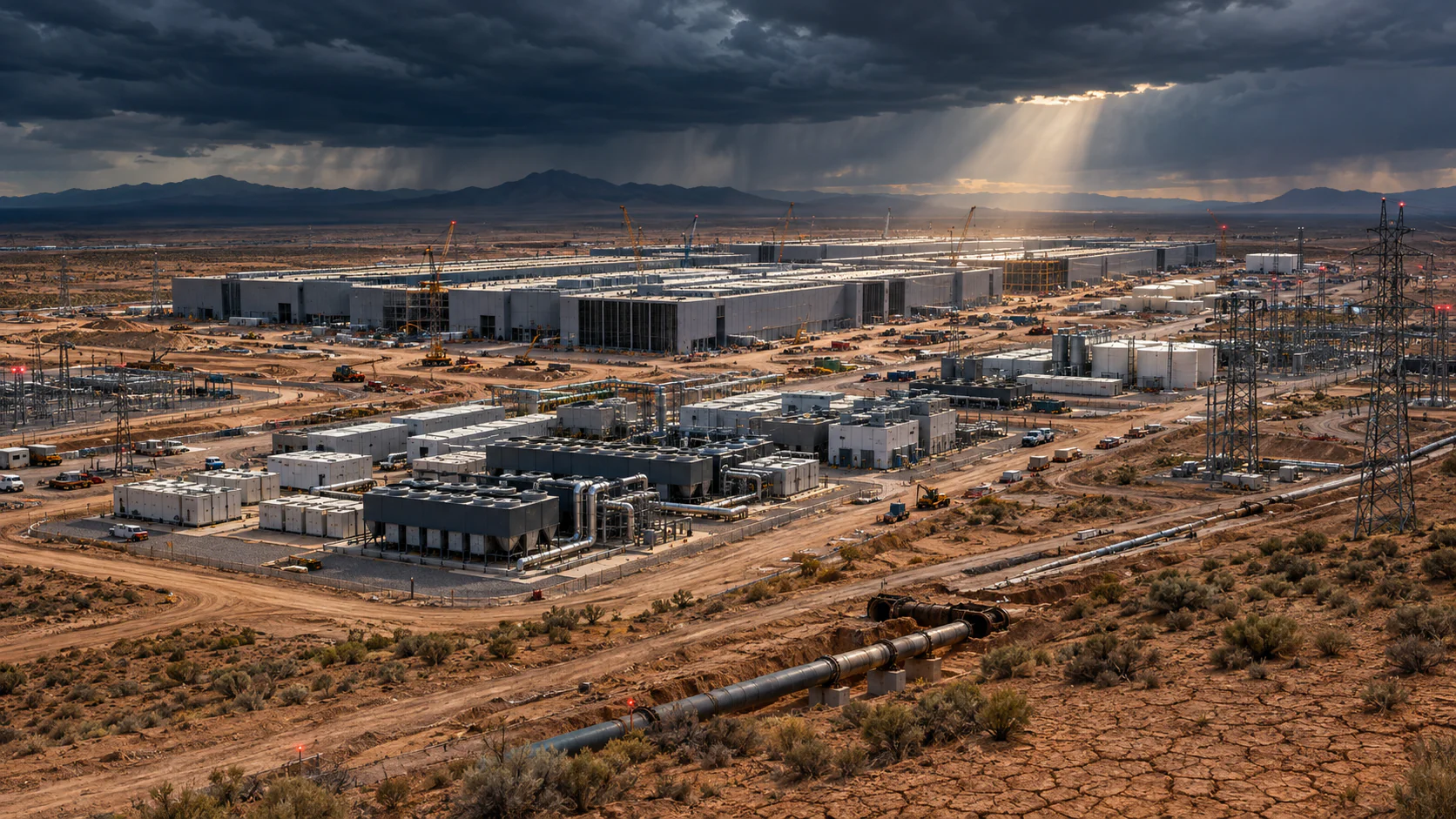
China's catch-up in artificial intelligence: The DeepSeek case and the strategic use of data – Image: Xpert.Digital

The new AI superpower: China is catching up with the USA

The new AI superpower: China is catching up with the USA

The sudden success of the Chinese AI company DeepSeek in early 2025 made it abundantly clear to the world that China is not only catching up in artificial intelligence, but in some areas is already on par with leading US companies. This development is no accident, but the result of a deliberate strategy based on massive data utilization and efficient scaling – with particular implications for the healthcare sector and industrial manufacturing.

Suitable for:

DeepSeek: From unknown start-up to AI pioneer

DeepSeek, founded in July 2023 by Liang Wenfeng, rose to international prominence in early 2025 with the release of its language model, DeepSeek-R1. In several benchmark tests, the model outperformed established American AI models such as OpenAI's GPT-4 and o1, particularly in mathematics and reasoning. The Chinese company's app quickly climbed to the top of the download charts in the US App Store, even surpassing ChatGPT.

Particularly noteworthy is that DeepSeek achieved this performance with significantly fewer resources. The company states that it trained its model for only about $6 million – a fraction of the estimated $100 million that OpenAI spent on GPT-4. The computational effort was also said to be only about one-tenth that of comparable models such as Meta's Llama 3.1.

Efficient AI development despite trade restrictions

This efficiency advantage is all the more remarkable given that US export restrictions prevent Chinese companies from accessing the most powerful AI chips. DeepSeek therefore developed alternative approaches such as “Mixture of Experts” (MoE), in which specialized sub-models are activated depending on the request – an architecture also used by the European AI model Mistral. Instead of relying on raw computing power, Chinese developers optimized their software for less powerful, but exportable, chips.

This predicament ultimately proved to be a driver of innovation: “Unlike many Chinese AI companies that rely heavily on advanced hardware, DeepSeek has focused on maximizing software-driven resource optimization,” explains Marina Zhang, professor at the University of Technology Sydney.

China's strategic approach to AI development

DeepSeek's success is not an isolated case, but part of a comprehensive national strategy. As early as 2017, China published its "New Generation Artificial Intelligence Development Plan," which defines clear goals: By 2025, the country aims to become a world leader in key areas such as autonomous driving, robotics, and AI-supported healthcare, and by 2030 to assume global leadership in AI.

Made in China 2025 and the AI ​​priority

The AI ​​strategy is embedded in the larger “Made in China 2025” plan, which aims to move China into the higher value chain. This plan, initiated by Chinese Premier Li Keqiang, envisions increasing the domestic share of core components to 70% by 2025, with a particular focus on high-tech sectors.

The current Five-Year Plan (2021-2025) and the new “AI+” initiative underscore the central importance of AI for China’s economic future. The initiative aims to combine digital technologies with China’s industrial strength and its vast domestic market. For example, Beijing has published an action plan outlining eight measures to support IT software companies applying large-scale AI models across various industries, with grants of up to 30 million yuan (approximately 3.8 million euros) per company.

The data advantage: Key to China's AI catch-up

A key advantage of China's AI strategy lies in its access to vast amounts of data. "While Western countries operate with high hurdles in data protection and ethical guidelines, China operates within a state-controlled framework that declares the use of sensitive data an economic and security priority," analyzes Renata Thiébaut in Handelsblatt.

Targeted data use in medicine

This competitive advantage is particularly evident in the fields of medicine and genetics. The Human Genetic Resources Regulation, updated in 2023, allows for the targeted use of genetic and health-related data under government control. This framework enables faster clinical trials and more efficient drug development.

AI applications like DeepSeek are already being used in the Chinese healthcare system to optimize processes. At the Second Affiliated Hospital of Fujian Medical University, for example, DeepSeek supports the electronic patient record by automatically summarizing patient data and assisting with medical documentation.

This development is also manifested in concrete projects such as the “AI Agent Hospital” in Beijing, which opened in 2025. Designed by the renowned Tsinghua University, this hospital comprehensively integrates AI into the design and operation of the hospital system. It aims, in particular, to counteract the shortage of doctors in rural and underserved areas and to support medical decision-making.

Structural factors favor the use of AI in healthcare

The Chinese market for medical AI benefits from structural factors: “In China, there is a per capita shortage of physicians but a surplus of IT engineers. Medical resources are concentrated in cities, while they are scarce in rural areas.” AI-supported telemedicine can alleviate both of these problems.

Furthermore, the strong network of public hospitals, which account for more than 80% of inpatient and outpatient treatments, enables the training of AI models with province-wide datasets. US researchers, on the other hand, have to work with data from individual private clinics, which operate under stricter data protection regulations.

Suitable for:

Industrial application: AI as an engine for manufacturing

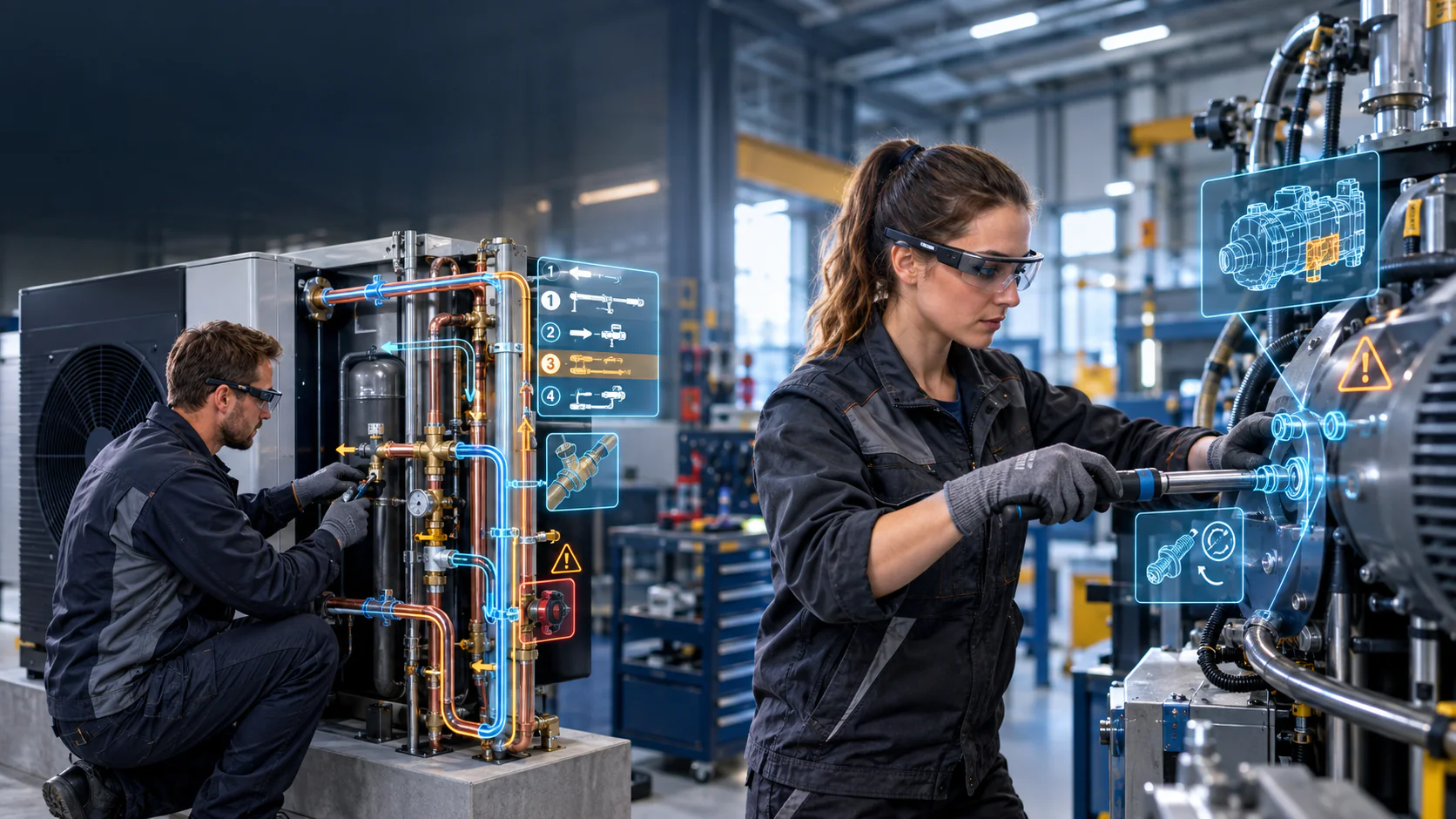
Besides healthcare, China is particularly focused on advancing AI integration in industrial manufacturing. The “AI+” strategy explicitly aims to network and upgrade the entire Chinese industrial sector. AI is intended to produce goods and manage their flow, which can significantly increase productivity.

Unlike many Western companies, the Chinese AI companies founded in 2023 focus primarily on implementation expertise rather than basic research: “While the focus in the US remains on basic research, China scores points with its implementation expertise.” This pragmatic approach enables faster integration of AI solutions into existing production processes.

How China's AI is walking a tightrope between progress and control

Despite impressive progress, China's AI development faces challenges. The international debate surrounding DeepSeek highlights the tensions between technological advancement and political control. DeepSeek's AI refuses to answer politically sensitive questions, such as those concerning the role of Chinese President Xi Jinping or the 1989 Tiananmen Square protests.

This censorship raises questions about the relationship between private companies and state control. Although DeepSeek is described as “relatively far removed from the Chinese government,” the presence of CEO Liang Wenfeng at a meeting with Chinese Premier Li Qiang demonstrates the close interrelationship between business and politics in China.

At the same time, the recent successes of Chinese AI companies are being celebrated in state media as national achievements. This development has geopolitical dimensions: "Globally deployed AI would be a powerful tool for pursuing geopolitical interests." China is repeatedly criticized internationally for disinformation campaigns and covert influence peddling.

Systemic competitive advantage through strategic alignment

China's rapid rise in AI development is based on a systemic approach that combines government planning, targeted data use, and pragmatic implementation. The success of companies like DeepSeek is no accident, but rather the result of this strategy, which is proving particularly fruitful in healthcare and industrial manufacturing.

Chinese AI development benefits from economies of scale in its large domestic market, strategically targeted subsidies, and a more flexible approach to data. Paradoxically, US export restrictions on AI chips have accelerated innovation by forcing Chinese companies to develop more efficient architectures.

This development presents Western technology companies and governments with new challenges. The global race for AI leadership has gained new momentum, with China's targeted strategy demonstrating that technological innovation depends not only on financial strength but also on systemic advantages and strategic planning.

Suitable for:


Your AI transformation, AI integration and AI platform industry expert

☑️ Our business language is English or German

☑️ NEW: Correspondence in your national language!


Konrad Wolfenstein

I would be happy to serve you and my team as a personal advisor.

You can contact me by filling out the contact form or simply call me on +49 89 89 674 804 (Munich) . My email address is: wolfenstein xpert.digital

I'm looking forward to our joint project.


☑️ SME support in strategy, consulting, planning and implementation

☑️ Creation or realignment of the AI ​​strategy

☑️ Pioneer Business Development

Exit the mobile version