
Utility-scale photovoltaics and tensegrity architecture: Up to 70% lower costs and safe support structures for solar modules
Xpert Pre-Release

Available in 27 languages 📢
Prefer Xpert.Digital on GoogleⓘPublished on: July 24, 2026 / Updated on: July 24, 2026 – Author: Konrad Wolfenstein
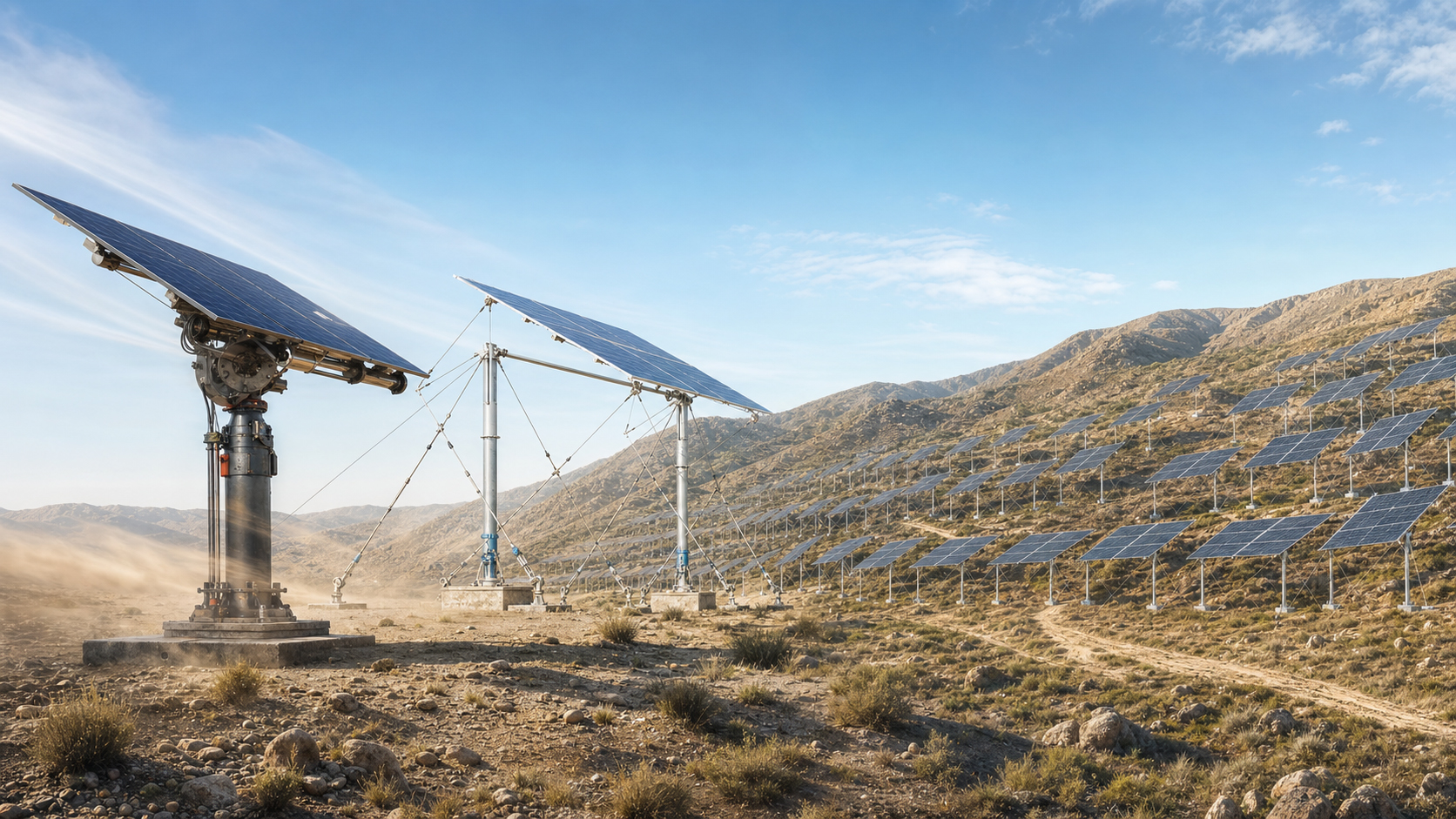
Utility-scale photovoltaics and tensegrity architecture: Up to 70% lower costs and safe support structures for solar modules – Image: Xpert.Digital
Up to 70% lower costs: How the tensegrity principle is revolutionizing the solar industry
Storm threat to solar parks: This ingenious construction method is revolutionizing huge solar parks
When giving in makes you stronger: The unexpected solution for gigawatt solar power plants
Utility-scale photovoltaics is growing at a rapid pace, but with the sheer size of modern solar parks, the structural and economic challenges are also increasing. Extreme weather conditions, such as destructive storms, are increasingly revealing the physical limitations of classic, rigid steel structures. The result: dramatic damage amounting to millions. Added to this are dwindling levels of available flat building land and high material costs, which are putting project developers worldwide under pressure. A paradigm shift is imperative – and the solution could come from bridge and stadium construction. Innovative, tension-based tensegrity architectures rely on dynamic flexibility instead of rigid resistance. Intelligent tension cable networks not only allow for immense savings in material costs but also drastically increase resilience to natural forces. Learn below why the future of the solar industry may lie not in massive steel tubes, but in the power of controlled yielding.
When rigidity becomes weakness: Why the solar industry needs to reinvent its support structures
Utility-scale photovoltaics has undergone remarkable technological maturation over the past two decades. Rigid fixed-angle systems have been replaced by single-axis tracking systems, which have significantly increased the yield per unit area and fundamentally changed the economic viability of large solar parks. Today, centralized torque tube architectures dominate the global tracker market and have substantially accelerated the worldwide proliferation of utility-scale solar parks. The global market for solar trackers was valued at approximately US$3.4 billion in 2021 and has since grown at an annual rate of over 20 percent, underscoring the crucial economic importance of this design.
This success story, however, has a downside that becomes increasingly apparent with the growing size of the plants. The larger and more powerful the solar parks become, the more structural requirements come to the fore that extend beyond mere energy production. Accessible land is becoming scarcer, complex terrain, labor shortages, rising installation costs, and long-term operating and maintenance requirements are putting pressure on the industry to reconsider the limitations of highly centralized structural concepts.
The weak point of today's trackers: When the wind wins
Traditional tracker systems typically rely on continuous structural elements, centralized mechanical load paths, and rigid structural behavior to withstand alignment and environmental stresses. While this design is highly effective in many application scenarios, highly centralized rigid structures can increase susceptibility to localized failures and transient loading events. The underlying problem is simple: In extreme weather conditions, particularly high winds, the forces acting upon the system are concentrated at a few central points within the supporting structure, rather than being distributed across the entire system.
The figures from insurance practice impressively underscore this picture. Nearly half of all material damage to solar power plants in North America is due to weather-related causes, making weather-related impacts by far the largest category of damage. A particularly insidious phenomenon is called torsional gallop, in which wind vortices break off at both edges of a tracker array, triggering a rapidly intensifying instability that only ends when the wind subsides. Scientific studies show that dynamic wind loads during such instability phases can reach five times the static wind loads, significantly diminishing the reliability of classic static load calculations.
Furthermore, a counterintuitive finding from aeroelastic research has emerged: Retracting the panels flat during storms, the industry standard for minimizing damage for decades, proves in dynamic analysis to be the most dangerous position a flat panel can assume in strong winds. Studies by the wind energy research company CPP demonstrate that torsional instability at retraction angles of twenty degrees and below can occur even at relatively moderate wind speeds of around 90 kilometers per hour. This finding fundamentally challenges established operating strategies across the entire industry and shows that simply designing for higher wind load assumptions does not solve the underlying problem.
When elasticity is greater than resistance
This is where the distributed tensile stress architecture approach described in the article comes in, marketed in this case under the name Tensagrid. The underlying idea does not originate from the classical structural engineering tradition of the solar sector, but rather draws on design principles from bridge construction, stadium construction, and lightweight aerospace engineering. Tension-based structures have long been established in architecture precisely because they utilize material efficiently by distributing force through tensile stress instead of pure stiffness.
Instead of using a few massive steel beams that have to bear all the loads alone, this concept employs a network of tension cables and more flexible structural elements that distributes the forces across the entire structure. A clear example of the underlying logic is the so-called tensegrity design, in which rigid compression members and tensioned cables together form a self-supporting, highly material-efficient framework. Academic research on such tensegrity-based solar substructures has shown that the structural costs of the substructure can be reduced by up to 70 percent compared to conventional baseline systems, while at the same time, the modified geometry can even lead to improved yields for bifacial modules through better rearward light exposure.
The crucial conceptual break with previous construction methods lies in no longer offering rigid resistance to the wind, but rather yielding in a controlled manner. This principle is known in technical terms as controlled survivability. Through targeted structural flexibility within defined limits, a system can dynamically dissipate and redistribute transient energy across the entire structure, instead of concentrating it at individual nodes. This very ability for controlled movement, rather than rigid resistance, aligns with a key finding in wind energy research: that a certain degree of compliance in the dynamic response can represent a sensible compromise between robust motion control and value-oriented design.
The soil no longer dictates the construction method
Another practical advantage of distributed, modular systems lies in their adaptability to the terrain. Traditional large-scale tracker systems generally benefit from relatively uniform soil conditions and often require extensive leveling work in more complex terrain. Distributed structures with a modular design, on the other hand, can compensate for differences in elevation and uneven terrain much more flexibly, without the need for costly earthworks beforehand.
This characteristic is gaining economic importance because suitable, flat, and well-developed areas for new solar projects are becoming increasingly scarce. Developers are increasingly turning to topographically challenging, rural, or formerly industrial sites, where earthwork costs represent a significant and often underestimated portion of the total investment. A structural design that adapts to the existing terrain, rather than adapting the terrain to the structure, is changing the economic viability of entire project pipelines and opening up areas that would have been considered uneconomical under previous logic.
Steel is expensive, intelligence isn't
The economic dimension of this debate cannot be understood without examining the cost structure of current tracker systems. According to industry figures, steel accounts for roughly seventy percent of total tracker costs, while motors, control systems, and software make up the remaining portion. The cost of single-axis tracker systems in Europe is around €0.07 per watt, and in the United States, it can reach up to $0.15 per watt. In the US, additional foundation costs of $0.30 to $0.50 per watt may apply, depending heavily on local building regulations. Dual-axis trackers, which require significantly more steel, are considerably more expensive, costing between €0.25 and €0.33 per watt.
These figures illustrate that any reduction in material usage, while maintaining or improving structural performance, directly impacts a project's economic viability. A concept that achieves less steel through intelligent load distribution thus shifts not only a technical metric but also one of the largest single cost items in the entire project budget. Given volatile steel prices and global supply chain risks, this material efficiency gains additional strategic importance because it makes projects less vulnerable to raw material price fluctuations.
At the same time, independent analyses from the insurance and operational sectors show that structural failures cause significant consequential costs over the entire life cycle of a plant. An independent study by an established tracker manufacturer found that an improved mechanical load release system enabled a net present value that was 4 US cents per watt higher and a 6.7 percent lower levelized cost of electricity (LCOE), driven by 37 percent lower life cycle operating costs. Another European research project estimates that targeted structural centralization measures on existing tracker systems could already reduce LCOE by 7 percent, while a specialized blocking system for a 100-megawatt power plant promises savings of around six million euros over 30 years through 700 times fewer component failures. These figures demonstrate that structural optimization is no longer a purely technical side issue, but rather determines significant double-digit percentage points in total operating costs.
New: Patent from the USA – install solar parks up to 30% cheaper and 40% faster and easier – with explanatory videos!

New: Patent from the USA – Install solar parks up to 30% cheaper and 40% faster and easier – with explanatory videos! - Image: Xpert.Digital
The core of this technological advancement is the deliberate departure from conventional clamp mounting, which has been the standard for decades. The new, more time- and cost-effective mounting system addresses this with a fundamentally different, more intelligent concept. Instead of clamping the modules at specific points, they are inserted into a continuous, specially shaped support rail and held securely in place. This design ensures that all forces – whether static loads from snow or dynamic loads from wind – are distributed evenly across the entire length of the module frame.
More information here:
Storm, terrain, costs: The underestimated innovation in the solar sector – When the substructure becomes a competitive advantage
Cable instead of steel pipe: How realistic is the revolution in solar park construction?
Despite the enthusiasm for the new concept, a critical assessment is also warranted. Tension-based systems have been known in the construction industry for decades, but outside of bridges, stadium roofs, and selected lightweight structures, they have not yet achieved widespread adoption. The reasons for this include higher demands on precision during assembly and maintenance, the need for specialized expertise in tension cable systems, and a certain skepticism among conservative clients and financiers towards less proven structural concepts compared to rigid systems that have stood the test of time.
Furthermore, it should be considered that torque tube tracker systems themselves are continuously being developed. Mechanical load release systems, improved damping technologies, and more sophisticated dynamic wind analyses have already significantly increased the reliability of classic architectures in recent years. A realistic view of market developments therefore suggests that distributed tensile stress systems will not completely replace rigid torque tube architectures in the foreseeable future, but rather will gain importance as a complementary design for specific application scenarios, particularly for topographically challenging sites, regions with extreme wind loads, and projects where material costs and transport logistics play an above-average role.
Caution is also advised regarding the reported cost savings of up to seventy percent for the substructure, as these figures are primarily derived from academic modeling and pilot projects and must first be confirmed through widespread commercial application under real market conditions. Long-term experience with material fatigue of tension cables, corrosion behavior under varying mechanical loads, and actual maintenance intervals over twenty to thirty years of operation is currently limited for utility-scale applications, which represents a significant valuation risk from the perspective of institutional investors and insurers.
Automation as a hidden growth driver
One aspect that has been underestimated in the public debate surrounding solar mounting systems is the relationship between structural design and installation methodology. The ongoing shortage of skilled workers in the construction industry and rising labor costs are driving the sector toward greater automation and robotics in the installation of large-scale solar parks. Lightweight, modular structural concepts with distributed interfaces could significantly facilitate automated deployment methods in this context, as standardized, lighter components are generally easier for robots to handle than massive steel tubes, which often require specialized equipment and larger assembly teams.
This development is likely to become the primary differentiator between structural concepts in the coming years, as the construction costs of large solar parks shift increasingly away from module costs and towards labor costs, logistics, and installation speed. A structural concept that can be assembled more efficiently by machine due to its lower weight and simpler connection technology thus gains a structural cost advantage that extends beyond the mere material savings in steel.
Climate change alters the equation of statics
The debate surrounding structural concepts cannot be considered in isolation from changing climatic conditions. Increasing extreme weather events and a growing frequency of intense storms are increasing the pressure on all open-field solar installations, regardless of the chosen structural concept. While traditional large-scale tracker systems often benefit from relatively uniform terrain, they frequently require significant material design to remain stable in more complex terrain with more varied environmental loads.
Distributed structural approaches could offer a dual advantage in the long term, responding both to increasingly inaccessible remaining building land and to a greater range and intensity of extreme weather events. It is important to note that these new structural concepts should not necessarily be seen as a complete replacement for existing tracker architectures. Rather, they represent an additional direction in the broader evolution of photovoltaic infrastructure design, which favors different structural philosophies depending on site conditions, environmental loads, project size, and operational requirements.
What investors and project developers really need to know
Several concrete conclusions can be drawn from this analysis for practical investment decisions. First, the choice of structural architecture should no longer be treated as a purely procurement decision based on the lowest purchase price, but rather as an integral part of a project's site and risk assessment, particularly in wind-exposed or topographically challenging regions. Second, the relevant cost parameters are increasingly shifting from pure material costs to a holistic consideration of life cycle costs, insurance premiums, and failure risks, and it is precisely at this point that distributed tension systems could most clearly demonstrate their theoretical potential.
Thirdly, project developers and financiers should explicitly request independently validated wind tunnel tests, dynamic load analyses, and, where available, operational data from completed reference projects for newer structural concepts such as Tensagrid. This is because the literature repeatedly points out that many manufacturers' claims regarding structural integrity are proprietary, not peer-reviewed, and insufficiently validated against real-world tracker behavior in the field. This requirement for robust empirical validation applies to any new structural technology, regardless of how convincing its theoretical engineering logic may seem.
The real insight behind the debate
The crucial strategic insight from this development lies less in the question of whether distributed tensile stress architectures will completely replace rigid torque tube systems, but rather in the fact that utility-scale photovoltaics is entering a new phase of structural differentiation. While the solar sector has thus far focused heavily on cell technology, inverter efficiency, and financing costs, the actual physical support structure is now moving into focus as an independent value driver for engineers, investors, and insurers alike.
From an engineering perspective, controlled, compliant behavior is likely to become an increasingly important design criterion, as solar parks must cope with greater environmental loads and more demanding operating conditions in ever more diverse geographical contexts. Tension-based structural principles have long been used in bridges, civil engineering structures, stadium roofs, and lightweight architectural systems precisely because they can efficiently distribute loads with minimal material concentration. Unlike purely rigid systems, which primarily resist forces through stiffness, tension-based structures allow for controlled structural flexibility within defined limits, which helps to dissipate temporary energy rather than managing loads solely through increased stiffness and material mass.
As utility-scale photovoltaics matures, the architecture of photovoltaic plant design is likely to become an increasingly important field of innovation. Future evaluations of solar structures will need to extend far beyond initial capital costs, encompassing survivability, adaptability, maintainability, deployment scalability, operational resilience, and structural efficiency under increasingly dynamic environmental conditions. For German and European project development, which is increasingly confronted with topographically more complex brownfield sites and stricter wind load standards, this debate is likely to gain considerable practical relevance in the coming years, even though widespread commercial market penetration of new tension systems will, from today's perspective, still require time and robust reference projects.
Your partner for business development in the fields of photovoltaics and construction
From industrial rooftop PV to solar parks and larger solar parking lots
☑️ Our business language is English or German
☑️ NEW: Correspondence in your native language!

Konrad Wolfenstein
I and my team are happy to be available to you as your personal advisor.
You can contact me by filling out the contact form here [email protected]:or simply call me at +49 7348 4088 965. My email address is
I'm looking forward to our joint project.







