
GLOBSEC and NATO's eastern flank: Between aspiration and operational reality
Xpert Pre-Release

Available in 27 languages 📢
Prefer Xpert.Digital on GoogleⓘPublished on: July 24, 2026 / Updated on: July 24, 2026 – Author: Konrad Wolfenstein
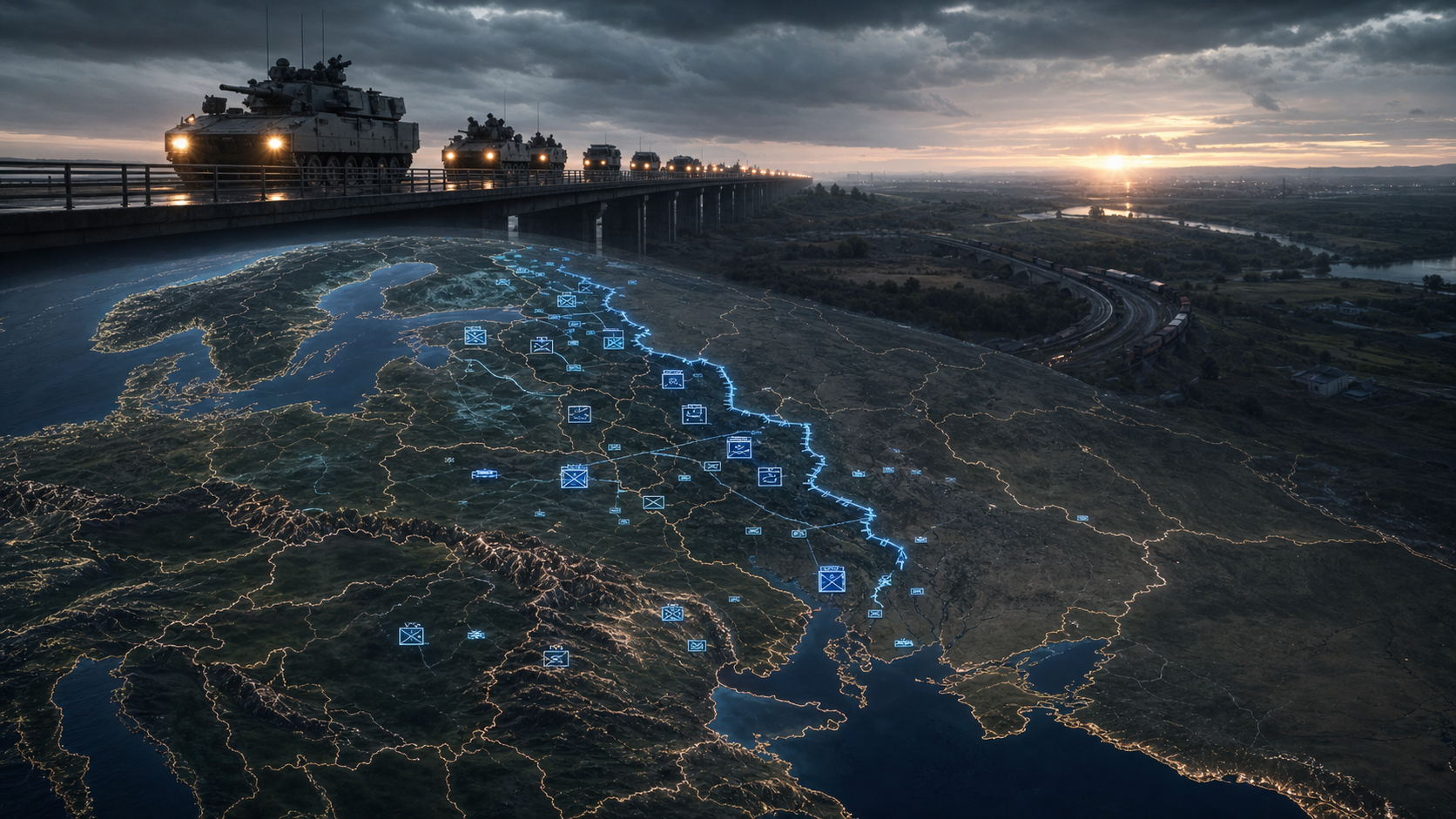
GLOBSEC and NATO's eastern flank: Between aspiration and operational reality – Image: Xpert.Digital
Rail, ammunition, logistics: These could really cause Europe's defense to fail
Billions spent on armaments, but not ready for combat? Europe's fatal security problem
NATO's eastern flank under scrutiny: Why money alone won't protect Europe in a crisis
Russia's war against Ukraine has jolted Europe out of its security policy slumber. But while defense budgets are climbing to record highs and NATO's two percent target is even being exceeded in many places, the new GLOBSEC 2026 report on combat readiness on the eastern flank reveals an uncomfortable truth: money alone does not create security. A massive discrepancy between political declarations of intent and operational reality, logistical bottlenecks, and bureaucratic inertia are jeopardizing Europe's genuine defense capability. While countries like Finland and Poland are leading the way as role models, other states risk becoming weak points due to inefficient decision-making structures. This comprehensive analysis sheds light on what this means for NATO deterrence, where the real gaps lie, and why European SMEs in particular are facing a historic—albeit challenging—opportunity.
Related to this:

More money, less security – why Europe has not yet fulfilled its defense mandate
A think tank as Europe's conscience: What GLOBSEC is and why it matters
Anyone seriously engaged with European security policy today cannot ignore an institution that originated in a relatively small city in the heart of Central Europe: GLOBSEC, based in Bratislava, Slovakia. The organization emerged from the Slovak Atlantic Commission, founded in 1993 – immediately after the end of the Cold War – by a group of Slovak diplomats with the aim of promoting Slovakia's integration into NATO and the European Union. This goal was achieved in 2004, and the original non-governmental organization gradually developed into an institutional network: Since 2005, GLOBSEC has organized the annual Bratislava Global Security Forum, which has become one of the five most important security conferences worldwide.
GLOBSEC's reputation rests not only on its conferences, but above all on its policy-oriented research arm, the GLOBSEC Policy Institute. It analyzes foreign policy, international security, technology, and democratic resilience, and is explicitly aimed at decision-makers in government, business, and civil society. Speakers at its events have included figures such as Pope Francis, David Cameron, Madeleine Albright, Ursula von der Leyen, John McCain, and Zbigniew Brzezinski – a list that demonstrates GLOBSEC's position at the forefront of global security debates.
GLOBSEC holds particular significance for Europe, and especially for Central Europe: it is one of the few think tank ecosystems that consistently integrates the Central European perspective into the transatlantic discourse. At a time when security policy decisions in Washington, Berlin, Paris, and Brussels significantly influence the fate of NATO's eastern flank, GLOBSEC acts as a bridge, a corrective, and an early warning system all at once. The study on annual combat readiness on the eastern flank, published in 2026, is perhaps the most visible example of this.
Why the GLOBSEC report on the eastern flank represents a turning point
The GLOBSEC document, published in May 2026 and titled "Annual Battle Readiness on the Eastern Flank," is no ordinary strategy paper. It is the first comprehensive, comparative assessment of military readiness along NATO's eastern flank, based on three pillars: military deterrence, political decision-making, and defense investment and innovation. It also incorporates five in-depth thematic analyses on cyber readiness, integrated air and missile defense, arms production, reserve systems, and lessons learned from Ukraine.
Ten countries are examined, from Finland and the Baltic states through Poland and Germany to Bulgaria – essentially the entire territory between the Baltic and Black Seas, which would be considered the first contact zone in the event of a military confrontation with Russia. The Decision-Making Timeline Index (DMTI) developed in the report measures how quickly a state can act in a real crisis – based on legal triggers, decision-making chains, allocation of powers, and the ability to mobilize its own forces and absorb allied forces.
The result is both sobering and illuminating: there is a clear divide between those states that rely on pre-authorized structures—above all Finland, Estonia, and Poland—and those that use sequential, parliament-dependent procedures that, in a crisis, can turn hours into days. This divide is not merely an academic observation. It is an operational reality that determines whether deterrence is effective in a crisis or exists only on paper.
The golden triangle of deterrence: money, capability, and speed of decision-making
Russia's invasion of Ukraine in February 2022 jolted Europe out of a long period of complacency regarding security policy. Since then, defense spending in European NATO member states has increased dramatically. In 2025, for the first time, all EU NATO members met the two percent target. European NATO members increased their defense spending by 14 percent in 2025 to around €739 billion – the strongest increase since the 1950s. Poland leads the field with a defense budget of 4.48 percent of GDP, more than double the previous benchmark and higher than the United States, which spent 3.22 percent in the same year.
But the GLOBSEC report breaks with a convenient equation: Higher budgets do not automatically mean greater combat readiness. McKinsey & Company identified the same discrepancy in a 2026 study: Although European NATO states are moving toward a new target of 3.5 percent of GDP for nuclear defense, the equipment stockpiles of many countries are still below 2021 levels, partly because extensive support deliveries to Ukraine have depleted their own stockpiles. More than 50 percent of major European armaments programs are behind schedule or exceeding their budgets.
The GLOBSEC framework clearly identifies the real bottleneck: the golden triangle of military capacity, political decision-making speed, and industrial production capability. All three elements must function simultaneously if deterrence is to be operational and not merely declaratory. If one fails or lags behind, the system collapses under the pressure of a real crisis.
Two classes on the eastern flank: The ready readers and the laggards
The report paints a nuanced, sometimes uncomfortable, picture of the ten countries studied. Finland is described as the European gold standard for strategic planning. Its legal framework allows allied forces to move, deploy, and operate with minimal additional political approval once readiness levels have been raised. Estonia has developed its lean crisis management model directly from an awareness of its vulnerability to hybrid threats and has consistently streamlined it.
Poland is also among the leaders: Since 2022, Warsaw has accelerated the development of its strategic reserves, invested in modern weapons systems – from tanks to long-range systems – and is the only major European country to have already scaled its defense budget to over four percent of GDP. The Baltic states of Lithuania, Latvia, and Estonia follow a similar approach, not least because their geographical proximity to Russia makes any abstraction about security risks concrete.
At the other end of the spectrum are Hungary and Slovakia. Budapest's emergency planning relies heavily on government decrees, which typically require ratification or re-approval and are often politically contentious. Slovakia, on the other hand, while possessing basic structures, needs to implement clearer triggers and pre-installed capabilities, according to the GLOBSEC authors, to respond more quickly to hybrid threats and drone incidents. This institutional disparity is not purely a military issue—it reflects differing political cultures, administrative traditions, and geostrategic risk perceptions.
The real problem: Logistics trumps a letter of intent
One of the report's key findings is that logistics—not just weapons systems or budgets—is the critical bottleneck. Tomas Nagy, Senior Research Fellow at GLOBSEC and one of the report's lead authors, succinctly summarizes it: sustainability in the field is the real and serious gap. This refers to maintenance capacity, logistical limitations due to poor transport infrastructure, and, above all, military mobility as a combat support element.
The most concrete example is the Rail Baltica project: an 870-kilometer rail network intended to connect Estonia, Latvia, and Lithuania with Poland and replace the Russian 1,520-millimeter gauge with the European standard—a crucial factor for the rapid deployment of supplies and heavy equipment from Western Europe to the eastern flank in the event of war. The project has a total budget of over €15 billion and was originally scheduled for completion by 2030. However, the chairman of the Latvian inquiry committee has stated that the Latvian section can no longer be completed by 2030, but rather around 2035—against the backdrop of significant security threats from Russia.
These delays point to a structural dilemma: the very infrastructure that determines reaction speed in a crisis cannot be protected under wartime conditions if it is not completed in peacetime. While NATO is planning an automated defense zone along the border with Russia and Belarus, equipped with robots, drones, and remotely controlled systems to stop a potential aggressor, even the most advanced deterrence architecture remains fragile without secure supply corridors and a robust transport infrastructure.
Ammunition, maintenance, medicine: The forgotten triad of combat readiness
In addition to mobility, the report identifies other critical gaps that are often overlooked in public debate. Ammunition stockpiles, maintenance capacities, and medical support systems are considered major constraints on sustainable warfare in several countries on the eastern flank. These three elements—what is known in military jargon as "sustainment"—are not supplementary to combat power, but rather its very foundation.
The war in Ukraine has empirically underscored this thesis: What most severely limits a country's military strength in a protracted, high-intensity conflict is not primarily the quality of its command and control weapons, but rather the ability to produce and deliver sufficient ammunition over months, to quickly maintain and repair weapons systems, and to provide medical care to wounded soldiers. For NATO's eastern flank, this means that the apparent progress in defense spending and troop strength should not obscure the fact that the industrial capacity for a prolonged conflict remains inadequate in several countries.
McKinsey quantifies the problem: The ratio of order backlog to revenue is significantly higher for European defense companies than for the US, delivery times are increasing, and a substantial proportion of key systems are procured outside Europe – which prolongs strategic dependencies and weakens their own resilience. The consequence is a structural undersupply on the eastern flank, which cannot be remedied by political declarations of intent alone.
Hub for Security and Defense - Advice and Information

Hub for Security and Defense - Image: Xpert.Digital
The Security and Defence Hub offers expert advice and up-to-date information to effectively support companies and organizations in strengthening their role in European security and defence policy. Working closely with the SME Connect Defence Working Group, it particularly promotes small and medium-sized enterprises (SMEs) that wish to further develop their innovative capacity and competitiveness in the defence sector. As a central point of contact, the Hub thus creates a crucial bridge between SMEs and European defence strategy.
Related to this:
Europe's security gaps: Why cyber defense, defense and SMEs are now working together
Hybrid warfare as a permanent state: Cyber threats without institutional parity
Another key finding of the GLOBSEC report concerns the cyber and hybrid threats facing the eastern flank states. For years, the region has been plagued by coordinated disinformation campaigns, acts of sabotage against infrastructure, and targeted cyberattacks – the actors behind which are predominantly state-controlled Russian intelligence services. The authors' conclusion is clear: In many cases, the institutional capacity of these states to respond to cyber and hybrid threats does not exceed the level of the existing burden.
In plain terms, this means that the responsible authorities are already operating in permanent crisis mode, without sufficient personnel and technical resources to scale quickly. While Russia pursues hybrid operations as a coherent strategic extension of its foreign policy, many Eastern European states are still reacting with fragmented national approaches that lack societal coordination. The introduction of the NIS2 Directive at the European level establishes minimum regulatory standards, but the depth of implementation varies considerably.
The report makes an important observation in this context: Societal resilience is not a mere add-on to hard security policy, but rather an independent force multiplier. Public trust in state institutions, the willingness to cooperate in reserve systems, and the ability to maintain civil defense measures measurably strengthen defense capabilities. Finland once again demonstrates the way forward: A well-developed reserve system, combined with a politically consensus-based security culture, increases the responsiveness of the entire system in a way that cannot be achieved through military spending alone.
Related to this:

The industrial flank: Europe's arms industry between growth and bottlenecks
The defense industry is at the heart of the question of whether Europe's new security policy ambitions can actually be translated into operational capabilities. The EY/DekaBank model from 2026 assumes that European NATO states would have to spend around €770 billion per year to meet NATO's targets by 2035. Of this amount, approximately €220 billion annually would be allocated to direct defense spending – with significant macroeconomic multiplier effects: In Germany alone, GDP would increase by at least 0.9 percent, and around 360,000 jobs would be secured or created each year.
At the European level, investments in defense and military equipment secure around 1.9 million jobs – almost 600,000 directly in the defense industry and nearly one million indirectly at suppliers. These figures illustrate the increasing convergence of security and economic policy. However, this is only the positive side. On the negative side lies a still fragmented European defense market with national procurement standards, a lack of interoperability, and – particularly serious for NATO's eastern flank – insufficient scalability for a prolonged high-intensity conflict.
Oxford Economics estimates that around 40 percent of European defense spending ends up outside the EU, particularly for capabilities that Europe cannot produce itself: long-range strike systems, ballistic missile defense, early warning systems, stealth fighters, and larger drones. This external dependence is not a footnote, but a strategic risk factor – one that could become a bottleneck in a crisis if political or logistical reasons disrupt supplies.
SMEs in transformation: The new defense industry as an opportunity
For German and European SMEs, this industrial transformation presents a historic opportunity – albeit with significant structural hurdles. The DIHK (Association of German Chambers of Industry and Commerce) business survey from spring 2026 shows that one in six industrial companies in Germany is already involved in the defense industry's value chain, while almost one in three sees it as an opportunity for their own business model. The German Security and Defense Industry Association reported that its membership has almost doubled since November 2024, from 243 to 440 – two-thirds of which are SMEs.
The driving force is a structural phenomenon: Many medium-sized companies in the automotive supply and mechanical engineering sectors are struggling with capacity utilization problems as a result of changes in the automotive industry and are looking for new sales markets. The defense industry offers precisely what these companies need: long-term, stable orders, government-backed demand, and the opportunity to utilize existing manufacturing expertise – mechanical components, precision assembly, special coatings, electronics – in a growing market.
The most relevant fields for SMEs are cybersecurity and IT security, sensor technology and communication technology, unmanned systems such as drones and autonomous platforms, logistics, and dual-use technologies that can be used for both civilian and military purposes. Dual-use is the most strategically interesting area: companies that produce machine tools, testing and measuring equipment, valves, optics, or special electronics are often already part of the supply chain without realizing it – or they can be with just a few structural adjustments.
The hidden hurdle: Why the middle class only benefits to a limited extent
Despite the generally positive growth outlook, small and medium-sized enterprises (SMEs) are currently only benefiting to a limited extent from the arms boom. This is due to several structural barriers. First, the large defense companies – Rheinmetall, Hensoldt, Diehl Defence, KNDS – dominate the top tier of orders and are expanding their own capacities without necessarily relying on external SME suppliers. Second, the conditions for SMEs to access Bundeswehr procurement procedures are complex: security checks, export control regulations, long lead times, and complicated certification requirements deter many potential suppliers.
Third, regulatory complexity arises from the parallel application of several European laws: The AI Act, the NIS2 Directive, and the Cyber Resilience Act also apply to companies developing defense products with dual civil-military use – and many companies overestimate the scope of existing exemptions. Fourth, investors and private equity firms are increasingly monitoring the segment: The PE transaction volume in the European defense sector in 2025 was double the five-year average, and the STOXX Aerospace & Defense Index rose by 74 percent in 2025 – a signal that capital is flowing into the industry and that consolidation processes will also begin at the supplier level.
Nevertheless, those who build expertise early, enter into strategic partnerships, and systematically address regulatory requirements can position themselves in a market whose growth trajectory appears secure for at least a decade. The European Defence Fund (EDF) funding program provides targeted incentives for transnational cooperation projects, which represent an attractive vehicle, particularly for medium-sized companies with limited internationalization resources of their own.
Societal resilience as a strategic variable
The GLOBSEC 2026 report explicitly highlights societal resilience as a force multiplier – and this is more than just a rhetorical gesture. In an era where hybrid threats target the erosion of public trust, the psychological and institutional stability of a population is an integral part of defense architecture. For the ten countries studied, it is evident that those states combining a robust reserve system with strong societal roots – Finland being a prime example – possess a qualitatively different depth of defense compared to countries relying on small professional armies and imported deterrence.
This realization has direct economic implications that are still underrepresented in the security policy debate. Societal resilience does not arise in a vacuum. It requires functioning education and information systems, media literacy in the face of disinformation, a robust healthcare system, and a social infrastructure that operates even under stress. This means that the boundary between defense investment and civilian public services is becoming increasingly permeable, both politically and economically.
The consequences for small and medium-sized enterprises (SMEs) and the business landscape as a whole are remarkable: Companies offering solutions in cybersecurity, communications technology, critical infrastructure, logistics resilience, or medical care are not only industrially relevant but also relevant from a security policy perspective. The distinction between defense companies and companies providing national basic security is blurring – and this is creating new strategic positioning opportunities for companies that previously had no contact with the defense sector.
What Europe needs to be prepared for by 2030
The report sets an implicit timeframe that is economically and strategically crucial: 2030. By then, the new spending targets agreed upon at the NATO summit are to be substantially achieved – 3.5 percent of GDP for nuclear defense, supplemented by 1.5 percent for defense-related infrastructure. This means that almost the entire continental European power will have to mobilize between one and one and a half percentage points of GDP in additional spending. Measured against the GDP of the EU-NATO member states, this corresponds to an additional annual requirement in the hundreds of billions.
The time pressure is not merely academic. The delays with Rail Baltica, the gaps in munitions production, the incompleteness of NATO's automated defense zone on the eastern flank – all these are characteristics of a transitional phase in which the real threat is growing faster than institutional and industrial response mechanisms. GLOBSEC articulates this diagnosis with analytical clarity: Deterrence today is not primarily a question of capabilities or expenditure, but of the ability to align military, political, and industrial systems under compressed timelines.
For the European economy, this represents a rare coincidence: strategic necessity and economic growth opportunity align. Investments in defense, resilience, infrastructure, and dual-use technologies not only serve national security interests but also unlock markets with exceptional growth potential. In this sense, the GLOBSEC report is not a document of fear, but rather a map of strategic gaps – which simultaneously serves as a blueprint for industrial and economic action.
What remains: Declaratory strength or operational substance?
The conclusion of the GLOBSEC Annual Battle Readiness Report 2026 is as clear as it is uncomfortable: progress is real, but uneven. Parts of NATO's eastern flank are structurally exposed should a real crisis occur. The gaps in mobilization speed, logistics, ammunition stockpiles, maintenance capacity, and institutional agility cannot be closed with political declarations, but only through consistent, long-term investments in operational capabilities.
For Europe as a whole, and for small and medium-sized enterprises (SMEs) in particular, this presents a threefold challenge: making the right political priorities, scaling up production capacities industrially within a significantly shorter timeframe than previously customary, and systematically lowering the barriers to market access for SMEs institutionally. GLOBSEC's analysis provides the diagnosis. The solution lies in the hands of governments, industries, and societies that are prepared to translate declarations of intent into operational reality.
Consulting - Planning - Implementation

Markus Becker
I would be happy to serve as your personal advisor.
Head of Business Development
Chairman SME Connect Defense Working Group
Consulting - Planning - Implementation
Konrad Wolfenstein
I would be happy to serve as your personal advisor.
You can contact me at wolfenstein∂xpert.digital or
Just call me on +49 7348 4088 965 .





