
Transparent GridParity solar modules: Generate electricity and let light through – The ingenious solar solution for patios and carports
Xpert Pre-Release

Available in 27 languages 📢
Prefer Xpert.Digital on GoogleⓘPublished on: July 23, 2026 / Updated on: July 23, 2026 – Author: Konrad Wolfenstein
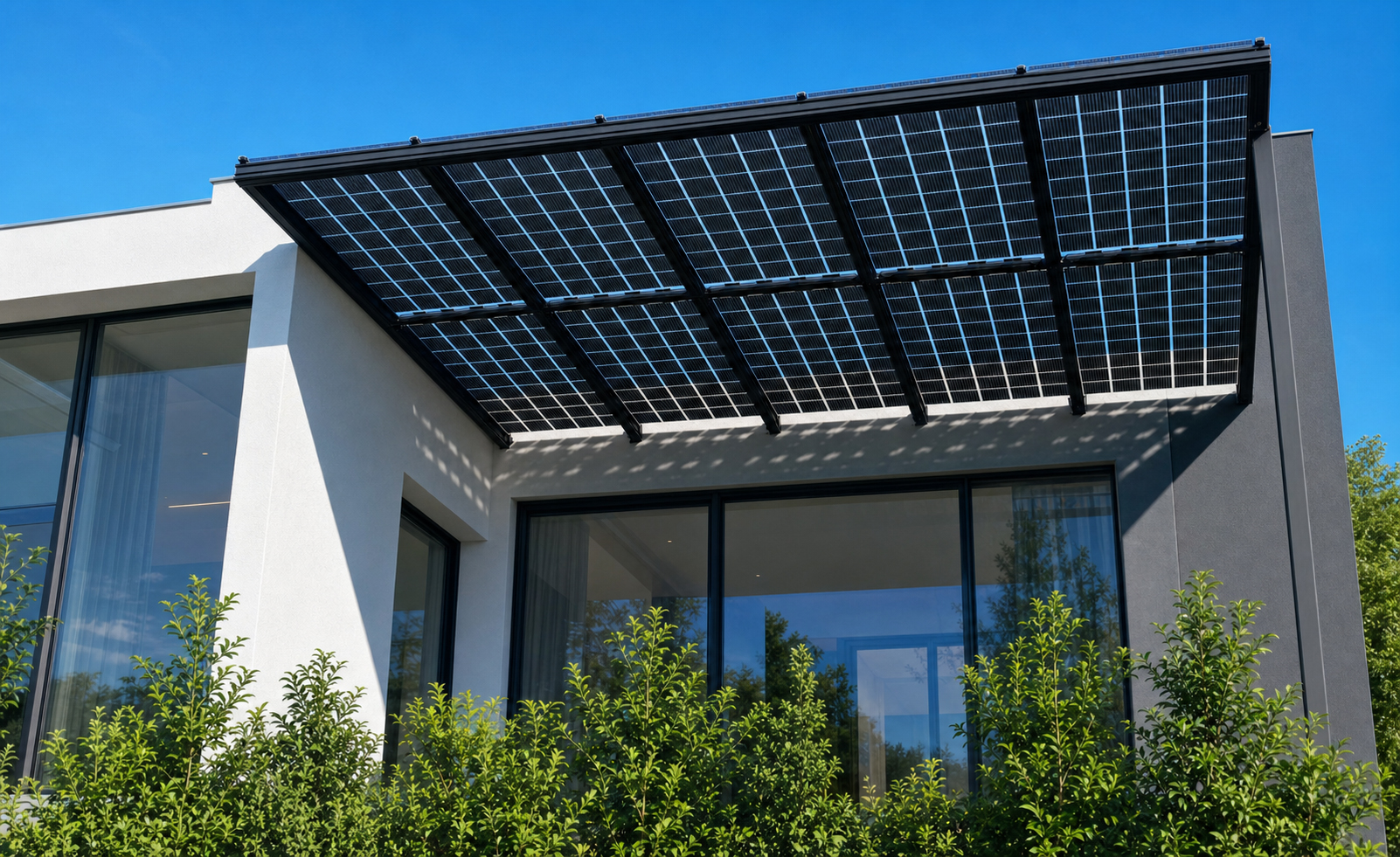
Transparent solar panels: Generate electricity and let light through – The ingenious solar solution for patios and carports – Image: Xpert.Digital
Bucking the Chinese trend: Why this particular solar module is shaking up the German market
Forget cheap, standard modules: Why semi-transparent solar systems are really worth it
30-year guarantee, dual use: This clever niche module beats the mass-produced goods
Anyone planning a photovoltaic system today usually ends up with interchangeable standard modules from Asian manufacturers, where price is the sole deciding factor. But beyond this cutthroat price war, the online retailer pvDach demonstrates that a worthwhile alternative exists: With its semi-transparent, bifacial GridParity modules, the company consciously adheres to a high-quality niche technology. These glass-glass modules were specifically developed for demanding projects such as carports, patio roofs, and conservatories – they not only generate electricity but also allow daylight to pass through.
The proven GridParity modules remain available on the market – pvDach continues to develop the proven specialist technology
While the rest of the industry focuses on mass production, a niche provider sticks to substance
The German photovoltaic landscape has changed radically in recent years. Anyone buying a solar module today is, in the vast majority of cases, purchasing a mass-produced product from China, manufactured according to the principle of maximum output with minimal profit margin. TOPCon cells, monocrystalline silicon, aluminum frames, interchangeable optics, interchangeable branding. In this environment, the online retailer pvDach is positioning itself with a deliberate alternative. Despite a market increasingly focused on rapid amortization, the GridParity module series is being consistently developed. This is not a nostalgic aside, but a sound business decision with economic substance that deserves closer examination.
To understand why this decision is remarkable, one must understand the context in which the German solar market operates in 2026. Module prices have fallen by roughly 30 to 40 percent over the past five years; a turnkey rooftop system now costs only a fraction of what it did in 2006. At the same time, the value chain has shifted almost entirely to China: Over 80 percent of the global market share now belongs to Chinese manufacturers such as Longi, JA Solar, Jinko, and Trina, who rely almost exclusively on TOPCon cell technology. This shift has drastically reduced consumer prices, but it has also created a homogenization of products that allows for hardly any differentiation. Anyone buying a standard module is essentially buying a commodity product whose only distinguishing feature is its price.
Why the GridParity concept focuses on transparency rather than quantity
This is precisely where the GridParity concept comes in, which pvDach offers in its own online shop . The modules are not based on the classic aluminum frame concept with an opaque back, but rather on a frameless or framed glass-glass construction with bifacial cell technology and a targeted partial transparency of approximately five to thirty-five percent, depending on the module type. This means that light is utilized not only on the front, but also through the spaces between the cells and from the back. The core economic principle behind this is simple: A module that simultaneously generates electricity and transmits daylight can utilize surfaces for two purposes, such as a carport roof, a patio cover, a facade element, or a shading system for conservatories. This dual use creates added economic value that cannot be expressed in pure kilowatt-peak figures, but which has a significant impact on users' everyday lives.
The term GridParity is more than just a brand name; it describes an energy policy objective. Grid parity refers to the point at which the cost of self-generated solar energy falls below the cost of grid electricity, without the need for further subsidies. For many standard applications, this point has long been reached in Germany.
Bifacial cell technology as an economic lever
The technical core of the modules lies in their bifacial cell structure. While conventional monofacial modules absorb light only on the front, bifacial cells also utilize light incident from the back, for example, through reflection from the surface or direct sunlight in overhead installations. Depending on the albedo of the surface, i.e., its reflectivity, this can result in an increased yield of ten to thirty percent compared to an identical monofacial module. On a typical, dark pitched roof, this effect is minimal because hardly any light reaches the back. However, when mounted overhead above light-colored paving, gravel, or a white concrete surface under a carport, the technology unfolds its full potential.
From an economic perspective, this means that the higher price per watt-peak for a bifacial glass-glass module compared to a standard module is at least partially offset by the additional energy yield. Current market data indicates a wholesale price of approximately €0.16 to €0.22 per watt-peak for glass-glass bifacial modules, while standard TOPCon modules cost between €0.10 and €0.18 per watt-peak. However, the price premium of roughly fifty percent is significantly reduced when one considers the increased yield, the extended lifespan, and the added benefit of utilizing the same surface area.
The numbers behind the second usage level of the modules
A key economic factor of GridParity modules is their technical robustness for applications that conventional frame modules, by design, cannot handle. The double-glazed modules are certified according to EN12600 for overhead installation and can withstand wind loads exceeding 2400 Pascals and snow loads exceeding 5400 Pascals. This certification is not a mere detail, but a building code requirement, as anyone installing a module above a parking lot, terrace, or pedestrian area must provide reliable safety documentation. This documentation is precisely what is lacking in many inexpensive standard modules, which are optimized for conventional roof mounting but are not approved for overhead applications.
In addition, there's the material quality. The modules consist of two-millimeter-thick, thermally tempered glass on both the front and back, thus completely eliminating the need for the plastic backing film that yellows, becomes brittle, and allows moisture to penetrate over time in conventional modules. The manufacturer's warranty is up to thirty years for performance and twenty-five years for the product itself, significantly exceeding the market average of ten to fifteen years for standard modules. This longer lifespan is economically significant because it stabilizes the amortization calculation over a considerably longer period and reduces the risk of premature performance degradation.
Market environment: Price decline, tariffs and the fight for differentiation
The German and European photovoltaic market will find itself in a contradictory situation in 2026. On the one hand, module prices have been falling continuously for years, driven by massive overproduction in China, which led to a sharp price drop in 2023 and continues to fill importers' inventories. On the other hand, the political climate has deteriorated. The European Union has previously imposed anti-dumping duties and minimum import prices on Chinese solar products, with tariffs ranging from 27.3 to 64.9 percent for dumping violations and additional countervailing duties of between 3.5 and 11.5 percent for state-subsidized manufacturers. The situation is currently worsening because China abolished its tax refund mechanism for solar exports on April 1, 2026, which is expected to increase module prices by an estimated 15 to 20 percent. In addition, there is the EU's Carbon Border Adjustment Mechanism, which imposes additional costs of around sixteen euros per 450-watt module for modules without proof of green production.
This combination of falling base prices and rising political and regulatory costs creates an environment in which pure price leadership is becoming increasingly risky. A supplier that competes solely on the basis of the lowest price is defenseless against geopolitical fluctuations in supply chains. A supplier that, instead, differentiates itself through unique technical features such as transparency, bifaciality, and overhead compatibility can at least partially escape this price pressure because it operates in a market segment where direct price comparisons with standard modules are not applicable.
New: Patent from the USA – install solar parks up to 30% cheaper and 40% faster and easier – with explanatory videos!

New: Patent from the USA – Install solar parks up to 30% cheaper and 40% faster and easier – with explanatory videos! - Image: Xpert.Digital
The core of this technological advancement is the deliberate departure from conventional clamp mounting, which has been the standard for decades. The new, more time- and cost-effective mounting system addresses this with a fundamentally different, more intelligent concept. Instead of clamping the modules at specific points, they are inserted into a continuous, specially shaped support rail and held securely in place. This design ensures that all forces – whether static loads from snow or dynamic loads from wind – are distributed evenly across the entire length of the module frame.
More information here:
More than just electricity from the roof: How GridParity combines photovoltaics, design and roofing
Niche strategy as a business management response to cutthroat competition
From a competitive strategy perspective, pvDach's continuation of the GridParity series follows a classic differentiation approach, as described in management literature for decades. Companies that position themselves not on price, but on a unique performance promise, have less to do in price wars with interchangeable competitors. The target group for the semi-transparent glass-glass modules is, in any case, different from that of traditional rooftop systems. Those who want to realize a carport, a patio roof, a facade, or an architecturally sophisticated project are not primarily looking for the lowest peak wattage offer, but rather a solution that combines design, function, and energy generation.
This market niche is naturally smaller than the mass market for rooftop solar installations on single-family homes, but it is also significantly less competitive. While a multitude of Chinese manufacturers compete for every cent per watt-peak in the standard segment, the number of suppliers of certified, overhead-compatible, semi-transparent bifacial glass-glass modules is considerably lower. This gives pvDach and GridParity a position with greater pricing power, even if the absolute market volume remains smaller.
Practical applications and their added economic benefits
The practical relevance of this technology is particularly evident in applications that extend beyond traditional roofing. A carport with semi-transparent GridParity modules generates electricity, protects the vehicle from the elements, and simultaneously allows diffused daylight to filter through, preventing the area below from being completely darkened. A similar effect occurs with patio roofs and conservatories: the transparent module surface replaces conventional glass or plastic roofing and simultaneously fulfills its function as a shading element, without requiring any additional building structure. This multifunctionality, which experts refer to as functional integration, is economically attractive because it allows the investment costs for a planned construction project, such as the roof, to be offset by the revenue generated from electricity production.
Price structure and profitability calculation in detail
A look at the specific pricing structure at pvDach reveals that the GridParity modules are offered in different performance classes and transparency levels, from the smaller B40/6 module with 250 watts peak and 35 percent transparency to the high-performance B72/6 module with 450 watts peak and around 10 percent transparency. This range allows planners to choose between greater light transmission and higher energy yield, depending on the application. A carport, which primarily serves as weather protection with electricity generation, can opt for a module with lower transparency and higher output. A patio roof, where living comfort and natural light are paramount, benefits more from a more transparent, but lower-performance module.
From an economic perspective, the module delivery alone is only one part of the total investment. Experts estimate that the solar modules themselves account for only about 25 to 35 percent of the total price of an installed system; the remainder is distributed among inverters, substructure, installation, and electrical wiring. With GridParity applications, the substructure, such as a carport frame or a terrace structure, would have had to be built anyway. The additional cost for the photovoltaic functionality is thus reduced to the difference between a conventional roof and the GridParity solution, which significantly shortens the actual amortization period compared to considering only the module costs.
What the continuation of the product line means strategically
pvDach's decision to continue offering the GridParity module series despite a changing market environment can be interpreted as a conscious bet on continuity. While many competitors adjust their product range annually to reflect the lowest Chinese import prices, continuing with an established specialized technology signals reliability to existing customers who have already installed GridParity modules and need to rely on compatible add-on modules or spare parts when required. This continuity is a particularly important factor in building trust for glass-glass modules with a thirty-year performance guarantee, as a system intended to function for over three decades requires a manufacturer and a distribution partner who remain in the market for a comparable timeframe.
At the same time, pvDach is positioning itself against pure price competition in the mass market and asserting a position in the higher-value market segment for architecturally integrated photovoltaics. Given the political and trade uncertainties surrounding Chinese imports, fluctuating tariffs, and the increasing importance of CO₂ origin certificates in the European market, this strategy does not appear economically unreasonable. It shifts the competitive focus from pure cost leadership to technical differentiation, long-term guarantees, and a clearly defined application profile that mass-produced Chinese products, by their very design, cannot fulfill.
Ultimately, the evaluation remains a question of individual application. For the standard case of a pitched roof on a single-family home, the classic, cost-effective TOPCon technology remains the most economical solution. For all cases where photovoltaics meet architectural requirements, light transmission, overhead mounting, and dual use of surfaces, the GridParity technology, further developed by pvDach, offers an economically sound and technically mature solution that will maintain its niche in the German photovoltaic market even in 2026.
Your partner for business development in the fields of photovoltaics and construction
From industrial rooftop PV to solar parks and larger solar parking lots
☑️ Our business language is English or German
☑️ NEW: Correspondence in your native language!

Konrad Wolfenstein
I and my team are happy to be available to you as your personal advisor.
You can contact me by filling out the contact form here [email protected]:or simply call me at +49 7348 4088 965. My email address is
I'm looking forward to our joint project.
☑️ EPC services (Engineering, Procurement and Construction)
☑️ Turnkey project development: Development of solar energy projects from start to finish
☑️ Site analysis, system design, installation, commissioning, maintenance and support
☑️ Project financier or intermediary of capital providers
Plan your solar system for the most common applications conveniently online with our solar system planner!
With our user-friendly solar system planner, you can design your individual solar system online. Whether you need a solar system for your home, your business, or for agricultural purposes, our planner allows you to consider your specific requirements and develop a customized solution.
The planning process is simple and intuitive. You simply enter the relevant information. Our planner takes this information into account and creates a customized solar system that meets your needs. You can try out different options and configurations to find the optimal solar system for your application.
Furthermore, you can save your plan to review it later or share it with others. Our customer service team is also available to answer any questions and provide support to ensure your solar system is optimally planned.
Use our solar system planner to design your individual solar system for the most common applications and accelerate the transition to clean energy. Get started now and take an important step towards sustainability and energy independence!

The solar system planner for the most common applications: Plan your solar system online here - Image: Xpert.Digital
More information here:





