
Civilian technology, military applications: That's why Karlsruhe is one of the top centers in the dual-use boom
Xpert Pre-Release

Available in 27 languages 📢
Prefer Xpert.Digital on GoogleⓘPublished on: July 21, 2026 / Updated on: July 21, 2026 – Author: Konrad Wolfenstein
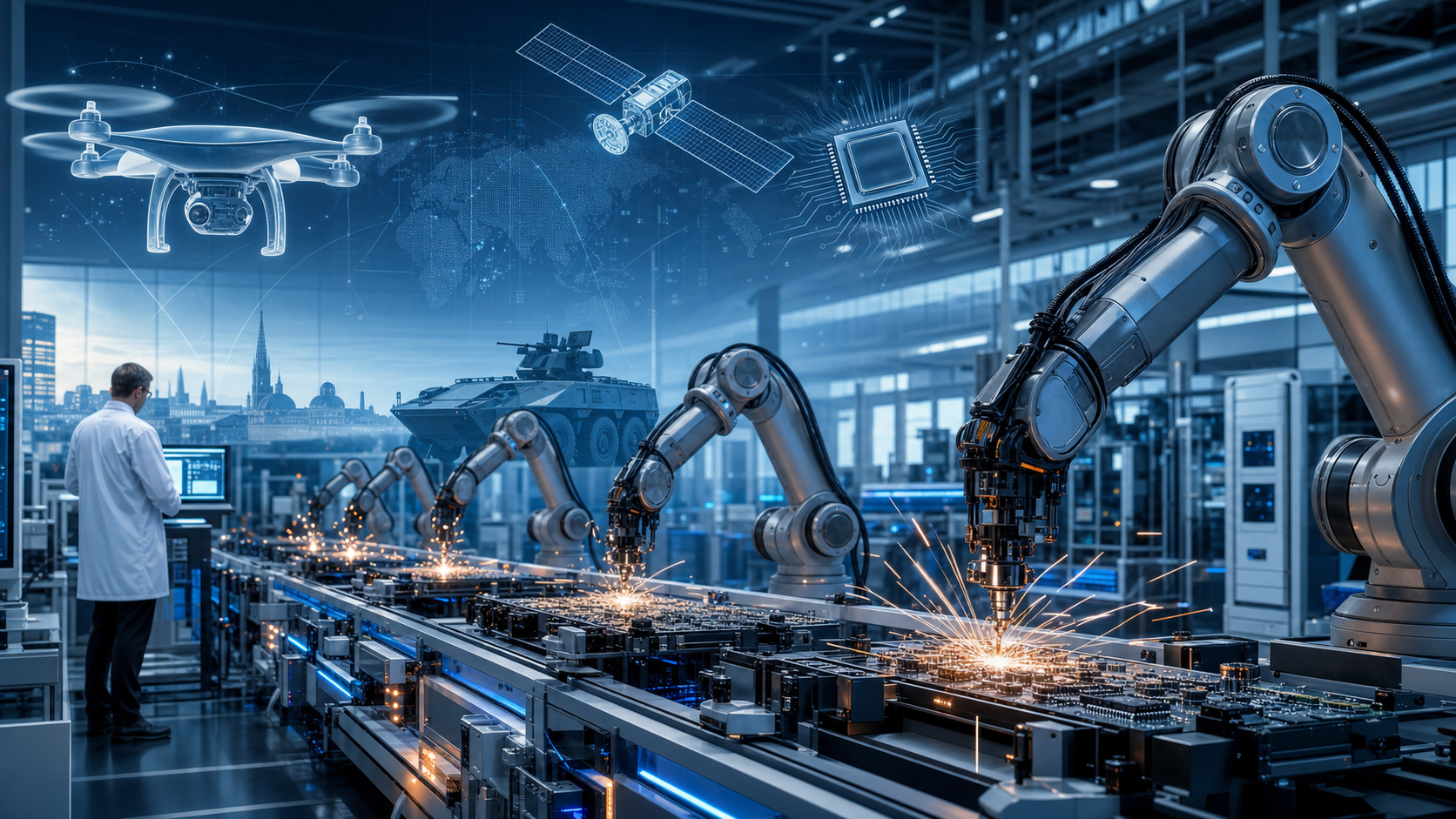
Civilian technology, military applications: That's why Karlsruhe is one of the top centers in the dual-use boom – Image: Xpert.Digital
When the sensor is used for defense: This is how enormously German industry benefits from the “dual-use” boom
Civil or defense? Why German industry is facing its biggest strategic realignment
Far removed from major public debates, civilian production and security-relevant technology are increasingly merging. A new "Dual-Use Atlas" by Prognos AG and Handelsblatt now documents for the first time the enormous scale of this development: Around 3.5 million people in Germany work in sectors whose products – from simple sensors to complex software – can be used for both civilian and military purposes. While traditional economic sectors are under pressure to transform, the so-called security economy is developing into a new driving force in industrial policy. The comprehensive study not only shows how this quiet transformation is affecting the entire country, but also reveals surprising regional winners. Technology hubs like Karlsruhe are suddenly moving to the center of a new, strategic economic power. Read on to find out why today's wrench is tomorrow's security infrastructure – and how the German economic landscape is currently undergoing irrevocable change.
Germany's silent armament of civilian industry: When the wrench becomes part of defense, whether we like it or not
Germany is currently undergoing an industrial policy realignment whose significance can hardly be overstated, even if it is still underestimated in public debate. The new Dual-Use Atlas from Prognos AG, developed in cooperation with Handelsblatt, provides, for the first time, a comprehensive and methodologically sound survey of those economic sectors whose products, technologies, and expertise can be used for both civilian and military or security-related purposes. The result is more than just an academic footnote: around 3.5 million people are employed in sectors that are fundamentally capable of producing dual-use goods, representing almost half of all industrial employment in Germany. Over 43 percent of German industrial production already consists of such goods, ranging from drone components and robotics parts to satellite-based communication systems. These figures illustrate that the boundary between civilian value creation and security-relevant production has long since dissolved in large parts of German industry, without this fact having yet registered in the broader economic policy discourse.
The significance of this development cannot be viewed in isolation, but must be understood within the context of a changing global security architecture. After decades in which German industrial policy focused primarily on civilian export markets, cost efficiency, and global supply chains, the question of strategic resilience is now taking center stage. The atlas reveals that this resilience does not need to be built from scratch, but is already largely present, albeit unevenly distributed across Germany and whose economic significance has not yet been systematically assessed.
The mapping of a hidden economic structure
The methodological approach of the Prognos study is remarkably detailed yet consistently standardized. Its starting point is the EU Dual-Use Goods List, a comprehensive set of rules spanning over two hundred pages, which systematically records products with dual uses and is regulated by the European Union's Delegated Regulation. Prognos deciphered this goods list and, through several intermediate steps, linked it to official classifications in German economic statistics, starting with commodity groups in foreign trade statistics, progressing to production statistics, and finally to the classification of economic sectors. The result of this integration is a reliable estimate of what proportion of employment in individual economic sectors can be classified as dual-use.
A total of 19 sectors from the manufacturing industry and information and communication technology were examined, while upstream and downstream services such as logistics or parts of the cultural and creative industries were excluded due to data availability. The spatial reference point was not the 401 urban and rural districts, but rather the 79 districts of the Chambers of Industry and Commerce, as these represent functional economic and employment areas that extend beyond administrative boundaries and provide a familiar frame of reference for companies. The calculation is based on employees subject to social security contributions as of June 30, 2025, collected in a special analysis by the Federal Employment Agency. It is important to note that the atlas is explicitly not a measuring instrument for actual arms production, but rather a potential indicator showing where technological and industrial prerequisites for expanding security-relevant manufacturing already exist, without necessarily resulting in new orders, revenues, or business models.
Two key figures, one overall picture of economic relevance
To make the regional significance of dual-use tangible, the study uses two complementary indicators. The regional share describes how strongly a region's economic structure is geared towards dual-use industries, i.e., what proportion of total regional employment these industries represent. The German share, on the other hand, measures a single region's contribution to the overall German dual-use employment potential, thus showing the weight a location carries within the national structure. An unweighted arithmetic index is calculated from both indicators and normalized on a scale of zero to one hundred, with the ten highest-ranked regions forming the top tier.
This dual perspective is crucial because high values in both dimensions do not necessarily coincide. Some regions boast enormous absolute employment volumes and thus significantly shape the overall national landscape, even though dual-use development is not particularly dominant within their own broadly diversified economy. Conversely, other regions are comparatively small but exhibit such a high degree of specialization in dual-use-relevant sectors that their economic identity is virtually inseparable from this connection. Only the interplay of these two metrics reveals which locations truly belong to the structurally defining centers of the new security economy.
South, West, East, North: Four faces of the industrial security base
The regional distribution of dual-use potential follows recognizable patterns that reflect the traditional industrial strengths of the individual regions, but present them in a new security policy light. Southern Germany, particularly the areas around Stuttgart, Munich, and Nuremberg, forms the industrial core, where mechanical engineering, automotive engineering, aerospace technology, and electronics are increasingly merging with digital technologies. Beyond these metropolitan areas, the south also exhibits significant potential for development, extending far beyond the well-known flagship regions.
The western part of the country, characterized by the economic regions along the Rhine and Ruhr rivers as well as in Westphalia, primarily delivers mass and volume. Here, a broad industrial base with high absolute employment figures along entire value chains contributes to the national dual-use potential, from basic materials industries to mechanical engineering and industrial services. Eastern Germany, on the other hand, scores less on mass and more on highly specialized clusters: regions such as Dresden, Chemnitz, and eastern Thuringia combine traditional industrial structures with cutting-edge technology, for example in optics or microelectronics, which makes these locations particularly attractive for the future security economy. Finally, the north is characterized by concentrated flagship industries rather than widespread strength, with centers such as Hamburg, Bremen, Kiel, and southeastern Lower Saxony, where automotive engineering, aerospace technology, and maritime security technologies are of particular importance. It is also noteworthy that the study reveals numerous surprises beyond the well-known metropolitan areas: regions with a strong industrial tradition, but less nationwide visibility, have relevant, previously little-noticed points of contact with the dual-use economy.
Karlsruhe as an underestimated pacesetter in security economics
Within this nationwide framework, the Karlsruhe Chamber of Industry and Commerce region occupies a position that, given its public perception as a rather inconspicuous technology hub, is quite surprising. In the nationwide Dual-Use Index, the region ranks eighth among all 79 Chamber of Industry and Commerce districts, placing it among the top ten locations in Germany. Regarding the regional share, i.e., the extent to which its economic structure is geared towards dual-use employment, Karlsruhe ranks eleventh nationwide with a share of 49.5 percent. This means that virtually every second industrial job in the region is related to security-relevant technologies. In terms of the national share, which measures the contribution to overall German dual-use employment, the region achieves 14th place with 1.8 percent, demonstrating that Karlsruhe is not only highly specialized regionally but also a location of substantial importance on a national scale.
The Karlsruhe Chamber of Industry and Commerce region is one of the strongest dual-use locations in Germany:
- Ranked 11th in the regional share of dual-use-capable employment (49.5%)
- Ranked 14th in terms of Germany's share (1.8%)
- Ranked 8th in the nationwide dual-use index
This combination of high specialization and significant size makes Karlsruhe one of the few locations in Germany that performs exceptionally well on both fronts. The underlying economic core of this strength lies in a combination of traditional industrial production and digital systems expertise, typical of southwestern Germany. Karlsruhe has long been considered one of Europe's leading research technology regions, characterized by a close integration of information technology, mechanical engineering, electrical engineering, and applied research. This very combination of hardware expertise and software/ICT knowledge is becoming a decisive competitive advantage in the new security economy, because modern dual-use technologies such as sensors, networked robotics, and satellite-based communication systems are emerging precisely at this interface.
Hub for Security and Defense - Advice and Information

Hub for Security and Defense - Image: Xpert.Digital
The Security and Defence Hub offers expert advice and up-to-date information to effectively support companies and organizations in strengthening their role in European security and defence policy. Working closely with the SME Connect Defence Working Group, it particularly promotes small and medium-sized enterprises (SMEs) that wish to further develop their innovative capacity and competitiveness in the defence sector. As a central point of contact, the Hub thus creates a crucial bridge between SMEs and European defence strategy.
Related to this:
From mechanical engineering to a security platform: Karlsruhe's path to new growth areas
From modular system design to strategic system capability
To fully understand the significance of the Karlsruhe findings, it is worthwhile to examine the industry logic underlying the Dual-Use Atlas. Nationwide, the greatest employment potential in the dual-use sector is concentrated in mechanical engineering, electrical engineering, automotive engineering, and information and communication technologies. These sectors combine key areas of expertise such as sensor technology, software, automation, robotics, communication technology, and drive technologies, which simultaneously serve as the technological foundation for numerous other value chains. They thus form the true backbone of the German dual-use economy, and regions where several of these sectors are strongly represented benefit from a synergistic effect that exceeds the sum of the individual sector strengths.
This very synergistic effect appears to be at work in Karlsruhe. The region doesn't have a single dominant dual-use industry, but rather an ecosystem where industrial manufacturing expertise meets digital systems integration. A sensor used for quality control in an industrial plant can have the same basic architecture as a sensor for disaster relief, critical infrastructure protection, or a military reconnaissance system. This technological interoperability, which extends far beyond the narrow field of traditional arms production, is the very core of what the Dual-Use Atlas describes as an economic opportunity. Companies don't necessarily have to radically change their business models to capitalize on this; instead, they can build on existing expertise and develop it for new fields of application.
Security economics as a future field of industrial policy
The economic policy relevance of this development can hardly be overestimated, especially given the period of structural weakness that large parts of German industry have been experiencing for several years. Traditional growth drivers such as the automotive industry are under considerable pressure to transform, while international supply chains have become more fragile due to geopolitical tensions. In this environment, the dual-use economy offers a perspective for defending existing industrial and technological strengths while simultaneously developing new growth areas, without requiring a complete structural break.
It is important to clarify that dual-use technology is by no means synonymous with the militarization of the economy and innovation. Many of the relevant technologies are originally developed for civilian markets and only later adapted for security-related applications. The focus is therefore less on how new weapons systems are created, but rather on how existing technological capabilities can contribute to increasing societal and economic resilience, whether in protecting critical infrastructure, disaster preparedness, or civil security technology. This very distinction makes the topic relevant even for companies that have traditionally had no contact with the defense industry but nevertheless possess expertise that becomes valuable in a broader security context.
Limits of consideration and methodological caution
Despite the Dual-Use Atlas's informative value, a sober assessment of its limitations is necessary. The study measures employment potential, not the actual production of specific security-relevant goods, actual defense contracts, or real company revenues in this sector. High dual-use employment potential, therefore, does not automatically mean that new value creation will occur in a region in the short term or that new business models will spring up overnight. Actual entry into dual-use markets typically requires significant technological adjustments, the development of regulatory expertise in export control, new networks, and suitable customer and market access. This describes a medium- to long-term development process rather than a short-term, automatic process.
Furthermore, official production and employment statistics often fail to differentiate between civilian, security-related, and military uses of a specific product. The study can therefore identify sectors and regions with corresponding potential, but it cannot specify which particular products individual companies actually manufacture or what these products are actually used for. Data on regional gross value added, research and development activities, or actual security-related company revenues could not be included in the analysis due to a lack of comprehensive availability. The atlas is therefore explicitly intended as a well-founded approach to the economic significance of dual-use products, not as an exact measurement of actual arms production.
What the location advantage means specifically for Karlsruhe
For the Karlsruhe economic region, its top ranking in the overall dual-use index has a number of concrete strategic implications. First, the ranking provides a solid, data-driven basis for regional economic development to specifically target companies from dual-use-relevant sectors, whether established medium-sized enterprises with a purely civilian focus to date or new companies in the security and defense technology sector. Second, the close connection between industrial manufacturing and digital systems expertise opens up access to a growing market for security-relevant applications for Karlsruhe companies, without requiring them to abandon their existing civilian customer base. Third, the ranking signals to potential investors, funding providers, and security-relevant procurement agencies that the region possesses a critical mass of technological substance that extends far beyond isolated areas of expertise.
At the same time, the region should take the study's methodological limitations seriously and not misinterpret the findings as an automatic economic success. The real challenge now lies in translating the identified potential into concrete market access, for example, through targeted networking between companies and the security and defense industry, by building export control expertise, or by adapting existing products to security-relevant requirements. Initiatives such as regional matchmaking platforms for connecting companies with the security and defense industry, as well as publications on entering this sector, indicate that such efforts are already underway.
The bigger story behind the ranking
The Dual-Use Atlas fits into a larger narrative about the realignment of German industrial policy that has been underway for several years. After decades of the peace dividend, in which security policy considerations played a subordinate role in economic planning, the question of strategic resilience is now gaining considerable importance, accompanied by policy decisions such as a national economic security strategy and increased public interest in both civilian and military security. In this context, the Atlas provides, for the first time, a robust, Germany-wide comparable data basis, demonstrating that the necessary industrial base for this realignment already exists in large parts of the country, albeit with very uneven regional distribution and whose strategic significance has not yet been sufficiently recognized.
For regions like Karlsruhe, this represents a dual opportunity: on the one hand, the chance to leverage existing industrial and digital strengths in a new, growing market segment; on the other hand, the responsibility to develop these strengths responsibly and in accordance with the legal framework of export controls and the societal debates surrounding the role of security economics. The coming years will reveal whether regions like Karlsruhe succeed in transforming statistical potential into actual added value, new jobs, and strengthened industrial resilience, or whether the identified potential remains untapped because regulatory hurdles, a lack of networks, or insufficient political will hinder the necessary transformation. The Dual-Use Atlas provides, for the first time, a reliable map on which this development can be tracked in the coming years.
Consulting - Planning - Implementation

Markus Becker
I would be happy to serve as your personal advisor.
Head of Business Development
Chairman SME Connect Defense Working Group
Consulting - Planning - Implementation
Konrad Wolfenstein
I would be happy to serve as your personal advisor.
You can contact me at wolfenstein∂xpert.digital or
Just call me on +49 7348 4088 965 .





