
The end of the old world order: Why free world trade is dead – and who benefits now
Xpert Pre-Release

Available in 27 languages 📢
Prefer Xpert.Digital on GoogleⓘPublished on: July 30, 2026 / Updated on: July 30, 2026 – Author: Konrad Wolfenstein
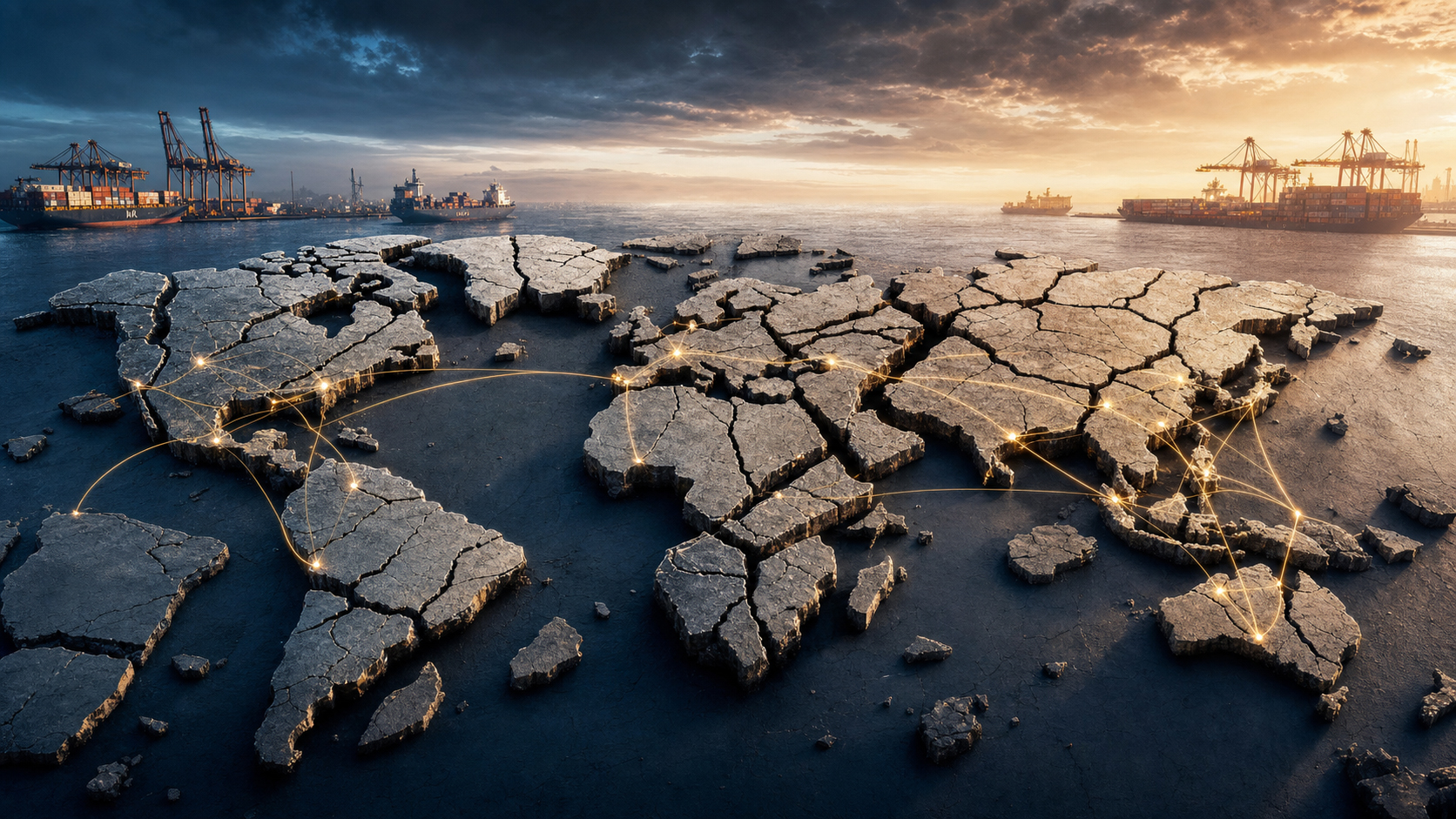
The end of the old world order: Why free global trade is dead – and who benefits now – Image: Xpert-Digital
World Economic Forum warning 2026: Why the biggest global risk is still ahead of us
USA vs. China: How the new economic war is putting our industry in a pincer movement
De-risking instead of globalization: How companies must prepare for global upheaval
The era of carefree globalization is over. Where once free markets, global supply chains, and borderless trade were considered immutable natural laws of economics, a new paradigm now dominates: geoeconomics. Economic interconnections are increasingly being used as geopolitical weapons – from tariffs and export controls to monopolies on rare earths and artificial intelligence. The Global Risks Report 2026 underscores this tectonic shift and warns of a fragmented world order, one that is disintegrating into blocs. For Europe and its export-oriented industries in particular, this means the end of old certainties. Cost efficiency is giving way to political resilience, and states and companies alike must recognize that the trade conflict between superpowers like the US and China is not a temporary crisis, but the new normal. A stark look at the new world order of the economy – and what it means for our future.
The new world economic order: When geopolitics becomes a commodity
Why the era of free world trade is dead – and nobody prepared its grave
Antoine de Saint-Exupéry once wrote that one should not predict the future, but create it. In 2026, this sentence sounds like a silent warning to a global economy that has long relied on open markets, free capital flows, and global supply chains being a law of nature. They never were. They were the result of a historical window that is now noticeably closing. Anyone who looks today at the trade relations between Washington and Beijing, at the fault lines between the transatlantic alliance and the Global South, at the fragmentation of financial systems, recognizes that the global economy is not in a temporary crisis, but undergoing a tectonic transformation of its fundamental architecture.
The break with the old order
For over three decades, globalization was seen as a natural pathway to success. Those who produced sold globally, those who invested did so without borders, and those who needed raw materials found them through tightly integrated international supply chains. This logic has shattered. The World Economic Forum's Global Risks Report for 2026 identifies geoeconomic confrontation as the biggest global risk of the year, jumping eight places in a single year. Two-thirds of the surveyed executives and experts expect a multipolar or fragmented world order in the next ten years, significantly more than the previous year. The message is clear: economic cooperation is increasingly seen as a weapon, no longer as a shared interest.
This development is not an abstract numbers game for economists in ivory towers. It describes how states increasingly view access to semiconductors, rare earth elements, energy, and capital as strategic levers for achieving political goals. Economics and power politics are merging into a single discipline, most aptly called geoeconomics.
How the world is splitting into two speeds
One of the most revealing observations from recent analyses is the picture of so-called K-shaped globalization. While the West is increasingly decoupling from a historically high level of economic interdependence, integration within the Global South is growing rapidly. Countries such as China, India, Saudi Arabia, and the United Arab Emirates are intensifying their economic ties with one another at a pace that Western economies can scarcely keep up with. The result is not a uniform retreat into national fragmentation, but rather a realignment of global trade flows along new geopolitical alliances.
Particularly striking is the decline in so-called geopolitical alignment, that is, the degree to which states align their foreign policy behavior. This indicator has been falling continuously since 2017, has accelerated since 2022, and has experienced another significant downward shift in the last twelve months. Trade integration and cross-border financial flows, especially foreign direct investment, are following this downward trend with some delay, but their impact is unmistakable. The practical consequence: companies that just a few years ago selected global locations purely based on efficiency criteria must now factor political risk premiums into every investment decision.
The ceasefire between the superpowers and its fragility
No event illustrates the new geoeconomic reality more clearly than the trade conflict between the United States and China. After more than a year of escalating tariffs, export controls, and retaliatory measures, the American president and the Chinese leader met in Busan, South Korea, in October 2025 and agreed to a temporary truce. China suspended its export controls on rare earth elements, gallium, germanium, antimony, and graphite, which it had tightened in October 2025, and issued general export licenses that effectively lifted the previously imposed restrictions. Beijing also committed to purchasing substantial quantities of American soybeans over several years and to suspending all retaliatory tariffs and non-tariff countermeasures that had been imposed since March 2025.
Washington retaliated by halving the so-called fentanyl tariffs from 20 to 10 percent and pausing measures against China's maritime and shipbuilding industries for a year. Both sides also established a joint trade council, under whose auspices further tariff reductions for goods worth at least 30 billion dollars each were negotiated in the spring of 2026. However, analysts like Zhiwei Zhang of Pinpoint Asset Management dampened the enthusiasm: the agreed-upon concessions were not significant enough to fundamentally alter the growth forecasts for the Chinese economy.
This fragility of the détente became starkly apparent at the end of February 2026, when the United States Supreme Court declared most of the tariffs imposed by the government invalid, including several against China. It was the administration's biggest legal defeat to date in its trade policy. But instead of retreating, defiance followed: Within hours, the American president announced new special tariffs of ten percent on imports from around the world and threatened a further increase to fifteen percent if the legal situation was not resolved in his favor. China reacted sharply, warning of a new trade war, while simultaneously emphasizing its determination to defend its interests. This pattern—short-term de-escalation followed by renewed legal and political escalation—is likely to shape trade relations between the world's two largest economies for years to come.
The costs of fragmentation are real and measurable
Anyone who believes that geoeconomic tensions are primarily a matter of diplomatic rhetoric is sorely mistaken. Recent analyses by the World Economic Forum put the annual cost of trade and financial fragmentation at up to $307 billion, an amount no longer limited to the immediate rival superpowers but increasingly extending to third countries and neutral economies. Countries that refuse to clearly align themselves with either the Western or the Chinese camp are coming under increasing pressure to take a stand, while at the same time the costs of diversification, duplicated supply chains, and regulatory adaptation are rising.
These figures reveal a fundamental economic paradox of our time. Protectionism is often sold politically as a safeguard for domestic industries and jobs, but in reality, it generates losses in prosperity that ultimately affect all involved, albeit not equally. Financial fragmentation, the splitting of global capital flows along geopolitical lines, increases the cost of credit, hinders cross-border investment, and forces companies to create expensive redundancies in their production networks. The International Monetary Fund warns in its latest outlook on the global economy that these structural shifts will dampen global growth potential in the medium term, even if individual economies may benefit in the short term from the redirection of trade flows.
Our global industry and economic expertise in business development, sales and marketing

Our global industry and economic expertise in business development, sales and marketing - Image: Xpert.Digital
Industry focus areas: B2B, digitalization (from AI to XR), mechanical engineering, logistics, renewable energies and industry
More information here:
A thematic hub offering insights and expertise:
- Knowledge platform covering global and regional economies, innovation and industry-specific trends
- A collection of analyses, insights, and background information from our key areas of focus
- A place for expertise and information on current developments in business and technology
- A hub for companies seeking information on markets, digitalization, and industry innovations
Europe's dilemma between the USA and China: Strategies for German SMEs in uncertain times
Rare earths as a geopolitical weapon
Few commodity sectors illustrate the fusion of economics and power politics as clearly as the market for rare earths and critical minerals. China still controls the majority of global production and, above all, the processing of these materials, which are essential for semiconductors, electric motors, wind turbines, and defense technology. When Beijing drastically tightened its export controls in October 2025, Western industrialized nations were suddenly made acutely aware of just how vulnerable their high-tech and defense sectors truly are. The subsequent suspension of these controls under the trade agreement was less a sign of a willingness to cooperate than a tactical retreat that could be reversed at any time should the political climate deteriorate again.
For Europe, and especially for Germany's export-oriented industry, this dependence is of strategic importance. Anyone producing electric motors, battery cells, or wind turbines today is at the end of a supply chain whose most critical links lie outside their control. Diversification strategies, such as building their own refining and recycling capacities or forging new partnerships with resource-producing countries in Africa, Australia, or Latin America, are no longer an option, but an economic necessity. The question is no longer whether Europe should become more independent, but how quickly this can be achieved, given the long lead times in the mining and processing sectors.
Europe's dilemma between two blocs
The European Union finds itself in a strategically awkward position. Economically intertwined with China and traditionally tied to the United States in security policy, it must navigate a world in which both partners increasingly expect Europe to take a clear stance. The Union's own foreign policy options remain limited by the national self-interest of its member states, which regularly puts Brussels in a weaker position in negotiations with Washington and Beijing than the combined economic size of the continent would otherwise allow.
At the same time, a creeping disintegration is emerging within the Western world itself. Trade barriers, technological export controls, and investment screening are increasing even between traditionally allied economies—a trend that would have been unthinkable a decade ago. German industry, historically heavily reliant on the Chinese market as well as American technologies and investments, is feeling this pincer movement particularly acutely. Companies in mechanical engineering, the automotive industry, and the chemical sector are increasingly reporting the need to align their global structures according to the principle of "China plus one," or even to completely separate production lines for different geopolitical blocs. This approach, known as de-risking—a deliberate reduction of one-sided dependencies without a complete withdrawal from a market—has now become an integral part of the strategic planning of both medium-sized and large companies.
Artificial intelligence as a new geopolitical power factor
Alongside traditional commodity and trade policies, a new area of conflict is moving to the forefront of geoeconomic debate: control over artificial intelligence and the semiconductor infrastructure necessary to support it. The Global Risks Report documents a dramatic increase in concerns about the adverse consequences of AI, a risk that has jumped from thirtieth to fifth place in the ten-year forecast. This fear relates not only to job market displacement and social upheaval, but increasingly also to the geopolitical dimension: whoever controls the most powerful chips, the largest data centers, and the most advanced models gains a strategic advantage that influences military, economic, and diplomatic power alike.
The US has systematically tightened its export controls on high-performance semiconductors from China in recent years, while Beijing is attempting to achieve technological independence in chip manufacturing through massive state investment programs. This race for technological sovereignty will likely shape the global economic order of the coming decade more profoundly than traditional tariff disputes, because it affects not only trade flows but also the fundamental architecture of future value creation.
Growth risks and the return of old ghosts
The World Economic Forum's two-year risk outlook reveals a remarkable return of classic macroeconomic concerns. Both the risk of recession and the threat of inflation have risen by eight places compared to the previous year, while fears of a bursting asset bubble have increased by seven places. This development is no coincidence, but rather a direct consequence of geoeconomic fragmentation: higher tariffs drive up import prices and thus inflation, while uncertainty about future trade rules delays companies' investment decisions and thus dampens growth potential.
At the same time, the debt levels of many major economies continue to rise, while geopolitical tensions undermine the capacity for international coordination of economic shocks. Institutions such as the International Monetary Fund and the United Nations, once central forums for joint crisis management, are losing influence because the major powers increasingly favor bilateral or bloc-based solutions. Half of the experts surveyed by the World Economic Forum expect a turbulent or stormy global situation over the next two years, and another third anticipate at least continued uncertainty. Only a vanishingly small proportion expect the situation to calm down—a sentiment that reflects the deep-seated unease among policymakers.
What this means for companies and location decisions
For companies operating internationally, this fundamentally changes the basis of strategic planning. Where cost efficiency and economies of scale were once the dominant criteria for location decisions, geopolitical resilience, regulatory predictability, and the safeguarding of critical supply chains now take center stage. Nearshoring, i.e., the relocation of production steps to geographically or politically closer locations than the sales market, and friendshoring, the preferred cooperation with politically allied states, are no longer niche concepts but shape the actual investment decisions of multi-billion-dollar corporations.
At the same time, this period of upheaval also presents opportunities. Countries of the Global South that are becoming more integrated into regional value chains are gaining economic importance and increasingly attracting investments that would previously have naturally flowed to established industrialized nations. For export-oriented SMEs from Germany and other European economies, this means that the focus of geographical expansion strategies must shift: away from a sole focus on China and the United States, towards broader diversification across several growth regions such as Southeast Asia, the Middle East, and parts of Africa.
A view without illusions
The geoeconomic confrontation, which the Global Risks Report 2026 identifies as the year's greatest risk, will not resolve itself in the foreseeable future. The structural interests of the major powers involved are too deeply entrenched, the decoupling of technological ecosystems is too advanced, and the political rhetoric in the affected countries has already hardened too much. The truce between Washington and Beijing may offer short-term relief, but its one-year duration and the ongoing legal and political repercussions demonstrate just how fragile this situation truly is.
What emerges from this is not a return to the old world order, but rather the necessity of actively shaping a new reality instead of passively enduring it. This is precisely the true lesson of Saint-Exupéry's ideas: those who want to not merely predict but actively shape the future of the global economy must invest today in diversification, technological sovereignty, and robust international partnerships. The companies, regions, and states that embrace this transformation as a challenge to shape will be the winners of the coming decade. Those who continue to hope for a return to the old, seamless globalization risk being overtaken by a global economy that is already undergoing a fundamental reorganization.
🎯🎯🎯 Data-driven B2B industry hub as a quasi-in-house solution

The quasi-in-house solution: How Xpert.Digital closes operational gaps in B2B marketing and sales – Smart Content-Driven Business - Image: Xpert.Digital
Xpert.Digital is a data-driven B2B industry hub led by Konrad Wolfenstein . The company acts as an external, quasi-in-house solution for industrial partners, closing operational gaps in marketing, content, and sales – without requiring additional resources on the client side.
More information here:
Your global marketing and business development partner
☑️ Our business language is English or German
☑️ NEW: Correspondence in your native language!

Konrad Wolfenstein
I and my team are happy to be available to you as your personal advisor.
You can contact me by filling out the contact form here [email protected]:or simply call me at +49 7348 4088 965. My email address is
I'm looking forward to our joint project.










