
How intermodal logistics shapes our lives: The hidden nerve centers of the economy
Xpert Pre-Release

Available in 27 languages 📢
Prefer Xpert.Digital on GoogleⓘPublished on: August 1, 2026 / Updated on: August 2, 2026 – Author: Konrad Wolfenstein
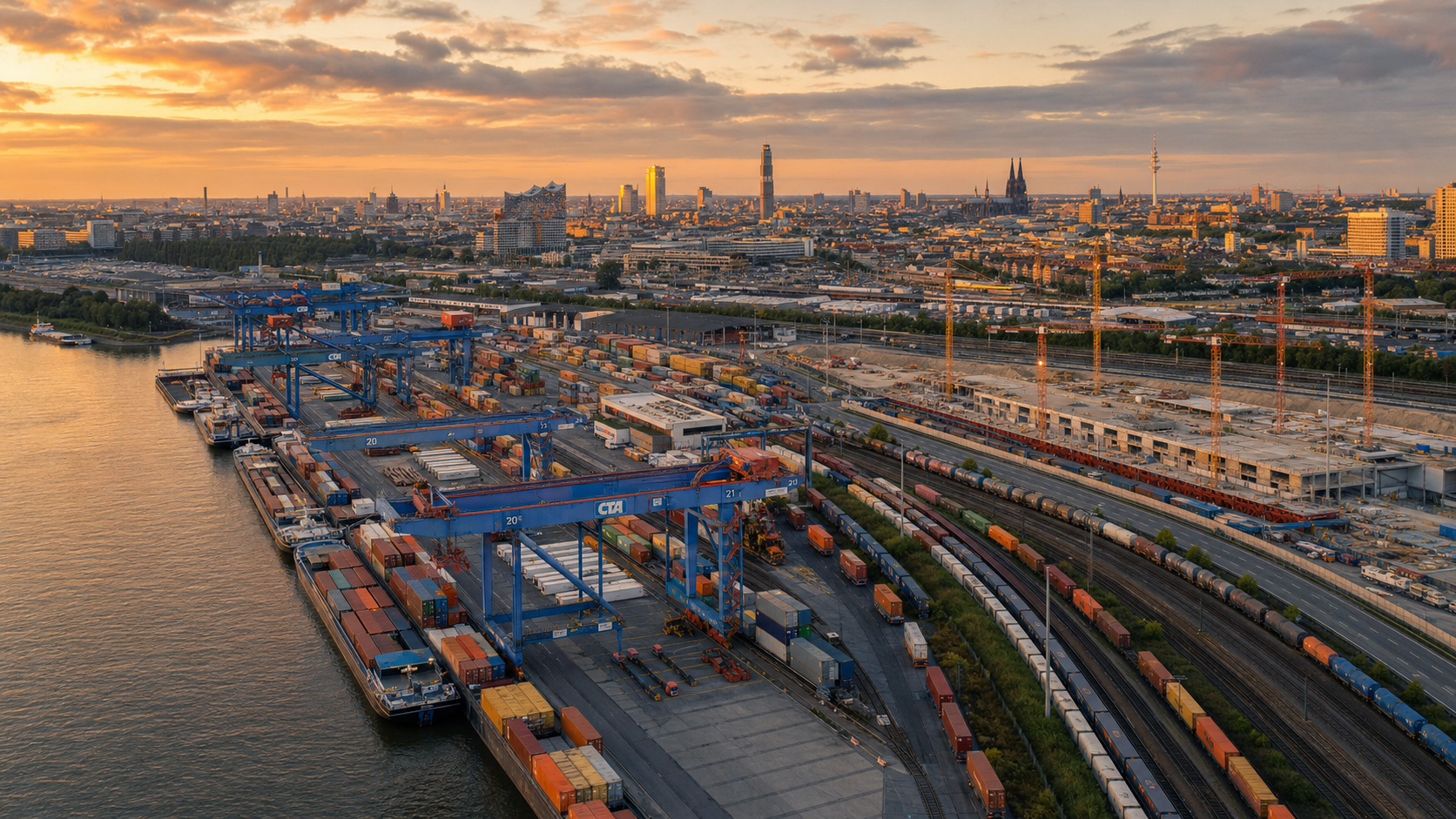
How intermodal logistics shapes our lives: The hidden nerve centers of the economy – Creative image on the topic, with AI: Xpert.Digital
Forget algorithms: Why concrete and steel must save global supply chains
Mega-projects out of control: Why Europe's infrastructure is stuck in a constant gridlock
In a world where supply chains are often perceived solely as digital networks, freight rates, and algorithms, the success of global trade ultimately hinges on hard physical reality: concrete, steel, and gigantic infrastructure projects. So-called intermodal logistics—the seamless integration of rail, road, and waterway—promises a green, efficient, and resilient future for freight transport. However, the reality behind this vision is complex, characterized by exploding costs in the billions, geopolitical dependencies, and decades-long construction delays.
Whether it's the expansion of the Port of Duisburg into the central European hub of the new Silk Road, the construction of the world's longest railway tunnel under the Brenner Pass, or the visionary Fehmarn Belt Fixed Link, which will connect Scandinavia more closely to the continent: these mega-projects are the true bottlenecks of our economy. They impressively demonstrate how strongly economic ambitions, protracted national planning bureaucracy, and unforeseen geological challenges are intertwined.
The following analysis illuminates the economic logic and strategic significance behind these gigantic investment sums. It demonstrates why the seamless transfer of a simple freight container from ship to rail is far more than a technical exercise – and why companies would be well advised to factor the massive delays in the expansion of trans-European transport networks into their long-term planning from the outset.
Intermodal logistics: When concrete and steel decide the future of supply chains
Large construction projects are generally considered infrastructure issues, but they have long since become one of the most important levers of the global trade system. The integration of rail, road, and waterways into seamless transport chains, known as intermodal logistics, depends directly on multi-billion-euro construction projects whose completion often takes decades and whose costs regularly spiral out of control. Anyone who wants to understand why European supply chains are so vulnerable and yet so adaptable today must look at tunnel boring machines, port basins, and railway lines, not just algorithms and freight rates.
What intermodal transport really means
Intermodal transport refers to the transport of goods in one and the same loading unit, such as a container or swap body, via at least two different modes of transport, without the goods themselves needing to be repacked. A container thus travels from sea to rail and from there to truck without the contents ever being handled. This seemingly simple idea has revolutionized global logistics since the 1960s because it drastically reduces handling costs and makes transport chains more predictable.
The economic appeal of the system lies in combining the respective strengths of the different modes of transport. Roads offer flexibility across a wide area, rail provides energy efficiency and capacity over long distances, and waterways score points with low costs for very large volumes. However, this combination only becomes economically viable if the interchange points between the systems function smoothly. This is precisely where the major construction projects come into play, because without efficient terminals, bridges, and tunnels, the theory of multimodality remains a pretty sketch on paper.
Terminals as nerve centers of goods flows
The Port of Duisburg exemplifies how powerfully individual construction projects can reshape entire regions economically. As the world's largest inland port, Duisburg has transformed itself from a coal transshipment point into a central hub for European-Asian trade. The Duisburg Gateway Terminal, a trimodal container terminal built on the site of the former coal island, was constructed there in cooperation with international partners from China, Switzerland, and the Netherlands at a cost of approximately one hundred million euros. Once fully operational, it is expected to reach an annual capacity of around 850,000 standard containers. The facility features six gantry cranes, twelve tracks for block trains, each 730 meters long, five loading bays for trucks, and three berths for inland vessels.
The project's ownership structure is noteworthy. Besides the Port of Duisburg itself, the Chinese company Cosco Shipping Logistics, the Swiss combined transport operator Hupac, and the Dutch HTS Group each hold significant stakes. This international investment in a German infrastructure project illustrates how closely economic interests along the new Silk Road are intertwined with European hinterland connections. Up to one hundred freight trains per week are planned to run between Duisburg and China, supplemented by rail connections to Eastern and Southeastern Europe and inland waterway services to the North Sea ports. The resulting reduction in road traffic is estimated at over sixty million tons annually – an effect that simply would not occur without this physical infrastructure.
The accompanying expansions also speak for themselves. In 2023 alone, the port operator invested around one hundred million euros in its infrastructure. A significant portion of this went into a new, nearly eleven-meter-wide bridge, which will provide exclusive access to the terminal. More than 11,000 square meters of land had to be filled in for its construction, requiring the movement of approximately 200,000 cubic meters of sand, earth, and other materials. In addition, KfW IPEX-Bank provided the Port of Duisburg with a further forty-five million euros to finance warehouses and port facilities – a move that underscores the strategic importance of the location for the core European network of trans-European transport networks.
When mountains become bottlenecks
No other European construction project illustrates the tension between political ambition and engineering reality as clearly as the Brenner Base Tunnel between Austria and Italy. As part of the railway axis between Berlin and Palermo in the so-called Scandinavian-Mediterranean core corridor of the European Union, the world's longest underground rail tunnel, at 55 kilometers, is intended to shift transalpine freight traffic from road to rail. The project's history is also a history of systematic miscalculations. When the first concrete plans began in the mid-2000s, estimates put construction costs between 4.5 and 12 billion euros, with the European Union expected to contribute a maximum of 900 million euros. The initial commissioning was planned for 2016, later postponed to 2028.
Today, more than two decades after planning began, the tunnel is not expected to be completed until 2032, at least sixteen years later than originally planned. The latest total costs are around €10.5 billion, a good forty percent higher than previous estimates. The main reasons cited are increased energy and construction material prices, but this masks a fundamental problem with major transalpine projects: namely, the enormous geological uncertainty involved in tunneling through unstable rock, as well as the complex bilateral coordination between two countries with differing planning cultures. Financing is shared between Austria, Italy, and the European Union, with the EU having pledged more than €1.6 billion in co-financing for the construction phase until completion.
The question of the approach routes is particularly revealing for the German economy. While construction work on the Austrian and Italian sides is now well advanced, a finalized route for the so-called Brenner northern approach from Munich to the Austrian border doesn't even exist yet. Deutsche Bahn now estimates planning and construction costs of around €8.57 billion for this section, plus a risk buffer for inflation and unforeseen costs of a further €7.6 billion. This threatens a scenario in which the most expensive tunnel in European transport history is completed, while its German connection doesn't follow until the 2040s. For companies that depend on reliable rail corridors between Germany and Italy, this means a structural waiting period of almost twenty more years, during which the capacity bottlenecks of the existing Brenner line will remain unresolved.
An underwater connection is changing the map of the North
Further north, the Fehmarn Belt Fixed Link is a project that will fundamentally change the geographical logic of European freight transport between Scandinavia and Central Europe. The approximately 18-kilometer-long immersed tunnel between the German island of Fehmarn and the Danish island of Lolland is considered the longest road and rail tunnel of its kind in the world. Unlike the Brenner Base Tunnel, it does not involve drilling through rock; instead, prefabricated concrete elements are lowered to the seabed and connected – a method in which Denmark already has experience from previous crossing projects.
The originally planned completion date of 2029, after a construction period of eight and a half years, is now also subject to change; a final, revised overall schedule is not yet available. Nevertheless, the recent approval of a specialized vessel for the controlled lowering of the first tunnel elements marks a significant milestone, after the project had previously been plagued by delays. From an economic perspective, the tunnel will replace a ferry connection, which currently involves waiting times and capacity limitations, with a continuous, weather-independent fixed link for road and rail. This will create new opportunities for intermodal transport, which combines truck and rail freight, because turnaround times for vehicles and rolling stock will become more predictable, and dependence on ferry schedules will be eliminated. In the long term, the connection is intended not only to shorten transport times but also to increase the resilience of goods flows between Scandinavia and the European continent – an aspect that has become even more important since the supply chain disruptions of recent years.
LTW Intralogistics Solutions

LTW Intralogistics – Engineers of Flow - Image: LTW Intralogistics GmbH
LTW offers its customers not individual components, but integrated complete solutions. Consulting, planning, mechanical and electrotechnical components, control and automation technology, as well as software and service – everything is networked and precisely coordinated.
In-house production of key components is particularly advantageous. This allows for optimal control of quality, supply chains, and interfaces.
LTW stands for reliability, transparency, and collaborative partnership. Loyalty and honesty are firmly anchored in the company's philosophy – a handshake still means something here.
Related to this:
Strategic location decisions: What companies need to know about delays in major projects
Political framework and the limits of planning
These individual projects are not isolated construction projects, but rather building blocks of the trans-European transport network, with which the European Union has been attempting for decades to create a coherent core network of rail, road, and waterway corridors. The European Court of Auditors has repeatedly found in its special reports that while European funding for intermodal freight transport has committed considerable resources for many years, the effectiveness of this funding remains limited as long as Member States set different priorities and national approval procedures delay implementation. Eight major transport projects in the European Union are currently experiencing significant delays and cost overruns; the Brenner Base Tunnel is merely the most prominent example of a structural pattern.
The German Master Plan for Rail Freight Transport, jointly developed by the Federal Ministry, the rail industry, and industry associations, clearly identifies the core problems: Pre- and post-carriage, as well as freight handling at terminals, are considered the biggest cost drivers in intermodal transport, because every change of transport mode means time, money, and an additional risk of disruption. The standardization of swap bodies at the international level is described as a fundamental prerequisite for a functioning, intelligently networked transport system, as is the rapid, bottleneck-oriented expansion of the rail network along the corridors important for freight transport. The necessary capacity expansion at the network's major hubs is considered just as essential as the technical adaptation of the signaling and safety technology for long freight trains.
The economic logic behind the billions
From an economic perspective, the benefits of such construction projects cannot be measured solely by construction costs; they must be weighed against the external costs of the existing system. Every ton of freight shifted from truck to rail or inland waterway reduces road wear, accident risk, noise pollution, and greenhouse gas emissions. Using Duisburg as an example, it is estimated that the shifted freight flows could save the equivalent of over sixty million tons of CO2 annually, along with the associated external costs of road traffic. This is a scale that justifies political support programs such as the German funding guidelines for combined transport.
At the same time, the cost development of the Brenner Base Tunnel exemplifies how severely such major projects suffer from the so-called optimism bias, i.e., the systematic underestimation of costs and construction times during the planning phase. From the initial cost estimate of €4.5 billion in 2002 to the current forecast of €10.5 billion, the projected amount has more than doubled, while completion has been delayed by more than a decade and a half. This experience is not unique to Germany or Austria, but rather a globally observable pattern in tunnel, bridge, and high-speed rail projects, which has been documented in the specialist literature for years. For companies that base long-term location and investment decisions on such infrastructure promises, this creates a significant planning risk, because the actual date of the capacity expansion is repeatedly pushed back.
Geopolitics in a shipping container
An often underestimated aspect of intermodal logistics is its geopolitical dimension. The involvement of Chinese state-owned enterprises like Cosco Shipping Logistics in the Duisburg Gateway Terminal and other multimodal logistics facilities in Chongqing, through a joint investment vehicle with the port operator PSA International, demonstrates that terminals are now also viewed as instruments of strategic influence along the Belt and Road Initiative. For Duisburg, the close connection to the Chinese rail corridors means economic growth, but at the same time entails a dependence on political developments between Europe and China, which have noticeably deteriorated in recent years.
At the same time, the repurposing of the former Duisburg coal island illustrates how closely intermodal logistics is linked to the energy transition. The decline in coal handling as a result of Germany's coal phase-out has created economically viable open spaces that are now being used for the booming container traffic with Asia. New approaches, such as the development of storage capacities for tank containers powered by green energy at the same location, also demonstrate that large logistics hubs are increasingly taking on multiple functions and evolving from mere transshipment points into hubs for the energy transition.
Who pays when concrete becomes more expensive?
The financing structures of the projects discussed reveal a recurring pattern of core public funding, European co-financing, and private or semi-public capital. For the Brenner Base Tunnel, Austria and Italy each bear the majority of the costs equally, while the European Union provides significant but limited subsidies over several funding periods. For the Duisburg terminal, a separate investment and operating company was established, in which the port operator and three international logistics partners hold stakes. This distributes the risk among several parties, while simultaneously ensuring that entrepreneurial interests from multiple countries are incorporated into the terminal's strategic direction.
This mixed financing model is economically justifiable because purely public financing would be politically unfeasible given the immense sums involved, while purely private financing would hardly be attractive enough considering the long amortization periods and macroeconomic externalities. At the same time, this structure complicates swift implementation, as every cost increase must be renegotiated between the parties involved, as demonstrated by the repeated renegotiations of the cost-sharing agreement for the Brenner Base Tunnel. Furthermore, the recent financing commitment of €45 million by KfW IPEX-Bank for the Port of Duisburg – explicitly justified by the site's importance for the European core network – shows that state-owned development banks are increasingly acting as stabilizing financing partners for strategically important infrastructure when private capital markets alone are insufficient.
Between delay and necessity
A central paradox of intermodal infrastructure policy lies in the fact that while the necessity of these projects is hardly disputed, their implementation regularly fails due to the realities of complex permitting processes, geological uncertainties, and shifting political priorities. While only a few kilometers of construction remain on the Italian side of the Brenner Base Tunnel, the final designation of the approach route on the German side is still pending – a decision that was only recently submitted to the Bundestag for debate. This asymmetry between the participating states means that investments worth billions in the main tunnel can only realize their full economic impact with considerable delay, because the weakest link in the chain limits the overall benefit of the system.
A similar principle applies to any network of terminals, tunnels, and bridges. The economic value of an individual construction project fundamentally depends on how well it is integrated into a functioning overall system. A state-of-the-art terminal without adequate rail connections to the hinterland remains economically underutilized; a completed Alpine tunnel without efficient approach lines cannot deliver on its capacity promise. This interdependence makes it clear why isolated national planning decisions in a cross-border transport system systematically lead to inefficiencies and why stronger European coordination, as repeatedly urged by the European Court of Auditors, would be economically sound—but remains politically difficult to implement.
A look at the coming years
For companies planning their supply chains for the long term, this analysis leads to a sobering realization: The noticeable capacity improvements resulting from the major projects described here will largely only take effect in the 2030s and, in some cases, not until the 2040s, while the current bottlenecks in transalpine traffic, along the Rhine corridors, and at the North European straits will persist in the short term. Anyone making strategic location decisions today for distribution centers, terminals, or production facilities should explicitly incorporate these long-term horizons into their planning, instead of relying solely on current schedules and capacity commitments.
At the same time, the ongoing construction work on the Rhine, Brenner, and Fehmarn Belt demonstrates that, despite all the delays, Europe remains committed to its strategic focus on a more interconnected, multimodal transport infrastructure. The combination of growing international trade, political pressure to shift traffic in line with climate targets, and the progressive development of digital control systems for terminals and rail networks suggests that the economic importance of intermodal transport chains will continue to increase in the coming decades – even if, as the examples presented here vividly illustrate, the path to achieving this remains bumpy, expensive, and considerably longer than originally planned.
Consulting - Planning - Implementation

Konrad Wolfenstein
I would be happy to serve as your personal advisor.
You can contact me at wolfenstein∂xpert.digital or
Just call me on +49 7348 4088 965 .
Your container high-bay warehouse and container terminal experts

Container terminal systems for road, rail and sea transport in the dual-use logistics concept of heavy-lift logistics - Creative image: Xpert.Digital
In a world marked by geopolitical upheavals, fragile supply chains, and a new awareness of the vulnerability of critical infrastructure, the concept of national security is undergoing a fundamental reassessment. A state's ability to guarantee its economic prosperity, the provision of essential goods and services to its population, and its military capability increasingly depends on the resilience of its logistical networks. In this context, the concept of "dual-use" is evolving from a niche category of export control to a broader strategic doctrine. This shift is not merely a technical adjustment but a necessary response to the "paradigm shift" that demands a profound integration of civilian and military capabilities.
Related to this:










