

Blog/Portal for Smart FACTORY | CITY | XR | METAVERSE | AI | DIGITIZATION | SOLAR | Industry Influencer (II)

Industry Hub & Blog for B2B Industry - Mechanical Engineering - Logistics/Intralogistics - Photovoltaics (PV/Solar)
For Smart FACTORY | CITY | XR | METAVERSE | AI | DIGITIZATION | SOLAR | Industry Influencers (II) | Startups | Support/Consulting

Business Innovator - Xpert.Digital - Konrad Wolfenstein
More information here

Available in 27 languages 📢

Prefer Xpert.Digital on Googleⓘ


⭐️ Sino Cooperation

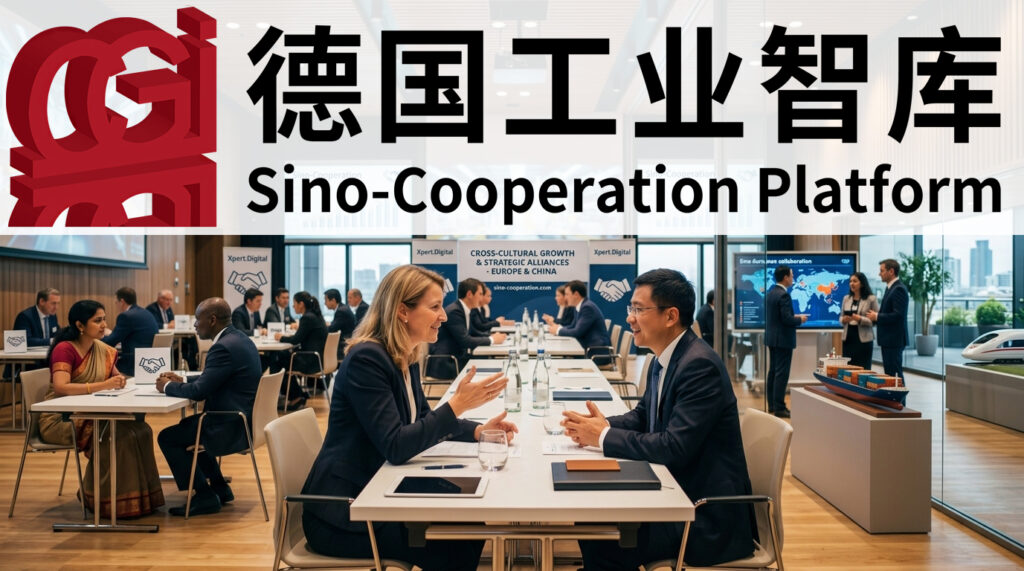
Sino-Cooperation is a platform based in China and Germany


Sino-Cooperation is a platform that promotes exchange and cooperation between German and Chinese companies, especially through events, digital formats and an online cooperation exchange for market entry and partnerships.


➡️ Over 250K subscribers: The unique media channel in China focusing on the topic "Made in Germany".


➡️ Over 5.2K members on the Sino Cooperation platform.


➡️ Over 200 trade associations: Close links with over 200 industrial trade associations.


Wei Zhang

Wei Zhang

I would be happy to serve as your personal advisor.


• Contact: Wei Zhang

• Email: [email protected]

• Tel: +49 176 914 779 98

• sino-cooperation.com


  • Oversized toys? Hype vs. reality: Why China's robotics industry relies on welders instead of humanoids

    ▶️ Oversized toys? Hype vs. reality: Why China's robotics industry relies on welders instead of humanoids

    The hype surrounding humanoid robots often overshadows the true economic revolution in Chinese industry. | While humanoid machines mostly remain research objects, a dramatic labor shortage is driving automation forward. | | China's focus is shifting away from flashy toys toward specialized, highly productive welding robots. | | This technological pragmatism solves real bottlenecks in an aging society with a 237 million labor shortage. | Industrial scaling only succeeds where technological maturity and clear economic benefits coincide. | Western companies should be guided by the necessity of demanding jobs, not by media trends. | True innovation means using technology in a socially responsible way, rather than simply replacing humans. | Market data clearly demonstrates that the economic substance currently lies with classic, specialized industrial robots. | Industrial dominance in welding solutions shows how strategic planning trumps mere hype in the long run. | Learn at xpert.digital why pragmatic automation is crucial for your global competitiveness. [...]

    ▶️ Learn more here


    German precision meets Chinese speed: Why industrial negotiations fail even though both sides want to win together

    ▶️ German precision meets Chinese speed: Why industrial negotiations fail even though both sides want to win together

    German industrial companies in China are encountering a radically accelerated market environment where traditional German thoroughness is often misunderstood as a hindrance. | Learn why the combination of precision and speed is the key to competitive advantage. | Many negotiations fail due to differing economic logics, rather than cultural differences. | We shed light on why referring to the "best price" often spells the end of cooperation in China. | Learn how to structure complex proposals in multiple stages to combine technical diligence with the necessary dynamism. | Price negotiations are not an attack, but a strategic opportunity to demonstrate value through measurable benefits. | Convert engineering hours into tangible economic benefits to close trust gaps with Chinese decision-makers. | Success in China requires professional stakeholder management and an understanding of individual decision-making processes within the company. | Utilize hybrid models to successfully reconcile planning certainty with market adaptation. | With xpert.digital, forge a robust industrial partnership that perfectly combines German quality and Chinese market logic. [...]

    ▶️ Learn more here


  • Trust instead of cheap: Why Chinese B2B SMEs are failing one after another in the West

    ▶️ Trust instead of cheap: Why Chinese B2B SMEs are failing one after another in the West

    Chinese B2B companies often fail in the European market because they underestimate the strategic value of trust compared to quick sales. Traditional lead generation, with a success rate of only 2 to 3 percent, proves inefficient for complex investment decisions. | | The "invisibility trap" blocks market entry, as German buyers seek reliable partners rather than short-term price advantages. | A fundamental misconception lies in transferring B2C consumer rules to the risk-averse B2B industrial environment. | | Western decision-makers prefer brands that can guarantee security, regulatory compliance, and long-term availability. | | Many Chinese suppliers struggle with an image that has not yet been translated from product quality to brand perception. | | Sustainable success requires building genuine expertise through a consistent presence and local integration within the target industry. | Recommendations from industry peers carry significantly more weight than aggressive cold calling or large-scale advertising campaigns. The transformation from a mere product exporter to an established, trusted brand is the only viable path for sustained market participation on xpert.digital. | Only through long-term investment in reputation and local service quality can the dual invisibility in the competitive landscape be permanently overcome. [...]

    ▶️ Learn more here


    Global Market Development: Why Marketing and Sales Work Completely Differently in the USA, China, and Germany

    ▶️ Global Market Development: Why Marketing and Sales Work Completely Differently in the USA, China, and Germany

    Learn why marketing and sales function fundamentally differently in Germany, the USA, and China. | Discover how salary differences in business development reflect economic cultures. | Compare the high compensation in the USA with the German focus on engineering. | Analyze the WeChat paradox and why Western B2B strategies often fail in China. | Understand how WeChat, as a digital operating system, dominates the entire Chinese market. | Learn how the digital "guanxi" logic has transformed the way business relationships are built in the Far East. | | Recognize the limitations of regulatory and cultural export opportunities for the Chinese playbook. | | Learn why European data protection regulations restrict the use of Chinese methods. | | Learn how your company can leverage the strengths of different value creation logics. | Conduct a thorough analysis of what your salary says about the global value of your work. [...]

    ▶️ Learn more here


  • Humanoid robots: The next electric car revolution – China's strategy and ruthless billion-dollar poker game for robot supremacy

    ▶️ Humanoid robots: The next electric car revolution – China's strategy and ruthless billion-dollar poker game for robot supremacy

    China's gigantic multi-billion-dollar gamble is driving hundreds of startups into humanoid robotics, repeating the electric car pattern. | Government subsidies and massive funding rounds are inflating a speculative bubble before market-ready products even exist. | Technologically, humanoid robots are 20–100 times more sophisticated than cars, dramatically increasing the risk. | Experts expect a brutal shakeout, leaving only a few well-capitalized giants. | The capital winter in robotics is likely to be shorter but more intense than in electric cars. | Advances in large AI models are accelerating development but do not change the physical challenges. | Low regulatory hurdles in China allow many new entrants but make quality assessment difficult. | Overcapacity and a ruinous price war could lead to massive losses and bankruptcies. | For Western competitors, the window of opportunity for technological catch-up is shrinking significantly. | Those who understand the pattern can react strategically and seize opportunities in the coming consolidation. [...]

    ▶️ Learn more here


    From demonstration to value creation: WAIC 2026 and the race for true AI delivery capability

    ▶️ The WAIC 2026 and the race for true AI delivery capability: From demonstration to value creation

    Small, highly specialized consultancies outperform large firms in the operational implementation of German-Chinese industrial projects. | Guanxi and verified networks are more crucial for SMEs in China than institutional prestige. | Boutique models offer faster decisions and direct contacts instead of lengthy hierarchies. | Careful partner verification minimizes IP risks and prevents costly mismatches. | A focus on Industry 4.0 enables deep technical market understanding instead of superficial industry reports. | Bidirectional bridging activities connect German SMEs with Chinese growth players in a credible and practical way. | German Chambers of Commerce Abroad (AHKs) and large consultancies remain important for regulatory compliance and major projects, but are often not scaled appropriately for SMEs. | For medium-sized manufacturers, operational depth, curated matches, and measurable cooperation successes count more than expensive reports. | Platforms like Sino-Cooperation deliver concrete matches, delegations, and long-term connections instead of generic market descriptions. Those who want to succeed in China need specialized, action-oriented partners, not just a good reputation. [...]

    ▶️ Learn more here


  • Why small specialists in German-Chinese business make the big machines look outdated

    ▶️ Why small specialists in German-Chinese business make the big companies look outdated

    Small, highly specialized consultancies outperform large firms in the operational implementation of German-Chinese industrial projects. | Guanxi and verified networks are more crucial for SMEs in China than institutional prestige. | Boutique models offer faster decisions and direct contacts instead of lengthy hierarchies. | Careful partner verification minimizes IP risks and prevents costly mismatches. | A focus on Industry 4.0 enables deep technical market understanding instead of superficial industry reports. | Bidirectional bridging activities connect German SMEs with Chinese growth players in a credible and practical way. | German Chambers of Commerce Abroad (AHKs) and large consultancies remain important for regulatory compliance and major projects, but are often not scaled appropriately for SMEs. | For medium-sized manufacturers, operational depth, curated matches, and measurable cooperation successes count more than expensive reports. | Platforms like Sino-Cooperation deliver concrete matches, delegations, and long-term connections instead of generic market descriptions. Those who want to succeed in China need specialized, action-oriented partners, not just a good reputation. [...]

    ▶️ Learn more here


    Precision metal processing in China: Quality instead of price wars – How German machines are supposed to save China's SMEs

    ▶️ Precision metal processing in China: Quality instead of price wars – How German machines are supposed to save China's SMEs

    China's precision metal processing industry is undergoing a profound structural transformation, shifting from price wars to quality. | Medium-sized manufacturers are increasingly investing in expensive German machinery, sometimes paying ten times the price of domestic equipment. | Price pressure in the lower market segment is leading to shrinking margins and forcing many companies to rethink their strategies. | High-quality machines promise longer service lives, greater process reliability, and thus economic advantages despite high acquisition costs. | In niche markets such as medical technology, food processing, and specialized applications, top-tier German expertise remains in demand. | These investments are part of a strategy to escape the low-cost trap and create high-margin products. | Despite the challenges, German machine manufacturers continue to see opportunities in China, especially in the high-precision segment. | For many companies, there are only two paths forward: technological upgrades or being driven out of the market. | While China may be growing macroeconomically, the market is divided between mass production and high-end quality. | This trend offers German suppliers lucrative long-term prospects if they combine quality, consulting, and service. [...]

    ▶️ Read more here


  • Guanxi beats Framework: The real secret to the success of German SMEs in China

    ▶️ Guanxi beats Framework: The real secret to the success of German SMEs in China

    Guanxi instead of a framework: Why German SMEs need more than "Made in Germany" in China. | Guanxi is a deeply rooted system of trust, renqing, and mianzi. | Without a local network, market access and efficient processes in China are virtually impossible. | Digital guanxi via WeChat & Co. complements personal relationships but doesn't replace them. | Building trust takes time and a sustained local presence. | Specialist consultants with strong guanxi act as a borrowed bridge to the relevant network. | Guanxi management must be strictly compliance-oriented and ethically managed. | German companies must adapt their organizational culture for successful partnerships in China. | Strategic localization and long-term investment in relationships secure competitive advantages. | Conclusion: Those who want to succeed in China need trust, local roots, and the right guanxi. [...]

    ▶️ Read more here


    Economic analysis of a strategic cooperation opportunity: Why China's high-tech factories urgently need German expertise

    ▶️ Economic analysis of a strategic cooperation opportunity: Why China's high-tech factories urgently need German expertise

    Germany possesses in-depth process knowledge that is now bringing practically applicable excellence to China's highly equipped factories. | The cooperation offers a strategic opportunity where German implementation expertise meets Chinese scaling power. | Despite high digitalization rates in China, the integration of MES, BOM, and APS into end-to-end processes is often lacking. | | Tried-and-tested training courses on MES/MOM, predictive maintenance, and digital twins bridge the gap between technology and operational benefits. | Companies benefit from measurable efficiency gains, reduced downtime, and optimized supply chain transparency. | Successful implementation requires change management, qualified middle management, and institutionalized knowledge management. | Sino-Cooperation enables partnership formats—online and in-person—for realistic case studies and network building. | Geopolitical risks must be considered, but organizational know-how is generally not subject to export controls. | For German experts, a lucrative market for training, follow-up contracts, and long-term collaborations is opening up in the short term. The strategic window of opportunity is limited — those who act now will secure sustainable market positions. [...]

    ▶️ Learn more here


  • Humanoid Embodied Robotics: Why the roundtable on June 25, 2026 was more than a friendly Zoom meeting

    ▶️ Humanoid Embodied Robotics: Why the roundtable on June 25, 2026 was more than a friendly Zoom meeting

    The roundtable discussion on June 25, 2026, connected German system integration with Chinese manufacturing power and outlined concrete pathways for physical AI and humanoid robotics. | | | | Experts from research, industry, investors, and government discussed practical applications, regulatory hurdles, and opportunities for transnational cooperation. | The market for humanoid robots is growing rapidly, with forecasts reaching billions and massive production shares originating from China. | | Technical maturity, flexibility, and human-robot compatibility were highlighted as key deployment criteria for industry-compatible solutions. | ROI and the production gap between pilot projects and scalable series production remain critical success factors. | Open-source approaches, data infrastructure, and simulation data are key to cost reduction and performance improvement. | | Trust, transparent interaction, and safety certifications are economically crucial for implementation in factories and hospitals. | Platforms such as Robot Valley and the Sino Cooperation Platform demonstrate how networks function as levers for scaling. Geopolitical tensions require a pragmatic division of labor rather than isolation in order to combine value creation in Europe and China. | Conclusion: Cooperation, standards, and institutional infrastructure form the basis for the next phase of humanoid robotics commercialization. [...]

    ▶️ Read more here


    Wheels instead of legs: Why the industry is temporarily abandoning the dream of the perfect android

    ▶️ Wheels instead of legs: Why the industry is temporarily abandoning the dream of the perfect android

    Robotics is transforming from showroom androids to pragmatic, wheel-based factory solutions. | Humanoid dreams are giving way to economic utility, as wheels and simple grippers are often sufficient. | The five-fingered hand remains expensive and complex and is failing to gain traction in industry in the short term. | China's mass production is driving massive price reductions and changing the global competitive landscape. | Those who deploy robots early on collect valuable real-world data for embodied AI. | Data is becoming a strategic bottleneck: real-world gripping and sensor data determine market leadership. | Deployment as a data generator creates a flywheel effect of scaling, data, and improved models. | Economic drivers such as skills shortages and falling prices are making humanoid robots increasingly profitable. | European suppliers have opportunities in component standardization but must scale quickly. | For investors and industry: launch pilot projects, data strategies, and partnerships now, or risk falling behind. [...]

    ▶️ Learn more here


  • AI compliance in China – What European companies need to know: Those who ignore these 5 rules risk millions in fines

    ▶️ AI compliance in China – What European companies need to know: Those who ignore these 5 rules risk millions in fines

    China is becoming an AI superpower, and European companies must react quickly. | This guide explains the five key compliance rules that, if ignored, can result in millions in fines. | It sheds light on China's layered regulatory model and shows which authorities enforce which rules. | Data localization, PIPL, and cross-border data obligations are explained in a practical way. | | Algorithm registration, security assessments, and disclosure requirements are mandatory for providers in China. | | Content must be moderated in an ideologically compliant and legally sound manner, and AI-generated works must be labeled. | For foreign providers, this often means a local presence, responsible personnel, and moderation teams on-site. | Investment restrictions, joint venture requirements, and export controls significantly impact market entry strategies. | The article highlights opportunities for Western AI solutions in China, but only under clear compliance and partnership conditions. | xpert.digital provides concrete recommendations for action so that European companies can legally and strategically enter the Chinese market. [...]

    ▶️ Learn more here


    The beautiful robot is useless – industry asks a different question: The pragmatic turn in humanoid robotics

    ▶️ The beautiful robot is useless – industry asks a different question: The pragmatic turn in humanoid robotics

    Humanoid robotics is undergoing a pragmatic shift: Industry is prioritizing reliability over aesthetics. | Wheel-based platforms are often closer to series production readiness than bipedal robots. | Simpler, specialized grippers offer advantages such as durability, maintainability, and lower costs. | China is pursuing a "deployment-first" strategy, generating massive amounts of real-world operational data for improved AI models. | Sharply falling prices and modular actuators are accelerating market penetration. | Data from real-world factory environments is the strategic resource for embodied AI and competitive advantages. | Supply chain decisions and investments in actuators and structural components will determine future market positions. | European companies must strategically choose between cooperation, in-house development, or dependence on Chinese players. | In the short term, wheel-based systems offer significant automation potential; fully autonomous humanoid robots will come later. | Those who pilot projects now and develop a data strategy will secure tomorrow's learning curve and market opportunities. [...]

    ▶️ Learn more here


  • Is China's robotics bubble about to burst? The "valley of death" of robotics: China's radical plan for humanoid robots

    ▶️ Is China's robotics bubble about to burst? The "valley of death" of robotics: China's radical plan for humanoid robots

    China's humanoid robotics is stuck in the "valley of death" and struggling for economic viability. | Huge investments are colliding with the reality of insufficient production readiness. | Many startups are securing cash flow through leasing and entertainment deployments. | Data centers are producing training data as a strategic resource for physical AI. | High-risk niches like power grid inspections offer lucrative entry markets. | Education and research clients are creating reliable sales channels for humanoids. | Government support and early adoption are giving China structural advantages. | Warnings of bubbles highlight the fragility of current growth. | Survivors are combining leasing, data sales, and niche solutions. | Those who acquire customers, data, and references now have the best long-term prospects. [...]

    ▶️ Learn more here


    Vocational training as a market entry model – China's underestimated infrastructure for German industrial companies

    ▶️ Vocational training as a market entry model – China's underestimated infrastructure for German industrial companies

    Vocational training as a market entry model: How German SMEs are gaining a lasting foothold in China through dual training centers. | Localization 3.0 means not only manufacturing, but also deep integration into China's education and industrial ecosystems. | Taicang demonstrates how German-Chinese training centers are becoming application validation hubs and sales accelerators. | Vocational schools act as political and economic gateways to local governments and industry networks. | | Training produces skilled workers who prefer German technologies, thus anchoring long-term demand. | The model reduces market entry costs, shortens training times, and strengthens customer loyalty through local service expertise. | | Risks exist regarding the protection of intellectual property and regulatory vulnerability with deep integration. | A three-phase approach (partner selection, teaching modules, validation hub) makes the concept operational and scalable. | For capital goods requiring explanation, the training model offers long-term economic superiority over traditional sales channels. | Vocational training thus becomes a strategic structural principle of German-Chinese industrial cooperation and creates institutional resilience. [...]

    ▶️ Learn more here


  • Is buying a robot worthwhile? How quickly does automation really pay off for companies?

    ▶️ Is buying a robot worthwhile? How quickly does automation really pay off for companies?

    Is buying a robot worthwhile? A data-driven analysis shows when automation pays off for companies. | Cobots, AMRs, and industrial robots reduce costs, increase quality, and expand capacity. | AI multiplies the benefits of robotics through improved image recognition, adaptive control, and simplified programming. | Market trends and IFR data demonstrate strong growth and regional shifts favoring Asia. | Industry examples from automotive, food, and metal demonstrate where automation is profitable today. | Payback periods range from a few months to several years—depending on the application and complexity. | Practical projects show that successful implementation requires partner networks, integrators, and phased implementation. | Limitations such as product variety, flexible materials, and employee acceptance remain realistic and must be assessed. | For Germany's competitiveness, robotics is a strategic imperative, not an option. | xpert.digital provides sound guidance, decision-making support, and concrete recommendations for SMEs and corporations. [...]

    ▶️ Learn more here


    The dancing robot is the show, the gripper arm is the business – Hannover Messe 2026 and the economics of humanoid robotics

    ▶️ The dancing robot is the show, the gripper arm is the business – Hannover Messe 2026 and the economics of humanoid robotics

    At Hannover Messe 2026, humanoid robots will attract attention, but their economic value often lies elsewhere. | Robotic arms and cobots secure locations and generate the most real cash flow today. | Only 4% of companies have fully scaled physical AI solutions, according to a Capgemini study. | | China is building an enormous competitive advantage through subsidies, EV cross-financing, and cluster policies. | The crucial question is not bipedalism, but who controls foundation models, sensors, and data. | Cobots and mobile systems are growing rapidly and are the more economically sound investments in the short term. | Demographic change will make humanoid robots indispensable for unstructured work environments in the long term. | | Companies must establish data pipelines, pilot projects, and collaborations with research institutions today. | In the short term, automation with cobots is worthwhile; in the medium term, specialized humanoids; and in the long term, embodied AI platforms will dominate. | Those who miss out on strategy, data, and collaborations now risk losing market share and technological leadership in the long run. [...]

    ▶️ Learn more here

     

  • Container logistics in China – Global comparison, supply challenges and trimodal system solutions

    ▶️ Container logistics in China – Global comparison, supply challenges and trimodal system solutions

    Showroom instead of strategy: Why China's 6S robot stores are often more show than substance and leave SMEs out. | The leasing and RaaS model explains how OpEx can accelerate adoption in small businesses. | Facts and figures on market size, new installations, and increasing import substitution in China reveal the enormous economic potential. | The structural paradox: Strong growth in corporations, lack of widespread adoption in manufacturing SMEs. | Why digital twins and AR can transform showrooms into genuine planning and decision-making tools. | Education and practical training as key to disseminating knowledge and avoiding bad investments. | Where the real leverage is: Second and third city clusters like Quanzhou and Ningbo instead of just Shenzhen. | Opportunities for German providers: Niche expertise, local hubs, and strategic market opening are crucial. | What a true robotics hub must offer—consulting, testing environment, financing, and education in an integrated package. | Conclusion: Replacing showrooms with hubs unlocks the untapped billion-dollar opportunities of global automation. [...]

    ▶️ Learn more here


    Showroom instead of strategy: The dangerous misconception of the “Robot 6S Stores” – and what a real “Robotics Hub” should look like

    ▶️ Showroom instead of strategy: The dangerous misconception of the “Robot 6S Stores” – and what a real “Robotics Hub” should look like

    Showroom instead of strategy: Why China's 6S robot stores are often more show than substance and leave SMEs out. | The leasing and RaaS model explains how OpEx can accelerate adoption in small businesses. | Facts and figures on market size, new installations, and increasing import substitution in China reveal the enormous economic potential. | The structural paradox: Strong growth in corporations, lack of widespread adoption in manufacturing SMEs. | Why digital twins and AR can transform showrooms into genuine planning and decision-making tools. | Education and practical training as key to disseminating knowledge and avoiding bad investments. | Where the real leverage is: Second and third city clusters like Quanzhou and Ningbo instead of just Shenzhen. | Opportunities for German providers: Niche expertise, local hubs, and strategic market opening are crucial. | What a true robotics hub must offer—consulting, testing environment, financing, and education in an integrated package. | Conclusion: Replacing showrooms with hubs unlocks the untapped billion-dollar opportunities of global automation. [...]

    ▶️ Learn more here


Page 1 of 212»
Partner in Germany and Europe - Business Development - Marketing & PR

Your partner in Germany and Europe

  • 🔵 Business Development
  • 🔵 Trade Fairs, Marketing & PR

Sino-cooperation


Sino Cooperation - Wei Zhang
  • Your Sino-Cooperation contact
  • • Contact person: Wei Zhang
  • • Sino-cooperation


Contact - Questions - Help - Konrad Wolfenstein / Xpert.Digital
  • Your contact for questions & help
  • • Contact person: Konrad Wolfenstein
  • • Email: [email protected]


Business & Trends – Blog / AnalysisChina Economy & Trends – Blog / Analysis
  • Xpert.Digital Overview
  • Xpert.Digital SEO
Contact/Info
  • Contact – Pioneer Business Development Expert & Expertise
  • Contact form
  • imprint
  • Privacy Policy
  • Terms and Conditions
  • e.Xpert Infotainment
  • Infomail
  • Solar system configurator (all variants)
  • Industrial (B2B/Business) Metaverse Configurator
Menu/Categories
  • Enterprise XR Solution Hub
  • Raw materials, global sourcing & trade
  • Managed AI Platform
  • AI-powered gamification platform for interactive content
  • LTW Solutions
  • Logistics/Intralogistics
  • Artificial Intelligence (AI) – AI Blog, Hotspot and Content Hub
  • New PV solutions
  • Sales/Marketing Blog
  • Renewable energy
  • Robotics
  • New: Economy
  • Heating systems of the future – Carbon Heat System (carbon fiber heaters) – Infrared heaters – Heat pumps
  • Smart & Intelligent B2B / Industry 4.0 (including mechanical engineering, construction industry, logistics, intralogistics) – Manufacturing industry
  • Smart City & Intelligent Cities, Hubs & Columbarium – Urbanization Solutions – Urban Logistics Consulting and Planning
  • Sensors and measurement technology – Industrial sensors – Smart & Intelligent – ​​Autonomous & Automation systems
  • Advanced metal fabrication & joining technology
  • Augmented & Extended Reality – Metaverse Planning Office / Agency
  • Digital hub for entrepreneurship and start-ups – information, tips, support & advice
  • Agri-photovoltaics (Agri-PV) consulting, planning and implementation (construction, installation & assembly)
  • Covered solar parking spaces: Solar carports – Solar carports – Solar carports
  • Energy-efficient renovation and new construction – Energy efficiency
  • Electricity storage, battery storage and energy storage
  • Blockchain technology
  • NSEO Blog for GEO (Generative Engine Optimization) and AIS Artificial Intelligence Search
  • Order acquisition
  • Digital Intelligence
  • Digital Transformation
  • E-commerce
  • Finance / Blog / Topics
  • Internet of Things
  • „Realitätscheck Politik“ (National Affairs Observer)
  • Bulgaria
  • USA
  • China
  • Sino-cooperation
  • Hub for Security and Defense
  • Trends
  • In practice
  • vision
  • Cyber ​​Crime/Data Protection
  • Social Media
  • eSports
  • glossary
  • Healthy eating
  • Wind power / Wind energy
  • Innovation & Strategy: Planning, consulting, and implementation for Artificial Intelligence / Photovoltaics / Logistics / Digitalization / Finance
  • Cold Chain Logistics (fresh logistics/refrigerated logistics)
  • Solar power in Ulm, around Neu-Ulm and Biberach: Photovoltaic solar systems – consultation – planning – installation
  • Franconia / Franconian Switzerland – Solar/Photovoltaic Solar Systems – Consulting – Planning – Installation
  • Berlin and surrounding areas – Solar/Photovoltaic systems – Consulting – Planning – Installation
  • Augsburg and surrounding area – Solar/Photovoltaic systems – Consulting – Planning – Installation
  • Expert advice & insider knowledge
  • Press – Xpert Press Relations | Consulting and Services
  • Tables for Desktop
  • B2B procurement: Supply chains, trade, marketplaces & AI-powered sourcing
  • XPaper
  • XSec
  • Protected area
  • Pre-release version
  • English Version for LinkedIn

© August 2026 Xpert.Digital / Xpert.Plus - Konrad Wolfenstein - Business Development