
Google's AI offensive and the end of free website traffic: Gemini 3.5 changes everything – The end of Google Search as we know it
Xpert Pre-Release

Available in 27 languages 📢
Prefer Xpert.Digital on GoogleⓘPublished on: July 28, 2026 / Updated on: July 28, 2026 – Author: Konrad Wolfenstein
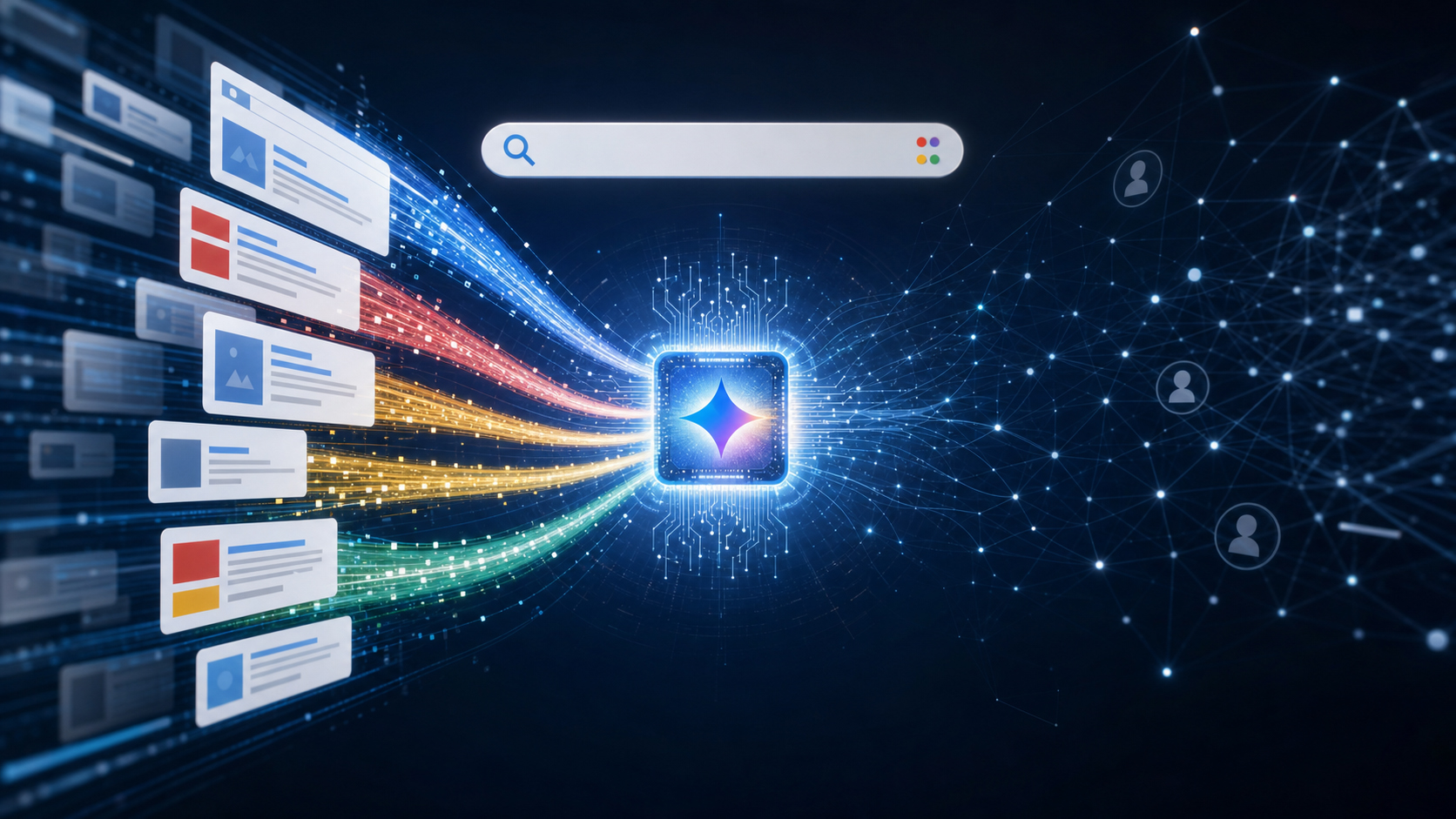
Google's AI offensive and the end of free website traffic: Gemini 3.5 changes everything – The end of Google Search as we know it – Image: Xpert.Digital
Red alert for portals: Who pays the bill for Google's fast AI answers
Forget traditional SEO: Why you now need to focus on "Answer Engine Optimization"
Google Search is undergoing its most profound transformation since the advent of the commercial internet. With the rollout of rapid and cost-effective AI models like Gemini 3.5 Flash-Lite, the search engine giant is increasingly transforming into an answer engine that delivers information directly on the results page – without requiring users to click on external links. For publishers, e-commerce shops, and comparison portals, this is dismantling a key pillar of their existing business model. So-called "zero-click" searches are skyrocketing, forcing website operators to take immediate action. However, this historic turning point doesn't only create losers. Those who understand the new rules of Generative Engine Optimization (GEO) and position themselves as an indispensable source of AI-generated answers can now secure crucial competitive advantages. The following article analyzes the economic consequences of Google's AI offensive, highlights the drastic changes in user behavior, and outlines strategic solutions for remaining successful in this new era of the search engine landscape.
Related to this:

The silent turning point in the search engine landscape
On July 20, 2026, Google announced the launch of three new models in the Gemini 3.5 family, including Gemini 3.5 Flash-Lite, which is explicitly intended for rollout in Google Search. At first glance, this announcement seems like a technical footnote in the constant stream of AI product announcements, but it actually marks an economic turning point for the entire business model of the open internet. Google itself describes the new model as the fastest and most cost-efficient in its 3.5 class, with a processing speed of 350 output tokens per second, designed specifically for high-throughput agent-based searches. This increase in efficiency is by no means insignificant, as it fundamentally alters the cost calculation that has thus far determined how aggressively Google could embed AI-generated answers into search results. The cheaper and faster an AI query can be processed, the less economic resistance there is to its widespread rather than selective deployment. As early as May 2026, Gemini 3.5 Flash was declared the standard model for the AI mode of search worldwide, which shows that this development is not a one-off outlier, but part of a consistent strategic line.
When every second search no longer leads to a click
The latest figures on the so-called zero-click search rate demonstrate that Google's chosen direction has already left a profound mark on user behavior. According to an analysis by SparkToro based on Similarweb clickstream data, in the first four months of 2026, approximately 68.01 percent of all US Google searches ended without a single click on a search result, compared to 60.45 percent in 2024. This represents an increase of 7.56 percentage points within two years and a decrease of 22.9 percent in click-generating searches during the same period. Particularly revealing is the finding that this trend varies considerably across different search query types. Informational search queries such as "What is X?" or "How does Y work?" have the highest zero-click rate at around 79 percent, while transactional queries with purchase intent account for approximately 38 percent. This gap is highly relevant from an economic perspective, as it demonstrates that Google is increasingly taking over the provision of information itself, while the actual transaction remains dependent on external providers. When an AI-generated overview appears in the search results, the average click-through rate for the top position drops from 31.7 percent in 2023 to 22.4 percent in 2026, a decline of 29.3 percent in just three years. A British study by Authoritas reached similar conclusions as early as 2025, identifying a drop in click-through rate of 47.5 percent on desktop devices and 37.7 percent on mobile devices as soon as an AI-generated overview is displayed.
Why speed makes the difference
The technical acceleration provided by models like Gemini 3.5 Flash-Lite isn't merely an improvement in convenience, but a crucial lever for user behavior. Previously, the noticeable delay in generating AI-generated summaries paradoxically led impatient users to click classic blue links in parallel or as an alternative while the answer was still loading. With a model speed that Google claims is four times faster than other Frontier models, this escape reflex is increasingly disappearing, as the answer appears virtually instantaneously. Google itself reports that 77 percent of users of AI mode make faster decisions, and 75 percent feel more confident than with traditional search. From a publisher's perspective, this subjectively positive user experience is a double-edged sword. While it increases satisfaction with the Google product, it simultaneously removes precisely that fraction of a second of uncertainty that has often provided the decisive impetus to click on an external website. SparkToro already noted that only 0.34 percent of search queries in the period studied switched to the separate AI mode, suggesting that the majority of the change in behavior takes place directly in the classic results page via the AI overviews and not via an explicit mode change.
The illusion of the more valuable remaining visitors
A common consolation in the industry is that the remaining traffic will be of higher quality because only users with a strong intention to buy will click. This claim can be partially supported by the metric Revenue per Session (RPS), which measures the average revenue per website visit and thus reflects the actual value generated by a single session, regardless of the sheer number of visitors. A recent study comparing chatbot traffic to traditional organic traffic shows that sessions from ChatGPT achieved a conversion rate of 1.81 percent compared to 1.39 percent for non-branded organic search, resulting in a 10.3 percent higher RPS of $3.65 per session compared to $3.30. However, this positive effect is significantly diminished upon closer inspection, as the average shopping cart size of AI-generated visitors was $204, 14.3 percent lower than the $238 average for traditional organic traffic. Furthermore, the absolute volume of these higher-quality AI sessions remains negligible compared to organic search, severely limiting the sheer number of new customer contacts and thus the growth potential of many business models that rely on scaling. The key uncertainty also lies in whether Google will intensify its own advertising monetization within the AI interfaces to such an extent that the positive RPS effect for external websites is neutralized by increased ad placement within the search interface itself.
Who actually pays the bill
The impact of this development is highly unevenly distributed across the various segments of the digital economy, necessitating a differentiated analysis. Traditional publishers, advice portals, news sites, and blogs are hardest hit, as their business models rely almost exclusively on advertising revenue generated by page views, meaning they are directly impacted financially by every lost click. At first glance, the risk appears lower for the e-commerce sector, since purchasing decisions are naturally less frequently completed entirely within the search results page, especially when it comes to payment processes, shopping cart interactions, or individual product configurations. However, this assessment requires nuance, as the zero-click rate for commercial research queries such as product comparisons has increased from 42 percent in 2024 to 51 percent in 2026 – a rise of nine percentage points that directly affects the upstream comparison phase where comparison portals and review sites traditionally generated their revenue. Comparison platforms, whose entire business model is based on collecting, processing and presenting options side by side, are thus in a particularly precarious situation, since this core service is now increasingly being provided directly by the AI overview of the search engine itself, without the user even having to visit the elaborately constructed comparison page of a third-party provider.
🎯🎯🎯 Data-driven B2B industry hub as a quasi-in-house solution

The quasi-in-house solution: How Xpert.Digital closes operational gaps in B2B marketing and sales – Smart Content-Driven Business - Image: Xpert.Digital
Xpert.Digital is a data-driven B2B industry hub led by Konrad Wolfenstein . The company acts as an external, quasi-in-house solution for industrial partners, closing operational gaps in marketing, content, and sales – without requiring additional resources on the client side.
More information here:
Brand growth through AI: Why citations are more important than click-through rates today
Tourism industry as a special case
The travel and tourism industry, due to its unique structure, warrants special consideration, as concrete, reliable data on the impact of AI search already exists. A 2025 study by Seer Interactive documented a 61 percent drop in organic click-through rates for travel queries using AI-generated overviews, from 1.76 percent to a mere 0.61 percent, while the click-through rate for paid ads plummeted by 68 percent. Google has since established a comprehensive planning tool called Canvas within its AI mode, which directly generates complete, day-by-day travel itineraries and displays them in an editable side panel alongside flight, hotel, and map data. This means users practically never have to leave the Google interface for their entire trip planning process. At the same time, a study by Skift shows that AI-generated overviews do not democratize accessibility for smaller travel providers, but rather tend to favor a few established major players, reinforcing a winner-takes-all pattern. Interestingly, the same research reports that brands mentioned and cited by name within an AI-generated overview subsequently achieve 35 percent more organic and 91 percent more paid clicks than unmentioned competitors. For tourism providers, this means that mere visibility in the results list is becoming less important, while whether or not they appear as a cited source within the generated answer itself is becoming the new, decisive competitive factor.
Related to this:

The limits of fear-mongering
Despite all the justified concerns, this development should not be uncritically extrapolated as a linear narrative of doom, as the available data suggests a certain slowdown in the growth rate. The increase in the zero-click rate from 2025 to 2026, at 1.4 percentage points, was significantly lower than the jump from 2024 to 2025, at 5.5 percentage points, indicating a gradual stabilization after the initial shock effect of the first wave of AI-generated overviews. Google itself contradicts the thesis of a dramatic traffic collapse, emphasizing that it continues to send billions of clicks to websites daily without any dramatic decline in the overall aggregation. While this statement is driven by self-interest, it cannot be completely refuted, because the absolute number of clicks remains high given the continued growth in overall search volume, even if the relative share of click-generating searches is decreasing. Furthermore, the SparkToro study shows that brand searches increase 2.1 times within 24 hours of being mentioned in an AI-generated overview, suggesting an indirect compensation effect through increased brand awareness that is not captured by traditional click statistics. The European Parliament has also addressed the competition law implications of AI-generated overviews, demonstrating that the issue has long since attracted regulatory attention and is not left solely to the free market.
The path from search engine optimization to answer engine optimization
As a strategic response to this structural shift, a new field of expertise has quickly established itself, commonly referred to as Generative Engine Optimization or Answer Engine Optimization. This discipline differs fundamentally from traditional search engine optimization, as the primary goal is no longer ranking in a search results list, but rather whether the company's own content is cited as a trustworthy source within a generated answer. A study analyzing nearly half a million prompts and generating over 1.7 million AI citations forms the basis for new metrics such as the so-called Share of Voice within AI-generated answers across systems like ChatGPT, Gemini, and Perplexity. In practice, this means that structured data, clearly formulated facts, demonstrable expertise, and high thematic authority are becoming more important than mere keyword density or technical page load time optimization, which were central to every SEO strategy just a few years ago. At the same time, it is recommended to systematically map the buyer journey along typical prompt formulations and to regularly monitor one's own AI visibility – similar to how it was previously done with classic ranking positions, but with completely new measurement methods, since classic click-through rate metrics are hardly meaningful for this new context.
Strategic opportunities beyond pure defense
The developments described above present not only obvious risks but also legitimate business opportunities, provided the change is approached proactively rather than reactively. Those who manage to be perceived as the preferred source within generative responses benefit disproportionately from the remaining clicks, as the aforementioned figures on increased click-through rates for cited brands in the travel segment impressively demonstrate. At the same time, the diversification of the AI provider landscape—with ChatGPT, Perplexity, and Gemini existing as parallel access points—opens up new channels for direct references, which can now be independently analyzed and evaluated according to their respective conversion quality. For companies with deep expertise, unique primary data, or proprietary analytics, this new order also means that generic, superficial content, which can easily be summarized by AI anyway, loses value. Unique, difficult-to-replicate content, on the other hand, is relatively enhanced because AI is more likely to reference it as a source than to completely replace it. This shifts the economic incentive away from sheer volume of content towards deeper, more differentiated expertise, which presents a significant opportunity, especially for specialized consultants, industry experts and niche providers with genuine expert knowledge, to position themselves as an indispensable primary source in an increasingly automated information landscape.
An irreversible reorganization
The available data paints a clear picture of a structural and, in all likelihood, permanent shift in the digital value chain, further accelerated by the technological and economic logic of increasingly faster and cheaper AI models like Gemini 3.5 Flash-Lite. The crucial business question for every traffic-dependent website is therefore no longer whether a decline will occur, but rather to what extent it will affect its specific segment and which counter-strategies are realistically feasible within the remaining timeframe. While information-driven publishers and traditional comparison portals will feel the full force of this shift, providers with strong brand loyalty, transaction-oriented positioning, and unique expertise have significantly better starting conditions to turn the new reality to their advantage. Ultimately, online success is no longer solely determined by one's position in a search results list, but by whether the brand itself remains visible within the response formulated by an artificial intelligence.
Your global marketing and business development partner
☑️ Our business language is English or German
☑️ NEW: Correspondence in your native language!

Konrad Wolfenstein
I and my team are happy to be available to you as your personal advisor.
You can contact me by filling out the contact form here [email protected]:or simply call me at +49 7348 4088 965. My email address is
I'm looking forward to our joint project.
☑️ SME support in strategy, consulting, planning and implementation
☑️ Creation or realignment of the digital strategy and digitization
☑️ Expansion and optimization of international sales processes
☑️ Global & Digital B2B trading platforms
☑️ Pioneer Business Development / Marketing / PR / Trade Fairs
📈🚀 From visibility to trust 👀🤝 Your scalable path with Xpert.Digital

From visibility to trust: Your scalable path with Xpert.Digital - Image: Xpert.Digital
In industrial B2B, sustainable business relationships rarely emerge overnight. They develop step by step – through visibility, professional relevance, recurring touchpoints, and growing trust. Xpert.Digital's 4-stage model addresses precisely this: It offers a structured path that begins with a manageable entry point and can evolve into deeper collaboration in business development if needed.
Instead of relying on loud marketing promises, this model puts the relationship at the forefront. Companies start with clearly defined, easily calculable measures and then decide, based on their own experience, how far they want to expand the collaboration. A key factor for this undisturbed trust-building process: The platform completely avoids annoying advertising ads, so the editorial focus remains solely on the companies' expertise.
More information here:










