
“We are not failures”: A Varta employee’s viral rant exposes the true battery drama
Xpert Pre-Release

Available in 27 languages 📢
Prefer Xpert.Digital on GoogleⓘPublished on: August 1, 2026 / Updated on: August 1, 2026 – Author: Konrad Wolfenstein
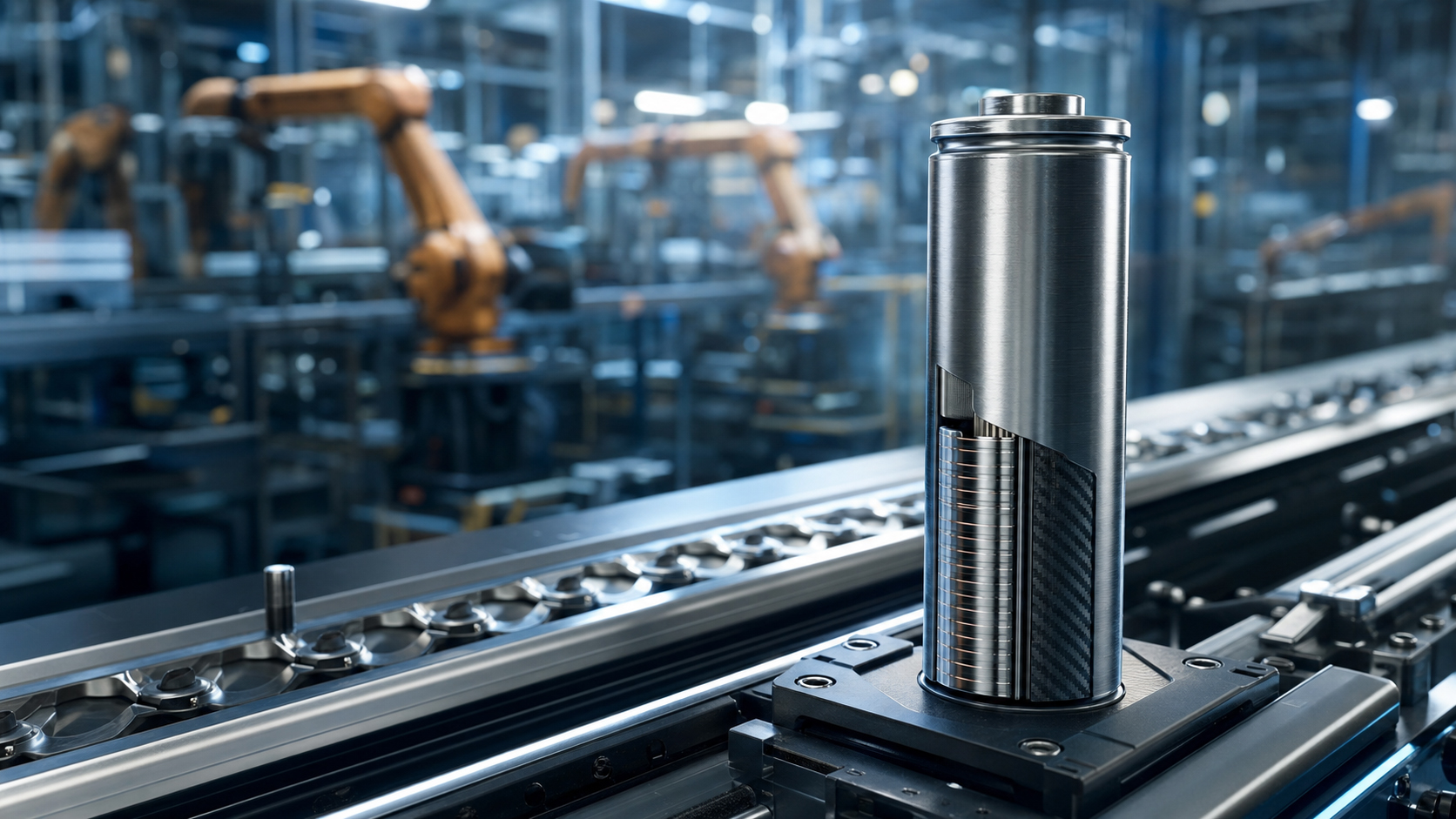
“We are not failures”: A Varta employee’s viral angry post reveals the true battery drama – Image: Xpert.Digital
World-class technology, but no profits: Why Europe's dream of its own battery production is bursting
Radical debt reduction and pressure from China: The survival struggle of the traditional company Varta
"Investors' milking machines": What Varta's dramatic fall reveals about Germany as an industrial location
A passionate LinkedIn post goes viral, hitting the nail on the head for an entire industry: While politicians dream of European technological sovereignty, the long-established German battery company Varta is fighting for its very survival. The case—marked by a devastating cyberattack, a radical debt restructuring at the expense of small shareholders, and immense price pressure from heavily subsidized Asian competitors—dramatically illustrates the fractured state of the European economy. Between world-class technology, Porsche's entry as a rescue anchor investor, and the harsh economic reality of an industry where even highly praised billion-dollar projects like Northvolt falter, an unprecedented industrial drama unfolds. The unvarnished message from Varta's engine room is more than just a defense of its own work; it is an urgent wake-up call to management, politicians, and the public.
When a LinkedIn post generates more engagement than any quarterly report, it says something about the state of German industrial policy. A post by a Varta employee, defiantly listing the company's capabilities while simultaneously railing against accusations of management failure, strikes a nerve. It reflects a deeper conflict between technological competence and economic viability that pervades the entire European battery industry.
A wake-up call from Swabia
Günter Gerold, a Varta employee, published a viral post, listing an impressive array of technical achievements in straightforward, almost defiant language: the production of one billion hearing aid cells annually, additional capacity for consumer products, years of dedicated support for Apple's demanding needs, the development of a high-performance cell for Porsche, and the establishment of a production facility in record time. This list is further enhanced by the company's mastery of diverse cell chemistries, from silver oxide and hydrogen to nickel-metal hydride and sodium, as well as its compliance with stringent automotive standards such as IATF and TISAX. This enumeration is not mere marketing rhetoric, but rather reflects the true technological breadth of a company that has been manufacturing batteries for over a century and holds a leading global position in niche markets like hearing aid batteries.
The core message, however, is not directed at customers, but at critics at home: Don't accuse us of management failure if you don't understand the operational complexities, and don't demand profits in an industry that doesn't generate them anywhere else in the world, not even in China. This statement is noteworthy because it adopts a defensive stance communicated by the workforce, not the board. It reveals a workforce that feels unfairly treated by public criticism while simultaneously undergoing massive structural changes.
More information here:
A corporation caught between cyberattack and capital reduction
To understand the urgency of this defense, one must consider the sequence of events in 2024. On the night of February 12, 2024, Varta AG fell victim to a serious cyberattack that crippled all five production sites in Germany, Romania, and Indonesia, as well as its administrative offices. For security reasons, all IT systems had to be disconnected from the internet as a precautionary measure, resulting in a complete production halt. Production could only be gradually restarted approximately four weeks later. The forensic analysis revealed that an organized hacking group with significant criminal intent had breached the company's supposedly robust security standards. The financial damage from this incident directly impacted the company's financial results and further complicated the ongoing restructuring efforts.
Parallel to the cyberattack, Varta was already struggling with an existential financial crisis. On July 21, 2024, the board announced its intention to initiate restructuring proceedings under the Corporate Stabilization and Restructuring Act (StaRUG). The plan envisioned a radical reduction of the company's capital to zero euros, coupled with the complete and uncompensated exit of the existing shareholders and the delisting of the stock from the stock exchange. For the minority shareholders, this meant a total loss, against which the German Association for the Protection of Investors (DSK) vehemently protested and called for the plan's rejection, as the major shareholder, Michael Tojner, was the only remaining shareholder permitted to participate in the subsequent capital increase. Despite lawsuits from numerous minority shareholders, the Stuttgart District Court upheld the restructuring plan on December 11, 2024, after the creditor groups had given their approval by the required majority. The agreed-upon debt reduction lowered the group's financial burden from approximately €485 million to around €230 million. In January 2025, the Stuttgart Regional Court also definitively rejected the appeals of numerous shareholders against this decision, thus clearing the legal way for the realignment.
Porsche as anchor investor and a signal to the market
A key element of the realignment concerns the high-performance cell business for the automotive industry. As early as spring 2024, Porsche initiated the construction of an additional production facility in Nördlingen for so-called booster cells, which are used in the performance hybrid drive of the Porsche 911 Carrera GTS. On October 9, 2024, Varta and Porsche signed an agreement for Porsche to acquire a majority stake in V4Drive Battery GmbH, a wholly-owned subsidiary into which Varta contributed its entire business unit for large-format lithium-ion cells, including the operating site. Porsche itself also signaled its willingness to participate in the financial restructuring of Varta AG as a whole with an investment of around €30 million. This partnership is economically significant because it demonstrates that at least one technologically demanding premium customer continues to place its trust in German cell expertise, even while the group as a whole was on the brink of collapse.
At the end of 2025, Varta finally presented its results for the restructuring-heavy transitional year of 2024. Revenue fell to €793.2 million from €820.3 million in the previous year, while EBITDA plummeted from €25.5 million to minus €3.5 million. Adjusted EBITDA, which Varta itself describes as a key performance indicator, dropped from €50.4 million to €30.6 million, with the company attributing this decline primarily to the financial impact of the operational restructuring and the one-off effects of the cyberattack. CEO Michael Ostermann described the year as a turning point, in which the successful completion of the StaRUG (German Act on the Stabilization and Restructuring Framework for Businesses) proceedings had laid the groundwork for future profitability.
Why nobody makes money with battery cells
The statement made in the article, that the battery cell industry is not profitable anywhere in the world, not even in China, can be substantiated by market developments over the past two years. The European cell industry experienced a series of severe setbacks in 2024 and 2025. The ACC consortium of Stellantis, Mercedes, and TotalEnergies put the construction of its planned gigafactory in Kaiserslautern, where batteries for 600,000 electric vehicles annually were originally intended to be produced, on hold and also halted preparatory work at the Termoli site in Italy. The fate of Northvolt, the Swedish manufacturer once celebrated as a European champion, was far more dramatic. Despite customer orders worth over US$50 billion and support from investors like Volkswagen, Northvolt failed to master the technical processes of cell manufacturing to a sufficient level of quality and quantity. In 2023, personnel and social security costs exceeded revenues from customer contracts by more than three times. Following the loss of a billion-dollar contract from BMW in June 2024 and the announcement of layoffs of one-fifth of the workforce, Northvolt filed for Chapter 11 bankruptcy protection in the US in November 2024 and ultimately for regular insolvency in Sweden in March 2025. The consequences also severely impacted German and European taxpayers, as the German government bore a risk of several hundred million euros through subsidies and loan guarantees. In August 2025, the US company Lyten finally acquired the remaining sites, including the factory under construction in Heide, Schleswig-Holstein.
This series of failures is no coincidence, but rather points to a structural market distortion. According to data from the International Energy Agency, China dominates around 85 percent of global battery cell production. Chinese manufacturers like CATL and BYD benefit from enormous economies of scale, government subsidies, vertically integrated supply chains for raw materials such as lithium and cobalt, and decades of experience in industrial mass production. European and American competitors, on the other hand, usually have to build their production capacities from scratch while simultaneously having to contend with sharply fallen cell prices, which, according to battery experts like Martin Winter, will foreseeably make for difficult years for newly entering cell manufacturers. Against this backdrop, the demand for short-term profitability from a medium-sized company like Varta appears to be an expectation that contradicts the economic reality of the entire industry.
Our EU and German expertise in business development, sales and marketing

Our EU and German expertise in business development, sales and marketing - Image: Xpert.Digital
Industry focus areas: B2B, digitalization (from AI to XR), mechanical engineering, logistics, renewable energies and industry
More information here:
A thematic hub offering insights and expertise:
- Knowledge platform covering global and regional economies, innovation and industry-specific trends
- A collection of analyses, insights, and background information from our key areas of focus
- A place for expertise and information on current developments in business and technology
- A hub for companies seeking information on markets, digitalization, and industry innovations
The Varta analysis: Between technological world-class performance and structural overload – What Varta reveals about the future of Made in Germany
Between operational excellence and structural vulnerability
The real analytical challenge lies in acknowledging two seemingly contradictory truths simultaneously. On the one hand, Varta undoubtedly possesses exceptional technical and organizational capabilities. Mastering diverse cell chemistries for applications as varied as hearing aids, consumer electronics, medical devices, and high-performance automotive applications requires a rare level of process and materials expertise. Years of collaboration with Apple, involving daily coordination calls, and compliance with automotive standards such as IATF 16949 and the TISAX safety standard demonstrate world-class quality and delivery capabilities. The record-breaking production ramp-up for Porsche and the handling of requirements surrounding the digital battery passport and CO₂ emissions reporting further demonstrate a company that operates at the cutting edge of technology and regulation.
On the other hand, operational competence cannot compensate for structural economic weaknesses if market conditions are fundamentally unfavorable. The highly specialized area of hearing aid and button cell batteries, in which Varta has traditionally been strong, offers stable margins, but is a niche market with limited growth potential. The more profitable, but also more capital-intensive, business with large-format lithium-ion cells for electric vehicles and energy storage systems, however, competes directly with the economies of scale of Asian manufacturers. The spin-off of this business unit into V4Drive Battery GmbH, jointly controlled with Porsche, can therefore be seen as a shrewd strategic move that relieves the lower-margin core business of the capital requirements of mass cell production, while simultaneously tempering the earlier strategic ambition of an integrated German battery group.
The role of financial investors in the restructuring process
Also noteworthy is the article's pointed remark about investors who "plug in their milking machines." This phrase likely refers to the conditions agreed upon in the StaRUG (German Act on the Stabilization and Restructuring Framework for Businesses) for new debt and equity providers, who, in return for providing fresh capital, received extensive control rights and favorable terms. Such structures are common in the restructuring of distressed companies, as new investors, given the high risk, demand correspondingly high returns and safeguards. From the employees' perspective, however, this often creates the impression that financial players profit from the crisis, while the company's operational assets and jobs bear the actual risk. This perception is not economically unfounded, since restructuring procedures like StaRUG are deliberately designed to secure the company's continued existence by shifting financial burdens from creditors to the existing owners, while new investors can disproportionately benefit from a future recovery.
At the same time, it must be noted that without these investors' willingness to provide capital, a regular insolvency with far more serious consequences for jobs and production sites would have been imminent, as the example of Northvolt vividly demonstrates, where, despite billions in subsidies, the company ultimately ended up being completely broken up and sold to an American investor. In this respect, while the criticism of the investors is understandable, it only partially addresses the root cause of the problems, because without fresh capital, continuing the company in its existing form would hardly have been realistic.
Management criticism in light of company figures
The defense against accusations of management failure presented in the article warrants a more nuanced assessment. It is fundamentally true that a company forced to cope with a serious cyberattack, a comprehensive StaRUG (German Act on the Stabilization and Restructuring Framework for Businesses) procedure, and the restructuring of its corporate group within just a few months was under extraordinary pressure, which is difficult to judge from the outside. At the same time, however, it must be noted that the financial difficulties that ultimately led to the StaRUG procedure had been apparent for years and were rooted in strategic decisions made in previous years, such as the capital-intensive expansion into the business of large-format cells for electromobility at a time when demand for electric vehicles in Europe was already losing momentum. As early as spring 2023, Varta had reached an initial comprehensive restructuring agreement with its banks, demonstrating that the financial problems existed long before the cyberattack and the urgent StaRUG notification in summer 2024.
The question of whether this is a case of management failure in the strict sense or an unfortunate chain of external shocks in a structurally challenging market environment cannot be definitively answered. A combination of both is more likely: A strategic misjudgment of market developments in the field of electric vehicle battery cells coincided with an external crisis in the form of the cyberattack, which further complicated the already ongoing restructuring process without fundamentally causing it. The demand made in this article not to confuse the operational commitment of the workforce with strategic misjudgments by the company's management is entirely justified, as both levels should be clearly distinguished in the public debate.
Symbolism for German industrial policy
The Varta case exemplifies a larger dilemma facing German and European industrial policy in the field of battery technology. On the one hand, domestic battery cell production is considered strategically indispensable for the energy transition, electromobility, and technological sovereignty vis-à-vis China. On the other hand, the examples of Varta, Northvolt, and ACC alike demonstrate that the development of competitive cell manufacturing capacities in Europe encounters deeply entrenched structural disadvantages that cannot be overcome by technical expertise or political will alone. The enormous capital costs for constructing modern gigafactories, the persistently high energy prices in Germany (explicitly cited as a burden in the article), and the intense price pressure from subsidized Chinese competitors create a combination that is virtually impossible for new market entrants to break through.
Against this backdrop, the passionate tone of the LinkedIn post appears less as naive self-defense and more as a justified expression of frustration from a workforce that delivers exceptional technical performance but receives predominantly public criticism instead of recognition. At the same time, this frustration does not absolve management of its responsibility to make sustainable long-term strategic decisions that translate operational excellence into financial stability. For the coming years, it will be crucial whether the partnership with Porsche in the area of high-performance cells, as well as the core business, which has been significantly reduced in debt following restructuring, will be sufficient to permanently lift Varta out of the red, while competitors from the Far East continue to expand their cost advantage.
🎯🎯🎯 Data-driven B2B industry hub as a quasi-in-house solution

The quasi-in-house solution: How Xpert.Digital closes operational gaps in B2B marketing and sales – Smart Content-Driven Business - Image: Xpert.Digital
Xpert.Digital is a data-driven B2B industry hub led by Konrad Wolfenstein . The company acts as an external, quasi-in-house solution for industrial partners, closing operational gaps in marketing, content, and sales – without requiring additional resources on the client side.
More information here:
Your global marketing and business development partner
☑️ Our business language is English or German
☑️ NEW: Correspondence in your native language!

Konrad Wolfenstein
I and my team are happy to be available to you as your personal advisor.
You can contact me by filling out the contact form here [email protected]:or simply call me at +49 7348 4088 965. My email address is
I'm looking forward to our joint project.










