Industry Hub & Blog for B2B Industry - Mechanical Engineering - Logistics/Intralogistics - Photovoltaics (PV/Solar) For Smart FACTORY | CITY | XR | METAVERSE | AI | DIGITIZATION | SOLAR | Industry Influencers (II) | Startups | Support/Consulting
The Security and Defense Hub of the SME Connect Working Group Defence on Xpert.Digital
SME Connect is one of the largest European networks and communication platforms for small and medium-sized enterprises (SMEs). Founded in 2017, SME Connect is a non-partisan organization that advocates for the interests of SMEs at the EU level, bringing together SMEs, their supporters, and relevant stakeholders such as associations, think tanks, and universities committed to SME-friendly policies.
The network aims to maximize the impact and visibility of SMEs in European politics. It serves as a platform for exchanging ideas, positions, information, and knowledge about the challenges and opportunities facing SMEs in Europe. SME Connect supports the development of constructive partnerships to find common ground or at least to facilitate an honest exchange of interests.
The SME Connect Defence Working Group – Strengthening SMEs in European Defence
Innovative SMEs are an essential part of the EU defence industry. However, they face numerous obstacles to participating in defence procurement, particularly across borders. Furthermore, the global dynamics are evolving rapidly, necessitating a European response to intensified global competition. This has underscored the need to improve existing structures and processes while simultaneously implementing new ones.
The goal of this working group is to unite SMEs and relevant stakeholders to form a consortium of entrepreneurs representing the defense sector and military suppliers. Leveraging our expertise in products, services, and markets, we aim to improve the regulatory environment within the European Union. B2B interactions are equally important to us. By joining forces, we facilitate market access and streamline financing initiatives. Together, we strive to serve as the primary resource for SMEs in Europe's defense industry.
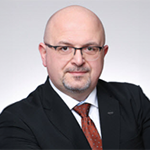
Markus Becker
I would be happy to serve as your personal advisor.
Head of Business Development Chairman SME Connect Defense Working Group
The Russian economy is at a critical juncture. | The central bank plays a crucial role in stability. | High military spending is straining the economic balance. | Russia has adapted to Western sanctions. | The relationship with China is becoming increasingly important. | Nevertheless, the economic situation remains fragile. | Labor shortages and inflation are major challenges. | The year 2027 is seen as a stress test for the central bank. | A weak economy could compromise military strength. | A sudden transition could have unforeseen consequences. [...]
Defense logistics is increasingly perceived as strategically crucial. | The market could grow to $344 billion by 2034. | Fuel and spare parts are of central importance for military operations. | Digitalization is fundamentally changing the value chain. | Autonomous systems and 3D printing offer new opportunities in logistics. | Cybersecurity is becoming a key competency in modern logistics. | Private providers are increasingly taking on important functions in the logistics sector. | The challenge lies in linking military and civilian resources. | Competition is not only decided on the battlefield. | Readiness is the new currency for military capabilities. [...]
The German Armed Forces' logistics are undergoing a transformation. | | A pioneering project is being built at the Altmark training area. | | It is a fully automated high-bay warehouse. | State-of-the-art Industry 4.0 principles are being implemented. | The efficiency of the automation requires maximum resilience. | Planning is crucial for future success. | The location is of particular importance for training. | Military warehousing differs significantly from commercial warehouses. | Data quality is crucial for functionality. | Project success will be measured by operational performance. [...]
Fear of a Chinese invasion of Taiwan dominates security policy debates. | The year 2027 is often cited as a possible attack date. | But Beijing's true strategy may be less military and more economic. | China has no interest in a devastated island. | Dependence on Taiwanese semiconductors makes the region the most dangerous economic bottleneck. | A blockade could put pressure on Taiwan without starting an open war. | Military exercises and cyberattacks are on the rise. | Europe will be severely affected economically, even if it is not militarily involved. | Germany's industry is particularly vulnerable due to complex supply chains. | Deterrence can have both a stabilizing and an escalating effect. [...]
| A faulty intelligence report almost triggered a military strike. | Artificial intelligence can be both supportive and detrimental. | Control over algorithms is crucial. | Speed should not be confused with efficiency. | Human judgment remains essential in automated processes. | Incorrect decisions can have massive economic consequences. | A robust control system should include multiple levels of review. | Geopolitical stability is an economic factor of production. | | Trust in AI must be critically examined. | | Responsibility must be clearly defined to avoid errors. [...]
The Claude case shows how generative AI can allegedly support military development programs in Yemen. | | Anthropic reports on software for guided missiles, ballistic missiles, and potential hypersonic projects. | The connection to the Houthis remains plausible but has not been definitively proven publicly. | AI reduces the costs of technical research, programming, simulation, and error analysis. | The acceleration of the learning loop between design, testing, and improvement is particularly dangerous. | | The case also reveals the limitations of security filters when users distribute tasks across multiple sessions. | Digital proliferation exacerbates geopolitical risks for ports, sea lanes, and energy facilities. | Uncertainty and diversions at the Bab al-Mandab can already strain global supply chains. | | Threatened oil shipments, pipelines, and trade routes increase price risks for energy and freight transport. | Learn why AI misuse is becoming a balance sheet risk and requires new security strategies for states and companies. [...]
| The German Armed Forces are developing Uranos AI, a European alternative to Palantir. | | The goal is greater digital sovereignty over military data and decisions. | A first prototype is expected by 2027. | Open architectures are intended to avoid long-term dependencies. | Consortia of German and European companies are pooling their expertise. | Interoperability with NATO systems remains crucial. | | Real combat data from Ukraine provides valuable insights. | Cybersecurity, data control, and AI accountability are key priorities. | The multi-billion-euro project carries high costs as well as technological and time-related risks. | | Find out whether Europe will be able to control its own digital battlefield in the future. [...]
| Rheinmetall is investing around €285 million in a logistics and technology center at Kassel Airport in Calden. | The project is expected to create over 1,000 new jobs and strengthen the regional economy. | | A civilian regional airport is increasingly transforming into a military hub through its connectivity and drone testing center. | The state of Hesse is funding the project with €25 million, thereby opening up controversial debates about taxpayer money for armaments. | | Critics see ethical and security policy problems, while proponents emphasize economic opportunities and infrastructure. | Rheinmetall's sales and order backlog are growing strongly, which makes the investment appear economically sound. | The concentration of production, research, testing, and training is creating a new local defense ecosystem. | At the same time, the risk of regional dependence on a single arms company and geopolitical fluctuations in demand is increasing. | | The political symbolism of the cooperation between the state government and industry intensifies the debate about industrial policy and militarization. This article analyzes the economic, political, and social consequences of the "Defence Hub North Hesse" for the region and the state. [...]
The F127 frigate reveals massive cost and procurement risks for the German Navy. | | After the F126 project was halted, another billion-euro risk now looms with the F127. | Media reports speak of over 40 billion euros for eight ships. | | A comprehensive US systems package is considered a key cost driver and creates dependency. | | The technical integration of Aegis, SPY-6, and Mk-41 increases complexity and testing effort. | | Politically, the government faces a dilemma between security needs and affordability. | Reducing the equipment could further increase unit costs. | Long-term lifecycle costs, spare parts, and ITAR regulations exacerbate the dependency. | Stable requirements, robust contracts, and transparent risk assessment are crucial. | The upcoming contract and budget decisions will determine whether the F127 becomes viable or another procurement problem. [...]
Rheinmetall is transforming Kassel into Europe's largest tank center with a massive investment. | The Defence Hub North Hesse is to integrate production, logistics, and drone testing. | | A new logistics and technology center in Calden will strengthen just-in-time manufacturing and training. | | | Thousands of new jobs and a tripling of site revenue are expected. | | The German Armed Forces' Arminius project is driving demand and generating billions in orders. | | The project raises questions about political dependence and regional concentration risk. | Kassel could become the European hub for wheeled and tracked vehicles as well as export markets. | A drone test field at Calden Airport is accelerating the development of unmanned systems. | Rheinmetall's growth and order backlog support the expansion plans but also entail planning risks. | The Budget Committee's decision in December will be crucial for the project's future. [...]
| The VW plant in Osnabrück is facing the potential conversion of convertible production to the manufacture of carrier systems for the Iron Dome missile system. | This paradigm shift is forcing Volkswagen to make tough decisions and is making Osnabrück a symbol of industrial reorientation. | Lower Saxony is considering a multi-million euro investment to secure jobs and save the plant's future. | Qatar, as a major shareholder, is blocking direct cooperation between VW and Rafael for geopolitical reasons. | The plan is to manufacture heavy transport and launch vehicles, not the missiles themselves. | | The project, structured as a joint venture with the state of Lower Saxony, raises legal, co-determination, and social security issues. | For the workforce, it's about job security, but also about ethical conflicts surrounding arms production. | | A European production site for Iron Dome components could strengthen defense autonomy – and simultaneously create diplomatic tensions. | Economically, the repurposing is a capital-efficient response to overcapacity in the automotive industry. The decision by the end of 2026 will show whether this is a sustainable industrial policy or just a transitional solution. [...]
Historic court ruling halts Pentagon's dispute with Anthropic over AI use. | Judge Rita Lin declares the classification "illegal and baseless." | Key question: Is the state allowed to use private AI models for autonomous weapons and mass surveillance? | Anthropic successfully sued against the classification as a security risk in its supply chain. | Companies emphasize ethical guidelines against surveillance and autonomous weapons use. | Billions in damages and reputational risks were at stake for Anthropic. | The government has signaled an appeal; the legal battle is not yet over. | The case raises fundamental questions about the control of AI in a military context. | The ruling could provide support for ethical standards for other technology providers. | For companies and the government, this is a precedent with global significance. [...]
Quantum Systems reaches 699 km/h with the "Apex Recordhunter," setting a new benchmark for electric drones. | The Bavarian startup has raised billions in capital within months and multiplied its valuation. | | Behind the record lies a strategic realignment toward autonomous defense systems. | | Technological partners like V4Smart supply high-current batteries that make these extreme speeds possible. | The war in Ukraine is accelerating development and turning the region into a practical testing ground for unmanned systems. | The announcement also serves as a marketing tool in the fierce competition for investors and government clients. | The 699 km/h is currently an internal company record; official certification is still pending. | Collaborations with Ukrainian partners demonstrate the cross-border networking of European defense innovation. | This case illustrates how civilian technology and military logic are increasingly merging. | Whether officially recognized or not, Quantum Systems signals that Europe is catching up in the race for autonomous air defense technologies. [...]
EnduroSat plans to establish "Starbase Europe" as a European space hub on the disused Dobroslavtsi military airfield. | | The 290-hectare site will house series production, test laboratories, and logistics facilities for satellites. | | The project promises around 1,000 high-tech jobs and a significant boost to Bulgarian industry and research. | EnduroSat is backed by major investors such as Peter Thiel and Google Ventures, as well as EU funding. | | The existing runway will be restored and retained for aviation and logistics purposes. | An integrated training campus with universities and military academies will train specialists on-site. | Technologically, the project aims for large satellites with aircraft-like solar panels and series production. | | So far, the memorandum of understanding is a declaration of intent; binding contracts and financing are still pending. | Politically, Dobroslavtsi links economic development, defense strategy, and geopolitical sovereignty. Whether the project becomes a beacon of hope or a pipe dream will be decided in the coming years during implementation and infrastructure development. [...]
The German government classifies the risk of attacks and sabotage as high and is warning the public. | Experts criticize authorities for not adequately communicating important, action-oriented information on crisis preparedness. | Large networks such as electricity, water, and telecommunications lines remain structurally vulnerable and difficult to protect completely. | A brochure with practical behavioral recommendations, updated by the Federal Office of Civil Protection and Disaster Assistance (BBK), is barely promoted and remains largely unknown. | The Critical Infrastructure Protection Commission (KKI) calls for systematic, understandable public education instead of mere alarmist pronouncements. | The new Critical Infrastructure Protection Act (KRITIS) strengthens operator obligations but does not create a binding obligation to inform citizens. | Resilience requires both government protective measures and informed, prepared citizens. | A well-planned communication campaign could reduce costs in a crisis and relieve the burden on emergency services. | Communication strategies must remain factual to avoid panic and maintain trust. | Policymakers must act now and actively, visibly, and permanently integrate public preparedness into everyday life. [...]
This article debunks the Palantir hype and shows why the data giant is not without alternatives. | Vendor lock-in and high implementation costs make Palantir risky for many companies. | | Government contracts secure revenue but increase political dependencies and reputational risks. | Managed AI approaches offer modular, cloud-native alternatives with faster implementation. | | Usage-based pricing models reduce capital commitment and improve profitability for SMEs. | | European managed AI solutions strengthen digital sovereignty and GDPR-compliant data processing. | Open interfaces and interchangeable language models minimize switching barriers and promote competition. | Transparency and auditability make managed AI more attractive for regulated industries. | Palantir's high market valuation reflects more narrative than unparalleled technical superiority. | For most commercial use cases, a well-designed managed AI architecture is the strategically and economically smarter choice. [...]
Germany is investing 35 billion euros to radically realign its space sector and secure military sovereignty. | Civilian Earth observation technologies are becoming a key secret weapon for national security interests in orbit. | The SATCOMBw program aims to build a European counterpart to Starlink as a secure, encrypted communications network. | A Berlin-based startup demonstrates how monitoring railway tracks can suddenly become critical military reconnaissance capabilities. | Government procurement is shifting from one-off hardware purchases to long-term service models with predictable revenues. | Large defense companies and agile technology providers are forming new consortia to benefit from this historic industrial supercycle. | Experts and highly qualified specialists in the defense sector are becoming a new, fiercely competitive commodity due to the enormous demand. | Despite the high willingness to invest, rigid bureaucratic processes and lengthy procurement cycles are hindering the desired record pace of development. Strategic visibility and excellent industry contacts are more crucial than ever for companies to succeed in this highly complex market. | Xpert.Digital offers the necessary analyses and access to establish itself as a credible partner in the new German security architecture [...]
Russia's navy is unexpectedly withdrawing from the Mediterranean to redistribute resources. | This historic retreat is a direct result of massive Western sanctions against Moscow's oil exports. | | Russia's shadow fleet is under extreme pressure and now requires protection from its own warships. | Instead of displays of power in the south, the Kremlin is focusing on securing its vital oil revenues. | The English Channel has become the new flashpoint, as Russian tankers are increasingly targeted by NATO. | | British and other Western authorities are consistently intensifying their seizures of Russian oil vessels. | The Russian surface fleet is struggling with massive logistical problems and is considered by experts to be severely overstretched. | Parallel to the military withdrawal, Putin is massively expanding his LNG fleet to circumvent upcoming EU import bans. | This strategic shift shows that economic war financing now takes precedence over geopolitical prestige. | | Learn in this analysis how the sanctions spiral is fundamentally changing Russia's maritime strategy. [...]
Germany's new €35 billion military space program is triggering an unprecedented gold rush in German industry. | | This strategic initiative marks a historic turning point toward technological sovereignty in low Earth orbit. | The German Armed Forces are investing heavily in their own satellite networks, early warning systems, and secure communication channels in response to global threats. | | A key objective is to build an independent infrastructure to minimize dependence on international providers like Starlink. | This presents enormous opportunities for companies in civilian technology sectors, such as data analytics and sensor technology, to repurpose their solutions for lucrative commercial applications. | The formation of large consortia is creating new business models, ranging from hardware manufacturing to specialized data services. | Industry is currently reorganizing, with visibility and the right network connectivity being crucial for access to rigorous tendering processes. | Early strategic positioning is essential for companies to be integrated as reliable partners into the complex defense structures. | | Despite the high growth potential, the Bundeswehr's long procurement cycles require realistic planning and financial staying power from the companies involved. | Those who set the course now can establish themselves as a long-term, integral part of [...]
Space is no longer an untouched place, but a highly sensitive area for our global security. | | Germany is responding to this threat with the Bundeswehr Space Command in Uedem. | | Satellites secure our modern everyday lives, from navigation to finance, and must therefore be protected. | | Space debris and targeted jamming maneuvers by major powers like Russia and China are increasing dramatically. | With the GESTRA radar system, Germany is now monitoring the orbit increasingly independently. | | The Bundeswehr is continuously expanding its capabilities to defend space as a strategic dimension. | Protecting orbital infrastructure is now an existential necessity for our economy. | Close civil-military cooperation makes the German model unique in Europe. | | Despite diplomatic efforts at arms control, Germany is preparing for conflicts in space. | Learn all about the new mission and the race for security above our heads. [...]