
Not Tesla or Boston Dynamics: The most innovative startups in the field of humanoid robotics – Who is really leading the future of robotics
Xpert Pre-Release

Available in 27 languages 📢
Prefer Xpert.Digital on Googleⓘ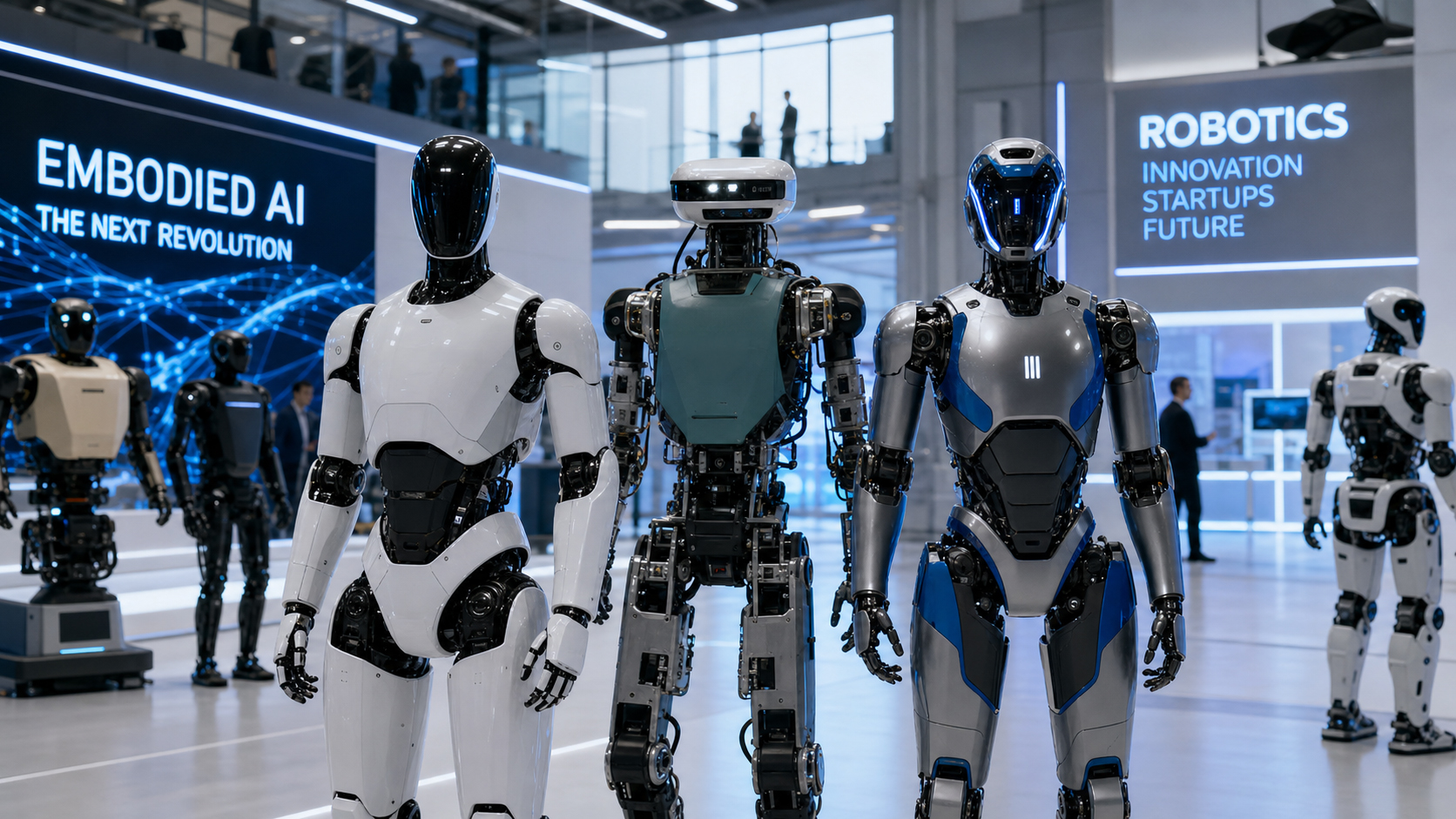
Not Tesla or Boston Dynamics: The most innovative startups in the field of humanoid robotics – Who is really leading the future of robotics – Creative image: Xpert.Digital
Against the overwhelming power of the USA and China: A Munich start-up is shaking up the robotics elite
Billion-dollar hype or real business? What patents reveal about robotics startups
Humanoid robots are roaming social media, chasing away wild animals, and captivating millions – but viral videos alone don't guarantee commercial success. In a future market whose volume analysts estimate at up to 200 billion US dollars, the wheat is separated from the chaff not on the stage, but in the patent offices. A recent analysis by LexisNexis Intellectual Property Solutions now takes a data-driven look behind the scenes of the PR machine and reveals which private startups actually possess the technological foundation for market leadership. The surprising result: Prominent industry giants are missing from the ranking of independent pioneers, China dominates the global innovation race with alarming clarity – and a single Munich-based startup stands out as a European hopeful. Who truly owns the most valuable intellectual property rights and why utopian company valuations often stand in stark contrast to operational reality.
LexisNexis patent analysis identifies the most innovative startups in the field of humanoid robotics
The patent bet on humanoid robots
According to numerous analysts, the economy is facing a transformation whose scope could be comparable to previous industrial revolutions: the widespread introduction of humanoid robots into homes, offices, restaurants, and factories. Dozens of companies are already vying for leadership positions in this emerging market, while the machines are evolving from their plodding factory automation predecessors into increasingly adept, adaptive companions in everyday life. The question on the minds of investors, suppliers, and competitors alike is which of these young companies will truly lay the foundation for sustainable growth and which will merely dazzle with viral video clips without possessing the technological substance for a commercial future.
The sheer size of the anticipated market opportunity is fueling this race. Goldman Sachs estimates the industry's annual revenue potential at $38 billion by 2035, while Barclays is significantly more optimistic, forecasting up to $200 billion. Goldman Sachs also anticipates that around 1.4 million humanoid robots will roll off the assembly lines in 2035 alone. This wide range of forecasts already reveals the fundamental uncertainty inherent in any valuation of this industry: No one currently knows with any certainty how quickly the technology will translate into real, paid use cases, and the difference of over $160 billion between the two estimates demonstrates the extent to which opinions diverge, even among established investment banks.
Why viral videos send the wrong signals
Many of the most famous humanoid robots gained their popularity through spectacular demonstrations that generated millions of views on social media. Machines mimicking kung fu moves, competing in marathons against human runners, chasing wild boars from fields, playing soccer, or assisting on construction sites shape the public image of the industry. While these demonstrations generate attention and contribute to legitimizing the entire technology category, they reveal little about which companies actually possess the technological depth to achieve long-term commercial success. A robot performing impressive feats on stage may well be based on a narrow technological foundation, while less conspicuous competitors are quietly building broad and valuable patent portfolios.
Economic success in technology-driven industries has traditionally depended heavily on intellectual property, and humanoid robotics is no exception. Those who hold the fundamental patents behind motion control, interaction systems, and mechanical design tend to secure a structural advantage that pays off regardless of short-term marketing successes. This is precisely where the analysis by LexisNexis Intellectual Property Solutions comes in, attempting to uncover the substance behind the public perception.
How patent analysis reveals market leaders
To identify the true leading innovators, LexisNexis Intellectual Property Solutions examined the strength of the patent portfolios of private startups that had demonstrated at least one functional bipedal robot. The top ten companies were ranked using the company's proprietary Patent Asset Index, a metric that links the size of a patent portfolio with the technological value and geographic reach of the respective intellectual property rights. This methodology aims to reflect not just the number of patent applications, but their actual economic relevance, for example, through citation frequency, scope of protection in multiple jurisdictions, and technological maturity.
Marco Richter, Managing Director and Chief Commercial Officer at LexisNexis Intellectual Property Solutions, emphasized that assessing the commercial potential of humanoid robotics companies presents a particular challenge because most leading players are still in the early stages of marketing their products. In this context, patent portfolios offer a unique window into a startup's competitive strength and innovation leadership, which are crucial drivers of growth and success. The Patent Asset Index allows for an objective assessment of which startups, with their patent portfolios, are truly laying the foundation for a leading position in this transformative industry.
The Patent Asset Index serves as a quantifiable indicator of the business impact of a patent portfolio, based on the assumption that technologically sophisticated inventions are more likely to lead to commercial success. High index values often indicate strong growth potential or attractiveness for acquisitions, and numerous companies ranked at the top of comparable LexisNexis rankings in other industries have already successfully monetized their patent portfolios through IPOs, strategic investments, and major acquisitions. This historical correlation lends the methodology a degree of predictive power, although it cannot, by its very nature, guarantee the future commercial success of individual companies.
China's dominant role in the global innovation race
A key finding of the analysis is the clear dominance of Chinese companies. Six of the ten leading startups are from China, including Fourier in first place, AGIBOT in second, LimX Dynamics in third, Pudu Robotics in fourth, Unitree Robotics in fifth, and Leju Robotics in ninth. This concentration reflects a broader industrial policy reality: China has identified robotics, similar to its earlier focus on electromobility and the solar industry, as a strategic field for the future and is promoting research, manufacturing capacity, and access to capital for domestic companies to an extent that Western competitors can hardly match.
The remaining four spots are shared among three US companies and one German company. Figure AI from San Jose, California, takes sixth place, Apptronik from Austin, Texas, eighth, and Agility Robotics from Salem, Oregon, tenth. Agile Robots from Munich is the only non-Chinese and non-American company to make the top ten, ranking seventh. This is a remarkable sign for the German and European robotics sector, even if, given the overall market conditions, it seems more of an exception than a trend.
This geographical distribution raises fundamental questions about the industry's future value chain. Should Chinese dominance in fundamental patents continue in the coming years, Western manufacturers and end customers could become increasingly dependent on core Chinese technology—a scenario reminiscent of developments in the solar industry, where pioneering Western companies conducted basic research, while Asian corporations later took over industrial scaling and thus market leadership.
The ten pioneers in direct comparison
1. Fourier, China
Fourier, founded in Shanghai in 2015, tops the ranking and has evolved from a provider of medical exoskeletons into a diversified robotics company. Its product range includes the GR series humanoid robots, rehabilitation systems under the RehabHubs brand, and the Galileo system, which, according to the company, are used in more than 2,000 institutions across 40 countries. External sources report a valuation in the range of $800 million to several billion, based on a capital increase of over $200 million, supported in part by the SoftBank Vision Fund.
2. AGIBOT, China
AGIBOT, founded in 2023, pursues an ambitious approach as a provider of so-called embodied AI base models, developing both the software-based intelligence layer and the corresponding robotic bodies. The company describes its architecture as a fusion of motion, interaction, and manipulation intelligence and covers not only humanoid robots but also quadrupedal systems and commercial cleaning solutions. With over 5,000 units shipped in 2025, AGIBOT is positioned as the volume market leader in China and is valued by investors at well over two billion US dollars, including Tencent, BYD, and Sequoia China.
3. LimX Dynamics, China
LimX Dynamics, ranked third, was founded in 2022 and quickly established itself as a serious player. In February 2026, the company raised $200 million in a Series B funding round, which included participation from the automotive group SAIC, the e-commerce giant JD.com, and several funds specializing in future technologies. The company's total funding now stands at nearly $300 million, illustrating the rapid capital accumulation in this market segment.
4. Pudu Robotics, China
Pudu Robotics, founded in 2016, initially established itself as a provider of commercial service robots before transferring its expertise in navigation algorithms, swarm control, and drive technology to humanoid systems. While its self-proclaimed vision of building a global infrastructure of intelligent robotics for ten billion people may sound ambitious, the company's entirely in-house developed technology base gives it genuine independence from external suppliers in critical component areas.
5. Unitree Robotics, China
Unitree Robotics ranks fifth and is also the company on the list with the most tangible commercial maturity. Founded in 2016, the manufacturer reported revenue of approximately US$170 million for the first nine months of 2025, with a gross margin exceeding 60 percent, and is currently preparing for an IPO on Shanghai's Star Market, which would value the company at around US$6.2 billion. This combination of operational profitability and IPO readiness clearly distinguishes Unitree from many competitors who are still far from achieving positive cash flow.
6. Figure AI, USA
Figure AI, founded in California in 2022, is by far the most highly valued company in this comparison, with a recently announced valuation of approximately $39 billion following a Series C funding round involving Nvidia, Microsoft, OpenAI, and Amazon founder Jeff Bezos. This enormous valuation, representing a fifteen-fold increase compared to the previous funding round, stands in striking contrast to the company's undisclosed revenue figures, raising questions about the sustainability of such private market valuations.
7. Agile Robots, Germany
Agile Robots from Munich, founded in 2018 by researchers from the German Aerospace Center, is the only European representative in the field and focuses on industrial automation solutions that combine artificial intelligence with robotic precision.
8. Apptronik, USA
Apptronik, based in Texas, is developing the Apollo robot, a platform built on nearly a decade of groundwork, including experience with NASA's Valkyrie robot and a total of fifteen previous robot generations. The company originated from the Human Centered Robotics Lab at the University of Texas at Austin and is initially targeting manufacturing and logistics, with healthcare and private households planned as further areas of application.
9. Leju Robotics, China
Leju Robotics, ranked ninth, benefits from strategic investments by prominent Chinese investors such as Tencent and Shenzhen Capital Group, while Agility Robotics from Oregon aims to deliver the first truly multi-purpose, workplace-ready humanoid robot with its Digit robot. Both companies demonstrate that substantial patent portfolios and differentiated business models exist even outside the top five, often receiving less attention in public discourse than their more spectacular competitors.
10. Agility Robotics, USA
Agility Robotics, based in Oregon and founded in 2015, aims to deliver the first truly multi-purpose, workplace-ready humanoid robot with its Digit robot. The company's mission is to build robotic partners that complement human labor and ultimately allow people to focus more on genuinely human tasks.
🎯🎯🎯 Data-driven B2B industry hub as a quasi-in-house solution

The quasi-in-house solution: How Xpert.Digital closes operational gaps in B2B marketing and sales – Smart Content-Driven Business - Image: Xpert.Digital
Xpert.Digital is a data-driven B2B industry hub led by Konrad Wolfenstein . The company acts as an external, quasi-in-house solution for industrial partners, closing operational gaps in marketing, content, and sales – without requiring additional resources on the client side.
More information here:
The real advantage: Which robotics startups are truly leading in patents?
Why Tesla and Boston Dynamics are missing
What's remarkable about the study is the deliberate exclusion of several prominent names. The publicly traded company UBTECH, the provider Dobot, and Tesla were all left out because the study focused exclusively on privately held startups. Boston Dynamics, one of the most historically renowned names in the industry, was also not included, as it was fully acquired by the South Korean automotive group Hyundai in June 2026 and therefore no longer qualifies as an independent, self-funded startup.
This methodological filter is crucial for a correct understanding of the results. The study does not answer the question of which company worldwide holds the strongest patents in the field of humanoid robotics, but rather which private, still independent startup occupies this position. A corporation like Tesla, with virtually unlimited capital resources and decades of manufacturing experience, competes according to entirely different rules than a startup founded in 2022, even if both ultimately bring similar end products to market. Removing these heavyweights focuses attention specifically on those players for whom patent strength is indeed a direct differentiator in the competition for capital and market share.
The methodology behind the ranking in detail
The technical basis of the analysis is the LexisNexis PatentSight+ platform, which was used to assess the strength and quality of patent portfolios based on the Patent Asset Index. A specially developed patent grid measured the index across three key technology fields of humanoid robotics: interaction systems, i.e., the ability of robots to communicate meaningfully with humans and their environment; control and planning architectures, which concern the decision-making and movement coordination of the machines; and morphology, i.e., the mechanical and structural design of the robot body itself.
The companies included in the study were initially identified based on their patent activity in the relevant technology fields and further supplemented by research in publicly available news sources. Two clear criteria had to be met for inclusion: the company had to be privately held as of July 1, 2026, and it had to have already publicly demonstrated a functional, bipedal-walking robot. Governments, state-controlled entities, and academic institutions were categorically excluded, ensuring that only commercially oriented, independent companies were included in the direct comparison.
Limits and blind spots of analysis
Despite all methodological rigor, every patent-based assessment remains subject to inherent limitations that are important for a balanced evaluation. A comprehensive and technologically sophisticated patent portfolio is an indicator of innovative strength, but by no means automatically guarantees commercial success. Numerous historical examples from other technology sectors show that companies with excellent patent positions have failed due to a lack of implementation capability, insufficient market access, or simply unfavorable timing. Similarly, the analysis cannot reveal how resilient the underlying intellectual property rights would actually be in the event of specific patent disputes, because the formal existence of a patent differs considerably from its actual enforceability in court.
Furthermore, a structural peculiarity of the Chinese patent system should be considered when interpreting the results. In absolute numbers, China files far more patents than any other country, partly due to government incentive programs that financially reward filings. A simple count index would therefore be systematically skewed in favor of Chinese companies. The LexisNexis Patent Asset Index attempts to counteract this effect by weighting patents according to technological value and international scope of protection, but completely neutralizing structural differences between national patent systems remains a demanding methodological challenge that must be considered in any cross-border patent analysis.
Ultimately, the study says nothing about the actual user experience, the reliability in continuous operation, or the scalability of manufacturing the respective robots. A company can possess excellent fundamental patents and still fail due to the very practical hurdles of mass production, supply chain organization, or battery technology. Patent strength is therefore a necessary, but not sufficient, condition for long-term business success in this particularly capital-intensive and technologically demanding market segment.
What valuation dynamics reveal about the industry
A look at the actual funding rounds of the companies studied reveals a remarkable discrepancy between their capital market valuation and operational maturity. While Figure AI, with a valuation of around $39 billion, manages with virtually no publicly known, significant revenues, Unitree Robotics, with a considerably lower targeted market capitalization of approximately $6.2 billion, already boasts solid revenue and profit figures. This comparison illustrates that the humanoid robotics market is currently splitting into two parallel valuation logics: one based on future, unrealized potential and the reputation of prominent investors, and another that relies more heavily on traditional business metrics.
This division is typical of early phases of disruptive technology cycles, as seen in similar forms with electromobility, solar energy, and previously with internet-based business models. In such phases, capital often initially flows into narratives and visions before valuations, as market maturity increases, become more aligned with actual revenues and margins. Should this pattern repeat itself in humanoid robotics, significant valuation corrections are likely in the coming years for those companies whose market capitalization has so far been derived primarily from expectations rather than demonstrable value creation.
At the same time, the upcoming IPO of Unitree Robotics demonstrates that at least some players in the industry have already made the leap from the pure research and development phase to viable, profitable business models. This suggests that humanoid robotics as a whole is progressing toward commercial maturity faster than many skeptics would have thought possible just a few years ago, even if progress is highly unevenly distributed among individual companies.
Strategic implications for industry and investors
For established industrial companies seeking access to humanoid robotics through partnerships, supply contracts, or direct investments, patent analysis provides valuable, though not exhaustive, guidance. Companies with broad and technologically deep patent portfolios tend to be less likely to become embroiled in costly and time-consuming intellectual property disputes, a factor that can carry significant weight in long-term industrial collaborations. At the same time, a strong patent position often signals technological independence from suppliers, which is particularly important in an era of geopolitically driven supply chain risks.
For venture capital investors and institutional investors, the practical benefit of the study lies primarily in the additional valuation dimension it provides alongside classic key performance indicators such as revenue growth, customer contracts, and management quality. A robust patent base can serve as an early indicator of future acquisition attractiveness, as larger technology companies increasingly seek out complementary patent portfolios during acquisitions to close their own development gaps or to exclude competitors from accessing certain technology fields. For European, and especially German, players, the example of Agile Robots from Munich also demonstrates that, despite Chinese and American dominance, internationally competitive patent portfolios can emerge from a research-intensive but comparatively smaller ecosystem, provided the technological foundation is sufficiently solid, as in the case of the spin-off from the German Aerospace Center (DLR).
Ultimately, the LexisNexis analysis confirms a fundamental economic insight that extends far beyond humanoid robotics: In technology-driven future markets, long-term success is determined not by short-term media attention, but by the substance of the underlying innovation. Those who control the fundamental patents in motion control, interaction design, and mechanical construction today are positioning themselves for a future in which humanoid robots could actually become everyday companions, while spectacular but technologically shallow demonstrations are likely to fade into obscurity.
Your global marketing and business development partner
☑️ Our business language is English or German
☑️ NEW: Correspondence in your native language!

Konrad Wolfenstein
I and my team are happy to be available to you as your personal advisor.
You can contact me by filling out the contact form here [email protected]:or simply call me at +49 7348 4088 965. My email address is
I'm looking forward to our joint project.
☑️ SME support in strategy, consulting, planning and implementation
☑️ Creation or realignment of the digital strategy and digitization
☑️ Expansion and optimization of international sales processes
☑️ Global & Digital B2B trading platforms
☑️ Pioneer Business Development / Marketing / PR / Trade Fairs
📈🚀 From visibility to trust 👀🤝 Your scalable path with Xpert.Digital

From visibility to trust: Your scalable path with Xpert.Digital - Image: Xpert.Digital
In industrial B2B, sustainable business relationships rarely emerge overnight. They develop step by step – through visibility, professional relevance, recurring touchpoints, and growing trust. Xpert.Digital's 4-stage model addresses precisely this: It offers a structured path that begins with a manageable entry point and can evolve into deeper collaboration in business development if needed.
Instead of relying on loud marketing promises, this model puts the relationship at the forefront. Companies start with clearly defined, easily calculable measures and then decide, based on their own experience, how far they want to expand the collaboration. A key factor for this undisturbed trust-building process: The platform completely avoids annoying advertising ads, so the editorial focus remains solely on the companies' expertise.
More information here:









