
Humanoid robots: The next electric car revolution – China's strategy and ruthless billion-dollar poker game for robot supremacy
Xpert Pre-Release

Available in 27 languages 📢
Prefer Xpert.Digital on GoogleⓘPublished on: July 26, 2026 / Updated on: July 26, 2026 – Author: Konrad Wolfenstein
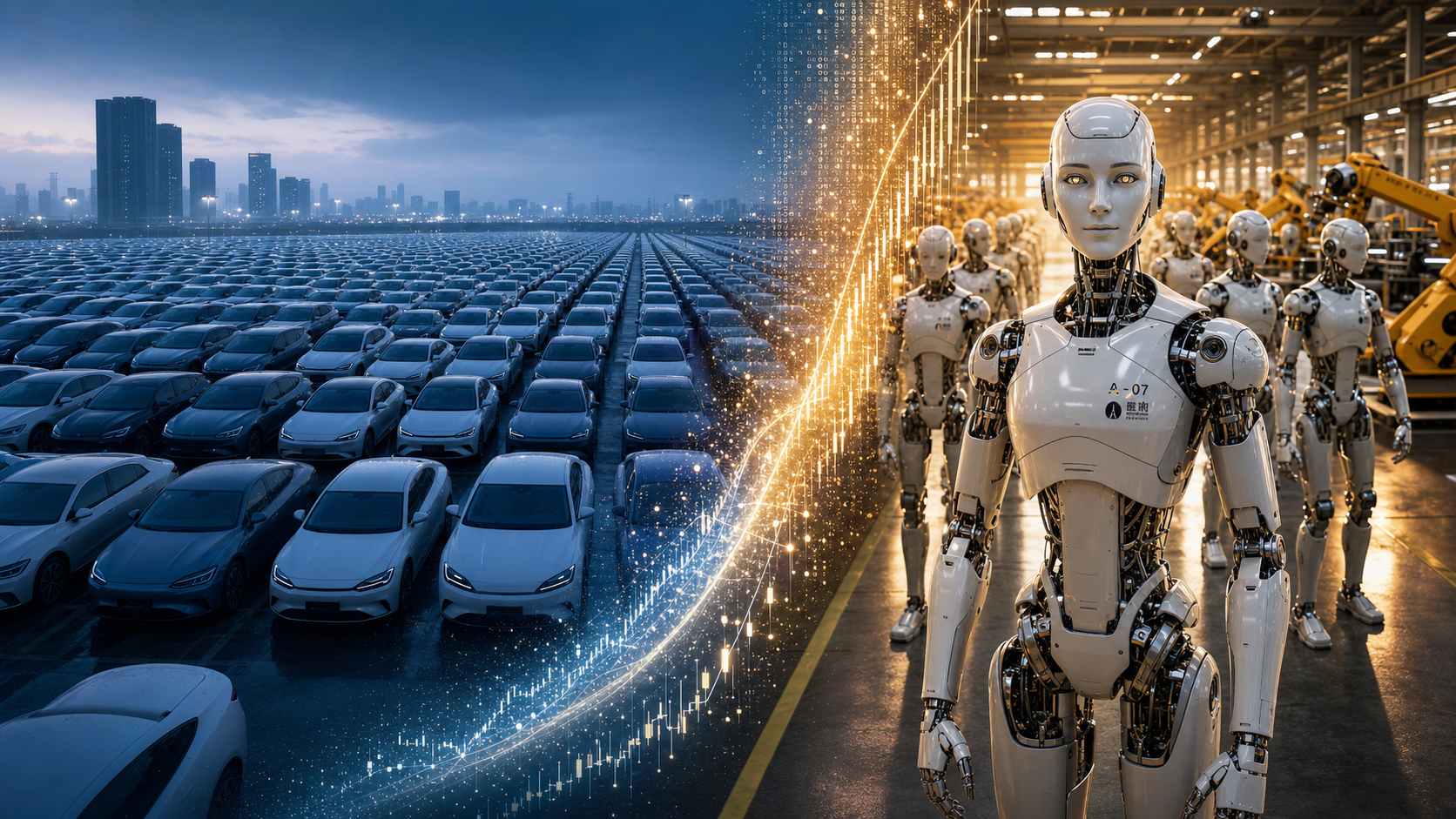
Humanoid robots: The next electric car revolution – China's strategy and ruthless billion-dollar poker game for robot supremacy – Image: Xpert.Digital
20 times more complex than car manufacturing: Why China's next industrial bubble will soon burst
Robots instead of electric cars: How dangerous is China's new technology master plan?
China's industrial policy follows a script that is as fascinating as it is ruthless. What the West witnessed in the electric car market over the past decade—a wave of startups triggered by billions in state funding, followed by gigantic overcapacities and a ruinous price war—is now being repeated at breakneck speed in the humanoid robot sector. Driven by breakthroughs in artificial intelligence (AI), unprecedented sums are flowing into hundreds of new startups, even before a mass-market product exists. But the allure of quick billions is deceptive: The technological hurdles in building a robot are far greater than in car manufacturing. Experts are already warning of an unprecedented shakeout, at the end of which only a few highly capitalized giants will survive. Anyone who understands the pattern of this market dynamic can guess: The coming capital winter in the robotics industry will be shorter, but all the more brutal. A look at an industry in a frenzy—and what that means for the rest of the global economy.
Between euphoria and maturity: Why China's robot boom is repeating the electric car debacle – only faster and more brutal
Anyone wanting to understand Chinese industrial policy over the past fifteen years cannot ignore a pattern: The state identifies a future technology, opens the floodgates of capital, and within a few years, an entire industry with hundreds of competitors emerges from nothing. This is precisely what happened with New Energy Vehicles (NEVs), and it is precisely the same scenario currently unfolding with humanoid robots. Comparing these two developments reveals an almost alarming symmetry in their progression, but also crucial differences in the pace and severity of market consolidation.
Around 2015, the Chinese central government's five-year plan mandated the replacement of foreign technology and manufacturers in the automotive industry with domestic suppliers. Since the technological gap in combustion engines was considered insurmountable, the competition was shifted to a new field where all participants started from scratch: electromobility. This political decision led to the emergence of approximately 500 companies within just a few years, all aiming to build electric vehicles – most of them without any prior experience in automotive manufacturing, many originating from consumer electronics or real estate. Today, a decade later, an almost identical pattern can be observed in the field of humanoid robots: Over 320 companies are now active in the area of embodied artificial intelligence. In the first two months of 2026 alone, more than ten billion yuan in fresh capital flowed into this sector.
The roadmap of an industrial policy bubble
Both industries clearly follow the same script. It begins with a euphoria driven by politics and capital, leading to an initial peak in company formations and valuations. This bubble then bursts, triggering a capital freeze in which many players fail and investors drastically reduce their involvement. Only after this, when technology and the market have truly matured, does a second, more sustainable peak follow, supported by real revenues and functioning business models rather than mere expectations.
This cycle is already almost fully observable in the electric vehicle sector. Of the approximately 480 companies originally registered, over 400 have long since disappeared – most of them without ever having brought a single prototype to market. In recent years alone, more than 75 Chinese car brands have had to give up, and market observers assume that around 30 electric car manufacturers have actually gone bankrupt in the recent past. According to the consulting firm AlixPartners, of the approximately 129 brands currently active in the NEV segment, only about 15 will still be financially viable by 2030. These remaining brands are then expected to control about three-quarters of the entire Chinese market for electric vehicles and plug-in hybrids, with each individual brand having to achieve an average annual sales volume of over one million vehicles to remain profitable. Even the market leader BYD publicly anticipates that around 100 of the approximately 130 electric car brands currently active will not survive the competition.
When excess capacity becomes a weapon
The cause of this selection battle lies in a self-reinforcing dynamic of government subsidies, overcapacity, and a ruinous price war. Because the Chinese government generously distributed loans, subsidies, and simplified registration processes, manufacturers produced far more vehicles than actually needed. The result was a brutal price war, in which BYD offered discounts of up to 34 percent on 22 models in the spring of 2025. According to calculations from the Chinese market, far more vehicles have now been produced than could actually be sold, leading to enormous inventories of unsold new cars, some of which are visible across Europe. At the same time, the financial figures of automakers have deteriorated steadily over the past six years, partly because suppliers have had to wait increasingly longer for payments.
This market consolidation, however, is proceeding more slowly than would be expected from a purely economic perspective. Paradoxically, the reason lies with the state itself: local governments, clinging to their regional automakers for reasons of prestige and employment, are delaying the necessary consolidation process through subsidies and political pressure. Even the attempt at a mega-merger of two large state-owned companies, intended to pool excess capacity, failed due to precisely such political resistance. Analysts at AlixPartners therefore explicitly emphasize that consolidation in China will proceed more slowly than in comparable markets in other countries.
Related to this:

The second wave: Robots as the new promise
While the automotive industry is still in the midst of its consolidation process, speculative capital has long since found a new target. According to the Chinese market research company IT Juzi, the robotics industry's cumulative funding in the first few months of 2026 alone has already exceeded the total for the previous year, reaching over 46 billion yuan, equivalent to more than 10 billion euros. By mid-May 2026, Chinese robotics companies had already raised 5.6 billion US dollars across 176 individual funding rounds – a sum equivalent to the entire venture capital volume of the record year 2021.
The scale of individual funding rounds is now considerable. Galbot secured a 2.5 billion yuan round, which for the first time included participation from the state-owned AI Industry Fund. Newcomer TARS reported the largest single funding round in the entire industry in China to date, raising 455 million US dollars. Several companies, such as AI² Robotics and X Square Robot, have now surpassed valuations of over 20 billion yuan, while the number of active humanoid robotics companies in China has risen to over 140 to 150. The most prominent investors no longer include only traditional venture capitalists, but also major technology companies like Alibaba, Meituan, ByteDance, and Xiaomi, as well as state funds and industrial capital from the automotive and battery sectors.
Warning signs amidst the euphoria
Even industry insiders now openly admit that the valuation jumps don't necessarily reflect a real technological advantage. A partner at the investment firm Shunfeng summed it up to the business newspaper Caixin: It's currently almost impossible to infer the actual technological gap between companies solely from their valuations. Rather, capital is increasingly flowing into robotics because the number of attractive investment targets for speech models and AI agents has noticeably dwindled, while at the same time, expectations are growing that robots could represent an even larger market than electric vehicles in the long run. Analysts are already warning of an impending market shakeout with a ratio of 80 to 20, in which only those companies with sufficient capital reserves and their own technology base are likely to survive, while the window of opportunity for the remaining more than 300 startups is rapidly shrinking. It is also noteworthy that the ten leading companies already control around 40 percent of the total capital flowing into the industry, indicating an early concentration of market power even before a significant mass-produced product exists.
🎯🎯🎯 Sino-Cooperation

Sino-Cooperation is a platform based in China and Germany
Sino-Cooperation is a platform based in China and Germany that promotes exchange and cooperation between German and Chinese companies, especially through events, digital formats and an online cooperation exchange for market entry and partnerships.
More information here:
The race for humanoid robots in China itself is being decided faster than the race for electric cars
Why winter is likely to be shorter for robots
Despite these structural parallels, the expected duration of the capital winter differs significantly between the two industries. The central driver of humanoid robotics is large-scale AI models, particularly so-called vision-language-action models, which allow machines to derive physical actions directly from visual and verbal input. Since this core technology is currently developing at a pace that is more exponential than linear, the industry's trough is expected to last only two to three years. In contrast, the comparable capital winter for electric vehicles extended over five to six years because technological maturation was much more closely tied to physical factors such as battery chemistry, manufacturing facilities, and supply chains, and thus progressed considerably more slowly than the advancement of software models.
This differing rate of maturation is already evident in market data. Forecasts for global sales of humanoid robots have been drastically revised upwards within just a few months; among other changes, a major investment bank doubled its sales forecast for China for 2026 to 28,000 units. According to market estimates, the global market for humanoid robots is expected to grow from approximately US$2.9 billion in 2025 to US$15.3 billion in 2030, representing an annual growth rate of about 39 percent. While the development of electric vehicles has been similarly dynamic, the underlying manufacturing technology was far less volatile and could not be improved at a comparable pace through software updates.
Low barriers to entry, high risk
A crucial structural difference concerns the barriers to entry in both industries. From the outset, the construction of electric vehicles faced significant entry hurdles: capital-intensive production facilities, extensive approval processes, and research and development costs in the high millions deterred at least some potential market participants, although these hurdles were clearly not sufficiently discouraging, given the nearly 500 companies that were ultimately founded.
In China, however, there are currently almost no comparable binding licensing restrictions for humanoid robots. The country only published its first national standard framework for humanoid robots in March 2026, but binding, audit-based approval procedures similar to those in the automotive industry are still largely absent. This lower regulatory barrier to entry means that the initial speculative bubble in the robotics sector could potentially inflate even more than it did with electric vehicles. Consequently, the phenomenon known in economics as Gresham's Law, according to which bad money drives good money out of circulation, threatens to become even more pronounced in the robotics industry: Undercapitalized, technologically weak providers with purely showy capabilities can temporarily attract capital and attention more easily than solid but less spectacular competitors because reliable differentiating factors are harder to identify due to the lack of established testing procedures.
The true level of difficulty behind the facade
Precisely because market access seems so easy, the actual entrepreneurial challenge is often underestimated. Industry experts estimate that building a truly successful and economically viable robotics company is 20 to 100 times more difficult than building a successful automotive manufacturer. This assessment may initially seem counterintuitive, but it becomes clear upon closer examination of the technical complexity: An electric car essentially has to perform a limited, clearly defined task in a highly structured environment, namely to drive safely from A to B. A humanoid robot, on the other hand, has to perform precise physical interactions in a virtually unlimited variety of unstructured, real-world environments, which places significantly higher demands on perception, fine motor skills, safety architecture, and software reliability.
This complexity also explains why, despite spectacular valuations, hardly any Chinese company has yet actually sold robots profitably on a large scale. The majority of current deployments are still limited to pilot projects, such as in factory halls for assembly and transport tasks, or for demonstration purposes at trade fairs and in retail chains. Even flagship companies like X Square Robot, which has already completed eight rounds of financing within two years, are generating initial revenue in the education, hotel, and care sectors, but are still far from mass-market, profitable production.
What this means for investors and the global economy
For international observers, competitors, and investors, this comparison yields several actionable insights. First, it can be assumed that the current valuation dynamics in the Chinese robotics industry will soon be followed by a significant correction, as soon as public and private investors begin demanding actual revenue and scaling figures instead of focusing solely on future promises. Second, experience from the automotive industry suggests that this process will ultimately result in a significantly smaller number of highly specialized, well-capitalized champions, who will then likely enter global markets with substantial government support and economies of scale, as has already happened with BYD and a handful of other electric vehicle manufacturers.
Third, the shorter expected duration of the robotics capital winter should not be mistaken for lower risk intensity. On the contrary: because barriers to entry are lower and valuations are already higher than in a comparable early stage of the electric vehicle industry, the upcoming shakeout process for humanoid robots is likely to be even more severe in terms of absolute capital losses, even if it is shorter in duration. For European and Western competitors, this means one thing above all: the windows of opportunity for technological catch-up are becoming increasingly shorter in both sectors, given the pace of Chinese capital and innovation. This necessitates a differentiated but swift strategic response, rather than waiting for a rapid self-correction of the Chinese market.
🎯🎯🎯 Data-driven B2B industry hub as a quasi-in-house solution

The quasi-in-house solution: How Xpert.Digital closes operational gaps in B2B marketing and sales – Smart Content-Driven Business - Image: Xpert.Digital
Xpert.Digital is a data-driven B2B industry hub led by Konrad Wolfenstein . The company acts as an external, quasi-in-house solution for industrial partners, closing operational gaps in marketing, content, and sales – without requiring additional resources on the client side.
More information here:
Your global marketing and business development partner
☑️ Our business language is English or German
☑️ NEW: Correspondence in your native language!

Konrad Wolfenstein
I and my team are happy to be available to you as your personal advisor.
You can contact me by filling out the contact form here [email protected]:or simply call me at +49 7348 4088 965. My email address is
I'm looking forward to our joint project.
☑️ SME support in strategy, consulting, planning and implementation
☑️ Creation or realignment of the digital strategy and digitization
☑️ Expansion and optimization of international sales processes
☑️ Global & Digital B2B trading platforms
☑️ Pioneer Business Development / Marketing / PR / Trade Fairs
Our China expertise in business development, sales and marketing

Our China expertise in business development, sales and marketing - Image: Xpert.Digital
Industry focus areas: B2B, digitalization (from AI to XR), mechanical engineering, logistics, renewable energies and industry
More information here:
A thematic hub offering insights and expertise:
- Knowledge platform covering global and regional economies, innovation and industry-specific trends
- A collection of analyses, insights, and background information from our key areas of focus
- A place for expertise and information on current developments in business and technology
- A hub for companies seeking information on markets, digitalization, and industry innovations





