
Solar parks in Germany: Between expansion pressure and administrative collapse – public anger and mountains of paperwork
Xpert Pre-Release

Available in 27 languages 📢
Prefer Xpert.Digital on GoogleⓘPublished on: July 31, 2026 / Updated on: July 31, 2026 – Author: Konrad Wolfenstein
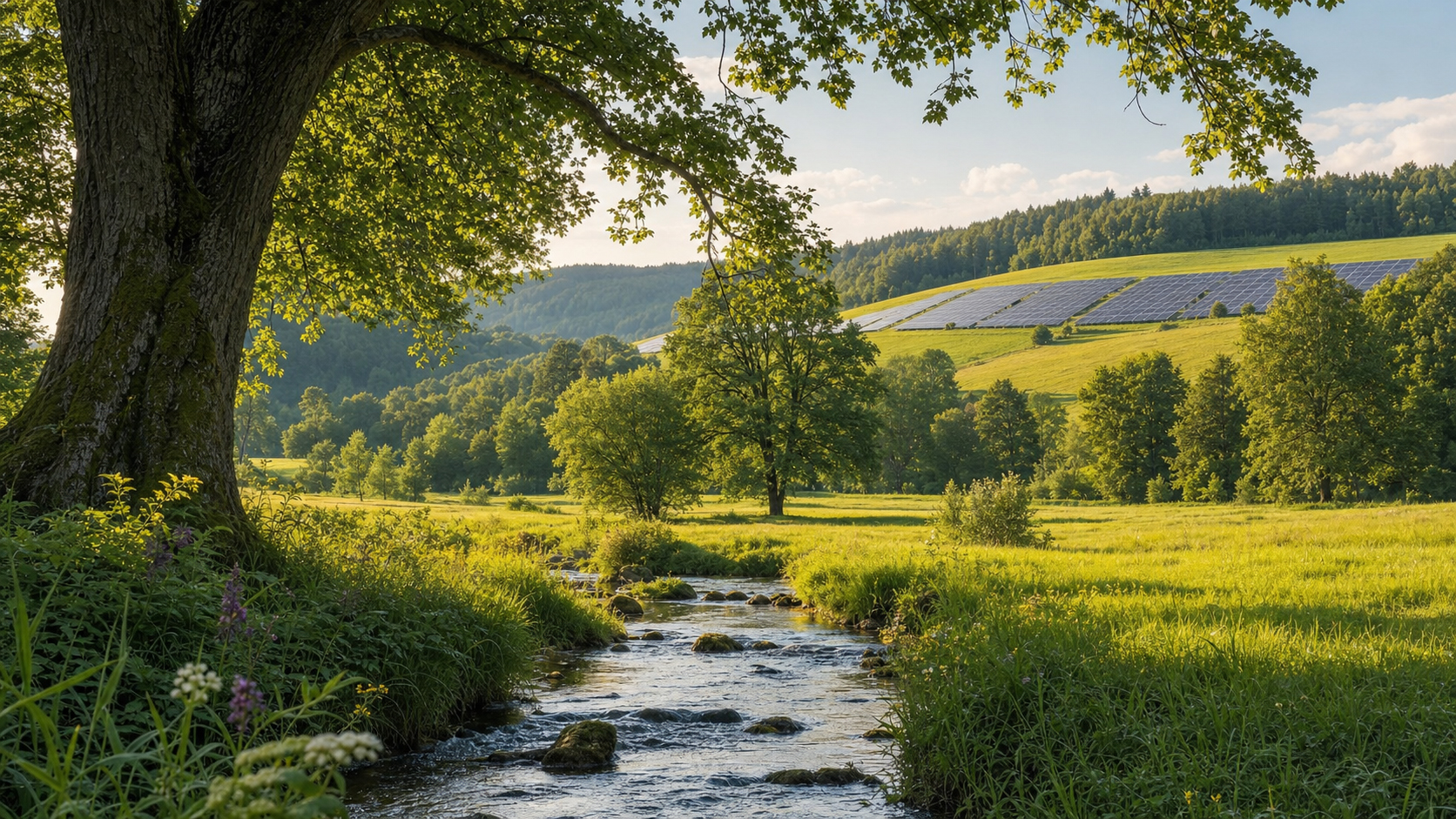
Solar parks in Germany: Between expansion pressure and administrative collapse – public anger and mountains of paperwork – a creative image on the topic, created with AI: Xpert.Digital
Paperwork backlog instead of energy transition: This is why the solar boom is collapsing in building authorities
Public anger and mountains of paperwork: Are Germany's open-field solar parks suffocating in bureaucracy?
"Simply overwhelmed": The dark side of the German photovoltaic miracle
Germany's energy transition has a massive structural problem – and for once, it's not due to the technology. While the federal government sets ambitious expansion targets for photovoltaics and the Federal Network Agency celebrates new record figures, a look at local government practices reveals a dramatic imbalance. Files are piling up in building authorities, approval processes are dragging on for years, and the glaring staff shortage in these agencies is acting as a massive brake on expansion. At the same time, the rush for lucrative open spaces for huge solar parks is exacerbating local conflicts: citizens are resisting the alteration of their landscape, while investors are luring them with high lease payments. Paradoxical situations are arising – from municipalities that can only process a single application per year to solar parks that feed electricity into the grid for years without any permits whatsoever. The following analysis shows how the politically mandated growth program is in danger of being stifled by its own bureaucracy and whether new laws or concepts like agrivoltaics can break this deadlock.
The German photovoltaic industry is in a peculiar state
On the one hand, the Federal Network Agency is reporting record numbers of new installations, while on the other hand, there are increasing reports of delayed permits, overburdened building authorities, and even solar parks that have been producing electricity for years without any permits. These contradictions are not accidental, but rather the result of a system that was politically programmed for maximum speed without the necessary administrative infrastructure having grown accordingly.
An expansion plan that has overtaken reality
At the end of 2025, Germany's installed photovoltaic capacity stood at approximately 117 gigawatts, following the addition of 16.4 to 16.6 gigawatts during the year. While this was enough for a new installation record, it remained significantly below the level required to meet the legally mandated expansion target of 215 gigawatts by 2030. To achieve this goal, over 22 gigawatts would need to be added annually. However, in the first half of 2026, only 7.4 gigawatts were registered, while the total installed capacity grew to approximately 125.4 gigawatts. The gap between political ambition and actual construction activity is therefore not narrowing, but rather remains structurally persistent.
The shift in the distribution of new solar installations is particularly striking. While the majority of new capacity was installed on rooftops in the years leading up to 2024, the expansion is now distributed more or less equally between building-integrated and ground-mounted systems. Ground-mounted solar parks, meaning large areas, mostly agricultural land, covered with solar modules, have thus become a cornerstone of Germany's solar strategy. This fundamentally changes the public debate. Unlike rooftop installations, a solar park directly impacts issues of landscape design, land use, nature conservation, and the local balancing of interests between agriculture and energy production.
When permitting authorities become a bottleneck
The case of the municipality of Herzebrock-Clarholz in North Rhine-Westphalia exemplifies the practical problems plaguing solar expansion. Two solar park projects are currently vying for permits there, but due to a simple lack of staff at the town hall, realistically only one project can be processed per year. This doesn't mean the projects themselves are problematic or that the municipality is politically obstructing expansion; rather, a very basic shortage of resources in the building authorities has become the real obstacle. This observation cannot be dismissed as an isolated incident.
An interview with an experienced project developer highlights the structural dimension of the problem: Of 25 to 30 solar park projects he has overseen, only one was completed within two years; on average, permitting processes for solar parks take two and a half to four years. These are by no means overly complex large-scale projects, but rather comparatively simple technical installations without moving parts and with low potential for disruption compared to, for example, wind turbines. The developer himself believes that a permitting period of one and a half years is technically and legally quite feasible if the authorities were adequately equipped and motivated.
The Möckern case and the limits of control
Particularly alarming is the report that a solar park in the town of Möckern in Saxony-Anhalt was apparently operated for years without the necessary permits. Municipal documents from Möckern reveal that a comprehensive planning process for a project-specific development plan, named "Solarpark Loburg 2," for the Loburg district was only formally initiated in the fall of 2024, even though the area had already been identified as fundamentally suitable as part of a comprehensive spatial concept for the energy use of photovoltaics since 2020. At that time, there was no effective land-use plan for the district in question, which further complicates the planning law situation.
The fact that a solar park can operate on the grid for years without the responsible authorities noticing or imposing timely sanctions raises fundamental questions about the capacity of government oversight. It is a symptom of the same structural problem that is also evident in Herzebrock-Clarholz: municipal building authorities lack the personnel to both process new applications promptly and systematically monitor existing installations. Where permitting procedures are effectively reduced to mere formalities or have to be retrospectively legalized, the actual protective function of building law loses its substance.
Citizen protest and local conflicts of interest
Not all resistance to solar parks can be reduced to bureaucratic delays. In Bayreuth, the controversial nature of site selection within a municipality is evident. The city has established a control concept, designating specific focus areas for photovoltaic systems, including along the highway and in the area south of the Saas River and Bärenleite. This plan has sparked considerable citizen protest in Oberkonnersreuth. A citizens' initiative explicitly opposed the designation of further areas for ground-mounted photovoltaic systems, as documented by a ruling of the Bayreuth Administrative Court in spring 2025.
In the summer of 2026, following this controversial debate, the Bayreuth city council initiated the planning process for a new agri-solar park in the south of the city. Feldwerke, a Munich-based energy company, intends to construct a solar power plant with battery storage on an area of approximately 8.3 hectares. It is noteworthy that the CSU faction on the city council—contrary to its previous position in the urban development committee—voted against initiating the process by a majority vote. Such partisan about-faces illustrate how strongly local solar park decisions are influenced by municipal power politics and the proximity of the next election, and not solely by energy-related necessity.
A similar pattern is evident in Memmingen, Bavaria, where a citizens' initiative has launched a petition against the development of designated solar areas within the "Buxachtal B8 Solar Park" project. The initiators are not demanding the complete abandonment of the project, but rather a restriction to areas that are legally privileged for use and continuous greening to mitigate the long-range impact on the landscape. With only seventy signatures, the petition's reach was limited, but its content exemplifies a recurring conflict: residents generally accept the energy transition but object to the specific visual and landscape impact of individual large-scale installations in their immediate vicinity.
The legal framework acts as both an accelerating and a braking element
In recent years, legislators have repeatedly attempted to legally facilitate the expansion of ground-mounted photovoltaic systems. Since January 1, 2023, ground-mounted photovoltaic systems have been permitted under certain conditions in rural areas, such as along highways or railway lines in a strip of up to 200 meters. This regulation was intended to accelerate expansion because the permissibility of a system no longer depends on a complex zoning plan procedure. In practice, however, as legal experts point out, a significant portion of the substantive review merely shifts from the planning process to the building permit process, where the same personnel shortages as before are now a factor.
In parallel, the German Federal Government passed a law in 2025 to implement the European Renewable Energy Directive. This law introduces fixed maximum deadlines for permitting procedures under immission control and water law, which can range from one month to two years depending on the type of project, as well as the option of a single point of contact for the entire process. Since November 2025, all permitting procedures for renewable energy projects have also had to be processed exclusively electronically. Such deadline regulations are a sensible step, but they do not solve the underlying problem if the authorities simply lack the skilled personnel to process applications within these timeframes.
The situation regarding feed-in tariffs is also constantly changing. With the so-called Solar Peak Act, new regulations were introduced on February 25, 2025, requiring new installations with a peak capacity of seven kilowatts or more to be equipped with smart metering systems and control devices. Furthermore, feed-in tariffs are suspended during periods of negative electricity prices on the exchange, but the tariff period is extended. For larger installations, feed-in tariffs were slightly reduced again by one percent on February 1, 2026. Such adjustments demonstrate that legislators are increasingly attempting to link subsidies more closely to actual market conditions. This alters the predictability of individual projects for developers and indirectly influences the willingness to invest in new ground-mounted solar projects.
New: Patent from the USA – install solar parks up to 30% cheaper and 40% faster and easier – with explanatory videos!

New: Patent from the USA – Install solar parks up to 30% cheaper and 40% faster and easier – with explanatory videos! - Image: Xpert.Digital
The core of this technological advancement is the deliberate departure from conventional clamp mounting, which has been the standard for decades. The new, more time- and cost-effective mounting system addresses this with a fundamentally different, more intelligent concept. Instead of clamping the modules at specific points, they are inserted into a continuous, specially shaped support rail and held securely in place. This design ensures that all forces – whether static loads from snow or dynamic loads from wind – are distributed evenly across the entire length of the module frame.
More information here:
Solar parks in Germany: Between available land and complex permitting procedures
Agri-photovoltaics as a compromise formula
Agri-photovoltaics, which combines agricultural use and electricity generation on the same land, is an increasingly prominent solution to the land-use conflict between agriculture and solar energy. Studies by the Fraunhofer Institute for Solar Energy Systems estimate the theoretical land potential for agri-photovoltaics in Germany at around 4.3 million hectares – many times the area actually needed to achieve expansion targets. The concept promises a dual benefit, as the modules can simultaneously protect against heat and hail, thus counteracting the effects of climate change on agriculture, as Deutschlandfunk also highlighted in a report on agri-photovoltaics in the fields.
However, practical implementation remains more challenging than the sheer potential of available land suggests. Researchers at the Jülich Research Centre point out that the specific technical and economic design – such as the choice of module height, crop type, and management intervals – has a significant impact on the actual dual benefit and is by no means universally applicable to every area. Furthermore, competition for land with primary agricultural production remains a politically sensitive issue, which the responsible Federal Ministry explicitly identifies as a conflict of objectives that must be considered. Agri-photovoltaics can therefore contribute to mitigating land-use conflicts, but it does not replace the fundamental need to noticeably accelerate permitting processes.
Regional differences and the example of Mecklenburg-Western Pomerania
The differences in administrative practices between the German states are illustrated by the situation in Mecklenburg-Western Pomerania. Several years ago, the responsible environment minister there promised a special program to facilitate the construction of new solar parks on at least 5,000 hectares with minimal bureaucracy. However, local communities complain that the actual implementation is progressing far too slowly. The red-red state government has since announced plans to double the available land outside designated suitability areas to 10,000 hectares statewide. However, municipalities and citizens often receive no financial benefit, as the profits largely remain with external investors.
This observation is economically significant because it concerns a key factor in public acceptance. In Bavaria, for example, investors guarantee landowners annual leases of up to €8,000 per hectare, making open-field solar installations extremely attractive for landowners, while residents without their own land are usually excluded from these financial advantages. This asymmetry between the winners and losers of the local energy transition explains a considerable portion of the resistance manifested in citizens' initiatives and petitions, such as those in Bayreuth and Memmingen. Those who are visually affected by a solar installation but do not benefit financially naturally have little incentive to support its expansion.
Economic assessment of administrative bottlenecks
From an economic perspective, delayed permitting processes cause significant costs that are often underestimated in public debate. If a project developer, as described in the cited example from Mecklenburg-Western Pomerania, has already established a community energy cooperative and deposited collateral with the Federal Network Agency because they expected prompt approval, then a delay of several years leads directly to substantial sunk costs – in the case described, around €300,000 due to forfeited collateral alone. Such losses deter potential investors and ultimately increase the cost of every future project, because developers must factor the risk of delays into their calculations.
At the same time, a comparison with other infrastructure projects shows that administrative speed is fundamentally possible if the political will is sufficiently strong. The liquefied natural gas terminal in Mukran on the island of Rügen was completed in a significantly shorter time and even without a full environmental impact assessment, while solar and especially wind power projects in the same region languished in limbo for years. Industry representatives rightly perceive this contrast as a bitter pill to swallow. It demonstrates that administrative processes can indeed be accelerated when a project is classified as particularly urgent, whereas a comparable level of urgency is evidently less frequently achieved politically for renewable energy projects.
The structural role of the lower nature conservation authorities
A recurring pattern in the described delays is the role of the lower nature conservation authorities as so-called public bodies whose consent must be obtained in the permitting process. In several documented cases, these authorities did not explicitly refuse consent, but simply failed to respond to inquiries from the procedural authority for years, or responded only with considerable delay, effectively bringing the entire process to a standstill. While German building law generally stipulates that a higher authority can, in cases of doubt, override a lack of consent, this option is apparently rarely used consistently in practice.
This behavior cannot be explained solely by staff shortages, but also points to differing professional and political priorities within the administration. While climate protection goals are formulated at the federal level, the concrete responsibility for implementation remains with authorities whose original legal mandate is species and nature conservation, and who accordingly may exhibit a structural tendency towards cautious, delayed decision-making. The resulting conflict of objectives between climate protection and traditional nature conservation is rarely openly addressed in public debate, even though it represents one of the main obstacles to solar park expansion in administrative practice.
Market concentration and the role of specialized project developers
The expansion of solar parks in Germany is increasingly being undertaken by specialized project development companies, which often act as lessees rather than owners of the land in question. This is illustrated by the example of the "Loburg 2 Solar Park" in Möckern, where GFM Sonnenkraftwerk 2 GmbH & Co. KG, in cooperation with another project investment company, acted as the project developer. This business model allows for the pooling of capital and planning expertise without incurring high land acquisition costs, but it also shifts the economic incentives: The project developer bears the planning risk, while the landowner receives a largely risk-free, predictable additional income through the lease.
This structure fosters a certain market dynamic in which financially strong, supra-regional project developers increasingly dominate. Smaller, locally rooted players, on the other hand, are structurally disadvantaged by the complexity of modern permitting processes, environmental impact assessments, and conversion evaluations. In the long term, there is a risk that the German solar park market will develop in a direction where a few large players determine expansion. This weakens regional value creation and local acceptance rather than strengthening them, unless targeted citizen participation models are implemented to counteract this trend.
Outlook: Between laws of acceleration and structural overload
The political response to the problems described has so far focused primarily on statutory deadlines and digital application procedures, while the actual staffing capacity of building authorities and permitting agencies has received comparatively little attention. As long as municipalities like Herzebrock-Clarholz can structurally only process one project per year, even the best statutory deadlines will be ineffective. Formal deadlines without sufficient personnel often lead only to blanket rejections or a gradual erosion of the actual depth of expert review.
The Möckern case also illustrates a risk that has so far received insufficient attention in the public debate: If administrative bodies are already overwhelmed with processing new applications, they certainly lack the capacity for systematic retrospective inspections of already constructed installations. This creates a twofold risk that can damage both legal certainty for investors and public confidence in an orderly energy transition. A sustainable solution therefore requires not only new legislation to expedite processes, but also a significant increase in personnel and digital resources for lower-level building authorities and nature conservation agencies. This must be linked to clearer financial participation models for affected municipalities and residents in order to ensure long-term local acceptance of the already irreversible expansion of photovoltaics in Germany.
Your partner for business development in the fields of photovoltaics and construction
From industrial rooftop PV to solar parks and larger solar parking lots
☑️ Our business language is English or German
☑️ NEW: Correspondence in your native language!

Konrad Wolfenstein
I and my team are happy to be available to you as your personal advisor.
You can contact me by filling out the contact form here [email protected]:or simply call me at +49 7348 4088 965. My email address is
I'm looking forward to our joint project.
☑️ EPC services (Engineering, Procurement and Construction)
☑️ Turnkey project development: Development of solar energy projects from start to finish
☑️ Site analysis, system design, installation, commissioning, maintenance and support
☑️ Project financier or intermediary of capital providers







