
Transport transformation in Styria: Intermodal logistics – Alpacem Peggau launches rail terminal with far-reaching potential
Xpert Pre-Release

Available in 27 languages 📢
Prefer Xpert.Digital on GoogleⓘPublished on: July 26, 2026 / Updated on: July 26, 2026 – Author: Konrad Wolfenstein
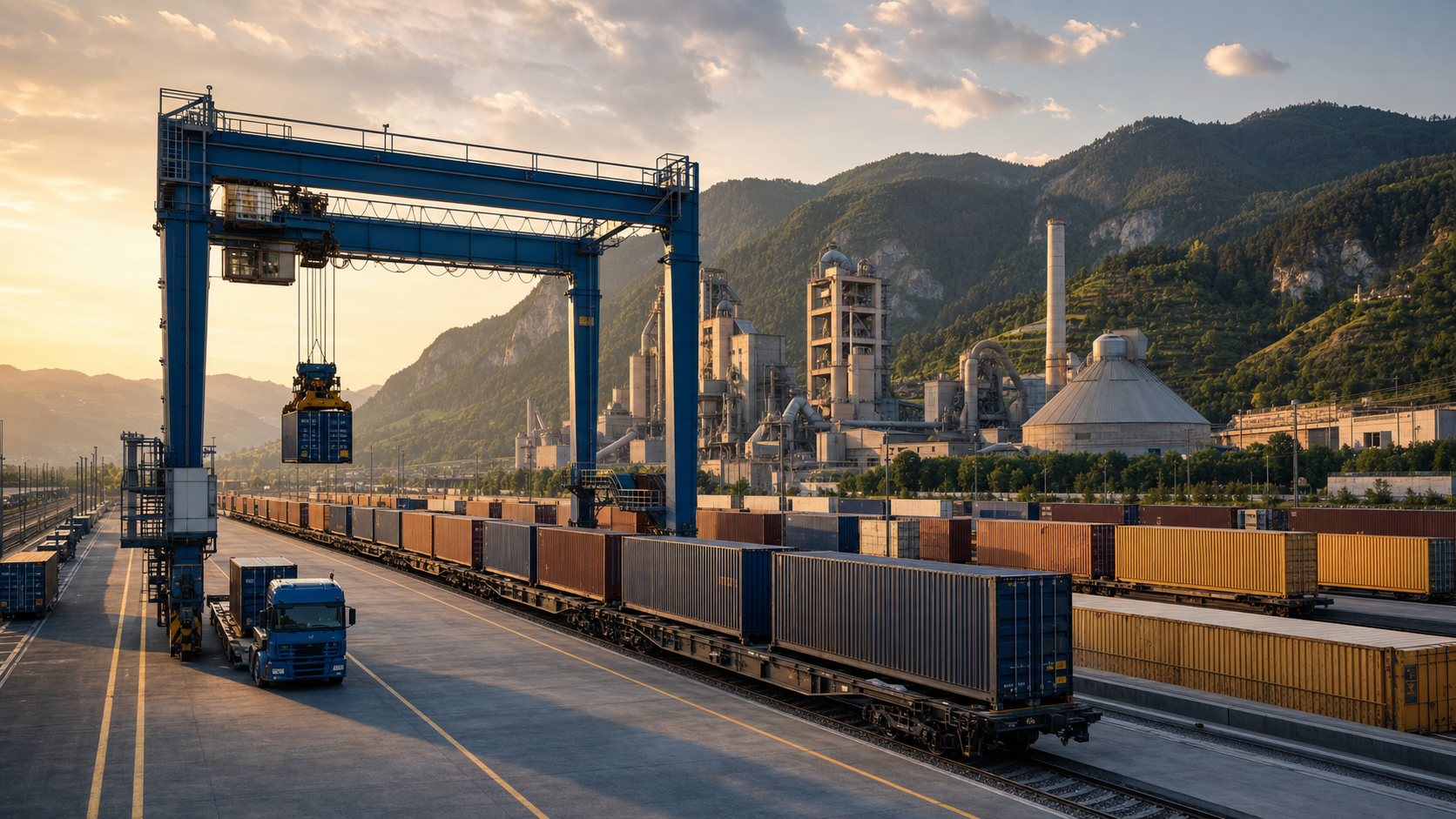
Transport revolution in Styria: Intermodal logistics – Alpacem Peggau launches rail terminal with far-reaching potential – Creative image: Xpert.Digital
Peggau Terminal: The 2.7-hectare site designed to solve Austria's logistics problems – How a new rail terminal is revolutionizing freight transport
Fighting against road dominance: Groundbreaking for mega rail terminal in Upper Styria – How 130 years of industrial history is becoming the logistics hub of the future
A flagship project for the transport revolution: The Peggau terminal
In Peggau, in the heart of Upper Styria, a pioneering infrastructure project is taking shape: the Peggau Terminal. The long-established companies Alpacem, InterCal, and Innofreight are joining forces to transform a 2.7-hectare, previously unused industrial site into a modern logistics hub for rail freight. Amidst challenging economic times and a transport transition that is often slow in Austria, the project partners are sending a strong, entrepreneurial signal for climate protection and long-term regional development. With a direct connection to the Southern Railway line and in anticipation of the opening of the Semmering Base Tunnel, the terminal is intended not only to decarbonize and optimize the raw material logistics of the participating companies but also to serve as a crucial hub for the entire industrial region. The project impressively demonstrates how the urgently needed shift of freight transport from road to rail can be successfully implemented in practice.
Between climate pressure and securing locations: Why a 2.7-hectare area in Upper Styria is becoming a test case for Austria's delayed transport revolution
An industrial site steeped in history is being transformed into the logistics laboratory of the future
In Peggau, north of Graz, 130 years of industrial history merge with a bet on the future of European freight transport. The roots of today's Alpacem and InterCal plant site reach back to 1893, when limestone was first mined and burned in shaft kilns there. On November 21, 2025, the three companies Alpacem, InterCal, and Innofreight, in the presence of Governor Mario Kunasek and Styrian Transport Minister Claudia Holzer, officially launched the Terminal Peggau project. A previously unused 2.7-hectare industrial site is to be transformed into a logistics hub for rail freight, far exceeding the needs of the individual plants themselves.
The timing of this investment decision is remarkable. It falls within a period that even experts consider economically challenging, while at the same time two family-run companies quickly joined forces to realize a multi-million-euro infrastructure project. This can be interpreted as a signal from an economic perspective: when established, long-standing industrial companies invest in stationary rail infrastructure despite a sluggish economy, it suggests a strategic, rather than merely cyclical, approach. The focus is not on short-term capacity utilization, but on securing long-term supply chains and location costs in an environment of rising CO2 pricing and volatile energy prices.
Two family businesses are joining forces for a joint future project
Behind Alpacem and InterCal stands the Carinthian Wietersdorfer Group, an industrial company that has been 100% family-owned since 1893. The company, now operating under the brands Alpacem, InterCal, Amiblu, Hobas, O-tek, Poloplast, and Calcit, is represented in 30 countries, employs 3,670 people, operates at 120 locations, and generated group-wide sales of €1,105 million in 2024. The lime division has operated under the joint InterCal brand since 2021 and, starting from its Peggau location, aims to strengthen its market position across Slovenia and Croatia to the Black Sea. On the other side is Innofreight, a rail freight company from Bruck an der Mur, which already boasts a proven track record of success in combined transport with specialized container solutions such as the MonTainer.
Managing Director Lutz Weber succinctly summarizes the strategic direction when he emphasizes that the new infrastructure will enable more goods to be shifted to rail, the expansion of low-CO2 transport solutions, and the long-term strengthening of the site. Innofreight owner Peter Wanek-Pusset underscores the network concept: it's about a comprehensive solution that links several Alpacem and InterCal locations, and about the unusually rapid collaboration of two family-owned companies in project implementation. This emphasis on site networking is economically significant because it demonstrates that the terminal is not conceived as an isolated project, but rather as a hub within a larger, group-wide logistics network.
Why the location of the area offers almost ideal starting conditions
The choice of location in Peggau is no coincidence, but rather the result of existing infrastructure that makes redevelopment economically attractive. The site already has a direct rail connection to the Southern Railway line and, to the north, access to the S35 expressway, thus providing both rail and road access without major new development. In addition, there is ample storage space for containers, a waiting area for trucks, and development areas for future expansion phases, while previously disused parts of the factory site will be reactivated. From an economic perspective, this starting point significantly reduces the investment risk, as costly development measures are unnecessary and the project focuses primarily on conversion rather than new construction.
The schedule follows a clearly staggered logic:
- The demolition of the disused existing buildings will begin in early 2026 to make room for the multifunctional terminal.
- The planning and design phase follows.
- The commissioning is targeted for 2027.
This sequence – dismantling before construction – on the one hand condenses the construction time, but on the other hand also entails classic implementation risks of larger infrastructure projects such as delays in approvals, increases in construction costs and supply bottlenecks in railway technology, which should not be underestimated in this analysis.
Specific operational advantages of two different raw material logistics systems
The economic benefits of the terminal vary depending on the partner company, but they are complementary. InterCal intends to significantly expand its operational reach with the new terminal and increasingly rely on rail deliveries for raw materials, instead of primarily using trucks. Managing Director Harald Braunecker describes this as a growth strategy based on enhanced networking, which will allow for a considerable expansion of the delivery radius through Innofreight's rail logistics. Since spring 2025, InterCal and Innofreight have been transporting quicklime from Peggau to the Slovakian city of Košice using the MonTainer XXLL WSF large container system. The product is initially moved within the plant premises by truck before the actual intermodal transshipment to rail takes place.
Alpacem, on the other hand, primarily uses the terminal to consolidate and optimize its already established rail raw material logistics. Sales Director Peter Ramskogler points out that Alpacem products from its main plant in Wietersdorf are to be distributed regionally via the Peggau terminal, while in return, raw materials from the Styrian industrial region, such as those from the steel, paper, and construction materials industries, can be transported back to Wietersdorf for further processing. This bidirectional flow of goods is economically attractive because it reduces empty runs on the rail network and thus improves the cost structure of rail transport compared to truck transport – a factor that often determines the profitability or non-profitability of entire modal shift projects in intermodal logistics.
What is also remarkable about the project is its regional added value claim. The terminal is not intended to serve exclusively the two parent companies, but rather to be used by all industrial companies in Upper Styria, thus transforming a single company investment into a regional logistics asset with potentially positive economies of scale for the entire industrial region.
LTW Intralogistics Solutions – Intermodal Transport

LTW Intralogistics Solutions – Intermodal Transport – Image: LTW Intralogistics GmbH
LTW offers its customers not individual components, but integrated complete solutions. Consulting, planning, mechanical and electrotechnical components, control and automation technology, as well as software and service – everything is networked and precisely coordinated.
In-house production of key components is particularly advantageous. This allows for optimal control of quality, supply chains, and interfaces.
LTW stands for reliability, transparency, and collaborative partnership. Loyalty and honesty are firmly anchored in the company's philosophy – a handshake still means something here.
Related to this:
Peggau Terminal: Why this infrastructure project is important for Austria's freight transport
Two major ÖBB projects as a crucial external growth driver
Semmering Base Tunnel and Peggau Terminal: A strategic turning point for European logistics – How private terminal investments solve the rail freight dilemma
The real strategic advantage of the terminal lies in its temporal and geographical interplay with two of Austria's largest railway infrastructure projects.
The Koralm Railway, which drastically speeds up the connection between Carinthia and Styria, is already in operation. After just one hundred days of operation, ÖBB Rail Cargo Group reported more than 1,050 freight trains with over 21,000 wagons and over one million tons transported, resulting in shorter transport routes and lower energy consumption due to the flatter terrain.
Even more significant for the Peggau terminal is the Semmering Base Tunnel, whose approximately 27.3-kilometer-long, twin-tube tunneling was fully completed by the end of 2024 and is scheduled to open in 2030.
This tunnel will create, for the first time, a continuous, flat-track southern rail line from Vienna through Upper Styria to Carinthia. According to ÖBB (Austrian Federal Railways) officials, this represents a tremendous advantage, especially for freight traffic, because modern freight trains can now travel through Austria without the steep gradients and cumbersome pusher locomotives required previously. The travel time between Wiener Neustadt and Graz will be reduced to approximately one hour and twenty minutes, which Governor Johanna Mikl-Leitner described as a revolution in mobility and explicitly characterized as a massive boost for both Austria and Europe as business locations. For a terminal like Peggau, which is located directly on the southern railway line, this means a significant upgrade to its network position: it is positioning itself on a future high-performance axis of the European freight corridor between the Baltic Sea region and the Adriatic Sea, long before the full capacity increase is actually realized in 2030.
Austria's structural dilemma between climate goals and road dominance
The project in Peggau can only be properly understood when viewed against the backdrop of the disappointing overall development of rail freight transport in Austria. Current data from Statistics Austria shows that rail's share of transport performance in Austria recently stood at around 26.4 percent, while at the European level, the rail share remains at only about 17 percent, with trucks accounting for approximately 78 percent across the EU. The goal set by the European rail freight industry itself—to achieve a modal share of 30 percent for rail by 2030—is now considered virtually unattainable. A survey conducted by the Austrian Transport Club (VCÖ) among 259 experts from 177 organizations revealed that 77 percent of the experts consider even a significantly lower target of 34 percent rail share by 2030 unrealistic, while at the same time 93 percent believe that additional measures to strengthen rail transport are necessary.
The experts surveyed cited the following as the main reasons for this structural stagnation:
- The lack of true cost accounting in road freight transport (rank 1).
- Lack of flexibility and long transport times of rail compared to trucks.
- A misguided spatial planning policy.
- Insufficient infrastructure capacity.
The last point mentioned – the insufficient availability of terminals and transshipment points – gets to the heart of what the Peggau project addresses: Without adequate transshipment facilities between road and rail, intermodal transport remains structurally hampered, regardless of how much capacity is built into the main rail network. The VCÖ also points out that truck traffic is responsible for around 40 percent of transport-related greenhouse gas emissions in Austria, further underscoring the urgent need for climate action.
At the political level, this deficit is now openly acknowledged. The Austrian Ministry of Infrastructure is working on a national logistics location strategy, the foundational document of which explicitly states that there is currently a lack of a systematic, nationally coordinated overview of critical supply chains, a link between economic practice and infrastructure planning, and sufficient transparency regarding critical goods, routes, and hubs. According to the document, the share of trucks in Austrian freight transport is stagnating at around 67 percent despite stated climate targets, while existing frameworks such as the Master Plan for Freight Transport 2030 provide strategic guidance but offer no operational solution to acute infrastructure bottlenecks, for example, on the Western Railway, at the Tauern Pass, or at the Brenner Pass. The four leading industry associations for rail freight transport, operating under the platform naturail, generally welcome the announced strategy but simultaneously urge faster progress, as the current growth of 1.8 percent in tonnage and 2.6 percent in transport performance falls significantly short of what is necessary from a climate policy perspective.
What the Peggau terminal demonstrates as a model for other industrial sites
Against this structural backdrop, the project in Peggau takes on an exemplary character. It demonstrates that private, industry-backed terminal investments can begin where government strategy papers remain in the conceptual phase, because they directly connect to existing operational freight flows and existing rail connections, instead of waiting for a comprehensive, overarching political solution. This approach aligns with a key finding of the VCÖ's expert survey, according to which 57 percent of the experts attribute very high potential for strengthening rail freight transport to the expansion of transshipment capacities – even more so than the general expansion of the rail infrastructure itself. At the same time, the survey confirms that 53 percent of the experts recommend consistently ensuring a rail connection when establishing new industrial companies; a criterion that the Peggau location has already fulfilled from the outset due to its historically developed rail connection.
From an economic perspective, the Peggau terminal is a prime example of how securing business locations, decarbonization pressure and regional economic development can be combined in a single investment project:
- For Alpacem and InterCal, the project secures existing jobs and at the same time opens up new possibilities for cross-site quantity control within the Wietersdorfer Group.
- For Innofreight, this expands its intermodal business model by adding another strategically located network node along the southern railway axis.
- For the region around Peggau, the project promises a noticeable reduction in traffic congestion, as access and egress will increasingly be routed via the northern traffic junction Badl-Peggau and the S35, thus relieving the town center of additional heavy traffic.
Opportunities and risks of betting on 2030
The project's central economic gamble lies in its timing in conjunction with the Semmering Base Tunnel. Until its planned commissioning in 2030, the Peggau terminal must initially prove its profitability without the full capacity and efficiency gains of the new southern line, relying solely on existing freight flows between Peggau, Wietersdorf, and international destinations such as Košice. Should the tunnel open as planned in 2030, the terminal's position as a transshipment point on one of Europe's most efficient north-south freight corridors should improve significantly, especially if the regulatory reforms to truck tolls and diesel taxation demanded by experts are implemented concurrently, thereby structurally increasing the relative competitiveness of rail compared to road transport.
However, without these political framework conditions, even well-planned individual projects like the Peggau terminal risk failing due to a fundamental market distortion, which, according to the transport experts surveyed, stems primarily from the lack of true cost accounting for road freight transport. In this respect, the Peggau terminal is less proof that Austria's transport transition is already succeeding, but rather a test case for whether individual, entrepreneurially driven infrastructure projects are sufficient to gradually bring the self-imposed European climate and modal split targets closer to reality, even without comprehensive political guidelines.
Consulting - Planning - Implementation

Konrad Wolfenstein
I would be happy to serve as your personal advisor.
You can contact me at wolfenstein∂xpert.digital or
Just call me on +49 7348 4088 965 .
Your container high-bay warehouse and container terminal experts

Container high-bay warehouses and container terminals: The logistical interplay – expert advice and solutions - Creative image: Xpert.Digital
This innovative technology promises to fundamentally change container logistics. Instead of stacking containers horizontally as before, they will be stored vertically in multi-story steel racking structures. This not only allows for a drastic increase in storage capacity within the same area, but also revolutionizes all processes at the container terminal.
More information here:










