
Blog/Portal for Smart FACTORY | CITY | XR | METAVERSE | AI | DIGITIZATION | SOLAR | Industry Influencer (II)

Industry Hub & Blog for B2B Industry - Mechanical Engineering - Logistics/Intralogistics - Photovoltaics (PV/Solar)
For Smart FACTORY | CITY | XR | METAVERSE | AI | DIGITIZATION | SOLAR | Industry Influencers (II) | Startups | Support/Consulting

Business Innovator - Xpert.Digital - Konrad Wolfenstein
More information here

Language selection 📢


⭐️ China

China – economic power, global player and strategic pacesetter
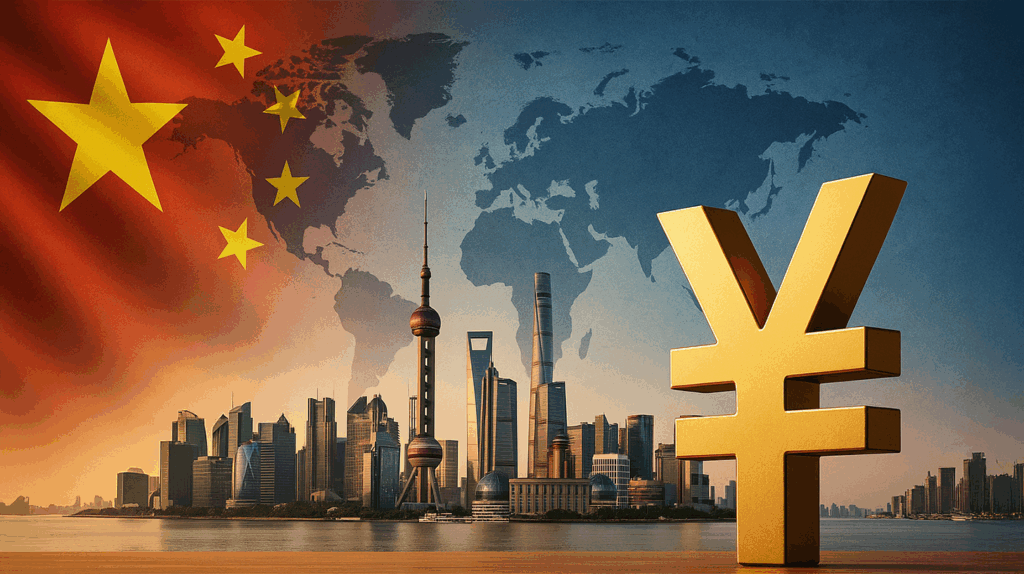
China – economic power, global player and strategic pacesetter – Image: Xpert.Digital


With a breathtaking catch-up, China has transformed itself into the world's second-largest economy in just a few decades. The former "workshop of the world" has long since become a global innovation leader, setting key standards in technology, science, and trade. Today, the country plays an indispensable key role in virtually all areas of international cooperation.


China's success is based on strategic foresight and a commitment to global integration – evident in visionary initiatives like the Belt and Road Initiative, which brings continents closer together economically. Internally, the country is also driving remarkable change: the transition to a sustainable, highly modern economy and the resolution of demographic challenges demonstrate the immense adaptability of Chinese society.


Here we comprehensively examine China's economic, technological, and social developments. We demonstrate the enormous opportunities these developments present for Europe, the Global South, and the international community.

  • Three world powers, one failure – Why Germany, the USA and China are making the same infrastructure mistake

    ▶️ Three world powers, one failure – Why Germany, the USA and China are making the same infrastructure mistake

    | The Bonn North Bridge is a prime example of a German backlog of infrastructure repairs that has long since had national repercussions. | Outdated power grids and the rapidly growing demand driven by AI and electromobility threaten regional and international system collapse. | Germany, the USA, and China exhibit similar perverse incentives: too little planning, too much short-term thinking. | Despite multi-billion-euro programs, implementation gaps and bureaucratic hurdles remain a core problem. | | Skilled labor shortages, supply bottlenecks, and lengthy approval processes are slowing down urgently needed construction projects. | Economic consequences range from traffic jams and productivity losses to billions in costs due to diversions and outages. | Successful countries rely on independent authorities, long-term planning, and transparent cost estimates. | Grid expansion is crucial for the energy transition; otherwise, climate targets and security of supply will remain unattainable. | | The political challenge: Election cycles and budget rules often prevent sustainable investments. | | The global infrastructure crisis is a government responsibility—invest or accept the destroyed foundations. [...]

    ▶️ Read more here


    “Epicenter of the China shock”: How a misconception is ruining our industry

    ▶️ “Epicenter of the China shock”: How a misconception is ruining our industry

    This analysis on Xpert.Digital explains why Germany has become the "epicenter of the China Shock 2.0." | It shows how massive Chinese subsidies, overcapacities, and an undervalued exchange rate threaten German industries. | The study criticizes Berlin's misdiagnoses and its adherence to symptom management instead of strategic industrial policy. | At the same time, the text documents the quiet shift of German value chains to Bulgaria and the consequences for small and medium-sized enterprises (SMEs). | It highlights the three-pronged problem: lost export markets, competition in the domestic market, and declining competitiveness. | Using the solar industry as an example, the danger of strategic dependence on China is vividly illustrated. | The article warns of the symbolic turning point that Germany now imports more capital goods from China than it exports there. | It discusses possible policy responses—from European safeguards to sectoral tariffs—and their limitations. | At the same time, a practical nearshoring alternative to Bulgaria is presented as part of a hybrid reorganization of supply chains. Conclusion: Without a decisive, coherent industrial policy, Germany risks losing its technological leadership. [...]

    ▶️ Read more here


  • Three giants, three crises – Why neither the USA, nor China, nor Germany are prepared for the future

    ▶️ Three giants, three crises – Why neither the USA, nor China, nor Germany are prepared for the future

    Three giants, three crises: The US, China, and Germany are insufficiently prepared for epochal change. | | China's export strength is proving to be a structural trap with weak domestic consumption and dangerous overcapacities. | | The working-time myth shows that more hours do not automatically mean more productivity or prosperity. | | Control of rare earths and strategic supply chains makes China difficult to attack in key sectors. | In robotics and electromobility, China is achieving impressive market shares, but economic added value and export risks are uncertain. | | The US dominates cloud computing and AI, but is paying a high price for the deindustrialization of its physical economy. | | Germany is stagnating despite strong medium-sized businesses and a tradition of engineering—the main problem is psychological and communicative. | A positive narrative of new beginnings, one that unites reforms, investments, and social energy, is lacking. | In times of technological discontinuity, speed of adaptation is more important than sheer size. Germany's opportunity lies in strategic clarity, rapid modernization, and a new communication culture that generates decisive action. [...]

    ▶️ Learn more here


    China's AI models are flooding the global market – and Europe must decide: play along or fall behind

    ▶️ China's AI models are flooding the global market – and Europe must decide: play along or fall behind

    China's open-source AI is flooding the market, forcing Europe to make a strategic choice between participating and maintaining sovereignty. | European companies face a dilemma: leverage the cost advantages of Chinese models or accept data protection and security risks. | GDPR, PIPL, and the Chinese intelligence law create a legal tension that complicates cross-border projects. | The EU AI Act places additional responsibilities on European operators and requires strict transparency and compliance obligations. | On-premise deployments and hybrid architectures offer viable ways to maintain data sovereignty while still benefiting from high performance. | IP protection, clear contractual clauses, and international patent strategies are crucial before development begins. | Operational models with a clear division of labor (EU compliance, Chinese optimization) enable economic efficiency without legal naivety. Europe needs investment-based AI sovereignty (computing infrastructure, funding, GenAI4EU) to avoid strategic dependencies. | | Technical excellence alone is not enough—intercultural leadership, data classification, and risk management determine project success. | The pragmatic answer is not a categorical no, but rather governance-driven use of Chinese AI resources under European control. [...]

    ▶️ Learn more here


  • 99% drop in one month: How China is cutting off the tap for German industry

    ▶️ 99% drop in one month: How China is cutting off the tap for German industry

    China is drastically reducing exports of gallium and germanium, putting entire industries under pressure. | | A slump of over 99% in one month shows that this is about geopolitical power, not just trade. | Germany's high-tech industry risks losing functionality in 5G, semiconductors, and defense technology without these metals. | Dependence on China is part of a triple vulnerability alongside energy and technology dependence. | | EU measures such as the Critical Raw Materials Act have been launched, but they are insufficient in terms of time and scale. | | Europe's problem lies less in deposits than in a lack of processing and investment capacity. | | Diplomacy and trade delegations are seeking solutions, but Beijing is deliberately creating uncertainty. | Companies face supply chain risks and must seriously address derisking. | The debate about raw material sovereignty has now become a question of national and European security. | | Whoever controls resources controls the future of technology and defense—action is urgently needed. [...]

    ▶️ Read more here


    Why China is right and why the West is now paying the price for a historic mistake

    ▶️ Why China is right and why the West is now paying the price for a historic mistake

    A concise overview of China's strategic raw material power and the West's historical mistakes. | Why China uses gallium, germanium, and rare earth elements as geopolitical leverage and how the global high-tech ecosystem suffers as a result. | The analysis shows how decades of Beijing's industrial policy have led to dominant control over extraction and processing stages. | Export controls and extraterritorial rules are presented as Beijing's legitimate countermeasures against Western sanctions. | Examples and figures demonstrate the far-reaching market effects since 2023, including drastic declines in exports. | The text explains how knowledge transfer and technology exports are now also subject to licensing requirements. | Europe and Germany are in a state of structural dependency that cannot be resolved in the short term. | Beijing's negotiating strategy relies on measured opening and permanent uncertainty instead of a total embargo. | Western legal and subsidy strategies are reaching their limits in the face of China's long-term perspective. Conclusion: Without far-reaching, long-term strategies, the West remains vulnerable to Beijing's geoeconomic power. [...]

    ▶️ Read more here


  • Permanently cheaper and 75% cheaper, AI price war escalates: How China's DeepSeek is destroying the calculations of Western tech giants

    ▶️ Permanently cheaper and 75% cheaper, AI price war escalates: How China's DeepSeek is destroying the calculations of Western tech giants

    DeepSeek launches a sustained price war, slashing top token prices by 75%, reshaping the global AI cost landscape. | By optimizing for Huawei's Ascend chips and leveraging government subsidies, DeepSeek is breaking free from Nvidia dependency and setting new pricing standards. | | For German and European companies, using Chinese APIs poses significant GDPR and compliance risks. | Data protection authorities are investigating DeepSeek; data storage in China and potential government access rights make many applications problematic. | Western providers are responding with hidden price increases through tokenizer changes, unexpectedly exceeding enterprise budgets. | Examples like Uber and Microsoft demonstrate how token-based billing without observability can financially overwhelm companies. | | Self-hosting and multi-provider strategies offer a viable middle ground to balance costs, data privacy, and vendor lock-in. | Decision-makers must now integrate model tiering, token tracking, and vendor diversification into their AI strategy. The price war is geopolitical: China is positioning itself as a long-term competitor with vertically integrated ecosystems. | Companies that combine cost, compliance, and technological independence secure sustainable competitiveness. [...]

    ▶️ Read more here


    Is China's robotics bubble about to burst? The "valley of death" of robotics: China's radical plan for humanoid robots

    ▶️ Is China's robotics bubble about to burst? The "valley of death" of robotics: China's radical plan for humanoid robots

    China's humanoid robotics is stuck in the "valley of death" and struggling for economic viability. | Huge investments are colliding with the reality of insufficient production readiness. | Many startups are securing cash flow through leasing and entertainment deployments. | Data centers are producing training data as a strategic resource for physical AI. | High-risk niches like power grid inspections offer lucrative entry markets. | Education and research clients are creating reliable sales channels for humanoids. | Government support and early adoption are giving China structural advantages. | Warnings of bubbles highlight the fragility of current growth. | Survivors are combining leasing, data sales, and niche solutions. | Those who acquire customers, data, and references now have the best long-term prospects. [...]

    ▶️ Learn more here


  • Nvidia's nightmare in China: Alibaba's new AI chip Zhenwu M890 is making the AI ​​powerhouse USA nervous

    ▶️ Nvidia's nightmare in China: Alibaba's new Zhenwu M890 AI chip is making the US AI powerhouse nervous

    Alibaba unveils the Zhenwu M890, propelling China's AI ambitions in a new direction. | US export restrictions have surprisingly fueled domestic chip development. | The M890 is designed as a full-stack solution for training and inference, targeting the "agentic era." | With 144 GB of HBM and 800 GB/s bandwidth, it is particularly optimized for memory-intensive, autonomous AI workloads. | Alibaba's platform strategy combines hardware, models, and cloud into an attractive overall package for Chinese customers. | The pricing model and local compliance strengthen its market position despite remaining technical gaps. | Nvidia's market share in China is shrinking dramatically, demonstrating the geopolitical impact. | Government support programs and industrial policy are driving capacity building and ecosystem development. | At the same time, risks arise from vendor lock-in and potential inefficiencies in closed systems. | The M890 marks less the end than the beginning of a global reshaping of the semiconductor and AI market. [...]

    ▶️ Learn more here


    Is China's economy in decline? The illusion is crumbling: Why consumption is suddenly collapsing

    ▶️ Is China's economy in decline? The illusion is crumbling: Why consumption is suddenly collapsing

    China's economy is faltering: April data shows a surprising collapse in domestic consumption. | Retail sales and industrial production weakened significantly, exposing structural problems. | The ongoing housing crisis has eroded wealth and dampened the willingness of many households to spend. | The car market is collapsing – seven months of decline and a slump in passenger car sales signal deep distrust. | High savings rates and a weak social safety net are exacerbating the sluggish demand and increasing deflationary risks. | China is exporting excess capacity abroad, which provides short-term support but fosters protectionism and tensions in the long term. | High youth unemployment is depriving an entire generation of purchasing power and confidence in the future. | Overcapacity in key industries is creating price pressure and putting pressure on global competitors, including German manufacturers. | Beijing's stimulus measures fall short of addressing the deep-seated structural problems and the erosion of confidence. This analysis explains why China's growth model rests on shaky foundations and what global consequences this has. [...]

    ▶️ Read more here

     

  • Vocational training as a market entry model – China's underestimated infrastructure for German industrial companies

    ▶️ Vocational training as a market entry model – China's underestimated infrastructure for German industrial companies

    Vocational training as a market entry model: How German SMEs are gaining a lasting foothold in China through dual training centers. | Localization 3.0 means not only manufacturing, but also deep integration into China's education and industrial ecosystems. | Taicang demonstrates how German-Chinese training centers are becoming application validation hubs and sales accelerators. | Vocational schools act as political and economic gateways to local governments and industry networks. | | Training produces skilled workers who prefer German technologies, thus anchoring long-term demand. | The model reduces market entry costs, shortens training times, and strengthens customer loyalty through local service expertise. | | Risks exist regarding the protection of intellectual property and regulatory vulnerability with deep integration. | A three-phase approach (partner selection, teaching modules, validation hub) makes the concept operational and scalable. | For capital goods requiring explanation, the training model offers long-term economic superiority over traditional sales channels. | Vocational training thus becomes a strategic structural principle of German-Chinese industrial cooperation and creates institutional resilience. [...]

    ▶️ Learn more here


    Trump's state visit to China: When the dealmaker meets the system configurator – and returns home empty-handed

    ▶️ Trump's state visit to China: When the dealmaker meets the system configurator – and goes home empty-handed

    Trump's state visit to Beijing shines on the surface, but reveals strategic imbalances between the US and China. | Symbolic deals like a Boeing commitment mask Washington's real negotiating disadvantages. | | China is sending clear signals of power in global supply chains with rare earths and export controls. | The differing public narratives show that Beijing determines the long-term framework. | | The Boeing announcement appears political rather than contractual and reflects limited negotiating leverage. | China's dominance in rare earths and processing infrastructure creates geopolitical leverage. | Technology exports and chip policy remain a risky dilemma for the US. | Fentanyl pledges are politically expedient, but do not solve the structural problem. | The Busan agreement is a temporary truce with a clear expiration date. | Overall, the summit marks a power shift toward a multipolar world with Beijing as the central hub. [...]

    ▶️ Read more here


  • Belt and Road Initiative (BRI) | The geostrategic significance of the “New Silk Road”: China’s largest geopolitical experiment

    ▶️ Belt and Road Initiative (BRI) | The geostrategic significance of the “New Silk Road”: China’s largest geopolitical experiment

    The Belt and Road Initiative (New Silk Road) is China's gigantic infrastructure and power project, reshaping global trade and power relations. | In 2025, investments and contracts reached record highs, demonstrating Beijing's determination to expand physical and digital connectivity. | At the same time, high levels of debt and hidden liabilities are pushing many partner countries into financial dependency and triggering debt crises. | | Alongside impressive ports, railways, and power plants, many projects reveal quality defects, environmental problems, and low local value creation. | The Digital Silk Road is creating invisible dependencies through fiber optics, 5G, and data centers, promoting Chinese technological and standards dominance. | Criticism focuses on a lack of transparency, preferential awarding of contracts to Chinese companies, and inadequate governance in recipient countries. | | Western counter-proposals such as Global Gateway and PGII rely on standards and private capital but have so far struggled to compete with China's pace and conditions. | China's domestic interests—overcapacity, export surpluses, and resource security—are a major driving force behind its external expansion. The BRI is undergoing a structural transformation: from expansive lending to a role as a debt collector and pragmatic contractor. | Whether the initiative will be geopolitically successful in the long term [...]

    ▶️ read more here


    How a distant war brings China's most important industry to a standstill: Historic collapse in the world's largest car market

    ▶️ How a distant war is bringing China's most important industry to a standstill: Historic collapse in the world's largest car market

    The transatlantic illusion is shattering: Washington is increasingly revealing itself as a hegemon, not an equal partner. | Military blackmail and troop withdrawals make it clear that the US presence often serves as a bargaining chip. | Trade conflicts and tariffs are hitting European industry hard and revealing economic vulnerability. | The Ukraine debacle illustrates how allies are instrumentalized and abandoned when US interests demand it. | Germany stands at a historic turning point between dependence and strategic independence. | Building European defense and technology capabilities is expensive, but increasingly unavoidable. | Transatlantic elite networks have long masked the asymmetric relationship and marginalized criticism. | Economic figures and declining exports highlight the urgency of diversification. | A coherent European strategy for sovereignty requires common structures, investment, and patience. | The crisis also presents an opportunity: Europe can emancipate itself and shape an independent, resilient foreign and security policy. [...]

    ▶️ Learn more here


  • The dancing robot is the show, the gripper arm is the business – Hannover Messe 2026 and the economics of humanoid robotics

    ▶️ The dancing robot is the show, the gripper arm is the business – Hannover Messe 2026 and the economics of humanoid robotics

    At Hannover Messe 2026, humanoid robots will attract attention, but their economic value often lies elsewhere. | Robotic arms and cobots secure locations and generate the most real cash flow today. | Only 4% of companies have fully scaled physical AI solutions, according to a Capgemini study. | | China is building an enormous competitive advantage through subsidies, EV cross-financing, and cluster policies. | The crucial question is not bipedalism, but who controls foundation models, sensors, and data. | Cobots and mobile systems are growing rapidly and are the more economically sound investments in the short term. | Demographic change will make humanoid robots indispensable for unstructured work environments in the long term. | | Companies must establish data pipelines, pilot projects, and collaborations with research institutions today. | In the short term, automation with cobots is worthwhile; in the medium term, specialized humanoids; and in the long term, embodied AI platforms will dominate. | Those who miss out on strategy, data, and collaborations now risk losing market share and technological leadership in the long run. [...]

    ▶️ Learn more here


    Container logistics in China – Global comparison, supply challenges and trimodal system solutions

    ▶️ Container logistics in China – Global comparison, supply challenges and trimodal system solutions

    Showroom instead of strategy: Why China's 6S robot stores are often more show than substance and leave SMEs out. | The leasing and RaaS model explains how OpEx can accelerate adoption in small businesses. | Facts and figures on market size, new installations, and increasing import substitution in China reveal the enormous economic potential. | The structural paradox: Strong growth in corporations, lack of widespread adoption in manufacturing SMEs. | Why digital twins and AR can transform showrooms into genuine planning and decision-making tools. | Education and practical training as key to disseminating knowledge and avoiding bad investments. | Where the real leverage is: Second and third city clusters like Quanzhou and Ningbo instead of just Shenzhen. | Opportunities for German providers: Niche expertise, local hubs, and strategic market opening are crucial. | What a true robotics hub must offer—consulting, testing environment, financing, and education in an integrated package. | Conclusion: Replacing showrooms with hubs unlocks the untapped billion-dollar opportunities of global automation. [...]

    ▶️ Learn more here


  • Showroom instead of strategy: The dangerous misconception of the “Robot 6S Stores” – and what a real “Robotics Hub” should look like

    ▶️ Showroom instead of strategy: The dangerous misconception of the “Robot 6S Stores” – and what a real “Robotics Hub” should look like

    Showroom instead of strategy: Why China's 6S robot stores are often more show than substance and leave SMEs out. | The leasing and RaaS model explains how OpEx can accelerate adoption in small businesses. | Facts and figures on market size, new installations, and increasing import substitution in China reveal the enormous economic potential. | The structural paradox: Strong growth in corporations, lack of widespread adoption in manufacturing SMEs. | Why digital twins and AR can transform showrooms into genuine planning and decision-making tools. | Education and practical training as key to disseminating knowledge and avoiding bad investments. | Where the real leverage is: Second and third city clusters like Quanzhou and Ningbo instead of just Shenzhen. | Opportunities for German providers: Niche expertise, local hubs, and strategic market opening are crucial. | What a true robotics hub must offer—consulting, testing environment, financing, and education in an integrated package. | Conclusion: Replacing showrooms with hubs unlocks the untapped billion-dollar opportunities of global automation. [...]

    ▶️ Learn more here


    90 percent market share: How China's humanoid robots are leaving the West behind

    ▶️ 90 percent market share: How China's humanoid robots are leaving the West behind

    China will dominate humanoid robotics by 2025 with a market share of around 90% and is driving global mass production. | Five Chinese tech giants are leading the automation offensive with billion-dollar valuations and aggressive growth strategies. | From affordable models under $6,000 to industrial robots at Airbus, there is broad industrial applicability. | Government subsidies, private capital, and targeted planning (five-year plan) form the backbone of this rise. | Patents, production practices, and installation experience give China sustainable technological depth. | Nevertheless, many units went to research institutions in 2025; large-scale commercial production remains a challenge. | The question now is the total cost of ownership: Is long-term deployment worthwhile under real-world conditions? | This rise has significant geopolitical consequences, while Western powers face strategic dilemmas. Key players like UBTECH, AgiBot, Unitree, DEEP Robotics, and Fourier combine full-stack approaches, scalability, and specialized expertise. | xpert.digital examines this revolution, its economic consequences, and the next phase of competition for deployment and service capability. [...]

    ▶️ Learn more here


  • China | The digital parallel universe: What the West urgently needs to learn about the super-app empire

    ▶️ China | The digital parallel universe: What the West urgently needs to learn about the super-app empire

    China forms a unique digital parallel universe where super apps merge everyday life and business. | WeChat, Douyin, and other platforms seamlessly integrate communication, payments, commerce, and services into a few ecosystems. | Cashless transactions, QR code payments, and e-CNY are shaping a cashierless society with billions of transactions. | Huge user numbers, 5G infrastructure, and AI breakthroughs like DeepSeek are driving a digital economy of global reach. | Live commerce and short videos have become revenue engines and are radically changing consumer behavior. | For B2B and sales, WeChat is central infrastructure and an indispensable tool for guanxi-based relationships. | | BAT corporations control data, platforms, and the advertising economy, functioning like private state infrastructure. | Digital inclusion reaches elderly and rural users through government programs and tailored services. | Western companies must radically realign their digital strategies if they want to succeed in this unique market. [...]

    ▶️ Learn more here


    Economic power in transition: Why Germany and China remain interdependent

    ▶️ Economic power in transition: Why Germany and China remain interdependent

    For decades, Germany and China have combined precision and scalability into a powerful economic partnership. | Bilateral cooperation supports over one million German jobs and creates global value chains. | | De-risking, rather than de-coupling, is the pragmatic way to seize opportunities and reduce dependencies. | | Industries such as automotive, mechanical engineering, and battery cells benefit from complementary strengths and accelerated time to market. | Climate and energy partnerships, particularly in solar modules and hydrogen, drive the green transformation. | Scientific collaborations and university networks multiply innovation potential and technology transfer. | Triangular cooperation and Belt and Road Initiatives open up opportunities in third countries and strengthen global infrastructure. | Risks exist in critical supply chains, rare earth elements, and technology transfers, requiring strategic countermeasures. | | Selective interdependence combines open markets with targeted risk reduction and the protection of critical technologies. | The future of the global economy depends on whether Germany and China cooperate constructively and act with strategic responsibility. [...]

    ▶️ Learn more here


Page 1 of 1412345...10...»Last »
Partner in Germany and Europe - Business Development - Marketing & PR

Your partner in Germany and Europe

  • 🔵 Business Development
  • 🔵 Trade Fairs, Marketing & PR

China Economy & Trends – Blog / Analysis


Sino-cooperation
Sino-Cooperation promotes exchange and cooperation between German and Chinese companies


Contact - Questions - Help - Konrad Wolfenstein / Xpert.Digital
  • Your contact for questions & help
  • • Contact person: Konrad Wolfenstein
  • • Email: [email protected]


Business & Trends – Blog / Analysis
  • Xpert.Digital Overview
  • Xpert.Digital SEO
Contact/Info
  • Contact – Pioneer Business Development Expert & Expertise
  • Contact form
  • imprint
  • Privacy Policy
  • Terms and Conditions
  • e.Xpert Infotainment
  • Infomail
  • Solar system configurator (all variants)
  • Industrial (B2B/Business) Metaverse Configurator
Menu/Categories
  • Enterprise XR Solution Hub
  • Raw materials, global sourcing & trade
  • Managed AI Platform
  • AI-powered gamification platform for interactive content
  • LTW Solutions
  • Logistics/Intralogistics
  • Artificial Intelligence (AI) – AI Blog, Hotspot and Content Hub
  • New PV solutions
  • Sales/Marketing Blog
  • Renewable energy
  • Robotics
  • New: Economy
  • Heating systems of the future – Carbon Heat System (carbon fiber heaters) – Infrared heaters – Heat pumps
  • Smart & Intelligent B2B / Industry 4.0 (including mechanical engineering, construction industry, logistics, intralogistics) – Manufacturing industry
  • Smart City & Intelligent Cities, Hubs & Columbarium – Urbanization Solutions – Urban Logistics Consulting and Planning
  • Sensors and measurement technology – Industrial sensors – Smart & Intelligent – ​​Autonomous & Automation systems
  • Advanced metal fabrication & joining technology
  • Augmented & Extended Reality – Metaverse Planning Office / Agency
  • Digital hub for entrepreneurship and start-ups – information, tips, support & advice
  • Agri-photovoltaics (Agri-PV) consulting, planning and implementation (construction, installation & assembly)
  • Covered solar parking spaces: Solar carports – Solar carports – Solar carports
  • Energy-efficient renovation and new construction – Energy efficiency
  • Electricity storage, battery storage and energy storage
  • Blockchain technology
  • NSEO Blog for GEO (Generative Engine Optimization) and AIS Artificial Intelligence Search
  • Order acquisition
  • Digital Intelligence
  • Digital Transformation
  • E-commerce
  • Finance / Blog / Topics
  • Internet of Things
  • „Realitätscheck Politik“ (National Affairs Observer)
  • Bulgaria
  • USA
  • China
  • Sino-cooperation
  • Hub for Security and Defense
  • Trends
  • In practice
  • vision
  • Cyber ​​Crime/Data Protection
  • Social Media
  • eSports
  • glossary
  • Healthy eating
  • Wind power / Wind energy
  • Innovation & Strategy: Planning, consulting, and implementation for Artificial Intelligence / Photovoltaics / Logistics / Digitalization / Finance
  • Cold Chain Logistics (fresh logistics/refrigerated logistics)
  • Solar power in Ulm, around Neu-Ulm and Biberach: Photovoltaic solar systems – consultation – planning – installation
  • Franconia / Franconian Switzerland – Solar/Photovoltaic Solar Systems – Consulting – Planning – Installation
  • Berlin and surrounding areas – Solar/Photovoltaic systems – Consulting – Planning – Installation
  • Augsburg and surrounding area – Solar/Photovoltaic systems – Consulting – Planning – Installation
  • Expert advice & insider knowledge
  • Press – Xpert Press Relations | Consulting and Services
  • Tables for Desktop
  • B2B procurement: Supply chains, trade, marketplaces & AI-powered sourcing
  • XPaper
  • XSec
  • Protected area
  • Pre-release version
  • English Version for LinkedIn

© June 2026 Xpert.Digital / Xpert.Plus - Konrad Wolfenstein - Business Development