
WAIC 2026 and the race for true AI delivery capability: From demonstration to value creation
Xpert Pre-Release

Available in 27 languages 📢
Prefer Xpert.Digital on GoogleⓘPublished on: July 24, 2026 / Updated on: July 24, 2026 – Author: Konrad Wolfenstein
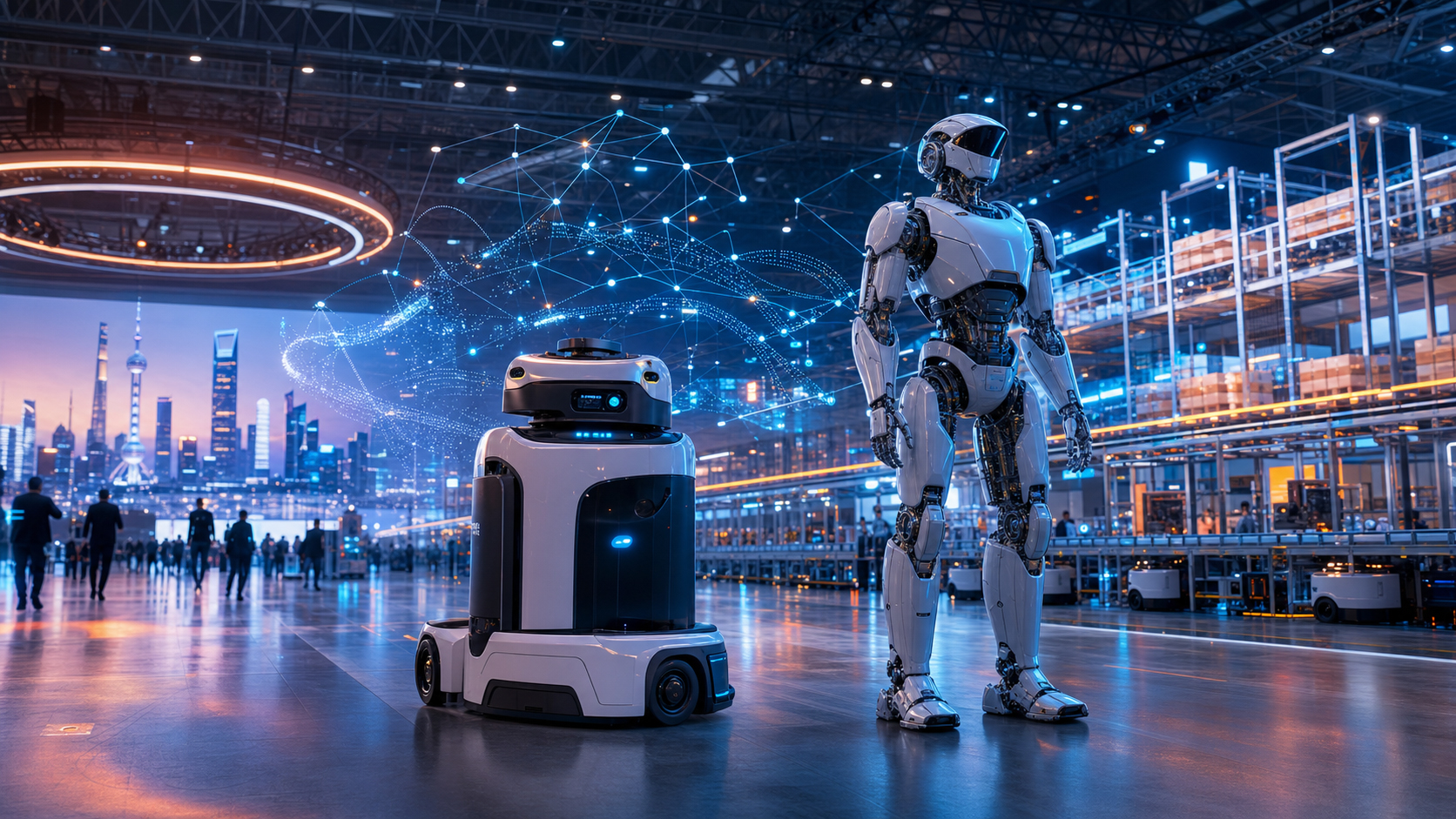
From demonstration to value creation: WAIC 2026 and the race for true AI delivery capability – Image: Xpert.Digital
Forget dancing robots: What AI really needs to achieve in the workplace now
The end of AI play: Why the real competition among tech giants is only just beginning
No more benchmark records: Why the global AI market is facing its biggest upheaval
Artificial intelligence has definitively moved beyond the phase of fascinating gimmickry. Anyone wanting to understand the global tech industry must turn their gaze away from spectacular benchmark records and dancing robots and focus on the hard economic realities: reliability, scalability, and measurable return on investment (ROI). Nowhere was this radical paradigm shift more evident than at the World Artificial Intelligence Conference (WAIC) 2026 in Shanghai. The leading trade fair ruthlessly revealed that true competition only begins when raw computing power becomes a commodity and AI models have to take on concrete tasks in factory halls, logistics centers, and digital infrastructure. The following article analyzes the crucial shift from mere technological demonstration to genuine industrial delivery capability and shows why this trend is not only revolutionizing the Asian market but is also inevitably becoming a strategic matter of survival for European companies.
When the robot no longer has to dance, but to deliver: A year-on-year comparison with signaling implications
Yu Yijun of Sino-Cooperation struck a chord with his observation, one that resonates far beyond a personal trade fair note. His comparison between the World Artificial Intelligence Conference (WAIC) 2025 and 2026 in Shanghai encapsulates in a single sentence what has transpired across the entire industry: Artificial intelligence was a promise for everyday life last year; this year, it has become a requirement for the workplace. This shift is not merely a marketing slogan, but is reflected in hard data and concrete product decisions made by the more than 1,100 exhibiting companies, who showcased their technologies across more than 100,000 square meters of exhibition space. The ninth edition of the conference, held from July 17 to 20, 2026, under the motto "AI Partnership for a Brighter Future," attracted over 400,000 on-site visitors and representatives from 102 countries, while online, it garnered more than three billion page views. Such dimensions show that it is no longer a niche event for technology enthusiasts, but rather one of the central pacesetters of the global AI industry.
What's remarkable is the economic substance behind the scenes. According to official figures, the conference generated purchase intentions totaling 20.36 billion yuan, equivalent to approximately three billion US dollars, representing a 25 percent increase compared to the previous year. This figure is revealing because it demonstrates that the event is no longer just about generating attention and media hype, but rather about concrete procurement decisions made by 177 large purchasing delegations who traveled specifically for the conference. Therefore, to understand WAIC 2026, one must view it not as a technology showcase, but as an emerging marketplace for industrial AI applications.
Related to this:
From the arms race of parameters to the economy of tasks
For years, the discourse surrounding large language models was characterized by a logic best described as a capacity race: Who has the largest model, the most parameters, the most impressive benchmark results? This way of thinking was a useful indicator for a long time because raw model capacity did indeed correlate with performance. However, at WAIC 2026, a fundamental shift in perspective became apparent: The crucial question is no longer how powerful a model is in theory, but rather what specific task an AI agent can reliably perform in everyday business.
This shift can be empirically substantiated. According to market analyses, around 40 percent of all enterprise applications are expected to integrate task-specific AI agents by the end of 2026, compared to less than five percent in 2025 – a leap considered one of the fastest technological adoption curves in recent economic history. At the same time, however, a sobering downside to this euphoria is apparent: estimates suggest that up to 88 percent of agent-based projects never reach productive use, and more than 40 percent of all agentic AI projects could be discontinued by 2027 due to escalating costs, unclear business models, or inadequate risk controls. This discrepancy between ambition and implementation is precisely the point made by the observation quoted at the beginning, which states that real competition only begins once technological capability has become a commodity.
For companies, this means a fundamentally different evaluation logic. Where previously the question was whether an AI solution was technically impressive, today it must be demonstrated whether it delivers a reliable return on investment. Surveys paint a nuanced picture: 66 percent of companies that have already implemented AI agents report measurable productivity gains, and 57 percent are seeing concrete cost savings. At the same time, however, only around 5.5 percent of the surveyed organizations state that more than five percent of their EBIT is already clearly attributable to AI investments. This figure makes it clear that the much-discussed productivity revolution is still largely in an experimental phase, even though 88 percent of executives plan to further increase their AI budgets in the next twelve months.
The infrastructure behind the spy economy
A key, yet often underestimated aspect of WAIC 2026 in public discourse, was the shift in focus from individual flagship products to the entire technological infrastructure that makes this agentic AI economy viable. Huawei unveiled the Atlas 950 SuperPoD, an AI supernode considered a significant advancement for the computing infrastructure of the agentic AI era. It connects thousands of AI chips via high-speed protocols, enabling them to function as a single, self-contained computer. This architecture can scale in configurations from a minimum of 64 to 8,192 NPU cards and is explicitly designed for training and inferencing models with trillions of parameters.
In parallel, the Chinese company Sugon presented an AI supercluster with 100,000 cards, ranking among the largest and most advanced AI systems in science. Also noteworthy is the Shanghai-based chip startup Oriental Compute Core Technology's unveiling of a software-defined, near-memory 3D AI chip entirely based on a domestic supply chain – a direct signal that China is consistently expanding its technological sovereignty in chip manufacturing in the face of ongoing export restrictions on advanced US semiconductor technology. Over 100 chip companies, representing around ten competing domestic GPU architectures, were present in the Zhangjiang section of the conference alone.
This development illustrates that the real competitive advantage increasingly lies not in a single, exceptionally fast chip, but in the ability to provide a highly collaborative, continuously evolving computing foundation upon which models and agents can be operated economically in the first place. For European, and especially German, companies active in the fields of digitalization and industrial automation, this infrastructure dimension is of considerable strategic relevance because it demonstrates how closely technological sovereignty, geopolitical dependencies, and economic competitiveness are now intertwined.
When robots no longer dance, but have to work
The second major observation from the note quoted at the beginning concerns robotics, and here, too, the thesis can be empirically confirmed. While humanoid robots in 2025 primarily generated attention through performances such as singing and dancing, the focus shifted decisively in 2026 towards real tasks and collaborative workflows. The number of exhibitors in the field of embodied intelligence, i.e., robotics companies, increased from around 80 in the previous year to more than 200 companies – a 2.5-fold increase within just twelve months.
A particularly revealing phrase, frequently quoted at the conference, is this: Observers used to ask if a robot could dance. Now they ask if it can work 24 hours straight and repeat a movement ten thousand times without breaking down. This shift in scale marks the transition from mere capability demonstrations to industrial reliability testing. Concrete use cases underscore this change: Agibot, in collaboration with JD Logistics, deployed the G2 Max robot in an operational logistics warehouse – reportedly the first confirmed deployment of a humanoid robot in a real third-party logistics warehouse, with a dual-arm payload capacity of up to 50 kilograms in unmanned, round-the-clock palletizing operations. Ant Group's Lingbo pharmacy solution is also already in real-world operation in branches of the Guoda pharmacy chain in Shanghai, and no longer just a pilot project.
This shift from demonstrations to continuous operation has significant economic consequences because it fundamentally changes the evaluation criteria for investors and buyers. Market success is no longer determined by the most spectacular demonstration, but by reliable operational data such as downtime, task success rate, and mean time between failures. However, analysts also point out that neither Agibot nor Ant Group has yet published reliable operational metrics or total cost of ownership that would allow for an independent economic evaluation compared to established automation solutions. This transparency gap thus remains one of the most important open questions for the coming years of conferences.
Farewell to the humanoid dogma
Another remarkable shift concerns the question of robotics' form itself. While in previous years there was often an implicit assumption that greater human-likeness automatically equated with higher technological maturity, this way of thinking has become noticeably more pragmatic in 2026. The question is no longer how human-like a robot can be, but rather which design is actually the most economically viable for a specific task. This development is reflected in the growing variety of wheeled robots, quadrupeds, and hybrid systems that were on display at the conference.
A particularly vivid example of this flexibility is the T1 from Qiyuan Robotics, which implements a so-called Transformer Cross-Embodiment architecture. This allows the robot to autonomously switch between a wheeled, bipedal and a quadrupedal configuration, resolving the conflict between off-road capability and manipulation range without separate control systems. ZTE's Xingzai robot also illustrates this trend toward specialization: at just 1.6 meters tall and weighing less than 30 kilograms—the lowest published value to date for a full-size humanoid—the company deliberately opted for a lightweight, tendon-based actuator architecture with a flexible mesh skin instead of maximizing human anthropometry.
This diversification is economically sound. In a factory hall with a level floor, a wheeled chassis can be more cost-effective, stable, and energy-efficient than a two-legged drive system, and for many logistics tasks, a ten-fingered gripper system is simply oversized and unnecessarily expensive. Gu Jie, CEO of Fourier Intelligence, aptly summarized the industry's core technological divide: The hardware architecture of embodied robots has clearly converged, but what hasn't is the brain—that is, the vision-language-action models that translate sensor data into movement commands. According to the majority of conference participants, this is precisely where the real differentiating factor of the coming years lies: in visuomotor control intelligence.
🎯🎯🎯 Sino-Cooperation

Sino-Cooperation is a platform based in China and Germany
Sino-Cooperation is a platform based in China and Germany that promotes exchange and cooperation between German and Chinese companies, especially through events, digital formats and an online cooperation exchange for market entry and partnerships.
More information here:
Humanoid robots face practical testing: Reliability and ROI now count
The new category of fine motor skills
One technical detail, seemingly unspectacular at first glance but of considerable economic importance, concerns the introduction of dexterous AI hands as a standalone product category in the official conference program of WAIC 2026 – for the first time in the event's history. This structural signal demonstrates that the industry's technological focus has shifted from mere locomotion to fine motor manipulation, because walking in structured indoor spaces is now considered a largely solved problem, while contact-intensive handling tasks still represent a significant technological hurdle.
Concrete examples illustrate the progress in this field. Agibot's OmniHand 3 Ultra-M features 20 degrees of freedom, as well as visual-tactile sensors on all five fingertips and distributed three-dimensional tactile sensors across the entire palm, making it suitable for high-contact manipulation tasks and the acquisition of teleoperation data. Fudan University presented a self-developed visual-tactile sensor with approximately 40,000 sensor points per square centimeter on the fingertip, applied to the precise assembly of automotive headlights, while Tashan Technology extended tactile sensor technology to a complete body stack, including the arm, torso, and sole of the foot. These developments demonstrate that the robotics industry is currently undergoing a similar maturation process to that once experienced by the electric vehicle industry: from vertically integrated in-house development to a specialized supply chain for dexter hands, tactile sensors, and embodied models as independent, structurally autonomous value creation stages.
Delivery as the central buzzword of the conference
The central thesis of the observation quoted at the beginning—that not "Embodied AI" but "Delivery" is the key word at WAIC 2026—is confirmed by several conference speakers. Horizon Robotics' Developer Ecosystem Vice President, Hu Chunxu, put it this way: Previously, the question was whether a robot could dance, whereas today the question is whether it can work continuously 24 hours a day and repeat an action tens of thousands of times. This shift in the benchmark from demonstrability to industrial operational reliability is the very essence of this year's conference spirit.
This logic also applies to the software side. As soon as AI agents, vision-language-action models, or humanoid robots become technically accessible to a growing number of companies, competition inevitably shifts from mere feasibility to market penetration. The crucial questions then become: Who will find genuine paying customers? Who will identify use cases with demonstrable economic value? Who can reliably produce, scale, and guarantee functioning customer service including after-sales support? And, ultimately, for whom will the investment actually pay off?
These questions cannot, of course, be answered with an impressive stage presentation, but require reliable operational data over months and years. The macroeconomic indicators of the Chinese AI industry underscore how seriously this transition is already being taken: China has now established over 30 national AI application pilot bases, and the AI penetration rate in key industries is already over 80 percent, with more than 30 percent of large industrial companies already using concrete AI applications.
SMEs and access to the agency economy
One aspect that is often underrepresented in international reporting concerns how small and medium-sized enterprises (SMEs) can participate in this new agent economy. At WAIC 2026, experts, including Pu Yapeng, Deputy Director of the Shanghai Municipal Commission of Economy and Informatization, explicitly pointed out that continued efforts are needed to make AI infrastructure and tools more accessible to SMEs, as they are considered the most agile real-world users of the emerging technology. This observation is of direct relevance to German SMEs because it shows that the crucial competitive question in the coming years will not only be who develops the most powerful models, but also who creates the lowest barrier to entry for smaller organizations to production-ready AI tools.
Simultaneously, the conference fostered a remarkably open innovation ecosystem for young developers and startups. The inaugural "OPC Independent Pioneer Challenge" focused entirely on originality, open source, and individual developers, providing a significant platform for independent programmers. In parallel, the "WAIC Future Tech" venture capital matrix curated nearly 180 promising projects from over 1,200 global submissions, with more than 70 percent of these teams founded less than three years ago and over half of the founders born in the 1990s. For early-stage startups, the biggest hurdle is often not the technology itself, but visibility and market validation, and the program has successfully bridged this gap in the past through 2,000 matchmaking sessions and acquisition intentions totaling the equivalent of 268 million yuan.
Geopolitics and global governance as a conference axis
WAIC 2026 has evolved not only into an industry trade fair but also into a central hub for international AI governance. On the sidelines of the conference, representatives from 29 countries signed an agreement to establish the World Artificial Intelligence Cooperation Organization (WAICO), an independent intergovernmental international organization headquartered in Shanghai. In addition, an action plan for AI cooperation and development, as well as an international action plan for AI ethics governance, were adopted.
This institutional dimension is of considerable importance for the economic assessment of the conference because it demonstrates that China is strategically positioning the WAIC as a diplomatic instrument to help shape global standards and cooperation frameworks, while simultaneously providing substantial support for domestic technology companies. Shanghai's Deputy Mayor, Chen Jie, described the conference as one of the largest and most influential international gatherings in the global AI field and China's first high-level diplomatic event in the AI sector. During the conference, 32 major Shanghai AI projects with a total investment volume exceeding 40.9 billion yuan were signed, complemented by China Unicom's "UniAI" project, which represents an investment of over 25 billion yuan in intelligent data center infrastructure in Shanghai.
For Western observers, particularly from Germany and the European Union, this presents a strategically relevant double message: On the one hand, China is demonstrating remarkable speed in the industrial application of AI technologies; on the other hand, the country is actively positioning itself as a co-creator of global regulatory standards, which puts additional pressure on Europe's position in the international AI competition. Anyone in Germany engaged in B2B business development or planning international market entry should understand this development as an early signal of future trade and regulatory dynamics.
Limits to euphoria and outstanding risks
Despite the impressive figures and obvious technological advances, it would be wrong to uncritically interpret the WAIC 2026 as proof of an already completed AI transformation. The adoption statistics cited earlier reveal a significant gap between pilot projects and actual scaling: According to surveys, two-thirds of organizations are still in experimental or pilot mode, and only about one-third have actually implemented AI applications at scale. This discrepancy between media perception and business reality is a recurring pattern in disruptive technology waves and should be considered in every investment decision.
Even on the robotics side, key technical bottlenecks remain unresolved. Analysts identified three structural hurdles in particular: Deploying vision-language-action models directly on the robot is limited by the memory and computing budgets of embedded edge processors, while cloud inference introduces a latency that is incompatible with closed-loop motor control systems. Model distillation, chip-based inference acceleration, and hierarchical fast-slow control architectures are considered active technical solutions, but none of these approaches has yet become dominant. These unresolved technical issues temper the impression of a fully mature industry.
Furthermore, there is a fundamental transparency gap regarding the economic indicators of real-world deployments. Neither Agibot and JD's logistics solution nor Ant Group's pharmacy application has published reliable operational data on availability rates or total cost of ownership that would allow for a sound comparison with conventional automation solutions. This lack of data makes it considerably more difficult for potential customers to calculate the actual return on investment in advance and is likely to be one of the most important discussion points at upcoming conferences.
Economic classification and outlook
The WAIC 2026 can be interpreted economically as a pivotal moment in which a technology industry transitions from the capacity demonstration phase to the operational testing phase. This observation aligns with typical patterns of historical technology cycles: once fundamental technical feasibility is established, the competitive focus inevitably shifts from research performance to sales, service, and scalability. This appears to be precisely what is currently happening in the Chinese AI and robotics industry, with far-reaching implications for international suppliers, competitors, and investors.
For European companies active in digitalization, logistics optimization, or industrial automation, this development offers concrete strategic impetus for action. First, the evaluation of AI partnerships and investments should focus more on reliable operational metrics and less on spectacular product demonstrations. Second, the diversification of robot form factors shows that companies do not necessarily have to rely on humanoid solutions when planning automation, but should instead choose the most economically viable design for the specific application. Third, the rapid infrastructure development in China illustrates that technological sovereignty and computing power are increasingly becoming an independent geopolitical and economic competitive factor, which is also likely to be of increasing concern to European industrial policy.
Perhaps the most apt summary of this year's conference spirit is that in 2025, artificial intelligence still had to prove that people would even want to use it, while in 2026 it will have to prove that companies can actually rely on it. The competition has thus definitively shifted from the pure technology level to the implementation level, and it is precisely there, in the sober business reality of reliability, scalability, and return on investment, that the coming years will determine which providers can transform the current gold rush mentality into lasting economic substance.
🎯🎯🎯 Data-driven B2B industry hub as a quasi-in-house solution

The quasi-in-house solution: How Xpert.Digital closes operational gaps in B2B marketing and sales – Smart Content-Driven Business - Image: Xpert.Digital
Xpert.Digital is a data-driven B2B industry hub led by Konrad Wolfenstein . The company acts as an external, quasi-in-house solution for industrial partners, closing operational gaps in marketing, content, and sales – without requiring additional resources on the client side.
More information here:
Your global marketing and business development partner
☑️ Our business language is English or German
☑️ NEW: Correspondence in your native language!

Konrad Wolfenstein
I and my team are happy to be available to you as your personal advisor.
You can contact me by filling out the contact form here [email protected]:or simply call me at +49 7348 4088 965. My email address is
I'm looking forward to our joint project.





