Website icon Xpert.Digital

Securing basic services in rural regions

How intralogistics ensures basic supplies for the population in rural regions

Ensuring basic services in rural regions – @shutterstock | LeManna

The trend toward urbanization is also clearly visible in Germany. Every year, tens of thousands of people move from rural areas to cities, leading to the continuous expansion of metropolitan areas. At the same time, this results in a shrinking population in many rural regions, posing new challenges for policymakers and businesses in ensuring the basic supply of goods to the rural population. This article explores how logistics can contribute to finding a solution.

Whether Berlin, Hamburg, Cologne, or Munich, Germany's major cities experience new population records every year, and a similar scenario is unfolding in other cities as well. This is no coincidence, as cities in Germany also promise jobs and an infrastructure that provides residents with all the goods they need for daily life.

However, this economic boom in urbanized regions has a downside, as a parallel trend can be observed in many rural areas. In many parts of the country, a kind of rural exodus has long since taken hold. This leads to a situation where, in particular, younger, well-educated people are leaving for the city. Often, only the elderly remain.

Reclaiming rural areas as an economic advantage – @shutterstock | Helen Hotson

Downward spiral due to dwindling population

The steadily declining population often sets in motion a dangerous downward spiral. The affected districts lose valuable economic power and purchasing power due to this exodus. As a result, companies struggle to meet their labor needs, which is why they themselves often relocate to areas with greater potential.

At the same time, it is becoming increasingly difficult to adequately provide for those who remain. This is because reduced demand and purchasing power automatically lead to a decline in the revenue of local retailers and service providers. The consequence is the closure of shops and the abandonment of shopping streets due to lower profitability, which in turn fuels the exodus of even more people. Ultimately, this is not only a problem for the remaining population and businesses, but also for the often state-owned water suppliers and wastewater treatment plants, as a smaller population results in lower consumption and wastewater volumes. These are crucial for maintaining the networks, so the question ultimately arises whether basic services can even be sustained in these areas. The crucial challenge for planners, politicians, and businesses is therefore: Where is the way out of this downward spiral?

Full logistical automation for rural populations – @shutterstock | Alessandro Pintus

Logistics companies as development partners for rural regions

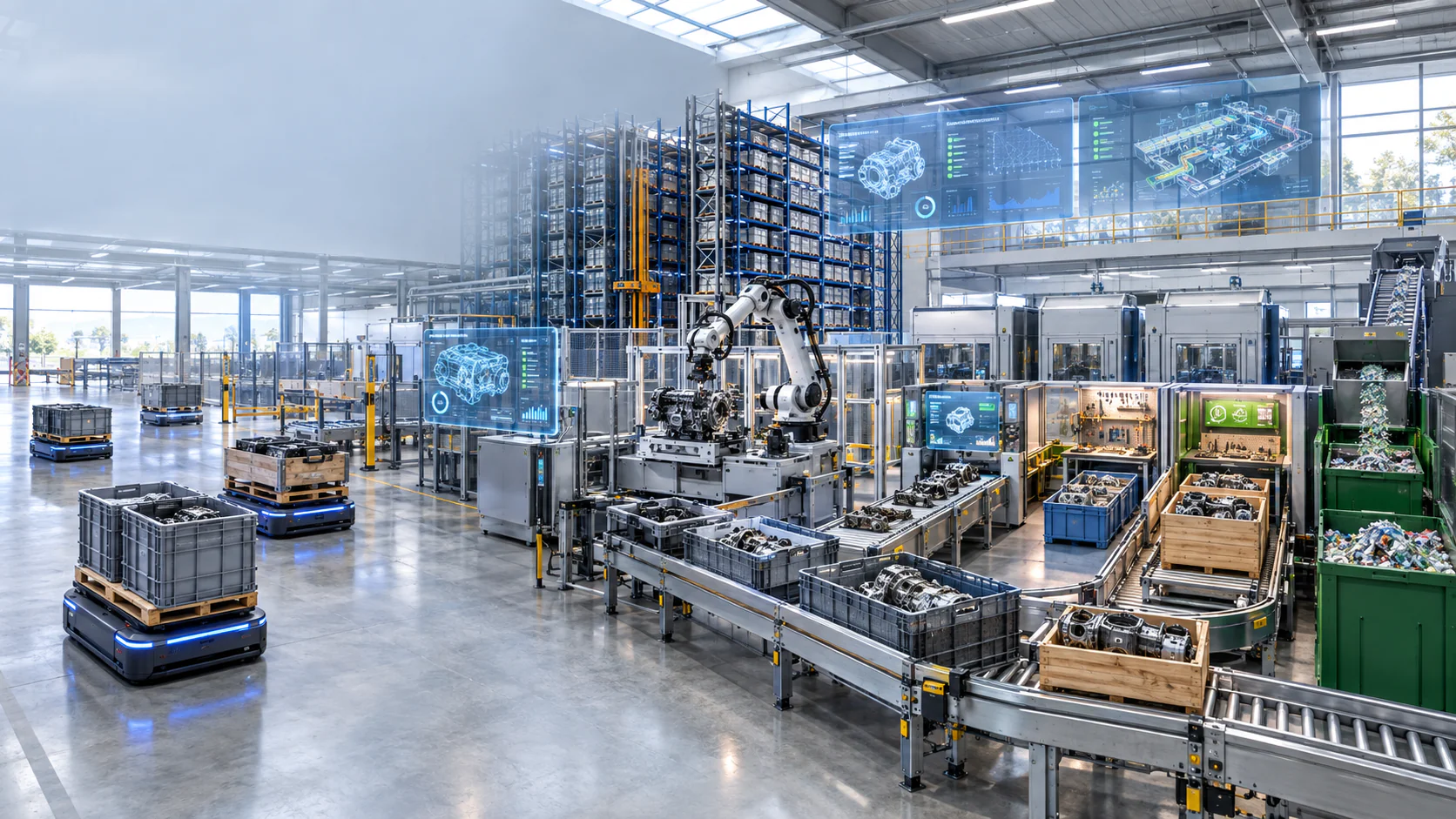
DAIFUKU can provide a potential solution for ensuring basic supplies for rural populations . These multi-material handling experts from Japan are global market leaders in their field and specialize in state-of-the-art warehouse systems. DAIFUKU solutions offer a crucial foundation for regional supply, as they not only enable the efficient storage and retrieval of everyday goods, but the high degree of automation also allows for the cost-effective (intermediate) storage of required goods in distribution centers and their subsequent transfer to decentralized distribution centers as needed.

The fashion group Fast Retailing, with a group turnover of 7.7 billion euros, is working with DAIFUKU, the world market leader in intralogistics, on the full automation of all 78 warehouses in Japan and overseas.

► From: “Japan is already working on the future of tomorrow”

The examples mentioned show how much DAIFUKU can contribute to solving this forward-looking question, which will determine the future development of regions away from urban centers.

politics

However, those in charge at the state level have also long since woken up and taken action to stop this alarming trend and – if possible – even reverse it. Therefore, a wide variety of projects have been launched in many parts of the country to avert the population decline.

This is also the case in Rhineland-Palatinate, where the village shop advisory project "M-Punkt RLP," subsidized with €250,000 annually, was launched back in 2010. The initiative aims to stimulate interest in establishing village and neighborhood shops by providing advice and support services to municipalities, thereby maintaining local supply in areas where large chains have long since withdrawn their stores. The municipalities are supported by state government advisors from the initial idea to the eventual opening of the shop. The high level of interest in this type of local supply initiative is demonstrated by the fact that around 90 consultations have been conducted annually since its inception. This has been demonstrably successful, resulting in 34 new shop openings and support for nearly 220 existing village shops.

Another focus is on promoting regional producers and distribution cooperatives, which are intended to ensure local supply. To boost investment activity, companies can claim eligible costs and receive reimbursement. This would, for example, enable the subsidized development of modern warehouse infrastructure.

But it's not just in Rhineland-Palatinate that politicians have reacted accordingly. In other German states, from Schleswig-Holstein to Baden-Württemberg and Bavaria, numerous similar projects have now been launched. What they all have in common is that they combine advisory services with financial assistance to boost regional healthcare provision.

Policymakers have recognized the looming threat and are actively taking countermeasures. Now it is up to companies to leverage these government initiatives and launch their own to revitalize rural areas. The systems presented by a provider like DAIFUKU demonstrated that intralogistics is ideally suited to ensuring basic services for the population in the affected regions. In this way, it contributes to increasing the attractiveness of these areas and could not only minimize migration but also foster a renaissance of rural communities.

► Contact me or discuss with me on LinkedIn

What will be crucial for the future will be how we secure the infrastructure of our key industries!

Three areas are of particular importance here:

  • Digital Intelligence (Digital Transformation, Internet Access, Industry 4.0 and Internet of Things)
  • Autonomous power supply (CO2 neutrality, planning security, safety for the environment)
  • Intralogistics/logistics (full automation, mobility of goods and people)

Xpert.Digital delivers you here from the Smart AUDA series

  • Autonomization of energy supply
  • urbanization
  • Digital transformation
  • Automation of processes

always new information that is updated regularly.


Keep in touch

Exit the mobile version