
The global debt bomb is ticking: Interest rate shock and record debt – Is the world economy facing the next major crash?
Xpert Pre-Release

Available in 27 languages 📢
Prefer Xpert.Digital on GoogleⓘPublished on: August 21, 2026 / Updated on: August 21, 2026 – Author: Konrad Wolfenstein
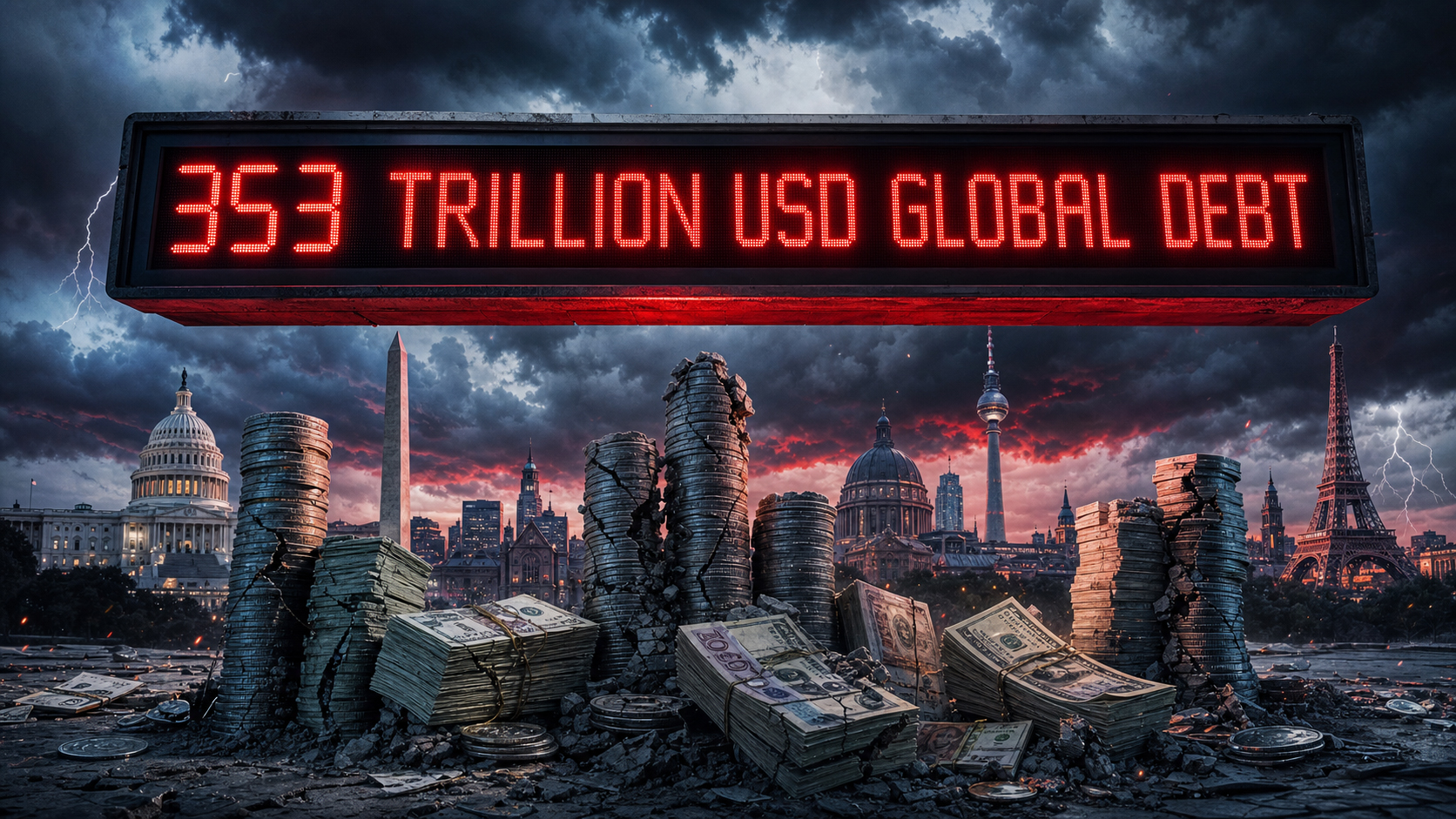
The global debt bomb is ticking: Interest rate shock and record debt – Is the world economy facing the next major crash? – Image: Xpert.Digital
$40 trillion in debt: How the US debt burden is becoming a danger to our money
Almost one in five tax euros goes towards interest alone: The dangerous debt trap of the state
Cheap money turns into an expensive trap: Is the economy about to tip into crisis?
For decades, the world lived on borrowed money – fueled by the illusion that borrowed funds were virtually free thanks to historically low interest rates. But this era has come to a brutal end. While the US just broke the unfathomable mark of $40 trillion in national debt in 2026, the exploding burden of interest payments is also creating ever-deeper holes in public budgets in Europe and Germany. What was once cheap money has become perhaps the most expensive trap of our time. If, as predicted in Germany, almost one in five tax euros soon flows simply to service interest payments, the capital for essential future investments will be lacking. The fiscal house of cards is tottering – and with it, the danger of a new, far-reaching financial crisis is growing. Learn why the global interest rate turnaround is mutating into a ticking time bomb, at what point the capital markets could finally lose confidence, and how you, as an investor, must protect your assets now from the impending upheavals.
The world is drowning in debt: Why the interest rate turnaround is becoming a global time bomb
When cheap money suddenly becomes the most expensive commodity in the world
For decades, a simple rule applied to governments around the globe: borrowing is cheap as long as interest rates remain low. That era is over, and the bill for years of living on credit is now being presented at an impressive pace. In August 2026, the United States surpassed the $40 trillion mark in national debt for the first time, a figure that just a few years ago seemed a distant, almost unimaginable number. By comparison, at the beginning of 2022, US debt stood at around $30 trillion. In just over four years, an additional $10 trillion in debt has been piled up—a speed that has surprised even seasoned economists.
What is particularly remarkable is not only the absolute amount, but also the speed of the increase. As recently as 2023, the US Congress had assumed that the $40 trillion mark would not be reached until fiscal year 2028. In fact, this milestone was reached roughly two years earlier. Washington needed only about five months to jump from $39 trillion to $40 trillion alone. Of the total, approximately $32.3 trillion is public debt, while another $7.8 trillion is domestic debt, for example, owed to social security trusts. Measured as a percentage of economic output, US national debt now stands at around 123 to 126 percent of gross domestic product (GDP), with the public debt ratio at approximately 101 percent.
The real drama, however, lies in the interest payments. In the first ten months of the current fiscal year, Washington paid a net $963 billion in interest alone on its debt—a sum that now exceeds the entire United States defense budget. Some calculations predict that interest payments will surpass the $1 trillion mark by 2026. This means that almost one in five dollars of US federal revenue now goes exclusively toward servicing existing debt, not toward investments, social programs, or infrastructure, but simply toward interest payments to creditors. The statutory debt ceiling is currently $41.1 trillion and, according to the Bipartisan Policy Center, could be reached between the end of winter and mid-2027, meaning that the next political showdown over the debt ceiling could be just a few months away.
Why cheap money suddenly became an expensive trap
The core of the problem lies in a fundamental shift in the global interest rate landscape. During the pandemic and in the years leading up to it, governments could borrow money practically at no cost. Investors were demanding only around 0.7 percent interest on ten-year US Treasury bonds at times, and in Germany, interest rates were even negative for a while – meaning the government was effectively paid to borrow money. This era is definitively over. In mid-August 2026, investors were demanding around 4.7 percent for ten-year US Treasury bonds, and yields on thirty-year bonds were temporarily reaching 5.34 percent, the highest level since 2007. Similarly high rates of over 5.3 percent were also achieved at the long end of the British yield curve. Germany now pays more than 3 percent for ten-year German government bonds, and France even around 4.1 percent.
This interest rate explosion is hitting government budgets hard because enormous amounts of legacy debt, incurred at the historically low interest rates of the 2010s and early 2020s, will mature in the coming years and must be refinanced at today's significantly higher interest rates. OECD countries alone will have to refinance around $14 trillion of old debt in 2026. Each of these refinancings means that a loan that was once virtually free suddenly has to be serviced at an interest rate of four, five, or more percent. This mechanism explains why government interest costs rise massively even when new borrowing doesn't increase dramatically compared to the previous year: it is the stock of maturing legacy debt that becomes the decisive cost factor.
Several overlapping factors are driving the rise in yields. First, persistent inflation concerns are forcing investors to demand higher compensation for the risk of tying up their money in a bond for ten or thirty years. Second, geopolitical risks—such as the ongoing war in Ukraine, tensions in the Middle East, and trade conflicts—are exacerbating uncertainty in the capital markets. Added to this is a subtle but important structural factor: Traditionally large foreign buyers of US Treasury bonds, such as Japan, are becoming increasingly reluctant, partly because they themselves are grappling with a weakening yen and their own fiscal challenges. But when these traditional major buyers of government bonds purchase less, governments must offer higher yields to attract enough private investors to absorb the sheer volume of newly issued bonds.
The dangerous, self-reinforcing mechanism
The International Monetary Fund is observing with growing concern that investors are becoming increasingly sensitive to rising government debt. This heightened market sensitivity is the real crux of the danger, as it can trigger a self-reinforcing vicious cycle: higher debt leads to higher risk premiums, higher risk premiums lead to higher interest costs, higher interest costs increase the budget deficit, and a larger deficit, in turn, requires new debt, which then has to be serviced at even higher interest rates. Once this cycle is set in motion, it becomes increasingly difficult for a country to extricate itself from it on its own without either drastic spending cuts, significant tax increases, or a combination of both.
Leading economists are urging a distinction between a still manageable situation and a genuine crisis. The current situation is serious, but not yet comparable to the euro crisis of the early 2010s, in which individual eurozone countries effectively lost access to capital markets and were dependent on bailout programs. Nevertheless, the economic growth of many industrialized nations, financed for years on credit, is now visibly reaching its limits. The euro crisis itself provided a blueprint for how quickly investor doubts can spread from one country to the next: When Greece came under massive debt pressure, investors immediately began asking which country might be next, leading to a veritable contagion effect across several southern European countries.
Economists are currently watching France with particular concern. In the first quarter of 2026, the country recorded a new all-time high in its national debt, reaching approximately €3.54 trillion, equivalent to about 117.5 percent of its economic output. A further increase to around 118 to 120 percent of GDP is expected for the full year 2026, while economic growth remains weak. The combination of high debt, persistent political instability, and weak growth makes France one of the most vulnerable major industrialized nations in the eurozone, even though the country has not yet succumbed to an acute crisis of confidence like the one Greece experienced.
Germany's debt burden is growing faster than planned
Even Germany, known for decades for its comparatively disciplined fiscal management, is now clearly feeling the pressure of the new interest rate reality. The German debt-to-GDP ratio was around 64.4 percent in 2022 and is already projected to reach approximately 65.2 percent in 2026, with a further increase to around 67 percent in 2027. For the current fiscal year, Federal Finance Minister Lars Klingbeil is planning for around 30 billion euros to be spent on interest payments alone. However, following the cabinet's decision on the key figures for the 2027 federal budget and the financial plan up to 2030, an even sharper increase is emerging: Federal interest payments are expected to climb from around 42 billion euros in 2027 to approximately 80 to 81 billion euros in 2030 – more than double the figure in just three years.
According to current projections, the German federal government plans to take on net borrowing totaling approximately €972 billion between 2026 and 2030 – a historically unprecedented debt program driven primarily by parallel increases in defense spending and special funds for infrastructure and the armed forces. Calculations by the German Economic Institute (IW) show that the so-called interest-to-tax ratio – the proportion of tax revenue that must be spent solely on interest payments – will rise from 7.7 percent in 2025 to 18.1 percent in 2030. In concrete terms, this means that by the end of the decade, almost one in five euros of tax revenue collected by the German state will be used directly for interest payments to creditors, thus eliminating it for investments, social benefits, or policy decisions. Critics are already arguing that one in eight euros in the core German budget is now debt-financed, significantly restricting the fiscal leeway of future governments.
This development is particularly alarming because it demonstrates that even a country with a comparatively moderate debt ratio by international standards – Germany, at around 65 percent of GDP, is far below the levels of the US, France, or Italy – is by no means immune to the effects of rising global interest rates. The interest burden is growing disproportionately fast because a growing mountain of debt is being combined with simultaneously rising interest rates. This double burden is likely to worsen in the coming years if global interest rates do not return to a significant normal level.
Our global industry and economic expertise in business development, sales and marketing

Our global industry and economic expertise in business development, sales and marketing - Image: Xpert.Digital
Industry focus areas: B2B, digitalization (from AI to XR), mechanical engineering, logistics, renewable energies and industry
More information here:
A thematic hub offering insights and expertise:
- Knowledge platform covering global and regional economies, innovation and industry-specific trends
- A collection of analyses, insights, and background information from our key areas of focus
- A place for expertise and information on current developments in business and technology
- A hub for companies seeking information on markets, digitalization, and industry innovations
National debt and rising interest rates: Why investors need to be vigilant now
When does debt burden become a real financial crisis?
The crucial question economists, central bankers, and investors are currently asking is: At what point will the current tension tip into a genuine financial crisis? The answer lies less in a fixed number than in a psychological tipping point: As soon as investors lose confidence in a state's ability or willingness to pay, they demand sharply higher risk premiums, which drives interest rates even higher and accelerates the downward spiral described. In such a scenario, loans for businesses and consumers become significantly more expensive, investment decisions are postponed or canceled altogether, and consequently, the labor market comes under pressure because, faced with rising financing costs and falling demand, companies tend to cut jobs rather than create new ones.
Economists in the investment and banking sectors have attempted to identify specific thresholds at which the situation could become critical. With interest rates around 5 percent for ten-year US Treasury bonds—a level briefly exceeded in August 2026—markets could already experience significant volatility, particularly for highly leveraged companies and in the real estate sector, which is traditionally very sensitive to interest rates. Conversely, should yields on ten-year US Treasury bonds rise toward 7 percent, a scenario not currently considered the most likely but by no means purely theoretical, market observers believe that a full-blown economic and financial crisis could no longer be ruled out.
Currently, however, many analysts tend toward a somewhat more optimistic baseline scenario: Instead of an abrupt collapse of confidence, they expect the financial markets to exert continuous pressure on policymakers over the coming months and years to enforce greater fiscal discipline. This mechanism, in which rising interest rates ultimately act as a disciplining corrective to unsound fiscal policy, is not historically new. However, it itself carries considerable risks, as it can lead to abrupt policy shifts, austerity programs, and consequently to a decline in economic growth, without necessarily resulting in an open crisis in the classical sense.
What the debt spiral specifically means for investors
Given these developments, private investors naturally wonder how they can protect their assets from the potential consequences of an escalating sovereign debt crisis. The central message from experienced financial market observers is surprisingly reassuring: those who have invested long-term in broadly diversified index funds, so-called ETFs, should not hastily sell these positions solely out of fear of a debt crisis. Historically, panic reactions almost always prove to be the most expensive investment strategy because they realize losses before it becomes clear whether the feared crisis actually materializes in its entirety.
At the same time, it is undisputed that a persistently high interest rate environment puts a significantly greater strain on certain asset classes than others. Equities, particularly those of growth-oriented companies that rely on cheap financing, as well as real estate investments that traditionally rely heavily on debt, are especially sensitive to rising interest rates. Higher interest rates directly translate into higher monthly payments for real estate financing, which dampens demand and consequently makes price corrections more likely. For corporate bonds, and especially for highly indebted companies with weaker credit ratings, the risk of refinancing problems also increases, much like the situation for sovereign debtors: those who have to replace old, cheap loans with new, expensive ones come under increasing financial pressure.
For investors with a long-term horizon, the current environment means one thing above all: heightened vigilance rather than blind panic. Broad diversification across various asset classes, regions, and currency zones remains the most effective protection against the concentrated risks of individual countries or sectors. At the same time, it's worth taking a closer look at your own portfolio structure: those heavily invested in interest-rate-sensitive sectors such as real estate or in long-term bonds should be aware of the increased price volatility risks that could accompany further rising interest rates. Gold and other traditional safe-haven currencies also experience increased demand in such an environment, as they are considered a hedge against systemic risks and inflation, even if they don't generate any ongoing income themselves.
Looking ahead: Where is global debt dynamics headed?
Longer-term forecasts for the development of national debt offer little cause for optimism. The Congressional Budget Office in the United States expects the publicly held debt-to-GDP ratio to exceed the historic post-war record of 106 percent by the end of the decade and rise to approximately 120 percent by 2036. Some banking analysts even predict that gross US debt could reach $50 trillion as early as 2029, while the Congressional Budget Office itself anticipates an increase to around $63 trillion by 2036 if current fiscal policies continue. Furthermore, a federal deficit of approximately $1.9 trillion is projected for the current fiscal year 2026—a historically exceptionally high figure in an environment of robust economic growth and low unemployment.
A key driver of this development lies in the combination of sharply increased defense spending and simultaneous tax cuts for corporations and high-income households, which have been politically implemented in several Western countries in recent years. This combination leads to government revenues structurally lagging behind expenditures, even during periods of economic prosperity, significantly reducing the fiscal buffer for actual crises—such as a recession or a geopolitical shock. Should a global recession occur while public debt remains at such high levels, many governments would have considerably less fiscal leeway than in previous crises, such as the 2008 financial crisis or the COVID-19 pandemic, when massive government stimulus programs were still relatively easy to finance.
For Europe, and especially for Germany, it is becoming clear that the coming years will be characterized by a constant tension between necessary investments in the future, such as defense, infrastructure, and the ecological transformation of the economy, and the simultaneously exploding debt burden. The crucial question will be whether the debt incurred actually flows into growth-promoting and productivity-enhancing investments that generate new economic power and thus new tax revenues in the long term, or whether it is primarily used for consumption, thereby merely burdening future generations with a growing debt burden without creating corresponding economic value. This decision will significantly determine whether the current tension in the bond markets remains a temporary episode or actually develops into a harbinger of a deeper global financial crisis.
The coming months will be crucial in determining the direction this dynamic develops. Should the political will for genuine fiscal discipline be lacking in the major industrialized nations, while interest rates remain high or continue to rise, the vicious cycle of growing debt and increasing interest costs is likely to intensify. At the same time, historical experience shows that markets are quite capable of coping with high levels of debt for years, as long as there is fundamental confidence in a state's long-term solvency. This very confidence is currently the decisive, but also the most fragile, factor in the entire global financial architecture.
🎯🎯🎯 Data-driven B2B industry hub as a quasi-in-house solution

The quasi-in-house solution: How Xpert.Digital closes operational gaps in B2B marketing and sales – Smart Content-Driven Business - Image: Xpert.Digital
Xpert.Digital is a data-driven B2B industry hub led by Konrad Wolfenstein . The company acts as an external, quasi-in-house solution for industrial partners, closing operational gaps in marketing, content, and sales – without requiring additional resources on the client side.
More information here:
Your global marketing and business development partner
☑️ Our business language is English or German
☑️ NEW: Correspondence in your native language!

Konrad Wolfenstein
I and my team are happy to be available to you as your personal advisor.
You can contact me by filling out the contact form here [email protected]:or simply call me at +49 7348 4088 965. My email address is
I'm looking forward to our joint project.










