
Prof. Dr. Helena Wisbert and the automotive crisis: Provocation instead of reassurance – Why a simple crisis narrative falls short
Xpert Pre-Release

Available in 27 languages 📢
Prefer Xpert.Digital on GoogleⓘPublished on: August 21, 2026 / Updated on: August 21, 2026 – Author: Konrad Wolfenstein
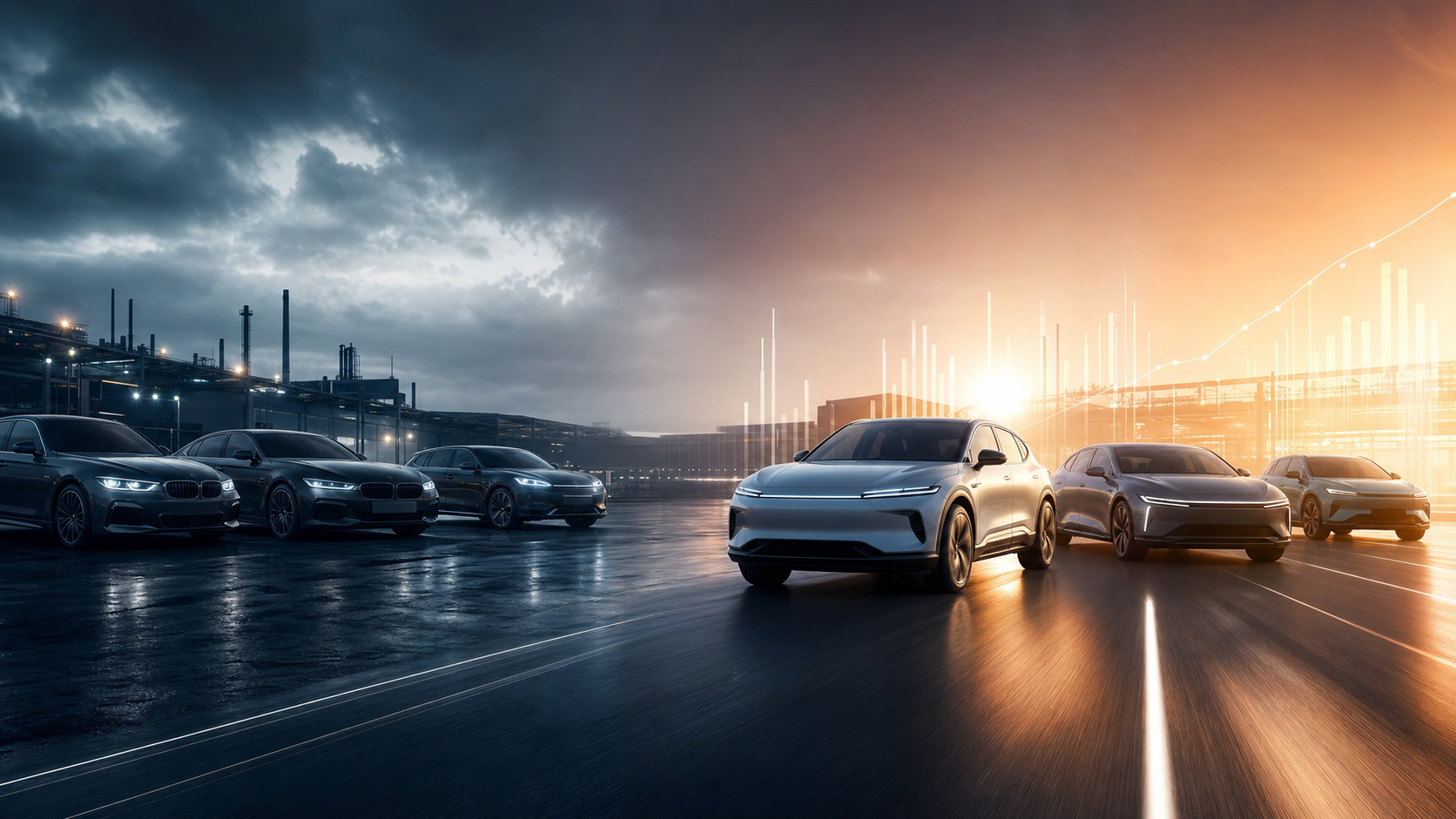
Prof. Dr. Helena Wisbert and the automotive crisis: Provocation instead of reassurance – Why a simple crisis narrative falls short – Image: Xpert.Digital
When the convenient explanation becomes the inconvenient truth: What is being kept secret in the debate about Germany's flagship industry
Why the demise of VW and other automakers falls short: Management failure or political error? The true cause of the German automotive crisis
The diagnosis seems clear when experts like the renowned automotive economist Helena Wisbert sound the death knell for the domestic auto industry: German manufacturers have supposedly missed the boat on electromobility, made strategic missteps, and failed miserably in software development. This catchy narrative of arrogant and backward management is extremely popular in the mainstream media – but it is dangerously simplistic. Those who locate the current crisis solely in the boardrooms of VW, Mercedes, and BMW overlook the far more complex overall picture. An unprecedentedly aggressive and heavily subsidized Chinese industrial policy, the clever exploitation of European tariff loopholes through plug-in hybrids, and the hopelessly erratic subsidy policies of the German government play a far greater role than the prevailing talk show theories suggest. It is high time for a data-driven examination of the true structural and geopolitical causes of a transformation in which not only the fate of individual corporations, but that of an entire economic region, is at stake.
Related to this:
"Golden ages over": Why a convenient crisis explanation is hurting car manufacturers
When one of Germany's most prominent automotive economists publicly declares that the glory days of the domestic auto industry are definitively over, it's a bold claim that guarantees media attention. Helena Wisbert, Professor of Automotive Economics at Ostfalia University of Applied Sciences in Wolfsburg and Director of the Center Automotive Research, has established herself in recent years as a frequently quoted voice in virtually every talk show, newspaper interview, and specialist podcast on the state of German automakers. Her central message hardly varies: the industry is in a fundamental, even catastrophic, crisis, triggered primarily by the slump in China and strategic errors in the transition to electromobility and software. While this analysis addresses real problems, it almost exclusively operates within an explanatory framework that has long since become standard fare in leading German media outlets. This very repetition of a convenient narrative deserves more critical scrutiny, as it ignores structural, political, and geoeconomic dimensions that are essential for a complete picture.
Related to this:


A look at the numbers behind the headline
The facts on which Wisbert and the published opinion that agrees with her are based are undeniably real. Chinese car brands have expanded their market share in Europe at a remarkable pace. In the first quarter of 2026, Chinese manufacturers achieved a market share of around eight percent across the EU, with just over three percent in Germany at that time. By early summer, this development had accelerated significantly: In May 2026, Chinese automakers exceeded the ten percent mark in the overall European market for the first time, driven in particular by hybrid and plug-in hybrid models such as the MG S9 SUV. In June of the same year, according to the market research company Dataforce, Chinese brands even reached 34 percent of all new plug-in hybrid registrations in Europe, a record figure largely driven by BYD and Chery Automobile.
The overall development in the first half of 2026 is particularly revealing. During this period, Chinese brands accounted for 28.3 percent of the European plug-in hybrid market, corresponding to a volume of approximately 208,000 vehicles. By comparison, in 2025 as a whole, Chinese manufacturers in this segment had already recorded growth of 645 percent, while the European PHEV market as a whole grew by only 33 percent. The three best-selling plug-in hybrids in Europe in the first half of 2026 were all Chinese models: the BYD Seal U, followed by the BYD Atto 2 and the Jaecoo 7, while the VW Tiguan, which had led the previous year, slipped to fourth place. In Germany, BYD even became the market leader for plug-in hybrids in May 2026 with 4,290 new registrations, with around 70 percent of all BYD registrations now being for this type of powertrain.
Why a misjudgment hypothesis alone is too simplistic
Wisbert's recurring argument is that German manufacturers strategically overestimated themselves because they simultaneously attempted to reinvent the battery-electric vehicle and develop a complete software architecture in-house – a competency they mistakenly attributed to themselves, much like Apple or Google. This observation is essentially correct and is strikingly confirmed by the well-known software problems at Volkswagen's subsidiary Cariad. However, the argument becomes problematic when it treats corporate mismanagement as a kind of natural law, systematically downplaying the role of European industrial policy, the global subsidy landscape, and geopolitical conditions. Those who primarily attribute Chinese market penetration to German management errors implicitly ignore the fact that Chinese manufacturers benefit from a battery and raw material supply chain built up over decades and heavily subsidized by the state – a chain that simply does not exist in Europe in this form.
Even the figures presented by Wisbert himself in a statement to the German Bundestag paint a more nuanced picture than the sensationalized media headline suggests. According to these figures, while German automakers still hold a combined market share of 18 percent in the overall Chinese market, their share in the crucial New Energy Vehicle segment is a mere four percent. This enormous discrepancy points to a structural problem that extends far beyond individual management decisions: For over a decade, the Chinese state has systematically regulated, subsidized, and provided market access incentives to favor domestic suppliers, while European manufacturers have had to compete in China under the same competitive conditions as their domestic rivals, who simultaneously benefited from significant advantages granted by the state.
Related to this:


The hidden dimension of industrial policy
A key blind spot in the prevailing debate, to which Wisbert's stance also contributes, concerns the issue of trade policy. While Volkswagen CEO Oliver Blume is now explicitly calling for swift EU countervailing tariffs on Chinese plug-in hybrids, as these vehicles are not currently covered by the punitive tariffs on purely electric cars from China introduced in 2024 and thus represent a regulatory loophole, this demand reveals an asymmetry that is hardly addressed in the public debate surrounding Wisbert's arguments: The EU Commission's countervailing tariffs on battery-electric vehicles from China, introduced in 2024, have indeed had an effect. A study by the environmental organization Transport & Environment shows that the share of electric cars built in China in the EU market fell from a peak of 22 percent in 2024 to 17 percent in the first quarter of 2026. At the same time, however, China's export strategy cleverly shifted towards plug-in hybrids, where Chinese brands more than quadrupled their market share from just three percent in 2024 to 13 percent in the first quarter of 2026.
This shift is no accident, but rather the result of clever regulatory arbitrage by Chinese corporations that precisely analyze European customs rules and adjust their product range accordingly. An analysis that ignores this strategic aspect and instead focuses primarily on German management shortcomings fails to convey to the public that this is also a trade policy race between Brussels and Beijing, in which European regulation has consistently lagged behind. The fact that Germany, as a traditionally export-oriented economy with close economic ties to China, was also among the most hesitant proponents of robust protective tariffs within the EU would be a level of analysis that deserves a more nuanced macroeconomic examination than is provided in standard interview formats.
Our EU and German expertise in business development, sales and marketing

Our EU and German expertise in business development, sales and marketing - Image: Xpert.Digital
Industry focus areas: B2B, digitalization (from AI to XR), mechanical engineering, logistics, renewable energies and industry
More information here:
A thematic hub offering insights and expertise:
- Knowledge platform covering global and regional economies, innovation and industry-specific trends
- A collection of analyses, insights, and background information from our key areas of focus
- A place for expertise and information on current developments in business and technology
- A hub for companies seeking information on markets, digitalization, and industry innovations
Beyond assigning blame: What the German automotive industry really needs now – Why reality is more complex than management errors
The role of German consumers and domestic politics
Another aspect that is regularly overlooked in the reception of Wisbert's work concerns the demand side in Germany itself. The abrupt and unannounced elimination of the government's environmental bonus for electric vehicles at the end of 2023 severely impacted demand for electromobility in Germany – a political error whose repercussions are still being felt today. While Wisbert does mention the need to reinstate purchase incentives for private and commercial customers in her statement to the Bundestag, the public discourse surrounding her remarks regularly focuses on corporate misjudgments as the dominant explanatory model, while the federal government's political responsibility for the volatile and unpredictable landscape of subsidies recedes into the background. This imbalance fits a pattern frequently observed in German economic reporting: Corporate failures are more readily personalized and located in boardrooms, while diffuse political misjudgments with long chains of effects appear less amenable to such sharp focus and are therefore less frequently the focus of media coverage.
In addition, there is a Europe-wide structural shift in demand that extends beyond the German debate. According to the European Automobile Manufacturers' Association (ACEA), pure electric cars achieved a market share of 19.4 percent in the EU in the first quarter of 2026, while hybrid vehicles, at 38.6 percent, were already significantly higher and represented the best-selling drive type in Europe overall. This shift in favor of hybrid technologies, which tend to be less technologically disruptive than pure electric drives, paradoxically benefits precisely those manufacturers who possess expertise in both battery technology and combustion engines – an area in which European, and especially German, manufacturers should traditionally have strengths. The fact that Chinese manufacturers are so successfully leveraging this transitional technology points less to technological superiority than to a more aggressive price-performance ratio and a faster product cycle.
Market shares at a glance: A data-driven comparison
The following table summarizes the key market developments that are essential for a differentiated assessment of the debate.
| Key figure | Period | Value |
|---|---|---|
| Market share of Chinese brands, EU total | Q1 2026 | approximately 8% |
| Market share of Chinese brands, Germany | Q1 2026 | approximately 3% |
| Market share of Chinese brands, Europe as a whole | May 2026 | over 10% |
| Share of Chinese brands in PHEV sales in Europe | June 2026 | 34 % |
| Share of Chinese brands in PHEV sales in Europe | H1 2026 | 28,3 % |
| Share of pure electric cars built in China in the EU market | Q1 2026 | 17% (after 22% in 2024) |
| Share of German manufacturers in the Chinese NEV segment | 2024 | 4 % |
| Share of German manufacturers in the total Chinese market | 2024 | 18 % |
While this data confirms the general direction of Wisbert's warnings, it also shows that the dynamics are highly complex and by no means linear. In particular, the effect of EU tariffs on pure electric vehicles, which measurably led to a decline in China's market share in this segment, while competitive pressure simultaneously shifted towards plug-in hybrids, demonstrates that trade policy instruments can indeed be effective when applied consistently and comprehensively. This very realization—that policymakers actually possess the power to shape these developments—tends to be underestimated in narratives that primarily focus on corporate failure.
The abridged digitization narrative
Wisbert's recurring thesis that German manufacturers have overextended themselves with the simultaneous ambition of independently reinventing both hardware and software undoubtedly applies to Volkswagen, as demonstrated by the ongoing problems at Cariad and the recently discussed potential abandonment of the cooperation with Bosch on autonomous driving. However, this observation cannot be applied to the entire industry without careful consideration. Mercedes-Benz and BMW have pursued significantly more pragmatic software strategies in recent years, relying more heavily on partnerships with external technology providers instead of developing every component in-house. An analysis that lumps the entire German automotive industry together under the same misleading label obscures significant differences between individual corporate strategies and fails to fully reflect the heterogeneous nature of the sector.
Furthermore, it is worthwhile to critically examine the implicit assumption that developing all of one's own software is the only strategically sound approach and that its absence should automatically be considered a management failure. Chinese manufacturers like BYD have not achieved their success primarily through superior software architecture, but rather through vertical integration of battery production, aggressive economies of scale, and a domestic market with over 20 million new vehicle registrations per year, enabling economies of scale that European manufacturers cannot structurally achieve. This fundamental asymmetry of market sizes is regularly given too little weight in the personalized debate about alleged management errors, even though it may represent the more significant explanatory variable from a macroeconomic perspective.
What a more nuanced EU response would need to achieve
If European policymakers are to effectively counter growing Chinese competition, they need more than reactive tariffs that constantly lag behind the latest product innovations from Chinese manufacturers. What is needed is a coherent, long-term European battery and raw materials strategy that gradually reduces the current almost complete dependence on Chinese cell and cathode material supply chains. In addition, reliable purchase incentives for end consumers, not repeatedly and abruptly discontinued, are required, along with an accelerated charging infrastructure and closer industrial policy coordination among EU member states, which currently pursue partially conflicting national interests. Germany, as Europe's largest automotive manufacturing hub, bears a special responsibility in this regard, but must also recognize that unilateral national action appears unlikely to succeed given the sheer scale of its Chinese competitors.
It is worth noting that Wisbert herself, even in her more nuanced formats, such as her written statement to the Bundestag, has formulated quite concrete political recommendations, including the reintroduction of purchase incentives and targeted research funding programs for battery technology, software development, and autonomous driving. The problem, therefore, lies less in a fundamental lack of expertise and more in the fact that the mass media's exploitation of her knowledge—for example, in sensationalized interview formats with catchy headlines like "The End of the Golden Age"—reduces complex causal relationships to an easily digestible, business-focused narrative that does not fully address the structural and political dimensions of the crisis.
Related to this:

A necessary reassessment
The core message—that the German automotive industry is undergoing a profound structural transformation and that old certainties no longer hold true—is well-supported by empirical evidence and impressively corroborated by the available market data. However, the debate becomes problematic when a single explanatory variable—alleged corporate mismanagement—is elevated to the dominant and almost sole interpretation, while trade policy asymmetries, industrial policy shortcomings on the part of German and European policymakers, and the structural economies of scale of the Chinese domestic market are relegated to the background. A truly robust economic analysis would have to consider all these factors in their interrelationships, instead of narrowing down to a narrative that, while media-friendly, only partially captures the complexity of actual market dynamics. Only such a multidimensional picture would allow for the development of effective political and corporate responses that go beyond symbolic blame-shifting and reveal the actual levers for renewing the European automotive industry.
🎯🎯🎯 Data-driven B2B industry hub as a quasi-in-house solution

The quasi-in-house solution: How Xpert.Digital closes operational gaps in B2B marketing and sales – Smart Content-Driven Business - Image: Xpert.Digital
Xpert.Digital is a data-driven B2B industry hub led by Konrad Wolfenstein . The company acts as an external, quasi-in-house solution for industrial partners, closing operational gaps in marketing, content, and sales – without requiring additional resources on the client side.
More information here:
Your global marketing and business development partner
☑️ Our business language is English or German
☑️ NEW: Correspondence in your native language!

Konrad Wolfenstein
I and my team are happy to be available to you as your personal advisor.
You can contact me by filling out the contact form here [email protected]:or simply call me at +49 7348 4088 965. My email address is
I'm looking forward to our joint project.










