
World Robot Conference in Beijing: Secret trade fair visit – Why Nvidia is keeping such a close eye on China's rapid rise in robotics
Xpert Pre-Release

Available in 27 languages 📢
Prefer Xpert.Digital on GoogleⓘPublished on: August 19, 2026 / Updated on: August 19, 2026 – Author: Konrad Wolfenstein
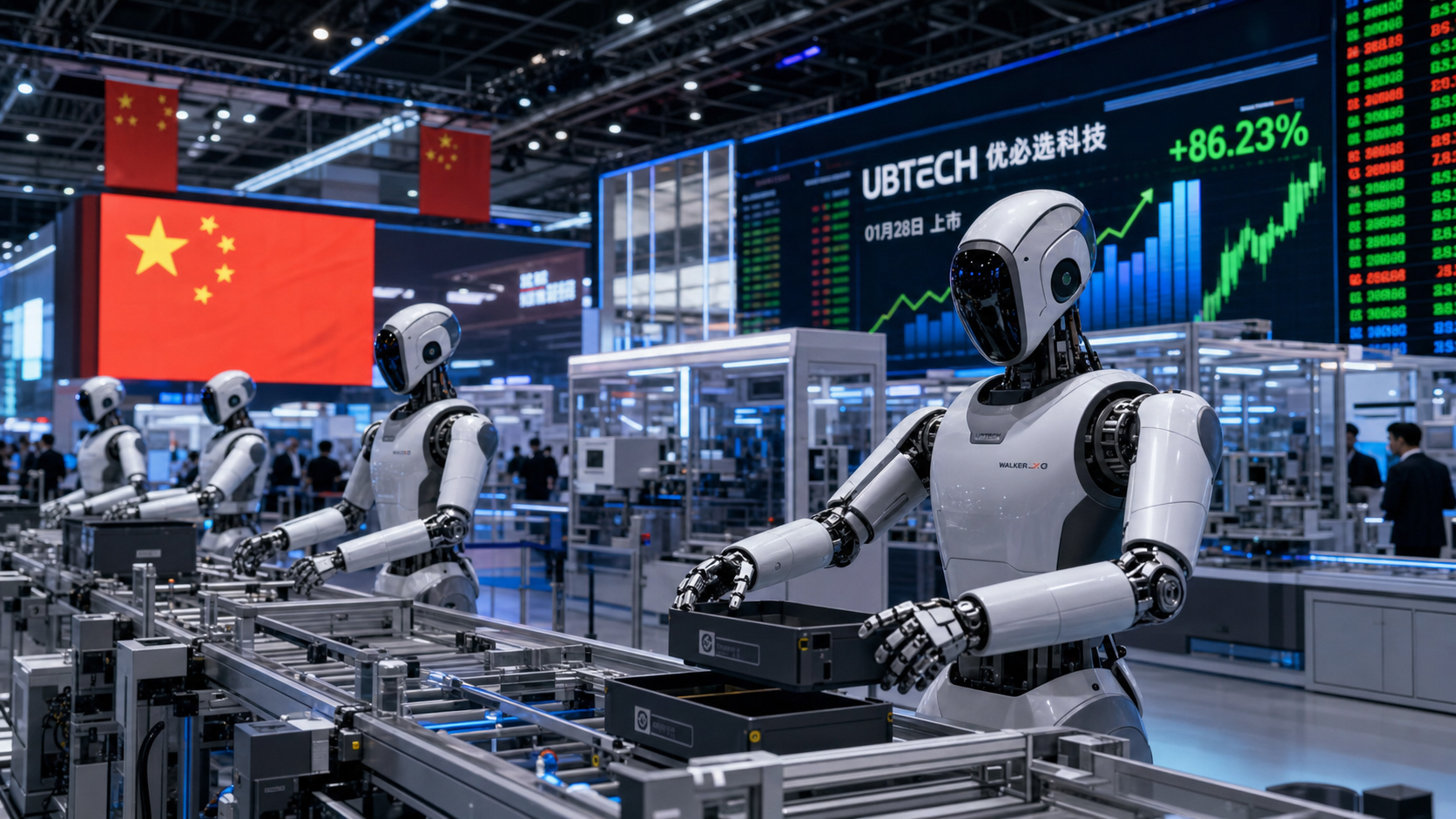
World Robot Conference in Beijing: Secret visit to the trade fair – Why Nvidia is keeping such a close eye on China's rapid rise in robotics – Creative image on the topic, with AI: Xpert.Digital
China's robot craze: Between investor fever and industrial reality
When kickboxing receives more applause in the exhibition hall lights than proof of economic viability – how much substance is actually behind the biggest tech hype since the AI revolution?
The hype surrounding artificial intelligence has long since reached the physical world – and the epicenter of this development is undeniably in China. The recent World Robot Conference in Beijing impressively demonstrated how rapidly the humanoid robot industry is transforming from a mere trade fair spectacle into a serious economic force. Fueled by dramatically falling production costs, massive government subsidies, and an unprecedented investor frenzy on Asian stock exchanges, Chinese manufacturers are pushing from research labs to factory floors and logistics centers at a breathtaking pace. But behind astronomical company valuations and impressive growth rates lies a far more complex reality: Caught between geopolitical dependencies, ambitious visions of the future, and the pressing question of genuine profitability, the industry must now prove that it is more than just a massive speculative bubble. This article offers a deep dive into China's robotics craze and explores how much substance truly lies behind this revolution of steel, chips, and algorithms.
A frenzy on the stock exchange floor
On August 19, 2026, Beijing transformed into the capital of future technology for a few days. At the World Robot Conference, more than 300 predominantly Chinese companies presented over 2,000 exhibits and unveiled more than 150 new products. But the real sensation didn't occur on the exhibition stage, but rather on the Shanghai Stock Exchange. Shares of Unitree Robotics, the best-known Chinese manufacturer of humanoid robots, skyrocketed by up to 542 percent on their first day of trading. The company had raised approximately 6.1 billion yuan, equivalent to about 905 million US dollars, in its IPO, becoming the first humanoid robot manufacturer ever to be listed on the Chinese mainland. The subscription rate from retail investors was more than 8,000 times the initial public offering, illustrating the sheer force of investor interest. At its initial public offering, Unitree was valued at approximately 219 times its annual earnings and 36 times its 2025 revenue – figures that are exceptionally high even for highly speculative technology stocks and raise questions about the sustainability of this valuation.
From hype to workbench
Behind the spectacular stock price movements lies a strategic realignment of the entire industry. After years of humanoid robots making headlines primarily with dance routines, backflips, and martial arts demonstrations, the focus is increasingly shifting to tangible economic benefits. In Beijing, manufacturers showcased their machines sorting packages, packaging mobile phones, and performing simple household tasks. This shift marks a transition that is existential for the industry: only if humanoid robots prove their worth in productive work processes can the industry's immense valuation be justified in the long term. At Leju, for example, a manufacturer of industrial humanoid robots, the focus is clearly on logistics. According to Vice President Zhang Dapeng, both European factories and Chinese automotive plants are already using Leju robots to move boxes and transport components.
Where machines are already at work
Some applications have now progressed beyond the pilot stage. According to the manufacturer Robotera, more than 100 package-sorting robots are in operation in 15 warehouses nationwide, contracted by China Post since last year. DexForce is going even further: Since the beginning of the year, the company has been deploying its humanoid robots in a factory belonging to Lens Technology, a Chinese supplier of touchscreens that also serves Apple and Huawei. There, the robots package mobile phones with millimeter precision and can independently detect and correct errors, such as when a phone is positioned at an angle. A DexForce representative succinctly summarized the economic core of this development: Theoretically, humans are the more skilled beings, but many factory workers are simply unwilling to continue performing monotonous tasks. This statement points to a structural driver that is often overlooked: China's demographic shift and the growing aversion of younger workers to mindless factory work are creating a real need that goes beyond mere enthusiasm for technology.
Nvidia's understated appearance with great symbolic power
One detail of the conference deserves special attention because it exposes the geopolitical dimension of the robotics industry. Madison Huang, a senior Nvidia executive and daughter of Nvidia CEO Jensen Huang, attended the trade show unannounced and watched demonstrations of kicking and dancing robots before asking questions about sensor technology at a booth for companion robots. Huang is responsible for marketing Nvidia's physical AI platforms. Her visit took place despite ongoing geopolitical tensions and US export restrictions on Nvidia's most advanced AI chips to China, highlighting the continued dependence of Chinese robotics companies on foreign, particularly American, supplier technology. The US company RealSense, specializing in vision systems for robots and one of the few foreign exhibitors at the conference, is also expanding its manufacturing capacity in China and forging distribution partnerships. The company's marketing chief, Mike Nielsen, described China as a key strategic market and noted that the country is becoming a hub for humanoid robotics technology. This intertwining of competition and cooperation between the USA and China illustrates that, despite all the rhetoric about technological decoupling, the robotics industry remains highly interconnected in practice.
Political tailwind from Beijing
The Chinese government leaves no doubt about the importance it attaches to robotics. At the opening ceremony of the conference, Vice Minister of Industry Xin Guobin pledged state support to the sector and described robotics as a significant force for China's economic and social development. This statement is not merely a courtesy but rather part of an industrial policy strategy pursued for years, with which Beijing systematically promotes key technologies such as semiconductors, electric vehicles, and now humanoid robots. The influx of well-capitalized strategic investors in Unitree's IPO confirms this close integration between the state and the private sector: around 20 percent of the shares went to strategic investors, including the Tencent-affiliated AI firm DeepSeek, as well as the investment arms of large state-owned enterprises such as China National Petroleum, China Southern Power Grid, and China Telecom. DeepSeek received a 2.31 percent stake with a three-year holding period, which means that Unitree can draw on DeepSeek's AI expertise in the future to further develop embodied intelligence models for its humanoid robots.
Figures that call for caution
Despite the euphoria, the available market data paints a far more nuanced picture. According to calculations by Morgan Stanley based on data from Smart Analytics Global, worldwide shipments of humanoid robots increased by 272 percent in the first half of 2026 to approximately 19,000 units, with Chinese companies accounting for 97 percent of this volume. While this figure initially sounds impressive, it is considerably put into perspective upon closer examination. According to the same analysis, around 65 percent of the shipped robots were not used for productive commercial work, but rather for entertainment, education, research, and data collection. In other words, the vast majority of the machines sold so far are not used to automate real work processes, but rather as demonstration objects, research platforms, or advertising tools. This discrepancy between spectacular growth rates and actual economic penetration is arguably the most important factor for a realistic assessment of the industry. In June 2026, Morgan Stanley revised its forecast for Chinese robot shipments upward for the second time that year, projecting 50,000 units shipped for the entire year, nearly double the previous forecast of 28,000 units. Such rapid and drastic forecast adjustments are typical of early technology cycles, when actual demand is still difficult to predict reliably.
The race for the next IPO
The spectacular success of Unitree's IPO has already triggered a chain reaction in the industry. Both the startup Lumos Robotics and the robotics division of Chery Automobile, China's largest car exporter, told Reuters that they are also considering an IPO. This trend is part of a broader revival of the Chinese IPO market: listings on the mainland stock exchanges in Shanghai, Shenzhen, and Beijing raised approximately US$7.7 billion in the first half of 2026, a 64.4 percent increase compared to the same period last year. Unitree itself had presented impressive operational figures in the run-up to its IPO: total revenue quadrupled in 2025 to 1.7 billion yuan, with humanoid robots, generating 867.8 million yuan in revenue, overtaking quadrupedal robots for the first time as the largest business segment. The share of humanoid robots in core business revenue rose from 27.6 percent in 2024 to 51.5 percent in the first three quarters of 2025, although the switch to the more affordable G1 model negatively impacted the gross margin. It is also noteworthy that a significant portion of the revenue from humanoid industrial applications does not originate from manufacturing or logistics, but rather from reception services and the role of museum or exhibition guides, which together account for approximately 50 to 70 percent. This further tempers the perception of a product that is already fully established in industry.
Our China expertise in business development, sales and marketing

Our China expertise in business development, sales and marketing - Image: Xpert.Digital
Industry focus areas: B2B, digitalization (from AI to XR), mechanical engineering, logistics, renewable energies and industry
More information here:
A thematic hub offering insights and expertise:
- Knowledge platform covering global and regional economies, innovation and industry-specific trends
- A collection of analyses, insights, and background information from our key areas of focus
- A place for expertise and information on current developments in business and technology
- A hub for companies seeking information on markets, digitalization, and industry innovations
Humanoid robots in China: Between massive market expansion and speculative bubble
Market dynamics in detail
Various market research institutes provide quite different figures on the size of the Chinese market, highlighting the novelty and uncertainty of this sector. TrendForce estimates that the Chinese market for humanoid robots will reach a volume of around 15 billion yuan in 2026, with an expected growth rate of at least 60 percent in 2027. Other calculations are considerably more optimistic, forecasting a market volume of over 1 trillion yuan for 2026 when upstream and downstream value chains such as component manufacturers and system integrators are included, with an expected annual growth rate of over 65 percent until 2030. This enormous range between different market estimates—from 15 billion to over 1 trillion yuan—demonstrates how differently market observers define and delimit the sector, depending on whether they consider only pure robot sales or the entire upstream and downstream value chain. Regarding unit volumes, estimates for Chinese deliveries in 2025 range from approximately 14,400 to 20,000 units, while a rise to around 62,500 units is projected for 2026, representing growth of approximately 94 percent. According to several sources, Chinese manufacturers were already expected to dominate the global delivery market by 2025 with a global market share exceeding 80 percent.
The price decline as a growth driver
A crucial economic factor accelerating market penetration is the drastic decline in manufacturing costs. According to the market research institute GGII, the manufacturing cost of a basic humanoid unit fell to approximately 100,000 yuan (around US$14,000) by the first quarter of 2026—a dramatic drop from the baseline of over 500,000 yuan in 2023. This cost reduction of more than 80 percent in just three years largely explains why companies like Unitree can now offer models for under 40,000 yuan and why mass production is now within reach. Such price reductions follow a classic industrial learning curve effect, similar to what has been observed with solar panels, batteries, and electric vehicles, with China becoming the global cost leader in all these sectors through aggressive scaling and government support.
Practical experience reports
The statements made by company representatives at the conference paint a more realistic picture than mere growth figures. Yu Chao, founder and CEO of Lumos Robotics, reported that his company already uses robots to automate the assembly of key components in its factory and plans to integrate them into final assembly in the future. His conclusion for this year: The focus of the entire industry has shifted away from mere feasibility demonstrations and toward the question of how robots can actually function in real-world application scenarios. X Square Robot, a company specializing in household chores, is still in an earlier stage of development: The longest test deployment of a robot in a private household to date lasted only one month. The company is currently testing its machines in several hundred homes, aiming for gradual commercialization next year. These comparatively modest, honestly communicated timeframes stand in stark contrast to the spectacular stock market valuations and illustrate that, despite all the progress, the industry is still at the beginning of a long road to widespread commercial maturity.
Short product cycles as a competitive advantage
One aspect that may give China a structural advantage over Western competitors is the speed of product development. Mike Nielsen of RealSense pointed out that robot development cycles in China now last six to eight months, rather than the three to four years typical in established industries. This enormous acceleration of innovation cycles results from the close integration of hardware manufacturing, software development, and market proximity within China's dense industrial ecosystem, particularly in regions like the Pearl River Delta and the Yangtze River Delta, where suppliers, manufacturing facilities, and investors collaborate in close geographical proximity. For Western competitors like Tesla with its Optimus project or the US startup Figure AI, which claims to have deployed robots continuously in a BMW factory for over eleven months, this translates into considerable pressure to innovate.
Valuation bubble or justified future value?
The central economic question arising from the events of August 19, 2026, concerns the relationship between valuation and actual economic substance. A valuation of 219 times earnings and 36 times revenue, as achieved by Unitree at its IPO, is difficult to justify using traditional valuation metrics, considering that a significant portion of its current revenue stems not from productive industrial work but from representational and entertainment functions. On the other hand, it can be argued that market participants are not valuing current revenue but a potential future in which humanoid robots have a similarly disruptive impact as PCs, smartphones, or electric vehicles once did. Furthermore, the parallel to the IPO of memory chip manufacturer CXMT, whose stock had risen by 466 percent the previous month, suggests a cross-industry pattern of speculative overreaction in connection with Chinese technology IPOs that extends beyond the robotics sector. For an experienced market observer, the comparison to the dot-com bubble of the early 2000s is compelling, where although many individual valuations were absurdly inflated, the underlying technological transformation was real and created value in the long term.
Geopolitical dimension and Western response
The rapid rise of the Chinese robotics industry has now alarmed European and American industry associations. In light of Unitree's soaring share price, the German Engineering Association (VDMA) has called for Europe to urgently catch up in the field of humanoid robotics to avoid falling behind in technological development. This concern is understandable from a German industrial perspective, as Germany is traditionally strong in conventional mechanical engineering and industrial robotics, but has yet to produce comparable leaders in the field of humanoid, AI-controlled robot systems. At the same time, the unannounced visit of Nvidia executive Madison Huang demonstrates that, despite political tensions, technological value chains remain globally intertwined: American chip and sensor technology remains indispensable for many Chinese robotics companies, while conversely, US corporations like Nvidia and RealSense consider the Chinese market strategically vital. This interdependence is likely to generate both incentives for cooperation and further political conflict in the medium term, especially if Washington further tightens its export controls on advanced AI chips.
China's lead and the humanoid robot: Why the industry now needs to prove its scalability
The central test for the entire industry in the next two to three years will no longer be technical feasibility, but rather the question of scalability and economic viability in continuous industrial operation. As long as roughly two-thirds of all humanoid robots delivered continue to end up in entertainment, education, and research rather than in productive work, it remains premature to call it an established industry. The crucial factor will be whether companies like DexForce, Robotera, and Leju can expand their existing pilot projects in logistics and electronics manufacturing to broader applications and larger production volumes without failure rates, maintenance costs, or a lack of reliability negating the promised productivity gains. The extremely short product cycles of six to eight months give Chinese manufacturers a speed advantage that could have a cumulative effect over the years and increasingly challenge Western competitors for market share. At the same time, the immense discrepancy between market valuations and operational substance remains a latent risk: Should commercial penetration develop more slowly than investors have priced in, significant price corrections are likely, as previous technology cycles have repeatedly demonstrated. For Chinese economic policy, however, the promotion of robotics remains a core strategic priority, regardless of short-term stock market fluctuations, as it serves both as a response to demographic change and as a new industrial growth area in the geopolitical race with the United States.
🎯🎯🎯 Data-driven B2B industry hub as a quasi-in-house solution

The quasi-in-house solution: How Xpert.Digital closes operational gaps in B2B marketing and sales – Smart Content-Driven Business - Image: Xpert.Digital
Xpert.Digital is a data-driven B2B industry hub led by Konrad Wolfenstein . The company acts as an external, quasi-in-house solution for industrial partners, closing operational gaps in marketing, content, and sales – without requiring additional resources on the client side.
More information here:
Your global marketing and business development partner
☑️ Our business language is English or German
☑️ NEW: Correspondence in your native language!

Konrad Wolfenstein
I and my team are happy to be available to you as your personal advisor.
You can contact me by filling out the contact form here [email protected]:or simply call me at +49 7348 4088 965. My email address is
I'm looking forward to our joint project.





