
Beef crisis in the USA: Price shock at the meat counter – Why Trump's beef plan is angering his most loyal voters
Xpert Pre-Release

Available in 27 languages 📢
Prefer Xpert.Digital on GoogleⓘPublished on: August 23, 2026 / Updated on: August 23, 2026 – Author: Konrad Wolfenstein
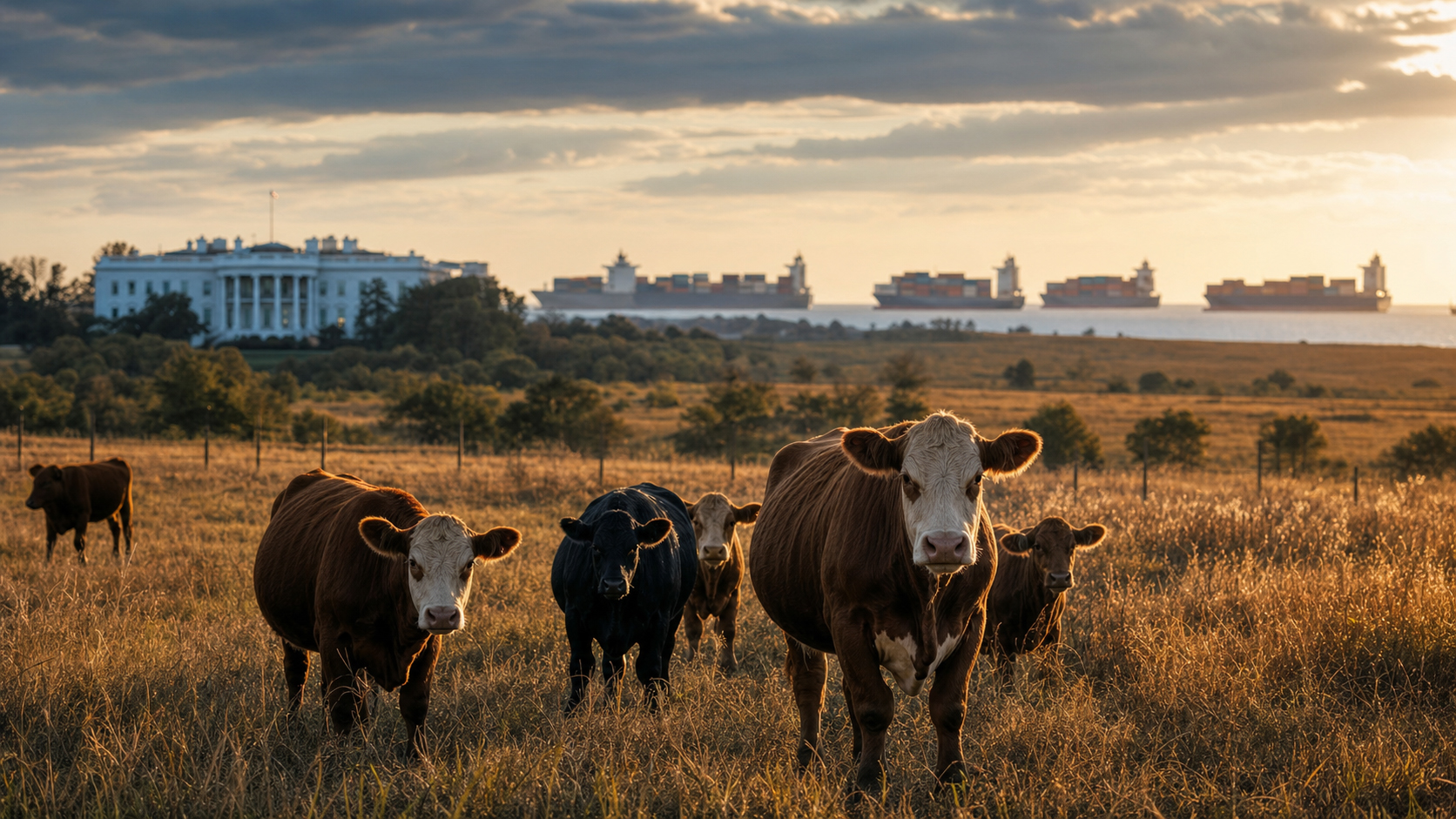
Beef crisis in the USA: Price shock at the meat counter – Why Trump's beef plan is angering his most loyal voters – Creative image on the topic, created with AI: Xpert.Digital
Farmers' revolt: Trump's 300,000-ton meat deal is stirring up the Republican base
Are the midterms in danger? How a simple food item could spell disaster for Donald Trump
Historic low in US cattle numbers: Why cheap imported ground beef is now exacerbating the problem
In the 2026 election year, Donald Trump finds himself in a precarious dilemma: To drive down historically high beef prices just before the crucial midterm elections, the US president is planning a temporary tariff exemption for massive quantities of imported ground beef. But what is intended as a quick campaign giveaway and visible relief for disgruntled consumers is provoking open revolt among his most loyal voter base. Leading Republicans and America's cattle ranchers accuse him of sacrificing domestic ranchers for short-term popularity. It is a risky political maneuver that not only ignores the unprecedented structural crisis in US agriculture but also severely tests Trump's protectionist "America First" core promise.
Related to this:

When campaign prices become more important than campaign promises: A president caught between consumer anger and farmers' resentment
Donald Trump has maneuvered himself into a political dilemma that is symptomatic of the contradictions in his economic policies. In 2018, with the slogan "Make Our Farmers Great Again," he promised American farmers that he would put their interests above all else. Eight years later, in August 2026, a trade policy decision by the same president sparked open revolt among the very voter group that had once helped him win. The trigger seems simple: ground beef has become more expensive in American supermarkets than it has been in decades, and the government wants to counteract this with a temporary tariff exemption for imports.
The political significance lies not only in the measure itself, but also in its timing. Midterm elections are scheduled for November 3rd, in which the narrow Republican majorities in the House of Representatives and the Senate will be reshuffled. Rising food prices have been considered one of the biggest risks for the president's party for months, which is why Trump wanted to score points with a swift, visible intervention. However, this gamble could backfire because it alienates precisely those rural voter demographics that traditionally form the backbone of Republican majorities.
The specific measure and its mechanics
On August 21, 2026, Trump announced via his platform TruthSocial that up to 300,000 tons of ground beef could be imported over the next 90 days without the usual additional import duties. Normally, the US levies tariffs on beef imports once a certain quota, known as the Tariff Rate Quota, is exceeded. These out-of-quota tariffs would be waived for the specified quantity. This amount is equivalent to approximately 661 million pounds of processable beef, illustrating the sheer scale of the influx of goods onto the market.
Trump accompanied the announcement with a remarkably specific price commitment. He stated that there was an assurance that this imported beef would be sold 25 percent below the current market price. A formal executive order is expected to be signed within the next two weeks, according to a government official. It is noteworthy that the president explicitly frames the measure as a bridging technology: it is intended to give American ranchers time and market relief to rebuild the domestic cattle population without consumers having to suffer from skyrocketing prices in the meantime.
Why beef has become so expensive
To understand the controversy, one must look at the underlying supply situation, which is indeed historic. On January 30, 2026, the U.S. Department of Agriculture released its semi-annual Cattle Inventory Report, which showed a total population of 86.2 million cattle and calves as of January 1, 2026. This is the lowest level since 1951, or 75 years, and marks the end of a contraction that has been ongoing since 2019. Particularly revealing is the beef cattle population, which fell to 27.6 million animals—the lowest figure since 1961.
The outlook for the so-called calf cohort is even more alarming. The Ministry of Agriculture's July report put the expected 2026 calf cohort at just 32.5 million animals, the lowest figure ever recorded and marking the ninth consecutive annual decline. This number is crucial because it determines production capacity for the coming years: those without calves today will be unable to sell cattle ready for slaughter in two to three years. Agricultural economists anticipate that the herd will not recover significantly until 2028 at the earliest.
The consequences for consumer prices were correspondingly drastic. In the spring of 2026, the beef futures contract on the Chicago Mercantile Exchange reached its highest level since the 1960s at $2.51 per pound, an increase of over 25 percent within twelve months. At the consumer level, the average price of ground beef climbed to around $6.70 per pound in the spring, while in February it even reached a record high of $6.67 – an increase of over 20 percent compared to the same month of the previous year. It is noteworthy that this price surge occurred while the general inflation rate in the US had eased to 2.4 percent in January 2026, thus making beef an isolated, but politically highly sensitive, price driver within the food basket.
The uprising of their own base
The reaction from agricultural lobby groups and Republican lawmakers was unusually sharp, precisely because it was directed against a president of their own party. Republican Senator Deb Fischer of Nebraska publicly warned that flooding the market with foreign beef would harm domestic cattle farming and undermine the necessary long-term solution: rebuilding the American cattle herd to meet domestic demand. She emphasized that she supported lower food prices, but not at the expense of American producers.
Republican Senator Tim Sheehy of Montana also opposed the president's decision, stating that the measure harms the ranching families who provide the country with food. Sharp criticism came from industry associations, including Justin Tupper, president of the National Cattle Breeders Association, who said that putting American cattle ranchers last does not put America first. He warned that the move weakens markets and even jeopardizes food security. Colin Woodall, president of the National Cattle Breeders Association, expressed concern that government-subsidized cheap beef would flood the domestic market.
Interestingly, this criticism stems not only from political calculation but also from a deeply ingrained structural logic within the cattle industry. Ranchers who have reduced their herds for years due to cost considerations need consistently high prices as an investment signal to reinvest in rebuilding their livestock. Paradoxically, artificially lowering prices through imports prolongs the very supply shortage that is meant to be resolved, because it weakens the economic incentive to expand herds.
Between symbolic politics and economic ineffectiveness
A key criticism, raised by economists and market participants alike, concerns the actual effectiveness of the measure. Reuters quoted economists and traders who doubted that the plan would have any noticeable price effect, given that the affected quantity of 300,000 tons over 90 days is negligible compared to total American beef consumption. This objection is compounded by the fact that several countries had not yet fully utilized their existing tariff-free import quotas, meaning that the additional allowance would not create any new trade flows in some cases, but merely facilitate existing imports.
This assessment is supported by market analyses that identify fundamental structural scarcity as the dominant price factor for the next two to three years, regardless of short-term trade policy interventions. The key finding is that supply will remain the determining price driver over the next 24 to 36 months, putting significant pressure on the margins of large meat processors such as Tyson Foods and JBS. Against this backdrop, the 90-day tariff exemption appears more like a political signal than an effective economic policy instrument that could actually close the underlying supply gap.
Our US expertise in business development, sales and marketing

Our US expertise in business development, sales and marketing - Image: Xpert.Digital
Industry focus areas: B2B, digitalization (from AI to XR), mechanical engineering, logistics, renewable energies and industry
More information here:
A thematic hub offering insights and expertise:
- Knowledge platform covering global and regional economies, innovation and industry-specific trends
- A collection of analyses, insights, and background information from our key areas of focus
- A place for expertise and information on current developments in business and technology
- A hub for companies seeking information on markets, digitalization, and industry innovations
Trade policy at its limit: Between short-term consumer support and structural upheaval
The complicated dual role of the customs regime
What's remarkable about this entire episode is the blatant contradiction within the administration's own trade policy. While Trump has promoted high tariffs in other policy areas as a tool to strengthen domestic industries and jobs, he is now resorting to the opposite approach in the case of beef, selectively lowering tariffs to facilitate imports. This apparent break with his own protectionist stance can only be understood by considering the political priorities in the run-up to the midterms: Short-term consumer relief for a highly visible, everyday food item apparently carries more weight in the election campaign strategy than the coherence of the overall trade policy.
This inconsistency opens up additional avenues of attack for political opponents and simultaneously weakens the overall credibility of the protectionist narrative that tariffs fundamentally serve domestic production. Critics within the administration can now justifiably argue that tariff policy is flexibly adapted to short-term political needs rather than following a reliable strategic line. For international trading partners, who already struggle with the unpredictability of American tariff policy, this is likely to be yet another example of how much domestic election cycles shape American foreign trade policy.
Related to this:

Ranch economics and the long shadow of the cattle cycle
To understand the ranchers' anger, one must understand the so-called cattle cycle, the multi-year rise and fall of the national cattle population that has shaped the industry for decades. The industry is currently in the twelfth year of this cycle, experiencing a sustained contraction since 2019. For comparison, the historical peak of the American cattle population was 132 million head in 1975, while the 100 million mark was last surpassed in 1997. The current population of approximately 86 million head is therefore almost 35 percent below the historical peak.
The suckler cow population has declined by four million animals since the last cyclical peak in 2019 and is now 40 percent below the historical record of 1975. These figures illustrate that the current supply shortage is not a short-term weather phenomenon or a temporary market disruption, but rather the result of a structural development that has grown over many years, driven, among other things, by persistent droughts in key grazing regions, increased feed and input costs, and the consolidation of smaller family farms. Some market observers, including agricultural economist James Mitchell from the University of Arkansas, already see the current data point as a potential turning point in the cycle, although this could not be definitively confirmed until the figures for January 2027 at the earliest.
The core of the political conflict lies precisely in this complex situation. Ranchers who are finally beginning to reinvest in rebuilding their herds, for example by keeping female calves for breeding rather than slaughter, need a stable and reliable price environment for these capital-intensive, multi-year investment decisions. A short-term, politically motivated wave of imports undermines this confidence and signals to the industry that high prices can be reined in at any time through executive action, which tends to discourage long-term investment decisions.
The geopolitical dimension of import origin
One aspect that has remained under-examined in the public debate so far concerns the question of which countries the additional import volume is actually supposed to come from. The traditionally largest beef suppliers to the US are countries such as Brazil, Australia, Canada, Mexico, New Zealand, and Argentina, each of which maintains different quota systems and trade agreements with the United States. Since some of these trading partners are not yet fully utilizing their existing quotas, as the Reuters analysis suggests, South American exporters in particular could gain an additional sales opportunity in the American market. This raises the question of whether the measure effectively leads to a silent redistribution of added value from American ranchers to foreign, often significantly cheaper, large-scale operations in South America.
For the affected exporting countries, the American announcement represents a significant economic signal, as it makes additional sales volumes possible at favorable conditions in the short term. At the same time, it remains to be seen whether trading partners will actually be able to mobilize sufficient additional quantities within the tight 90-day timeframe and ship them logistically to the USA, which is by no means trivial given the realities of global supply chains.
Consumer perspective and the limits of political price promises
From the perspective of American consumers, the announcement initially appears as a welcome relief, especially given the drastic price increases for a staple food deeply rooted in American everyday culture – whether at a backyard barbecue or a classic burger. Trump's promised price reduction of 25 percent below the current market level initially sounds like a significant relief for household budgets already suffering from general inflation.
However, basic economic principles caution against such political price promises. In a market economy, such a commitment is difficult to enforce, as ultimately private importers, wholesalers, and retail chains, not the government itself, determine the actual selling prices. Furthermore, it is unclear what precise mechanism would contractually secure the promised price reduction and how compliance could be monitored in practice. Given that market experts consider the additional import volume to be relatively small compared to the overall market, it seems quite possible that the noticeable impact on general consumer prices will remain limited, even if individual import batches are indeed offered at lower prices.
A test case for political capacity to act ahead of the midterms
The dispute over ground beef is ultimately more than a technical debate about agricultural trade policy; it's a test of how resilient the coalition between Trump and his traditional rural voter base truly is when economic interests clash. Farmers and ranchers have been among the Republicans' most reliable voter groups for decades, and their open opposition to a decision by their own president signals a remarkable breaking point within this political alliance. Should the criticism intensify in the coming weeks, it could weaken the administration's negotiating position and increase the pressure to either soften the measure or accompany it with additional support programs for local ranchers in order to defuse the internal party conflict.
At the same time, this episode exemplifies how difficult it is for any government to simultaneously serve short-term consumer relief and the long-term structural interests of individual economic sectors, especially when both concerns coincide immediately before a major election. The coming months will show whether the announced tariff reduction actually has a noticeable impact on retail prices, how the affected exporting countries react to the new sales opportunity, and whether the internal discontent among Republican agricultural policymakers persists until the midterm elections on November 3rd or can be alleviated by accompanying political concessions to ranchers.
🎯🎯🎯 Data-driven B2B industry hub as a quasi-in-house solution

The quasi-in-house solution: How Xpert.Digital closes operational gaps in B2B marketing and sales – Smart Content-Driven Business - Image: Xpert.Digital
Xpert.Digital is a data-driven B2B industry hub led by Konrad Wolfenstein . The company acts as an external, quasi-in-house solution for industrial partners, closing operational gaps in marketing, content, and sales – without requiring additional resources on the client side.
More information here:
Your global marketing and business development partner
☑️ Our business language is English or German
☑️ NEW: Correspondence in your native language!

Konrad Wolfenstein
I and my team are happy to be available to you as your personal advisor.
You can contact me by filling out the contact form here [email protected]:or simply call me at +49 7348 4088 965. My email address is
I'm looking forward to our joint project.










