
The beautiful robot is useless – industry asks a different question: The pragmatic turn in humanoid robotics
Xpert Pre-Release

Available in 27 languages 📢
Prefer Xpert.Digital on GoogleⓘPublished on: June 2, 2026 / Updated on: June 2, 2026 – Author: Konrad Wolfenstein
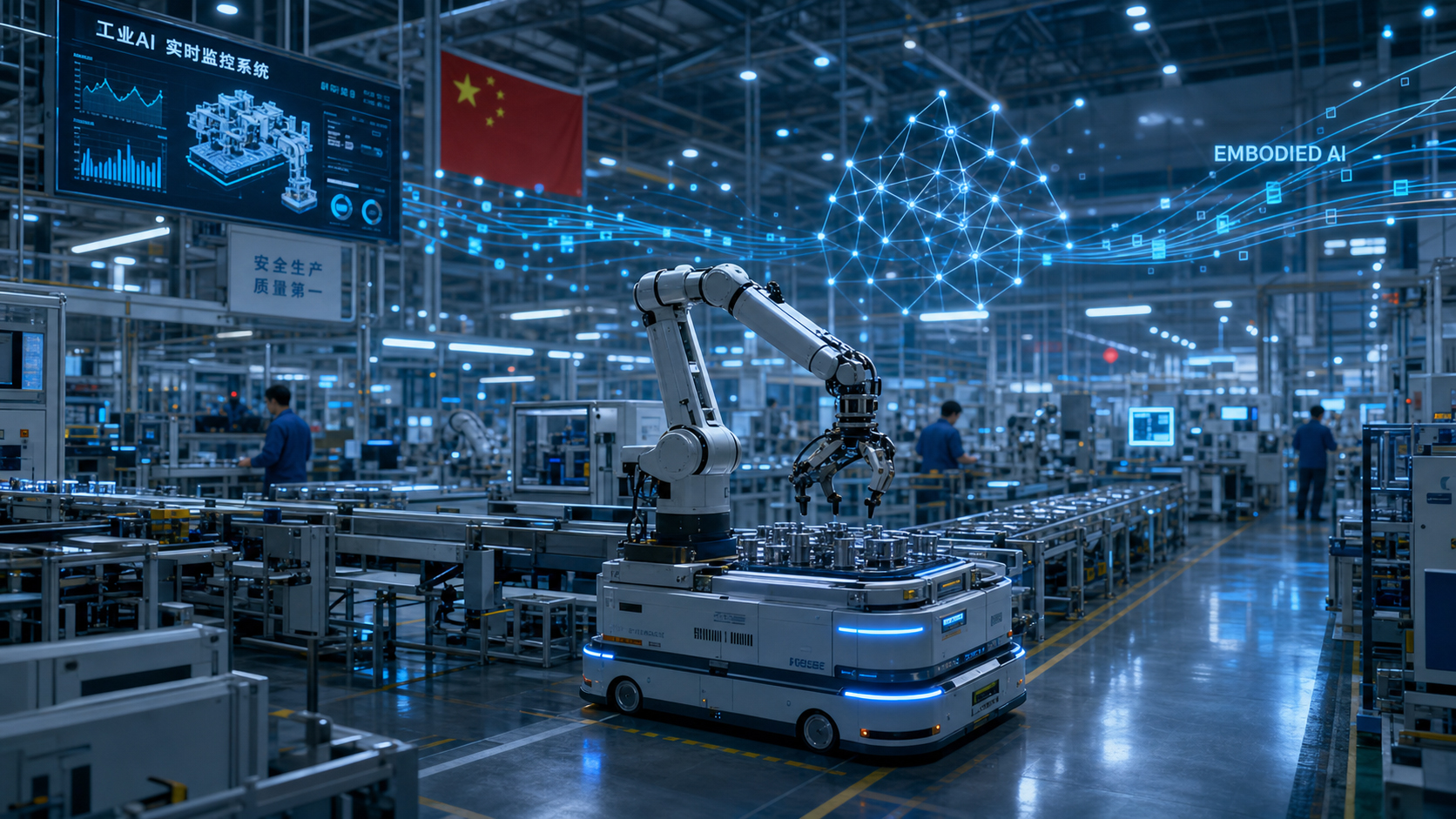
The beautiful robot is useless – industry asks a different question: The pragmatic turn in humanoid robotics – Image: Xpert.Digital
Forget dancing machines: Why the real robot revolution rolls on wheels
The “Deployment-First” Strategy: How China is dominating the industry of the future with wheel-based robots
Five fingers are too many: Why factories are now relying on simple robot grippers
Humanoid robots were long considered the epitome of a technological vision of the future: bipedal, with human-like faces and highly complex hands. But while the West still philosophizes about the perfect anthropomorphic worker, a radical, pragmatic shift is taking place in global production halls and development labs – especially in China. Industry is abandoning aesthetic elegance if it comes at the expense of reliability and efficiency. Instead of error-prone high-tech hands and computationally intensive legs, leading manufacturers are increasingly relying on wheel-based systems with robust, simple grippers. This uncompromising departure from pure science fiction fantasy to an unconditional "deployment-first" logic marks the true maturation process of the industry. Accompanied by a massive price drop and an insatiable hunger for real-world operational data for AI models, a new market with trillions of dollars in potential is emerging. Anyone still waiting for the perfect android will miss out on tomorrow's wave of industrial automation.
Enough with the science fiction: This is what the humanoid robots that will actually take over our jobs look like
Humanoid robotics is undergoing a profound paradigm shift. For a long time, the question of how human-like a robot could appear dominated public perception and some development labs. Bipedal locomotion, five-fingered hands, a face with displays – all of this attracted attention, filled exhibition halls, and garnered venture capital for companies. But anyone walking through the development departments and production halls in Shenzhen today will hear a different question: What can this robot actually do in the factory? This shift is not a cosmetic correction. It is a fundamental maturation process for an entire industry – from demonstration to deployment logic, from aesthetic ideals to engineering reality.
Yijun Yu, founder of the Sino-Cooperation Platform, has published a series of observations following visits to several companies in Shenzhen, precisely outlining this transformation. His assessments are not those of a detached analyst, but rather those of an industry expert who has spoken directly with market participants. The four key theses he formulates align remarkably well with what independent studies by Roland Berger, Nexery, and others have revealed in recent months. What is emerging is an industrial history being written in China in real time – with global consequences.
Wheels instead of legs: The realistic way into the factory hall
The most striking finding from the Shenzhen talks is technical, but it has far-reaching strategic implications: A wheeled robot with a gripper arm is often closer to industrial readiness in its current stage of development than a bipedal humanoid robot with a five-fingered hand. Several market participants estimate that such systems could already cover 80 to 90 percent of typical industrial applications.
This may sound sobering to anyone dreaming of anthropomorphic robots. But it's actually a strength of the industry: it's learning to ask the right questions. The Chinese company AgiBot, for example, is focusing precisely on this approach. Its A2-W model – a two-armed, wheeled robot – was tested live in an auto parts factory in Mianyang in July 2025. The result was impressive: for over three hours, the robots moved more than 800 shipping boxes per shift between assembly stations, autonomously navigating around forklifts and adjusting their gripping force in real time to repositioned boxes – almost flawlessly. This demonstration wasn't a showroom event, but a productive shift in a real factory environment.
The decisive advantage of wheel-based platforms lies in the combination of mobility, stability, and reduced system complexity. Bipedal robots must constantly maintain their balance, which consumes computing power, energy, and design effort. Wheels, on the other hand, allow for stable, fast navigation without these overhead costs. For factory environments with level floors and structured logistics routes, legs are simply not a necessary feature. Factories weren't built for legs—they were built for efficiency. A robot's human-like form is valuable when it has to operate in an environment designed for humans. In a factory that can be redesigned or adapted, this argument loses considerable weight.
This by no means signifies the end of the bipedal humanoid. Tesla is building its Optimus robot for use in its own production facilities, BMW is testing humanoid systems for inserting sheet metal parts into machines, and BYD plans to deploy more than 1,500 units in its factories by 2025. However, these pilot projects demonstrate that the initial steps involve defined, narrowly defined tasks, not the universal factory worker of science fiction films. Considerable development effort will still be required before truly bipedal systems can be implemented where wheel-based platforms fall short.
The five-fingered hand: Technological brilliance with industrial limits
The five-fingered "dexterous hand" is a central symbol of technological progress in robotics. It represents the ambition to enable universal manipulation: complex grasping, multimodal interaction with objects, and flexible, multi-purpose tasks. From a scientific and technological perspective, this direction of development is justified and necessary. However, from the perspective of industrial users, entirely different criteria apply.
What counts in a factory is not elegance, but reliability. Industrial decision-makers demand durability, maintainability, fail-safe operation, and cost – and the five-fingered hand currently exhibits significant weaknesses in all these areas. Roland Berger's 2026 study found that advanced robotic hands currently have a lifespan of less than a year in high-volume applications. This is a virtually unacceptable figure for an industrial component. A machine that requires major maintenance or replacement every few months is simply not cost-effective – especially when the material costs for such a hand are in the four-figure dollar range.
The consequence is remarkable: Several companies have deliberately removed the five-fingered hand from their product roadmap for the next three years. As Yijun Yu aptly puts it, this is not a rejection of the technology, but a clear prioritization: Technological elegance and industrial feasibility are not the same thing. Those who build for the factory must work with the factory's criteria. Industrial users do not accept technology that only works in demonstrations.
This also explains why specialized grippers – robust tools optimized for a few tasks – are currently the preferred solution for industrial robot platforms. A gripper designed for handling cardboard boxes can operate reliably for months, is inexpensive to replace, and easy to maintain. The five-fingered hand will come – but only when it meets the industrial benchmarks of durability, cost-effectiveness, and ease of maintenance. Until then, the simpler gripper is the wiser choice.
From an industry perspective, this development is healthy. It shows that the market is increasingly thinking in a mature way. The initial phase of any technology industry is characterized by features that impress. The mature phase is characterized by features that work. Humanoid robotics is currently moving from the first to the second phase.
Data as a strategic resource: The invisible foundation of Embodied AI
Behind every learning robot lies a data infrastructure. This is the part that is often overlooked in press reports about dancing robots and factory deployments. Embodied AI – the physically anchored, action-oriented AI – requires high-quality, multidimensional data from real-world work environments: real movements, real workpieces, real process variations, and real malfunctions. This data is not available on the internet, it cannot be distilled from language model corpora, and it cannot simply be generated in simulation.
This fundamentally distinguishes embodied AI from large language models like GPT or Gemini. While a language model can be trained on trillions of tokens from the web, a robot action model must generate data episode by episode in real or physically simulated environments—with a real robot, a real task, a human operator, or a scripted sequence. The International Federation of Robotics estimates that over 3.9 million industrial robots are in operation worldwide, but the largest publicly available manipulation datasets comprise only around one million episodes. This gap won't close on its own.
Even more fundamental is the problem of the embodiment gap: A policy trained on a six-axis single-armed robot does not translate cleanly to a two-armed humanoid robot on wheels. Every new robot form effectively resets the data requirements. This makes data a non-tradable competitive advantage—whoever has it can model; whoever doesn't can't buy it.
Yijun Yu identifies another, often overlooked aspect: It's not just the data itself that's crucial, but also the business model behind data collection. If data collection is conceived as a one-off project, it's hardly scalable. What the industry needs is a cost-effective, repeatable, and sustainable mechanism—a flywheel that keeps turning with every new robot unit in the field. In its study, Roland Berger recommends that humanoid OEMs leverage manufacturer partnerships to exchange real-world production environments for preferential pricing or early technology access—precisely because these environments provide the indispensable data foundation.
The value of this data is enormous. Conservative estimates put the potential market volume for embodied AI data at over ten trillion US dollars—three times the total data value of the internet industry. This is based on the analogy of internet companies, which generate roughly 600 dollars in data value per user, compared to a robot, which generates a lifetime of physical interaction, learning curves, and proprietary models for the company. Whoever controls the data controls the AI. Whoever controls the AI controls the competitive position in the next generation of industrial automation.
China grasped this strategic logic earlier than the West. The Chinese companies Unitree and AgiBot will account for nearly 80 percent of the global supply volume of humanoid robots in 2025. This is no coincidence and not simply price dumping – it is a deliberate deployment-first strategy aimed at generating real-world operational data as quickly as possible and using this advantage to hone software expertise.
🎯🎯🎯 Sino-Cooperation

Sino-Cooperation is a platform based in China and Germany
Sino-Cooperation is a platform based in China and Germany that promotes exchange and cooperation between German and Chinese companies, especially through events, digital formats and an online cooperation exchange for market entry and partnerships.
More information here:
Deployment instead of perfection: How China is changing the development of industrial humanoids – Collect data now, dominate later
Price decline as an accelerator: What falling costs mean for market dynamics
Perhaps the most concrete indicator of the industry's industrial maturity comes from price trends. In China, average selling prices for industrial humanoid robots have fallen noticeably within just one year: from around 800,000 RMB in 2025 to approximately 550,000 RMB currently. More importantly, material costs have dropped to about 200,000 RMB – a figure that demonstrates that the consolidation and scaling of supply chains is already having a real impact.
For Western observers, these figures in RMB are not immediately comprehensible. For comparison, the average global price of humanoid robots fell from around US$85,000 in 2023 to approximately US$25,000 by mid-2025 – a cost reduction of more than 70 percent in less than three years. Morgan Stanley has already doubled its forecast for China's humanoid robot production for 2026 to 28,000 units. Elon Musk predicts future prices of US$20,000 to US$25,000 – roughly the same as a mid-range car.
Behind this price decline lie two structural causes, which Yijun Yu clearly identifies. First, actuators and gearboxes are increasingly being modularized and produced in higher volumes. Actuators are the core component of every humanoid robot – they determine torque density, dynamic performance, and energy efficiency. When these key components transition from individually manufactured parts to standardized modules produced on automotive-like assembly lines, not only do unit costs decrease, but also lead times, quality variations, and maintenance requirements. Roland Berger estimates that the market volume for actuators for the body alone will reach between 26 and 79 billion US dollars by 2035.
Secondly, the manufacturing of structural components is changing. The transition from CNC-based single-unit and small-batch processes to tool-dependent mass production methods – that is, from machining individual parts to forming and casting in series – significantly reduces unit costs. This is the same path the automotive industry took decades ago: away from handcrafted precision manufacturing and towards scalable mass production with tight tolerances.
The Nexery study from 2026 projects that industrial humanoid robots will cost less than $55,000 by the end of the decade—a price level at which investments in suitable applications could pay for themselves in less than a year. This fundamentally changes the investment logic. No longer will large corporations be the sole buyers, and seven-figure pilot projects will no longer be the entry barrier—instead, automation tools will be widely accessible to medium-sized manufacturers.
China as a global testing ground: The deployment-first logic and its consequences
China has established a strategic position in humanoid robotics that goes beyond mere cost leadership. The country currently supplies 53 percent of the world's relevant vendors and is dynamically expanding its market leadership. The National Development and Reform Commission registered more than 150 humanoid robotics companies in 2025, with an annual growth rate exceeding 50 percent. Funding in the embodied intelligence sector reached 33.5 billion yuan in the first eleven months of 2025 – four times the figure for the same period of the previous year.
The Chinese strategy is not primarily focused on technological elegance, but on deployment speed. More than 15,000 humanoid robots were produced in China by 2025 – at least 30 times as many as in North America and over 150 times as many as in the EMEA region. This scaling is not primarily about sales volume, but about data generation. Every deployed unit is a data point in real-world operation – and this operational data feeds into next-generation AI models.
This creates a self-reinforcing advantage: More deployment means more data, more data means better models, better models mean more deployment. China is systematically building this flywheel, while Western ecosystems are still in the pilot phase. The Chinese startup AgiBot has already rolled its 10,000th mass-produced humanoid robot off the assembly line. UTECH Robotics reported a 22-fold increase in revenue from full-size humanoid robots for 2025.
At the same time, the Chinese ecosystem is not immune to fundamental technological challenges. Chinese companies also grapple with the sim-to-real gap, the quality of training data, and the durability of components in shift operations. However, the difference is that China is solving these problems in real-world operations, with actual industrial partners and in genuine production environments – while other regions are still negotiating the terms of pilot projects.
For European and German industrial companies, this development is a wake-up call. According to Roland Berger, more than 45 percent of Germany's manufacturing companies have vacant positions. The labor crisis is real and will worsen by 2050 – Germany's working-age population is projected to shrink by about 18 percent. Humanoid robots are one of the few answers to this structural challenge. The question is whether European companies will source the technology from their own ecosystem or become increasingly dependent on Chinese platforms or US AI stacks.
The market potential and the long road to full autonomy
The economic outlook for humanoid robotics is impressive – but it requires nuance. Roland Berger forecasts a market volume of up to US$750 billion at the OEM level for the sector by 2035, with long-term scenarios exceeding US$4 trillion by 2050. This would be comparable to today's automotive industry. The China Institute of Electronics anticipates a Chinese market alone of 870 billion yuan by 2030. Nexery estimates that 20 million humanoid robots could be in use by the end of the decade – by comparison, around 4.3 million conventional industrial robots are currently in operation worldwide.
However, these figures describe scenarios, not certainties. While 73 percent of the companies surveyed in the Nexery study are specifically planning to deploy embodied AI systems in the coming years, fully autonomous humanoid robots in industrial environments are realistically not expected until after 2030. The remaining gaps are well-known: Autonomy in open, unstructured environments will require another five to ten years of AI development. The longevity of key components under continuous operating conditions remains unproven. Regulatory frameworks are virtually nonexistent worldwide, and the fragmentation between US, European, and Chinese standards complicates international deployments.
The more realistic, short-term development path leads along precisely those pragmatic systems that Yijun Yu observed in Shenzhen: wheel-based platforms with reliable grippers, embedded in clearly defined logistics and assembly tasks, with a robust data acquisition model in the background. This is not a compromised vision – it's sound engineering practice. Between 40 and 60 percent of the tasks currently performed manually in production and logistics are considered fundamentally automatable. If wheel-based systems can already cover 80 to 90 percent of these tasks, that's a transformative achievement – not despite the lack of a human form, but because of their industrial focus.
Strategic conclusions for industrial companies
The analysis of the observations from Shenzhen, together with the available market studies, provides a clear course of action for industrial companies that want to prepare for the coming wave of embodied AI.
First: The entry-level technology is available. Those who wait until the perfect humanoid robot enters the factory miss out on the learning curve of the first wave. Pilot projects with wheel-based platforms in defined logistics or assembly tasks are now economically viable and simultaneously provide the operational data that is crucial for the next stage of development.
Secondly, data strategy is the real competitive advantage. Companies that are now building a structured infrastructure for capturing industrial motion and process data are positioning themselves for the AI models of the next generation of robots. This is not purely a technical issue – it requires a viable business model that integrates data collection as an ongoing process, not as a one-off project.
Third, component investments and supply chain decisions must be made now. Actuators, gears, and structural components are rapidly evolving toward automotive-like mass production. Companies entering these supply chains today—as manufacturers, integrators, or strategic partners—are securing positions in a market that will grow to several hundred billion dollars in the next decade.
Fourth: The stance towards Chinese technology players requires strategic clarity. China leads not only in production, but also in deployment speed and the development of proprietary datasets. Whether to utilize these capabilities, circumvent them, or develop European alternatives is not a technical decision, but an economic and geopolitical one – and one that must be made early on.
Humanoid robotics has long been a promise. It is now becoming a market. And the crucial step is not the perfect bipedal robot with a human hand – it is the reliable, affordable, maintainable robot with a gripper on wheels, which is starting its shift in Shenzhen today and could be in Frankfurt, Ulm, and Stuttgart tomorrow.
🎯🎯🎯 Data-driven B2B industry hub as a quasi-in-house solution

The quasi-in-house solution: How Xpert.Digital closes operational gaps in B2B marketing and sales – Smart Content-Driven Business - Image: Xpert.Digital
Xpert.Digital is a data-driven B2B industry hub led by Konrad Wolfenstein . The company acts as an external, quasi-in-house solution for industrial partners, closing operational gaps in marketing, content, and sales – without requiring additional resources on the client side.
More information here:
Your global marketing and business development partner
☑️ Our business language is English or German
☑️ NEW: Correspondence in your native language!

Konrad Wolfenstein
I and my team are happy to be available to you as your personal advisor.
You can contact me by filling out the contact form here simply call me at +49 7348 4088 965. My email address is [email protected]:or
I'm looking forward to our joint project.





