
Humanoid Embodied Robotics: Why the roundtable on June 25, 2026 was more than a friendly Zoom meeting
Xpert Pre-Release

Available in 27 languages 📢
Prefer Xpert.Digital on GoogleⓘPublished on: June 25, 2026 / Updated on: June 25, 2026 – Author: Konrad Wolfenstein
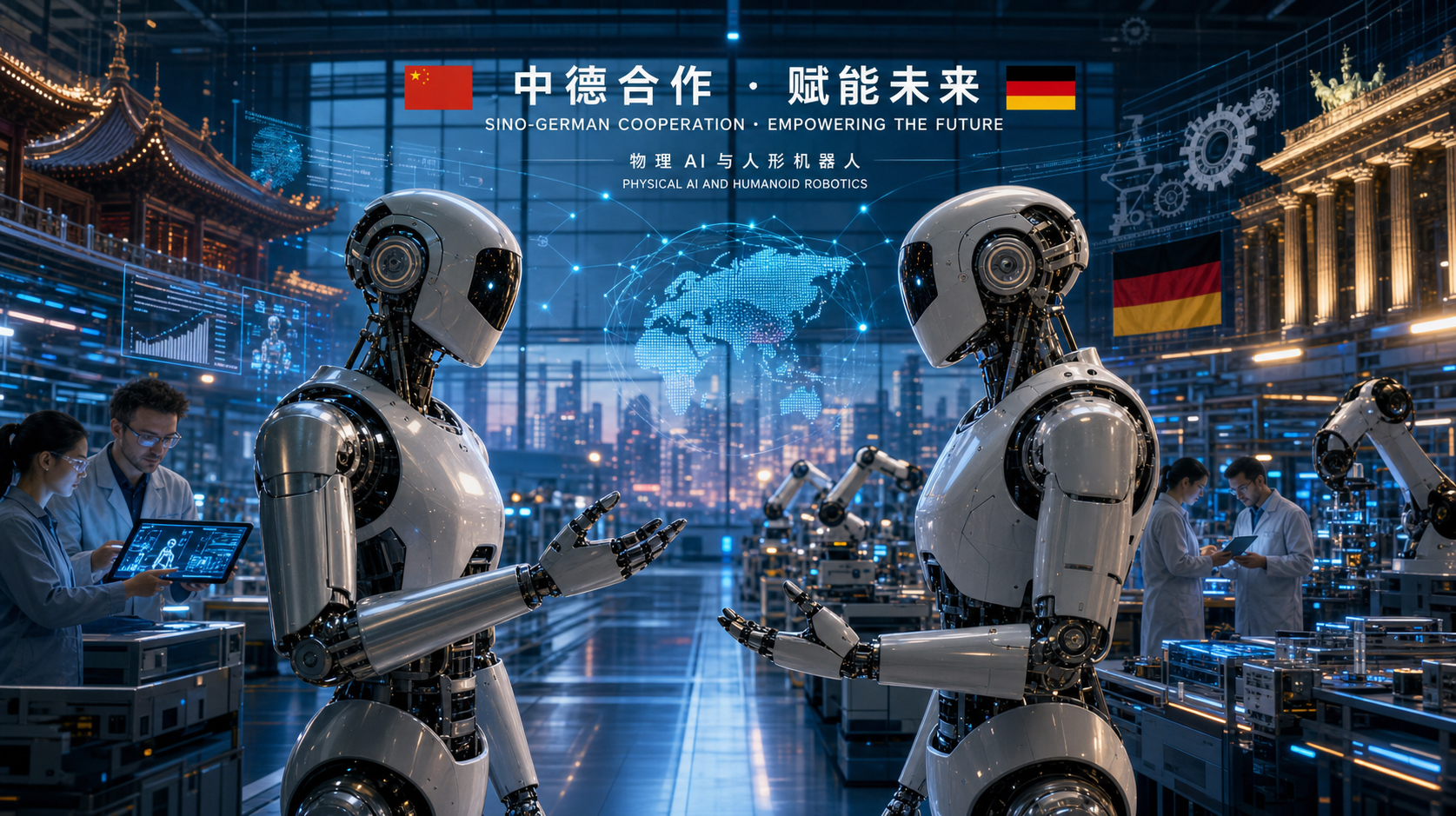
Humanoid Embodied Robotics: Why the roundtable on June 25, 2026 was more than a friendly Zoom meeting – Image: Xpert.Digital
Sino-German cooperation in physical AI and humanoid robotics: Why the battle for the factories of the future can only be won together
Between vision and factory floor – A date that means more than a calendar date
On June 25, 2026, scientists, entrepreneurs, investors, and engineers from Germany and China connected for an online roundtable entitled "Sino-German Discussion on Physical AI and Humanoid Robotics." Organized by Robot Valley—Germany's leading community and innovation platform for robotics and artificial intelligence—in cooperation with the Sino Cooperation Platform, the format was deliberately open: no conference papers, no formal protocol, but instead direct exchange between practitioners working at the interface of two world regions that will jointly shape the robotics market in the coming years.
The participants came from a broad spectrum: universities and research institutions, industrial software and AI companies, robotics and automation companies, and industrial end users. Among those represented was the Fraunhofer Institute for Industrial Engineering IAO with its Applied Robotics Alliance (ARA), which has been officially operational since July 1, 2026, and offers a structured innovation network for robot manufacturers, integrators, and users. On the Chinese side, participants included key players representing the pulse of the Chinese robotics industry: from venture capital investors and hardware developers to municipal economic development zones that have already established national testing infrastructure for robot drive components.
The timing was anything but accidental. The roundtable took place at a time when the global robotics industry is undergoing a fundamental transition: from the laboratory and prototype phase to the first commercial deployments in real-world production environments. The market for humanoid robots is estimated at US$3.64 billion for 2026 and is projected to grow to US$14.53 billion by 2032, representing an annual growth rate of 25.8 percent. Under more optimistic scenarios, Roland Berger even projects a market volume of up to US$750 billion by 2035 and up to US$4 trillion by 2050 – comparable to today's automotive industry.
Related to this:
What's at stake: The economic framework
Before assessing the substantive value of the roundtable, one must understand the economic context in which it took place. Humanoid robotics will no longer be a niche topic in 2026. In 2025, global production of humanoid robots exceeded 20,000 units for the first time – a dramatic increase from fewer than 2,000 units the previous year. Chinese manufacturers contributed over 90 percent of the global production volume: Unitree Robotics alone shipped more than 5,500 units, claiming a global market share of approximately 32.4 percent. AgiBot followed closely behind with 5,168 units. By comparison, the major American manufacturers Tesla, Figure AI, and Agility Robotics together delivered only around 450 units.
These figures are not only technologically relevant; they have geopolitical and economic implications. Nearly 90 percent of all humanoid robots sold worldwide in 2025 were manufactured in China. Investors worldwide poured US$27.6 billion into 1,009 robotics deals that same year, with defense robotics alone attracting US$8 billion. In June 2026, the Chinese Ministry of Industry and Information Technology (MIIT) mandated that 10,000 humanoid robots be operational in factories and hospitals by the end of the year. Simultaneously, Unitree Robotics is aiming for an IPO on Shanghai's STAR Market with a valuation of approximately €5.8 billion.
Germany is not absent from this race, but it operates on a different level. Its strengths lie in system integration, precision manufacturing, safety engineering expertise, and – crucially – in the established demand from German industry: automotive, mechanical engineering, logistics, and medical technology. This very constellation transforms the German-Chinese dialogue not into a competition, but into a strategic complementary process. This was symbolically underscored during German Chancellor Friedrich Merz's visit to Unitree Robotics in Hangzhou on February 26, 2026 – a visit that was the only Chinese company stop included in the official itinerary and was accompanied by 30 German industry leaders from the automotive, chemical, and mechanical engineering sectors.
Three criteria instead of showroom logic: What truly supports an industrial application
The main topic of discussion at the roundtable was the question of deployment criteria. This debate is anything but academic. It determines whether investments in humanoid robotics are economically justified – or whether they merely serve as technological demonstrations. Fraunhofer IPA has developed a guideline on the economic viability of humanoid robots, which calculates the amortization period for robot deployments in various scenarios. In one logistics example, the amortization period was approximately 7.8 years – a figure that calls into question the current economic viability in this sector, especially given the low labor costs in logistics.
The discussion identified four overarching criteria that determine suitability for deployment. First, technical process reliability: A robot must not only be able to perform a task, but also perform it reliably and reproducibly. Current systems still show significant shortcomings in this area. At the BAAI (Zhiyuan Conference) in Beijing, Connor Zhang of the OpenARM Chinese Community reported that various manufacturers estimate the maturity level of the "embodied brain"—that is, the cognitive control layer of humanoid systems—at only single-digit percentages, compared to the previous generation of deterministic 6-axis systems. This means that fully autonomous, embodied AI is not yet feasible in industrial practice in the short term.
And then there's flexibility and generalizability: One of the key promises of humanoid robots lies not in sheer speed or strength, but in their ability to adapt to changing tasks without needing to be reprogrammed each time. This is precisely where they differ from traditional industrial robots. The International Federation of Robotics (IFR) sees humanoid robots as particularly promising for industrial applications where flexibility is required – in areas where rigid automation reaches its limits. Thirdly, there's human-robot compatibility: Existing infrastructures, factory floors, tools, and processes are designed for humans. A humanoid robot with the same body morphology can utilize this infrastructure without costly modifications – an argument often underestimated in discussions about industrial ROI. Fourthly, there's the adaptation to regulatory and safety frameworks: Especially in Germany and Europe, CE conformity, the Machinery Directive, and risk assessment are essential hurdles that Chinese manufacturers must navigate when entering the European market.
ROI versus Vision: The structural tension in early market phases
The question of return on investment in early market phases is one of the central points of contention in the entire debate. Technology adoption rarely follows a linear ROI model, especially in the early stages. This phenomenon is well-known from the history of information technology: early PC generations offered barely measurable productivity gains, and ERP systems often only paid for themselves after decades. Humanoid robotics is currently in a phase that Bessemer Venture Partners describes as the "GPT 2.5 moment": real and scalable, but with a still significant gap between laboratory and field deployment.
Specifically, this means that a humanoid robot will cost between $50,000 and $70,000 per unit in 2026. Chinese manufacturers have driven production costs down to around $46,000 via their local supply chains, while non-Chinese supply chains still cost around $130,000 – equivalent to two years' average salary for an American worker. Industry analysts expect industrial robots to cost less than $55,000 by the end of the decade and could pay for themselves in less than a year in suitable applications. The automation potential is particularly high in logistics, where the relevance of humanoid systems is estimated at 96 percent of all standardized tasks – 40 to 60 percent of today's manual tasks are considered fundamentally automatable.
The real divide between ROI and vision, however, lies not in the price of the hardware, but in the so-called production gap: the divide between a functioning pilot project and scalable series deployment. As the Executive Playbook for Physical AI Deployment 2026 notes, most promising industrial pilots fail not due to model quality, but because of poor data quality, unresolved data pipelines, and a lack of alignment between business objectives, infrastructure, and operational processes. This is not a technical weakness, but an organizational and strategic one – and this is precisely where cooperation between German systems expertise and Chinese hardware scaling power can unleash productive synergies.
Human-robot interaction: Trust as an economic variable
That trust between humans and robots is even on the agenda of an economic roundtable may initially seem surprising. However, it is one of the most relevant economic variables in the implementation process. Technology that is not accepted by employees achieves no ROI – regardless of its performance. This finding is well-documented: studies among German industry representatives show that the feeling of being informed and not having to fear job loss, as well as trust in the interaction with the robot, are among the most important success factors for implementation.
Researchers at the Technical University of Munich demonstrated in a study published in 2026 that transparent interaction—that is, the traceability of robot actions—makes a significant contribution to building trust. A data recorder that makes the interaction between humans and robots transparent could play a key role in this. The findings of the HRI 2026 conference point in the same direction: Effective human-robot collaboration requires continuous feedback on the current state of the system, context-sensitive instructions, and simple and intuitive communication formats such as short text displays or light signals. The VDI (Association of German Engineers) has also documented that a robot's errors negatively impact perceived intelligence, likability, acceptance, and trust—and that more information during error-free operation can even lead to less trust, highlighting the complexity of the issue.
This dimension is particularly relevant in the Sino-German context because both sides bring different cultural and regulatory starting points. In China, a pragmatic, state-sponsored adoption push currently dominates: The MIIT has mandated the adoption of 10,000 humanoid units by the end of the year. In Germany, on the other hand, decision-making power lies more with individual companies, works councils, and security authorities – which is both slower and more sustainable. Fraunhofer IAO's ARA (Action Reconstruction and Approach) addresses precisely this point: Through innovation sprints, application workshops, and partner matching, the alliance aims not only to develop technical solutions but also to strengthen societal and operational acceptance.
Practical application scenarios: What actually arrives in the factory
The roundtable revealed a remarkable breadth of concrete application scenarios and product approaches. SunrisingAI from China presented a self-evolving embodied AI robot designed for industrial scenarios, boasting precision, agile efficiency, flexible adaptability, and collaborative safety. According to the company, its welding and placement robot was the first product that NIO manager Liu demonstrated at an event. This underscores how closely the development of humanoid systems in China is linked to the procurement strategies of major OEMs.
Union Image, a Shenzhen-based company supported by Unitree, builds the "eyes" for humanoid robots: high-precision camera and depth modules based on structured light and time-of-flight technology, with proprietary ISP tuning and multi-camera synchronization. These components are not only relevant for factory environments but also play a central role in real-to-sim data generation—that is, the transfer of real-world scenarios into simulated training environments for AI systems. Huaweike Intelligent Technology, on the other hand, claims to be one of the first Chinese companies to specialize in tactile sensor and electronic skin technologies for humanoid robots and describes itself as a market leader in flexible tactile sensors for humanoid systems in China.
Particularly revealing was the contribution of the Lishui Economic Development Zone, which presented itself as China's only independent testing and inspection laboratory for key robot drive components – especially ball screws and lead screws. The existence of such a specialized testing infrastructure at the municipal level strongly suggests that China is not only producing robots but is building a complete industrial value chain. This aligns with the adjacent picture from Lishui itself: The China Rolling Headquarters is part of a comprehensive robotics component infrastructure, familiar to the German observers present from the concept of the Rolling Innovation Center.
🎯🎯🎯 Sino-Cooperation

Sino-Cooperation is a platform based in China and Germany
Sino-Cooperation is a platform based in China and Germany that promotes exchange and cooperation between German and Chinese companies, especially through events, digital formats and an online cooperation exchange for market entry and partnerships.
More information here:
Robot Valley & China: How a transnational ecosystem for Physical AI is being created
Open Source and Cost Structure: The Democratization of Robotics Hardware
One topic that generated particular interest at the roundtable was the question of open-source architectures and cost development in robot hardware. Connor Zhang from the OpenARM Chinese Community presented an approach that focuses radically on cost reduction and accessibility: affordable open-source assembly solutions for 7-degrees-of-freedom (7-DOF) humanoid robot arms, complemented by an open-source operating system for embodied AI with a view to general artificial intelligence (AGI). The goal is clearly defined: to help industrial partners reduce implementation costs and promote the widespread use of large-scale embodied AI models in various industrial scenarios.
The OpenArm concept is not merely a theoretical exercise. The price structure for open-source robotic arms now ranges from a few hundred to a few thousand US dollars for basic components, even though the fully equipped OpenArm Agility A1 costs between 3,580 and 5,800 US dollars on the market. For research and education, solutions like the Robotis OMX AI robotic arm, available from 384 euros, represent a new barrier to entry. This development has systemic implications: if the hardware costs for robotic platforms fall as sharply as those for microprocessors or solar cells, the barriers to experimentation, pilot projects, and ultimately, mass production will be dramatically lowered. The real bottleneck will then shift from hardware to software, data, and systems integration expertise – fields in which European partners have traditionally been strong.
SOTA Tech Shanghai presented another building block of this infrastructure during the discussion: The company focuses on AI-3D research and product design, providing simulation data as well as real-world 3D and 4D data for training robotic models and physical AI systems. This data layer is at least as crucial for the performance of future systems as the hardware itself – a realization that is increasingly gaining traction in European robotics as well.
The role of industrial platforms: Networks as a lever for scaling
It was no coincidence that Robot Valley was chosen to organize the roundtable. The platform represents a model for scaling robotics innovation that goes beyond traditional technology clusters. Robot Valley is supported by EDIH Saxony and funded by the EU's "Digital Europe" program. It is integrated into Saxony's official robotics strategy through Robotics Saxony and explicitly named in the Saxon coalition agreement as a key initiative for the region's robotics and AI infrastructure. The platform offers five specific service areas: networking and partner matching, events and knowledge exchange, training and further education through the Robot Valley Academy, access to test environments, and research and reporting.
The Robot Valley model can be understood as a blueprint for what the Roundtable aimed to achieve on a global scale: not just exchanging information, but connecting ecosystems. The Sino Cooperation Platform on the Chinese side fulfills an analogous function. The collaboration between the two platforms thus creates a transnational networking structure that extends beyond individual business partnerships and can unleash systemic effects. For small and medium-sized enterprises (SMEs) that lack both the resources and the networks to independently identify Chinese robotics partners, such an institutional framework is of considerable practical value.
On the investor side, Jerry from Huaxing Capital Singapore – a seed and angel-stage VC focused on AI and hardware – was a prominent representative of the financing side. Huaxing Capital is one of the most active Chinese venture capital firms in the tech sector and has played a key role in funding rounds for Alibaba, Meituan, and numerous other Chinese tech champions. His participation in the roundtable signaled that the topics discussed were not merely academic but had direct investment relevance.
Geopolitics and technology cooperation: The diplomatic subtext
Every roundtable discussion between Chinese and German technology stakeholders today takes place in a geopolitically charged climate. The Russia-Ukraine war, US export restrictions on AI chips, the debate surrounding technological decoupling, and the question of whether Europe can build an independent robotics industry or wants to become dependent on Chinese supply chains—all these areas of tension formed the invisible backdrop for the discussion. Nevertheless, the participants consciously chose a pragmatic perspective: cooperation instead of isolation, exchange instead of autarky.
Chancellor Merz's visit to Unitree Robotics in February 2026—the only Chinese company stop on his trip to China—sent a clear political signal in this direction. Germany relies on Chinese supply chains for robotics components, and conversely, the Chinese robotics industry needs the European market as a benchmark for high-quality mass production and regulatory legitimacy. The success of the Sino-German Smart Manufacturing Matchmaking Conference in Hefei, where nearly 100 German companies, including BMW and Siemens, concluded trade and investment deals worth over 6.8 billion yuan, demonstrates that economic pragmatism outweighs political skepticism.
TealSphere Consulting, which participated in the roundtable discussion, provides another practical illustration of this reality: The company, with offices in China and Europe, supports technology companies with their international expansion and foreign companies with their market entry into China, offering consulting, marketing, and recruitment services. Such intermediaries are indispensable in an environment where cultural, linguistic, and regulatory barriers remain significant.
Results and impulses: What June 25th leaves behind
The picture painted by the roundtable discussion of June 25, 2026, is both nuanced and encouraging. Nuanced because the technological maturity of humanoid systems, and thus their actual industrial utility, remains limited. This became clear in the chat log when Connor Zhang directly referenced the BAAI conference and characterized the level of "embodied brain" as a single-digit percentage compared to deterministic predecessor systems. Fully autonomous embodied AI in the factory is not a topic for the coming months, but for the coming years.
Encouragingly, the stakeholders on both sides share this pragmatism and are nevertheless working together on concrete steps. Fraunhofer IAO, with its Applied Robotics Alliance, has created a structured institutional infrastructure for the next phase of innovation, explicitly addressing five application sectors: construction, logistics and trade, manufacturing, healthcare, and agriculture. The project duration, running until August 2027, provides companies with a clearly defined timeframe for engagement and investment. On the Chinese side, the breadth of participation—from venture capitalists and sensor specialists to municipal testing centers—demonstrates that the Chinese robotics industry is no longer solely driven by individual flagship companies like Unitree or AgiBot, but rather by a deep ecosystem of industrial specialization.
Valeria Bopp-Bertenbreiter and Selina Layer from Fraunhofer IAO used the roundtable's chat specifically for networking and invited interested parties to contact the Applied Robotics Alliance through official channels. This is no coincidence: platforms like this roundtable have long since become primary contact points for transnational collaborations in a world where global travel is time-consuming and digital formats enable deep connections.
Perspectives: What Europe can learn from the Sino-German dialogue
The overarching economic lesson offered by this roundtable extends beyond robotics. It concerns Europe's ability to act not as a passive observer, but as an active shaper of the technological competition of the 21st century. For this, Europe does not need complete technological autarky – that would be economically pointless and politically unfeasible. What it needs is a smart division of labor: combining Chinese hardware scaling expertise and production capacity with European system integration, safety certification, end-user engagement, and the development of societal acceptance.
Physical AI – the physical counterpart to digital AI, embodied in robots operating in the real world – has the potential to automate up to 60 percent of the tasks currently performed manually in production and logistics. The question is not whether this will happen, but who controls the value chain. As Deloitte analyzes in a white paper on Physical AI, the economic value of Physical AI in manufacturing extends across three layers: operational value creation at the core of production, disruptive innovation for new business models, and value spillover through integration along the entire supply chain.
This spillover effect makes it clear that the economic consequences of humanoid robotics will extend far beyond the immediate market. When humanoid robots become mass-produced, they will not only change workflows, but also logistics structures, real estate markets for industrial sites, education systems, social security systems, and geopolitical power dynamics. In this sense, the roundtable on June 25th was a small but precise window into a much larger transformation – and Robot Valley and the Sino Cooperation Platform, with its organization, have demonstrated how to build bridges before the flood arrives.
Collaboration as a strategic response to technological complexity
The Sino-German online discussion round on June 25, 2026, was more than just a networking event. It was a structured learning forum at the intersection of technology, economics, and geopolitics. The key findings can be summarized in five points.
First, humanoid robotics is transitioning from the prototype to the early commercialization phase, with China leading in production statistics and Germany contributing expertise in system integration and application. Second, the return on investment in this early market phase is highly context- and sector-dependent; realistic amortization prospects exist in logistics and standardized manufacturing, while physically demanding or dangerous tasks represent the most compelling initial use cases. Third, human-machine trust is not a soft social variable but a hard economic condition for successful implementation—and must be built systematically, transparently, and with a user-centric approach. Fourth, the most productive innovation dynamics arise not from isolated corporate partnerships but from ecosystemic platforms like Robot Valley, which systematically connect research, industry, startups, and policymakers. Fifthly, the roundtable shows that despite geopolitical tensions, the Sino-German dialogue in robotics is based on a pragmatic foundation of technological complementarity – and that this foundation is robust enough to survive short-term political turbulence.
The machines are not yet fully autonomous. But the dialogue between those who want to build, finance, research, and deploy them is underway – and that is an economically and strategically significant fact.
🎯🎯🎯 Data-driven B2B industry hub as a quasi-in-house solution

The quasi-in-house solution: How Xpert.Digital closes operational gaps in B2B marketing and sales – Smart Content-Driven Business - Image: Xpert.Digital
Xpert.Digital is a data-driven B2B industry hub led by Konrad Wolfenstein . The company acts as an external, quasi-in-house solution for industrial partners, closing operational gaps in marketing, content, and sales – without requiring additional resources on the client side.
More information here:
Your global marketing and business development partner
☑️ Our business language is English or German
☑️ NEW: Correspondence in your native language!

Konrad Wolfenstein
I and my team are happy to be available to you as your personal advisor.
You can contact me by filling out the contact form here [email protected]:or simply call me at +49 7348 4088 965. My email address is
I'm looking forward to our joint project.





