
China's AI diplomacy: How China aims to dethrone the US with a new AI alliance – a power struggle over the future of technology
Xpert Pre-Release

Available in 27 languages 📢
Prefer Xpert.Digital on GoogleⓘPublished on: July 18, 2026 / Updated on: July 18, 2026 – Author: Konrad Wolfenstein
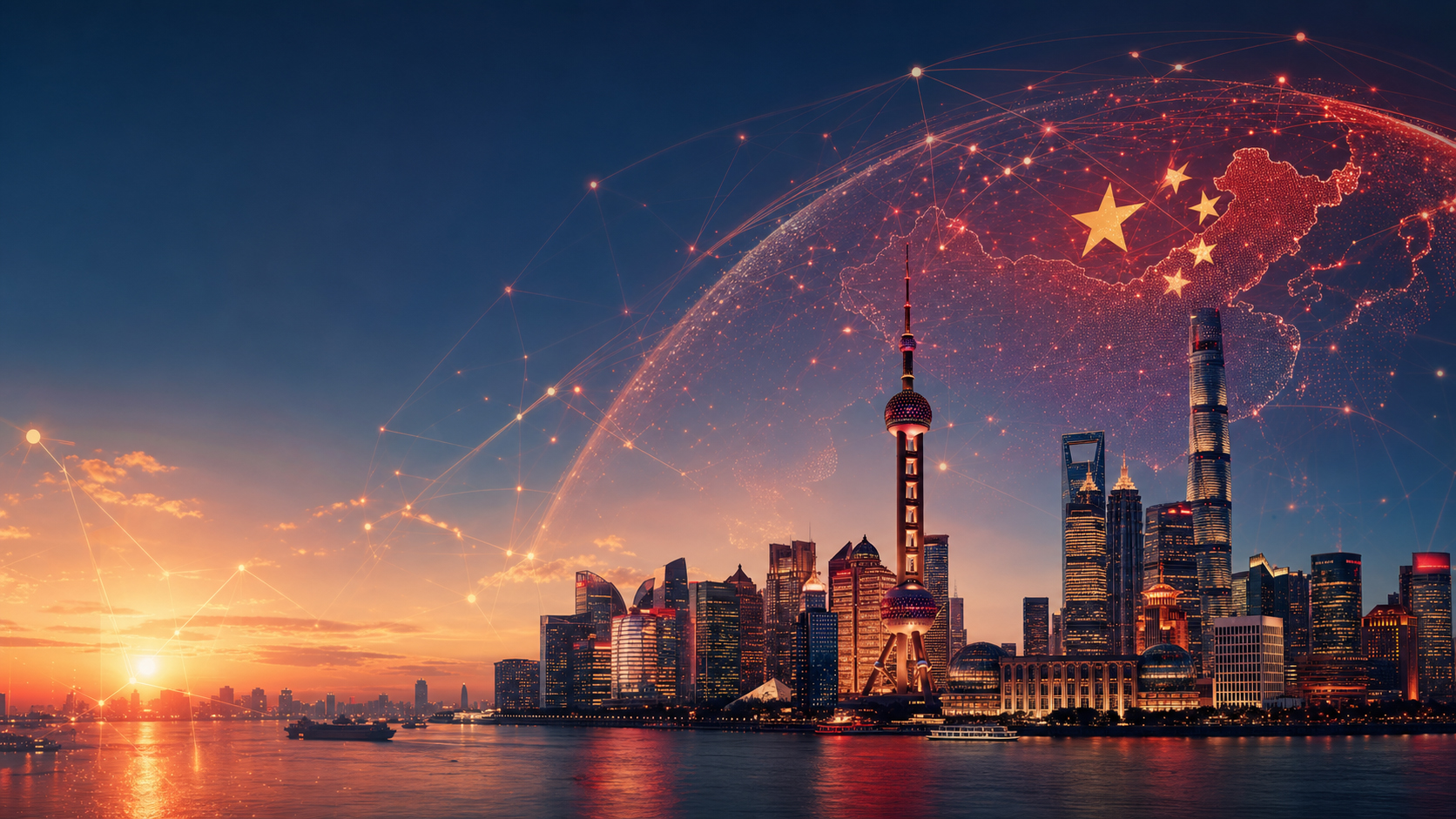
China's AI diplomacy: How China aims to dethrone the US with a new AI alliance – Power struggle over the future of technology – Image: Xpert.Digital
Shocking moment in Shanghai: China's new technology bloc forces Europe to act
AI as a geopolitical weapon: Why Xi's new pact with the Global South is alarming the West
In the summer of 2026, Shanghai will become the epicenter of a new global power struggle. With the ceremonial founding of the World AI Cooperation Organization (WAICO) and a rhetorically sophisticated keynote address by President Xi Jinping, China underscores its ambitious claim: Beijing no longer wants to merely participate in the race for artificial intelligence, but rather dictate the global rules of the game itself. Instead of submitting to American export controls, the People's Republic is forging a strategic alliance with the Global South. The chosen lure: open, cost-effective AI models without democratic or moral constraints. What at first glance appears to be a generous offer of international cooperation reveals itself upon closer inspection as a far-reaching geopolitical dual strategy. It aims to create new structural dependencies – and thus puts the US and Europe under immense pressure.
Beijing is building a parallel world of artificial intelligence
The World Conference on Artificial Intelligence in Shanghai in the summer of 2026 has become one of the most significant geopolitical events of the year. What at first glance appears to be an ordinary trade fair for technology companies reveals itself upon closer inspection as a carefully orchestrated stage for a strategic ambition: China no longer wants to be merely a participant in the global race for artificial intelligence, but rather to help shape or even dictate its rules. President Xi Jinping used his opening speech to place artificial intelligence in a historical lineage alongside the invention of the steam engine and electricity, thus illustrating the dimension in which the Chinese leadership positions this technology.
A new block is being formed: The founding of WAICO
One day before Xi Jinping's appearance, representatives from 29 countries signed the founding document of the World AI Cooperation Organization (WAICO) in Shanghai. The signatory states include Russia, Belarus, Serbia, Cuba, Brazil, and Venezuela, as well as ten African and twelve Asian countries, including Kazakhstan, Laos, Pakistan, and Indonesia. Chinese Foreign Minister Wang Yi signed the agreement on behalf of his government, while UN Secretary-General António Guterres attended the ceremony as an observer, which was intended to lend the new organization additional international legitimacy. According to official statements, WAICO will be an independent, intergovernmental organization based in Shanghai, tasked with promoting international cooperation and global governance in the field of artificial intelligence. This effectively creates an institutional parallel to existing Western-led AI initiatives, giving China the opportunity to establish its own standards and norms within a circle of supportive states without relying on the approval of Western governments.
The four principles: Xi's dual rhetorical strategy
In his keynote address, Xi Jinping outlined four central observations regarding the development and governance of artificial intelligence. First, he called for openness and mutually beneficial cooperation, coupled with a commitment to open-source models as a driver of innovation. Second, he emphasized the need to strengthen risk awareness and ensure that artificial intelligence remains under human control at all times, for which legislation, technological monitoring, and early warning systems should be implemented. Third, he advocated for inclusion and a respectful approach to cultural diversity so that AI applications do not undermine the distinctiveness of different civilizations. Fourth, he called for global solidarity and strengthened international governance, explicitly highlighting the role of the United Nations. The ambiguity of this message is noteworthy: Xi simultaneously warned against overextending the concept of national security in the field of AI and prioritizing the security of one country over that of another, which can be unmistakably interpreted as criticism of American export controls on high-performance chips, even though he did not mention the United States by name.
Sovereignty as a dual strategy
The core of China's position lies in an apparent contradiction that, upon closer analysis, proves to be a coherent strategy. On the one hand, Beijing is vigorously pursuing technological independence to reduce its reliance on American chip supply chains, semiconductor technologies, and software ecosystems. On the other hand, China is deliberately focusing on the international dissemination of its own models, standards, and infrastructure to create dependencies among other countries. This dual strategy is no accident, but rather follows the classic logic of technological standard-setting: whoever supplies the reference systems gains long-term structural influence, even if their own hardware base still has gaps. The simultaneous unveiling of the Kimi K3 model by the Chinese startup Moonshot, which, according to sources close to the conference, is supposed to be on par with the most advanced models from the US provider Anthropic, underscores China's ambition to no longer be technologically second-rate.
Open Source as a geopolitical tool
A central element of China's strategy is the targeted promotion of open-source AI models. Unlike many American providers, whose top-tier models mostly remain proprietary and costly, China, with companies like DeepSeek, Alibaba, and Moonshot, is pursuing an approach that makes powerful models openly accessible. George Chen, head of Digital Practice at the consulting firm The Asia Group, succinctly summarized China's message by stating that China will not lag behind anyone in AI technology or standards and will not allow anyone to dictate how it should handle artificial intelligence. This openness is a shrewd strategic calculation: countries with limited financial and technological resources, particularly in the Global South, can access cost-effective or free Chinese models instead of acquiring expensive licenses from American providers. However, once an ecosystem has been adopted, it typically remains technically and organizationally bound to its further development, creating long-term dependencies that extend beyond mere cost considerations.
The Global South as a strategic target area
The selection of WAICO's founding members reveals much about China's geopolitical objectives. Russia, Belarus, Serbia, Cuba, and Venezuela are among the participating states, all traditionally openly confronting Western sanctions regimes. Meanwhile, the involvement of ten African and twelve Asian countries demonstrates China's targeted approach to those regions of the world that often play only a minor role in existing Western technology bodies. Xi Jinping announced concrete support measures, including 5,000 artificial intelligence training positions for developing countries over the next five years and access for 30 countries to a Chinese-developed meteorological AI system with early warning capabilities. Such offers are attractive to many countries in the Global South because they promise tangible benefits in the short term without requiring adherence to the political conditions of Western development aid or trade agreements. China is thus positioning itself as a pragmatic partner that provides technology without demanding democratic reforms, adherence to human rights standards, or transparency requirements—a significant competitive advantage over Western offerings, according to many governments in Africa, Asia, and Latin America.
Historical injustice as a rhetorical instrument
A recurring theme in Xi's speech was the warning against new historical injustices that could arise from unequal access to artificial intelligence. This phrasing is deliberate, as it taps into the collective memory of many former colonial powers, which often associate technological and economic disadvantage with Western dominance. By presenting itself as an advocate for a fairer global technological order, China shifts the debate from a purely technical to a morally charged one. The state news agency Xinhua reinforced this message by stating that the future of artificial intelligence should not be determined by monopolies or geopolitical rivalries, but by how widely its innovations are shared and its benefits are felt. This rhetoric, however, ignores the fact that China itself also exercises considerable control over data, censorship, and the use of AI for surveillance purposes within its own borders—a contradiction regularly criticized by Western observers but not addressed in the speech itself.
Our China expertise in business development, sales and marketing

Our China expertise in business development, sales and marketing - Image: Xpert.Digital
Industry focus areas: B2B, digitalization (from AI to XR), mechanical engineering, logistics, renewable energies and industry
More information here:
A thematic hub offering insights and expertise:
- Knowledge platform covering global and regional economies, innovation and industry-specific trends
- A collection of analyses, insights, and background information from our key areas of focus
- A place for expertise and information on current developments in business and technology
- A hub for companies seeking information on markets, digitalization, and industry innovations
China's AI offensive: How Washington's chip ban is fueling the race
Response to American export controls
The immediate trigger for China's intensified efforts toward technological self-sufficiency lies in the continued American restrictions on the export of high-performance chips and advanced semiconductor technology. These controls have effectively cut China off from some of the most powerful computing resources needed to train cutting-edge AI models. Xi's statement that the development of artificial intelligence should not be a solo performance by a single country, but rather a symphony of international cooperation, can be read as a direct response to this policy. The wording is cleverly chosen because it portrays China not as a victim of the sanctions, but as a defender of a cooperative, multilateral worldview, while implicitly depicting the US as an isolationist, unilateral actor. This reinterpretation is a classic element of Chinese foreign policy, aimed at morally enhancing its own position while simultaneously investing heavily in domestic chip manufacturing capacity to reduce its long-term dependence on foreign hardware.
Economic dimension: Race for market share
Beyond geopolitical symbolism, China is pursuing tangible economic interests with its AI strategy. The global market for AI infrastructure, cloud services, and application software is expected to grow massively in the coming years, and those who establish the foundational models and development platforms in emerging markets today will secure long-term economies of scale, network effects, and customer loyalty. Chinese technology companies like Alibaba, Baidu, and Tencent, as well as emerging startups like DeepSeek and Moonshot, benefit from a domestic market with over a billion users, providing them with enormous training data and economies of scale. By disseminating cost-effective open-source models in countries of the Global South, these companies are also opening up new markets for cloud services, consulting, and hardware, even if the basic models themselves are offered free of charge. This strategy is similar to the approach taken by American technology companies in previous decades, when free or low-cost basic services were used to gain market share and then to generate revenue through supplementary, paid services.
Governance vacuum and the role of the United Nations
Xi Jinping's emphasis on the United Nations as a key player in global AI governance is noteworthy, given China's frequent skepticism toward multilateral institutions in other policy areas when they conflict with its interests. However, a significant governance vacuum does indeed exist in the field of artificial intelligence, as there are currently no binding international rules comparable to agreements on climate change or nuclear non-proliferation. This gap offers China an opportunity to position itself as a constructive rule-maker while simultaneously introducing its own proposals for technical standards, security protocols, and ethical guidelines into the international debate before Western states or institutions like the G7 can establish their own binding frameworks. The presence of UN Secretary-General António Guterres at the WAICO signing ceremony signals the United Nations' willingness to engage with the new organization, at least diplomatically, lending the initiative additional credibility.
Skepticism and open questions
Despite the impressive diplomatic choreography, key questions regarding the actual effectiveness of WAICO remain unanswered. International organizations without binding enforcement mechanisms often risk becoming mere discussion forums, especially when member states have differing economic interests and levels of technological development. Furthermore, it is unclear to what extent states like Brazil or Indonesia, which also maintain close economic ties with the US and Europe, are prepared to commit themselves to Chinese standards in the long term and exclusively. Many governments in the Global South traditionally pursue a policy of diversification and deliberately avoid excessive dependence on a single major power, raising the question of whether WAICO will actually become an exclusive instrument of Chinese influence or rather function as an additional option alongside existing Western cooperation formats. The issue of data security and access to sensitive information by Chinese systems also remains a point of contention for many potential partner states, one that has so far received little attention in official statements.
Consequences for Western technology policy
This development creates significant strategic pressure for the United States and the European Union. Should China succeed in establishing its models and standards as the de facto standard in large parts of Africa, Asia, and Latin America, this would not only cost it economic market share in the long term but also weaken the normative influence of Western values on global technological development. Initial reactions are already evident: Both the US and the EU have intensified their own efforts to promote open-source alternatives and support developing countries in the technology sector in order to counter the Chinese offering. For European companies and institutions active in international trade and industrial cooperation with emerging economies, this means that technological location decisions are increasingly taking on geopolitical dimensions, as the choice of an AI platform will no longer be solely a technical but also a strategic positioning decision in global systemic competition.
Outlook for the coming years
The events in Shanghai mark a further step in the fragmentation of the global technology order along geopolitical lines, a trend already observable in other areas such as semiconductor manufacturing, telecommunications infrastructure, and financial systems. The coming years will reveal whether WAICO actually generates substantial joint projects or whether it primarily serves as a symbolic vehicle for China's claim to technological leadership. Crucially, this will depend on how quickly Chinese companies can further develop their models, whether the announced training programs and infrastructure projects are actually implemented, and how the affected states balance their relations with China against their existing ties to Western partners. For businesses and policymakers worldwide, this development must be understood not as a short-term event, but as a structural shift in the global technology order, the effects of which are likely to intensify further in the coming decades through trade relations, investment decisions, and security dependencies.
🎯🎯🎯 Data-driven B2B industry hub as a quasi-in-house solution

The quasi-in-house solution: How Xpert.Digital closes operational gaps in B2B marketing and sales – Smart Content-Driven Business - Image: Xpert.Digital
Xpert.Digital is a data-driven B2B industry hub led by Konrad Wolfenstein . The company acts as an external, quasi-in-house solution for industrial partners, closing operational gaps in marketing, content, and sales – without requiring additional resources on the client side.
More information here:
Your global marketing and business development partner
☑️ Our business language is English or German
☑️ NEW: Correspondence in your native language!

Konrad Wolfenstein
I and my team are happy to be available to you as your personal advisor.
You can contact me by filling out the contact form here [email protected]:or simply call me at +49 7348 4088 965. My email address is
I'm looking forward to our joint project.





