
Red alert in mechanical engineering: This is why German industry is now demanding tough EU tariffs against China
Xpert Pre-Release

Available in 27 languages 📢
Prefer Xpert.Digital on GoogleⓘPublished on: July 19, 2026 / Updated on: July 19, 2026 – Author: Konrad Wolfenstein
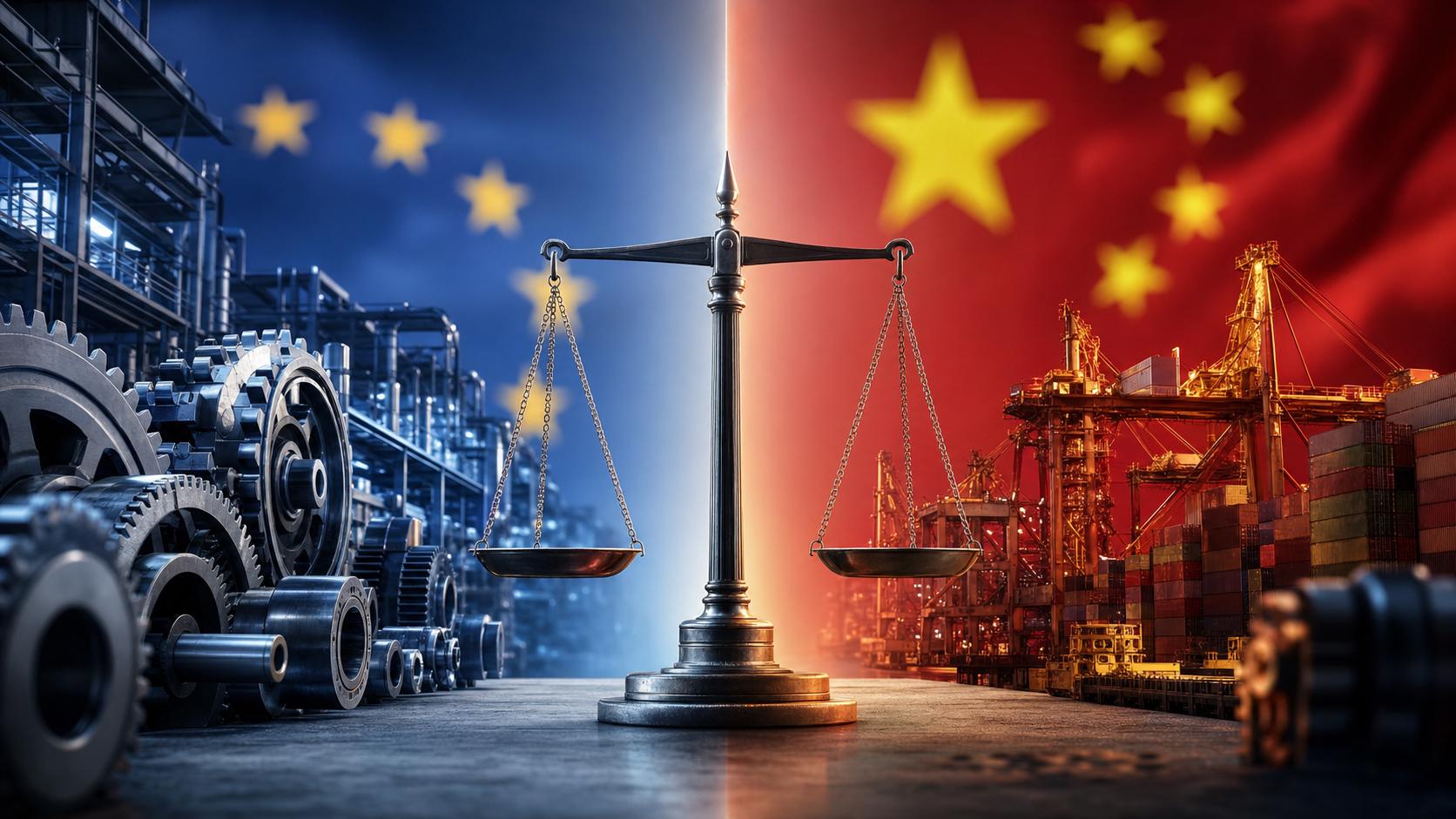
Red alert in mechanical engineering: This is why German industry is now demanding tough EU tariffs against China – Image: Xpert.Digital
Price dumping and subsidies: The risky China business of German machine manufacturers
Reversal of the burden of proof and punitive tariffs: The new master plan against China's industrial power
Radical change of strategy: Is the EU about to pull the plug on mechanical engineering?
The German mechanical and plant engineering sector is facing a historic test. For decades, the industry was considered the undisputed export champion and the industrial backbone of the Federal Republic. But increasingly, Chinese competitors are pushing into the global market, not only with enhanced technological expertise, but above all with aggressive pricing and massive state support. The German Engineering Federation (VDMA) is now sounding the alarm: In a revised position paper, it is calling on the European Union to take decisive, yet surgically precise action against the blatant distortions of competition from the Far East. Instead of blanket import quotas, the industry is advocating for countervailing tariffs across entire product groups and a legally sensitive reversal of the burden of proof. However, balancing the necessary protection of domestic innovations with the avoidance of an escalating trade war is a highly complex political tightrope walk. Read on to find out why the VDMA is now calling for a paradigm shift and what risks this new tough stance towards Beijing entails.
Trade conflict in mechanical engineering: The VDMA demands decisive action from the EU against China
When fairness becomes a systemic issue – Germany's mechanical engineering companies sound the alarm
The German mechanical and plant engineering sector, for decades the industrial backbone of the Federal Republic and a world export champion in numerous sub-sectors, is facing a structural shift in global competition that is shaking its very foundations. The German Engineering Federation (VDMA) has published a revised position paper entitled "China – For Competitiveness and Fair Competition," which calls on the German government and the European Union to take more decisive action against distortions of competition. President Bertram Kawlath traveled to Brussels specifically to emphasize his position in direct talks with EU representatives and to underscore the urgency of the demands. The federation, which represents around 3,600 member companies, explicitly stresses that its aim is not to isolate itself from an equally matched competitor, but rather to restore a level playing field with a rival whose rise has been significantly accelerated by government intervention. This distinction between respect for entrepreneurial achievement and criticism of systemic distortion forms the argumentative core of the entire positioning and shows how much the tone of German industry towards China has become harsher in recent years.
Technological catch-up process meets state-supported overcapacities
Over the past two decades, China has transformed itself from a mere extended workbench into a technologically serious competitor in the mechanical and plant engineering sector, increasingly challenging Western suppliers in niche markets. This development, in itself, would be a normal and healthy expression of economic convergence, a process many emerging economies undergo during their industrial maturation. However, from the VDMA's perspective, the situation becomes problematic because this rise is not solely based on market-driven innovation, but is significantly fueled by state subsidies, covert export promotion, and targeted industrial policies. The European Union and international trade observers have now extensively documented that Chinese companies in sectors such as steel, chemicals, and increasingly also mechanical engineering benefit from a combination of cheap loans, subsidized raw materials, and regional development programs that is not available to foreign competitors in the same way. By the end of last year, the European Commission had already implemented 172 anti-dumping and anti-subsidy measures, more than three-quarters of which targeted Chinese companies, highlighting the scale of the problem. EU trade policy observers also report a significant increase in new investigations and final customs determinations this year, putting the Commission on track to exceed last year's figures, a response to what is increasingly perceived as a structural problem of Chinese industrial overcapacity.
Between market access and market distortion – the ambivalence of Chinese competition
It would be an unacceptable oversimplification to dismiss Chinese mechanical engineering as merely a product of state subsidies, as the country now possesses considerable independent technological expertise, particularly in areas such as automation, electromobility, and renewable energies. VDMA President Kawlath himself explicitly emphasizes respect for the achievements of Chinese competitors, demonstrating that the association consciously distances itself from purely protectionist rhetoric that simply ignores China's technological progress. At the same time, however, the association points out that the distortions of competition are now so comprehensively documented that effective EU responses are necessary to ensure fair conditions. This dual perspective, which combines technological recognition with regulatory critique, makes the position paper more nuanced than many public debates on China, which often oscillate between naive enthusiasm for cooperation and sweeping threat rhetoric. From an economic point of view, this differentiation is also significant because it provides the basis for targeted rather than blanket trade policy instruments, an aspect that is also reflected in the specific demands of the paper.
Countervailing duties at the commodity group level as a new core instrument
The central innovation in the revised position paper is the demand for countervailing duties at the level of entire product groups when there is sufficient evidence of unfair competitive practices. Specifically, this means that, for example, the entire category of construction machinery could be subject to countervailing duties as soon as there is solid evidence of systematic subsidizing or dumping within this product group, without having to undergo a separate, years-long procedure for each individual company. Oliver Richtberg, Head of Foreign Trade at the VDMA (German Engineering Federation), succinctly summarized this demand, stating that the European Union must act more quickly and effectively against distortions of competition such as subsidies, dumping, and currency manipulation. This demand addresses a real structural weakness of the existing EU trade defense system, as traditional anti-dumping and anti-subsidy proceedings typically take a good year, and including preparatory work, two to three years often pass between identifying a problem and actually implementing a solution. For companies facing aggressively pricing competitors in their day-to-day business, such a long response time can effectively mean that market share is already irreversibly lost before any protective measures even take effect. Critics of this procedural length within EU trade policy have long pointed out that this timeframe is simply too long for struggling domestic industries.
The reversal of the burden of proof as a legally explosive tightening of regulations
In addition to countervailing duties at the commodity group level, the position paper contains a second, legally far more explosive demand: the examination of a reversal of the burden of proof for countervailing duties. According to this model, affected Chinese companies would have to prove, if sufficient evidence exists, that they are not benefiting from unfair advantages, instead of the European side bearing the full burden of proof for the existence of unfair practices, as is currently the case. This shift in the burden of proof would significantly alter the balance of power in trade defense proceedings in favor of European industry, since the information asymmetry between foreign companies and European investigative authorities has so far been one of the biggest practical obstacles to the effective enforcement of trade defense measures. In practice, the European Commission often finds it extremely difficult to obtain access to the internal cost structures, government subsidy decisions, or loan terms of Chinese companies because this information is naturally within the reach of the companies concerned and their domestic authorities and is rarely disclosed voluntarily. A reversal of the burden of proof would at least partially compensate for this structural disadvantage, but at the same time raises questions of WTO compliance, since multilateral trade law traditionally places high demands on the investigating authority's burden of proof. It is significant that the VDMA speaks here of an "examination" and not of an immediate demand for implementation, which indicates an awareness of the legal complexity of this instrument.
Why import quotas are met with skepticism at the VDMA
Interestingly, the VDMA (German Engineering Association) has explicitly positioned itself against an instrument already widely used in other sectors, such as the steel industry: import quotas with high additional tariffs on quantities exceeding the quota. Richtberg justified this rejection by arguing that such measures would affect third countries equally, regardless of whether they engaged in unfair competitive practices or not. This position reveals a remarkable fundamental economic conviction of the association, which evidently distinguishes between targeted, polluter-pays instruments and blanket, undifferentiated safeguard measures. While the steel industry, with its safeguard measures—currently slated for extension beyond the regular eight-year WTO framework—relies on broad quantitative restrictions that affect all importers equally, the mechanical engineering sector evidently prefers more surgically precise interventions that actually target wrongdoers without penalizing fair competitors from third countries. This differentiation is remarkably consistent from an economic perspective, as it avoids the risk of protectionist measures causing collateral damage to trading partners who do not themselves engage in unfair practices, but who would unnecessarily burden valuable supply chains and diplomatic relations.
Our South America and Latin America expertise in business development, sales and marketing

Our Latin America expertise in business development, sales and marketing - Image: Xpert.Digital
Industry focus areas: B2B, digitalization (from AI to XR), mechanical engineering, logistics, renewable energies and industry
More information here:
A thematic hub offering insights and expertise:
- Knowledge platform covering global and regional economies, innovation and industry-specific trends
- A collection of analyses, insights, and background information from our key areas of focus
- A place for expertise and information on current developments in business and technology
- A hub for companies seeking information on markets, digitalization, and industry innovations
Trade protection revenues reimagined: Innovation fund instead of state treasury
Trade protection revenues as an engine of innovation instead of tax revenue
A particularly noteworthy, because unconventional, proposal in the position paper concerns the use of revenues from trade defense measures. The association proposes channeling these revenues entirely into technology-neutral innovation promotion and, where appropriate, using them specifically to support companies affected by Chinese countermeasures. This proposal addresses a real political threat that has already materialized several times in recent EU-China trade history. In response to European tariffs on Chinese electric vehicles, which have reached up to 35.3 percent since the end of 2024, China has imposed countermeasures on European products such as pork, brandy, and dairy products. For brandy, for example, the Chinese Ministry of Commerce imposed tariffs of up to 349 percent, although major producers such as Pernod Ricard, LVMH, and Rémy Cointreau were exempted from these tariffs through individual minimum price agreements. This escalation spiral demonstrates that trade protection measures rarely remain without consequences and often lead to asymmetric retaliation that can significantly impact other sectors, even those unrelated to the original point of contention. The VDMA's proposal to compensate affected companies from the tariff revenues generated therefore represents a pragmatic attempt to distribute the cross-sectoral costs of a more aggressive trade protection policy more fairly across society.
Market surveillance as the second pillar of the fairness strategy
In addition to customs measures, the VDMA (German Engineering Federation) identifies significantly more intensive market surveillance as a second essential measure for ensuring fair competition in the European single market. This demand stems from the recurring observation that Chinese companies are exporting machinery to Europe that simply does not comply with applicable EU regulations, for example, regarding safety standards or technical norms. In this context, Richtberg demanded that violations be consistently prosecuted, as this is not a hypothetical but a recurring problem. Specifically, the association proposes requiring manufacturers from third countries who violate the rules to undergo pre-certification by an independent testing body and further demands that manufacturers of products based in third countries, as well as their EU representatives, must be clearly identifiable so that legal requirements for products can be enforced. This demand for better traceability touches on a sore point of the European single market order, because in practice the enforcement of product regulations against manufacturers without a physical presence in the EU regularly proves extremely difficult, which structurally disadvantages fair European suppliers who must produce in full compliance with regulations compared to more lax competitors.
The broader context: A worsening EU-China trade climate
The VDMA position paper does not emerge from a trade policy vacuum, but rather fits into a pattern of increasing tensions between the European Union and China that extends across numerous sectors. In addition to the aforementioned tariffs on electric vehicles and the Chinese countermeasures on agricultural products, the EU has imposed a number of further anti-dumping measures against Chinese imports this year, including tariffs of up to 83.9 percent on barium carbonate, provisional tariffs of up to 142.5 percent on the chemical feedstock 1,4-butanediol, and tariffs of up to 42.3 percent on adipic acid. A significant tightening of restrictions is also emerging in the steel sector, where the EU intends to practically halve its import quotas under the safeguard measures from July onwards, although this will require difficult negotiations with steel-exporting countries. Within the EU member states, there is a growing chorus of voices calling for a fundamental acceleration of trade investigations, advocating for an expansion of the product scope of such investigations, and pushing for a more flexible application of safeguard measures, such as the introduction of provisional safeguard measures alongside longer-running anti-dumping or anti-subsidy proceedings. A position paper recently spearheaded by France even proposed the possibility of additional tariffs and quotas to reduce over-dependence on a single country and to structurally protect European industry. This complex situation demonstrates that the mechanical engineering sector is by no means isolated in its demands, but rather part of a cross-sectoral realignment of European trade policy towards China, which has steadily intensified over the past two years.
The political tightrope walk between confrontation and cooperation
German and European policymakers are walking a tightrope on this issue, as China remains a key sales market for German mechanical engineering despite all the tensions, and at the same time a potential counterweight at a time when trade relations with the United States are also under pressure from a more aggressive American tariff policy. Observers point out that the German government under Chancellor Friedrich Merz wants to simultaneously take a hard line against unfair Chinese practices and use China as a counterweight to American trade policy – a balancing act that seems increasingly precarious in light of the new EU tariffs on Chinese chemical products. This ambivalence is particularly noticeable for mechanical engineering, a sector especially dependent on exports, whose products are both sold in China and increasingly threatened by Chinese competition in third-country markets. On the one hand, German mechanical engineering companies still need access to the Chinese sales market and Chinese supply chains; on the other hand, they are facing increasingly aggressive Chinese competition, particularly in growth markets outside Europe, which can offer artificially discounted prices through subsidies. This dual dependency explains why the VDMA deliberately focuses on targeted rather than blanket instruments in its position paper, because an overly confrontational trade policy could severely damage its own export interests in China and cause additional collateral damage through Chinese countermeasures.
Economic assessment: Justified criticism with implementation risks
From an economic policy perspective, the VDMA's position can be considered fundamentally justified, but not without risks. The documentation of extensive Chinese industrial subsidies has now been sufficiently substantiated by numerous independent studies and the procedural practice of the EU Commission itself, meaning that the demand for more effective countermeasures cannot be dismissed as mere protectionist exaggeration. At the same time, the demands for a reversal of the burden of proof and for blanket countervailing tariffs at the commodity group level, in particular, entail considerable implementation risks, both legally with regard to WTO compliance and politically with regard to potential Chinese retaliatory measures, which, as in the case of the electric vehicle tariffs, could quickly affect other, often uninvolved, industries. The association's nuanced stance, which explicitly rejects import quotas and instead relies on targeted, evidence-based instruments, demonstrates a mature understanding of this compromise situation and distinguishes the VDMA's position favorably from the more sweeping protectionist demands of other interest groups. In the long term, the success of this strategy will depend on whether the European Union is actually able to significantly accelerate its procedures while simultaneously controlling the diplomatic costs of a tougher stance towards Beijing, without making its own export-oriented industries, such as mechanical engineering, collateral damage in an escalating trade dispute.
🎯🎯🎯 Data-driven B2B industry hub as a quasi-in-house solution

The quasi-in-house solution: How Xpert.Digital closes operational gaps in B2B marketing and sales – Smart Content-Driven Business - Image: Xpert.Digital
Xpert.Digital is a data-driven B2B industry hub led by Konrad Wolfenstein . The company acts as an external, quasi-in-house solution for industrial partners, closing operational gaps in marketing, content, and sales – without requiring additional resources on the client side.
More information here:
Your global marketing and business development partner
☑️ Our business language is English or German
☑️ NEW: Correspondence in your native language!

Konrad Wolfenstein
I and my team are happy to be available to you as your personal advisor.
You can contact me by filling out the contact form here [email protected]:or simply call me at +49 7348 4088 965. My email address is
I'm looking forward to our joint project.
☑️ SME support in strategy, consulting, planning and implementation
☑️ Creation or realignment of the digital strategy and digitization
☑️ Expansion and optimization of international sales processes
☑️ Global & Digital B2B trading platforms
☑️ Pioneer Business Development / Marketing / PR / Trade Fairs
📈🚀 From visibility to trust 👀🤝 Your scalable path with Xpert.Digital

From visibility to trust: Your scalable path with Xpert.Digital - Image: Xpert.Digital
In industrial B2B, sustainable business relationships rarely emerge overnight. They develop step by step – through visibility, professional relevance, recurring touchpoints, and growing trust. Xpert.Digital's 4-stage model addresses precisely this: It offers a structured path that begins with a manageable entry point and can evolve into deeper collaboration in business development if needed.
Instead of relying on loud marketing promises, this model puts the relationship at the forefront. Companies start with clearly defined, easily calculable measures and then decide, based on their own experience, how far they want to expand the collaboration. A key factor for this undisturbed trust-building process: The platform completely avoids annoying advertising ads, so the editorial focus remains solely on the companies' expertise.
More information here:





