
Xi Jinping's radical reckoning: Why China's rise to tech superpower is suddenly faltering
Xpert Pre-Release

Available in 27 languages 📢
Prefer Xpert.Digital on GoogleⓘPublished on: July 15, 2026 / Updated on: July 15, 2026 – Author: Konrad Wolfenstein
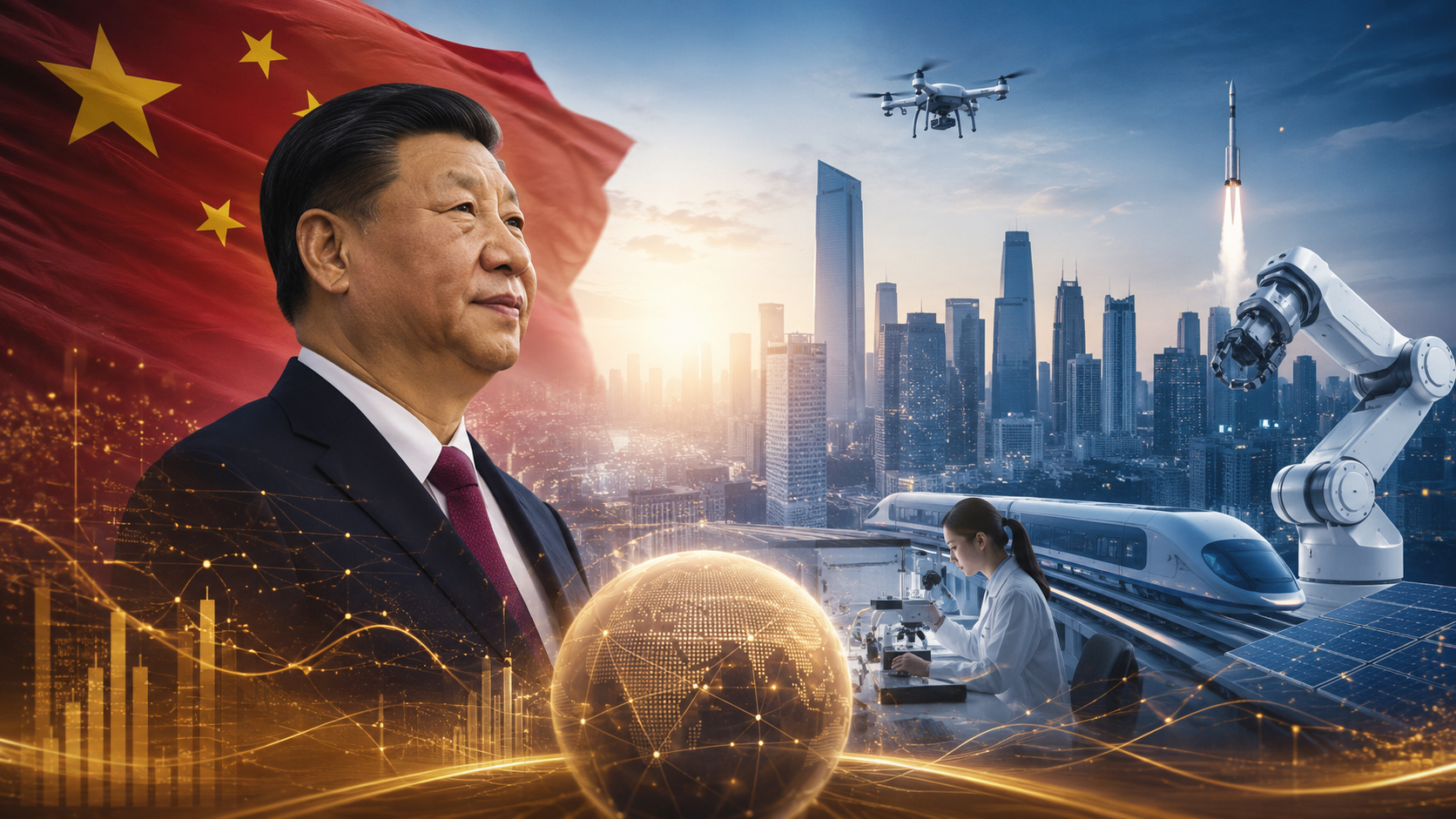
Xi Jinping's radical reckoning: Why China's rise to tech superpower is suddenly faltering – Creative image: Xpert.Digital
Historic speech in Beijing: Xi Jinping unveils China's true master plan for global tech domination
AI war against the USA: How China discovered a gigantic flaw in its own system
Billions with no effect: China's ruthless diagnosis of its own technology industry
China's path to global technological dominance was long considered unstoppable. But behind the scenes of these massive investments, the system is in crisis – and none other than President Xi Jinping has now ruthlessly exposed this. In a historic keynote address on July 8, 2026, he called for a radical departure from the current indiscriminate subsidy approach and a move towards genuine, qualitative innovation. While the People's Republic has long been rivaling the US in future-oriented fields such as artificial intelligence and battery technology, inefficient subsidies, institutional inertia, and a dramatic shortage of so-called "patient capital" are hindering its breakthrough to complete self-sufficiency. With the new 15th Five-Year Plan (2026–2030), Beijing is now ushering in a technological paradigm shift. This strategy not only intensifies the "cold AI war" with the United States but also directly targets the core competencies of European and German export industries. Can China force genuine, groundbreaking innovation without relinquishing its strict political control? The answer to this question is likely to significantly shape the global economic order of the next decade.
The long road to technological superpower status: Why money alone doesn't buy innovation – The political signal from July 8, 2026
Xi Jinping has called for a reform of China's innovation system and demanded greater efficiency in research, financing, and technology transfer
On July 8, 2026, a rare gathering of scientific and political luminaries convened in Beijing's Great Hall of the People: At the simultaneous conference for the National Science and Technology Prize, the General Assembly of the Chinese Academy of Sciences and the Chinese Academy of Engineering, and the 11th National Congress of the China Association for Science and Technology, Xi Jinping delivered a keynote address that went far beyond a mere protocol ceremony. He awarded the country's highest science and technology prize to two scientists: Chen Liquan, a pioneer of Chinese lithium battery technology, and Ben De, a radar technology expert—two symbolic figures representing precisely those areas in which China seeks to catch up or maintain its position in the global technological hierarchy.
The message of the speech was less a celebration of past successes than a stark diagnosis of structural deficiencies. Xi openly admitted that China's technology sector still suffers from insufficient original innovation in certain fields, an irrational talent structure, and low efficiency in technology investments, while institutional bottlenecks hamper progress. This openness carried political weight: coming from the General Secretary and President, such a diagnosis sounds not like academic self-criticism, but like a mandate for reform. Xi described the period of the 15th Five-Year Plan (2026–2030) as a crucial phase for building a scientifically and technologically strong nation.
From quantitative to qualitative innovation logic
Looking at the development of Chinese research spending over the past few years, one is immediately struck by the impressive figures. China's total R&D expenditure exceeded 3.6 trillion yuan in 2024, equivalent to approximately US$506 billion, representing an 8.9 percent increase compared to the previous year. Between 2021 and 2024, spending grew by an average of 10.5 percent annually—one of the fastest growth rates among all major economies worldwide. R&D intensity, the share of research spending in gross domestic product, rose to 2.68 percent in 2024, significantly exceeding the EU average of 2.11 percent, but only approaching the OECD average of 2.73 percent.
For the 15th Five-Year Plan (2026–2030), the government has stipulated a minimum annual growth rate of seven percent for R&D spending. These figures are impressive, yet a purely quantitative view falls short. The real challenge Xi addressed on July 8 lies not in the volume of investment, but in its effectiveness. Research from the Center for China Economic Analysis shows that historically, up to 53 percent of all subsidies earmarked for R&D have been diverted to unrelated non-research expenditures—a systemic problem that has significantly damaged innovation efficiency for years. According to these analyses, public R&D funding for state-owned enterprises sometimes has no measurable impact on productivity or genuine innovation performance.
A new financial architecture for innovation capitalism
At the heart of Xi's reform is the redesign of the financing system for innovation. The existing system suffers from a structural mismatch: China's financial system has historically been geared towards short-term returns on capital in a heavily bank-dominated environment, while disruptive innovation projects typically involve long time horizons, high uncertainty, and asymmetric risk structures. Venture capital and patient capital were insufficiently available to the system.
China has already formulated initial responses to this dilemma in recent months. In May 2025, the Ministry of Science and Technology and six other high-level agencies published a joint package of measures designed to channel long-term capital into strategic technology sectors. National laboratories, leading technology companies, and promising startups will receive increased financial support; IPO mechanisms for companies with breakthroughs in core technologies will be optimized. In parallel, China has established a new national fund to promote entrepreneurship, aimed at accelerating the commercialization of scientific discoveries. Additionally, commercial banks are to establish specialized technology finance branches, particularly in regions with concentrated innovation activity.
Furthermore, China is investing massively at the state level: In March 2026, the Chinese government launched a subsidy package for artificial intelligence and semiconductors worth approximately €70 billion—the largest state-funded technology support program in the country's history, covering the entire AI value chain from chip design to the development of cutting-edge models. State-funded data centers and factories must source at least 50 percent of their equipment from domestic suppliers, while foreign AI accelerators are completely prohibited in publicly funded infrastructure. By 2027, 70 percent of AI chips in Chinese infrastructure are expected to be domestically produced.
Intellectual property: From reputation for protection gaps to patent superpower
No aspect of Chinese innovation policy is more controversial internationally than its protection of intellectual property. The narrative of systematic theft of Western technology has dominated years of trade conflicts and diplomatic disputes. However, recent data paints a more nuanced picture—though not a complete all-clear.
In 2025, a total of 972,000 invention patents were granted in China, making it the first country in the world to exceed five million valid invention patents. Numerous patents for key technologies were filed in future-oriented sectors such as quantum technology, biomanufacturing, brain-computer interfaces, and 6G communication. The industrialization rate of company patents increased from 44.9 percent in 2020 to 53.3 percent in 2024, indicating that more patents are actually being translated into commercial applications.
In the area of intellectual property protection for emerging technology fields, China significantly strengthened the legal framework in 2025 and 2026. Revised patent examination guidelines introduced dedicated standards for AI and big data, trademark law amendments targeted malicious registrations, and integrated circuit regulations were revised. Eighty-two national IP protection centers were established in key fields such as AI, integrated circuits, quantum technology, and brain-computer interfaces. Chinese courts resolved a total of 494,000 IP-related cases in 2024—a growth that signals an increasing readiness for legal enforcement.
The downsides of this process remain real. The critical question is whether institutional change in IP enforcement is progressing quickly enough to regain the trust of foreign companies that would be necessary for knowledge transfer within the framework of cooperative research partnerships. Germany's mechanical engineering and chemical industries, which possess specific production know-how, are observing this development with justified interest, but also with continued skepticism.
The talent question: When the outflow becomes the backflow
No other topic within the Chinese innovation discourse is currently experiencing more dynamic development than that of scientific talent. For decades, demographers and educational economists described China as a classic brain drain country: the best minds of the generation emigrated to the USA, Europe, and Australia, utilized Western universities and research infrastructures, and many never returned.
This picture is changing noticeably. Since the beginning of 2024, at least 85 scientists who were on the rise or had already established their careers in the US have returned full-time to Chinese research institutions, more than half of them in 2025. The reasons are multifaceted: Washington is cutting research budgets, tightening oversight of foreign talent, and thus creating a climate of mistrust, while Beijing is simultaneously increasing its investments in innovation and offering attractive career opportunities. Since October 1, 2025, China has offered a new "K-Visa" specifically for young talent in science and technology, intended to further enhance the country's appeal to international professionals.
Data from the job portal Zhaopin shows that the number of Chinese university graduates returning from abroad continued to rise in 2025. Even more revealing is an analysis by the Hoover Institution and the Stanford Institute for Human-Centered AI of the AI startup DeepSeek: Of the 211 authors of fundamental DeepSeek research analyzed, 197 were currently or previously affiliated with Chinese institutions, and more than half had never left China for education or work. Researchers with US experience revealed a classic pattern: China → USA → China, with the American system increasingly serving as a skills platform whose output flows back into the Chinese innovation system. This finding is significant from a geopolitical perspective: The USA is losing its historical role as a global magnet for top talent.
Xi Jinping explicitly addressed this talent issue at the July 2026 conference. He emphasized that the future of science lies with the youth and that the synergy between science and education must be optimized to foster outstanding young talent in science and technology. In Chinese practice, a structural reform of early-career support means: more autonomy for young researchers, less bureaucratic oversight by senior researchers, more flexible research agendas, and faster career paths—all elements that remain scarce in the current system.
The 15th Five-Year Plan as a strategic framework
Xi Jinping's speech of July 8, 2026, should not be understood in isolation, but rather within the broader framework of the 15th Five-Year Plan (2026–2030), which China adopted in mid-March 2026. This plan places a stronger emphasis on innovation, digitalization, green transformation, and industrial modernization compared to its predecessor. Strategic future industries include AI applications, semiconductors, digital infrastructure including 5G/6G, humanoid robots, new batteries, biomanufacturing, medical technology, brain-computer interfaces, and green hydrogen.
In the financial sector, the plan envisions new technology financing instruments, and Shanghai is to continue growing as an international financial center. The GDP growth target for 2026 is between 4.5 and 5.0 percent—the government's lowest growth target to date, indicating a shift in priorities toward qualitative development. R&D spending has been clearly defined as a strategic investment category, no longer primarily as a budget item to be cut during economic downturns.
The 15th Five-Year Plan continues industrial policy programs such as Made in China 2025 while simultaneously reinforcing the goal of reducing dependence on foreign technology. The trade conflict with the US has painfully demonstrated China's own technological dependence in key areas, from high-performance semiconductors and EUV lithography machines to certain categories of industrial software. This geopolitical vulnerability has thus become a structural driver of innovation: self-sufficiency is no longer a luxury, but a strategic necessity.
Our China expertise in business development, sales and marketing

Our China expertise in business development, sales and marketing - Image: Xpert.Digital
Industry focus areas: B2B, digitalization (from AI to XR), mechanical engineering, logistics, renewable energies and industry
More information here:
A thematic hub offering insights and expertise:
- Knowledge platform covering global and regional economies, innovation and industry-specific trends
- A collection of analyses, insights, and background information from our key areas of focus
- A place for expertise and information on current developments in business and technology
- A hub for companies seeking information on markets, digitalization, and industry innovations
From research lab to factory: China's problem with technology transfer
AI and semiconductors: Catching up under pressure from sanctions
The clearest manifestation of this systemic ambition is China's development in the fields of artificial intelligence and semiconductors. The US government has deliberately restricted China's access to cutting-edge AI chips. The goal: to secure the US's technological lead over China and to slow the country's military and economic rise. In practice, however, this pressure has had a paradoxical effect: it has forced Chinese actors to intensify domestic development and accelerated the emergence of an independent technology ecosystem.
In April 2026, Chinese AI models overtook US systems in global usage frequency on major developer platforms, with a 127 percent increase within three weeks. By the second week of April 2026, Chinese models occupied four of the top five spots in the global rankings, led by DeepSeek, Alibaba's Qwen, and Moonshot AI. Nearly half of the users of these platforms were from the US—a finding that underscores the power of China's AI offensive in its competitors' home market.
Around 70 percent of global AI patents now originate in China. Huawei is developing its own AI accelerators, and DeepSeek confirmed that its new flagship model, the DeepSeek V3, was trained on Huawei Ascend chips—not on the industry-standard Nvidia processors. While individual Chinese chips like the Ascend 910C currently deliver only about 60 percent of the performance of their US counterparts, developers are compensating for this disadvantage through larger computing clusters and algorithmic optimizations. Furthermore, China has more than twice the power generation capacity of the US, which significantly facilitates the operation of large, energy-intensive clusters.
Nevertheless, structural bottlenecks remain. Building a complete semiconductor manufacturing chain is not simply a matter of capital investment. The world's only manufacturer of EUV lithography machines—essential for the most advanced chip manufacturing—is the Dutch company ASML, to which China has no access. Experts estimate that China would need three to five years to establish alternative manufacturing processes at a comparable level, if such a breakthrough were ever to occur.
Technology transfer: Structural failure at the heart of the system
Xi's reform demands also explicitly focused on increasing the efficiency of technology transfer—that is, the bridge between scientific knowledge and economic application. Despite all the progress made, this bridge still has significant structural flaws in China.
Fraunhofer researchers have conducted an in-depth analysis of the Chinese technology transfer system and have reached a sobering conclusion: China's science and innovation policy primarily addresses technology transfer along the narrow path of classic commercialization instruments, neglecting the deeper knowledge transfer necessary for systemic innovation. The approach remains largely technocratic: Isolated scientific findings are to be commercialized through institutions or agents, rather than fostering a genuine knowledge culture between science and industry.
The fundamental problem is not a lack of awareness, but institutional inertia. Chinese universities are traditionally evaluated based on the number of their publications, not on the economic impact of their research. Incentive structures for professors to develop patentable technologies and translate them into corporate partnerships are only gradually emerging. Venture capitalists, who act as a critical link between academic research and the market, are still less well-connected to scientific institutions in China compared to the US or Israel.
The package of measures announced in May 2025 partially addresses this structural gap by explicitly defining the commercialization of significant scientific discoveries as a goal of the new national entrepreneurship fund. However, a national entrepreneurship fund is no substitute for a vibrant culture of innovation that emerges bottom-up from the interplay of curiosity, a willingness to take risks, and institutional freedoms—precisely the kind of culture that is structurally lacking in a strictly hierarchical and politically controlled scientific system.
The efficiency problem: Stricter standards as a lever for reform
Another key point of Xi's speech on July 8, 2026, was the announcement of stricter standards for research projects. The programmatic significance of this point can hardly be overstated: The political leadership officially acknowledges that the existing system of allocating funds indiscriminately—or worse, based on guanxi networks and political calculation—must give way to a serious culture of evaluation.
China's funding practices have historically proven weaknesses. ZEW researchers have documented that between 2001 and 2011, approximately 42 percent of recipients of R&D subsidies spent these funds entirely or at least partially on non-research purposes. Overall, 53 percent of all subsidy payments intended for R&D were diverted to other uses—a systemic inefficiency that significantly reduces actual research output, even with increasing funding volumes. The ZEW analysis also shows that a funding policy with less frequent but more targeted subsidy payments achieves better results.
Stricter evaluation criteria for research projects mean, in practice: a stronger focus on outcomes in project assessment, more peer review by external, international panels, fewer politically motivated funding decisions, and a more consistent distinction between basic research, applied research, and development. The institutional reforms announced so far include changes in the administration of funding programs, intended to allow for a more precise selection of companies and better control over the use of funds. How far Xi's reform initiative will actually penetrate the depths of the bureaucratic apparatus remains to be seen.
Between cooperation and decoupling: The geopolitical dimension
China's innovation agenda cannot be viewed in a vacuum, but rather embedded in a fundamentally changing geopolitical landscape. Analysts describe the central conflict of the 21st century as no longer primarily about oil, nuclear weapons, or naval power, but rather on the fronts of AI, semiconductors, and digital technology. This "cold AI war" between the US and China is not a rhetorical construct, but a strategic reality that is materializing in export controls, talent embargoes, supply chain restrictions, and subsidy competition.
The 15th Five-Year Plan signals that China understands this challenge as a structural opportunity: The People's Republic is not responding to external pressure with retreat, but with accelerated domestic development. At the same time, despite geopolitical tensions, China is striving for international cooperation and high-quality market opening. Sectors to be further opened to international cooperation include modern services, telecommunications, the digital economy, healthcare, and education. This seemingly contradictory simultaneity of preparing for decoupling and offering cooperation is not an inconsistency, but rather strategic flexibility: China wants to achieve technological self-sufficiency in critical areas without simultaneously forgoing access to global markets, talent, and capital flows.
This situation presents Germany and the EU with a complex positioning. German companies, as exporters of industrial goods, machinery, chemicals, and automobiles, are deeply embedded in Chinese supply and value chains. At the same time, competition is intensifying: The 15th Five-Year Plan explicitly aims to strengthen domestic development of core components, industrial software, machine tools, and metrology—all areas in which German industry has previously held competitive advantages. This competitive struggle is therefore not a distant scenario, but a foreseeable reality of the current decade.
China's scientific ambitions face the judgment of history
Xi Jinping's speech of July 8, 2026, should be read in its strategic significance as a milestone, not as a solution to problems. With unusual candor, it identifies structural weaknesses in a system that for decades has primarily optimized for growth speed, subordinating issues of efficiency, institutional integrity, and creative freedom.
The ambitions are historic: becoming a world-leading scientific and technological power by 2035 means overtaking economies that have held this status for decades or even centuries in less than ten years. In the field of artificial intelligence, China is already a fully-fledged competitor; it already holds global leadership in battery technologies and solar modules; however, in semiconductors and certain categories of basic research, the gap to the global leaders remains substantial.
The real testing ground for the coming years will be the institutional level: Can China unleash the creativity and risk-taking that truly groundbreaking innovation requires without relinquishing the political control that characterizes Xi Jinping's leadership model? This question is not rhetorical. Historical examples—from Bell Labs to Silicon Valley to the Israeli innovation ecosystem—suggest that the most fertile innovation environments are characterized by a high degree of intellectual freedom, institutional decentralization, and tolerance for failure. Whether the Chinese system can develop its own, structurally different formula for cutting-edge innovation is the most significant open question in global technology policy for the next decade.
Xi's diagnosis is correct. The therapy is ambitious. Whether the medicine works will depend on one variable that most stubbornly resists political control: the trust that researchers, entrepreneurs, and investors place in a system that actually rewards their initiative.
🎯🎯🎯 Data-driven B2B industry hub as a quasi-in-house solution

The quasi-in-house solution: How Xpert.Digital closes operational gaps in B2B marketing and sales – Smart Content-Driven Business - Image: Xpert.Digital
Xpert.Digital is a data-driven B2B industry hub led by Konrad Wolfenstein . The company acts as an external, quasi-in-house solution for industrial partners, closing operational gaps in marketing, content, and sales – without requiring additional resources on the client side.
More information here:
Your global marketing and business development partner
☑️ Our business language is English or German
☑️ NEW: Correspondence in your native language!

Konrad Wolfenstein
I and my team are happy to be available to you as your personal advisor.
You can contact me by filling out the contact form here [email protected]:or simply call me at +49 7348 4088 965. My email address is
I'm looking forward to our joint project.





