
The ECB is adjusting interest rates: First rate hike in three years – This is why life is suddenly becoming more expensive again
Xpert Pre-Release

Available in 27 languages 📢
Prefer Xpert.Digital on GoogleⓘPublished on: June 11, 2026 / Updated on: June 11, 2026 – Author: Konrad Wolfenstein
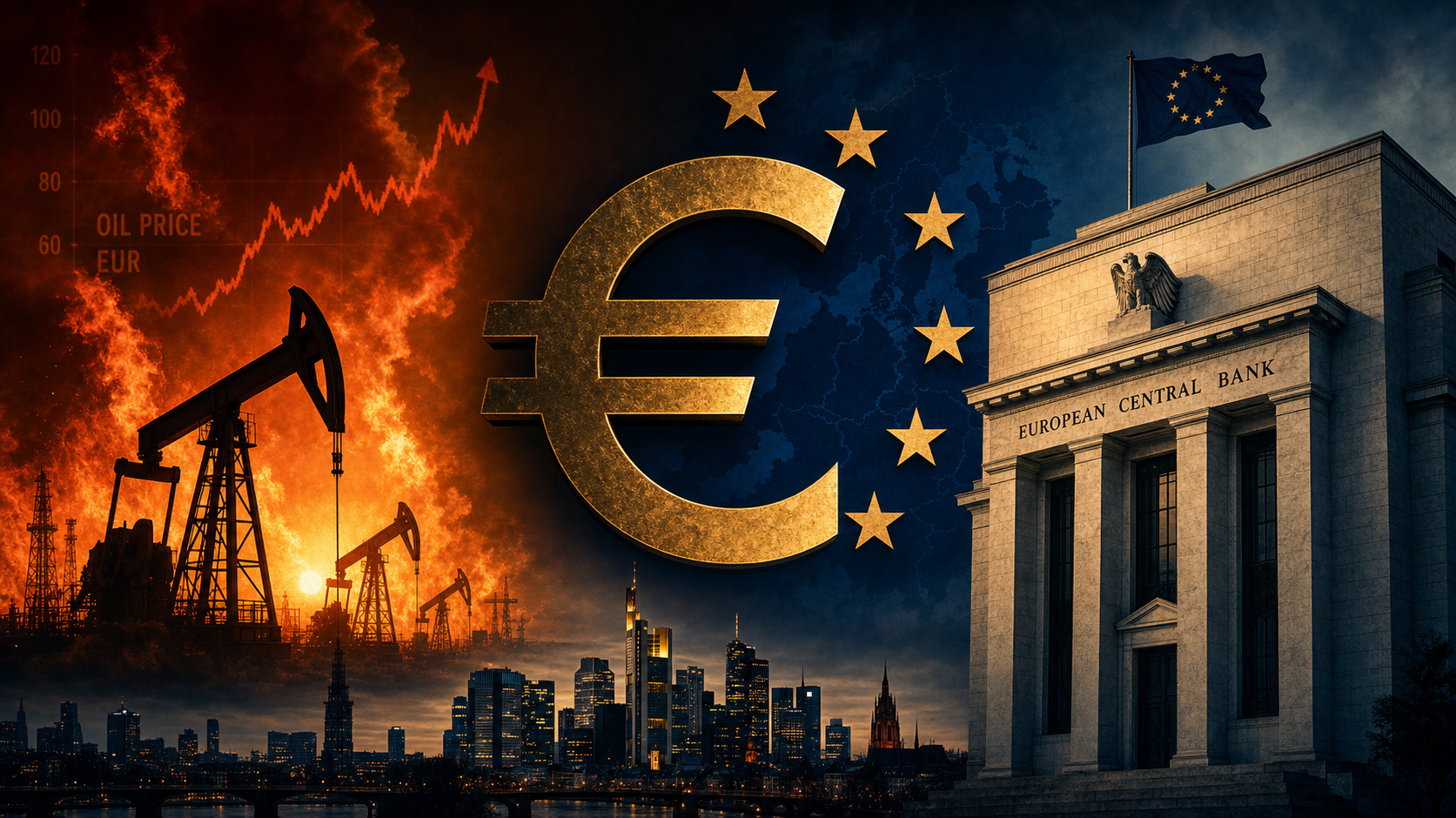
The ECB is adjusting interest rates: First rate hike in three years – This is why life is suddenly becoming more expensive again – Image: Xpert.Digital
Red alert in the Eurozone: How the Iran war is endangering our money
Price shock hits the economy: Is Germany the big loser of the new ECB policy?
The return of stagflation? Why the new ECB decision is making all of Europe tremble
On June 11, 2026, the European Central Bank (ECB) executed a dramatic U-turn: After almost three years of easing, interest rates in the Eurozone are rising again. Triggered by the escalating war with Iran and the resulting explosion in energy prices, inflation is skyrocketing. The central bankers feel compelled to tighten monetary policy sharply in the short term – with far-reaching consequences for savers, borrowers, and the already weakening economy. The dreaded specter of stagflation is looming once more, and Germany's export-oriented industry, in particular, is coming under increasing pressure. Learn here how this historic shift in monetary policy came about, what chain reactions the markets are preparing for, and what the next few months will mean for our wallets.
When war ignites monetary policy: Why the next interest rate hike could be just the beginning
A conflict is changing the coordinates of European monetary policy
The ECB Governing Council raised the deposit rate from 2.0 to 2.25 percent—the first interest rate hike in almost three years. At the same time, the main refinancing rate rose to 2.40 percent and the marginal lending facility to 2.65 percent. The immediate trigger was the Iran-Iraq War, which, since its outbreak on February 28, 2026, has turmoiled global energy markets and unleashed a wave of inflation across the eurozone that the central bank could no longer ignore.
The fact that the ECB found itself in this situation is the result of a shockingly rapid succession of events: As recently as February 2026, the inflation rate in the eurozone was 1.9 percent, just below the official target of 2.0 percent—from a monetary policy perspective, everything seemed fine. Then the conflict in the Middle East escalated. Iranian forces blocked the Strait of Hormuz, through which roughly one-fifth of all global oil shipments pass daily, and fired on oil tankers in the strait. Within a few weeks, European energy prices doubled. The price of Brent crude, which had been trading at around $62 to $66 per barrel at the beginning of 2026, shot up to over $126 at times—a historic shock that, in its magnitude, recalled the oil crises of previous decades.
From calm to alarm: Inflation trends in fast forward
The speed with which inflation surged in the eurozone surprised even seasoned observers. In March 2026, just weeks after the outbreak of war, the inflation rate had already climbed to 2.5 percent. Energy prices, which had fallen by 3.1 percent year-on-year in February, rose by 4.9 percent in March. In April, the trend accelerated further: Inflation reached 3.0 percent, driven by a 10.9 percent increase in energy prices compared to the previous year. Finally, in May, inflation stood at 3.2 percent—the highest level since September 2023.
Particularly worrying from the central bankers' perspective was the parallel rise in core inflation, which excludes volatile energy and food prices. It rose from 2.2 percent in April to 2.5 percent in May 2026. This is significant because core inflation reveals whether price increases have already permeated the broader structures of the economy—beyond the immediate energy shock. Service prices rose by 3.5 percent, while food, alcohol, and tobacco increased by 2.0 percent. This signals that the passing on of higher energy and transportation costs to end consumers is already well underway.
For comparison: As recently as February 2026, shortly before the outbreak of war, eurozone inflation stood at 1.9 percent. In just three months, the Iran-Iraq War catapulted inflation upwards by 1.3 percentage points—a rate of change that put the ECB under immediate pressure to act. The ECB's own inflation forecast, which in December 2025 had still projected 1.9 percent inflation for 2026, had to be raised to 2.6 percent as early as March. By the time of the interest rate decision on June 11, the ECB's own economists were even expecting an annual average of 3.0 percent for 2026.
The dilemma of a central bank between price stability and growth protection
Rarely has a central bank faced such a painful dilemma as the ECB did this spring. The classic mandate of a central bank is price stability. If inflation rises permanently above the target of 2.0 percent, action must be taken. But the Iran war not only generated inflation—it also destroyed growth. The result is that dreaded combination that economists call stagflation: rising prices coupled with a stagnant or shrinking economy.
EU Economic Affairs Commissioner Valdis Dombrovskis openly warned of this stagflation risk as early as March 2026, should the conflict escalate further. The concern was justified: In the first quarter of 2026, the eurozone economy contracted by 0.2 percent compared to the previous quarter—the first negative quarterly rate in more than three years. Should the second quarter also be negative, the eurozone would technically be in recession. Economists polled by Reuters on average expected only a minimal increase of 0.1 percent for the second quarter, with some experts even acknowledging the possibility of another contraction due to the burdens of the war.
In this environment, the ECB must operate with an instrument not designed for stagflation: higher interest rates combat inflation by dampening demand. However, an already weakened economy can ill-equipped to handle this stimulus. The monetary policy scalpel risks becoming a crowbar when it strikes fragile tissue. Nevertheless, Ifo Institute head Clemens Fuest succinctly summarized the decision: since inflation in the eurozone has exceeded three percent and there is little prospect of a de-escalation in the Iran conflict, an interest rate hike is the right step now. The ECB is simply following what the markets have already priced in.
The mechanics of the oil price shock and its spread through the economy
To understand the chain of effects of the Iran war on prices, it's worth looking at the physics of global energy markets. The Strait of Hormuz is the narrowest bottleneck of international commodity trade: around 500 oil and gas tankers pass through the strait daily. When Iran blockaded it, hundreds of ships were trapped, and not a single tanker crossed the strait during the second week of the war. The result was an immediate supply shock: according to the Bundesbank, Brent crude oil rose to around US$117 per barrel by the end of April 2026—roughly 63 percent above pre-war levels and 88 percent above the beginning of the year. European gas prices more than doubled to over €50 per megawatt-hour.
This energy price shock translated into broader price increases through several channels. First, energy became directly more expensive for households and businesses, which was immediately reflected in overall inflation. Then, transport costs rose because gas and kerosene became more expensive and shipping routes had to be rerouted. Roland Berger analysts calculated that freight rates between Asia and Europe increased by 30 to 70 percent by sea, and transit times lengthened by 10 to 20 days. This hit German and European industrial companies with a double blow: higher energy costs for production and higher logistics costs for sourcing intermediate goods.
Energy-intensive industries were hit particularly hard, increasingly passing on their increased costs to customers—thus fueling the price spiral themselves. In a Chamber of Industry and Commerce (IHK) survey of the economy in southwest Germany, more than 60 percent of the companies surveyed reported burdens from rising freight and transport costs; in the industrial sector, the figure was as high as 75 percent. Even industries not directly dependent on the Suez Canal or the Strait of Hormuz felt the indirect effects of rising energy prices and capacity bottlenecks.
Germany in a bind: Energy-dependent economy under constant pressure
Germany is being hit particularly hard by the Iran war—and this is due to structural reasons that have been known for years but have never been fully addressed. The German economy remains highly energy- and export-intensive. Energy price shocks act as amplifiers here: they increase production costs, reduce export competitiveness, and simultaneously dampen private consumption.
The German government reacted swiftly: In April 2026, Federal Minister for Economic Affairs Katherina Reiche halved the growth forecast for the current year from 1.0 to 0.5 percent. The German Economic Institute (IW) went even further, revising its forecast to just 0.4 percent growth, compared to the originally expected 0.9 percent. For comparison, in December 2025, the IW had still projected an annual growth rate of 0.9 percent—now it sees no genuine economic recovery for Germany this year. As a result of the energy price shock, the IW expected an average annual inflation rate of 3.0 percent.
The situation is particularly critical because Germany entered this crisis from a weakened economic position. In 2023, gross domestic product (GDP) shrank by 0.9 percent, and by a further 0.5 percent in 2024; in 2025, only minimal growth of 0.2 percent was achieved. Three years of stagnation and recession have significantly weakened the country's resilience. The fact that Germany recorded a GDP increase of 0.3 percent in the first quarter of 2026—while the eurozone as a whole contracted—is a small glimmer of hope, but it does not mask the underlying structural problems.
Private consumption, which in December was still forecast to increase by one percent by 2026, has stagnated again. Unemployment is expected to rise to over three million, with the unemployment rate reaching 6.4 percent. Only government spending from approved investments in infrastructure and defense is currently supporting the economy. However, the Munich-based Ifo Institute noted that increased government spending could sustain the momentum of the recovery throughout the rest of the year, particularly as these programs increasingly stimulate demand.
Our EU and German expertise in business development, sales and marketing

Our EU and German expertise in business development, sales and marketing - Image: Xpert.Digital
Industry focus areas: B2B, digitalization (from AI to XR), mechanical engineering, logistics, renewable energies and industry
More information here:
A thematic hub offering insights and expertise:
- Knowledge platform covering global and regional economies, innovation and industry-specific trends
- A collection of analyses, insights, and background information from our key areas of focus
- A place for expertise and information on current developments in business and technology
- A hub for companies seeking information on markets, digitalization, and industry innovations
Europe hit unevenly: Which countries are suffering most from rising interest rates?
The spectre of stagflation: A nightmare from the seventies returns
Stagflation—the very word makes experienced economists uneasy because it evokes memories of the most economically turbulent years of the post-war era. In the 1970s, the OPEC oil embargoes produced precisely the scenario that threatens Europe again today: inflation and stagnation simultaneously, combined with a monetary policy that offers no viable options.
The structural parallel is striking: Then, as now, the shock began with a sudden supply disruption of crude oil, triggered by geopolitical escalation. Then, as now, demand in Europe decreased—not because the central bank raised interest rates, but simply because higher energy prices eroded consumers' purchasing power. The difference to the current situation lies in the monetary starting point: The ECB had successfully curbed inflation with its interest rate policy in previous years, and the deposit rate had been lowered to 2.0 percent until June 2025. This relative initial stability gives the central bank somewhat more room to maneuver than was the case in 1973.
Nevertheless, the risk of a stagflationary shock remains real. In a stress scenario with a continued blockade of the Strait of Hormuz, ECB staff economists projected inflation of up to 3.5 to 4.4 percent. RWI chief economist Torsten Schmidt even raised the possibility of inflation of up to six percent in the event of a prolonged war. Commerzbank chief economist Jörg Krämer already considered inflation of at least three percent likely in the case of a sustained conflict.
Market reaction and the signal for September
That the ECB would act was already clear to the markets. More than 90 percent of economists polled by Reuters had expected an increase in the deposit rate to 2.25 percent for June 11, and the forecasting platform Polymarket estimated the probability of an interest rate hike at the ECB meeting at 97 percent. When the ECB actually delivered, the market reaction was therefore less a shock than a confirmation.
More significant than the June decision itself is the outlook. More than 60 percent of economists surveyed by Reuters in June expected another interest rate hike this year, likely in September. ABN AMRO's chief economist, Bill Diviney, even anticipated two further rate hikes after the June decision. apoBank concurred with the view that another increase in September would follow the June move, bringing the deposit rate to 2.5 percent by the end of the year. That would represent a total interest rate increase of 50 basis points within just a few months—and a clear signal that the ECB is prioritizing inflation control over its short-term growth target.
This market expectation is already having consequences: Interest rates on savings and loans are moving in anticipation of the expected monetary tightening. Bond yields are rising, refinancing costs for companies are increasing, and mortgage rates are climbing further to levels that are putting pressure on the housing market.
What the interest rate hike means for savers, borrowers and the real estate market
The direct impact of the ECB's decision on private households is a double-edged sword. Savers are initially on the winning side: the deposit rate of 2.25 percent forms the basis for banks' interest rates on overnight and fixed-term deposits. According to the comparison portal Verivox, fixed-term deposits with a two-year term, available nationwide, already yield an average of around 2.3 percent; some banks temporarily attracted new customers with rates of up to 4 percent on overnight deposits. The Finanztip interest rate barometer had already reported in March 2026 that the top overnight deposit offers had risen to 3.19 percent, compared to 2.72 percent six months earlier.
On the losing side are borrowers, especially homebuyers and businesses with variable-rate loans. Even before the June interest rate hike, mortgage rates for ten-year terms averaged around 3.9 to 4.0 percent effective; with further increases, they are likely to rise towards 4.5 percent. For a typical mortgage of €400,000, an interest rate increase of 0.5 percentage points translates to an additional annual burden of €2,000—a significant amount in an environment of rising living costs.
For the economy as a whole, higher interest rates represent a further burden. Investments that appeared profitable at 2.0 percent interest rates become unprofitable at 2.5 or 3.0 percent. This particularly affects small and medium-sized enterprises (SMEs) and capital-intensive industries, which were already struggling with high energy prices and weak demand in previous years. The German Economic Institute (IW) had already warned that investment and consumption would stagnate in 2026—a more restrictive interest rate policy will exacerbate this trend.
Wage policy as a critical variable: Is a wage-price spiral imminent?
One of the most dangerous dynamics in an inflationary environment is the so-called second-round effect: when employees respond to rising living costs with wage demands, and companies in turn pass these higher labor costs on as price increases, a self-reinforcing wage-price spiral ensues. The IMF explicitly warned in April 2026 that the risk of such spirals had increased with the Iran-Iraq War.
The ECB is attempting to interrupt precisely this dynamic with its interest rate hike. Ifo Institute head Fuest had already argued in March that the ECB must intervene early to prevent second-round effects such as rising wage demands. The logic behind this is clear: the longer inflation remains high, the more likely unions are to secure corresponding wage increases in collective bargaining – and the more the central bank loses credibility as the guardian of price stability.
At the same time, the situation in 2026 is not directly comparable to that of 2022, when a similar constellation arose after the invasion of Ukraine. Back then, the ECB acted too late and had to raise interest rates at a historically rapid pace—from minus 0.5 percent to 4.0 percent within about a year and a half. This time, the central bank is reacting earlier and from a more moderate starting point. While core inflation has risen above the target, it has not reached the levels that temporarily hit 5 to 6 percent in 2022 and 2023. This gives the ECB more leeway for a measured response.
Europe's economic asymmetry: Not all countries are affected equally
The Iran war is affecting European economies with varying intensity, depending on their energy dependence, industrial structure, and fiscal position. Germany, as the largest economy in the Eurozone, is among the most vulnerable countries due to its high energy-intensive industrial sector and its reliance on imported intermediate goods.
Italy also revised its growth forecast for 2026 downwards to 0.6 percent. France recorded a GDP decline of 0.3 percent in the first quarter of 2026, and Sweden a decrease of 0.2 percent. Estonia and Malta also suffered declines. This reflects a European economy that is in the process of recovering from the recent years of crisis and is once again being thrown off balance by the external shock.
The ECB must take this asymmetry into account in its interest rate policy. A single interest rate for 21 countries with very different economic starting points is always a compromise. Highly indebted countries like Greece or Italy come under pressure on their public finances from rising interest rates, while fiscally sound economies can absorb the higher rates more easily. The ECB's instrument is therefore inherently crude, and its side effects are unevenly distributed across the euro area.
What the next few months will decide
The economic development of Germany and Europe in the second half of 2026 hinges on one key question: How long will the Iran conflict last, and how quickly will energy prices return to a sustainable level? The ECB's forecast of 3.0 percent inflation for the full year 2026 is based on the assumption that energy prices will not escalate further. For 2027, ECB economists expect inflation to fall to 2.3 percent—still slightly above the target, but significantly below current levels.
Geopolitical scenarios cannot be quantified, but they do structure the range of possibilities. A swift end to the war would immediately relieve pressure on energy prices, reduce inflation, and allow the ECB to pause interest rate hikes in September or October. Conversely, a protracted conflict with a permanent blockade of the Strait of Hormuz could push inflation toward 4 percent or higher and force the ECB into more aggressive tightening—with significant damage to growth and employment in Europe.
Regardless of geopolitical developments, the coming months will undoubtedly bring fundamental structural shifts: in energy policy, in the supply chain strategies of European companies, and in the ECB's monetary policy responsiveness. Europe learned from the experience following the Ukraine war that energy dependence means strategic vulnerability. The Iran war is painfully demonstrating this lesson once again. The question is not whether Europe needs to transform its energy structure—it is whether the economic conditions for this transformation still allow it to be carried out quickly enough.
Monetary policy course correction with far-reaching consequences
The ECB's decision to raise interest rates for the first time in three years marks more than a technical adjustment of monetary policy. It signals the end of a period of monetary easing, characterized by the 2025 interest rate-cutting cycle, and ushers in a new phase of caution and tightening. In an economy already suffering from structural pressures—high energy prices, weakened competitiveness, and sluggish investment—this is a difficult message to deliver. Yet, within this framework, the ECB has little choice: price stability is its mandate, and credibility is the foundation of its effectiveness.
For businesses, consumers, and investors in Germany and Europe, this means that the era of cheap money is over for now, and the next decision in September will show whether the ECB is prepared to deepen its current course. The markets have already priced this in. What remains to be seen is the political and economic response to a conflict that is reminding Europe of its structural limitations.
🎯🎯🎯 Data-driven B2B industry hub as a quasi-in-house solution

The quasi-in-house solution: How Xpert.Digital closes operational gaps in B2B marketing and sales – Smart Content-Driven Business - Image: Xpert.Digital
Xpert.Digital is a data-driven B2B industry hub led by Konrad Wolfenstein . The company acts as an external, quasi-in-house solution for industrial partners, closing operational gaps in marketing, content, and sales – without requiring additional resources on the client side.
More information here:
Your global marketing and business development partner
☑️ Our business language is English or German
☑️ NEW: Correspondence in your native language!

Konrad Wolfenstein
I and my team are happy to be available to you as your personal advisor.
You can contact me by filling out the contact form here [email protected]:or simply call me at +49 7348 4088 965. My email address is
I'm looking forward to our joint project.










