
When a ceasefire becomes a farce: The war continues – The Iran war and its global shockwave | May 26 and 28, 2026
Xpert Pre-Release

Available in 27 languages 📢
Prefer Xpert.Digital on GoogleⓘPublished on: May 28, 2026 / Updated on: May 28, 2026 – Author: Konrad Wolfenstein
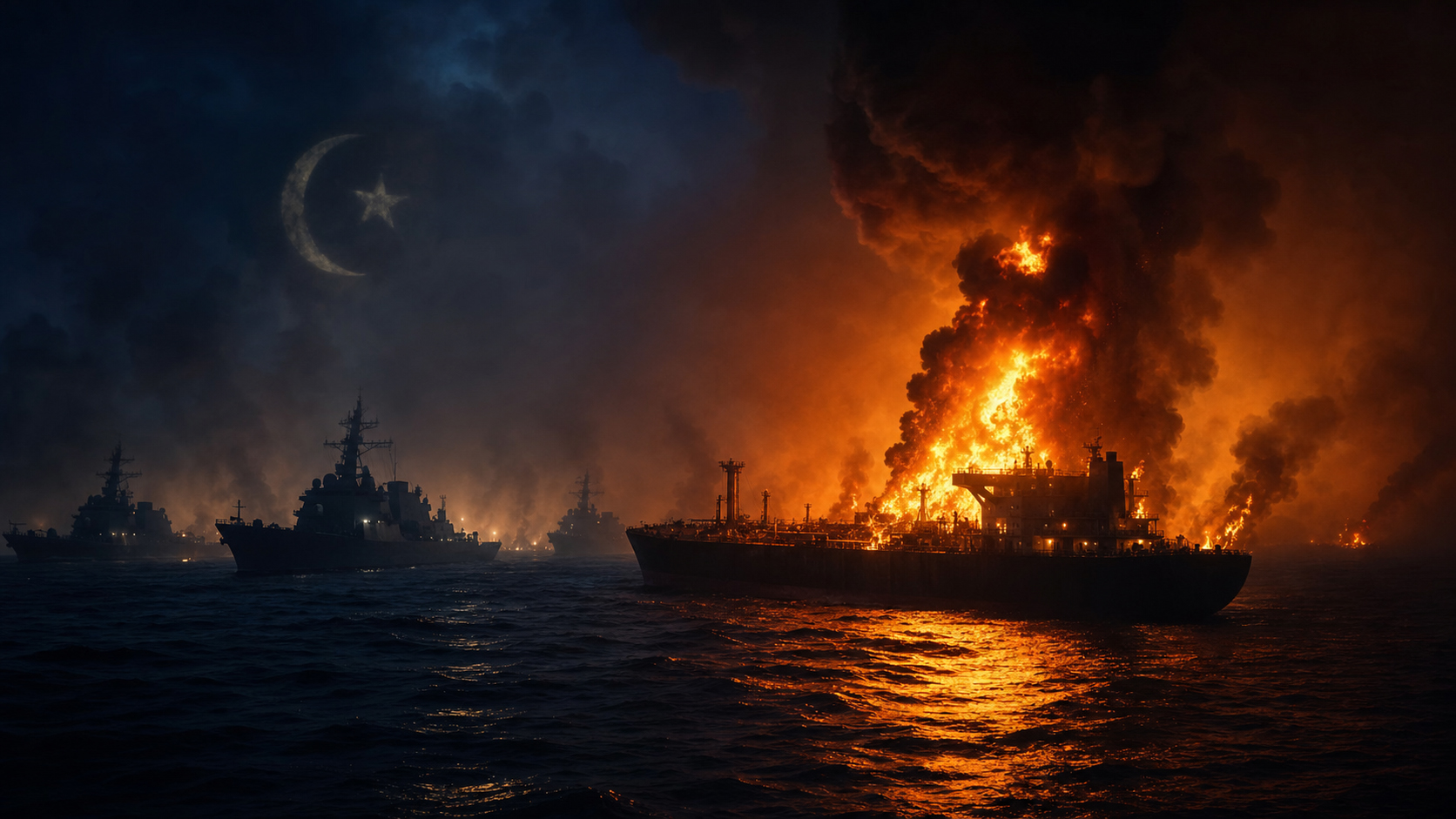
When a ceasefire becomes a farce: The war continues – The Iran war and its global shockwave | May 26 and 28, 2026 – Creative image: Xpert.Digital
The Strait of Hormuz is burning: How the Iran war is making the global economy more difficult
A war at the geopolitical bottleneck of the world: How the escalation in the Persian Gulf is holding the global economy hostage.
The war in the Middle East reached a new, highly dangerous level of escalation in May 2026. While negotiations for an extension of the fragile ceasefire continued behind closed doors in Doha, weapons continued to speak in the Persian Gulf. Rocket attacks by the Iranian Revolutionary Guard Corps on US bases and mysterious drone strikes on Kuwaiti territory revealed the perverse logic of this conflict: negotiations and retaliatory strikes proceeded in parallel, as if neither side could decide between war and peace. At the heart of this geopolitical earthquake lies the Strait of Hormuz – the most important chokepoint for global oil and gas trade. Its blockage has not only caused energy prices to skyrocket worldwide but also threatens to drive inflation in Europe to new record highs.
But behind the military scenes, a far greater drama is unfolding. The US strategy under President Donald Trump is not only aimed at disempowering the Iranian mullah regime, but also, with surgical precision, at China's economy by blocking vital oil routes. At the same time, the security architecture of the Middle East is undergoing a radical reshaping: For the first time in history, Arab Gulf states are launching a direct military attack on Iran, while Trump is increasing pressure on the Islamic world to join the Abraham Accords. Against the backdrop of a looming economic collapse in Iran and a growing global recession, the international community faces crucial weeks. A proposed peace agreement could offer salvation – but any further attack risks bringing this fragile house of cards crashing down for good.
Why a peace agreement in the Middle East is currently failing
May 28, 2026, marks another escalation in a conflict that has not experienced a single stable day since the war began in late February. While Iranian negotiators are in Doha trying to broker peace, the Iranian Revolutionary Guard Corps (IRGC) attacks a US airbase in retaliation for American strikes near Bandar Abbas. Kuwait also reported missile and drone attacks on its territory early Thursday morning, though no one has claimed responsibility. This war follows a perverse logic: negotiations and retaliation run parallel, as if both sides are unwilling or unable to choose between war and peace.
The US Central Command (CENTCOM) described its strikes on May 26 and 28 as "self-defense," claiming it neutralized drone threats to the Strait of Hormuz and sank two Iranian IRGC speedboats that were laying sea mines. Iran accused the US of violating the ceasefire and responded with the attack on the US base as a "grave warning." At least 13 powerful explosions were reported in Bandar Abbas within 30 seconds, and the runway at the airport there was said to have suffered severe damage.
Oil price shock and the threat of war: Why the escalation in the Gulf affects us all
This spiral of escalation is no accident, but rather the result of structurally incompatible interests: Washington insists on the complete dismantling of Iran's nuclear program and the immediate opening of the Strait of Hormuz, while Tehran demands first and foremost the lifting of the naval blockade and reparations for war damage. A fragile ceasefire, in effect since April 8, has contained the war but not ended it – and every new attack risks causing the entire house of cards to collapse.
The geopolitical earthquake: How it all began
To understand the current situation, one must consider the starting point. On February 28, 2026, the US and Israel attacked Iran in coordinated airstrikes that targeted not only military installations but also leading figures of the regime – including Iran's Supreme Leader and high-ranking security officials. The country, which at the beginning of the year was already struggling with an inflation rate of 42.2 percent and food inflation of 72 percent, was on shaky ground from the outset.
Iran responded with the only tool at its disposal: closing the Strait of Hormuz. Within hours, several shipping companies, oil corporations, and trading houses halted their traffic through the strait. The strait, through which some 20 million barrels of crude oil are transported daily—almost 20 percent of global consumption—was effectively shut down. The price of oil reacted immediately, surging to nearly $120 per barrel at one point before settling at around $91 to $100—an increase of over 26 percent compared to pre-war levels. At the time of the current negotiations in early May 2026, Brent crude was already trading at $111.29.
At the same time, LNG deliveries from Qatar collapsed, because the Qatari export terminals on the Persian Gulf also depend on free passage through the Strait of Hormuz. Europe was suddenly cut off from a key gas supply route.
The black blood of world trade: The Strait of Hormuz as an economic bottleneck
No other strait in the world concentrates so much economic power in so few square kilometers. Roughly one-fifth of global oil trade and a comparable share of global LNG trade, primarily from Qatar, flow through the Strait of Hormuz. In the event of a prolonged naval blockade, pipelines could only handle a fraction of these volumes: only Saudi Arabia and the United Arab Emirates have alternative export routes – for a maximum of around 2.6 million barrels per day. Given a daily throughput of 20 million barrels, this represents a negligible amount of redundancy.
A recent study jointly presented by Wiener Chain Intelligence and TU Delft estimates the export risk for the five most important Gulf states in the event of a long-term blockade at up to US$1.2 trillion annually. The most serious consequences would occur if the strait remains blocked for more than four months – this would lead to congestion on alternative routes and systemic supply chain disruptions. In addition to crude oil and natural gas, fertilizers, which are essential for global food security, would be particularly affected.
For Germany and Europe, the direct damage is comparatively moderate, as Europe only obtains a small portion of its energy directly from the Gulf region. The real problem is not one of quantity, but of price: Rising global market prices are driving up energy costs even where there is no direct dependence. In Germany, the price of gasoline rose to over two euros per liter, and the Hans Böckler Foundation predicted an inflation rate of 2.5 percent for the first and second quarters of 2026 – with a clear upward risk. According to experts at the think tank Dezernat Zukunft, if extraction facilities were permanently destroyed, up to two percentage points of additional inflation could result, raising the inflation rate to almost four percent – the highest level since 2023.
China in a stranglehold: The real strategic goal
While Europe is experiencing a significant but manageable price shock, the Hormuz blockade is hitting China with surgical precision. In 2025, the People's Republic imported 5.4 million barrels of crude oil daily through the Strait of Hormuz—twice as much as any other nation. China is by far the largest buyer of Iranian oil; over 90 percent of Iranian oil exports went to China before the war. With the disruption of this supply route, Beijing faces a twofold problem: not only is it losing cheap Iranian oil imports, but it is now competing on the global market with European buyers for replacement supplies—driving prices even higher.
The strategic dimension of this development can hardly be overstated. Washington knows that a continued blockade of the Hormuz River will deplete China's strategic oil reserves and significantly restrict Beijing's freedom of action in any future conflict—whether over Taiwan or elsewhere. China has condemned the US blockade as "dangerous and irresponsible" and simultaneously launched a diplomatic offensive: President Xi Jinping received representatives from Spain, the UAE, Russia, and Vietnam in rapid succession to position China as a stable counterweight to Washington. At the same time, Beijing is working to restructure its land-based energy supply through long-term supply contracts with Russia, Central Asia, and Latin America.
This forced realignment of Chinese energy policy has long-term consequences that will extend beyond the war. The Hormuz crisis is accelerating a geopolitical decoupling that has been underway for years and is forcing China to overcome its economic vulnerability to American naval power through continental alternatives.
Related to this:
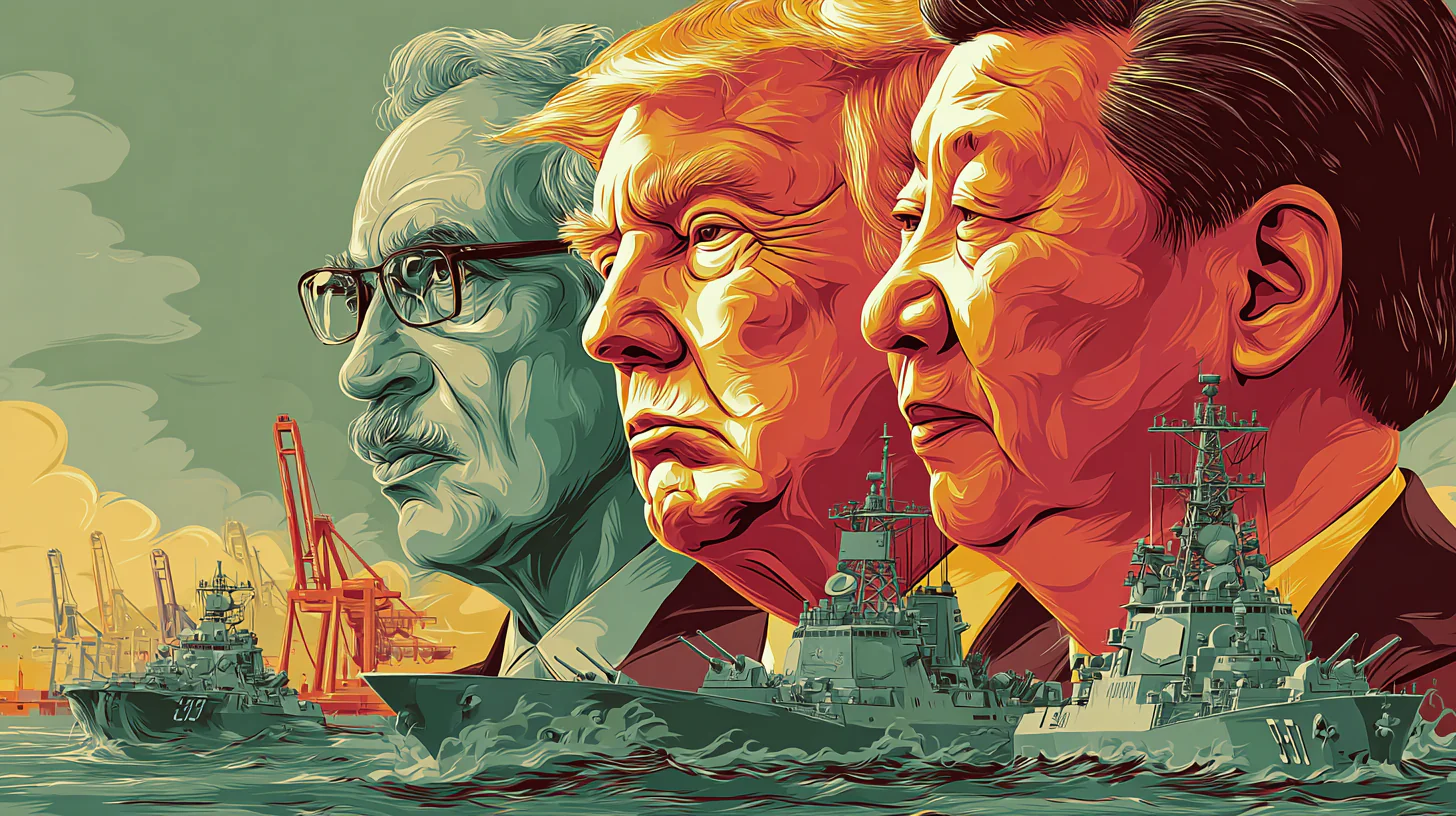
Arab sheikhs caught between the fronts: The end of strategic ambiguity
One of the most remarkable outcomes of the war is the resolution of years of strategic ambiguity among the Arab Gulf states. More than 5,000 attacks using rockets, drones, and cruise missiles have been recorded in Kuwait, Saudi Arabia, and the United Arab Emirates since the war began. These attacks, launched by Iran and Iran-backed Shiite militias in Iraq, have achieved something that decades of diplomatic efforts failed to do: they have united rival Gulf monarchies against a common enemy.
Saudi Arabia and the UAE, according to multiple reports confirmed by Western diplomats, Arab security sources, and a well-informed source in Tehran, have launched direct retaliatory attacks against Iranian targets. This marks the first time in history that these two Arab monarchies have directly attacked Iran militarily. The UAE reportedly attacked the Iranian island of Lavan and struck a refinery shortly before the ceasefire was announced in April.
In parallel, the region's economic structures are being reshaped. Kuwaiti ports and infrastructure have been severely damaged; the Ras Tanura refinery, owned by Saudi Aramco, the world's most valuable company, was hit by an Iranian drone. While production losses remained limited, the signal was unmistakable: Iran is willing and able to attack the Persian Gulf's oil infrastructure, and is doing so. Insurance costs for shipping in the region have skyrocketed, and foreign investment in the Arabian Peninsula is likely to slow in the medium term.
Related to this:

Trump's move: The Abraham Accords in a new guise
US President Donald Trump is pursuing a multi-dimensional strategy in this conflict that extends far beyond immediate military objectives. Just days before the latest escalations – on May 24, 2026 – Trump called on several Muslim states to accede to the Abraham Accords, declaring it practically mandatory for countries like Qatar, Pakistan, Egypt, Jordan, and Turkey. Saudi Arabia and Qatar should begin signing "immediately," and the rest should follow.
Behind this lies a clear negotiating logic: Whoever wants to operate under the protective umbrella of a US-led security architecture and benefit economically from normalization with Israel must take a political stance. For Saudi Arabia, whose economy, despite the Vision 2030 program, remains heavily dependent on stable oil markets, continuing as before is no longer possible – the war dividend of higher oil prices is being consumed by the war costs in the form of destroyed infrastructure and disrupted investments.
The original Abraham Accords, signed during Trump's first term, had persuaded the United Arab Emirates, Bahrain, Morocco, and Sudan to normalize relations with Israel. Since the initial signing in 2020, no other Arab country has joined—except for Kazakhstan, which merely expressed its willingness to join. The war is now fundamentally altering the incentive structure: Arab states that previously hesitated for domestic political reasons increasingly find themselves in a security dilemma that makes closer ties with Washington more attractive—even if publicly professing support for Israel remains politically sensitive domestically.
Our global industry and economic expertise in business development, sales and marketing

Our global industry and economic expertise in business development, sales and marketing - Image: Xpert.Digital
Industry focus areas: B2B, digitalization (from AI to XR), mechanical engineering, logistics, renewable energies and industry
More information here:
A thematic hub offering insights and expertise:
- Knowledge platform covering global and regional economies, innovation and industry-specific trends
- A collection of analyses, insights, and background information from our key areas of focus
- A place for expertise and information on current developments in business and technology
- A hub for companies seeking information on markets, digitalization, and industry innovations
A peace deal on a knife's edge: oil, nuclear power, and power games
The economic collapse of the mullah regime: Victory through starvation?
While international attention is focused on the military clashes, an economic drama is unfolding in Iran itself, revealing the true strategic asymmetry of this conflict. At the beginning of 2026, the official inflation rate stood at 42.2 percent, with food inflation reaching 72 percent. Since Trump's withdrawal from the nuclear agreement in 2018, the Iranian rial has plummeted from 50,000 to 1,420,000 rials per dollar—a 28-fold devaluation in eight years. This currency crash has triggered a self-reinforcing cycle: rising import costs, collapsed supply chains, and further currency devaluation.
The US naval blockade, which Washington imposed in early April to disrupt supply chains through Iranian ports, strikes the regime at its most vulnerable point. Nearly 40 percent of the Iranian economy depends on oil revenues; oil exports, already suffering under UN snapback sanctions, have plummeted further as a result of the blockade. In addition, Iranian oil revenues from the sanctioned black market are frozen in Qatar. As part of a peace agreement, Tehran is demanding the release of a total of $24 billion in frozen assets – half upon the entry into force of a framework agreement, the other half within 60 days.
At the same time, the war has weakened the regime domestically. Massive economic protests in several cities at the beginning of the year revealed a population stretched to its limits. The leadership vacuum following the targeted killings of high-ranking officials and an escalating power struggle between pragmatic factions and the military-industrial complex of the Revolutionary Guard are paralyzing political action. The IRGC, which has consolidated its power through the war, is also the one most likely—and willing—to sabotage any agreement.
Related to this:

The peace dilemma: Too close and too far at the same time
Negotiations to end the war are in a peculiar state of limbo. Trump's statement of May 24, 2026, that a peace agreement was "largely negotiated" and imminent, contained a crucial caveat: the details were still being discussed. Iran's Foreign Ministry commented on Trump's optimism with the sober observation that both sides were simultaneously "very far and very close" to an agreement.
A draft memorandum of understanding proposes: a 60-day extension of the ceasefire, the immediate reopening of the Strait of Hormuz by Iran, a commitment by both sides to a permanent end to the war, including the Lebanon front, reaffirmation that Iran will not develop nuclear weapons, and the disposal of its enriched uranium stockpile under a mechanism yet to be determined. In return, the US would lift its naval blockade and cooperate in the release of frozen assets.
The crucial point of contention is the Iranian nuclear program. Washington insists on the complete dismantling of the facilities in Natanz, Fordow, and Isfahan, as well as the surrender of all enriched uranium stockpiles to the IAEA. Tehran insists on its right to uranium enrichment under the Nuclear Non-Proliferation Treaty and wants to negotiate nuclear issues only after a formal end to the war. Qatar, acting as an informal channel between the parties, and Pakistan, as the official mediator, are attempting to bridge this gap. However, every new military skirmish—such as the events of May 26 and 28—increases the political costs of reaching an agreement on both sides.
The global price shock: Inflation risks for Europe and the world economy
The macroeconomic consequences of the conflict are already measurable and could become considerably more severe depending on its course. Philip Lane, chief economist of the European Central Bank, warned early on that a prolonged conflict in the Gulf could drive inflation in the eurozone "to over three percent, possibly even towards four percent." Indeed, gasoline prices in Germany have risen to over two euros per liter, and gas prices have doubled in some cases.
The German Economic Institute (IW) has calculated that an oil price of $100 would lead to an inflation increase of 0.8 percentage points this year. For the US, the world's largest oil producer, gasoline prices at the pump have risen by 20 percent since the start of the war. Economist Jared Franz of Capital Group estimated that the purchasing power of US consumers would fall by around 0.6 percent at an oil price of $85 per barrel – at $100 or more, the damage would be significantly greater. Nevertheless, Franz expressed cautious optimism that US GDP could grow by 2.8 percent over the course of the year, provided the conflict does not escalate.
For the global economy as a whole, strategic reserves buffer short-term bottlenecks – experts estimate there are tanker reserves sufficient for 12 to 15 days of global consumption. Shipping companies are switching to alternative routes, which lengthens delivery times and increases costs, but does not create immediate supply shortages. The real damage lies in the chronic price pressure, which erodes margins in oil-intensive industries – chemicals, pharmaceuticals, transport, agriculture – and postpones investment decisions.
Lessons from escalation: When wars develop their own logic
What has been happening in the Persian Gulf since February 28, 2026, is instructive for understanding modern resource wars. First, military superiority—such as that undoubtedly possessed by the US and its allies—does not automatically lead to political solutions if the losing side can use a strategically vital resource as leverage. Iran's ability to block the Strait of Hormuz has complicated US calculations from the outset.
Secondly, sanctions and blockades have a twofold effect. They weaken Iran economically to the limit of what is bearable – and at the same time, they harm the blocking country itself through rising energy prices and global inflation risks. Trump described the blockade as a "very profitable business"; Iran called it a "shameful admission of piracy." Behind this lies a real dilemma: the longer the blockade lasts, the greater the domestic political costs in the US and Europe.
Third: Wars of this kind have their own inertia. Both sides have opened channels of negotiation and continued military actions—not because no one wants peace, but because within each camp there are forces that fear a settlement. The IRGC sees its institutional power threatened by a compromise peace; on the American side, there are hardliners who consider the permanent dismantling of the Iranian nuclear program non-negotiable. These domestic political dynamics, not the will of the negotiators in Doha or Islamabad, are the real obstacle.
Scenarios for further development and their economic consequences
Three scenarios are emerging, and their economic implications diverge considerably.
In the first scenario—a swift Memorandum of Understanding followed by the opening of the Strait of Hormuz—energy prices would fall significantly within a few weeks. If the strait is navigable again by summer, economists expect oil prices to return to their late 2025 levels and inflation in Europe to drop back to the ECB's two percent target. The global economy would experience a V-shaped recovery, and the Abraham Accords, in their expanded form, could become a structurally stabilizing element for the region.
In the second scenario—a “frozen conflict” with ongoing skirmishes but without full escalation—uncertainty would persist. The oil price would fluctuate between $85 and $110, inflation in Europe would remain elevated, and investment in the region would decline. China would systematically expand its continental energy supply and strategically decouple itself from Western supply chains—with long-term consequences for the multipolar world order.
In the third scenario – a renewed escalation to full-blown war – the previously mentioned inflation scenarios of up to four percent in the Eurozone would become reality. The global economy would slow noticeably, and the risks of recession would increase. The destruction of oil and gas facilities in the Gulf, which experts have already warned about, could potentially generate up to two percentage points of additional inflation in the short term. The geopolitical order of the Middle East would be redrawn for generations to come.
The moment of truth is approaching
The Iran war is no longer a regional conflict – it is a global economic shock with a geopolitical dimension. The Strait of Hormuz is the bottleneck through which the strategic interests of the US, China, the Arab Gulf states, Europe, and Iran converge in a narrow space that leaves no room for error. Trump's strategy of silent starvation may be causing Iran considerable hardship; but starvation strategies rarely end with the triumph of the stronger – they end with negotiations in which the defeated party lays its final cards on the table.
Kuwait, Saudi Arabia, and the UAE have now paid the price—in destroyed infrastructure, political capital, and strategic credibility. Their direct involvement in attacks on Iran marks a historic turning point that has permanently altered the security paradigm of the Persian Gulf. The Abraham Accords in their original form—a diplomatic normalization achieved under the radar of public attention—are definitively obsolete. What follows will be a tougher, more direct, and openly militarized security architecture in which the Arab monarchies are no longer silent beneficiaries but active shapers.
The coming weeks will determine which of the three scenarios becomes reality. The memorandum is on the table; the IRGC is withdrawing. The next attack—whether from Bandar Abbas or against a base in Kuwait—could close the window that currently still offers a diplomatic way out. Economically speaking, the price of failure is clearly quantifiable: inflation, lost growth, geopolitical fragmentation, and an energy market that would not recover quickly from this shock.
🎯🎯🎯 Data-driven B2B industry hub as a quasi-in-house solution

The quasi-in-house solution: How Xpert.Digital closes operational gaps in B2B marketing and sales – Smart Content-Driven Business - Image: Xpert.Digital
Xpert.Digital is a data-driven B2B industry hub led by Konrad Wolfenstein . The company acts as an external, quasi-in-house solution for industrial partners, closing operational gaps in marketing, content, and sales – without requiring additional resources on the client side.
More information here:
Your global marketing and business development partner
☑️ Our business language is English or German
☑️ NEW: Correspondence in your native language!

Konrad Wolfenstein
I and my team are happy to be available to you as your personal advisor.
You can contact me by filling out the contact form here simply call me at +49 7348 4088 965. My email address is [email protected]:or
I'm looking forward to our joint project.










