
The end of cheap solar panels? Why modules from China are suddenly becoming more expensive
Xpert Pre-Release

Available in 27 languages 📢
Prefer Xpert.Digital on GoogleⓘPublished on: April 3, 2026 / Updated on: April 3, 2026 – Author: Konrad Wolfenstein
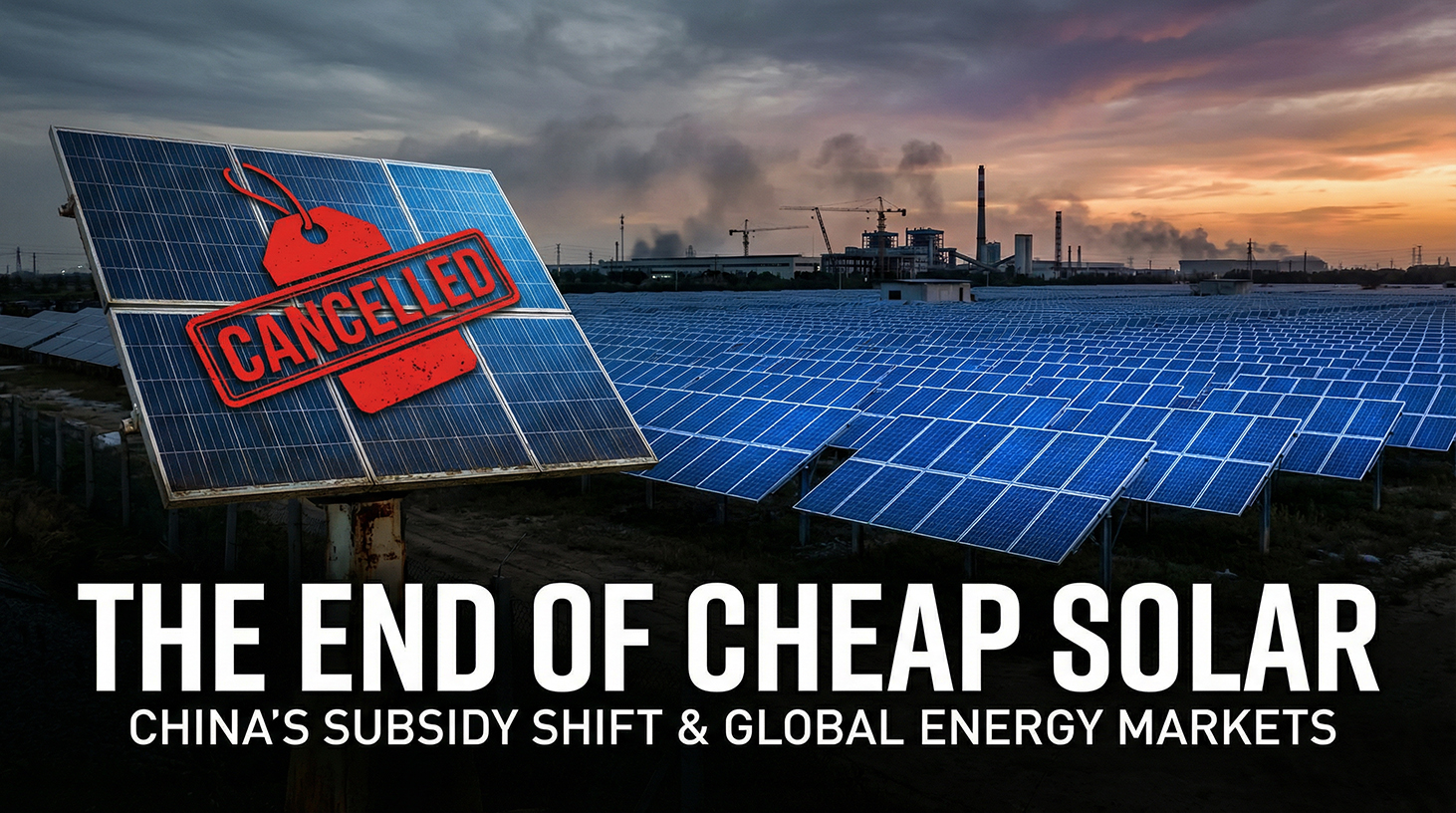
The end of cheap solar panels? Why modules from China are suddenly becoming more expensive – Image: Xpert.Digital
Billions in losses and an emergency brake: The hidden crisis behind China's solar dominance
China's strategic withdrawal: This is why our energy transition will become more expensive in the future
Why Beijing is now pulling the emergency brake – and the world is paying the price
For years, homeowners and stakeholders in Europe's energy transition benefited from an unprecedented drop in the price of photovoltaic systems. Solar panels and balcony power plants were cheaper than ever before – fueled by massive government subsidies and enormous overproduction in China. But this era of "cheap solar" is now coming to an abrupt end. With a far-reaching political U-turn, Beijing is radically cutting billions in export subsidies for its solar industry. What at first glance appears to be a distant fiscal policy measure has direct and tangible consequences for the domestic market: Prices for solar technology will rise noticeably. But why is China, the undisputed global market leader, pulling the emergency brake now? The following article examines the background of this historic decision – from the destructive price spiral of the so-called "Neijuan" to geopolitical power plays and the question of what this development means specifically for consumers' wallets and the future of the energy transition.
Related to this:

The turning point: What has changed since April 1, 2026
As of April 1, 2026, China has implemented a quiet revolution in the global solar market. The Chinese Ministry of Finance and the State Revenue Administration jointly announced the complete elimination of value-added tax (VAT) refunds for the export of photovoltaic products. This step affects all key components of the solar value chain – from monocrystalline silicon wafers and solar cells to fully assembled modules and inverters. A phased approach applies to energy storage products: The refund rate will initially be reduced from 9 to 6 percent and completely eliminated from January 1, 2027.
What at first glance appears to be a technical tax adjustment is in reality the culmination of a decades-long subsidy program. As early as December 2024, China had reduced the tax refund rate for photovoltaic products from 13 to 9 percent – a first warning sign, now followed by its complete elimination. In barely three years, the state support framework for solar exports has thus been reduced from 13 percent to zero, unequivocally demonstrating the fundamental reorientation of Chinese industrial policy in this sector.
China's unprecedented rise to solar power
To understand the implications of this decision, one must grasp the extent of Chinese market dominance in the photovoltaic industry. China currently controls over 95 percent of global polysilicon production for solar applications, 97 percent of wafer manufacturing, 85 percent of solar cell production, and approximately 75 percent of module production. This near-complete control of all stages of the value chain is no accident, but rather the result of a two-decade-long industrial policy that combined government subsidies with massive capital inflows, favorable land prices, and coordinated technology promotion.
The production capacities resulting from this expansion are unprecedented. In 2025, China's manufacturing capacity for solar modules is estimated to have reached 1,200 gigawatts – a figure almost double the total global installation demand of around 650 gigawatts in the same year. In the first half of 2025 alone, China installed 212 gigawatts of new solar capacity, equivalent to the total photovoltaic capacity built in Germany over 25 years. By the end of 2025, China's cumulative photovoltaic capacity had surpassed the historic mark of 1,200 gigawatts – the first country in the world to do so.
Neijuan: When industrial policy destroys itself
Behind these impressive figures lies a structural crisis known in the People's Republic as Neijuan – a term from agricultural sociology that originally described stagnation despite increasing resource input, but today stands for destructive cutthroat competition without productive progress. In the solar industry, Neijuan has taken a concrete and mathematically verifiable form: manufacturers systematically sell below their cost to defend market share and finance the resulting losses with cheap government loans and provincial subsidies.
The consequences are dramatic. The four largest Chinese module manufacturers – Longi, Jinko Solar, Trina Solar, and JA Solar – recorded combined net losses of 11 billion yuan in the first half of 2025 alone, equivalent to approximately US$1.54 billion and representing a 150 percent increase compared to the same period of the previous year. Longi Green Energy, once the undisputed global market leader, reported losses of up to €700 million for the first half of 2025, while Tongwei warned of losses of up to €400 million in the same period. Jinko Solar recorded a 32.63 percent drop in revenue alongside exploding losses.
This price war developed its own dynamic: due to oversupply, solar modules became almost 50 percent cheaper over the course of 2024, which, while accelerating the global energy transition, drove Chinese manufacturers into an existential spiral. Despite a record expansion of 315 gigawatts of new solar capacity in China alone in 2025, the industry remained highly unprofitable – an economic paradox that exposes the limits of state-enforced overproduction.
Why China is acting now
The abolition of export subsidies is not a spontaneous reaction, but the result of a multi-year situation analysis at the highest governmental level. Several factors drove the decision at this time.
First, the industry's losses have reached a politically intolerable level. Beijing is no longer able to accept systematic losses in the billions as the price of global market dominance when its strategic goals—cost reduction, technological leadership, and market penetration—have already been achieved. Lin Boqiang, director of the China Center for Energy Economics Research at Xiamen University, describes this step as a necessary intervention to curb inefficient competition, reduce trade conflicts, and steer the industry toward high-quality development.
Secondly, China faces a growing problem with international trade disputes. The EU, the US, and an increasing number of other importing countries have initiated anti-dumping proceedings or imposed punitive tariffs, explicitly arguing that Chinese manufacturers are only able to export below market prices due to state subsidies. The China Photovoltaic Association (CPIA) confirmed in an official statement that the measure is intended to help rationalize pricing in foreign markets and reduce the risk of trade conflicts.
Third, the entire economy is trapped in a deflationary cycle, fueled by serial overproduction in several key industries—solar panels, batteries, and electric vehicles. Nomura analysts interpreted the decision as a signal that Beijing will rely more on non-currency instruments to manage its massive trade surplus problem, rather than resorting to yuan appreciation. The decisive end to subsidies also demonstrates a serious intention to enforce market correction in multiple sectors simultaneously.
New: Patent from the USA – install solar parks up to 30% cheaper and 40% faster and easier – with explanatory videos!

New: Patent from the USA – Install solar parks up to 30% cheaper and 40% faster and easier – with explanatory videos! - Image: Xpert.Digital
The core of this technological advancement is the deliberate departure from conventional clamp mounting, which has been the standard for decades. The new, more time- and cost-effective mounting system addresses this with a fundamentally different, more intelligent concept. Instead of clamping the modules at specific points, they are inserted into a continuous, specially shaped support rail and held securely in place. This design ensures that all forces – whether static loads from snow or dynamic loads from wind – are distributed evenly across the entire length of the module frame.
More information here:
China's solar plan: Cartel strategies instead of price wars
Cartels instead of price wars: China's controversial consolidation strategy
Alongside the elimination of export subsidies, Beijing is attempting to curb neiyuan competition through industrial policy coordination. In July 2025, the Ministry of Industry and Information Technology invited 14 major solar companies to a meeting where measures against irrational low-price competition, the decommissioning of outdated capacity, and improvements in industrial quality were agreed upon. The wording was the official terminology for what is internationally known as cartel coordination: coordinated production restrictions, minimum price agreements, and the coordinated closure of older manufacturing facilities.
This strategy carries significant domestic political tensions. Six leading polysilicon manufacturers, along with the industry association CPIA, were summoned by the state market regulator because their self-regulation agreements raised suspicions of illegal price-fixing. The authorities face a fundamental dilemma: effectively combating overcapacity requires coordination, which, without clear boundaries, risks veering into market manipulation. Industry experts anticipate that consolidation in silicon, wafer, and module manufacturing will take months or even years before its effects become noticeable.
Related to this:

Gradual increase in raw material costs as a multiplier
The elimination of export subsidies is hitting an industry already suffering from increasing cost pressures. Silver, a key material in solar cell manufacturing, reached a record price of $83.62 per ounce at the end of 2025 – a year-on-year increase of over 130 percent. This means that silver paste now accounts for 15 to 17 percent of the total cost of a solar module, surpassing polysilicon as the largest single cost factor. According to OPIS analysts, FOB prices for TOPCon cells – the technologically leading product generation – had already risen by around 30 percent since mid-December 2025, even before the tax reform officially took effect.
In parallel, the Chinese Ministry of Industry has curbed polysilicon production through regulatory intervention. Leading manufacturers are now producing at only 55 to 70 percent of their capacity, which led to a 48 percent price increase for this key raw material in September 2025 alone. Wood Mackenzie had already predicted price increases of around 9 percent for modules and storage systems starting in the fourth quarter of 2025 – an assessment that has proven too conservative with the complete elimination of subsidies.
The specific consequences for the European market
Since nearly 90 percent of solar modules sold in Germany are of Chinese origin, Beijing's tax policies are directly reflected in end-customer prices. Market analysts anticipate a price increase of 10 to 15 percent for solar modules in the European market. For mid-range systems, typically installed on single-family homes and currently costing between €15,000 and €18,000, this translates to an additional cost of around €600. In some sub-segments, price increases of 20 to 30 percent were already observed before the effective date, as European buyers attempted to protect themselves against the anticipated price hikes by placing pre-orders.
For balcony power plants – a booming entry point into decentralized energy generation in Germany – the elimination of Chinese export subsidies means a price increase of around 10 percent, according to industry representatives. A device currently available for 600 euros could rise to as much as 660 euros by 2026. Current export prices for TOPCon modules are already between 0.09 and 0.13 US dollars per watt-peak – and trending upwards.
| segment | Price increase (forecast) | Absolute additional costs (example) |
|---|---|---|
| Large-scale system (15–18 kWp) | approximately 3–4% | approx. €600 |
| Standard solar module | 10–15 % | depending on performance class |
| Balcony power plant (€600) | approximately 10% | approx. €60 |
| Module price (FOB, TOPCon) | up to 30% since Dec. 2025 | USD 0.09–0.13/Wp |
| Battery storage 2026 | Refund: 9 → 6% | gradual increase |
| Battery storage 2027 | Refund: 0% | full inflation |
For large-scale systems with 15–18 kWp, a price increase of approximately 3–4% is expected, corresponding to an additional cost of around €600. Standard solar modules could become 10–15% more expensive; the absolute additional costs depend on the respective power class. Balcony power plants, which currently cost around €600, are expected to see an increase of about 10%, i.e., additional costs of around €60. Module prices (FOB, TOPCon) have already risen by up to 30% since December 2025 and are currently around USD 0.09–0.13 per watt-peak. For battery storage systems, a reduction in the subsidy from 9% to 6% is expected in 2026, leading to a gradual price increase; in 2027, the subsidy will fall to 0%, resulting in a complete price increase for storage systems.
The geopolitical calculation behind the decision
China's decision also follows a geopolitical calculation. In a world of increasing trade tensions, US tariff increases under President Trump, and growing EU skepticism towards Chinese subsidy practices, eliminating its own export tax breaks sends a rhetorically effective signal: Beijing is pretending to become more market-compliant and to address international accusations of dumping. At the same time, the Chinese solar industry has long since achieved its strategic goals – global market penetration, cost reduction through economies of scale, and technological leadership – and no longer needs subsidies to remain unrivaled.
The complete market dominance of Chinese manufacturers remains structurally intact even after the subsidies are eliminated. No Western manufacturer has the capacity to operate the value chain from polysilicon to the finished module competitively. Even a 15 percent price increase will only bring Chinese modules back from a historically unprecedented low to a still very affordable level – the cost advantage over alternative sources remains.
Strategic reorientation: From volume to value
Behind the operational decision to eliminate tax breaks lies a deeper strategic realignment. The Chinese government has signaled its intention to transform the solar industry from a volume-oriented mass exporter into a technology-leading, high-value segment. Liu Yiyang, Executive Secretary General of the China Photovoltaic Association, described this transformation as follows: The end of tax privileges marks the point at which the industry must prove itself in free market competition. Companies that were only viable through government subsidies will exit the market; the remaining market leaders will emerge from this consolidation phase technologically stronger and more financially stable.
In this context, the shift towards more advanced cell technologies such as TOPCon, HJT, and perovskite tandem concepts is also understandable. Where cost reductions for conventional PERC cells reach their physical limits, these technologies offer new efficiency gains and thus the basis for a renewed price offensive at a technologically higher level. China installed a new world record of 315 gigawatts in 2025 and achieved its national expansion target of 1,200 gigawatts of installed solar and wind power six years ahead of schedule in 2030.
Risks and open questions
Eliminating subsidies will not automatically solve the Neijuan problem. As long as overcapacity exists in the value chain, the structural pressure for aggressive pricing will remain – only now without government funding to cover the shortfall. The market consolidation process will be painful: analysts expect significant capacity reductions, bankruptcies of medium-sized manufacturers, and government-orchestrated mergers to bring the industry to a sustainable size.
For international buyers and project developers, this results in a significantly altered basis for calculation in the medium term. The unusually low module prices of the years 2023 to 2025 were likely not a permanent state, but rather the temporary result of a flood of prices created by industrial policy. A return to these price levels is not realistic in the medium term – even if the absolute cost reduction of the technology through further efficiency improvements will enable further price reductions in the long term.
For the European and German energy transition, this is not a catastrophe, but a significant recalibration. The economic advantages of photovoltaic systems remain even with a price increase of 10 to 15 percent, as the levelized cost of electricity is still significantly lower than that of fossil fuel alternatives. What is changing is the pervasive logic of permanent price reductions, on which many installation companies, project developers, and end customers had based their financial plans. China's new solar economy is more expensive – and more honest.
Your partner for business development in the fields of photovoltaics and construction
From industrial rooftop PV to solar parks and larger solar parking lots
☑️ Our business language is English or German
☑️ NEW: Correspondence in your native language!

Konrad Wolfenstein
I and my team are happy to be available to you as your personal advisor.
You can contact me by filling out the contact form here or simply call me at +49 7348 4088 965. My email address is : [email protected]
I'm looking forward to our joint project.
☑️ EPC services (Engineering, Procurement and Construction)
☑️ Turnkey project development: Development of solar energy projects from start to finish
☑️ Site analysis, system design, installation, commissioning, maintenance and support
☑️ Project financier or intermediary of capital providers
Innovative photovoltaic solution for cost reduction (up to 30%) and time savings (up to 40%)

Innovative photovoltaic solution for cost reduction and time savings - Image: Xpert.Digital
More information here:







