
Trump's secret strategy and calculated hesitation: This is why the US doesn't actually want to open the Strait of Hormuz
Xpert Pre-Release

Available in 27 languages 📢
Prefer Xpert.Digital on GoogleⓘPublished on: May 25, 2026 / Updated on: May 25, 2026 – Author: Konrad Wolfenstein
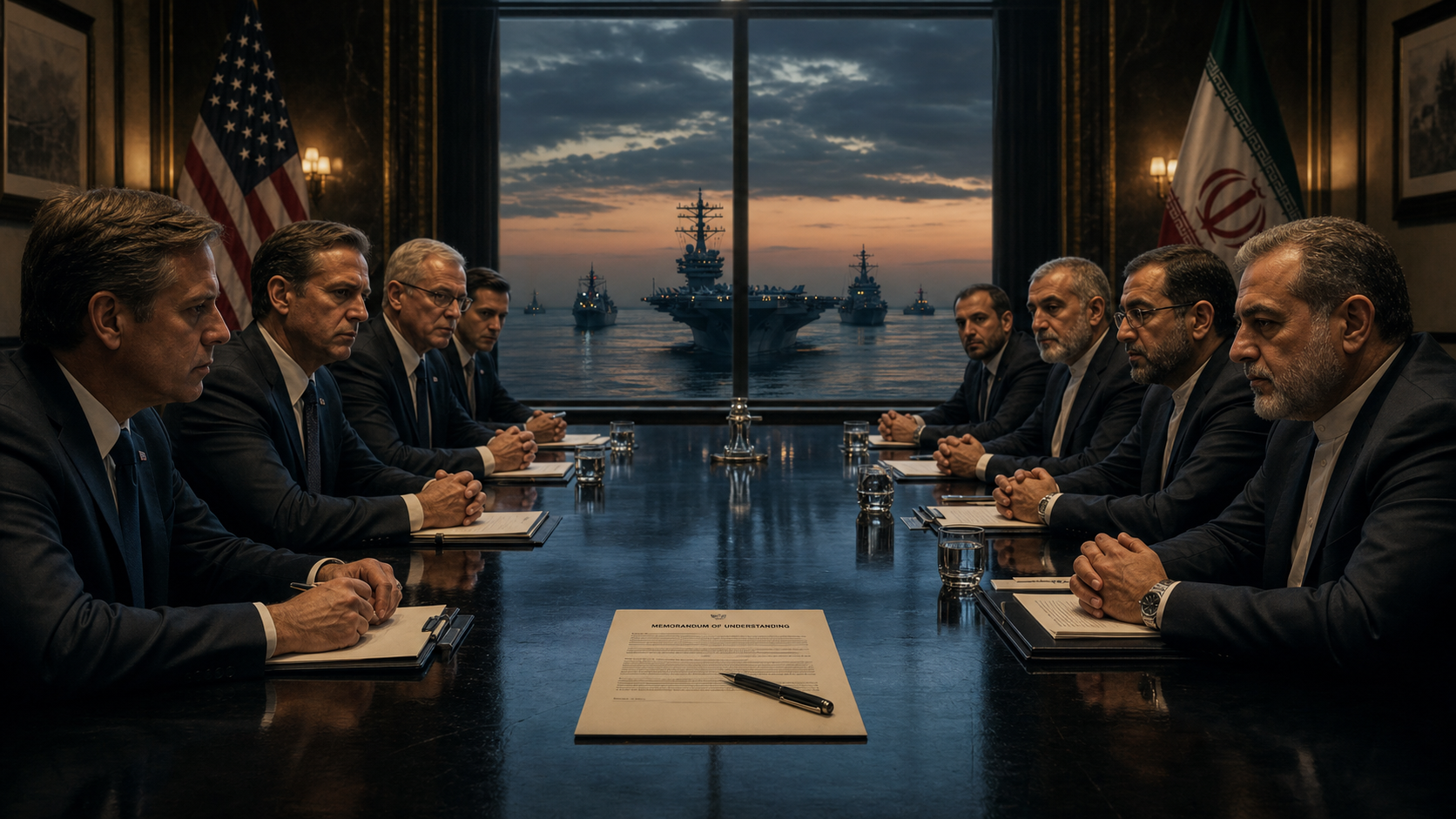
Trump's secret strategy: This is why the US doesn't want to open the Strait of Hormuz at all – Image: Xpert.Digital
The end of the petrodollar? How the Gulf conflict is reshaping the global financial system
Trump's Iran Trap: Why the real enemy in the Persian Gulf is actually China
Asia bleeds, America profits: The brutal truth behind the stalled Iran deal
An apparently unpredictable US president, a blocked global trade bottleneck, and a conflict that has global markets on edge: The Iran crisis of 2026 is often dismissed at first glance as purely regional chaos. But behind Donald Trump's hesitant negotiations and the military blockade of the Strait of Hormuz lies a far larger, coldly calculated strategy. It is no longer just about Tehran's nuclear program or a local ceasefire. The Persian Gulf has become the central chessboard in the struggle for global hegemony. The real target of this geo-economic war lies thousands of kilometers further east: Beijing. The following analysis reveals how the US is using Iran as leverage to deliberately curb China's economy, why Washington is intentionally prolonging the conflict, and why this geopolitical poker game could ultimately spell the end of the US dollar as the world's leading currency.
Related to this:

Trump's calculated hesitation: The Iran deal as leverage against China?
At first glance, Trump's contradictory behavior in the Iran negotiations appears to be political unpredictability: First, he pushes for a quick agreement, then warns against haste, then Secretary of State Rubio signals optimism, while Iranian state media deny key points. But anyone who considers these fluctuations in isolation overlooks the underlying strategic structure. The Iran crisis of 2026 is not a regional conflict that happens to shake global markets. It is a precisely positioned lever in the global power game between Washington and Beijing – and the indecisiveness regarding the deal is a crucial part of the strategy.
Between optimism and caution: The dynamics of negotiations in May 2026
On May 23, 2026, US President Donald Trump declared on TruthSocial that a framework agreement with Iran had been "largely negotiated" and that the Strait of Hormuz would be opened. A few hours later, Foreign Minister Marco Rubio, who was in New Delhi at the time, emphasized that there could soon be "good news"—but admitted that there was "still work to be done." At the same time, Iranian state media outlets such as Fars and Tasnim reported that significant differences remained, particularly regarding control of the strait and the nuclear issue.
This precisely describes the situation: The US and Iran have been negotiating for weeks on a multi-page memorandum of understanding intended to initially solidify the ceasefire, open the Strait of Hormuz, and partially release Tehran's frozen assets. The nuclear issue is to be negotiated in a second phase within 60 days. However, this very delay is problematic for Washington, as the US is demanding a complete halt to Iran's uranium enrichment program and the handover of its stockpile of highly enriched uranium – demands Tehran categorically rejects in this first phase. According to Reuters, a high-ranking Iranian source has explicitly stated that there is no agreement on the removal of Iran's uranium reserves.
Trump's message that time is "on our side" is therefore more than a negotiating tactic. It is an endorsement of the logic of asymmetric pressure: the longer the conflict lasts, the deeper Iran's economy bleeds – and the more painful the collateral damage for China becomes.
Related to this:

The silent starvation: How the US naval blockade is economically crippling Iran
On April 13, 2026, the US Navy imposed a formal naval blockade on Iranian ports. The economic impact was immediate. Over 90 percent of Iran's foreign trade, valued at approximately $109.7 billion annually, flows through southern shipping lanes and the Strait of Hormuz. The blockade is estimated to have disrupted almost all Iranian maritime trade, resulting in a daily loss of approximately $435 million in direct economic activity. The halt in oil exports alone is likely to force Iran to reduce oil production within a few weeks, once storage capacity on Kharg Island is exhausted.
Analysts at the Foundation for Defense of Democracies (FDD) think tank anticipate that a months-long blockade will drive Iran's economy into financial collapse, as the country is structurally dependent on oil export revenues. Dissenting voices urge caution: Economic analyst Saeed Laylaz of the University of Tehran argues that the "real material impact" has so far been limited, since Iran has maintained at least some deliveries through parallel mechanisms—the so-called shadow tanker system, through which China has primarily sourced Iranian oil. Nevertheless, the pressure is undeniably mounting: Trump's statement that Iran is "financially collapsing" and Treasury Secretary Bessent's indication that storage capacity is at its limit reflect a logic of pressure that is deliberately playing for time.
Hormuz as a weapon: Why the US doesn't want to open the strait
The Strait of Hormuz is the narrowest bottleneck of the global energy system. Approximately 20.9 million barrels of crude oil, condensates, and petroleum products flow through it daily – equivalent to roughly 20 percent of global petroleum consumption and about a quarter of total global seaborne tanker trade. Saudi Arabia alone accounts for roughly 37 percent of this flow, followed by Iraq with 23 percent. Around 80 percent of these exports go to Asia – primarily to China, India, Japan, and South Korea.
Since the start of the conflict on February 28, 2026, major international shipping companies such as Maersk and Hapag-Lloyd have suspended operations through the strait. Daily throughput has plummeted from over 150 normal tanker passages to as few as two to thirteen at times. Hundreds of tankers are anchored outside the strait. Insurers have largely withdrawn coverage for ships in the region. The US Navy is operating three carrier strike groups in the area—the largest deployment since 2003—and has repelled several tankers and authorized the firing of minelayers.
The real strategic message is that Washington isn't simply forcing free passage. The US could militarily open the strait to neutral shipping. They aren't doing so completely – and that's not a failure, but intentional. As long as the strait remains de facto blocked, Washington holds the reins over the energy supply for China's entire industrial production.
China's energy dependence: The structural nerve that Washington is pressing
China is the world's largest importer of crude oil, sourcing the lion's share of its imports from Gulf regions via the Strait of Hormuz. In 2025, China purchased more than 80 percent of Iran's exported crude oil—an average of 1.38 million barrels per day, representing approximately 13.4 percent of China's total maritime imports of 10.27 million barrels per day. Over half of all Chinese crude oil imports originate from countries whose supply routes have been directly or indirectly disrupted by the Hormuz conflict.
The Bruegel Institute in Brussels has calculated that a 25 percent increase in oil prices reduces China's GDP growth by about 0.5 percentage points. Given the massive price increases—crude oil rose from around $70 to over $92 per barrel after the US-Israeli attacks of February 28, and LNG prices more than doubled to $24 to $25 per MMBtu—the economic burden on Beijing is considerable. China has already lowered its growth forecast from 4.9 to 5 percent to a range of 4.5 to 5 percent. Analysts still consider this target range too optimistic.
The "teapot" refineries, China's small independent operations that had previously readily processed sanctioned, cheap Iranian oil, are now facing double pressure: firstly, from the disruption of supply routes, and secondly, from US sanctions against Chinese refineries that continued to purchase Iranian oil. While Beijing has blocked these sanctions and instructed its companies not to comply, uncertainty is growing regarding insurance, logistics, and payment processing.
China's strategic safeguards—strategic oil reserves, diversified supply chains, increasing domestic production, and the rapid expansion of electromobility—partially cushion the shock. However, Beijing is not entirely immune: its economy is already suffering from weak domestic demand, a real estate crisis, declining birth rates, and pressure from US tariffs. The Iran shock is hitting an already weakened system.
Petroyuan versus Petrodollar: The currency war in the strait
The Iran conflict has revealed a second, even more fundamental dimension: the struggle for dominance in the global monetary system. The petrodollar system, which has secured US dominance in global oil trade since the 1970s, is facing its first serious structural challenge. According to JP Morgan Chase, around 80 percent of all global oil transactions are conducted in US dollars. This fact allows Washington to use sanctions as a weapon and, in effect, control the energy supply of its adversaries.
Iran has deliberately exploited this vulnerability: Through a de facto madhouse regime, Tehran grants ships passage through the Strait of Hormuz in exchange for transit fees – paid in Chinese yuan. At least two ships have demonstrably made these payments. China's Ministry of Commerce implicitly confirmed the reports via a social media message. Deutsche Bank, in an analyst note, described this trend as a potentially "historic catalyst for the erosion of the petrodollar and the beginning of the petroyuan.".
For Washington, this is a warning sign. The petrodollar system is not only economically valuable, but also a geopolitical foundation: it compels all oil-importing countries to hold US dollars, supports demand for American Treasury bonds, and secures extraordinary monetary policy leeway for the Federal Reserve. Undermining this system through a growing petroyuan market would erode the structural dominance of the US in the long term. At the same time, Gulf states like Saudi Arabia and the UAE are showing a willingness to re-evaluate their dependence on the US security guarantee – according to a report from March 2026, three of the four largest GCC economies are already reviewing their sovereign wealth fund investments in American markets. The petrodollar system only functions as long as the Gulf states reinvest their oil revenues in US assets – this certainty is crumbling.
Our global industry and economic expertise in business development, sales and marketing

Our global industry and economic expertise in business development, sales and marketing - Image: Xpert.Digital
Industry focus areas: B2B, digitalization (from AI to XR), mechanical engineering, logistics, renewable energies and industry
More information here:
A thematic hub offering insights and expertise:
- Knowledge platform covering global and regional economies, innovation and industry-specific trends
- A collection of analyses, insights, and background information from our key areas of focus
- A place for expertise and information on current developments in business and technology
- A hub for companies seeking information on markets, digitalization, and industry innovations
Hormuz as a geopolitical fuse: consequences for China, India, Japan
Asian collateral damage: China, Japan, South Korea and India
Approximately 90 percent of the oil flowing through the Strait of Hormuz is destined for Asian countries. The conflict thus acts as a global energy drain with an asymmetrical impact: the US – a net energy exporter – suffers comparatively little. Asia, on the other hand, suffers massively.
Japan is particularly vulnerable: The country obtains 93 percent of its crude oil from the Middle East, almost all of it via the Hormuz waterway. Similar figures apply to South Korea – 70 percent of its oil and 20 percent of its natural gas follow this route. The prime ministers of both countries therefore agreed in May 2026 to a joint emergency cooperation agreement for oil supplies, including shared storage capacities and a coordinated search for alternative suppliers in Oman, Kazakhstan, and Saudi Arabia. Tehran was able to secure individual oil shipments through bilateral agreements – at significantly higher prices.
India finds itself in a similarly precarious situation. According to the research firm Kpler, in January and February 2026, nearly 50 percent of all Indian monthly crude oil imports passed through the Strait of Hormuz. India's total imports from the Middle East fell by 23 percent month-on-month in March 2026. In response, Indian refineries nearly doubled their purchases from Russia—Russian oil's share rose to around 44 percent of total imports at the beginning of March. India is simultaneously investing in alternative Western and African suppliers, but transportation costs, freight premiums, and insurance surcharges significantly increase the price of each barrel. Every $10 increase in the price of oil could raise India's consumer price index by 20 to 25 basis points if the costs are passed on.
China, meanwhile, recorded its seventh consecutive monthly decline in domestic car sales in April 2026: Sales fell by 21.6 percent year-on-year to 1.4 million vehicles – the lowest April figure since the COVID lockdowns in 2022. Gasoline-powered car sales plummeted by a third. Even electric and hybrid vehicles lost 6.8 percent. Morgan Stanley lowered its forecast for China's domestic car sales to minus 11 percent for the full year 2026.
Related to this:

A double shock for Turkey: Between adaptability and a breaking point
Turkey serves as a prime example of how the Iran shock can indirectly affect interconnected economies without direct military exposure. While Ankara does not import the majority of its oil via the Strait of Hormuz, oil prices are determined globally: any price shock in the Strait of Hormuz raises the worldwide oil price and thus Ankara's import bill.
Turkish Finance Minister Mehmet Şimşek summarized the scenario for investors in London as follows: "Limited wartime inflation, a wider current account deficit, slower growth." Specifically, with an average oil price of around $85 per barrel, inflation in Turkey could rise by 3.6 to 4.4 percentage points, and economic growth could fall by 0.6 to 1.5 percentage points. Should prices climb above $100, the current account deficit threatens to rise to $55 to $60 billion – well above the target of 2.3 percent of GDP for 2026.
In April 2026, Turkey's monthly inflation rate rose to 4.18 percent, and the annual rate to 32.37 percent – despite years of disinflationary efforts. The central bank maintains the key interest rate at 37 percent, and the effective overnight financing rate is close to 40 percent. Tourism – a major source of foreign currency – is suffering: hotels have reduced their prices by 20 to 25 percent just to achieve occupancy; the government's tourism target of US$68 billion in revenue for 2026 is now virtually unattainable. The interplay of energy shock, currency pressure, spiraling inflation, and dwindling tourist numbers illustrates the multiplier effect of geopolitical conflicts on vulnerable emerging markets.
Related to this:

Washington's hegemony strategy: The dots connect
Anyone who considers the events since the beginning of 2026 from a strategic perspective will recognize a pattern that geopolitical analysts like Velina Tchakarova described shortly after the outbreak of the conflict: "All the flashpoints are interconnected points in a strategy aimed at concentrating all efforts on China and the Indo-Pacific." The US has not only waged war against Iran—it has simultaneously destabilized Venezuela, thereby shaking a second Chinese oil supplier that secured parts of China's energy supply.
The geographical logic is clear: The Persian Gulf is not a secondary theater of war in the Middle East, but rather the energetic lifeline of the Asia-Pacific economic zone, which accounts for 80 percent of global goods production. Whoever controls this lifeline controls the conditions under which China produces, exports, and competes. Zineb Riboua of the Hudson Institute has precisely analyzed China's interests: "Beijing needed a defiant Tehran to tie down Washington in the Gulf, to maintain a sanctions-resistant energy corridor, and above all, as living proof that American power has its limits.".
The Iran war has shaken Beijing's calculations. Chatham House therefore reaches the nuanced conclusion that China could ultimately benefit from this war, regardless of the outcome of negotiations—not as a security guarantor, but as a normative actor in a new regional order in which the Gulf states are redefining their strategic frame of reference. The Atlantic Council outlines four possible geopolitical scenarios following the Iran war, ranging from a restoration of US hegemony to a multipolar new order.
Related to this:

The quality of the potential deal: What's on the table
The specific outlines of the memorandum being negotiated between the US and Iran can be roughly sketched from the concurring reports of May 23, 2026: The 14-point document envisions the opening of the Strait of Hormuz and the release of frozen Iranian assets. The US commits to suspending sanctions on Iranian oil during the negotiation phase. Iran pledges to extend the ceasefire. The issue of the Iranian nuclear program is to be resolved within 60 days of the memorandum's entry into force.
Significant points of contention remain: Tehran insists that the administration of the strait continue to be the responsibility of the Islamic Republic – a concession that Washington finds difficult to accept. Iran has not agreed to the transfer of its stockpile of highly enriched uranium. Russia has offered to store the uranium – an arrangement that Iran appears to be considering. US negotiators Steve Witkoff and Jared Kushner are indirectly coordinating the talks through Pakistan, which is acting as mediator. The White House recognizes a division within the Iranian leadership and assesses the prospects for a unified position from Tehran as difficult.
Trump's statement, "there can be no mistakes," is therefore more than a quality standard – it is an assessment of his own negotiating position: A poorly negotiated deal that leaves the Iranian nuclear program intact and keeps Tehran's control over Hormuz would lower energy prices in the short term, but would reduce geopolitical leverage against China.
The limits of a hegemonic strategy through proxy blockade
The US strategy toward Iran, as an extension of its efforts to contain China, is analytically sound – but fraught with significant structural risks. First, the collateral damage to allied economies is substantial. Japan, South Korea, India, Turkey, and large parts of the emerging markets are paying a high economic price without reaping any strategic benefits. This undermines the legitimacy of US leadership and drives precisely those countries that are needed as partners in the great power competition to adopt a more distant stance toward Washington.
Second, the strategy risks exacerbating the unintended side effect of the petroyuan. The longer the US instrumentalizes its control over Hormuz, the stronger the incentive becomes for oil-importing countries to develop alternatives to the dollar as a trading currency. Saudi Arabia has already joined China's mBridge project for processing oil payments in central bank digital currencies. If Gulf states systematically shift their sovereign wealth fund investments in US markets, the entire fiscal foundation of American government financing will come under pressure.
Third, the Chinese response demonstrates remarkable resilience: China has built up strategic oil reserves, increased its electric vehicle penetration, and developed alternative supply routes through bilateral corridors – the Yask terminal route south of Hormuz, pipeline alternatives through Central Asia, and a deepening of its Russian energy supply ties. The Chinese economy is vulnerable, but not powerless.
The real paradox of the US strategy lies in the fact that it could be effective in the short term and self-destructive in the long term. Trump's calculated hesitation on the Iran deal—the deliberate slowdown on the path to an agreement—increases the pressure on China in the here and now. But every week that passes without the Strait being freely navigable accelerates the structural reorganization of global energy trade, which, in the long run, undermines the foundations of US hegemony. Time may indeed be on the side of the US—but perhaps it is also on the side of those who want to replace the dollar system.
🎯🎯🎯 Data-driven B2B industry hub as a quasi-in-house solution

The quasi-in-house solution: How Xpert.Digital closes operational gaps in B2B marketing and sales – Smart Content-Driven Business - Image: Xpert.Digital
Xpert.Digital is a data-driven B2B industry hub led by Konrad Wolfenstein . The company acts as an external, quasi-in-house solution for industrial partners, closing operational gaps in marketing, content, and sales – without requiring additional resources on the client side.
More information here:
Your global marketing and business development partner
☑️ Our business language is English or German
☑️ NEW: Correspondence in your native language!

Konrad Wolfenstein
I and my team are happy to be available to you as your personal advisor.
You can contact me by filling out the contact form here simply call me at +49 7348 4088 965. My email address is [email protected]:or
I'm looking forward to our joint project.










