

Ludwig Erhard would be amazed – Roland Koch's fascinatingly selective love for the free energy market: "The rich must remain tough"
Xpert Pre-Release

Available in 27 languages 📢
Prefer Xpert.Digital on GoogleⓘPublished on: April 9, 2026 / Updated on: April 9, 2026 – Author: Konrad Wolfenstein
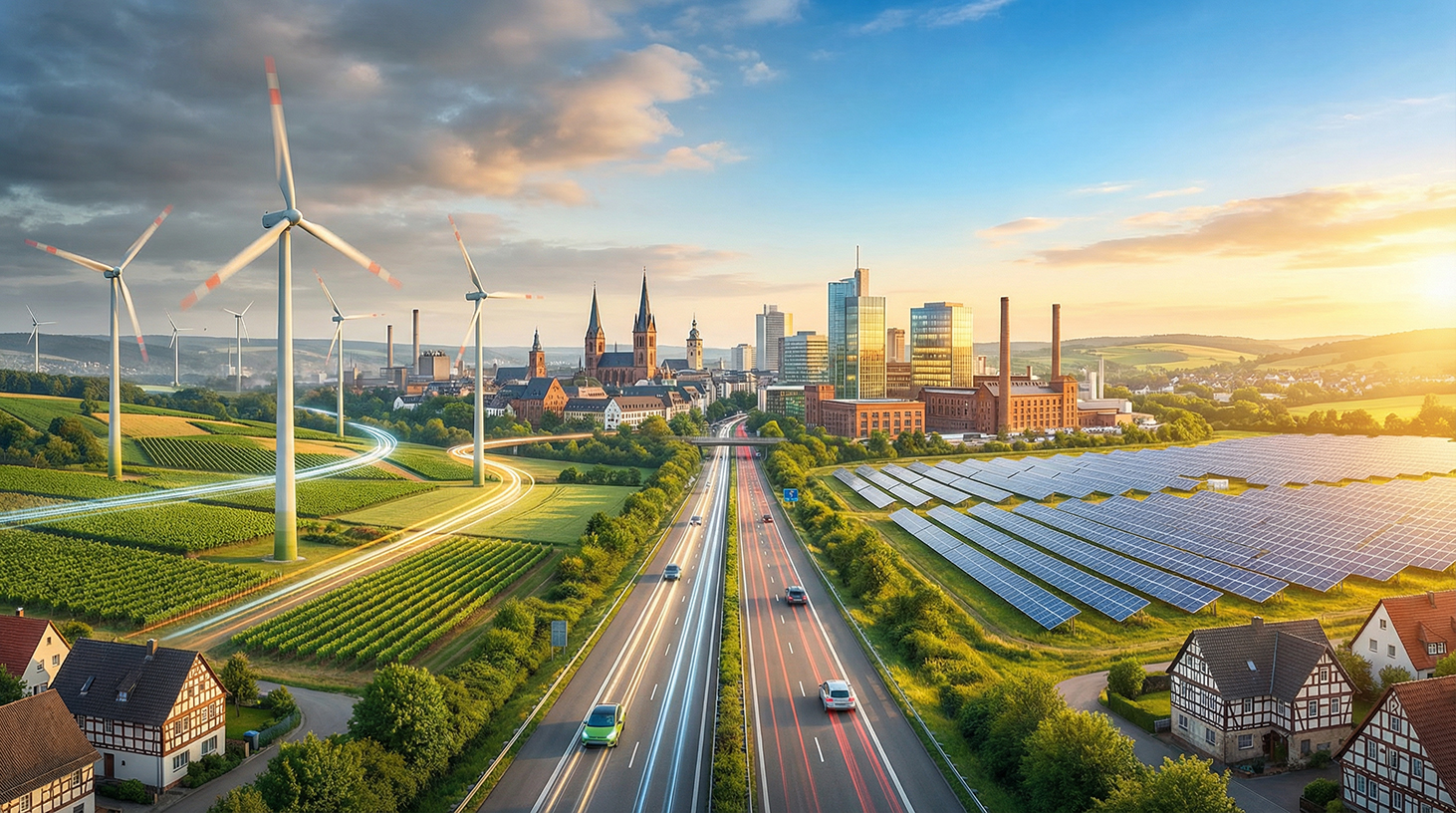
A remarkable memory: How the fossil lobby's historical subsidy hammock suddenly becomes invisible – Image: Xpert.Digital
A remarkable memory: How the fossil lobby's historical subsidy hammock suddenly becomes invisible
How Roland Koch trades political responsibility for elegant party calculation: Why his criticism of the eco-hammock is cleverly formulated, but analytically incomplete
The invisible billions: What is discreetly concealed in the debate about wind power, free markets and subsidies
Roland Koch, former leading CDU politician, Hessian Minister-President, and current head of the Ludwig Erhard Foundation, is lashing out: Renewable energies are resting in a "subsidy hammock" and must finally face genuine market competition. This forceful rhetoric is flanked by Federal Economics Minister Katherina Reiche, who is ushering in a radical shift in energy policy – away from the accelerated expansion of green electricity and towards state-subsidized gas-fired power plants. However, the accusation of market distortion reveals a blatant double standard upon closer examination. While the end of subsidies for wind and solar power is being hailed as a salutary return to a market economy, Koch and Reiche consistently ignore the massive, decades-long, and ongoing state aid for coal, gas, and nuclear power. This selective regulatory policy not only distorts historical truth but also seriously jeopardizes Germany's economic competitiveness. An in-depth analysis of partisan framing, failed market economy, and the question of why Germany risks falling behind in the global technology race – for example, in new storage systems against China – if ideological blinders dictate energy policy.
Roland Koch commented on Federal Minister of Economics Katherina Reiche's article in the Frankfurter Allgemeine Zeitung (FAZ) on LinkedIn. His central thesis: State subsidies for renewable energies are outdated. Solar and wind farm operators must now focus their creativity on developing alternative uses for electricity when it is not needed. If the convenient subsidies were to end, Koch argues, battery storage, CO₂ conversion, and hydrogen production would explode as quickly as they always do when creative minds have to jump out of the "subsidy hammock" and start earning money. There is a kernel of truth in this statement. However, it suffers from a serious omission that suggests either ignorance or calculated partisan framing: Koch consistently ignores the fact that the entire fossil fuel and nuclear energy sectors have been in the same state-funded hammock for decades – and far more comfortably than renewable energies ever have.
Rich Course: An Energy Policy Turning Point Narrative
In September 2025, Katherina Reiche presented her energy policy concept with a ten-point plan, describing it as a "turning point" in Germany's energy transition. Her argument: After years of focusing on climate protection and the rapid expansion of renewable energies, security of supply and the affordability of electricity must now take center stage. The expansion of renewables is to be scaled back, and new gas-fired power plants are to be built – a change of course welcomed by energy-intensive industries, while environmental groups are sounding the alarm.
A few months later, in April 2026, Reiche published an article in the Frankfurter Allgemeine Zeitung (FAZ) entitled "Enough with the self-deception in energy policy," in which she stated that the share of renewable energies in total energy consumption in 2025 was barely one-fifth. The renewable energy sector had matured and now had to assume responsibility – both systemically and financially. At the same time, she supported the energy transition, Reiche emphasized, but climate protection without affordability was politically unsustainable, and climate protection without security of supply was strategically unwise. This sounds balanced, and indeed, this statement contains a logic that is hard to dispute.
The problem, however, lies not in Reiche's core message, but in the context in which it is communicated. Simultaneously with the debate about cutting subsidies for private solar installations, the German government is planning billions in subsidies for new gas-fired power plants. As early as this year, 2026, tenders are to be issued for 12 gigawatts of new dispatchable capacity, 10 gigawatts of which are specifically for gas-fired power plants. These are to be financed through a state-funded capacity mechanism – precisely the type of state aid that Reiche and Koch describe as detrimental to renewable energies. According to internal government documents, the total volume of gas-fired power plant capacity tendered could even rise to 41 gigawatts.
Related to this:

Koch's rhetorical trap: The selective application of the market economy principle
Roland Koch presents his demand for an end to subsidies for renewable energies as a return to a market economy in the spirit of Ludwig Erhard. It sounds reasonable – but it's only half right. The central contradiction of his entire commentary lies in this: he calls for a market economy for wind turbines and solar panels, while fossil fuels in Germany continue to be subsidized with tens of billions of euros. The German Federal Environment Agency recently identified over 40 climate-damaging subsidies worth around 65 billion euros per year. A more recent calculation even arrives at a figure of 85.3 billion euros for 2023, with 32.6 billion alone attributable to crisis-related energy protection measures since the war in Ukraine.
In 2009, Germany, along with other G7 countries, committed to ending the subsidization of fossil fuels by 2025. Instead, the corresponding subsidies were increased by 49 percent during this period – the second-highest increase within the entire G7 group. Not a single word about any of this appears in Koch's commentary, which refers to the Ludwig Erhard Platform. This isn't a omission – it's a deliberate distortion of the narrative. If free-market principles are only to apply to that part of the energy sector that is politically undesirable, then this is not a matter of sound economic policy, but rather a policy of special interests.
The metaphor of the "subsidy hammock" is rhetorically effective, but analytically half-baked. It strikes a nerve because it points to a real problem: that permanent government support preserves structures that are alien to the market. But logically, the same metaphor should also apply to those corporations that have benefited for decades from government purchase guarantees, tax exemptions, liability privileges, and politically secured demand—and on a scale that far surpasses the historical level of EEG subsidies. Those who only label one side of the scale are not engaging in analysis; they are engaging in framing.
The subsidy paradox of the fossil fuel industry: What Koch is concealing
The history of German energy subsidies is a history of double standards – and it doesn't begin with the Renewable Energy Sources Act (EEG), but many decades earlier. Hard coal mining is the clearest example. Between 1958 and the closure of the last mine in 2018 alone, the federal government and the state of North Rhine-Westphalia together spent around €128 billion subsidizing domestic hard coal mining. If one includes all financial aid, tax breaks, and budget-independent government regulations, this sum rises to around €330 billion for the period from 1950 to 2008. Economic historian Franz-Josef Brüggemeier estimated the total amount by the end of German hard coal mining at €200 to €300 billion. The primary beneficiaries were not the miners, but corporations like E.on, RWE, Thyssen-Krupp, and Hoesch, which, as shareholders of Ruhrkohle AG, transferred billions through complex accounting mechanisms.
Looking at nuclear power, the picture becomes even clearer. A study commissioned by Greenpeace and conducted by the Forum for Ecological and Social Market Economy puts the state subsidies for German nuclear energy between 1950 and 2010 at at least €204 billion – plus further costs incurred until the final phase-out without extending operating licenses. The true costs were systematically omitted and obscured: direct federal subsidies, research funding amounting to €22.8 billion, costs for the failed nuclear waste repositories Asse II and Morsleben, and tax breaks from disposal provisions totaling at least €54.8 billion by 2008. Taxpayers subsidized every kilowatt-hour of nuclear power by 4.3 cents – more than double the then-applicable EEG surcharge of two cents. This did not include subsidies for the actual safety costs and long-term liabilities of nuclear waste disposal, which continue to burden public budgets today.
The gas lobby is the third major chapter in the history of fossil fuel subsidies, a chapter that continues to be written today. A 2024 study by LobbyControl reveals how companies and associations in the gas industry have shaped German energy policy for decades. Former Chancellor Gerhard Schröder, whose influence as chairman of the supervisory boards of Russian oil and gas companies was merely the tip of the iceberg, deliberately opened doors for the gas industry into German politics. Successive federal governments maintained one-sided contacts with the gas industry, while the German Energy Agency (dena), as a federally owned company, effectively acted as a lobbying channel to the Ministry of Economic Affairs. The result: Germany became energy-dependent on Russian gas and missed the timely transition to renewable energies – with devastating economic consequences that manifested themselves in dramatic energy price increases starting in 2022.
The new fossil fuel lock-in: Gas-fired power plants as a subsidy project of the present day
The subsidy logic of the fossil fuel industry is not a historical phenomenon. It continues unabated in the present. The power plant strategy currently being pushed by Economics Minister Reiche plans billions in state subsidies for the construction of new gas-fired power plants, to be financed through a new levy on the electricity price. Up to 12 gigawatts of new dispatchable capacity are to be put out to tender this year, 2026, with 10 gigawatts specifically tailored to gas-fired power plants using a so-called long-term criterion, effectively excluding battery storage. According to internal documents, the total volume could grow to 41 gigawatts by 2029. Since gas-fired power plants used solely to cover periods of low wind and solar output are hardly economically viable, the federal government is planning a capacity mechanism in which operators are paid simply for maintaining electricity supply – essentially a state subsidy for the power plant's existence, regardless of whether it generates electricity or not.
Structurally, this is nothing more than the feed-in tariff under the Renewable Energy Sources Act (EEG), only without the climate protection effect. Anyone who demands the end of state guarantees for renewable energies while simultaneously establishing a state-funded capacity market for gas-fired power plants is not practicing a market economy. They are pursuing industrial policy favoring the fossil fuel industry, disguised in the language of market economics. The fact that the industrial electricity price that Reiche is also planning – a state-subsidized electricity price of five cents per kilowatt-hour for energy-intensive companies with a total volume of around ten billion euros until 2035 – is encountering considerable resistance in Brussels due to concerns about state aid rules underscores the inconsistency of this policy.
The Federal Ministry for Economic Affairs and Energy, headed by Reiche, has itself warned that this project could fail due to EU state aid rules. In March 2026, the SPD sharply criticized Reiche because no formal application had yet been submitted to Brussels. At the same time, billions are flowing into the expansion of gas infrastructure: The German government approved an agreement with the Netherlands for joint natural gas production off the North Sea island of Borkum. The overall logic appears contradictory: Subsidies for a mature renewable energy sector are being called into question, while new, extensive state support structures are being established for fossil fuel capacities.
Our EU and German expertise in business development, sales and marketing

Our EU and German expertise in business development, sales and marketing - Image: Xpert.Digital
Industry focus areas: B2B, digitalization (from AI to XR), mechanical engineering, logistics, renewable energies and industry
More information here:
A thematic hub offering insights and expertise:
- Knowledge platform covering global and regional economies, innovation and industry-specific trends
- A collection of analyses, insights, and background information from our key areas of focus
- A place for expertise and information on current developments in business and technology
- A hub for companies seeking information on markets, digitalization, and industry innovations
Fossil fuel protection vs. storage promotion: Why a coherent energy policy is needed
What's really holding innovators back: The problem of misdiagnosis
Koch's central thesis contains a kernel of truth that should be taken seriously. It is true that long-term subsidies can distort the dynamics of innovation. It is also true that renewable energies have now matured to the point where solar and wind power are largely competitive. The declining system costs and increasing market maturity justify a gradual redesign of the support system. The so-called Solar Peak Act, which came into force in February 2025 and eliminates feed-in tariffs during periods of negative electricity prices on the exchange, is a step in this direction. It creates a direct market-based incentive not to feed electricity into the grid when it is not needed, but rather to store it or use it for other purposes.
What Koch overlooks, however, is that innovators in the fields of storage technologies, power-to-X solutions, and hydrogen production have been active for years, not just since the potential elimination of subsidies. The expansion of battery storage in Germany reached a new record in 2025: More than two million storage systems are now installed. Between January and July 2025 alone, over 318,000 new systems with a total capacity of over 2,000 megawatts were added. The International Economic Forum for Renewable Energies projected 2.3 million battery storage systems would be in operation by the end of 2025. The number of hours with negative electricity prices has almost doubled since 2024 – a clear indication of increasing periods of overproduction, which, without storage and flexibility options, will lead to billions in wasted energy.
A study by Leibniz University Hannover and the Institute for Solar Energy Research Hameln shows that by 2050, around 35 percent of the renewable electricity produced will need to be stored or converted into hydrogen to be used efficiently. If this doesn't happen, the total costs of the transformation will increase by up to 60 billion euros – primarily due to the fossil fuel backup capacity that will then be necessary. The research group calculated that this would require electrolyzers with an installed capacity of 70 gigawatts and around 600 gigawatt-hours of battery storage – thirty times the current total capacity. The pressure to innovate is there. What's missing are fair framework conditions that allow storage to compete with fossil fuel flexibility resources.
Related to this:

The Chinese challenge: Salt batteries and sodium-ion technology
Koch's statement that creative minds would break free from the subsidy-fueled hammock and force innovation fundamentally misjudges the global competitive landscape. The innovation he seems to be waiting for—affordable, scalable battery storage solutions—is not coming from Germany, not from Europe, but from China. CATL, the world's largest battery manufacturer, already brought its first products to market in 2025 with its so-called Naxtra platform for sodium-ion batteries. According to the company, sodium-ion batteries are expected to be widely deployed in four key areas from 2026 onward: battery swapping systems, passenger cars, commercial vehicles, and stationary energy storage.
The strategic importance of this technology is enormous. Sodium, as a component of table salt, is as abundant as sand on the beach and makes expensive, geopolitically sensitive raw materials like lithium or cobalt superfluous. CATL's sodium-ion cells achieve energy densities of up to 175 Wh/kg, putting them on par with many lithium iron phosphate cells, while simultaneously offering significant advantages in cold-weather performance – three times better than lithium batteries at minus 30 degrees Celsius. The combination of low price, broad raw material availability, high safety, and sufficient energy density makes sodium-ion batteries the ideal technology for large-scale stationary energy storage systems.
The crucial question is: Why is China achieving this breakthrough while Germany and Europe lag behind? The answer isn't that China forgoes subsidies. On the contrary, the Chinese battery industry has been and continues to be massively supported by the state. CATL benefited from government research funding, market development assistance, and strategic import protection measures. The difference lies in the fact that the Chinese government consistently focused its support on strategic future technologies, rather than using the same resources to prop up existing fossil fuel infrastructure. At the same time, the Fraunhofer Energy Technologies Alliance issued a stark warning as early as 2024 about a 30 percent decline in research funding for key technologies of the energy transition in Germany—a decline that doesn't promote innovation, but rather stifles it.
Related to this:

Power-to-X and CO₂ utilization: The technologies are there – the framework is lacking
Koch is right in his statement about alternative uses for surplus electricity: battery storage, CO₂ conversion, and hydrogen production are the logical answers to the structural challenge of volatile renewable energy feed-in. And indeed, researchers, companies, and engineers are already working intensively on this. The number of power-to-X projects in Germany has risen sharply in recent years. In 2021, 36 power-to-X plants were already in operation, primarily power-to-gas plants with hydrogen as the end product. The demand for electrolysis capacity by 2050 is estimated at 70 gigawatts – a market that is still largely untapped and holds enormous industrial potential.
In the area of carbon capture and utilization (CCU), global production capacity for CO₂-based products is now rising to more than 1.5 million tons annually. German companies are quite active in this field. CMBlu Energy, based in Alzenau, Bavaria, is developing large-format organic solid-state batteries made from lignin – a plant-based waste product from the paper industry – without critical raw materials such as lithium, cobalt, or nickel. The company has successfully tested this technology in pilot projects and is working with major industrial partners on its implementation. This is not evidence of failure, but rather of the success of German innovation – even under the existing funding system.
The problem is not a lack of creativity, but a lack of fair market conditions. Battery storage systems are systematically disadvantaged compared to conventional power plants in the current system: through de-rating factors in tenders, in grid fees, and through the power plant strategy, which limits 10 of the 12 tendered gigawatts to gas-fired power plants, effectively leaving only 2 gigawatts for storage. Subsidizing investment in gas-fired power plants, which are not economically viable, distorts the market to the detriment of storage solutions that could be more profitable from a market perspective. Those who want to create pressure for innovation by reducing subsidies must not simultaneously provide state support to the competitors of that innovation.
Party-political calculation or energy policy diagnosis?
Koch's statement, "The rich must stand firm," reveals more than it conceals. It is not a contribution to the energy policy debate. It is a signal to the CDU party leadership: stick to the course, no compromises, no consideration for the nuances of the issue. This is partisan thinking, not a national struggle for the best possible solution. Koch knows very well that the question of energy subsidies is not one that can be resolved by standing firm against one industry. It is a systemic issue that requires a coherent regulatory policy for all energy sources – including gas, nuclear power, and coal.
That Koch's statements can nevertheless be strategically successful lies in their rhetorical impact within the CDU/CSU's political sphere. The talk of a "subsidy hammock" reinforces the image of an inefficient, state-dependent wind and solar power industry and strengthens those political forces that are fundamentally opposed to the development of renewable energies. At the same time, Koch's statement harms precisely those people he instrumentalizes for his argument: the inventors, researchers, and entrepreneurs who have been working for years on storage solutions, hydrogen applications, and CO₂ utilization concepts. Anyone who lumps them together with a subsidy-dependent pension avalanche discredits genuine innovation in favor of political rhetoric.
Furthermore, the framing misses its mark when examined for coherence. The economically liberal imperative of the Ludwig Erhard Foundation – market economy, no state intervention, competition instead of protectionism – should logically lead to the demand to eliminate all energy subsidies: those for wind power and photovoltaics as well as those for the perpetual burdens of hard coal, the capacity mechanism for gas-fired power plants, the industrial electricity price, and the historical liability privileges for nuclear power. Anyone who selectively criticizes one sector while silently waving the others through is not practicing a sound economic policy. They are engaging in special interest representation disguised as adherence to principles.
The division within the energy policy camp that Koch is creating with his statement is the truly dangerous consequence of this rhetoric. The renewable energy sector and the storage and hydrogen industries are not adversaries. They are two sides of the same technological necessity. Anyone who attacks the promotion of renewable energy producers without simultaneously demanding fair market conditions for storage and flexibility providers weakens the entire system – and ultimately strengthens the fossil fuel incumbents that have benefited from government protection for seven decades.
From camp-based thinking to state-political responsibility
The real question that arises from Koch's analysis is one of national policy, not party politics: How do we manage the transition from a subsidy-supported energy system to a robust market economy? This question has no easy answer, but it does have clear conditions. First, subsidies for all energy sources—coal, gas, nuclear, and renewables—must be evaluated according to the same criteria. Second, the reduction of subsidy mechanisms must occur in parallel with the creation of fair market conditions, not as an isolated intervention favoring individual sectors. Third, the power plant strategy must not create a fossil fuel lock-in that undermines incentives for storage and hydrogen investments for the next two decades.
The fact that the number of hours with negative electricity prices has been almost twice as high since 2024 as in previous years demonstrates that the market problem for renewable energies is not one of insufficient competitiveness, but rather one of inadequate system integration. Electricity is produced in large quantities, but not used effectively because storage capacity is lacking and grid expansion is lagging behind. According to an analysis commissioned by the Federal Network Agency, around €300 million was lost in 2025 alone due to unusable surplus electricity. These are not theoretical losses; this is real capital that could have been invested in storage systems.
The solution lies in technology-neutral frameworks that integrate storage, electrolyzers, and flexibility providers into market mechanisms on an equal footing with gas-fired power plants. The power plant strategy, which effectively reserves 10 of the 12 tendered gigawatts for gas-fired power plants, does precisely the opposite. It cements fossil fuel structures at the expense of decentralized, innovation-driven alternatives. This is not the spirit of Ludwig Erhard – it is the spirit of the energy lobby, which for decades has understood how to disguise its interests as a systemic necessity.
Related to this:

- Comparison of electricity grid expansion: USA, China, EU, Japan, South Korea and Germany at a glance


Consequences for the energy policy debate
Koch's intervention is problematic because it poisons the actual reform debate. There are good reasons to further develop the EEG system and adapt support mechanisms. The Solar Peak Act, which eliminates compensation during periods of negative electricity prices, is one such sensible step. A more market-oriented direct marketing system with incentives for flexible operating modes and the combination of generation plants with storage would also increase the pressure to innovate without discrediting creative entrepreneurs. However, such reforms require broad consensus – and this becomes impossible when one of the country's most prominent economically liberal voices stigmatizes renewable energy providers across the board as subsidy recipients, while remaining silent about the structurally far more expensive fossil fuel industry.
The innovators that Koch supposedly hopes to unleash with his criticism of subsidies are not motivated by his statements. They are harmed. Investors, banks, and partners read Koch's pronouncements and derive political risk assessments from them. When the chairman of the Ludwig Erhard Foundation and former Minister-President of a major German state suggests that the entire renewable energy industry is resting on its laurels, he sends a signal that hinders capital inflows into storage technologies, hydrogen projects, and CO₂ recovery plants—precisely the technologies whose promotion he simultaneously demands. The rhetoric and the intention are fundamentally contradictory.
Germany is at a crossroads in energy policy, that's true. But the direction in which Koch and Reiche want to steer the country deserves more critical scrutiny than the statement: "Reiche must stand firm."










