
Germany is currently not competitive, said Federal Minister for Economic Affairs Katherina Reiche at the Foreign Trade Day in Berlin
Xpert pre-release

Available in 27 languages 📢
Prefer Xpert.Digital on GoogleⓘPublished on: October 28, 2025 / Updated on: October 28, 2025 – Author: Konrad Wolfenstein

Germany is currently not competitive, said Federal Minister for Economic Affairs Katherina Reiche at the Foreign Trade Day in Berlin – Image: Xpert.Digital
Global dynamics, national paralysis? Why Germany as a business location is under scrutiny
Economy in Transition: Germany's Global Challenges and the Search for Competitiveness
At the Foreign Trade Day, Federal Minister for Economic Affairs and Energy Katherina Reiche emphasized that Germany is currently uncompetitive and struggling with structural problems. She pointed out that excessive regulation, high energy prices, and the burden of the welfare state, in particular, are increasing labor costs and weakening companies.
The Foreign Trade Day 2025 took place on October 28, 2025, at the House of German Business in Berlin.
Reiche noted that Germany is caught in the global tension between open markets and geopolitical power interests, especially in comparison to the US and China. In her view, Germany's ability to actively navigate this tension will determine whether the country remains a true economic power. She called on companies to diversify their supply chains and expressed incomprehension as to why many firms have not yet done so.
Suitable for:

The starting position of a traditional location in international competition
At the beginning of the 2020s, Germany's economic situation is characterized by profound upheavals, systemic risks, and a growing awareness of its own vulnerability in international comparison. What for decades was considered a model of stability, technological leadership, and securing prosperity is now more strongly than ever under fire from fundamental criticism and external challenges. The statements made by Federal Minister for Economic Affairs and Energy Katherina Reiche at the Foreign Trade Day not only reflect the situational assessment of a political actor, but also summarize the key structural deficits and geopolitical constraints facing Europe's largest economy.
In addition to reflecting on its own status, statistics and international benchmarks make it clear that Germany as a business location is at risk of falling behind in several key indicators compared internationally. In particular, the high regulatory density, above-average energy prices, and an extensive welfare state have created a situation in which competitiveness is not just a theoretical economic narrative, but is increasingly becoming a question of survival for large parts of industry and small and medium-sized businesses.
Traditional certainties—such as consistently stable export figures, innovation leadership in mechanical engineering, or Europe's role as a job engine—are increasingly being shaken by disruptive technologies, the rise of new rivals, and a global economy characterized by multiple crises. In this new environment, it is not only economic skill but also the adaptability of political and social institutions that will determine whether Germany remains a leading economic power or risks being marginalized in the international division of labor.
From export nation to innovation dead end? A closer look at the weaknesses of the German model
Historically, Germany's economic success has been based on the triad of innovative capacity, technological leadership, and international integration. For decades, German companies were considered world export champions, whose products such as cars, machinery, and chemicals were in demand on all continents. This achievement is closely linked to specific location factors such as an efficient infrastructure, close integration of science and industry, and a highly qualified workforce.
But this formula for success is increasingly coming under pressure. Germany is losing ground in key technology sectors: US and, increasingly, Chinese providers dominate in the areas of digitalization, artificial intelligence, and cloud solutions. The former technological superiority of German machinery and vehicles is being eroded as competitors from Asia—especially China and South Korea—are catching up or even overtaking with massive investments and economies of scale.
Innovation indicators paint a mixed picture: While German companies continue to invest large sums in research and development, the speed of implementation is suffering, especially in the context of digitalization. Many startups are moving abroad after a short period of time, and large companies are complaining about an increasingly anti-innovation regulatory framework that hinders rapid market entry and increases bureaucratic burdens.
This is putting Germany into an innovation dead end: On the one hand, enormous resources are being invested in traditional research, while on the other, there is a lack of risk-taking, venture capital, and flexible regulatory frameworks to roll out new business models on a large scale. This dynamic threatens to increasingly undermine the model of technology leadership that has been cultivated for decades.
The labor market cost trap: How the welfare state and regulation dampen competitiveness
A key challenge for German companies is the high cost of labor. While the welfare state, which has been expanding for years, provides a high level of social security, it is accompanied by rising non-wage labor costs, a complex contribution system, and a multitude of administrative tasks. The burden on companies results not only from labor costs, but also from the aggregate effects of additional contributions to pension, health, unemployment, and long-term care insurance.
Added to this are collective bargaining agreements, strong co-determination rights for employees, and – by international standards – comprehensive protection against dismissal. While these factors were historically celebrated as the foundation of a social market economy model, in a globalized context they are increasingly becoming a competitive disadvantage.
International analyses show that, for example, targeted location decisions are being made in favor of neighboring Central and Eastern European countries or the southern United States because labor costs are lower there, labor markets are more flexible, and regulations are more manageable. Especially when investing in future-oriented industries—such as semiconductor technology, electromobility, or battery technology—German companies now have to compete with massive subsidies and more favorable conditions elsewhere.
Demographic changes are further exacerbating the problem: An aging population is leading to a shrinking workforce. Labor market bottlenecks—particularly in the technical, skilled, and service sectors—are driving up wages and further reducing companies' flexibility. The shortage of skilled workers is thus not only becoming an economic drag, but is increasingly calling into question the region's long-term ability to innovate and compete.
Energy price shock and locational disadvantages: Germany caught up in the deindustrialization debate
A central theme in the current debate about the location of Germany concerns energy prices. Compared to other industrialized nations, Germany has particularly high electricity and gas costs. This trend has become entrenched as a structural problem following the discontinuation of Russian gas supplies and the phase-out of nuclear power. While industries in the USA have access to inexpensive energy sources obtained through fracking and China is investing heavily in its own energy production, German companies are dependent on an increasingly volatile and cost-intensive market.
High energy prices are having a direct impact on the competitiveness of energy-intensive industries. Basic materials industries—chemicals, steel, aluminum, and numerous processors—are coming under massive cost pressure. The consequences range from lost investment and relocation of production to plant closures and job losses. The intense debate about whether Germany is facing "deindustrialization" is not purely rhetorical, but is based on concrete corporate decisions to permanently relocate plants abroad.
Furthermore, the complexity of the energy transition, combined with a multitude of new regulations for integrating renewable energy sources and carbon pricing, limits the economy's planning and investment security. Companies complain about a lack of future funding opportunities, lengthy approval processes, and a patchwork of differing responsibilities at the federal, state, and local levels. Uncertainty about future energy prices and taxes is a key risk that significantly influences investment decisions.
Regulatory density and bureaucracy: obstacles to innovation and growth
A recurring theme in all company surveys and location analyses is the burden of excessive regulation and bureaucracy. According to international rankings, Germany is considered a highly regulated location. Whether starting a business, obtaining a building permit, applying for energy supplies, or applying for government funding – all processes are subject to documentation requirements, approval requirements, and frequent changes to the law.
The average time it takes to start a business, the sheer volume of forms, and the complexity of tax and social security regulations are a deterrent for investors and those willing to innovate. Digital government processes are often stuck in the planning stage or, where they exist, are user-friendly and inefficient.
This regulatory density has substantial effects: Companies invest significantly more resources in administration than the international average. The consequences are often innovation bottlenecks, extended time to market, and declining location attractiveness – especially for internationally mobile investors and start-ups.
The much-cited transformation to "digital government" is progressing slowly and threatens to become a competitive disadvantage in international comparison. The reliability, predictability, and efficiency of government frameworks are essential for a globalized economy; however, Germany is currently failing to adequately meet these requirements.
Our EU and Germany expertise in business development, sales and marketing

Our EU and Germany expertise in business development, sales and marketing - Image: Xpert.Digital
Industry focus: B2B, digitalization (from AI to XR), mechanical engineering, logistics, renewable energies and industry
More about it here:
A topic hub with insights and expertise:
- Knowledge platform on the global and regional economy, innovation and industry-specific trends
- Collection of analyses, impulses and background information from our focus areas
- A place for expertise and information on current developments in business and technology
- Topic hub for companies that want to learn about markets, digitalization and industry innovations
Rethinking supply chains – From just-in-time to resilience: How companies secure their future
Globalization in Transition: Between New Markets and Geopolitical Risks
Germany's economic model has always relied on open markets, global supply chains, and the division of labor. The country's historical prosperity is inextricably linked to the success of its export industry: around 50 percent of value added is generated through foreign trade or through upstream and downstream services provided by the export sectors.
But this openness is increasingly reaching its limits. The geopolitical climate—particularly the tensions between China, the US, and Europe—growing efforts toward self-sufficiency, strategic industrial policy, and rising protectionism are leading to a reorganization of global value chains. Global transport costs, political uncertainties, and disruptions such as the COVID-19 pandemic and the war in Ukraine demonstrate the risks of long supply chains and the vulnerability of systems based on international division of labor.
The German government has recognized the need for supply chain diversification and resilience. Companies are being strongly encouraged to broaden their sources of supply and no longer concentrate critical raw materials and components on a single market. In practice, however, this process is lengthy and expensive. Many companies have systematically reduced their vertical integration in recent decades and relied on global just-in-time structures. Dismantling these systems and building redundant structures requires significant investment, new expertise, and a fundamental shift in corporate strategies.
At the same time, the restructuring of global economic relations also brings opportunities: New sales markets in Southeast Asia, Africa, and Latin America, growing infrastructure investments, and the search for alternative trading partners are opening up new prospects for German companies. However, access to these markets is characterized by tough competition, cultural differences, and often precarious political conditions.
Suitable for:
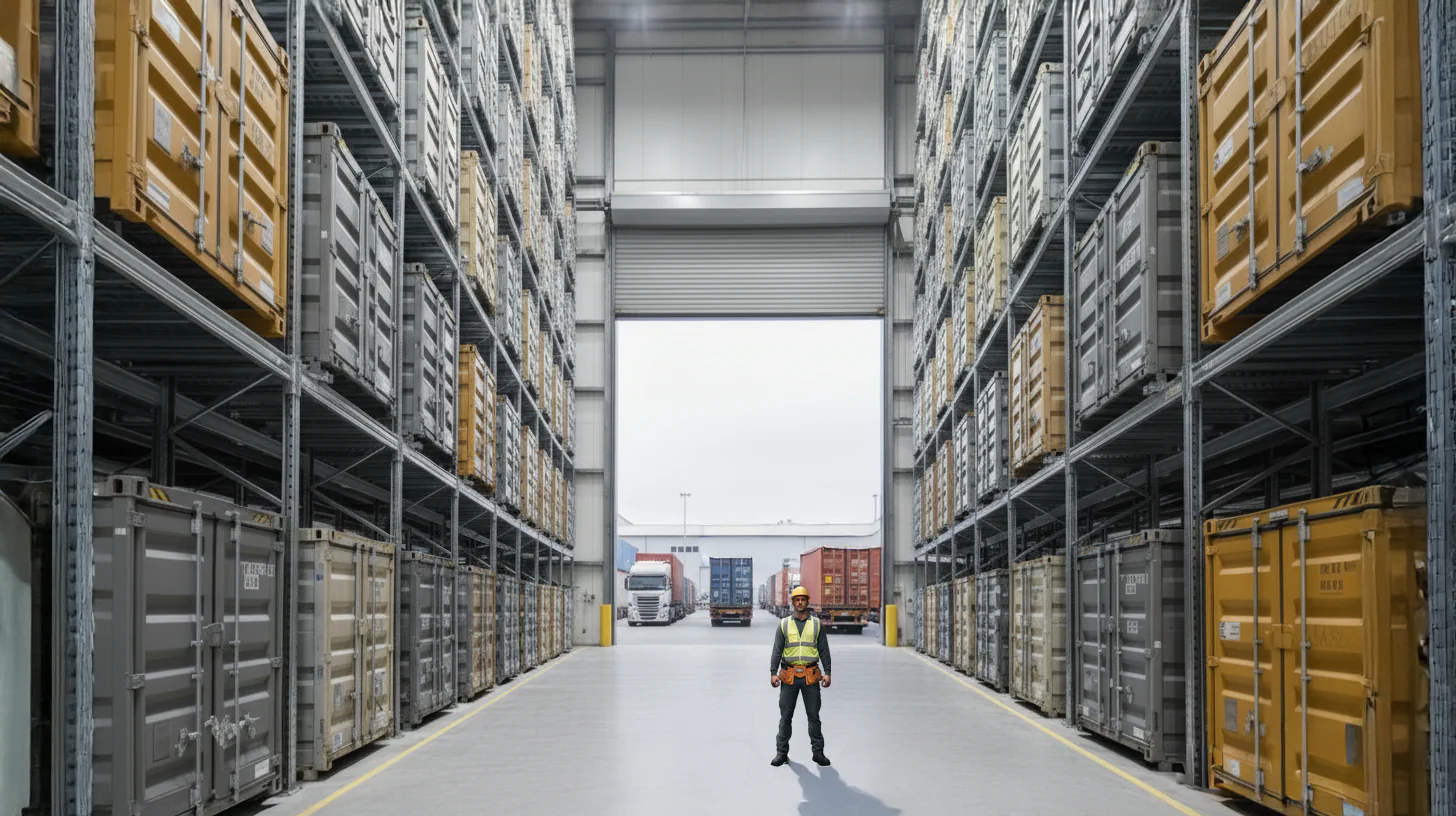
The role of geopolitical power interests: Economy in the tension field of the great powers
Today's global economy is significantly shaped by the competition between the United States, China, and the European Union. Germany—as Europe's economic powerhouse—is inevitably at the center of these global conflicts. Unlike the United States, Germany has neither a comparable military presence nor a global capital market. Unlike China, it lacks an independent and assertive raw materials and industrial policy.
American and Chinese companies receive massive government support, benefit from strategic innovation programs, and often have access to significantly larger domestic markets. Germany, on the other hand, must position itself in an increasingly tight web of EU regulations, international agreements, and geopolitical groups.
The foreign trade environment for German companies is deteriorating, especially in politically sensitive sectors. Technology transfer, export controls, and investment screening are being enforced with increasing stringency. At the same time, companies must respond to Russian sanctions, American extraterritoriality, and Chinese technological dominance.
This further narrows the scope for traditional export strategies. Companies are faced with the challenge of finding new ways to remain globally competitive in an era of political bloc formation, deglobalized supply chains, and techno-nationalist tendencies.
Challenges and opportunities of transformation: digitalization, decarbonization, demographics
At the core of the current economic transformation processes are three major issues: digitalization, decarbonization (climate neutrality), and demographics. Each of these challenges is transformative in its own right, but their simultaneous impact is potentially vital to the future viability of the region.
The slow pace of digitalization is an Achilles heel of German companies and public administration. Despite significant investments, digital processes, platforms, and products are often immature, fragmented, or hampered by innovation. The reasons range from investment hesitancy due to uncertain profit prospects to a lack of digital education across all social classes.
The imperative to transform towards climate neutrality is politically irreversible, but economically highly problematic: The restructuring of the energy sector, the electrification of transport, and the decarbonization of industry require massive investments, but initially lead to rising costs and changing business models. At the same time, the EU Green Deal and the development of climate-friendly technologies also offer opportunities to create leading international markets—provided they are not once again dominated by more agile competing countries.
Demographic trends—particularly the rapid aging and shrinking of the working population—limit the economy's growth potential. Productivity increases and targeted immigration of skilled workers are essential, but they face diverse social, political, and administrative barriers.
Corporate strategies in transition: From global players to champions of resilience
In response to the challenges mentioned above, the strategic orientation of many German companies is changing. "Resilience" will become the guiding principle for the coming years: securing locations, redundancy, and flexibility will be given greater priority than short-term profit maximization. Companies are investing specifically in diversifying their supply chains, building additional warehouses, or creating parallel structures in various sales and procurement markets.
Individual sectors are taking different paths: While automobile manufacturers are investing heavily in electromobility and battery technologies, chemical companies are seeking new raw material sources or developing alternative production processes. The mechanical engineering industry is placing greater emphasis on digital platforms and service models. However, medium-sized companies in particular are finding the transition more difficult, as they lack the resources, market power, and scalability of large corporations.
For many companies, political lobbying and helping to shape regulatory processes at home and abroad are also becoming more of a focus. At the same time, new cooperation models are emerging between companies, academia, and government to advance technology development and training.
Social acceptance and political courage: sustainability as a community task
Overcoming the challenges described above is hardly possible without social acceptance and political will to shape the future. The necessary transformation processes bring with them uncertainty, social hardship, and short-term losses in prosperity. At the same time, a large part of the population is skeptical of change – whether out of concern for jobs, fear of being overwhelmed, or a fundamental rejection of new technologies.
Politicians face the task of setting ambitious yet realistic guidelines, reducing bureaucracy, and declaring competitiveness a priority for society as a whole. At the same time, a balance must be struck between social security and economic flexibility. Education, research, migration, infrastructure, and energy policy are closely intertwined fields that require holistic management.
Only a combination of political courage, entrepreneurial innovation and social openness can save Germany from a fall into economic insignificance.
Sobriety, courage and pragmatism as the key to new competitiveness
An analysis of current location factors, global upheavals, and internal blockages leads to a sobering realization: Germany's decline into permanent mediocrity is not a law of nature, but neither is it an unrealistic scenario. International competition is a constant struggle for adaptation that knows no automatic mechanisms. Only those locations whose economic systems demonstrate sufficient adaptability, innovative spirit, and political will to shape the future will prevail.
Germany must be willing to question entrenched structures, speak uncomfortable truths, and abandon conventional certainties. It requires political and societal solidarity, a new understanding of competitiveness and economic resilience – beyond short-term clientelist politics and sectoral individual interests.
The future viability of a business location is not a given. It is earned or lost. Society, companies, and the state all have a responsibility to pursue bold reforms, actively shape technological trends, and make prosperity renewable.
This will show whether Germany can continue to act as a true economic power in the global competition, or whether the location is in danger of being overtaken by a new generation of agile, technology-driven economies.
Your global marketing and business development partner
☑️ Our business language is English or German
☑️ NEW: Correspondence in your national language!

Konrad Wolfenstein
I would be happy to serve you and my team as a personal advisor.
You can contact me by filling out the contact form or simply call me on +49 7348 4088 965 (Munich) . My email address is: wolfenstein ∂ xpert.digital
I'm looking forward to our joint project.
☑️ SME support in strategy, consulting, planning and implementation
☑️ Creation or realignment of the digital strategy and digitalization
☑️ Expansion and optimization of international sales processes
☑️ Global & Digital B2B trading platforms
☑️ Pioneer Business Development / Marketing / PR / Trade Fairs
🎯🎯🎯 Benefit from Xpert.Digital's extensive, five-fold expertise in a comprehensive service package | BD, R&D, XR, PR & Digital Visibility Optimization

Benefit from Xpert.Digital's extensive, fivefold expertise in a comprehensive service package | R&D, XR, PR & Digital Visibility Optimization - Image: Xpert.Digital
Xpert.Digital has in-depth knowledge of various industries. This allows us to develop tailor-made strategies that are tailored precisely to the requirements and challenges of your specific market segment. By continually analyzing market trends and following industry developments, we can act with foresight and offer innovative solutions. Through the combination of experience and knowledge, we generate added value and give our customers a decisive competitive advantage.
More about it here:










