
The salt battery on the way to the €20/kWh revolution – but Germany is once again getting in its own way
Xpert Pre-Release

Available in 27 languages 📢
Prefer Xpert.Digital on GoogleⓘPublished on: March 3, 2026 / Updated on: March 3, 2026 – Author: Konrad Wolfenstein
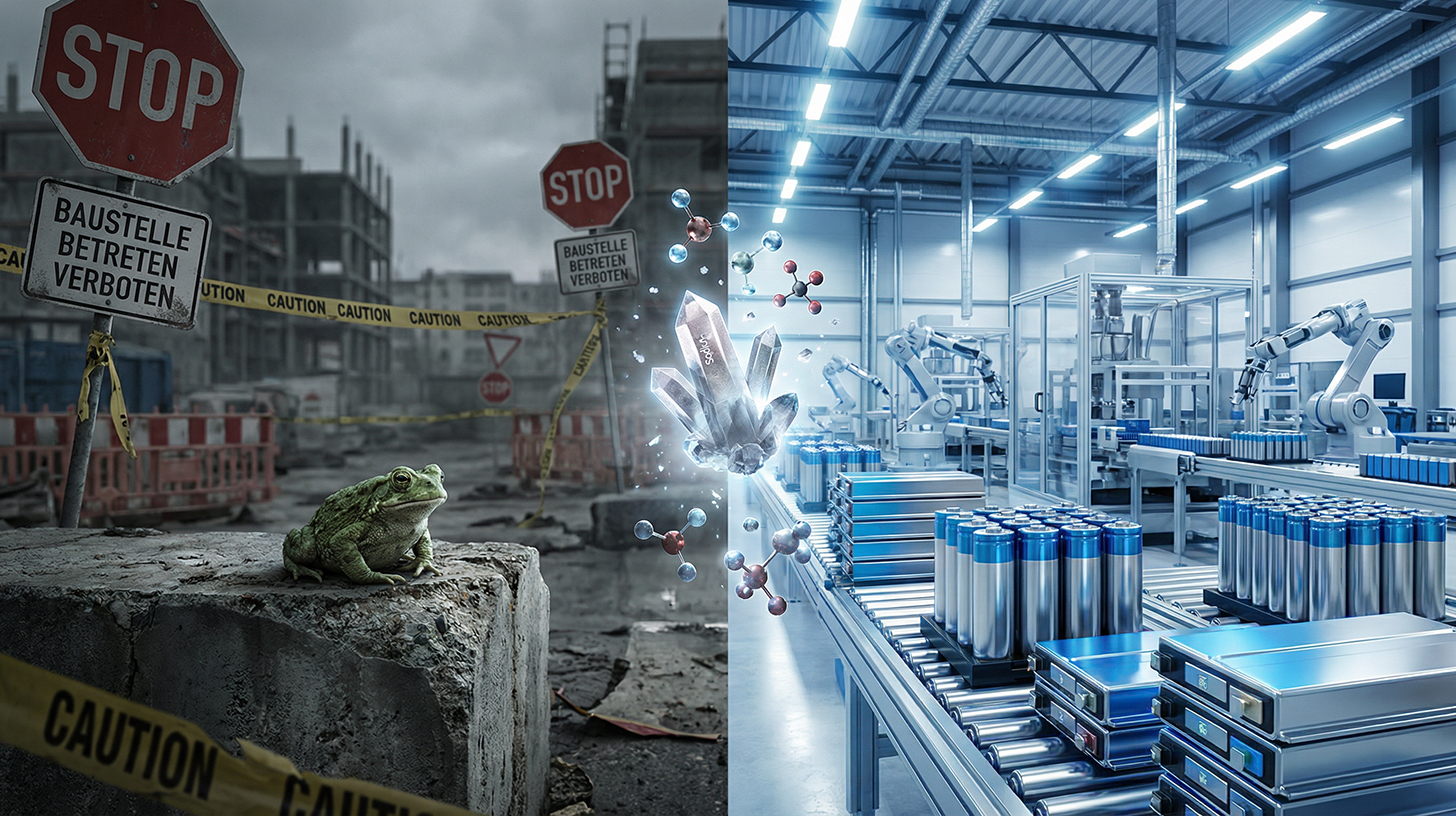
Forget lithium! 10,000 charging cycles, dirt cheap: The salt battery is here – but Germany is once again getting in its own way – Image: Xpert.Digital
Salt instead of lithium: This Bavarian mega-factory aims to break China's battery dominance
Of all places, Bavaria: Why Europe's most important battery factory had to flee Berlin because of a toad
It sounds like a classic example of modern industrial policy absurdity: Because a strictly protected – but never sighted – toad was suspected to inhabit a 300-hectare industrial site in Berlin, the capital lost the historic opportunity to build Europe's first sodium-ion battery factory. Instead, Bavaria is now celebrating a 93-million-euro project that is intended to herald nothing less than a global energy revolution. Sodium batteries don't require expensive lithium or cobalt, are based on simple salt, and are extremely durable. While China has long since ramped up mass production, Europe risks falling behind in this key technology. But Lichtenfels in Upper Franconia is now demonstrating how the continent can pragmatically resist Asian dominance – and why the global battery market is facing its biggest disruption since the 1990s.
Related to this:

How an invisible toad drove away Europe's first sodium battery factory and why this technology will change everything
There are stories so absurd they could be mistaken for satire, were they not bitter reality. One such story takes place in Berlin-Marzahn, on the grounds of the CleanTech Business Park, Berlin's largest contiguous industrial area, covering approximately 300 hectares. Europe's first factory for sodium-ion batteries was supposed to be built there, a future technology with the potential to revolutionize global energy storage. However, a strictly protected amphibian species, the European green toad (Bufotes viridis), blocked the project for years and ultimately drove it out of the capital. The intriguing part: no one ever actually saw this toad on the site.
Meanwhile, Bavaria is rubbing its hands with glee. In Lichtenfels, Upper Franconia, what Berlin could have become is now taking shape: a pioneering project in European battery technology, funded with over 22 million euros from Bavarian state funds and EU money, with an investment volume of over 93 million euros and the promise to start production as early as 2026.
The Berlin Grotesque in detail
The story begins in 2021, when Moll Batterien GmbH, under the leadership of project developer Peter Urban, announced plans to build a production facility for sodium-ion batteries on the grounds of the CleanTech Business Park in Marzahn. Initially, the investment volume was estimated at 39 million euros, but this later increased to 50 million euros. 380 jobs were expected to be created.
But species protection regulations thwarted these plans. The European green toad was classified as potentially present on the site. A toad protection fence was initially intended to prevent the animals from migrating onto the planned construction site of the company Aucoteam, which intended to build a battery testing center there. However, the Marzahn nature conservation authority demanded the removal of this fence.
WISTA, the state-owned operating company of the CleanTech Park, sued against the order and won in court. The district office then granted the building permit. The path seemed clear. But then the State Working Group for Nature Conservation, a service institution of Berlin's nature conservation associations funded by the state of Berlin, filed another lawsuit. The court found that a mapping of the area that met species protection standards was lacking. There was suspicion that natterjack toads were present throughout the park. The land purchase and the associated building plans were reversed.
Peter Urban wrote in an email to the Tagesspiegel what will probably go down in history as one of the most resigned statements in German industrial policy: He would have very much liked to realize the innovative battery project in Berlin, but they had no chance against the toad.
Particularly alarming: The roughly 300-hectare CleanTech Business Park still hasn't attracted a single tenant. Even its former flagship tenant, HH2E, a hydrogen startup, has since gone bankrupt. Berlin has thus lost not only a battery factory, but also a battery testing center and a planned green hydrogen production facility. Three projects, all thwarted by a single, seemingly insignificant obstacle.
Bavaria's access and Europe's opportunity
In Lichtenfels, Upper Franconia, the company Moll Batterien found a new, more pragmatic location. The company is utilizing existing infrastructure there. No protected species that could pose a threat to the project were sighted. Bavaria reacted quickly and decisively.
Bavaria's Minister of Economic Affairs, Hubert Aiwanger, called the project a true milestone for Bavaria and all of Europe when he presented the funding approval in December 2025. Of the total €22.17 million in funding, €19.65 million comes from Bavarian state funds and €2.52 million from the European Regional Development Fund. The total investment volume amounts to over €93 million.
The plant is expected to have an initial annual capacity of one gigawatt-hour and create 126 new jobs and apprenticeships. Commissioning is planned for the end of 2026. Capacity could increase to five gigawatt-hours as early as 2026 or 2027. The collaboration with Coburg University of Applied Sciences and the Bavarian Center for Battery Technology ensures scientific support for the project.
Why sodium will revolutionize the world of batteries
To understand the strategic importance of this project, one must examine the underlying technology. Sodium-ion batteries represent arguably the most significant disruption to the battery market since the commercialization of lithium-ion technology in the 1990s.
The basic operating principle is similar to that of lithium-ion batteries. Sodium ions migrate between the cathode and anode during charging and discharging. The crucial difference lies in the raw material used. Sodium is one of the most abundant elements on Earth. It is 400 times more common than lithium and almost 1,000 times more common than cobalt. It can be extracted from common table salt, i.e., sodium chloride. Every sea, every salt deposit is a potential source of this raw material.
Scientists at Princeton University have developed a new generation of batteries that achieve an energy density of over 600 watt-hours per kilogram – a value that surpasses most current lithium-ion batteries. The fast-charging capability of these new sodium batteries also exceeds that of previous lithium batteries, making them particularly attractive for electric vehicles.
CATL, the world's largest battery manufacturer, announced the official start of mass production of its Naxtra sodium-ion battery at the end of December 2025. The message was unequivocal: sodium-ion batteries are no longer a future technology; they are an industrial reality. Naxtra battery packs are expected to enable ranges of up to 500 kilometers and achieve more than 10,000 charge cycles. The cycle life of over 10,000 discharges and functionality at extreme temperatures down to minus 40 degrees Celsius mark the transition of sodium technology into global infrastructure.
Our EU and German expertise in business development, sales and marketing

Our EU and German expertise in business development, sales and marketing - Image: Xpert.Digital
Industry focus areas: B2B, digitalization (from AI to XR), mechanical engineering, logistics, renewable energies and industry
More information here:
A thematic hub offering insights and expertise:
- Knowledge platform covering global and regional economies, innovation and industry-specific trends
- A collection of analyses, insights, and background information from our key areas of focus
- A place for expertise and information on current developments in business and technology
- A hub for companies seeking information on markets, digitalization, and industry innovations
Europe's chance: Can a factory in Bavaria win the race for the future of batteries?
Cost advantage as a strategic weapon
The economic implications of sodium technology are enormous. Current estimates suggest that sodium-ion cells could fall below US$40 per kilowatt-hour in the short to medium term. Economies of scale and technological advancements make a price of less than €20 per kilowatt-hour foreseeable. By comparison, lithium-ion batteries currently cost between €80 and €150 per kilowatt-hour, depending on the chemistry.
This price advantage results from several factors. Sodium-ion batteries do not require critical raw materials such as lithium, cobalt, or nickel. The geopolitical dependence on a few producing countries that control the lithium market is eliminated. Since the production processes and equipment are largely identical to those for lithium iron phosphate (LFP) cells, a drop-in strategy can be pursued: sodium-ion cells can be manufactured on existing lithium-ion production lines in the long term.
The raw material sodium makes the crucial cost difference. While lithium prices are subject to strong fluctuations and market researchers are warning of renewed shortages, the supply of sodium is practically unlimited. Max Kory, CTO of the Swiss company Phenogy, put it unequivocally at the commissioning of Europe's largest sodium-ion battery in Bremen in September 2025: It would be a strategic mistake to invest in large-scale LFP production in Europe today and remain dependent on China for imported intermediate products. Lithium prices will rise again, and with rising prices, alternative chemicals will become more attractive. Sodium-ion technology is the best candidate for establishing local supply chains in Europe and North America.
Related to this:
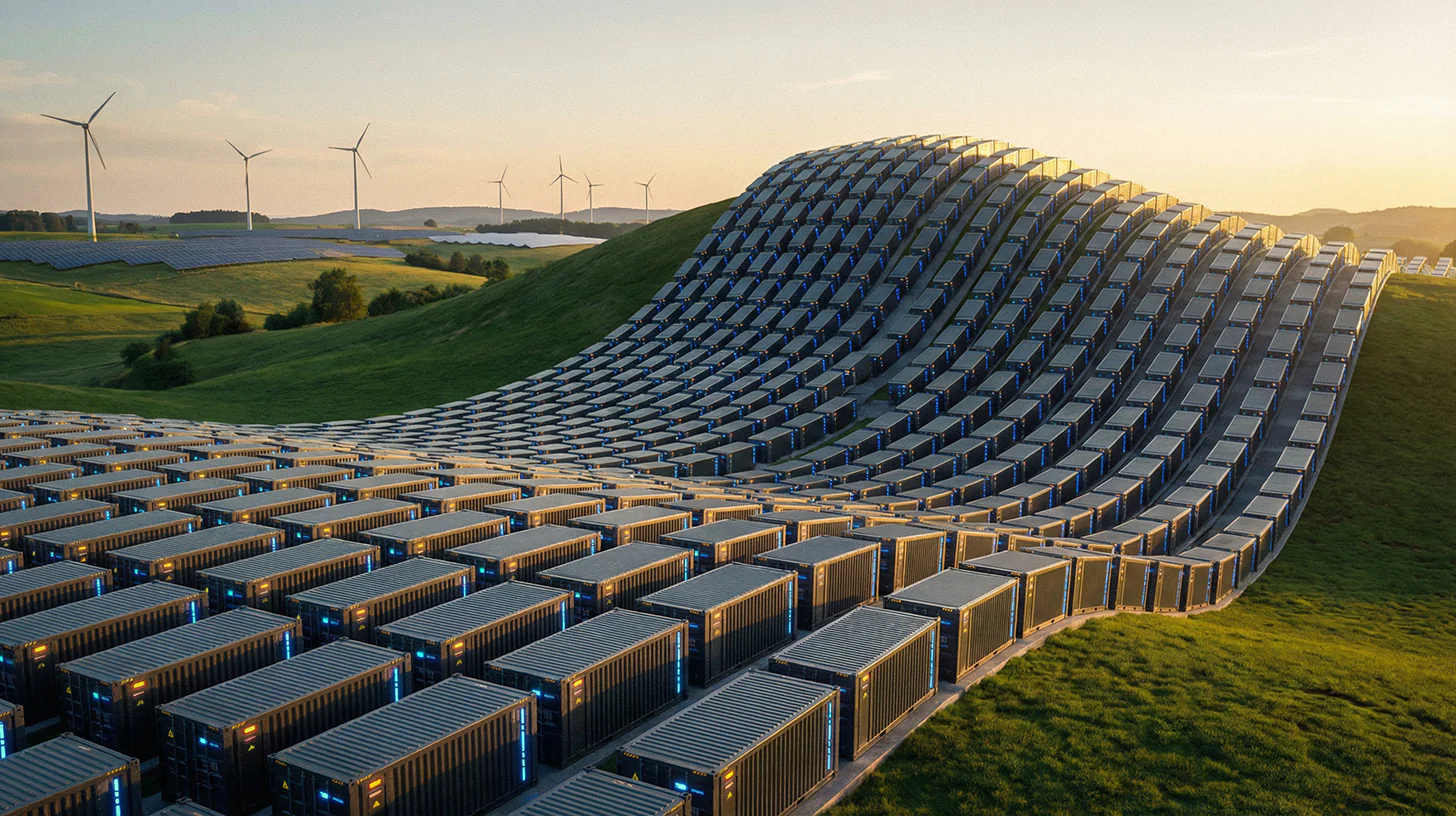
The race between China and Europe
The greatest competitive pressure comes from China. CATL, BYD, and Huawei are driving sodium-ion technology forward with enormous resources. China already has projects on a 100-megawatt scale and has developed hybrid systems that combine sodium-ion with lithium-ion. From 2026, CATL plans to deploy Naxtra batteries on a large scale in battery swapping systems, passenger cars, commercial vehicles, and energy storage.
Europe is lagging behind. Northvolt, Europe's great battery hope, filed for bankruptcy last year after burning through $15 billion. The Swedish company had developed its own sodium-ion battery with an energy density of 160 watt-hours per kilogram, but was never able to get production under control. Northvolt's failure has opened the field to Chinese suppliers. CATL is already building three factories in Europe: in Arnstadt, Thuringia, in Hungary, and in a joint venture with Stellantis in Spain.
In this context, the project in Lichtenfels takes on strategic importance. It signals that Europe does not intend to completely cede sodium-ion technology to the Chinese. While its initial capacity of one gigawatt-hour may seem modest compared to Chinese standards, it can serve as a catalyst for European sodium-ion production, closely linked to research institutions.
Germany's research offensive
Alongside the industrial project in Lichtenfels, Germany is building a comprehensive research ecosystem for sodium-ion batteries. The Federal Ministry of Education and Research is supporting the SIB:DE project with €14 million – one of the largest sodium-ion consortia in Europe. In the current research phase, 21 partners are developing active materials, electrolytes, and demonstrator cells. The second phase, with 27 partners, including industry giants such as BMW, Varta, and Jungheinrich, is scheduled to begin in 2026.
The Fraunhofer Research Production Facility for Battery Cells (FFB) in Münster plays a key role. With the already operational FFB PreFab and the FFB Fab currently under construction, a development environment is being created there in which new battery technologies can be validated using European equipment and scaled up to industrial levels. Further projects such as Na.Ion.NRW, which develops large-format sodium-ion cells on a pilot scale, and Safe.SIB, which focuses on safe and durable batteries for stationary energy storage systems, complement the portfolio.
A recent study by Fraunhofer FFB and the University of Münster confirms the trend: sodium-ion batteries are on the verge of transitioning to industrial mass production. The technology is ready for the gigafactory.
The future belongs to salt
The applications of sodium-ion technology extend to almost all areas of energy storage. In stationary applications, such as grid stabilization and home storage for solar energy, sodium-ion batteries are expected to replace lithium iron phosphate within five to six years thanks to their price advantage and high cycle stability. Sodium cells are significantly less sensitive to high and low temperatures and can retain a charge for up to a year.
In the mobility sector, CATL is targeting an energy density of up to 175 watt-hours per kilogram with Naxtra, which corresponds to the level of LFP batteries. This opens up new possibilities for affordable electric small cars and the entire commercial vehicle sector. Researchers at the University of Surrey have also discovered nanostructured sodium vanadate, a material that can store almost twice as much charge as typical sodium-ion materials and remains stable for over 400 charge cycles.
The story of the sodium battery factory that migrated from Berlin to Bavaria is more than just a local political anecdote. It's emblematic of the contradictions in German industrial policy, which on the one hand pumps billions into the energy transition and on the other is bogged down by bureaucratic absurdities. An amphibian that has never been sighted can block a technology that could make Europe less dependent on Chinese supply chains. Species conservation is a valuable asset, no doubt. But when it results in a 300-hectare industrial site remaining completely unused while China ramps up mass production of the next generation of batteries, then the balance is off.
In Lichtenfels, industrial history is being written. Europe's first sodium-ion battery factory is being built there, where pragmatism meets a spirit of innovation. The frogs in Berlin can continue to croak undisturbed – if they're still there.
Your global marketing and business development partner
☑️ Our business language is English or German
☑️ NEW: Correspondence in your native language!

Konrad Wolfenstein
I and my team are happy to be available to you as your personal advisor.
You can contact me by filling out the contact form here or simply call me at +49 7348 4088 965. My email address is: [email protected]
I'm looking forward to our joint project.










