
Electricity price lie exposed: Why green electricity is not the reason for your high bill
Xpert Pre-Release

Available in 27 languages 📢
Prefer Xpert.Digital on GoogleⓘPublished on: April 6, 2026 / Updated on: April 6, 2026 – Author: Konrad Wolfenstein
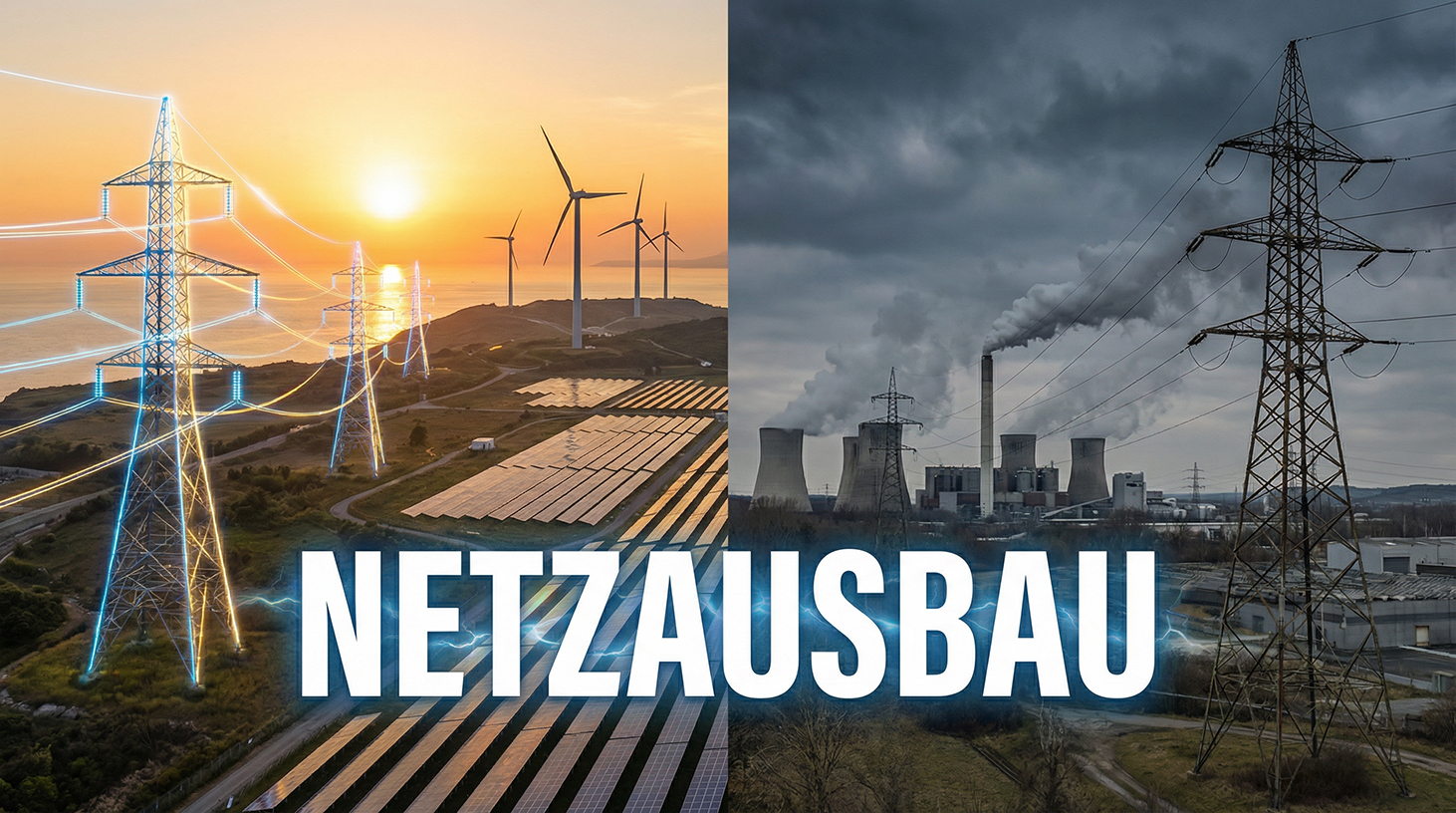
Electricity price lie exposed: Why green electricity is not the reason for your high bill – Image: Xpert.Digital
Billions wasted on the electricity grid and a fatal diagnosis: How a massive political mistake is artificially driving up the price of our electricity
Spain's electricity miracle: Why our own energy policy is ruining the German economy
Nuclear power as a savior? The bitter truth about Germany's actual energy costs
German electricity prices are among the highest in Europe – but the blame doesn't lie, as critics often claim, with the expansion of renewable energies. On the contrary: wind and solar power have long been by far the cheapest forms of generation on the market. The fact that consumers and industry still have to dig deep into their pockets is due to a massive structural failure: the electricity grid simply isn't keeping pace with the expansion. Instead of rapidly investing hundreds of billions in smart grids and storage, however, policymakers are pursuing a fatal misstep. Renewable energies are to be slowed down and artificially inflated in price, while old myths about a renaissance of expensive nuclear power cloud the discourse. A look at Spain, meanwhile, impressively demonstrates how a successful energy transition can drastically reduce electricity prices. This in-depth analysis reveals why Germany's political hesitancy has long since become an existential risk to its competitiveness and who truly benefits from the high prices.
Related to this:

Germany's grid failure and the persistent myth of expensive green electricity
If political courage is lacking, the location will ultimately pay the price
It is one of the most persistent misconceptions in the German energy debate that renewable energies are expensive and drive up electricity bills. The opposite is true. Onshore wind and ground-mounted photovoltaics generate electricity at production costs of 4.1 to 9.2 cents per kilowatt-hour, as calculated by the Fraunhofer Institute for Solar Energy Systems in its 2024 study. This makes them not only the cheapest renewable energy source, but the cheapest form of electricity generation overall – among all power plant types. New coal-fired power plants cost between 15.1 and 25.7 cents per kilowatt-hour, and new nuclear power plants between 13.6 and 49.0 cents. The international market reflects this finding: worldwide, almost exclusively renewable energy and battery storage capacity is growing in the electricity sector because simply no other option is economically competitive.
Related to this:

How gas prices are dividing the European electricity market
Behind the seemingly unified European electricity market lies a deep structural divide created by the so-called merit order principle. This pricing method states that the most expensive power plant still needed to meet demand at any given moment determines the price for all producers. In practice, this marginal power plant in Europe is often a gas-fired power plant. Consequently, when oil and gas prices rise, this is immediately reflected in the wholesale electricity price, even though the majority of electricity is now generated more cheaply. The result: countries that have significantly reduced their gas consumption for electricity generation are largely insulated from price shocks in the commodity markets. Those that haven't are forced to bear the brunt of every fluctuation.
The Spanish model as a blueprint for resilience
Spain has demonstrated in recent years how a consistent expansion strategy for renewables can decouple electricity prices from gas prices. According to an analysis by the energy think tank Ember, Spanish growth in wind and solar energy has reduced the influence of fossil fuel power plants on electricity prices by 75 percent since 2019. While Spain was one of the most expensive countries for household electricity just a few years ago, by 2026 it would be among the cheapest in Europe. The opposite is true for Italy: there, gas dictates the price for well over half the hours, resulting in a significantly more expensive electricity market. In Germany, household electricity cost an average of 38.35 to 39.3 cents per kilowatt-hour in 2025 – ranking first in Europe for high electricity prices. Spain, on the other hand, is far below this figure, with an industrial electricity price of around 12.4 cents per kilowatt-hour. This price difference is not accidental, but rather the direct consequence of differing investment decisions made in recent years.
Smart networks as the key to decoupling
The British magazine "The Economist" and a growing number of energy economists point to the core of the solution: grids must become larger and smarter so that the supply of affordable renewable energy can flexibly meet demand instead of being wasted in bottlenecks. According to international energy policy consensus, large-scale battery storage at the grid level is now considered the fastest-growing energy technology worldwide; the International Energy Agency predicts that the combination of photovoltaics and battery storage will be cheaper than new coal-fired power plants from 2025 onward. A flexible, digitized grid also allows for active demand management: those using a variable electricity tariff can schedule washing machines, electric cars, or industrial processes for times of oversupply and thus low prices. This makes doubly good economic sense because it alleviates grid bottlenecks and reduces redispatch costs. Green Party parliamentarians have calculated that consistent digitization of distribution grids alone could enable up to 30 percent more capacity without building a single kilometer of new power line.
Related to this:

The investment gap in the German network
Germany's core problem is well-known and has been documented for years: the grid cannot keep pace with the expansion of generation capacity. The necessary investment is enormous. Studies estimate that between 500 and 732 billion euros will have to flow into transmission and distribution networks by 2045. The transmission system operators alone have budgeted 440 billion euros for grid expansion in their current grid development plan – an increase of more than a third compared to the 2023 forecast. Annual investments would have to rise to around 34 billion euros, more than double the 15 billion euros that were actually invested in 2023. This gap between demand and reality is the root cause of redispatch costs: electricity is generated where it is not needed and cannot be transported to where it is required. Northern Germany produces wind power in abundance, while the south is starved for it and burns natural gas instead.
New: Patent from the USA – install solar parks up to 30% cheaper and 40% faster and easier – with explanatory videos!

New: Patent from the USA – Install solar parks up to 30% cheaper and 40% faster and easier – with explanatory videos! - Image: Xpert.Digital
The core of this technological advancement is the deliberate departure from conventional clamp mounting, which has been the standard for decades. The new, more time- and cost-effective mounting system addresses this with a fundamentally different, more intelligent concept. Instead of clamping the modules at specific points, they are inserted into a continuous, specially shaped support rail and held securely in place. This design ensures that all forces – whether static loads from snow or dynamic loads from wind – are distributed evenly across the entire length of the module frame.
More information here:
Why Germany's grid expansion is the biggest problem of the energy transition
Rich diagnosis and the wrong therapy
Federal Economics Minister Katherina Reiche (CDU) has recognized and publicly acknowledged the discrepancy between the state of the grid and the speed of its expansion. Due to insufficient grid capacity, renewable energy plants must be repeatedly curtailed, and this compensation costs money. Her diagnosis is correct so far. However, the proposed solution is a serious economic policy error. Instead of massively accelerating grid expansion and thus eliminating the bottleneck, she plans to slow down the expansion of renewable energies and link it to grid expansion. Specifically, a draft law proposes that operators of new green energy plants in congested areas should waive compensation payments for up to ten years if their plants are curtailed due to grid bottlenecks. Since these payments are an integral part of the profitability calculations for many projects, this regulation would simply render many investments unprofitable. Furthermore, the flood of applications for large-scale battery storage systems is to be reduced, even though these storage systems fill precisely the gap created by a lack of grid capacity. It is a policy that combats the symptom – namely too much electricity in the wrong place – by producing less electricity, instead of ensuring that it flows better.
Related to this:
- Katherina Reiche: Savior of industry or mouthpiece of corporate lobbying? The dark spots of the Minister of Economic Affairs

- Redispatch 2.0 and large-scale battery storage: Curse or Segen for the power grid? The ambivalent role of giant battery storage systems


Figures that need correction
Reiche justifies her policies, among other things, with a statement that fact-checkers have deemed misleading. In a video produced by the Federal Ministry for Economic Affairs and Energy, she claimed that three billion euros worth of electricity is simply wasted in Germany every year, citing this as proof of an energy transition lacking economic rationale. This figure is grossly distorted. The actual compensation payments made to operators of curtailed renewable energy plants in 2025 amounted to just under 435 million euros – a decrease of around 120 million euros compared to 2024. The trend has therefore been downward for years. The three billion euros cited by the ministry upon inquiry refers to the total costs of so-called redispatch, i.e., the entire grid congestion management in 2024. However, according to information provided to the investigative journalism organization Correctiv by the Fraunhofer Institute for Energy Economics and Energy System Technology, the largest single item of this figure was for operating costs of fossil fuel power plants, amounting to approximately 1.1 billion euros, and for standby costs for reserve power plants, amounting to about one billion euros. The costs for reserve power plants alone rose to €952 million in 2025, an increase of 37 percent compared to the previous year. The vast majority of the sum mentioned by Reiche is therefore not flowing into renewable energy, but into fossil fuel-powered reserve capacity, which is needed precisely because the grid is not sufficiently expanded. Nevertheless, Germany was able to transport an impressive 96.5 percent of the renewable electricity it generated to consumers in 2024, and this figure was still around 96 percent in the third quarter of 2025.
The misguided approach of allocating costs to renewables
Another component of Reiche's policy is the plan to make operators of renewable energy plants contribute to the costs of grid expansion, while conventional power plants would continue to use the grid free of charge. This asymmetry would create a significant competitive disadvantage for green energy producers, as their additional costs would be passed on to consumers. This would automatically make them more expensive than fossil fuel competitors, who do not bear the same surcharge. This is not market logic, but rather a structural preference for fossil fuel generation under the guise of cost efficiency. Behind the scenes, corporations like LEAG, ArcelorMittal, and BASF, as well as the IGBCE trade union, are working to permanently exempt industry entirely from transmission grid fees, thus leaving these costs solely with private consumers.
The nuclear power argument and the reality of the costs
The fact that the political debate in Germany, despite all the available data, is repeatedly steered towards nuclear power as a cheap solution – for example, by Bavaria's Minister-President Markus Söder – has little to do with the actual levelized cost of electricity (LCOE). The Fraunhofer ISE study indicates LCOE values between 13.6 and 49.0 cents per kilowatt-hour for new nuclear power plants in Germany. According to these calculations, new nuclear power plants are two to four times more expensive than onshore wind or ground-mounted photovoltaics. Practical experience from Europe confirms this: The British Hinkley Point C project and the French Flamanville plant have become symbols of cost explosions and decades of construction delays. Building new nuclear power plants takes 15 to 20 years under favorable conditions. The grid can be modernized several times during this period, and renewable energy capacity can be built in just a few years. Therefore, anyone who relies on nuclear power to solve Germany's electricity problem is choosing the most expensive and slowest possible path.
Related to this:

Political hesitancy as a location risk
What is truly worrying about Reiche's energy policy is not just the factual vagueness of individual figures, but the structural consequence: Germany remains stuck in an energy architecture that is more expensive and gas-dependent than necessary, while competitors like Spain are systematically becoming cheaper. For Germany as an industrial location, this is not an abstract problem. Industrial electricity currently costs around 12.4 cents per kilowatt-hour in Spain, but many times that in Germany. Energy-intensive industries, which have to calculate their costs based on location, certainly take this difference into account when making investment decisions. Furthermore, an accelerated, intelligent grid expansion would not only reduce redispatch costs and strengthen Germany's position, but would also make it less dependent on geopolitical price shocks, such as those caused by the Iran conflict and the Trump administration's approach to energy imports. An economics minister whose job it is to maintain Germany's competitiveness should prioritize precisely that, instead of hindering the instrument that provides the solution.
Related to this:


Your partner for business development in the fields of photovoltaics and construction
From industrial rooftop PV to solar parks and larger solar parking lots
☑️ Our business language is English or German
☑️ NEW: Correspondence in your native language!

Konrad Wolfenstein
I and my team are happy to be available to you as your personal advisor.
You can contact me by filling out the contact form here or simply call me at +49 7348 4088 965. My email address is : [email protected]
I'm looking forward to our joint project.
☑️ EPC services (Engineering, Procurement and Construction)
☑️ Turnkey project development: Development of solar energy projects from start to finish
☑️ Site analysis, system design, installation, commissioning, maintenance and support
☑️ Project financier or intermediary of capital providers
Innovative photovoltaic solution for cost reduction (up to 30%) and time savings (up to 40%)

Innovative photovoltaic solution for cost reduction and time savings - Image: Xpert.Digital
More information here:







