
Published on: March 24, 2025 / Updated on: March 24, 2025 – Author: Konrad Wolfenstein
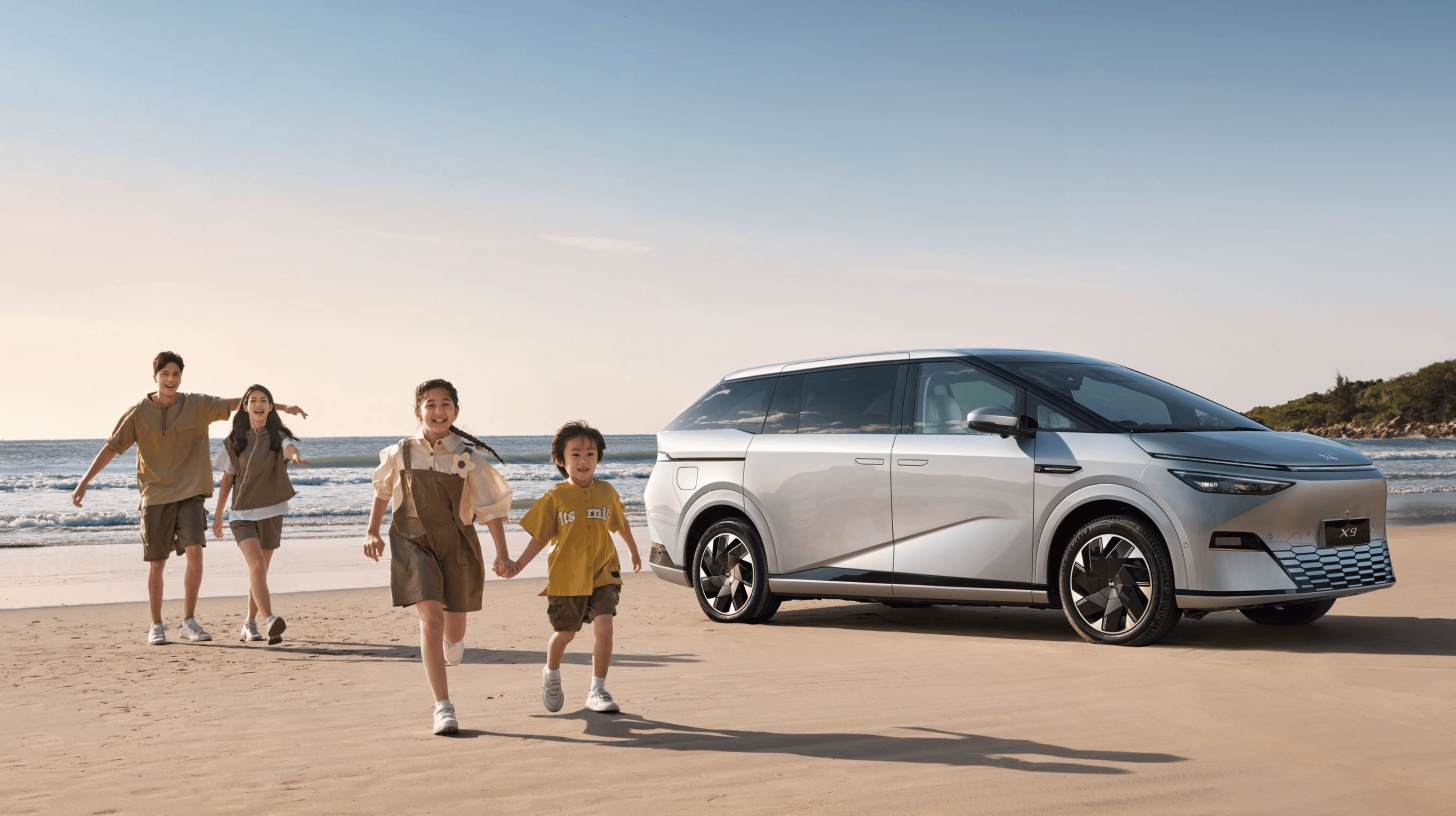
Electric vehicle manufacturer XPENG: Advanced electromobility for a sustainable future – Image: Xpert.Digital
Xpeng, GAC and Magna Steyr: A partnership with potential
EU tariffs in focus: China's electric car offensive in Europe
Chinese electric vehicle manufacturers Xpeng and GAC are reportedly close to finalizing a significant agreement with Austrian contract manufacturer Magna Steyr that would allow them to circumvent the recently imposed EU tariffs on Chinese electric cars. This strategic partnership could have far-reaching implications for the European electric vehicle market and demonstrates how Chinese manufacturers are finding innovative ways to advance their expansion plans in Europe despite trade policy hurdles.
Suitable for:

The planned cooperation between Magna Steyr and the Chinese manufacturers
According to reports in the Graz-based newspaper "Kleine Zeitung," Chinese automakers Xpeng and GAC are in advanced negotiations with Magna Steyr regarding the assembly of their vehicles in Austria. Magna Steyr, a subsidiary of the Graz-based contract manufacturer and supplier Magna International, is known for producing vehicles for renowned brands such as Mercedes-Benz, BMW, and Toyota. The contracts could reportedly be signed as early as June 2025, allowing for a swift start to production.
While Xpeng focuses exclusively on electric vehicles, GAC manufactures both electric and conventional combustion engine vehicles. Which specific models are to be produced in Austria has not yet been officially confirmed. Xpeng currently offers the G6 and G9 electric SUVs and the P7 sedan in Europe, while GAC plans to launch the Aion V electric SUV on the European market. It is speculated that GAC might have this model produced by Magna Steyr.
The SKD method as a strategy to circumvent punitive tariffs
A key aspect of the planned collaboration is the application of the so-called SKD (Semi Knocked Down) method. In this manufacturing method, prefabricated assemblies and components are shipped from China to Austria and only assembled into complete vehicles there. It is therefore not a complete production process, but primarily a final assembly in Graz.
This strategy offers a crucial advantage: since only components, not complete vehicles, are imported, Chinese manufacturers do not have to pay the high EU tariffs. Without this solution, Xpeng, as a so-called cooperating company, would have to pay an additional 21.3 percent punitive tariff on top of the standard 10 percent. For GAC, it would be an additional 20.7 percent. Local final assembly allows these substantial additional costs to be avoided.
Suitable for:
- Tariffs on Chinese electric cars due to state subsidies – EU reacts to unfair competition from China


Background: EU tariffs on Chinese electric cars
On October 30, 2024, the EU imposed definitive tariffs on electric cars from China, which were to remain in effect for five years. This measure followed a comprehensive anti-subsidy investigation by the European Commission, which concluded that Chinese manufacturers benefited from unfair state subsidies that gave them a significant competitive advantage in the European market.
The level of tariffs varies depending on the manufacturer: BYD has to pay a 17 percent special tariff, Geely 18.8 percent, and SAIC even 35.3 percent. Tesla, which produces in Shanghai, is subject to an additional 7.8 percent tariff. Other manufacturers that have cooperated with the EU must pay a special tariff of at least 21.3 percent, while non-cooperating companies must pay as much as 35.3 percent.
Germany, under the leadership of Chancellor Olaf Scholz, had repeatedly spoken out against these punitive tariffs, but was outvoted in the decisive vote in the EU Council. The German government fears possible retaliatory measures from China, which could particularly affect the export-oriented German automotive industry.
Benefits for all participating companies
The planned cooperation offers significant advantages to all parties involved. For Chinese manufacturers, it's not just about circumventing tariffs, but also about strengthening their presence in Europe. Local production will also allow them to respond more quickly and flexibly to the demands of the European market.
For Magna Steyr, the potential partnership comes at a strategically opportune time. The company recently lost Jaguar as a customer, and existing contracts with BMW and Toyota expire in 2026. Only the production of the Mercedes G-Class is secured until 2029. The new orders from Xpeng and GAC would therefore help to better utilize the production capacity of the Graz plant. After 105,100 vehicles in 2023, only 71,900 units were built the following year, underscoring the urgent need for new orders.
Xpeng's strategy and partnerships in Europe
The collaboration with Magna Steyr is part of Xpeng's broader European strategy. Back in August 2024, Xpeng's CEO, He Xiaopeng, stated in an interview with BNN Bloomberg that his company was in the early stages of site selection for a production facility in Europe. In addition to a production plant, Xpeng also plans to build a data center in Europe.
A key element of Xpeng's European strategy is its partnership with Volkswagen. In December 2023, VW invested US$700 million (approximately €630 million) in the Chinese electric vehicle manufacturer. In 2024, the two companies expanded their collaboration and agreed on a framework agreement for the joint development of an E/E architecture in China. According to Brian Gu, co-president of Xpeng, hundreds of VW employees are already working at Xpeng in China on the development of electric vehicles. This partnership could help Xpeng better understand European market dynamics and establish a presence in Europe.
Industry-wide strategy of Chinese manufacturers
Xpeng and GAC are not the only Chinese manufacturers developing strategies to circumvent EU tariffs. Other companies, such as BYD, Chery Automobile, and Zeekr, are also planning production facilities in Europe. While BYD plans its own plants in Europe, Magna could act as a contract manufacturer for smaller Chinese brands, representing a more cost-effective intermediate step with lower production volumes.
Smaller companies like Elaris AG are also exploring similar solutions. The company is investigating the possibility of manufacturing SKD components outside of China to avoid EU tariffs and continue offering affordable electric vehicles.
Cooperation between Magna Steyr and China: New dynamics in the European electric car market
The upcoming collaboration between Magna Steyr and the Chinese manufacturers Xpeng and GAC demonstrates the adaptability and determination of Chinese companies to pursue their expansion plans in Europe despite trade policy hurdles. SKD's assembly strategy offers a pragmatic approach to circumvent EU tariffs while simultaneously strengthening its European market presence.
This development could have significant consequences for the European electric vehicle market, as it allows Chinese manufacturers to continue offering competitively priced electric vehicles. This could increase the pressure on European manufacturers to optimize their own electric car offerings and make them more cost-effective.
The decision by Xpeng and GAC to collaborate with Magna Steyr underscores the growing importance of strategic partnerships and flexible production models in the global automotive industry. It remains to be seen whether other Chinese manufacturers will follow similar paths and how the EU will react to this strategy for circumventing tariffs.
Suitable for:
Your global marketing and business development partner
☑️ Our business language is English or German
☑️ NEW: Correspondence in your national language!

Konrad Wolfenstein
I would be happy to serve you and my team as a personal advisor.
You can contact me by filling out the contact form or simply call me on +49 7348 4088 965 (Munich) . My email address is: wolfenstein ∂ xpert.digital
I'm looking forward to our joint project.


