
Whose revolution is this, exactly? When the German taxpayer finances the Chinese electric vehicle offensive
Xpert Pre-Release

Available in 27 languages 📢
Prefer Xpert.Digital on GoogleⓘPublished on: July 4, 2026 / Updated on: July 4, 2026 – Author: Konrad Wolfenstein
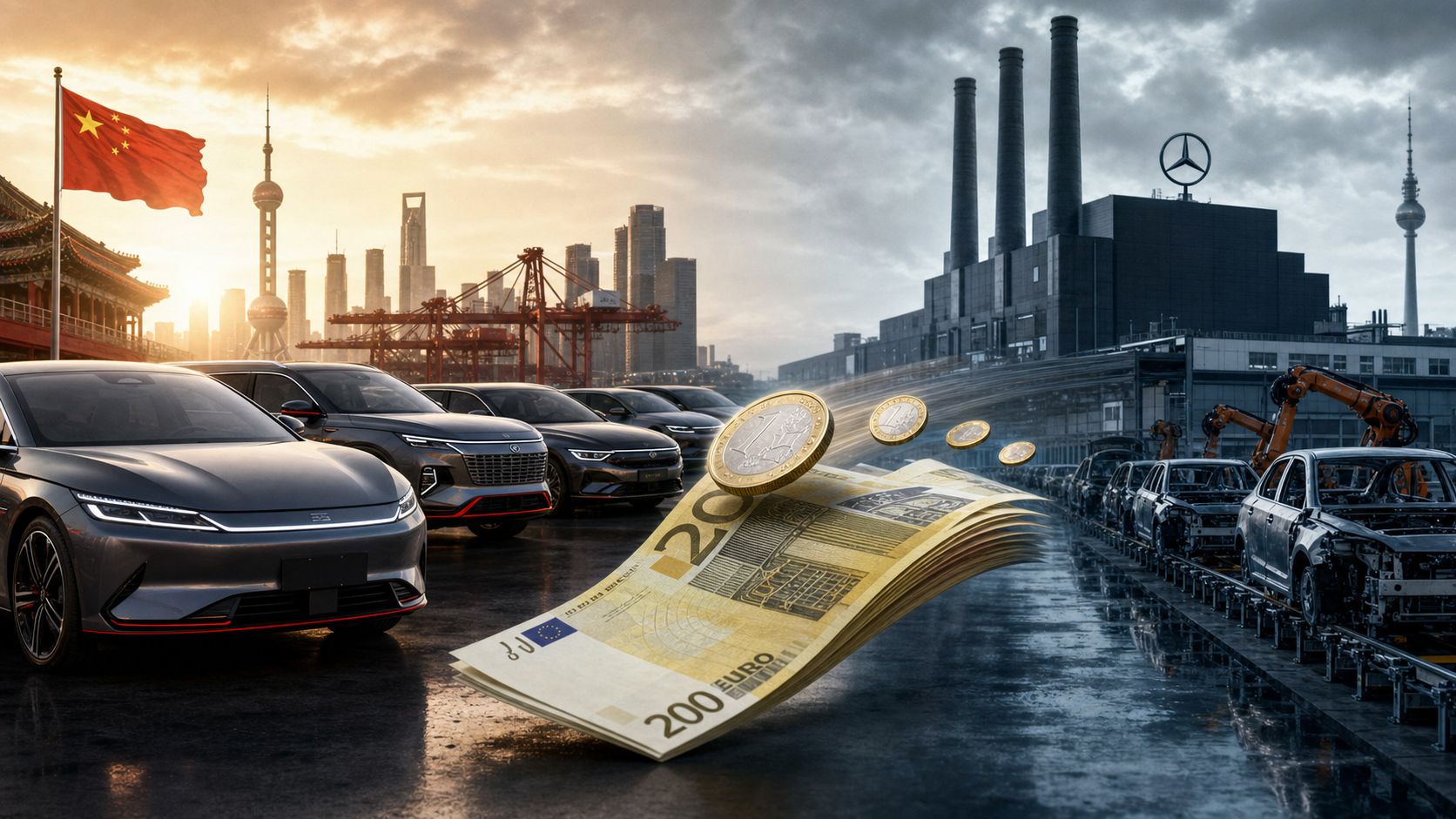
Whose revolution is this, exactly? When the German taxpayer finances the Chinese electric vehicle offensive – Image: Xpert.Digital
Despite EU tariffs: How Chinese electric cars are flooding the German market with state aid
Tax billions for BYD & Co.: How the new electric car subsidy is becoming a Chinese incentive program
The new government purchase incentive for electric cars, launched in May 2026, is worth three billion euros. The program, designed with a socially tiered system to make the switch to electric mobility easier, especially for average and low-income earners, is considered one of the German government's most important climate policy tools. However, this well-intentioned measure is increasingly proving to be an industrial policy boomerang: because German manufacturers neglected the crucial, subsidized price segment between 20,000 and 30,000 euros for years, Asian automakers like BYD and MG are the primary beneficiaries of German taxpayers' money. This is a detailed analysis of the domestic industry's self-inflicted strategic errors, the legal impotence of European customs policy, and the bitter dilemma facing policymakers: anyone who wants to promote the transport revolution in a socially responsible way today inevitably ends up financing China's electric vehicle offensive.
Under €30,000: Why German car manufacturers are suddenly at a disadvantage with the new purchase incentive
The billion-dollar dilemma: Why our taxes for the transport revolution are actually making China strong
Since May 19, 2026, private individuals in Germany have been able to apply for the new government purchase incentive for electric vehicles. With a funding volume of three billion euros and subsidies for up to 800,000 vehicles, the program is one of the largest single industrial policy measures of the current legislative period. However, as soon as the portal of the Federal Office for Economic Affairs and Export Control (BAFA) opened, a dynamic emerged that required considerable explanation from federal politicians: Surprisingly often, the winners of the new funding program did not come from Wolfsburg, Munich, or Stuttgart.
The price segment as a strategic breaking point
To understand the political implications of the new funding guidelines, one must first grasp the program's structure. The German government has designed the funding on a socially tiered basis: Households with a taxable annual income of up to €80,000 – or up to €90,000 for families with two or more children – receive a non-repayable grant. The basic grant for purely battery-electric vehicles is €3,000, while plug-in hybrids and vehicles with range extenders receive €1,500. Those with an annual income below €60,000 receive an additional bonus of €1,000; this bonus increases further for those with an income below €45,000. In total, lower-income households can receive up to €6,000 in grants.
This tiered system was well-intentioned politically and quite plausibly justified from a social perspective. Those with lower incomes need greater purchasing power support to take the plunge into electric mobility. However, this is precisely where the industrial policy trap lies: the price range relevant for low- and middle-income households—vehicles between €20,000 and €30,000—is currently barely served by German manufacturers. The Volkswagen ID. Polo, the VW Group's first true small car in this price range, was not yet fully available at the start of the subsidy program, with an entry-level price of around €24,990. The ID.1, planned for prices starting at approximately €20,000, is not expected to arrive until a year later.
But who currently offers reliable electric cars between €20,000 and €30,000? Chinese manufacturers. BYD launched the Dolphin Surf at €19,990, and MG offered several entry-level models in precisely this price range. The government subsidy program thus coincided with a market structure that put the Chinese competitors in an almost ideal position: high subsidies, low residual costs, and models available for immediate delivery.
The market reaction: Doubled sales, new momentum
The effects of this structural situation were not long in coming. The president of the Association of German Automobile Dealers (VAD), who also heads one of Germany's largest car dealership groups with 42 dealerships, publicly reported to the news magazine Politico on a massive market shift. When asked which vehicles were being purchased most frequently with the new incentive, his dealers' answer was unanimous: cars in the price range between €20,000 and €30,000. And what was in this price segment? Chinese cars.
The figures from its own dealer network, which carries German and European brands as well as BYD and MG, speak volumes. BYD sales at its dealerships rose by 235 percent in May. MG increased its monthly orders from around 150 units in the first quarter to 231 vehicles in April alone. Overall, sales of Chinese electric car brands at the group's dealerships more than doubled. The dealer association drew a pointed conclusion: the subsidy benefits almost exclusively foreign manufacturers.
This is a politically explosive statement – not only because it comes from one of Germany's most influential dealer representatives, but also because it is being made by a group that, in fact, profits from this business itself. What is remarkable about the situation is precisely that the complaint about the decline of the German manufacturing base is coming from within the dealership itself, which naturally has no interest in discrediting profitable sales.
What the official data actually shows
Following public reports, the Federal Ministry for the Environment, under Carsten Schneider (SPD), felt compelled to downplay the so-called "China shock." Based on the first 51,128 applications received by June 9, 2026, less than 15 percent were for vehicles from Chinese manufacturers. Of these applications, approximately 46,157 concerned purely battery-electric vehicles or fuel cell vehicles; the remainder were for hybrids and range-extender vehicles.
The ministry pointed out that this early data does not yet allow for representative conclusions and emphasized that the share of Chinese brands in the fully electric vehicle market is even lower than in the plug-in hybrid market. Whether this qualification holds true, however, is a matter of perspective. A share of less than 15 percent does not initially sound dramatic. However, the share of Chinese brands in the entire German electric car market was only around five percent between 2023 and 2025. If the subsidy program contributes to Chinese manufacturers being three to four times more represented in subsidized purchases than in the open market, this represents a significant shift overall.
Added to this is the aforementioned structural logic of the program: it is specifically aimed at lower-income households, precisely the buyer group that relies on the affordable price segment in which Chinese manufacturers currently have no competition. 71 percent of the applications came from households with a taxable annual income of no more than €60,000. This buyer group, in particular, does not find the most attractive offers at VW or BMW.
China's industrial policy starting position: The foundation of its price advantage
The high prices of Chinese electric cars are no accident, nor are they solely the result of superior efficiency. They are based on decades of strategically planned government support, the scale of which is unparalleled in the OECD world. An analysis by the Kiel Institute for the World Economy (IfW) has shown that Chinese government subsidies amount to three to nine times the total amount of corporate subsidies that other OECD countries, such as the US or Germany, spend on subsidies. More than 99 percent of publicly listed Chinese companies received direct government subsidies in 2022.
This is particularly evident in the case of BYD, now the world's largest electric vehicle manufacturer. Direct subsidies for BYD increased from around €220 million in 2020 to €2.1 billion in 2022 – a fivefold increase in just two years. BYD also receives disproportionately high purchase premiums for electric vehicles in its Chinese home market, more than any other domestic manufacturer or foreign competitor producing in China, such as Tesla or the VW joint ventures. The Kiel Institute estimated that these figures still underestimate the true extent of the subsidies, as they do not fully capture indirect benefits such as favorable supply chain subsidies, preferential access to raw materials, and preferential terms on government loans.
The US think tank Center for Strategic and International Studies (CSIS) has calculated that Beijing invested at least $230.8 billion in the electric vehicle industry between 2009 and 2023. In 2023 alone, annual spending amounted to $45.2 billion – a figure that even conservative estimates consider substantial. China has thus cultivated an industry that, through years of upfront financing of economies of scale, state-funded research, and enforced technology transfer from foreign partners, has achieved a competitive position in domestic markets that is structurally incomparable to European conditions.
In China, the average electric car costs around €29,765 according to the price list. In Germany, consumers have to pay an average of €43,749 for the same vehicles. Chinese battery-powered cars therefore cost, on average, more than twice as much in their home country as in China – yet the export price is still significantly lower than European equivalents. This is the result of a cost advantage built up over decades, which cannot be explained by lower wages alone.
EU customs policy: A protective shield with holes
The European Union has reacted to this distortion of competition – albeit with considerable delay and against significant internal resistance. Since the end of October 2024, definitive anti-subsidy duties have been in effect on electric vehicles produced in China: BYD pays an additional 17 percent duty, Geely 18.8 percent, and SAIC, with its MG brand, is subject to the maximum rate of 35.3 percent. Added to this is the regular EU import duty of ten percent, resulting in a total duty of 27 percent for BYD and up to 45.3 percent for SAIC/MG.
These measures are coherently justified from a trade policy perspective, but met with considerable resistance in Germany. The German government voted against the tariffs in the EU Council – out of concern for retaliatory measures against German manufacturers, who are still heavily dependent on the Chinese market for their combustion engine models. This conflict of interest is symptomatic: What seems sensible for European electromobility policy simultaneously threatens the combustion engine business, which continues to generate the largest profit contribution for VW, BMW, and Mercedes in China.
Chinese manufacturers responded to the tariffs with a strategy known in trade policy as tariff jumping: shifting production to Europe to circumvent them. BYD built a plant in Szeged, Hungary, which began production at the end of 2025. It is designed to produce up to 150,000 vehicles annually, and a second plant in the Turkish city of Izmir opened in March 2026. BYD aims to manufacture all vehicles for the European market locally by 2028. Vehicles from the Hungarian plant, as EU-produced goods, are no longer subject to punitive tariffs – largely neutralizing the protectionist effect of the Brussels measures in the long term.
In parallel, at the beginning of 2026, the EU Commission agreed on price commitments with Chinese manufacturers as an alternative to punitive tariffs. The manufacturers commit to not offering prices below a certain minimum in Europe. Unlike the traditional tariff model, the manufacturer retains the difference instead of paying it to the EU as customs duties – effectively improving the margins of Chinese manufacturers without benefiting European treasury budgets.
At the same time, the EU has begun examining whether customs regulations should be extended to plug-in hybrids. Chinese manufacturers quickly realized that PHEVs were currently only subject to the standard import duty of ten percent – and consequently flooded the European market with a wide range of hybrid vehicles. Exports of Chinese hybrid vehicles to the EU increased by 155 percent in 2025, while electric car exports grew by only twelve percent. This change in strategy is a classic example of industrial policy responsiveness: where one customs gate is closed, the next one is sought.
Our EU and German expertise in business development, sales and marketing

Our EU and German expertise in business development, sales and marketing - Image: Xpert.Digital
Industry focus areas: B2B, digitalization (from AI to XR), mechanical engineering, logistics, renewable energies and industry
More information here:
A thematic hub offering insights and expertise:
- Knowledge platform covering global and regional economies, innovation and industry-specific trends
- A collection of analyses, insights, and background information from our key areas of focus
- A place for expertise and information on current developments in business and technology
- A hub for companies seeking information on markets, digitalization, and industry innovations
Why German subsidies are unintentionally financing China's electric vehicle offensive
Legal limits of national discretion
Excluding Chinese vehicles from the German subsidy program would simply be inadmissible under current European competition law. The Federal Ministry for the Environment has explicitly explained this: Based on current European legislation, regulations favoring European vehicles are not yet permissible without further ado. Government purchase incentives linked to technical parameters such as CO2 emissions and minimum electric range must not discriminate based on the product's country of origin – this would violate the free movement of goods and WTO rules.
This puts Germany and other EU member states in a defensive and reactive position: Minimum requirements can be defined, but origin preferences cannot be codified. The local content rules under discussion within the framework of the EU's so-called Industrial Accelerator Act could remedy this. The German Federal Ministry for the Environment has signaled its readiness to adjust the funding criteria immediately as soon as a legally sound, EU-wide definition of "Made in Europe" is available. Until then, Germany is structurally in a situation where well-intentioned climate protection policies can lead to an unintended preferential treatment effect.
This is not due to negligence on the part of the program designers, but rather the result of a cumbersome legal framework: EU trade policy instruments are not designed for the speed at which industrial policy shifts occur in the market. It can take two to three funding years before Brussels formulates protective rules, passes them through parliamentary processes, and implements them into national law.
The strategic gap in the European product portfolio
Beyond the debate on regulatory policy, there is a finding that needs closer examination: The European automotive industry itself has created a pricing gap in electromobility, which is now being filled from the outside. This is not a Chinese problem; it is a self-inflicted failure.
For years, Volkswagen stuck to its strategy of marketing electric cars primarily as premium products. The VW ID.3 launched in 2019 at prices well over €30,000, and the ID.4's entry-level version cost over €40,000. This strategy promised higher margins in the early adoption phase, but simultaneously hindered its entry into the mass market. Management recognized this oversight: Wolfsburg developed a response with the Electric Urban Car Family – consisting of the VW ID. Polo, Cupra Raval, Skoda Epiq, and the later ID.1. But it came late.
The ID. Polo, with a starting price of around €24,990, is the first VW to enter the price-decisive segment. The ID.1, priced at around €20,000, is slated for 2027. This means that in 2026, the initial year of the subsidy program, and for a significant portion of the program's duration until 2029, a competitive German volume model in the lowest price segment will be lacking. Anyone aiming to subsidize 800,000 vehicles without being able to dictate product preferences will inevitably be subsidizing what is available – and in the crucial price segment, that largely means Chinese production.
This finding does not diminish the state's responsibility, but it structurally rewrites it: The problem is less that the federal government designed things poorly, but that German manufacturers have ignored their own market gap for too long.
The double irony: climate policy and industrial policy in contradiction
The situation raises a fundamental question of regulatory policy that is given too little attention in the political debate: What goal does state support for electromobility actually primarily serve – climate protection or the preservation of domestic value creation?
From a purely climate policy perspective, the answer is clear: Every electric car registered in Germany that replaces a combustion engine vehicle reduces CO2 emissions. Whether a Chinese or German company logo adorns the hood is irrelevant to the overall climate protection balance. The subsidy thus fulfills its stated primary purpose, regardless of whose company's revenue increases.
From an industrial policy perspective, the calculation looks completely different. Government subsidies that strengthen the market share of foreign manufacturers simultaneously weaken the returns on investment in domestic value creation. The German automotive industry has lost an estimated 120,000 jobs since 2018. Systemic pressure from Chinese competition, the sluggish combustion engine market in China, and the high transformation costs of electrification have put manufacturers like VW and suppliers like Bosch and ZF in considerable difficulty. Further market share losses, subsidized by taxpayers' money, appear absurd from this perspective.
The attempt to resolve this contradiction leads to a fundamental question of weighing priorities: Should the state primarily finance transformation or protect domestic industry? The political answer cannot be purely technocratic – it touches upon the question of which societal model is formulated as the goal.
Protectionism as a misguided path, open market as a risk
The widespread reaction to this dynamic is a call for more protection: Made-in-Europe clauses, local content requirements, and supplementary tariffs on hybrid vehicles. These instruments are understandable, but their effectiveness is limited – and their cost to consumers is considerable. Those who make electric cars more expensive through trade barriers hit hardest precisely the households for whom the socially tiered subsidy program was designed.
If additional tariffs of 17 to 38 percent were introduced on Chinese PHEVs, the BYD Seal U DM-i, for example, would become around €6,800 more expensive, while the MG HS PHEV could become up to €15,000 more expensive. The price advantage, which is the main motivation for buying these vehicles, would be largely eliminated. This protects the European manufacturer – but it is unclear whether consumers would then opt for the European model or postpone the purchase altogether.
The alternative to protectionism would be a proactive European industrial policy: not isolation, but the accelerated development of competitive domestic production in the lower price segment. The VW Group has signaled its understanding of this necessity with its Electric Urban Car Family. However, the company is starting from a significantly weakened economic position, with ongoing factory optimizations, downsizing programs, and shareholder pressure for short-term profitability.
The paradox is complete: German taxpayers could effectively be contributing to the financing of Chinese manufacturers' market expansion through the spiral of subsidies – while at the same time, EU tariffs are being used to try to slow down this very market expansion. State subsidies and state trade policy are thus structurally contradictory.
Structural causes: Why the funding logic inevitably leads to this result
The described dynamic is not an operational accident of German funding policy, but the predictable result of a specific constellation of four factors.
Firstly, the funding program follows a socially tiered logic that favors lower price categories. While this makes sense from a fairness perspective, it structurally selects the segment of the market where European manufacturers are currently weakest.
Secondly, there is no legal basis for origin preferences. European and WTO law prohibit discrimination based on the producer's nationality. This is correct for reasons of trade order, but it does not protect against the structural advantage of heavily state-subsidized foreign industries.
Third, Chinese manufacturers have a cost advantage built up over decades, based on government subsidies amounting to several hundred billion dollars. This advantage cannot be overcome through subsidy programs – it is structural in nature.
Fourth, European product policy reacts with a time lag. The market in the price range relevant to lower-income groups is not yet sufficiently saturated with European offerings. The gap is made visible by the funding logic, not caused by it.
What needs to be done now
An honest industrial policy debate cannot solve the situation described solely through protective tariffs or appeals to consumers' national sentiment. A multidimensional strategy is needed.
At the European level, the discussed local content clauses must be enshrined as a priority within the framework of the Industrial Accelerator Act. Only a legally unambiguous EU standard will enable member states to design national funding programs accordingly. At the same time, the EU Commission's anti-subsidy procedures should be extended to hybrid vehicles and other electric drive variants.
At the company level, European manufacturers must substantially accelerate the ramp-up of affordable electric vehicles. The planned volume models under €25,000 from VW, Stellantis, Renault, and other manufacturers are the right answers, but they are arriving later than market dynamics demand. The ID.1 for around €20,000 or the production version of the Renault 5 in more affordable trim levels will only sustainably shift the price structure in favor of European manufacturers if they are actually available in sufficient numbers and at the announced prices.
At the level of funding policy, the German government should proactively communicate the option of a temporary production site commitment for the period following an EU regulation, in order to signal planning certainty for manufacturers. At the same time, the socially tiered structure of the program remains politically sound and should not be sacrificed to the idea of protecting industry. Both are necessary – and they are not mutually exclusive if the legal basis is in place.
This situation highlights a fundamental dilemma of modern industrial policy: those who use public funds to accelerate societal transformation processes cannot arbitrarily control the beneficiaries – especially when their own companies have not yet occupied the relevant market segment. The real lesson of Germany's 2026 electric car subsidy program, therefore, is not that the state governed poorly, but that industrial policy and transformation support must be better coordinated: first close the gap, then provide subsidies.
Your global marketing and business development partner
☑️ Our business language is English or German
☑️ NEW: Correspondence in your native language!

Konrad Wolfenstein
I and my team are happy to be available to you as your personal advisor.
You can contact me by filling out the contact form here [email protected]:or simply call me at +49 7348 4088 965. My email address is
I'm looking forward to our joint project.
☑️ SME support in strategy, consulting, planning and implementation
☑️ Creation or realignment of the digital strategy and digitization
☑️ Expansion and optimization of international sales processes
☑️ Global & Digital B2B trading platforms
☑️ Pioneer Business Development / Marketing / PR / Trade Fairs
🎯🎯🎯 Data-driven B2B industry hub as a quasi-in-house solution

The quasi-in-house solution: How Xpert.Digital closes operational gaps in B2B marketing and sales – Smart Content-Driven Business - Image: Xpert.Digital
Xpert.Digital is a data-driven B2B industry hub led by Konrad Wolfenstein . The company acts as an external, quasi-in-house solution for industrial partners, closing operational gaps in marketing, content, and sales – without requiring additional resources on the client side.
More information here:










