
Surprising ifo figures: Is the German automotive industry poised for a comeback?
Xpert Pre-Release

Available in 27 languages 📢
Prefer Xpert.Digital on GoogleⓘPublished on: August 10, 2026 / Updated on: August 10, 2026 – Author: Konrad Wolfenstein
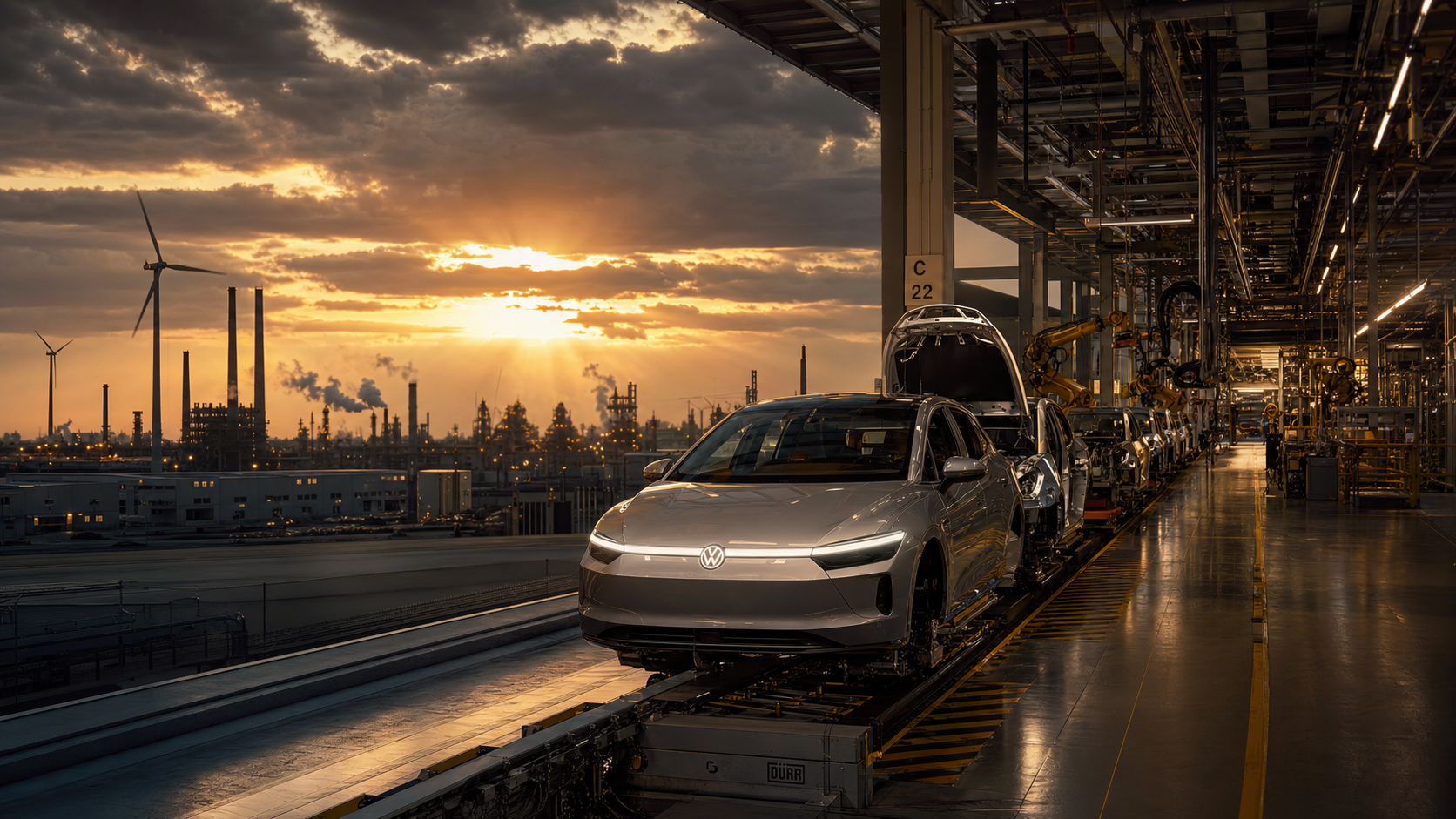
Surprising ifo figures: Is the German automotive industry poised for a comeback? – Image: Xpert.Digital
Despite the VW crisis and US tariffs: This is why the German auto industry is suddenly finding hope
Massive layoffs at VW & Co.: Why the German car engine could still start up again
Turning point or just a temporary peak? What do the latest figures from car manufacturers mean?
After years of dire news, the German automotive industry is suddenly sending an unexpected sign of life. While China's electric mobility, geopolitical tensions, and crushing location costs have plunged the once-flagship companies into an unprecedented structural crisis, a surprising jump in the ifo Business Climate Index in July 2026 is causing a stir. But how reliable is this sudden optimism? A closer look at the figures reveals a glaring discrepancy between the still bleak reality and the growing expectations of managers. Whether this upswing in sentiment represents the long-awaited turning point or merely a deceptive temporary high amidst a relentless structural transformation is revealed in our comprehensive analysis of this key German industry.
Germany's automotive industry is finding hope: A delicate seedling in stormy seas
In July 2026, the German automotive industry sent a signal that, after years of gloomy news, sounds almost unusual: things are looking up, at least subjectively. The business climate index for the sector, compiled by the ifo Institute, rose by 6 points and now stands at minus 15.6. Looking at this figure in isolation could easily lead to misinterpretation, as a negative value still simply means that the surveyed companies are generally more pessimistic than optimistic. The real value of the report lies not in the absolute level, but in the direction and speed of the change. Within just three months, sentiment in the industry has recovered significantly from a low point, and this dynamic warrants a more precise economic analysis.
To understand the significance of this development, it's worth looking at the index's history. As recently as April 2026, the expected value was more than 30 points lower than it is today. This means that within a single quarter, one of the most significant improvements in sentiment in recent years has occurred in this sector. Such leaps are rare and usually indicate that real economic factors have changed, not just the perceptions of the surveyed managers. At the same time, caution remains advisable, as sentiment indicators are leading indicators that can, but do not necessarily, anticipate real developments.
Two stories in one number: Expectation versus reality
The ifo index comprises two components that differ significantly in the current survey, thus painting a nuanced picture. Business expectations climbed to minus 0.1 points, practically at zero, the highest level in more than three years. The current business situation, however, remains very poor at minus 29.9 points. This discrepancy is highly significant from an economic perspective, as it demonstrates that companies still perceive their current situation as burdensome, while their outlook for the future has brightened considerably.
This dichotomy can be interpreted as a classic pattern of an economic turnaround. Expectations typically improve first because they are based on order intake, leading indicators, and planning signals, while the actual situation adjusts only with a delay, as production capacities, staffing levels, and inventories cannot react immediately to changing conditions. In this context, ifo industry expert Anita Wölfl points out that order books are filling up somewhat again and export expectations have risen, with a positive trend also evident in the order intake figures available up to May from both domestic markets and the Eurozone. It is important to emphasize that this upswing has so far been driven primarily by European factors and is not yet based on a broad global recovery.
The long shadow of the crisis: How deep did the downturn run?
To properly assess the current recovery, one must consider the starting point from which it unfolded. The German automotive industry was experiencing one of the most severe crises in its post-war history in recent years. As early as the summer of 2024, the business climate index had fallen to minus 18.3 points, accompanied by warnings that the sector was sliding further into crisis. During 2026, the situation initially deteriorated further, with the index falling to minus 21.4 points in June, after having already reached minus 20.7 points in May. The turnaround only came with the surge in July, which is now the subject of current reporting.
A study published in January 2026 on the state of the automotive industry painted an alarming picture of the structural depth of this crisis. According to the study, more than half of the companies in the sector were already in crisis, with almost three-quarters of these businesses facing acute liquidity problems or on the verge of insolvency. The economic stability that had characterized the industry for decades had largely vanished, and the crisis affected not only the major vehicle manufacturers but also significant parts of the industrial supply chain. Restructuring expert Michael Hengstmann succinctly stated that the industry was not undergoing a transformation but was in the midst of a structural crisis, where decisive action would now determine whether it suffered a permanent loss of competitiveness and industrial substance.
Competitive pressure from China and geopolitical uncertainties
The causes of the crisis are multifaceted and mutually reinforcing, creating a structural burden that will not disappear with a single economic upswing. More than four out of five companies surveyed in the aforementioned study cited new competitors, particularly from China, as a key burden, supplemented by structural underutilization of production capacities and highly volatile demand volumes. Added to this are geopolitical tensions, trade conflicts, and growing regulatory uncertainty, which together deprive many business models of their economic planning basis and accelerate the structural upheaval in the industry.
The new US tariff policy is having a particularly serious impact in this context. A separate survey showed that 83 percent of the companies surveyed consider the consequences of this tariff policy to be massive, while 73 percent expect a decline in German exports to the United States. As a result, almost a quarter of the companies are planning to postpone investments, and nearly 40 percent anticipate both increasing pressure on profit margins and a shift of investments and production capacities toward the United States. For the full year 2026, around 89 percent of the companies expected a decline in revenue, with 70 percent anticipating a decrease of more than five percent. The Chinese market, once the growth engine of German premium manufacturers, has also become a significant burden: Sales by German companies in China plummeted by 16 percent, as Chinese consumers increasingly prefer domestic brands in the growing electric vehicle segment, and the economic slowdown there is having a particularly strong impact on high-priced premium vehicles.
Profitability in free fall compared to international rivals
A particularly telling indicator of the depth of the crisis is the international comparison of profitability, documented in an analysis by the consulting firm EY from June 2026. The profits of the three German companies Volkswagen, Mercedes-Benz, and BMW fell by 23 percent in the first quarter of the year, while their American competitors were able to increase their surplus by 83 percent during the same period. In terms of revenue, the German manufacturers were also the only group among the world's largest automotive companies to record a decline, by four percent, while US manufacturers increased their revenue by five percent and Japanese competitors by four percent.
The following overview illustrates the positioning of German corporations in an international margin comparison, based on the EY analysis of the 19 largest automotive groups worldwide.
| Key figure | German manufacturers (VW, Mercedes, BMW) | International competition |
|---|---|---|
| Profit development Q1 2026 | minus 23 percent | US manufacturers up 83 percent |
| Revenue development | minus 4 percent | USA plus 5 percent, Japan plus 4 percent |
| BMW margin | 6.5 percent (rank 4 out of 19) | Industry average 3.5 percent |
| Mercedes margin | 6.0 percent (rank 6 out of 19) | – |
| VW margin | 3.3 percent (rank 13 out of 19) | – |
| China sales | minus 16 percent | – |
The average profit margin of all 19 automotive groups analyzed fell to 3.5 percent, reaching its lowest level since the COVID-19 crisis year of 2020. EY industry expert Peter Fuß, quoted in the analysis, succinctly summarizes the situation, stating that the crisis is far from over, especially for German automakers, because the loss of foreign markets, costly overcapacity, high software investments, and a slow ramp-up of electromobility are weighing on their results. These figures significantly temper the euphoria surrounding the improved sentiment in July, as improved expectations do not automatically translate into improved financial results.
Structural change is a matter of survival, not an option
Beyond short-term economic fluctuations, the real core of the current challenge lies in a profound structural transformation that has gripped the entire industry. The public debate surrounding job cuts at Volkswagen, where reports indicate up to 100,000 jobs could be eliminated and four plants in Germany closed, exemplifies a development previously experienced by BMW with its profit warning and Mercedes-Benz with its drastic cost-cutting measures. The decades-long dominance of German manufacturers of combustion engine vehicles is reaching its limits, while the transition to electromobility requires substantial investments in a completely different production environment, without the possibility of simply shutting down the old combustion engine factories while they are operating at full capacity.
This double cost burden from the parallel production of old and new drive technologies is hitting a location already suffering from structurally high costs. High wages, high energy costs, high taxes and levies, as well as a high degree of bureaucracy, make it difficult for the heavily export-dependent industry to produce competitively in Germany. Industry experts consider job cuts virtually unavoidable given these circumstances, with around 90 percent of the companies surveyed in the study cited at the beginning calling for a fundamental restructuring of German production and development sites. Sixty percent of the managers surveyed even consider plant closures and relocations abroad an unavoidable part of the solution, demonstrating how far the consensus within the industry has shifted from the idea of gradual adjustment to more radical cutbacks.
Our global industry and economic expertise in business development, sales and marketing

Our global industry and economic expertise in business development, sales and marketing - Image: Xpert.Digital
Industry focus areas: B2B, digitalization (from AI to XR), mechanical engineering, logistics, renewable energies and industry
More information here:
A thematic hub offering insights and expertise:
- Knowledge platform covering global and regional economies, innovation and industry-specific trends
- A collection of analyses, insights, and background information from our key areas of focus
- A place for expertise and information on current developments in business and technology
- A hub for companies seeking information on markets, digitalization, and industry innovations
Why operational excellence determines the future of industry today: Between hope and tough structural reforms
Management quality as an underestimated success factor
An interesting, often overlooked aspect of the current debate concerns the role of leadership in managing the crisis. The cited study identifies the targeted strengthening of management skills, particularly in the areas of restructuring and internationalization, as a crucial lever: 88 percent of the surveyed companies see this as the key to crisis management. It is noteworthy that while many companies possess viable strategies and transformation plans, their implementation frequently fails due to a lack of experience, insufficient speed, and inadequate assertiveness in operational crisis management.
Hengstmann articulates this observation as a key insight when he emphasizes that the industry has fundamentally recognized its situation, but lacks the ability to implement restructuring quickly, consistently, and effectively on an international scale, with management quality now determining the industry's future or its decline in importance. This assessment points to a fundamental problem within German industrial culture, which traditionally relies on consensus, co-determination, and incremental process optimization, but may be acting too slowly in a phase of disruptive change to keep pace with the speed of international competitors.
Export dependence as both an Achilles' heel and an opportunity
The German automotive industry remains fundamentally an export-oriented nation, which allows it to benefit from global trade flows but also makes it particularly vulnerable to geopolitical shifts. Forecasts from the German Association of the Automotive Industry (VDA) in December 2025 predicted a slight decline in passenger car exports from German plants by one percent to 3.2 million vehicles in 2026, corresponding to an export quota of 77.5 percent, while foreign production of German brands was expected to increase by one percent to 9.2 million vehicles. This shift from domestic export production to production abroad is itself a symptom of structural change, as it demonstrates that German companies are increasingly producing where their customers are located, rather than shipping vehicles from Germany all over the world.
The development of export expectations over the course of 2026 shows remarkable volatility. At the beginning of the year, the sector's export expectations unexpectedly turned positive, rising to 8.7 points, after having stood at minus 8.0 points in December 2025. According to ifo expert Wölfl, intra-European trade was the primary driving force. Within the European Union, companies perceived their own competitiveness as significantly improving, while simultaneously assessing their position in markets outside Europe as considerably weaker. This underscores the increasing divide in global sales opportunities for German manufacturers between a more robust European domestic market and an increasingly hostile environment outside Europe. This observation aligns perfectly with the improvement reported in July, which, according to the ifo Institute, was also strongly supported by positive trends from within Germany and the Eurozone.
The overall economic context: Germany on the rise
The recovery of the automotive industry fits into a broader picture of a stabilizing German economy. The general ifo Business Climate Index for the entire German economy rose for the third consecutive month in July to 86.6 points, up from 85.7 points in June. Industrial companies in particular showed significantly greater confidence recently, indicating a broader economic recovery extending beyond the automotive sector alone. Reuters reported concurrently that economic expectations climbed from 84.3 to 86.7 points in July, while companies were slightly less satisfied with their current business situation than in the previous month – a pattern almost mirrored in the figures for the automotive industry.
This parallel between industry and overall economic indicators suggests that the improved sentiment in the automotive industry is not solely due to industry-specific factors, but is also supported by a general brightening of the macroeconomic environment in Germany. Factors such as a possible easing of interest rates, government subsidy programs for the purchase of electric vehicles, and an overall less pessimistic mood in the executive suites of German companies are likely playing a role. At the same time, it should be noted that the overall economy, with an index value of 86.6 points, is still significantly below historical highs, indicating that a genuine boom is not yet in sight.
Electromobility as a double-edged promise of growth
Electromobility continues to be cited by industry associations as a key growth driver for the coming years, although forecasts for 2026 reveal both opportunities and significant risks. Moderate growth was expected for the international passenger car markets, with an increase of two percent to 13.4 million vehicles in Europe and one percent to 24.5 million units in China. These moderate growth rates contrast with the sometimes euphoric expectations of previous years for the electromobility market and illustrate that demand for electric vehicles is developing more slowly than originally predicted.
At the same time, the model range of German manufacturers in the electric vehicle segment is now also expanding into the small car market, indicating increasing market penetration in more price-sensitive segments. Despite some shortcomings in the charging infrastructure, customers are increasingly becoming accustomed to the idea of purchasing an electric vehicle, a trend further supported by government subsidies. However, the structural problem remains that combustion engine production continues in parallel, leading to underutilized factories and correspondingly rising unit costs. This double burden of declining demand for combustion engines and insufficient demand for electric vehicles to fully compensate for the shortfall represents one of the key business challenges for the coming years.
A critical assessment: turning point or intermediate peak?
The question of whether the rise in sentiment in July 2026 truly marks a sustainable turning point or merely represents a temporary peak within a longer-term downward trend cannot be definitively answered with the available data, but it warrants a nuanced assessment. The breadth of the improvement, evident in both the sector index and the general Ifo Business Climate Index, and supported by actual order intake data from Germany and the Eurozone, suggests a genuine turning point. Furthermore, the fact that the expectations indicator improved continuously over a period of three consecutive months argues against a purely random statistical spike.
However, several significant factors argue against prematurely sounding the all-clear. First, the current business situation remains at a historically low level of minus 29.9 points, indicating that the fundamental earnings situation of companies has not yet fundamentally changed. Second, the structural stressors that triggered the crisis remain largely unchanged: competitive pressure from China has not diminished, US tariff policy continues to pose a serious burden on exports, and the profitability gap compared to international competitors even widened in the first quarter of 2026. Third, the improvement in export expectations has so far been driven primarily by European factors, while the assessment of domestic competitiveness outside Europe remains negative, demonstrating that the industry's core global problems have not yet been resolved.
A cautious assessment
The most realistic interpretation of the current data likely lies between the two extremes: a euphoric turning point thesis and a pessimistic dirge for the German automotive industry. The increase in sentiment in July 2026 is real and supported by reliable order intake data, which distinguishes it from a mere psychological snapshot. At the same time, it represents a recovery from an exceptionally low starting point, which by no means implies that the industry's deep-seated structural problems have been solved. The parallel restructuring, involving plant closures, job cuts, and relocations abroad, will, according to the vast majority of industry representatives, have to continue regardless of short-term improvements in sentiment, because the underlying competitive disadvantages are structural, not cyclical.
For the German economy as a whole, in which the automotive industry traditionally plays a key role as an employer, driver of innovation, and export engine, this means that while an improved mood is a welcome sign, it offers no cause for complacency. The coming months will have to show whether the improved expectations actually translate into a sustainably improved business situation, rising margins, and stabilized employment figures, or whether it is merely a temporary respite within a longer, painful adjustment process that could ultimately result in a smaller, but potentially more competitive, industry.
📈🚀 From visibility to trust 👀🤝 Your scalable path with Xpert.Digital

From visibility to trust: Your scalable path with Xpert.Digital - Image: Xpert.Digital
In industrial B2B, sustainable business relationships rarely emerge overnight. They develop step by step – through visibility, professional relevance, recurring touchpoints, and growing trust. Xpert.Digital's 4-stage model addresses precisely this: It offers a structured path that begins with a manageable entry point and can evolve into deeper collaboration in business development if needed.
Instead of relying on loud marketing promises, this model puts the relationship at the forefront. Companies start with clearly defined, easily calculable measures and then decide, based on their own experience, how far they want to expand the collaboration. A key factor for this undisturbed trust-building process: The platform completely avoids annoying advertising ads, so the editorial focus remains solely on the companies' expertise.
More information here:
Consulting - Planning - Implementation

Konrad Wolfenstein
I would be happy to serve as your personal advisor.
You can contact me at wolfenstein∂xpert.digital or
Just call me on +49 7348 4088 965 .










