
OPEC split in the Persian Gulf: An economic comparison of the United Arab Emirates (UAE) and Saudi Arabia
Xpert Pre-Release

Available in 27 languages 📢
Prefer Xpert.Digital on GoogleⓘPublished on: May 2, 2026 / Updated on: May 2, 2026 – Author: Konrad Wolfenstein
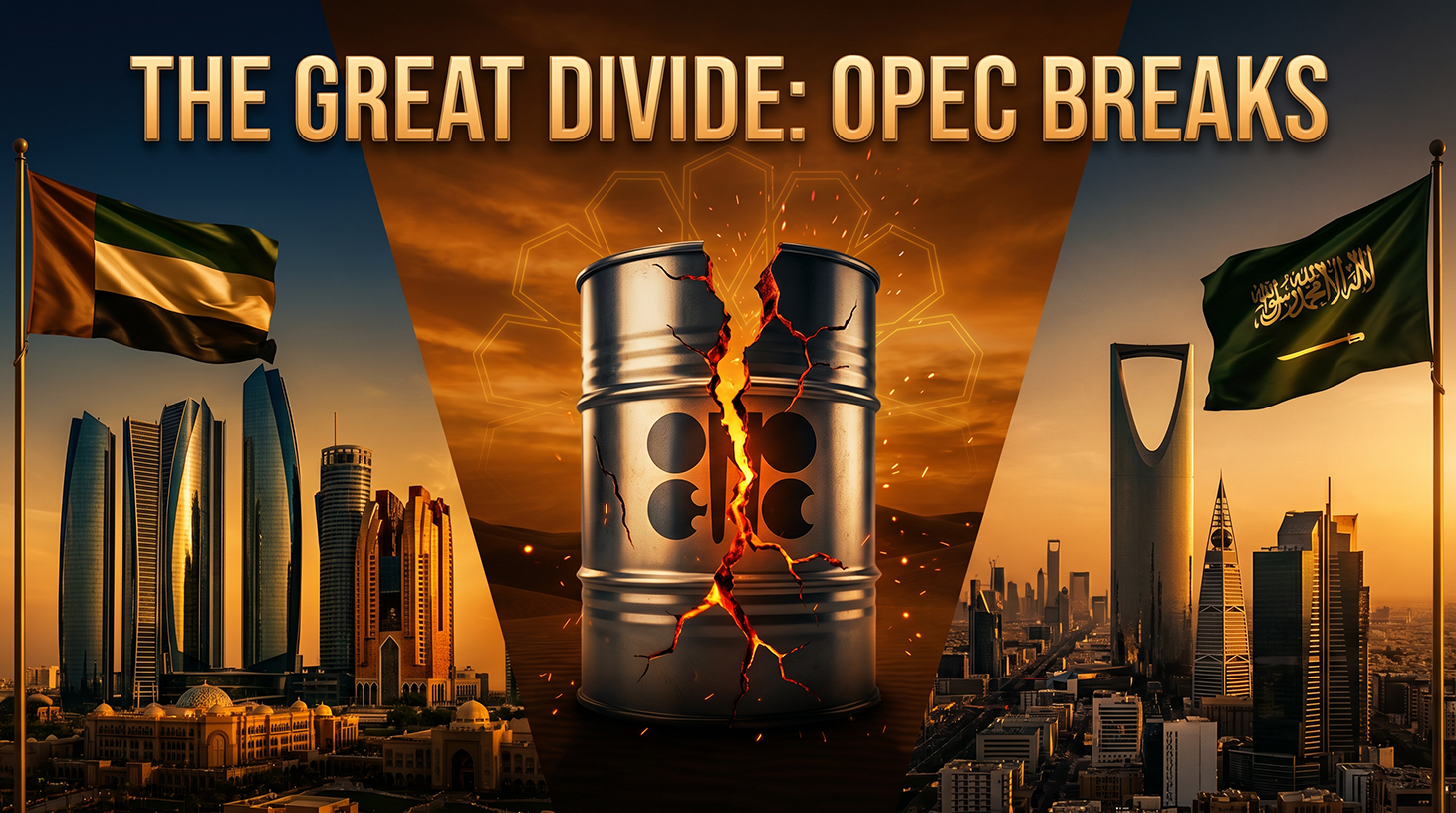
OPEC split in the Persian Gulf: An economic comparison of the United Arab Emirates (UAE) and Saudi Arabia – Image: Xpert.Digital
The end of a historic alliance: The real reason for the Emirates' exit from OPEC
David versus Goliath in the Gulf: Why the small UAE is economically outperforming Saudi Arabia
Oil, power and betrayal: How the conflict between Saudi Arabia and the UAE escalated
It is a political and economic earthquake that will be felt far beyond the Middle East: The United Arab Emirates (UAE) are turning their backs on OPEC after almost 60 years. What is officially declared a logical step in a national realignment is, in reality, the provisional culmination of a creeping estrangement between Abu Dhabi and Riyadh. Former allies have become bitter rivals – driven by geopolitical conflicts in Yemen, the escalating war with Iran, and fundamentally different visions for the post-oil boom era. While Saudi Arabia, with its ambitious "Vision 2030," still needs high oil prices to finance its megaprojects, the Emirates have long since built a diversified, highly profitable economic empire that can no longer tolerate rigid OPEC quotas. This deep rift in the Persian Gulf not only threatens the global market power of the world's most powerful oil cartel but is also likely to permanently alter the global energy market and international oil prices.
Related to this:
When oil giants remain silent, the oil speaks for itself – a historic rift with global consequences
The end of an oil marriage: How the UAE's exit from OPEC is changing the world
On April 28, 2026, the Persian Gulf made history: The United Arab Emirates (UAE) announced its withdrawal from the Organization of the Petroleum Exporting Countries (OPEC) and the expanded OPEC+ alliance, effective May 1, 2026. This is a severe blow to the oil cartel, which has been considered the power center of global energy policy since 1960 – and a watershed moment for the relationship between Abu Dhabi and Riyadh, one that extends far beyond oil quotas.
The UAE has been a member of OPEC since 1967 – back then as the Emirate of Abu Dhabi – and for decades was considered a reliable, if occasionally rebellious, partner of Saudi Arabia. Now, after almost 60 years of membership, the Emirates are taking a step that previously seemed almost unthinkable. The official explanation from Abu Dhabi sounds matter-of-fact: they are following national interests, want to expand domestic energy production, and act as a responsible global supplier – especially in light of the supply disruptions in the Strait of Hormuz caused by the war with Iran. But behind this sober language lies a profound political rift.
The immediate trigger lies in Yemen. What was once a joint military intervention by Saudi Arabia and the UAE against the pro-Iranian Houthi rebels is now a breeding ground for mistrust. From the end of 2025, the UAE supported separatist forces in southern Yemen—the Southern Transitional Council (STC)—while Saudi Arabia favored the recognized central government in Sana'a. Tensions escalated to such an extent that in December 2025, Saudi Arabia bombed two ships allegedly carrying weapons from the Emirates and demanded the withdrawal of Emirati troops. This open conflict—between two countries that considered themselves allies—has now spilled over into the oil market.
Smaller area, bigger ambitions: Geography and demography compared
To understand the rivalry between the UAE and Saudi Arabia, one must first grasp the enormous size difference between the two countries. Saudi Arabia covers 2,149,690 square kilometers – it is the largest country on the Arabian Peninsula and roughly five times the size of France. Much of this is desert, sparsely populated with approximately 18 people per square kilometer. The population is estimated at around 38 to 40 million, a significant portion of whom are migrant workers.
The UAE, on the other hand, is a comparatively tiny neighbor with approximately 83,600 square kilometers – roughly the size of Bavaria and Baden-Württemberg combined. Its population comprises around 11 million people, with Emirati citizens making up only about 10 to 12 percent of the total. The remainder consists of millions of guest workers and expats from South Asia, the Arab world, and the Western world – a demographic profile unmatched by any other economy in the world. The UAE's population density of 136 people per square kilometer is thus more than seven times higher than that of Saudi Arabia.
Culturally, both countries are Sunni Arab, sharing a common language and a deeply rooted tribal tradition. However, their societies are developing in different directions. Saudi Arabia, custodian of the holy sites of Mecca and Medina, is traditionally more conservative and influenced by the Wahhabi interpretation of Islam. The UAE has pursued a more pragmatic, cosmopolitan approach for decades: Dubai as a global trade and tourism hub, Abu Dhabi as a financial center – both emirates are deliberately internationally oriented. While Saudi Arabia is opening up as part of its Vision 2030, the cultural shift is proceeding more slowly and under stronger state control.
Provocative figures: The economic duel between two Gulf states
The economic relationship between the two countries is complex: Saudi Arabia has a far larger economy in absolute terms, but the UAE is more efficient and diversified. Saudi Arabia's gross domestic product (GDP) in 2024 was around US$1.24 trillion, ranking it 18th worldwide. The UAE's GDP in the same year was around US$552 billion – less than half the size. However, when measured by GDP per capita, the picture is reversed: While a Saudi citizen earns approximately US$35,000, a UAE resident earns around US$50,000 – one of the highest rates in the world.
| indicator | Saudi Arabia | UAE |
|---|---|---|
| Area (km²) | 2.149.690 | 83.600 |
| Population | approximately 38–40 million. | approximately 11 million. |
| GDP (2024) | approximately 1.24 trillion USD | approximately USD 552 billion |
| GDP per capita (2024) | approximately USD 35,000 | approximately USD 50,000 |
| GDP growth (2024) | approximately 2% | approximately 4% |
| Non-oil share of GDP | approximately 52–55% | approximately 73–77% |
| Fiscal break-even oil price | approx. 85 USD/barrel | approx. 65 USD/barrel |
The UAE's lower fiscal equilibrium price of around US$65 per barrel, compared to US$85 for Saudi Arabia, is a crucial strategic advantage. It explains why Abu Dhabi, unlike Riyadh, can afford to produce more oil without jeopardizing its budget. Saudi Arabia needs higher prices to finance its enormous government spending—particularly on the Vision 2030 megaprojects.
Economic growth underscores the Emirates' lead: While Saudi Arabia recorded real growth of around 2 percent in 2024, the UAE reached almost 4 percent. The IMF forecasts for 2026 project Saudi Arabia at 3.6 percent and the UAE at 4.2 percent growth – a consistent pattern reflecting the increased diversification of the Emirati economy.
The oil beneath the sand: reserves, capacities and strategic interests
Both countries sit atop gigantic oil and gas reserves, but their strategies for exploiting them differ fundamentally. With approximately 266 to 268 billion barrels of proven oil reserves, Saudi Arabia possesses the second largest in the world – after Venezuela – and could produce for more than 200 years at current production rates. Saudi Aramco, the state-owned oil company, has a production capacity of around 12 million barrels per day, of which approximately 9.47 million were actually produced in 2025.
The UAE, through its state-owned oil company ADNOC, is pursuing an aggressive expansion strategy: With a capital expenditure program of US$150 billion between 2023 and 2027, ADNOC aims to increase production capacity to 5 million barrels per day. Current capacity is already around 4.85 million barrels per day – well above the OPEC+ quota of just over 3 million barrels that Abu Dhabi was required to meet. This was a key point of friction with OPEC: The UAE had the capacity to produce significantly more but was hampered by quota agreements.
For years, there had been signals from Abu Dhabi that OPEC membership was increasingly perceived as a constraint. While other members like Kazakhstan regularly exceeded their quotas, prompting Saudi Arabia to demand compensatory cuts, Abu Dhabi did not want its capacity expansion permanently limited by quotas. From a production policy perspective, withdrawal was therefore almost inevitable – the Iran-Iraq War and the conflict in Yemen merely provided the final impetus.
Our global industry and economic expertise in business development, sales and marketing

Our global industry and economic expertise in business development, sales and marketing - Image: Xpert.Digital
Industry focus areas: B2B, digitalization (from AI to XR), mechanical engineering, logistics, renewable energies and industry
More information here:
A thematic hub offering insights and expertise:
- Knowledge platform covering global and regional economies, innovation and industry-specific trends
- A collection of analyses, insights, and background information from our key areas of focus
- A place for expertise and information on current developments in business and technology
- A hub for companies seeking information on markets, digitalization, and industry innovations
UAE exit and Vision 2030: Who will win the race for the post-oil age?
Vision 2030 versus Expo legacy: A comparison of two diversification strategies
Both Saudi Arabia and the UAE know that the oil era is coming to an end – and are acting accordingly. But their paths to a post-oil economy are different.
Saudi Arabia's Vision 2030, launched in 2016 by Crown Prince Mohammed bin Salman, is the most ambitious government transformation program in the country's history. It rests on three pillars: a vibrant society, a thriving economy, and an ambitious nation. In concrete terms, this means building a tourism sector, privatizing state-owned enterprises, promoting small and medium-sized enterprises (SMEs), and undertaking massive construction projects such as the futuristic linear city of NEOM in Tabuk Province. By mid-2025, the non-oil sector had increased its share of real GDP to over 55 percent, up from 45 percent in 2016. Female employment rose from 22.8 to 35.4 percent, and unemployment among Saudi citizens fell from 12.3 to 6.8 percent. The Public Investment Fund (PIF) grew to approximately US$749 billion in assets under management. These figures are impressive – but a critical look also reveals the downsides: human rights organizations report tens of thousands of deaths on construction sites of the Vision 2030 projects, and the economic dependence on the oil price remains real – Saudi Arabia's budget falls into deficit at prices below 85 US dollars.
The UAE pursued its diversification earlier and more consistently. Dubai has been developing into a global trade and tourism metropolis since the 1990s, while Abu Dhabi has established itself as a financial center and cultural hub. In the first half of 2025, the non-oil sector already accounted for 77.5 percent of the UAE's total GDP. Non-oil foreign trade reached a value of 3.8 trillion dirhams in 2025 – an increase of almost 27 percent compared to 2024. The industrial strategy "Operation 300bn" aims to increase the manufacturing sector's share of GDP from 9 to 25 percent. The UAE's non-monetary goal is to be a global hub for trade, finance, technology, and logistics – independent of the oil price. In this model, OPEC membership is no longer an asset, but a strategic obstacle.
Related to this:

A break without return? OPEC after the UAE exit
The UAE's withdrawal shakes OPEC to its core – and not just symbolically. With the Emirates, the cartel loses its third-largest producer and thus significant production capacity. While OPEC points out that its members account for around 36 percent of global oil supply, this figure has been declining for years: The US shale oil boom, the strong growth in production from Brazil and Guyana, and the internal lack of discipline among some members have gradually eroded the cartel's market power.
Saudi Arabia, as the de facto leader of OPEC, now faces a dilemma: it can decide on production cuts, but without the cooperation of an increasingly decentralized cartel, their effect diminishes. The ability to act as a market buffer—that is, to reduce its own production when prices fall and increase it when supply shortages occur—requires cooperation from others. A unilaterally acting Abu Dhabi, which can now freely utilize its capacity, will structurally favor lower oil prices—to the detriment of Riyadh, which needs higher prices for its public finances.
For global markets, this move means short-term volatility, but in the medium to long term, it will likely lead to lower oil prices. Analysts estimate that the UAE could quickly develop additional capacity outside of OPEC+ – with low production costs and an ADNOC capacity approaching 5 million barrels per day, the financial incentive to do so is considerable. Some estimates put the potential additional revenue for the UAE from free production at up to US$50 billion annually. At the same time, the withdrawal calls into question Saudi Arabia's strategic stabilizing role: if its most important partner leaves the common system, it weakens Riyadh's ability to support the global oil price – and thus its own fiscal stability.
The Iran-Iraq War provided the geopolitical backdrop for this move. The closure or threat to the Strait of Hormuz—through which some 20 percent of the world's traded oil and liquefied natural gas flows—has already put pressure on energy markets. In response, Saudi Arabia and the UAE have increased their exports to bridge supply gaps. But while Riyadh is using this crisis as an opportunity to act in a coordinated manner within OPEC, the Emirates saw the lack of Arab solidarity during Iranian drone and missile attacks on Emirati territory as a fundamental crisis of confidence.
US President Donald Trump is likely watching this development with satisfaction: For years he criticized OPEC as a price-driving cartel and accused it of taking advantage of the world. A weakened cartel with declining coordination capabilities corresponds exactly to the scenario Washington has been striving for for years – lower oil prices, more competition, less OPEC power.
State of development and future prospects: Where do both countries really stand?
Despite their differences, Saudi Arabia and the UAE are both undergoing a period of intense transformation – moving away from rentier state logic towards diversified economies. However, the maturity of this transformation differs.
The UAE has a structural advantage: its economy is more diversified, its per capita income is higher, its institutions are more export-oriented, and its legal system is more reliable for foreign investment. Dubai and Abu Dhabi compete globally for capital, talent, and business locations – with considerable success. Non-oil exports reached an all-time high in 2025, growing by 45.5 percent year-on-year. The UAE no longer sees itself as an oil state with a service economy, but rather as a global economic hub with the oil industry as one of several pillars.
In contrast, Saudi Arabia faces an enormous transformation – and has consciously embarked upon it. Vision 2030 is showing measurable successes: non-oil-based GDP is growing, tourism is booming, the entertainment sector has been liberalized, and the proportion of women in the labor market has doubled. However, structurally, Saudi Arabia remains deeply dependent on oil revenues. Aramco's annual dividend payments of around US$100 billion flow primarily back to the state and directly finance Vision 2030 projects. The system is thus still saturated with oil – the difference lies less in decoupling than in the use of the revenues: they are now being more actively reinvested in diversification.
In the medium to long term, the trends favor the UAE: its deeper integration into global trade, more consistent institutional change, and its geographical location as a crossroads between Asia, Africa, and Europe secure it a structural competitive advantage in the post-oil age. Saudi Arabia, on the other hand, has greater resources, a larger population, and thus greater domestic economic potential – but will need considerably longer to overcome its oil dependency.
Between oil interests and regional power: What the rift means in the long term
The UAE's withdrawal from OPEC is not merely an energy policy event – it marks a fundamental realignment of the balance of power in the Gulf region. For decades, Saudi Arabia and the UAE functioned as complementary powers: Riyadh set the geopolitical agenda, while Abu Dhabi contributed economic agility and global networking. This partnership was considered a pillar of regional stability – and has now collapsed.
For Saudi Arabia, the strategic question has been redefined: Can Riyadh credibly lead OPEC as an instrument of market control without the UAE? And can Saudi Arabia finance its Vision 2030 if oil prices come under pressure because Abu Dhabi is now expanding its capacity unchecked? This twofold question – the loss of a political partner and potential price pressure on its own budget model – makes the UAE's withdrawal the most serious challenge for Riyadh since the Russian-Saudi price war of 2020.
For the UAE, this move opens up new possibilities: Outside of OPEC, they can shape their production according to their own strategic plans, develop international partnerships – including with the West and Asia – without OPEC constraints, and position themselves as a reliable supplier in a world where energy security has become a geopolitical asset. The UAE's Energy Minister, Suhail Al Mazrouei, made it clear that this decision was made autonomously and without consulting other countries – including Saudi Arabia. A clear message to Riyadh and to the world.
The Strait of Hormuz remains both the connecting and dividing element: As long as the war with Iran and the threat to the strait affect development opportunities, both Gulf powers operate under the same risks – but with increasingly diverging interests. Whether this rift will lead to a deep estrangement in the long term or give way to a new, pragmatic cooperation after a period of escalation depends not least on how the conflict in Yemen develops and whether a diplomatic solution to the war with Iran can be found.
One thing is certain: the OPEC architecture, for decades the dominant instrument for regulating the global oil market, has suffered irreversible damage with the departure of its third-largest producer. Whether this triggers further fragmentation of the cartel – Angola already left in 2024, Qatar in 2019 – will be the central energy policy question of the coming years.
Your global marketing and business development partner
☑️ Our business language is English or German
☑️ NEW: Correspondence in your native language!

Konrad Wolfenstein
I and my team are happy to be available to you as your personal advisor.
You can contact me by filling out the contact form here simply call me at +49 7348 4088 965. My email address is [email protected]:or
I'm looking forward to our joint project.
☑️ SME support in strategy, consulting, planning and implementation
☑️ Creation or realignment of the digital strategy and digitization
☑️ Expansion and optimization of international sales processes
☑️ Global & Digital B2B trading platforms
☑️ Pioneer Business Development / Marketing / PR / Trade Fairs
🎯🎯🎯 Data-driven B2B industry hub as a quasi-in-house solution

The quasi-in-house solution: How Xpert.Digital closes operational gaps in B2B marketing and sales – Smart Content-Driven Business - Image: Xpert.Digital
Xpert.Digital is a data-driven B2B industry hub led by Konrad Wolfenstein . The company acts as an external, quasi-in-house solution for industrial partners, closing operational gaps in marketing, content, and sales – without requiring additional resources on the client side.
More information here:










