
New realpolitik in the desert: Why Germany is seeking closer ties with Saudi Arabia
Xpert Pre-Release

Available in 27 languages 📢
Prefer Xpert.Digital on GoogleⓘPublished on: February 4, 2026 / Updated on: February 4, 2026 – Author: Konrad Wolfenstein
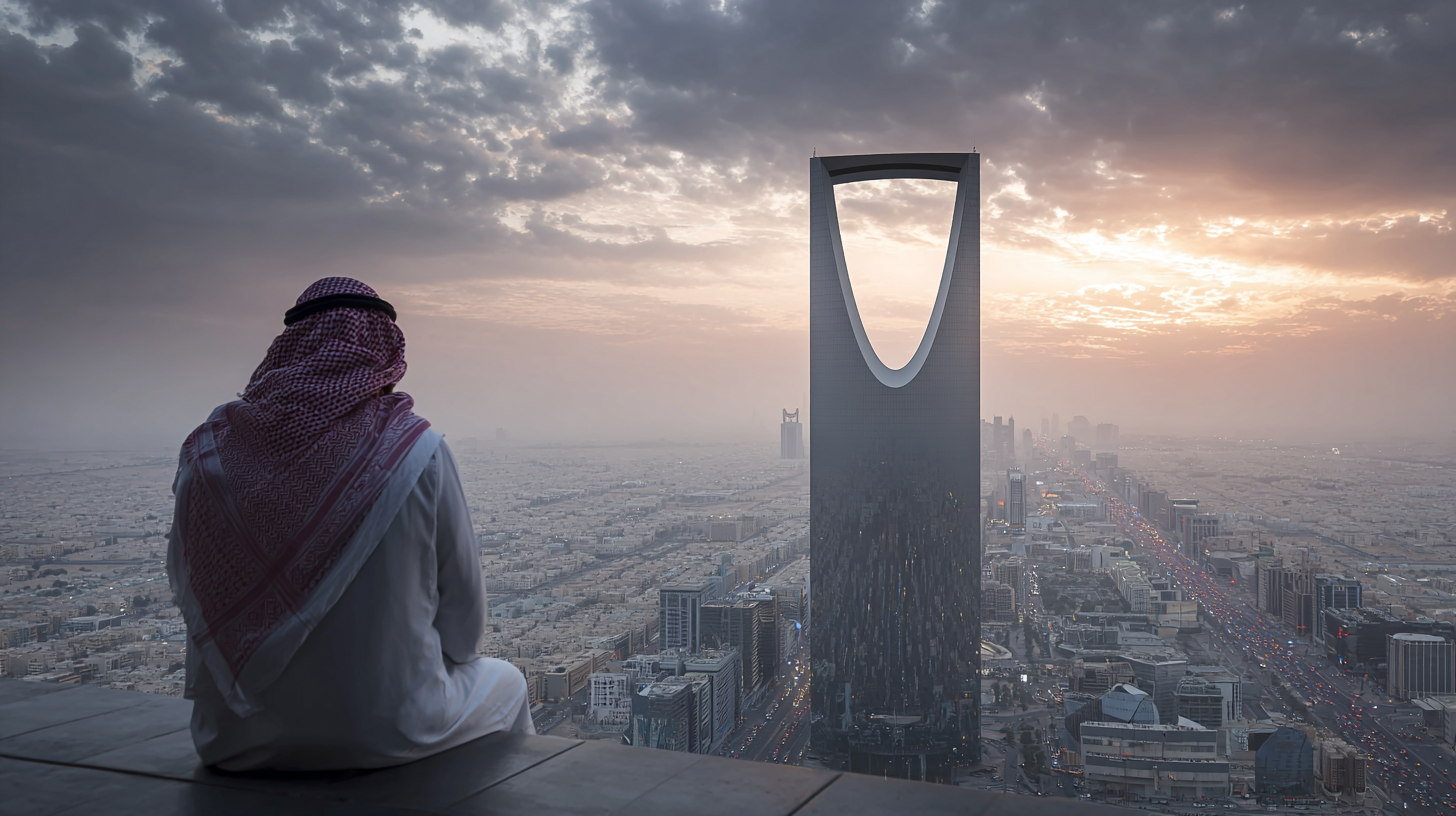
New realpolitik in the desert: Why Germany is seeking closer ties with Saudi Arabia – Creative image: Xpert.Digital
Afraid of Trump? Merz forges new alliance in the desert
Billion-dollar deal revealed: This is how Saudi Arabia plans to save Germany's economy
At the beginning of 2026, air traffic between Berlin and Riyadh was brisk. Within just a few weeks, Environment Minister Carsten Schneider, Economics Minister Katherina Reiche, and finally Chancellor Friedrich Merz had all traveled to the Gulf region in person. This diplomatic onslaught was no coincidence, but rather the result of a cool-headed strategic recalculation by the governing coalition of the Christian Democrats and Social Democrats. Faced with an uncertain global situation, characterized by the unpredictability of US President Donald Trump's second term and the sluggish economic recovery in Europe, Germany was seeking reliable partners with capital and resources.
Saudi Arabia, undergoing a radical social and economic transformation under Crown Prince Mohammed bin Salman and his "Vision 2030," offers precisely what German industry lacks: a willingness to invest, affordable energy, and vast markets for infrastructure projects. At the heart of the new partnership lies a historic quid pro quo: through strategic agreements, Germany secures access to future imports of green hydrogen and liquefied natural gas to meet its climate targets and diversify its energy supply. In return, Berlin opens the long-closed doors to arms exports and supplies cutting-edge technology that the kingdom urgently needs for its modernization.
But this demonstrative alliance with the desert state is a balancing act. While the economic advantages – from hydrogen pipelines to major contracts for German SMEs – are obvious, the persistently precarious human rights situation and the aggressive foreign policy of the past cast long shadows. The following article examines the background of this new “realpolitik in the Gulf,” analyzes the specific energy deals, and asks what the moral price is for Germany’s economic stability.
Related to this:

Why are top German politicians currently traveling to Saudi Arabia?
Why are so many German politicians and business leaders suddenly drawn to Saudi Arabia? At the end of January 2026, Environment Minister Carsten Schneider kicked things off by opening an environmental technology trade fair in Riyadh. Shortly afterward, Federal Economics Minister Katherina Reiche followed suit, brokering a far-reaching energy deal with the Saudis. Then, on February 4th, Chancellor Friedrich Merz traveled to the Gulf region himself, accompanied by a large business delegation. His three-day trip took him to Saudi Arabia, Qatar, and the United Arab Emirates.
The short answer to the question is: because the Saudis have overflowing coffers thanks to decades of booming oil sales, making them excellent business partners. At the same time, the German government is serious about intensifying its partnerships with influential states worldwide, given the unpredictability of US President Donald Trump. Saudi Arabia is at the top of this list.
For Germany, three crucial things the Kingdom can offer are at stake: money, gas, and oil. The Gulf states possess enormous financial resources and have shown themselves willing to invest in Germany and Europe. The new black-red coalition under Merz is convinced that this turning point requires five massive efforts: boosting economic growth, strengthening the European financial market, increasing military spending, curbing illegal migration, and establishing new trade relationships.
Energy partnership as the core of cooperation
What exactly did Katherina Reiche and the Saudi Energy Minister agree on? On February 1, 2026, they signed a strategic declaration of intent for an energy partnership in Riyadh. At its core, the agreement focuses on establishing a supply chain for green hydrogen, digitizing energy systems, and utilizing artificial intelligence. For Germany, this is an important step toward importing the large quantities of green hydrogen necessary to meet its climate targets.
Specifically, a green ammonia corridor will be created from Saudi Arabia to Germany. The project unites the Saudi energy giant ACWA Power, the German utility EnBW, the gas trader VNG, and the Port of Rostock. ACWA Power will build a large production plant for green hydrogen and ammonia in Yanbu, Saudi Arabia, which is scheduled to go into operation in 2030. The climate-neutral ammonia will be transported by ship to Rostock, where it will be converted into hydrogen in a special cracker plant and fed into the German hydrogen network.
Saudi Arabia's decisive advantage lies in the extremely low cost of solar and wind energy. Few countries can generate renewable electricity more cheaply, and thus also climate-friendly hydrogen. The agreement goes beyond hydrogen and encompasses all energy sectors, the chemical industry, carbon dioxide management, digitalization, and the development of reliable supply chains.
German interests and Saudi wishes
What does Germany hope to gain from this increased cooperation? Germany is primarily interested in liquefied natural gas (LNG) and wants to become more independent, including from the USA. Furthermore, the Germans want to purchase climate-friendly hydrogen produced from wind and solar power from the Gulf states. The German government urgently needs successes with hydrogen, as the goals set out in the National Hydrogen Strategy are still a long way off. Given the slow ramp-up of domestic production, the import of climate-neutral hydrogen is becoming increasingly important.
In return, the kingdom is eyeing top German technology to modernize its military capabilities. Advanced military technology is also on its wish list. Previously, arms deliveries to Saudi Arabia were frowned upon, but the coalition has adjusted its stance, according to government sources. Issues such as arms deals are now a priority, including Saudi Arabia's interest in the Airbus A400M and the Eurofighter.
The change in German arms export policy
How has Germany's stance on arms exports to Saudi Arabia changed? The previous federal government, a coalition of the CDU/CSU and SPD, largely halted arms exports to the hard-line desert state in October 2018, partly due to the kingdom's involvement in the Yemen war and the murder of journalist Jamal Khashoggi at the consulate in Istanbul. However, it allowed exceptions for joint projects with allies and repeatedly made use of them.
The traffic light coalition under Olaf Scholz made significantly greater use of these exceptions in its first year in office. While the previous center-right/center-left government approved arms exports to Saudi Arabia worth only €0.8 million in 2019, the traffic light coalition increased these export licenses to €44.2 million in 2022. At the end of 2023, the Federal Security Council approved the export of 150 Iris-T air-to-air missiles.
The German government's new assessment is based on the argument that, following the Hamas terrorist attack of October 7, Saudi Arabia is making a significant contribution to Israel's security and helping to contain the risk of a regional conflagration. With the new additional condition of being favorably disposed towards Israel, the government has expanded the conditions for German arms exports.
German companies in the Kingdom
How strong is the presence of German companies in Saudi Arabia? More than 800 German firms are now firmly established in the Kingdom. However, it's no longer just giants like Siemens Energy, but increasingly also medium-sized companies. German exports to Saudi Arabia amounted to approximately €6.6 billion in 2017.
Dalia Samra-Rohte, Delegate of German Industry and Commerce for Saudi Arabia at the German Chamber of Commerce Abroad, explained: Small and medium-sized enterprises from Germany, in particular, which have maintained close business relationships with the Kingdom for many years, are now expanding their activities and gradually establishing local value chains. This is evident, for example, in construction machinery, pump technology, and valves.
While traditional sales markets for German companies came under increasing pressure, Saudi Arabia, as a dynamic growth region, moved more into focus. The country is the largest economy in the Middle East and offers German companies numerous new business opportunities within the framework of the social and economic reform program Vision 2030.
Our global industry and economic expertise in business development, sales and marketing

Our global industry and economic expertise in business development, sales and marketing - Image: Xpert.Digital
Industry focus areas: B2B, digitalization (from AI to XR), mechanical engineering, logistics, renewable energies and industry
More information here:
A thematic hub offering insights and expertise:
- Knowledge platform covering global and regional economies, innovation and industry-specific trends
- A collection of analyses, insights, and background information from our key areas of focus
- A place for expertise and information on current developments in business and technology
- A hub for companies seeking information on markets, digitalization, and industry innovations
More than just oil: How Saudi Arabia is reinventing its economy with German help
Vision 2030 and the diversification of the Saudi economy
What is Vision 2030 and why is it so important for Saudi Arabia? Saudi Vision 2030 is a government initiative launched by Crown Prince Mohammed bin Salman on April 25, 2016. The project aims to diversify Saudi Arabia's economy, society, and culture. Its main objective is to improve financial management and reduce the country's economic dependence on oil.
The vision rests on three main pillars: to make the country the heart of the Arab and Islamic world, to transform it into a global investment powerhouse, and to establish its position as a hub connecting Afro-Eurasia. Through its partnership with Germany, Saudi Arabia gains access to German technology and expertise to utilize its exceptional solar resources for hydrogen production. The country aims to generate half of its electricity from renewable sources by 2030 and become a global exporter of clean energy.
Saudi Arabia's move to open itself up more is linked to the fact that the oil business, which has brought wealth to the country and the ruling family, does not alone guarantee a bright future. While Saudi Arabia, along with the United States, is one of the world's largest crude oil exporters, possessing the second-largest reserves after Venezuela, oil prices are under pressure. Saudi Arabia, too, wants to diversify its business, and German companies are looking to expand their operations in the Gulf region.
Related to this:

Tourism as a pillar of the future
What role does tourism play in Vision 2030? Saudi Vision 2030 positions tourism at the heart of the national transformation strategy, leveraging the Kingdom's diverse natural, cultural, and historical resources. This strategic vision significantly highlights tourism as a crucial economic and social driver, fostering growth, creating jobs, and solidifying Saudi Arabia's status as a world-class tourist destination.
After years of relying heavily on its oil and gas industries, Saudi Arabia is now looking to become a tourist destination. The country opened its doors to international leisure tourists in 2019, after years of restricting travel to business, religious, or family purposes. Saudi Arabia recorded a record 116 million tourists in 2024, compared to 80 million in 2019. The kingdom now hopes to attract 150 million visitors annually by 2030.
Tourism Minister Ahmed Al Khateeb emphasized that the sector already contributed about 5 percent to Saudi Arabia's gross domestic product in 2024, with the goal of reaching the global average of 10 percent by 2030. Saudi Arabia plans to host major events such as Expo 2030, the 2034 FIFA World Cup, and the UN Tourism Assembly.
Social reforms and liberalizations
What societal changes has Saudi Arabia undergone under Vision 2030? The country has implemented cautious liberalizations in recent years. Women have been allowed to drive since June 2018, making Saudi Arabia the last country in the world to lift this ban. Crown Prince Mohammed bin Salman is considered the driving force behind these reforms. More than half of the country's population is under 25 years old.
Since 2016, the so-called religious or Sharia police, which was responsible for enforcing Sharia-compliant dress codes, no longer exist. The abaya requirement was also abolished, and legally, women in the Kingdom are not obligated to cover themselves. However, many do so for their own personal or religious reasons. A headscarf is also not mandatory. Since May, women have been allowed to study and work without a guardian, and since July, girls have been permitted to participate in physical education classes.
Alcohol is reportedly on the verge of limited legalization. Starting in 2026, Saudi Arabia plans to license the sale and consumption of alcoholic beverages in approximately 600 select locations across the country. This strategic move marks a significant shift in the kingdom's traditionally strict regulatory stance on alcohol. The licensing will permit only wine, beer, and cider, excluding spirits and beverages with an alcohol content exceeding 20 percent. Sales will be restricted to five-star hotels, luxury resorts, and tourist centers such as the Red Sea Resort, Sindalah, and Neom.
Problems with megaprojects
Is everything going according to plan with Vision 2030? No, there are significant problems. Saudi Arabia has suspended construction of the Mukaab, a massive cube-shaped skyscraper planned for the heart of Riyadh's New Murabba district. The decision makes the Mukaab the latest high-profile Vision 2030 gigaproject to be delayed or scaled back as the kingdom's $925 billion sovereign wealth fund recalibrates its spending priorities.
Saudi Arabia is increasingly shifting its focus from capital-intensive, futuristic developments to projects deemed more urgent or commercially viable. Priority projects now include infrastructure for the 2030 World Expo, preparations for the 2034 FIFA World Cup, the $60 billion Diriyah Cultural Zone, and the Qiddiya entertainment and tourism project.
The Mukaab was planned as a 400-meter by 400-meter metallic cube containing a dome with the world's largest AI-powered display. Originally slated for completion by 2030, the New Murabba district has now been pushed back to 2040. Real estate consultancy Knight Frank has estimated that the New Murabba district will require approximately $50 billion in total. The development was projected to deliver 104,000 residential units, contribute 180 billion riyals to Saudi Arabia's gross domestic product, and create 334,000 jobs by 2030.
The downsides of modernization
Is there criticism of the human rights situation in Saudi Arabia? Yes, and this criticism is justified. There has been no sign of any adjustments regarding freedom of expression in Saudi Arabia. Anyone who posts the wrong thing on social media can still end up in prison. Saudi authorities continue their campaign to suppress peaceful social media activity.
Concrete examples illustrate the severity of the crackdown: In August 2022, student Salma al-Shihab was sentenced to 34 years in prison for sharing posts by women's rights activists on Twitter. According to human rights organizations, this is the harshest sentence of its kind handed down in the country to date. A Saudi-American dual citizen named Saad Almadi was arrested in 2022 during a visit to Saudi Arabia and sentenced to 19 years in prison for posting a 14-word tweet about the Crown Prince in 2015.
Since 2017, Saudi authorities have arrested hundreds of public figures from across the political spectrum. Human rights defenders and others exercising their rights to freedom of expression and association were also arbitrarily arrested and detained in 2024. They were often subjected to travel bans or sentenced to long prison terms in unfair trials.
The role of the USA under Donald Trump
How will Donald Trump's presidency affect relations between Saudi Arabia and the West? Saudi Arabia has mixed expectations ahead of Donald Trump's second term. On the one hand, the royal family maintains close business ties with the president-elect and his inner circle, which could lead to privileged access to the White House. On the other hand, Trump's Middle East policy, his confrontational stance toward China, and his plans to increase domestic oil production could jeopardize the kingdom's ongoing transformation under Vision 2030.
In November 2025, Crown Prince Mohammed bin Salman met with President Trump at the White House. Trump declared Saudi Arabia a key non-NATO ally and signed a historic strategic defense agreement. Saudi Arabia agreed to purchase nearly 300 American tanks, securing hundreds of American jobs. The two shared a regional vision that favored trade over chaos and technological investment over ideological confrontation.
This presents opportunities for Germany and its European partners to intensify cooperation with the Kingdom, not least to advance their own strategic interests vis-à-vis Washington. The further implementation of Vision 2030 is all the more dependent on the sustainable stabilization of the region, the associated improvement in the investment climate, and a high level of government revenue.
Germany's new strategy: Why Saudi Arabia is so important now
What is the significance of the current rapprochement between Germany and Saudi Arabia? The intensified relations between Germany and Saudi Arabia are part of a strategic realignment of German foreign policy in a world undergoing a reorganization. Merz and his government are convinced that Germany must diversify its partnerships with influential states to become less dependent on the US and China. Saudi Arabia offers a combination of financial resources, energy supplies, and investment potential in this regard.
For Saudi Arabia, the partnership with Germany is a key component of its Vision 2030. German technology and expertise are crucial for the planned transformation from an oil-dependent economy to a diversified, modern one. The hydrogen partnership could play a pivotal role in this transformation and serve as a blueprint for further green energy trade routes between the Middle East and Europe.
Visits from Germany will come to a halt after Merz's visit. The fasting month of Ramadan begins in mid-February. However, the strategic partnership between the two countries will deepen further in the coming years, although balancing economic interests and human rights issues will remain an ongoing challenge.
Your global marketing and business development partner
☑️ Our business language is English or German
☑️ NEW: Correspondence in your native language!

Konrad Wolfenstein
I and my team are happy to be available to you as your personal advisor.
You can contact me by filling out the contact form here or simply call me at +49 7348 4088 965. My email address is: [email protected]
I'm looking forward to our joint project.
☑️ SME support in strategy, consulting, planning and implementation
☑️ Creation or realignment of the digital strategy and digitization
☑️ Expansion and optimization of international sales processes
☑️ Global & Digital B2B trading platforms
☑️ Pioneer Business Development / Marketing / PR / Trade Fairs
🎯🎯🎯 Benefit from Xpert.Digital's extensive, five-fold expertise in one comprehensive service package | BD, R&D, XR, PR & Digital Visibility Optimization

Benefit from Xpert.Digital's extensive, five-fold expertise in a comprehensive service package | R&D, XR, PR & Digital Visibility Optimization - Image: Xpert.Digital
Xpert.Digital possesses in-depth knowledge across various industries. This allows us to develop tailored strategies precisely aligned with the requirements and challenges of your specific market segment. By continuously analyzing market trends and monitoring industry developments, we can act proactively and offer innovative solutions. The combination of experience and expertise generates added value and provides our clients with a decisive competitive advantage.
More information here:










