
Saudi Arabia: On the cusp of becoming an industrial superpower? German engineering expertise and China in key roles
Xpert Pre-Release

Available in 27 languages 📢
Prefer Xpert.Digital on GoogleⓘPublished on: October 23, 2025 / Updated on: October 23, 2025 – Author: Konrad Wolfenstein
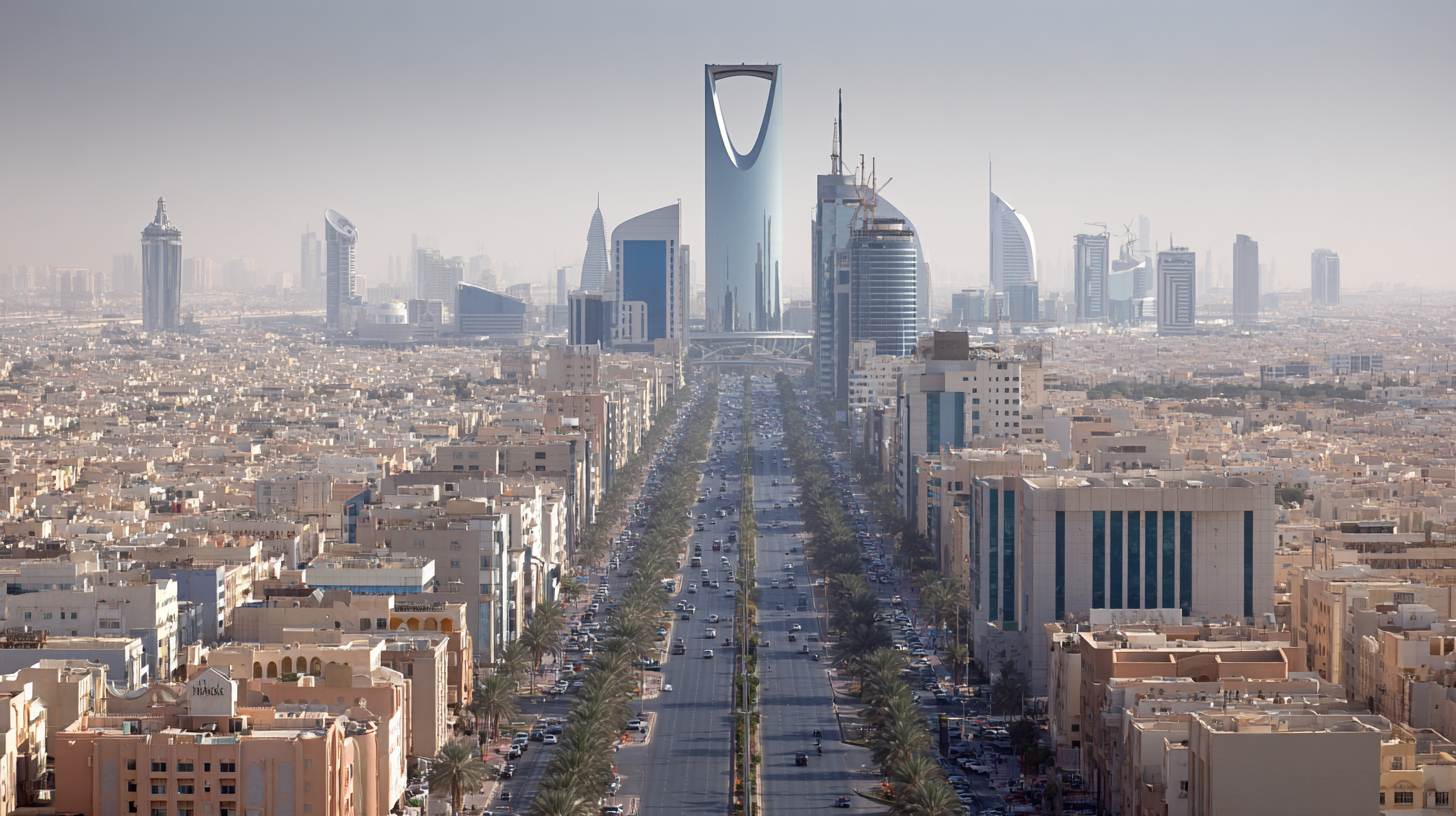
Saudi Arabia: On the cusp of becoming an industrial superpower? – Creative image: Xpert.Digital
Vision 2030 – Paradigm shift or risky tightrope walk in the desert?
Saudi Arabia's industrial revolution as a game changer?
Saudi Arabia is undertaking one of the world's most ambitious industrial transformations, positioning itself at the intersection of global economic dynamics, geopolitical power shifts, and technology-driven upheavals. The Kingdom aims to drastically reduce its dependence on oil by 2035 and transform itself into an international hub for manufacturing, raw material processing, and future technologies. At its core is the goal of establishing more than 36,000 factories in 40 existing industrial zones by 2035. Few countries have initiated such a comprehensive realignment in such a short period. The implications are enormous: Saudi Arabia's strategic shift is influencing energy markets, global supply chain innovation, and geopolitical alliances, and requires foreign partners, particularly Germany, to adopt a forward-looking innovation and cooperation strategy.
The analysis is divided into key areas: Following the historical derivation, the driving forces and actors are examined, a current status is presented with data and facts, case studies on international interconnectedness are analyzed, risks and controversial debates are highlighted, development path and disruption scenarios are discussed, and the strategic implications are summarized in conclusion.
From the oil industry to a major industrial project – stages of a rethinking
Economic change cannot be understood without grasping the preceding stages of development. For decades, the Saudi economy was almost entirely focused on oil exports. The oil boom of the 1970s shaped society and politics, while the following decades were characterized by recurring crises, fluctuating production quotas, and an inefficient distribution system. Efforts toward diversification began in the 1990s but remained marginal.
With the collapse of oil prices starting in 2014 and the growing challenges posed by demographic change, unemployment, and geopolitical uncertainties, fundamental reforms became unavoidable. Vision 2030, launched in 2016 by Crown Prince Mohammed bin Salman, marks a turning point: the goal is a flexible, innovative industrial nation with global competitiveness. This will be achieved through foreign technology partnerships, government guidance, mega-infrastructure projects, and new regulatory frameworks. In particular, the "Special Economic Zones" and the centrally controlled licensing system promise control mechanisms, transparency, and investment security.
Structure and forces: The mechanics of industrial transformation in Saudi Arabia
The transformation is multidimensional. Key players include the Saudi government, especially the Ministry of Industry and Natural Resources, international and local companies, institutions such as the Saudi Authority for Industrial Cities (MODON), the Public Investment Fund (PIF), and a growing network of service providers, suppliers, and educational stakeholders.
The main driving force stems from incentive structures: attractive energy prices, tax advantages, modern licensing management, and a strategic location between the markets of Africa, Asia, and Central Arabia. Special economic zones and targeted subsidies accelerate industrialization processes. Universities and research centers are being expanded to provide qualified training for skilled workers. In contrast, a rapidly growing, young population with a desire for participation is putting pressure on innovation and job creation.
The focus is on technological innovation fields such as artificial intelligence, automation, green energy technologies, and advanced logistics. Synergies between traditional industrial sectors (petrochemicals, basic materials) and emerging fields (e-mobility, biotechnology, digital platforms) are systematically promoted. Market mechanisms are modified through the targeted management of value chains and the integration of foreign experts and investors.
Status quo: Data, indicators and acute challenges
Saudi Arabia is already showing significant progress in implementing its strategy. Between 2016 and 2024, the number of industrial plants increased from around 7,200 to over 12,000, with a target of 36,000 factories by 2035. The economic output of the non-oil sector grew by 4.7% in 2025 compared to the previous year, contributing 2.7 percentage points to overall growth. The country has a total GDP of nearly $2.8 trillion (purchasing power parity) and aims to triple its industrial value added to approximately $377 billion by 2035.
During the same period, non-oil-based exports increased by approximately 18%, reaching over $100 billion. Particularly noteworthy are the mechanical engineering and chemical industries, as well as the development of high-tech sites and cluster investments, such as in Jeddah and KAEC. The number of employees in the industrial sector is projected to rise from approximately 1.5 million currently to 3.3 million by 2035. Challenges remain, including the training of local workers, the integration of women (whose share of the workforce recently rose to 35%), excessive migration, and the efficient use of resources.
Regulatory reforms, such as the introduction of a new investment law, full opening to foreign shareholders, and the digitalization of administration, are fostering encouraging investment momentum. Foreign direct investment reached approximately SAR 3 trillion in 2025, with continued inflows, particularly from Europe and Asia.
Our global industry and economic expertise in business development, sales and marketing

Our global industry and business expertise in business development, sales and marketing - Image: Xpert.Digital
Industry focus: B2B, digitalization (from AI to XR), mechanical engineering, logistics, renewable energies and industry
More about it here:
A topic hub with insights and expertise:
- Knowledge platform on the global and regional economy, innovation and industry-specific trends
- Collection of analyses, impulses and background information from our focus areas
- A place for expertise and information on current developments in business and technology
- Topic hub for companies that want to learn about markets, digitalization and industry innovations
Saudi Arabia's industrial offensive: Germany and China play key roles
International Interconnections: Case Studies on Germany, China and the UAE
Saudi Arabia's industrial development is interwoven with a complex network of global partnerships, most notably with Germany and China.
Germany, with its engineering and manufacturing expertise, is a key focus of Saudi recruitment programs. Export volumes of German machinery, vehicles, and pharmaceutical products to Saudi Arabia amounted to nearly US$9 billion in 2024, while imports from Saudi Arabia reached approximately US$2.5 billion. Extensive cooperation models and technology transfers are emerging, particularly in the areas of green hydrogen, megaprojects (NEOM), medical technology, and automation. New investment laws guarantee up to 100% foreign ownership and attractive tax conditions.
China is both Saudi Arabia's largest trading partner and a key strategic investor. Over 750 Chinese companies now operate in Saudi Arabia, focusing on mining, chemicals, e-mobility, and logistics. Bilateral trade in 2025 reached over $116 billion, supported by strategic investments, technology transfers, and joint ventures. Extensive synergies exist, particularly in Industry 4.0, green energy, and infrastructure, such as in the development of port and industrial sites like Oxagon. A similar strategic partnership exists with the United Arab Emirates, with which Saudi Arabia competes for regional industrial and logistics hub status. Saudi Arabia is increasingly relying on attracting headquarters, tax incentives, and targeted regulation to encourage companies to enter the market.
Controversial aspects: risks, fault lines and open debates
Industrial transformation carries significant risks and remains the subject of controversial debate. Socioeconomic risks arise from unequal employment structures, challenges in skills development, the high proportion of migrant workers, and a discrepancy between aspiration and reality regarding the integration of Saudi youth. Critics warn that despite digitalization and automation, many goals, such as a significant reduction in unemployment, diversification, and increasing the private sector's share of GDP, are being achieved only slowly.
The massive investments in megaprojects are being debated in terms of sustainability and environmental impact. While Saudi Arabia is implementing initiatives such as the "Saudi Green Initiative" and extensive ESG programs and has committed to climate targets, the ecological transformation remains a significant challenge given the scale of resource consumption, urbanization, and emissions. The effects on flora, fauna, and societal sectors have not yet been fully analyzed.
Political risks arise from the authoritarian state model, a lack of freedom of expression, and sometimes restrictive regulations regarding social and civic participation. Critics point to repressive measures, low transparency, and persistent human rights problems, which are debated internationally under accusations of "sportswashing" and PR-driven image management.
Perspectives: Scenarios and potential disruptions until 2035
The outlook remains uncertain, but several scenarios are conceivable:
- In the baseline scenario, Saudi Arabia continues its industrial expansion, increases the share of the non-oil sector in GDP, boosts export volumes, and establishes itself as a leading manufacturing hub in the Middle East. However, this will only succeed if it continues to open its doors to foreign skilled workers, facilitates the transfer of innovation, and stabilizes its education and social systems.
- In this innovation scenario, the Kingdom will become a global hub for future technologies such as green energy, autonomous driving, aviation, biotechnology, and digital infrastructure. Strong regulatory frameworks and investment programs will promote technology transfer and create an ecosystem of startups, university spin-offs, and multinational corporations.
- Alternatively, reforms could stall in the event of exogenous shocks such as oil price collapses, geopolitical tensions, or failures in labor market integration. The risk of social unrest increases if the employment, innovation, and diversification goals postulated in Vision 2030 are not achieved.
- Finally, there is the possibility of profound ecological and social disruption if sustainability and equality are not systematically integrated into industrial transformation. A course correction is therefore necessary – particularly regarding resource consumption, water and energy management, emissions reduction, and social participation.
Long-term relevance and implications for decision-makers
Saudi Arabia's industrial transformation is a key international project with direct implications for German industry, European supply chains, global energy markets, and geopolitical relationships. Decision-makers in business and politics must prepare for a fundamental realignment of trade, location, and innovation strategies. A targeted approach to education, skills development, investment protection, sustainability, and technology transfer will be essential for a successful partnership.
In the long term, Saudi Arabia's transformation serves as a blueprint for many resource-rich states seeking a similar diversification path. The combination of modernization, openness to foreign partners, a willingness to innovate, and regulatory flexibility makes the Kingdom a geopolitical and economic testing ground for the 21st century. The success or failure of the "industrialization in Saudi Arabia" project will decisively influence the global economic structure of the coming decades and will remain a key point of reference for political, industrial, and social decisions far beyond the country's borders.
Your global marketing and business development partner
☑️ Our business language is English or German
☑️ NEW: Correspondence in your national language!

Konrad Wolfenstein
I would be happy to serve you and my team as a personal advisor.
You can contact me by filling out the contact form or simply call me on +49 7348 4088 965 (Munich) . My email address is: wolfenstein ∂ xpert.digital
I'm looking forward to our joint project.
☑️ SME support in strategy, consulting, planning and implementation
☑️ Creation or realignment of the digital strategy and digitalization
☑️ Expansion and optimization of international sales processes
☑️ Global & Digital B2B trading platforms
☑️ Pioneer Business Development / Marketing / PR / Trade Fairs
🎯🎯🎯 Benefit from Xpert.Digital's extensive, five-fold expertise in a comprehensive service package | BD, R&D, XR, PR & Digital Visibility Optimization

Benefit from Xpert.Digital's extensive, fivefold expertise in a comprehensive service package | R&D, XR, PR & Digital Visibility Optimization - Image: Xpert.Digital
Xpert.Digital has in-depth knowledge of various industries. This allows us to develop tailor-made strategies that are tailored precisely to the requirements and challenges of your specific market segment. By continually analyzing market trends and following industry developments, we can act with foresight and offer innovative solutions. Through the combination of experience and knowledge, we generate added value and give our customers a decisive competitive advantage.
More about it here:










