
“Dirty deal” or bitter reality? Weapons for Saudi Arabia? Are the critics of Merz’s Gulf strategy making it too easy for themselves?
Xpert Pre-Release

Available in 27 languages 📢
Prefer Xpert.Digital on GoogleⓘPublished on: February 9, 2026 / Updated on: February 9, 2026 – Author: Konrad Wolfenstein
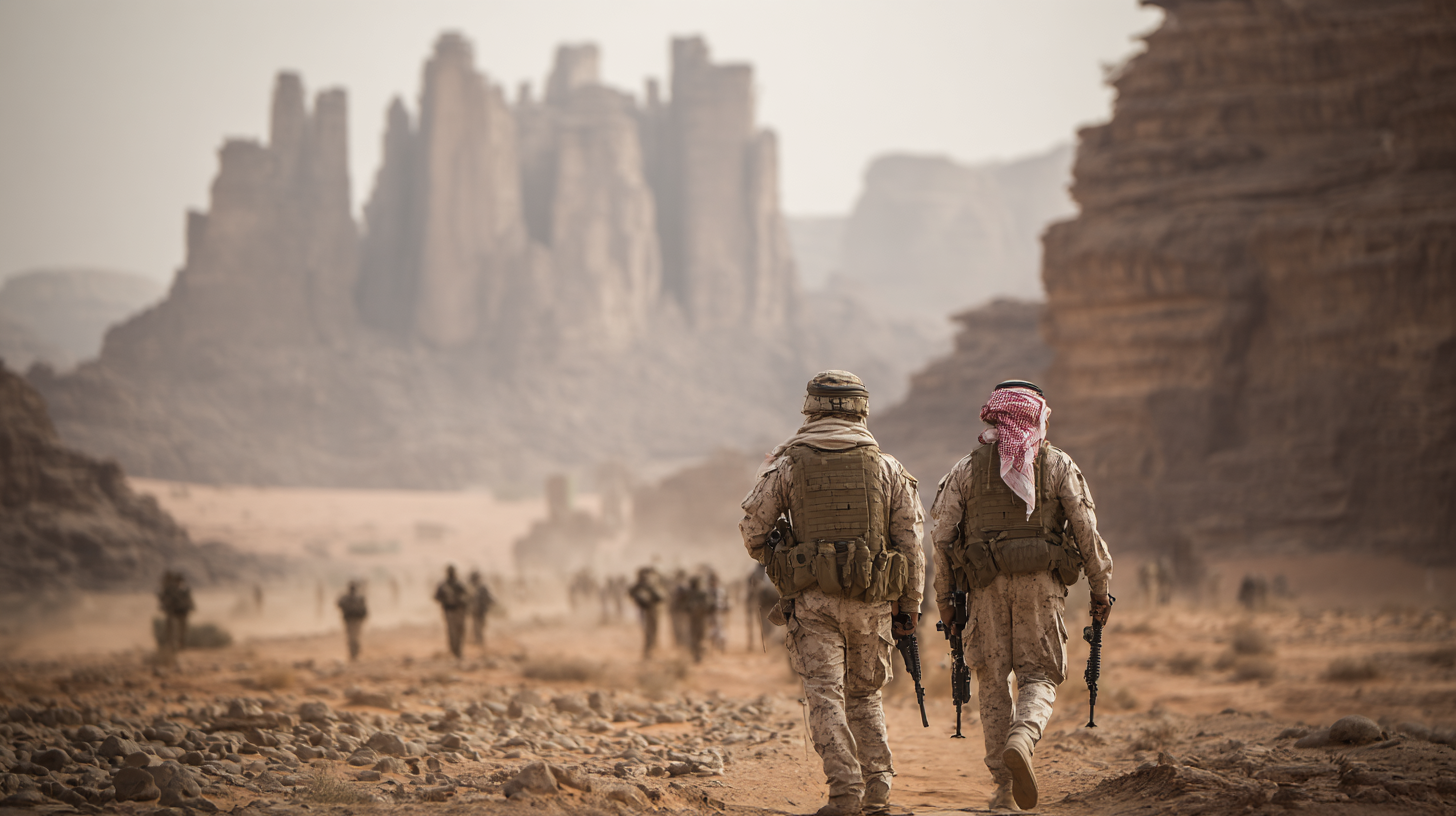
“Dirty deal” or bitter reality? Weapons for Saudi Arabia? Are the critics of Merz’s Gulf strategy oversimplifying things? – Creative image: Xpert.Digital
Between values and billions: Why Germany can no longer be picky in the Gulf
Realpolitik instead of wishful thinking: The dilemma of German interests in the Gulf
The polemical term "dirty deal," which shapes the current debate about arms cooperation with the Gulf States, precisely marks the fault line where modern Germany stands: It is the conflict between the idealistic aspiration of a values-based foreign policy and the harsh geopolitical and economic realities of an increasingly uncertain world order.
Chancellor Friedrich Merz faces a strategic necessity that leaves little room for moral absolutism. At a time when energy security, stable supply chains, and the resilience of domestic industry determine the prosperity and security of the Federal Republic, partnerships with difficult actors become unavoidable. Here, the understandable yearning for an ethically perfect world clashes with the uncompromising realities of international diplomacy.
Criticism of human rights violations remains important and justified – but those who reject all cooperation from a position of moral purity often overlook the complex nuances of global politics. In this context, an ethics of responsibility means making decisions that are not always "clean" in an idealistic sense, but are necessary to ensure state capacity and stability. The dispute over Gulf cooperation is therefore less evidence of a lack of morality than a testament to how difficult it is to pragmatically assert German interests in an imperfect world.
What is meant by the "dirty deal"?
The term “dirty deal” is used in the debate surrounding Chancellor Friedrich Merz’s announced arms cooperation with several Gulf states to criticize the mixing of security policy, economic interests and human rights.
For critics – especially from the Left Party and the Greens – this term means that Merz is expanding German arms exports to countries known for systematic human rights violations, prioritizing economic gains and political entanglements. Jan van Aken, leader of the Left Party, speaks of a "dirty deal: weapons in exchange for ever-increasing profits for German business leaders," an arrangement in which Western security rhetoric and commercial interests are given precedence, even though the regimes in those countries violate human rights standards.
This suggests that arms cooperation does not primarily stem from stabilizing or peace-building motives, but rather from a package of political normalization, economic interdependence, and the military safeguarding of geopolitical interests. The term "dirty" thus implies a moral and ethical critique: that the German government knowingly or tacitly accepts that arms will end up in contexts where human rights are violated, conflicts escalate, or authoritarian regimes are strengthened.
Why is the criticism from the left and the Greens so sharp?
The Left Party and the Greens reacted to Merz's announcement with clear outrage, because the protection of human rights, the avoidance of escalating conflicts and a restrictive arms export policy are central pillars in their security and foreign policy guidelines.
Jan van Aken criticizes the German government for ignoring human rights concerns regarding states like Saudi Arabia. He points to executions, restrictions on women's rights, the persecution of opposition figures, and the potential complicity of the Gulf states in regional conflicts. For him, the weakening or easing of export restrictions is tantamount to politically condoning these conditions. The accusation is therefore not only technical but also moral: the German government is allowing itself to be lulled by the propaganda of Crown Prince Mohammed bin Salman and is normalizing authoritarian regimes by expanding military cooperation.
The Greens, and in particular Sara Nanni, the parliamentary group's spokesperson on security policy, also view the announcement critically. She accuses Merz of using arms cooperation with the Gulf states primarily in the context of his "fossil fuel agenda" and his planned return to a more active, primarily military-oriented foreign policy. The Greens argue that the reasons for a restrictive export policy remain: the United Arab Emirates are problematically involved in the Sudan conflict, Saudi Arabia is responsible for serious human rights violations, and Qatar is suspected of having corrupted European politicians.
For these parties, arms policy is not a neutral business model, but rather an integral part of shaping the republic's foreign policy. Expanding arms cooperation with states that fuel conflicts elsewhere or operate repressive systems domestically therefore contradicts their political ethics and their understanding of security.
What geopolitical motives lie behind the announced arms cooperation?
Geopolitically, Merz's announcement can be understood as part of a broader strategy to reposition Germany in an increasingly multipolar security environment. This is against the backdrop of the shift in global power relations between the US, China, Russia, India, the Middle East, and the EU, a shift that has been noticeable for years.
The Gulf region plays a crucial role in this: it is a central hub for energy flows, global trade routes, regional conflicts, and access to markets in Africa and Asia. With Saudi Arabia, the United Arab Emirates, and Qatar, states have emerged that not only possess enormous financial reserves but also actively intervene in other regions – for example, in Sudan, Yemen, or the Horn of Africa.
By announcing closer arms cooperation with these states, Merz is clearly seeking to gain influence on several levels:
- Germany should be taken seriously as a military partner, not just as an economic one.
- The Gulf States are to be involved as “reliable cooperation partners” in security matters, for example in the context of maritime security, air traffic and energy infrastructure.
- Germany is signaling its willingness to operate in an expanded security partnership, even with countries that are not democratically organized.
Against the backdrop of conflicts such as the war in Ukraine, tensions in the Middle East, the role of Iran, and the question of energy supply in Europe, active arms cooperation with Gulf states is an option for Berlin to strengthen geopolitically relevant allies. The logic is that whoever supplies arms also exerts political influence – for example, through consulting, training, joint exercises, or the joint development of technologies. This can lead to Berlin being involved in security issues in the region, instead of merely acting as an outsider without its own military presence.
How does this fit with German security policy of recent years?
Germany's security policy developments since 2014, intensified by Russia's war of aggression against Ukraine in February 2022, have led to a fundamental rethink. The debate surrounding monuments and the "turning point" in history, along with the increase in the defense budget, have shifted the Federal Republic from a more restrained, conflict-avoidant security policy towards a more active, militarily engaged role.
Merz is using this shift to emphasize an even stronger focus on military cooperation. His appeal that the world will only become safer if Germany also defends itself reflects the assumption that passive security policy is no longer sufficient. In this context, armaments are understood not only as a product, but also as an instrument of foreign policy.
At the same time, the announcement also raises questions:
- How do close military partnerships with autocratic regimes fit with a concept of security that is based on international law and human rights?
- Can arms deliveries actually achieve greater stability if they can infiltrate internal conflicts or regional rivalries?
- What role does the fear of the Gulf States drifting further towards other powers, such as China, play if the West continues to scale back its security policy?
The German government emphasizes that arms exports will continue to be reviewed on a case-by-case basis. This is intended to counter criticism from the Left Party and the Greens that Germany supplies weapons "completely unchecked." However, there is a clear trend toward expanding exceptions and loosening the political framework for exports, as long as the partners are considered "reliable.".
Economic importance of arms exports to the Gulf
Economically, the Gulf States are highly attractive to the German arms export industry. These countries possess enormous financial reserves, primarily from oil and gas sales, and have significantly increased their military budgets in recent years. They are interested in modern air and naval forces, air defense systems, cyber and space technologies, and sophisticated command and control systems – areas in which German companies are, in some cases, leaders.
For German arms companies such as Rheinmetall, Krauss-Maffei Wegmann, Airbus or ThyssenKrupp Marine Systems, closer cooperation with Gulf states means:
- increasing order volume,
- Securing jobs and production sites in Germany,
- long-term contracts for maintenance, training and retrofitting,
- Opportunities for the joint development of new systems.
Many business representatives welcome this prospect as a boost to the industry. Especially in an environment where the entire German industry is characterized by downturn, energy costs, and a lack of investment, large-scale defense projects are considered an important economic factor.
At the same time, the link between arms exports and economic gain raises precisely the question posed by critics: Are economic interests, or political and ethical considerations, the primary factors in deciding which countries receive arms? Describing these exports as a "dirty deal" implies the assumption that economics and security policy are in an unhealthy relationship.
For the German government, however, the argument is less moral and more pragmatic: Germany needs strong industrial sectors to remain militarily capable. Without economically thriving arms companies, the Bundeswehr cannot be adequately modernized. Furthermore, it is argued that German arms are produced in an international environment where other countries like the USA, France, and Russia have long been exporting massively and with less stringent criteria.
What role do human rights and human rights violations play?
The criticism from the left and the Greens is largely based on the human rights discourse. Van Aken and Nanni emphasize that Saudi Arabia continues to commit serious human rights violations, such as executions, restrictions on women's rights, and the persecution of dissidents. Qatar and the United Arab Emirates are also sharply criticized, for example, in connection with working conditions, political repression, and attempts to exert influence on European politicians.
For these positions, the question of whether arms should be supplied to such states is not merely a security policy or economic issue, but a more fundamental ethical one. The argument here is that a democracy like Germany should not systematically supply weapons to regimes that violate fundamental rights, fuel conflicts, or intervene in other countries without being held accountable.
The German government, however, argues that the case-by-case review of arms exports concerns specific situations and not a general suspicion of entire states. According to this view, a country should not be categorically excluded simply because it has human rights shortcomings, but rather sites and projects should be assessed to determine whether there are concrete risks of weapons ending up in ethically or legally problematic contexts.
In Germany, the legal situation is actually shaped by EU arms export control guidelines and national laws. Germany may only supply arms if certain criteria are met, such as compliance with human rights standards, the risk that the goods could be used in conflicts, and the impact on stability in the region. When the German government claims that these criteria still apply, it is trying to avoid the impression that this is purely a matter of "business logic.".
However, the criticism remains: the criteria are vaguely formulated, open to political interpretation, and often loosely applied in practice. The statement that individual cases are reviewed is frequently used as justification to push through deliveries, even when risks exist.
This makes the human rights issue a central point of contention: Should German foreign policy be guided by the idea that human rights are not only symbolically upheld, but in practice serve as an obstacle to arms exports? Or is Germany's role rather that of a responsible, but not naive, actor, prepared to cooperate militarily to secure its own interests and the stability of certain regions?
How does arms cooperation affect the region?
The Gulf region is an area of intense geopolitical tension: The issues at stake include Iran's influence, the conflict in Yemen, the status of the Palestinian question, the handling of migration policy, and access to energy and trade routes. The role of Saudi Arabia, the United Arab Emirates, and Qatar is contradictory: On the one hand, they attempt to position themselves as modernizing, economically open regimes, for example, through visions for diversifying their economies. On the other hand, authoritarian structures persist, and interventions in other countries continue.
When Germany supplies arms to these countries, it strengthens their military capabilities. This can have various effects:
- The Gulf states can expand their own security systems, such as air defense, coastal surveillance, or cybersecurity.
- They can further strengthen their role as regional actors, for example in the context of conflicts in Yemen, Sudan or on important maritime trade routes in the Red Sea and the Persian Gulf.
- They can distance themselves economically and politically from the influence of other powers, such as the USA, while simultaneously involving other partners like Germany or France.
The question, however, is whether this arms buildup will actually lead to greater stability and fewer conflicts – or rather increase the risk of arms races, escalation, and further militarization? Critics fear that arms deliveries to regions with existing tensions are not neutral, but in fact strengthen one side or at least are perceived as a signal of political bias.
Merz argues that closer arms cooperation with reliable partners contributes to a safer world. He links this security logic to the idea that stable partners in the Gulf region help prevent conflicts and promote cooperation on global security issues. Nevertheless, the question remains whether arms deliveries actually build trust or are perceived more as an expression of power dynamics and political interests.
Hub for Security and Defense - Advice and Information

Hub for Security and Defense - Image: Xpert.Digital
The Security and Defence Hub offers expert advice and up-to-date information to effectively support companies and organizations in strengthening their role in European security and defence policy. Working closely with the SME Connect Defence Working Group, it particularly promotes small and medium-sized enterprises (SMEs) that wish to further develop their innovative capacity and competitiveness in the defence sector. As a central point of contact, the Hub thus creates a crucial bridge between SMEs and European defence strategy.
Related to this:
Germany's go-it-alone approach: Will this arms deal jeopardize EU security?
How does the deal influence the political debate in Germany?
The debate over arms exports has been a central point of contention in German foreign and security policy discussions for decades. Chancellor Friedrich Merz's announcement of plans to intensify arms cooperation with Gulf states has reignited old divisions between political parties and within society.
For the Left Party, this issue is part of a comprehensive rejection of arms exports. Left Party leader Jan van Aken states clearly: He fundamentally rejects arms exports and emphasizes that every delivery of weapons to crisis regions or authoritarian regimes increases the risk that German technology will be involved in human rights violations or war crimes. For him, Merz's decision is therefore not only a political mistake, but a breach of the norm that Germany must align its security policy with ethical and legal standards.
The Greens, on the other hand, take a middle ground. They do not accept arms exports across the board, but demand strict criteria, transparency, and restrictive practices. Sara Nanni emphasizes that the German government has never placed the Gulf states under general suspicion, but that there are concrete reasons for export restrictions – such as the role of the United Arab Emirates in the Sudan conflict, the human rights situation in Saudi Arabia, or suspected cases of corruption in Qatar. From this perspective, Merz's announcement appears to be a weakening of these criteria and a sign that foreign policy is increasingly being shaped by economic and military interests.
For the governing parties – especially the CDU and its coalition partners – the question is primarily one of security capability and political influence. They argue that in an increasingly precarious security environment, Germany cannot rely solely on allies like the US or France, but must develop its own military and industrial capacities. Closer arms cooperation with Gulf states is seen as part of a "strategic sovereignty" that will make Germany more independent and capable of taking action.
The political impact of the deal is therefore multifaceted:
- It further polarizes the parties on issues of security, human rights and economic interests.
- It intensifies the debate about whether Germany wants to position itself as a more "moral" or "realistic" actor on the world stage.
- He raises the question of how dependent the German government is on arms exports and thus on large industrial companies.
This means that the “dirty deal” is not only a topic for foreign policy experts, but also a subject of public moral debate, in which citizens, NGOs and the media question the responsibility of the Federal Republic of Germany.
How does this affect Germany's role in the EU?
Merz's decision also has implications for Germany's role within the European Union. As the largest economy and one of the most important arms exporters, Germany is a recurring focal point for discussions about European arms policy and the question of whether a common security and defense identity should be established.
In recent years, the EU has sought to coordinate its defense policy, for example through the European Commission, the European Defence Agency, and programs such as the European Defence Fund. The aim is to create synergies, reduce dependence on third countries, and simultaneously guarantee human rights and security standards. Germany is a key player in this, not only because of its economic power but also because of its political influence.
When Merz announces close bilateral arms cooperation with Gulf states, this raises questions:
- Does Germany operate more as a "special path" actor, making its own deals instead of adhering to common EU export controls?
- Can such a bilaterally oriented policy still be reconciled with the idea of a common European security and defence policy?
- What signals is Berlin sending to other member states that may also be tempted to expand their arms exports?
The EU faces a significant risk that differing national interests could lead to a relaxation of common standards. If individual states – such as Germany, France, or Italy – ease their export regulations, others may follow suit in order to remain competitive. This could ultimately lead to a spiral of arms races and a further erosion of human rights standards.
At the same time, one could argue that Germany, through its arms cooperation in the Gulf region, also exerts an influence on the region that the EU as a whole could hardly achieve. If Berlin establishes closer security partnerships with Gulf states, it can involve them in dialogues on energy security, migration, conflict prevention, and regional stability. This could help integrate these states into European security structures and prevent them from being dominated solely by other powers such as China, Russia, or the USA.
This makes the “dirty deal” not only a German but also a European problem. The question is whether Germany will use its role as a “hegemonic” partner in the EU to defend higher standards, or whether it will exacerbate the fragmentation of European foreign and security policy through bilateral arms cooperation.
What role does China play in this context?
A key factor behind Merz's announcement is China's growing role in the Gulf region. In recent years, Beijing has intensified its economic and political ties with Saudi Arabia, the United Arab Emirates, and Qatar. China is not only a major consumer of oil and gas but also an investor in infrastructure projects, energy facilities, and technology.
This development is being perceived as a warning signal in Washington, Paris, and Berlin. If China gains influence in the Gulf region, it could challenge Western dominance in key energy and trade routes. The region is a strategic priority for the US, and the US is striving to strengthen its long-standing allies while simultaneously countering China's growing presence.
In this context, Germany faces a dilemma:
- It does not want to unnecessarily worsen its economic relations with China, as China is one of the most important export markets for German industry.
- At the same time, it wants to strengthen its relations with Arab states in order to be taken seriously as a security policy actor.
Arms cooperation with Gulf states can be interpreted as part of a strategy to counter China in the region. By forging close military partnerships with Saudi Arabia, the United Arab Emirates, and Qatar, Germany signals that these states depend not only on China but also on Western partners. This can help prevent the Gulf states from drifting entirely under China's influence.
At the same time, this raises new questions:
- How will the expansion of arms exports affect relations with China?
- Can Germany simultaneously maintain a “conceptual counterpart” relationship with China in the security sector and expand economic ties?
- Is the arms cooperation with Gulf states interpreted as a sign that Germany is strengthening the western front against China?
This means the "dirty deal" is not only a topic of debate between the Left and the Greens on the one hand and Merz on the other, but also an element of the global rivalry between the West and China. The question is whether Germany is acting as a "moral" or "realistic" actor on this front line – and whether its arms exports actually contribute to stabilizing the regional balance or whether they further exacerbate tensions.
How does arms cooperation change security policy?
Arms cooperation with Gulf states has profound implications for German security policy. It changes not only the way Germany acts militarily, but also how it is perceived in the world.
First and foremost, closer cooperation with Gulf states will integrate the German Armed Forces more strongly into global security structures. Joint exercises, joint training, and joint operations could lead to German soldiers operating in the Gulf region, and not just in Afghanistan, Mali, or the Baltic states. This means that Germany is expanding its role as a "global security actor.".
Secondly, security policy is changing with the inclusion of new partners. Gulf states are not only economic actors, but also political powers with their own range of interests. If Germany supplies arms, it also assumes responsibility for the consequences of these deliveries. The question is whether the German government is prepared to assume this responsibility – for example, through clear agreements on the use of the weapons, through surveillance capabilities, or through diplomatic messages to its partners.
Thirdly, arms cooperation impacts domestic defense policy. Arms exports promote the modernization of the Bundeswehr (German Armed Forces), as industry develops new technologies through contracts and delivers these to the Bundeswehr. At the same time, there is a risk that the Bundeswehr will be aligned with the export logic, for example, by prioritizing projects that are attractive to the export market instead of projects that primarily serve domestic security needs.
This makes arms cooperation with Gulf states a test case for German security policy:
- Can Germany balance moral principles with realpolitik interests?
- Can it strengthen its role as a security policy actor without losing its democratic values?
- Can it expand its relations with Gulf states without creating a dependency on authoritarian regimes?
The answer to these questions will significantly determine how Germany is perceived on the world stage in the coming years – whether as a “moral superman” who places his principles above reality, or as a “realistic actor” who is prepared to compromise in order to protect his security interests.
How is the public reacting to the "dirty deal"?
Public reaction to Merz's announcement is mixed. While many citizens understand the security logic – Germany must defend itself, and closer arms cooperation with Gulf states could contribute to this – others are deeply concerned about the moral and ethical implications.
The criticism from the Left and the Greens is shared by parts of the population, particularly by people who advocate for human rights, peace, and disarmament. For them, arms cooperation with Gulf states is a sign that the German government is prepared to sacrifice its values to promote economic interests and political influence. These groups are demanding transparency, oversight, and greater involvement of civil society in arms exports.
At the same time, there is a broad majority who view Germany's security policy as pragmatic and realistic. Many people support the modernization of the Bundeswehr (German Armed Forces) and see arms exports as a means of strengthening their own defense capabilities. They argue that Germany must not be naive in an uncertain environment and that close partnerships with Gulf states could help prevent conflicts.
The media play a central role in this. Depending on their perspective, arms exports are portrayed either as a "dirty deal" that ignores moral concerns, or as a necessary step to strengthen security. The media coverage sharpens and polarizes the debate – and public opinion reacts accordingly.
This turns the "dirty deal" into a socially contentious issue:
- Should Germany orient its security policy more strongly towards moral principles?
- Or is it more realistic to consider economic and political interests, even if this involves moral compromises?
The answer to these questions will be crucial in determining how the Federal Republic of Germany shapes its relations with Gulf states in the coming years – and how it sees itself as a security policy actor on the world stage.
Is the “dirty deal” important geopolitically, economically, and in terms of state policy?
The “dirty deal,” as it is called by Jan van Aken and other critics, is a central point in the current debate surrounding German security and foreign policy in several respects. Geopolitically, arms cooperation with Gulf states demonstrates Germany’s willingness to strengthen its role as a global security actor and to position itself in a multipolar environment. Economically, it provides leverage for German industry, which benefits from large arms exports, securing contracts, jobs, and investments. From a state policy perspective, it reflects the German government’s readiness to compromise in order to protect its security interests—even if this raises moral concerns.
The question is whether this compromise is the right answer to the challenges of the future. Can Germany strengthen its role as a security policy actor without compromising its democratic values? Can it expand its relations with Gulf states without creating a dependence on authoritarian regimes? And can it strengthen its own defense capabilities without increasing the risk of escalation and conflict?
The answer to these questions will decisively determine how Germany is perceived on the world stage in the coming years – and how it shapes its relations with Gulf states. The “dirty deal” is therefore not merely a topic of debate between the Left and the Greens on the one hand and Merz on the other, but a central point in the question of how Germany understands its role in the world.
Consulting - Planning - Implementation

Markus Becker
I would be happy to serve as your personal advisor.
Head of Business Development
Chairman SME Connect Defense Working Group
Consulting - Planning - Implementation
Konrad Wolfenstein
I would be happy to serve as your personal advisor.
contact me at wolfenstein ∂ xpert.digital
Just call me on +49 7348 4088 965 (Munich) .
Your dual-use logistics experts

Dual-use logistics experts - Image: Xpert.Digital
The global economy is currently undergoing a fundamental transformation, a watershed moment that is shaking the foundations of global logistics. The era of hyper-globalization, characterized by the relentless pursuit of maximum efficiency and the "just-in-time" principle, is giving way to a new reality. This new reality is marked by profound structural breaks, geopolitical power shifts, and increasing fragmentation of economic policy. The once taken-for-granted predictability of international markets and supply chains is dissolving and being replaced by a period of growing uncertainty.
Related to this:





