

How BYD's humanoid robot "Xiao Di" is escalating the tech war: USA bans China's robot
Xpert Pre-Release

Available in 27 languages 📢
Prefer Xpert.Digital on GoogleⓘPublished on: August 6, 2026 / Updated on: August 6, 2026 – Author: Konrad Wolfenstein
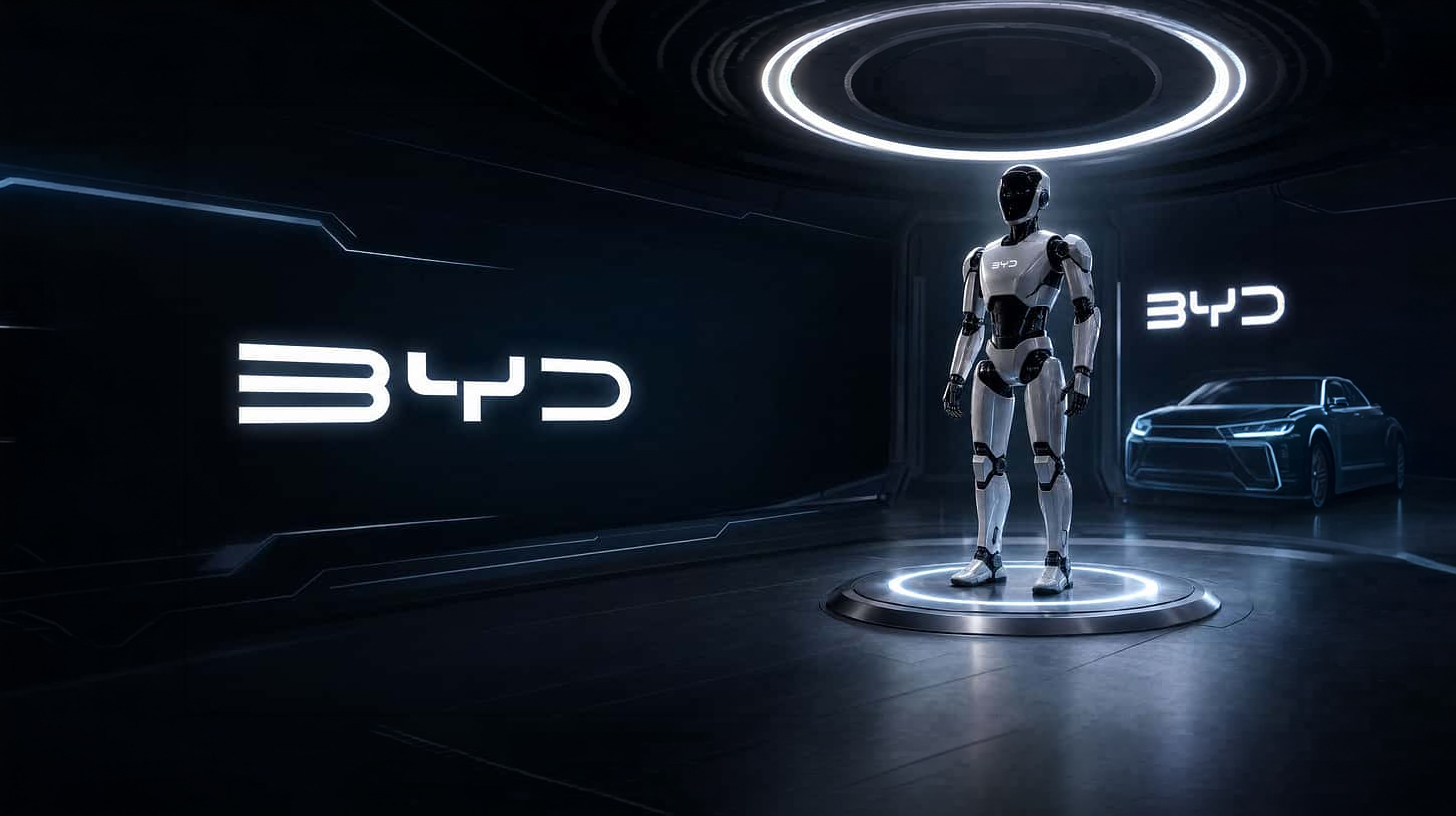
How BYD's humanoid robot "Xiao Di" is escalating the tech war: USA bans China's robot – Image: BYD
From cars to androids: Why BYD and others are now investing massively in humanoid robots
Ban on robots: Why the US fears China's new robot army
BYD attacks Tesla: New humanoid robot fuels the race between superpowers
The encroachment of Chinese technology companies into our daily lives is reaching a new dimension – and encountering massive political resistance. While automotive giant BYD is currently presenting its first humanoid robot, "Xiao Di," for commercial use in car dealerships, the US is pulling the regulatory emergency brake on the other side of the Pacific. A threatened ban by the US Federal Communications Commission (FCC) on Chinese high-tech systems clearly demonstrates that the trade dispute is no longer just about electric cars, semiconductors, or smartphones. Humanoid robots have become the latest, and perhaps most fascinating, arena in a bitter geopolitical struggle between Washington and Beijing. But why are car manufacturers suddenly transforming into robotics companies? What economic policy calculations lie behind the American blockade? And what does this "robot war of the continents" mean for the future global economic order? An analysis.
Related to this:

Robot war of the continents: When a tin man in the car dealership becomes a geopolitical weapon
The idea of a humanoid greeting robot in a Chinese car dealership might seem like a mere marketing ploy at first glance. However, the announcement of BYD's android Xiao Di actually marks the moment when two parallel trajectories in the global economy intersect head-on: China's industrial rise to become the dominant robotics power and Washington's political will to curb precisely this rise through regulation. What follows is an analysis of these events within their economic, industrial policy, and geopolitical context.
A car manufacturer becomes a robotics company
BYD has officially confirmed to Chinese business media outlets such as the South China Morning Post and Cailian Press that the company will unveil its first fully functional humanoid robot, named Xiao Di, in early August 2026. The presentation will take place at the company's Di Space experience center in Zhengzhou, where an official teaser already advertised that a new friend wanted to get to know visitors. Following the confirmation, BYD's stock rose by more than two percent in Hong Kong – an indication of how strongly investors now value humanoid robotics as a growth driver.
The technical specifications leaked beforehand paint a picture of a compact yet technologically advanced system. Xiao Di is approximately 1.61 meters tall, weighs about 58.5 kilograms, and has 31 degrees of freedom distributed across its hands, legs, hips, and neck. Its hands are designed to grasp loads of up to one kilogram with a positioning accuracy of about one millimeter, sufficient for tasks such as clearing tables or handing objects. The robot supports real-time translation into several Chinese dialects and foreign languages, features 360-degree surround vision with dynamic scene modeling, and offers facial, lip-sync, and gesture recognition. This clearly indicates that Xiao Di is designed as a showroom and sales assistant, not as an industrial robot for manufacturing.
Why a car manufacturer is getting into robotics
BYD's move seems less surprising when one considers the industrial logic behind it. BYD is one of the world's largest manufacturers of batteries, electric motors, and power electronics, and can directly transfer these key components from its own vehicle production to robotics development. The same actuators, battery cells, and control systems used in electric cars can also be adapted for humanoid systems, significantly reducing development and manufacturing costs. Tesla is pursuing precisely this approach with its Optimus program, which also builds on existing vehicle and battery technology.
BYD's Vice President Stella Li outlined the strategic direction in advance. Her goal is to eventually deploy two to three humanoid robots in every BYD store to greet customers, explain vehicles, and conduct product demonstrations. She anticipates that robots could reach practical maturity as sales assistants within one to two years, but emphasizes that robots cannot replace the emotional connection between human sales staff and customers, and that human employees will remain essential. This cautious stance aligns with a pattern observed across the industry: Humanoid robots are currently being introduced primarily as a complementary, image-enhancing technology, not as a replacement for human workers.
China's broad front in the global robotics race
BYD is far from the only Chinese automaker investing in humanoid robotics. Xpeng is developing its own platform with its Iron robot, Chery is pursuing the Aimoga project, and other manufacturers are working in parallel on humanoid systems for industrial and service applications. In addition, there are specialized robotics companies like Unitree and AgiBot, which, according to market analyses, already supply the majority of units worldwide. Market observers such as Counterpoint Research estimate that by 2025, around 80 to 85 percent of all humanoid robots installed worldwide will come from Chinese manufacturers, with a total of approximately 16,000 units installed globally. Morgan Stanley expects Chinese sales figures to more than double to around 28,000 units in 2026.
This dominance is no accident, but the result of decades of building an industrial infrastructure. China boasts the world's densest supply chain for electric motors, battery cells, sensors, and precision mechanics, as these components are already being produced in enormous quantities for the electric vehicle and electronics industries. Furthermore, the Chinese government is specifically supporting the robotics sector with subsidies and industrial policy targets aimed at achieving global market leadership by 2027. Analysts consider this goal quite realistic given the current investment and production dynamics.
America's answer: Regulation instead of market superiority
Almost simultaneously with BYD's announcement, the United States significantly tightened its defenses against Chinese robotics technology. On July 28, 2026, the US Federal Communications Commission (FCC) decided to add new, previously unapproved humanoid and quadrupedal robots, as well as networked inverters, to its so-called Covered List—the list of devices deemed an unacceptable risk to US national security. This means these categories of devices can no longer obtain new FCC device approval, which is mandatory for the import and sale of virtually all electronic devices in the US.
Technically, this is not a classic import ban in the sense of customs law, but rather a targeted blocking of the approval process through which the FCC has access to radio-emitting devices, which also include networked robots. Furthermore, the measure is not retroactive: already approved models may still be imported and sold, and devices already in use in homes and businesses are not affected by the regulation. Only new models and new versions of existing models that apply for approval in the future are affected. Thus, the regulation precisely targets the product generation to which BYD's Xiao Di belongs, provided the company intends to launch it in the US.
The FCC justifies the move with the risk of supply chain vulnerabilities, cybersecurity risks to critical infrastructure, and the possibility of espionage and data leakage through networked, permanently online robotic systems. The underlying security assessment by the White House specifically argues that foreign-made robotics could collect data that could be used by hostile actors to monitor American citizens, strengthen foreign intelligence services, or directly take control of the devices. As a concrete example, it cites a well-known vulnerability called UniPwn, which allowed remote control of humanoid robots from the Chinese manufacturer Unitree.
The Unitree case as a blueprint for the new blocklist
Unitree is a prime example of the central concern for the United States. The Chinese robotics specialist was placed on the US Department of Defense's so-called 1260H list in June 2026, a list of Chinese companies with alleged ties to the Chinese military. Since the end of June 2026, the Pentagon has been prohibited from directly awarding contracts to Unitree, and from mid-2027, this ban is to be extended to products that contain even individual components from listed companies. It is important to note that the 1260H list is not a sanction in the strict sense; assets are not frozen, and commercial sales remain legal. Unitree even continues to offer its products directly to American consumers through international trading platforms.
In parallel, the US Congress is negotiating the so-called GUARD Act, a more far-reaching, complete commercial ban via the FCC's exclusion list. This act, however, has not yet been included in the annual National Defense Authorisation Act (NDAA) and remains under legislative review. Additionally, Section 163 of the NDAA, passed by the House of Representatives in July 2026, prohibits the Pentagon from acquiring, leasing, or operating humanoid robotic systems linked to geopolitical rivals such as China, Russia, or Iran. This creates a multi-layered regulatory framework, ranging from mere procurement restrictions for federal agencies to a complete market closure for new product approvals. The most stringent measure—a comprehensive commercial ban—is currently not politically feasible.
Economic policy calculations behind the blockade
From an economic policy perspective, the US government is pursuing a dual objective with this measure. Firstly, it aims to protect the domestic robotics industry, led by companies like Tesla, Boston Dynamics, and Figure AI, from competition from lower-cost Chinese models while its own manufacturing capacity is still developing. Secondly, it seeks to prevent the American economy from becoming structurally dependent on foreign, particularly Chinese, supply chains in a future technology, similar to what happened previously with semiconductors, rare earth elements, and solar modules. FCC Chairman Brendan Carr justified the decision by stating that the government wants to secure America's critical supply chains and is acting in concert with national security agencies.
Interestingly, this coincides with the simultaneous blocking of networked inverters, the devices that connect solar panels, battery storage systems, and data centers to the power grid. Here, too, China dominates the global market, and here, too, American authorities fear that network connections could be misused for remote control or sabotage of the energy infrastructure. For observers in the renewable energy sector, this is a remarkable signal because it shows that technological decoupling is no longer limited to semiconductors and telecommunications equipment, but is being systematically extended to every networked hardware category in which China holds a market-leading position.
🎯🎯🎯 Data-driven B2B industry hub as a quasi-in-house solution

The quasi-in-house solution: How Xpert.Digital closes operational gaps in B2B marketing and sales – Smart Content-Driven Business - Image: Xpert.Digital
Xpert.Digital is a data-driven B2B industry hub led by Konrad Wolfenstein . The company acts as an external, quasi-in-house solution for industrial partners, closing operational gaps in marketing, content, and sales – without requiring additional resources on the client side.
More information here:
Trade war over robots: Why the US is slowing down Chinese progress and how European companies could benefit from the robotics conflict
China's reaction and the diplomatic escalation spiral
Beijing reacted to the American decision with sharp criticism. The Chinese Ministry of Commerce described the measure as discriminatory and directed against Chinese companies and products, while the Chinese Foreign Ministry accused the American government of overusing the concept of national security and emphasized that protectionism does not make the United States more competitive. Furthermore, China threatened countermeasures, without yet specifying them. This rhetoric follows a familiar pattern seen in previous trade disputes involving semiconductors, telecommunications equipment, and drones: An American security measure is interpreted by China as covert protectionism, followed by threats of retaliation that, in practice, often prove to be more symbolic than economically substantial.
It is also noteworthy that the FCC regulation formally does not name any specific country, but refers generally to foreign-made devices. In practice, however, it primarily affects China, since several market analysts believe that Chinese manufacturers possess the vast majority of the world's production capacity for humanoid robots. This seemingly neutral wording allows Washington to officially present the measure as a general safety precaution, while in reality it constitutes a targeted trade barrier against the dominant competitor.
Related to this:

Who benefits economically from isolation?
The primary beneficiaries of the American import restrictions are domestic and allied robotics manufacturers. Tesla, with its Optimus program, is in the midst of establishing its own mass production: The third generation of robots entered pilot production at the Fremont plant in January 2026, after production of the Model S and Model X there was discontinued to make room for the new robot line. Musk has projected a production target of 50,000 to 100,000 units by 2026, a figure that independent observers consider ambitious to unrealistic given the still early stage of development. In fact, Musk himself admitted in January 2026 that not a single Optimus robot was yet operating productively in Tesla factories, demonstrating the still significant gap between announcement and actual commercial use.
Boston Dynamics – now majority-owned by the South Korean Hyundai Group, but still manufacturing in the US – is also among the beneficiaries of the new regulation, as domestically manufactured products owned by foreign entities are explicitly exempt from the restrictions. This detail illustrates that the US government is indeed more concerned with the production location than with the ownership structure of companies, which in turn creates incentives for foreign robotics firms to establish their own manufacturing facilities directly in the US to circumvent the restrictions.
The downside: distortion of competition and stifling innovation
From an economic perspective, the American measure can certainly be critically examined. Numerous market observers point out that China currently has a significant advantage not only in terms of the number of units produced, but also in the manufacturing costs of humanoid robots, as the established supply chains for batteries, electric motors, and sensors are already in place on a massive scale. While artificially closing off the American market provides domestic manufacturers with short-term protection from low-cost competition, it may also delay American companies and consumers' access to more mature, cost-effective technology. Similar lines of reasoning were observed with previous trade restrictions in the areas of electric vehicles and solar modules, where protective measures stabilized domestic industries but simultaneously increased end-consumer prices and slowed technological diffusion.
Added to this is a structural problem within the American robotics industry itself. According to several market analyses, the actual economic benefits of humanoid robots, regardless of their country of origin, remain limited. A recent report in Fortune magazine notes that most Chinese robot demonstrations have so far been more performative than functional; that is, the systems appear impressive in demonstrations but do not yet perform any economically relevant work on a large scale. Essentially the same assessment applies to Tesla Optimus, whose productive use in factory halls, according to Elon Musk himself, has so far been virtually nonexistent. The political significance of the topic thus stands in a certain tension with the actual technological maturity of the products.
Market size and growth dynamics at a glance
Despite these maturity issues, market research institutes unanimously assume enormous growth potential, although the specific forecasts differ considerably. Fortune Business Insights estimates the global market for humanoid robots at approximately US$6.24 billion in 2026, with an expected annual growth rate of over 50 percent until 2034. MarketsandMarkets projects a slightly lower starting value of around US$5.4 billion in 2026, which is expected to grow to well over US$50 billion by 2035. Interact Analysis takes a more conservative approach, forecasting a market volume of around US$15 billion by 2035 with annual production exceeding 700,000 units, with China expected to account for more than 65 percent of all robots deployed in the real economy by then. The investment bank Morgan Stanley is quoted with a significantly more ambitious long-term estimate of up to five trillion US dollars in market volume, although such figures should be understood more as an expression of speculative future potential than as a reliable short-term forecast.
Despite the differing data sources, almost all analyses agree on two key points. First, the Asia-Pacific region, led by China, will continue to hold the largest market share in the global production and installation of humanoid robots for years to come. Second, realistically, the real commercial breakthrough—that is, the widespread, economically viable deployment of these systems outside of demonstrations and pilot projects—is not expected to occur until the next decade, with the second half of the 2020s being primarily a phase of scaling industrial manufacturing capacities and establishing regulatory frameworks.
The geopolitical dimension of a seemingly technical issue
The link between BYD's robot debut and the American import restrictions exemplifies how closely technology and trade policy are intertwined in 2026. Both superpowers explicitly view humanoid robots as a strategic future technology with a dual purpose: civilian applications in service and logistics, but also potentially relevant for military purposes in reconnaissance, logistics, and combat support. This dual nature explains why the regulatory response is not limited to traditional trade instruments like tariffs, but rather operates through national security agencies and defense ministries, as was previously the case with semiconductors, telecommunications equipment, and drone technology.
This development has several relevant implications for European companies, and particularly for the German mechanical engineering and automotive sectors. Firstly, there is a risk of technological bloc formation, where companies increasingly have to choose between Chinese and American supply chains and standards, significantly complicating investment decisions. Secondly, the emerging gap between the two major markets also presents opportunities in the medium term for European, and especially German, robotics providers, provided they are able to establish independent, geopolitically neutral value chains. Given the traditional strength of German industrial robotics, for example at companies like KUKA, a strategic window of opportunity could open up. However, considering the enormous capital intensity and speed of Chinese and American developments, this opportunity could only be seized with considerable industrial policy commitment.
A race with an uncertain outcome
The events surrounding BYD's Xiao Di and the American FCC ruling exemplify how closely technological innovation, industrial scaling, and geopolitical bloc formation have become intertwined in the field of humanoid robotics. China currently holds a clear lead in production capacity, unit costs, and market penetration, while the United States is attempting to buy time to build its own competitive industry through regulatory instruments. Whether this strategy will be successful in the long term depends significantly on whether American companies like Tesla, Figure AI, and Boston Dynamics can actually translate their hitherto largely demonstrative manufacturing capacity into economically viable mass production before the technological and price gap with China widens further. For observers in business and industry, the robotics market thus remains one of the most exciting and, at the same time, most unpredictable battlegrounds of the coming years.
Your global marketing and business development partner
☑️ Our business language is English or German
☑️ NEW: Correspondence in your native language!

Konrad Wolfenstein
I and my team are happy to be available to you as your personal advisor.
You can contact me by filling out the contact form here [email protected]:or simply call me at +49 7348 4088 965. My email address is
I'm looking forward to our joint project.
☑️ SME support in strategy, consulting, planning and implementation
☑️ Creation or realignment of the digital strategy and digitization
☑️ Expansion and optimization of international sales processes
☑️ Global & Digital B2B trading platforms
☑️ Pioneer Business Development / Marketing / PR / Trade Fairs
📈🚀 From visibility to trust 👀🤝 Your scalable path with Xpert.Digital

From visibility to trust: Your scalable path with Xpert.Digital - Image: Xpert.Digital
In industrial B2B, sustainable business relationships rarely emerge overnight. They develop step by step – through visibility, professional relevance, recurring touchpoints, and growing trust. Xpert.Digital's 4-stage model addresses precisely this: It offers a structured path that begins with a manageable entry point and can evolve into deeper collaboration in business development if needed.
Instead of relying on loud marketing promises, this model puts the relationship at the forefront. Companies start with clearly defined, easily calculable measures and then decide, based on their own experience, how far they want to expand the collaboration. A key factor for this undisturbed trust-building process: The platform completely avoids annoying advertising ads, so the editorial focus remains solely on the companies' expertise.
More information here:









