

Why Austria's warehouses are suddenly growing skyward: A billion-dollar race to the top
Xpert Pre-Release

Available in 27 languages 📢
Prefer Xpert.Digital on GoogleⓘPublished on: September 7, 2026 / Updated on: September 7, 2026 – Author: Konrad Wolfenstein
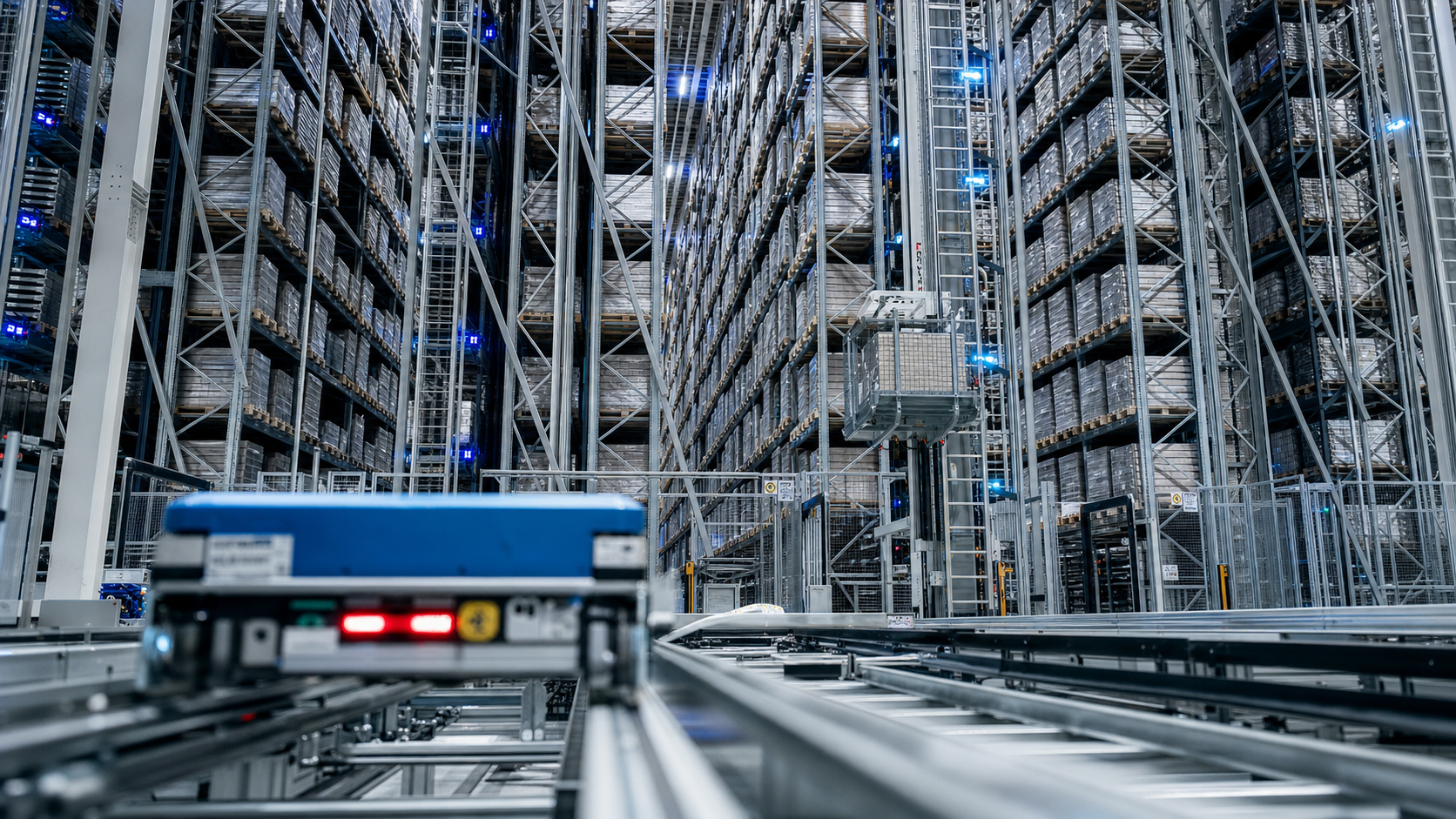
Why Austria's warehouses are suddenly growing skyward: A billion-dollar race to the top – a creative image on the topic, created with AI: Xpert.Digital
No space, no staff: How mega-towers are now supposed to save Austria's logistics
The invisible billion-dollar industry: Why the future of warehousing lies in vertical systems
REWE's 600 million project: What's behind Austria's new mega-warehouses
Austria's economic landscape is facing an unprecedented, albeit often invisible, transformation. Because building land is becoming increasingly scarce and qualified logistics personnel are desperately sought after in many places, the country's warehouses are no longer expanding horizontally, but vertically. Whether food giants like REWE and Lidl, drugstore chains like dm, or medium-sized wholesalers – across all sectors, hundreds of millions of euros are currently being invested in gigantic, fully automated mega-towers and intelligent robotic systems. Domestic technology world market leaders are driving this development forward massively and proving that the future of intralogistics is vertical. But this rapid change, in which goods are delivered fully automatically to people, also raises new questions: How secure are the jobs of tomorrow, what is the actual energy demand of these high-tech silos, and what does this mean for fire safety? A deep dive into an industry that must radically reinvent itself.
The quiet billion-euro transformation: How Austria's logistics sector is solving its space and personnel problems
Austria is currently undergoing a quiet but profound transformation of its warehouse landscape. Anyone expecting that the growing demand for storage capacity will be met primarily through new warehouse space is mistaken. The real answer from industry lies in vertical expansion, density, and automation on already developed land. Between autumn 2025 and autumn 2026, numerous investment decisions will be made in Austria, all pointing in the same direction: more capacity per square meter, less new land sealing, and less dependence on scarce personnel.
This development is no coincidence, but rather the result of a confluence of several mutually reinforcing structural forces. On the one hand, there is a spatial planning policy that increasingly restricts the development of new logistics areas. On the other hand, there is a labor market that can barely fill simple warehousing and order picking positions. Added to this is a retail sector whose product ranges and branch density are constantly expanding, while at the same time environmental targets and energy costs are putting pressure on every new investment. This complex situation is creating a market in which high-bay warehouses, pallet high-bay warehouses, and automated small parts warehouses are becoming the key solution to structural bottlenecks.
Three storage worlds with a common logic
A closer look at the Austrian market reveals three distinct but closely related manifestations of the same fundamental problem. The first is the high-bay warehouse in the general sense, understood as a structural and technical solution to space constraints and a shortage of skilled workers, across almost all industries. The second is the classic pallet high-bay warehouse, usually built as a silo, often temperature-controlled, and designed for very high storage capacities. This type of warehouse dominates in the food retail, dairy, and beverage wholesale sectors, where the primary concerns are branch supply, fresh produce logistics, and reducing truck journeys.
The third world is the small parts warehouse, implemented as a cube or shuttle system, for example in the form of AutoStore, Evo Shuttle, or classic shuttle high-bay warehouses. These systems dominate where the number of items is exploding while the storage area remains constant or even needs to shrink, for example in the plumbing and heating wholesale trade, automotive supply, contract logistics, and the drugstore and omnichannel retail sectors. All three worlds share the principle of achieving greater performance with less new space by having the goods automatically come to the people, rather than the person going to the goods.
Billion-dollar flagship projects as proof of change
The scale of this transformation is best illustrated by concrete large-scale projects that were announced or under construction during the observation period. By far the largest project is the new logistics center of the REWE Group in Wiener Neudorf, Lower Austria. With an investment volume of €600 million, a fully automated high-bay warehouse with approximately 87,000 pallet spaces is being built there on a usable area of around 135,000 to 150,000 square meters, designed for approximately 116 million order units per year. The first construction phase, a recycling sorting center, began in May 2026. The entire project is scheduled for completion in the early 2030s and will supply around 2,500 locations in Vienna, Lower Austria, and Burgenland. The technology partner is the Bavarian plant engineering company Witron, while the state of Lower Austria classifies the project as the largest single private investment in the state's history.
Almost simultaneously, the dairy company NÖM built a new distribution center at its headquarters in Baden near Vienna. Between October 2025 and March 2026, a roughly 30-meter-high, double-deep high-bay warehouse in silo construction was built there, offering approximately 26,600 pallet spaces and operating at around four degrees Celsius to ensure an unbroken cold chain. The steel structure was supplied by voestalpine Krems Finaltechnik, and the investment volume is around 80 million euros. NÖM itself estimates that the new warehouse will save over 10,000 truck journeys and up to 1,400 tons of CO2 per year, although these figures are based on company data and have not yet been subjected to independent external verification.
Another example of the increasing density in the food retail sector is Lidl Austria's central warehouse in Großebersdorf, where the general contractor Jungheinrich implemented a semi-automated, approximately 40-meter-high pallet high-bay warehouse. Of a total of 70,000 pallet spaces, over 50,000 are fully automated, divided between a triple-deep channel storage system with two different temperature zones and a single-deep silo storage system. The center supplies more than one hundred stores and exemplifies how strongly the discount retail sector is also relying on dense, multi-story warehouse architecture.
Small parts as the real growth engine
While pallet high-bay warehouses represent the largest single investment in the food retail sector, the structurally broader need lies in the area of small parts storage. In February 2026, the drugstore chain dm announced the largest single investment to date for its Austrian operations. In Kronstorf, Upper Austria, a fulfillment center is being built in partnership with the technology provider TGW Logistics. This center will feature a shuttle warehouse with approximately 260,000 pallet spaces, operated by more than 200 robots and supplemented by around 80 automated guided vehicles (AGVs). The facility is scheduled to go live in the summer of 2028 and will supply the markets of Austria, Italy, and Slovenia. Certification according to the stringent ÖGNI Gold Standard for sustainable building is also part of the concept.
Another insightful example is the plumbing and heating wholesaler Holter, which broke ground on a new AutoStore small parts warehouse in Wels in August 2026. With an investment of approximately €12 million, the existing small parts storage area will be reduced from about 2,200 square meters to just 800 square meters, while simultaneously significantly improving picking performance and reducing error rates. Managing Director Michael Holter explicitly cites the ongoing shortage of skilled workers and the desire to utilize existing warehouse capacity more efficiently rather than developing new space as the reasons for the investment. Commissioning is planned for autumn 2027, with a construction period of approximately twelve months.
The plant engineering company TGW Logistics is also investing heavily in its home base. At its headquarters in Marchtrenk, the company campus is being expanded by around €100 million by summer 2026, including a dedicated shuttle warehouse and a high-bay pallet warehouse with 11,000 pallet spaces. The fact that a globally active systems provider is investing so massively in its own infrastructure underscores how confident the industry itself is in its growing order book.
LTW Intralogistics Solutions

LTW Intralogistics – Engineers of Flow - Image: LTW Intralogistics GmbH
LTW offers its customers not individual components, but integrated complete solutions. Consulting, planning, mechanical and electrotechnical components, control and automation technology, as well as software and service – everything is networked and precisely coordinated.
In-house production of key components is particularly advantageous. This allows for optimal control of quality, supply chains, and interfaces.
LTW stands for reliability, transparency, and collaborative partnership. Loyalty and honesty are firmly anchored in the company's philosophy – a handshake still means something here.
Related to this:
Why Austria's municipalities are involuntarily becoming drivers of warehouse automation
Figures that demonstrate the dynamism of the industry
The Austrian intralogistics providers KNAPP and TGW are now among the leading international suppliers of automated warehouse technology and are directly benefiting from this trend. The Graz-based KNAPP Group closed the 2025/26 fiscal year with sales of €2.135 billion and order intake of €2.51 billion, employing around 9,000 people worldwide, of whom approximately 4,600 are based in Austria. This scale demonstrates that Austria is not only the location of numerous automation projects, but also the production and development center of two global technology leaders in the industry.
On the real estate side, however, a more nuanced picture emerges. Vacancy rates in Vienna's logistics real estate market stood at just under ten percent at the end of 2025, while new construction activity declined noticeably in 2026. In the first half of 2026, only around 70,600 square meters of new logistics space were completed across Austria, with approximately ninety percent of that located in the greater Vienna area. Real estate services provider CBRE interprets this as a sign that, for the first time in a long while, is beginning to reduce its vacancy rate, as the historically low volume of new construction coincides with a renewed increase in demand. At the same time, prime rents in Vienna remained stable to slightly rising at around €7.25 to €7.35 per square meter per month, despite the increased vacancy rate. This suggests a market segmentation in which modern, high-ceilinged, and technically equipped warehouses are significantly more in demand than older, lower-ceilinged existing properties.
Why municipalities are becoming gatekeepers of the logistics industry
A key, often underestimated driver of this development lies in Austrian spatial planning. Municipalities and states are increasingly hesitant to rezone land for logistics use in order to avoid further soil sealing. CBRE describes this as a medium-term bottleneck that is slowing down speculative new construction and instead favoring pre-leased projects. This political reluctance coincides with a market in which companies are already increasingly favoring more intensive use of existing properties rather than developing new areas on the outskirts of cities.
From an economic perspective, this results in a remarkable effect: The scarcity of newly designated land acts as an implicit tax on horizontal expansion, making vertical, technology-intensive solutions relatively more attractive. Companies that already need to invest in new logistics capacity are therefore increasingly opting for vertical densification, combined with extensive automation, to compensate for the economic disadvantage of limited land availability. This trend is likely to continue as long as the political stance towards new land sealing remains unchanged and restrictive.
The shortage of skilled workers as the actual client for automation
Besides the scarcity of space, the persistent shortage of workers in warehousing and order picking is arguably the most important driver of the automation wave. Both the Chamber of Commerce and the Public Employment Service have been recording a high number of vacancies in the warehousing and logistics sector for years, which can hardly be filled with sufficiently qualified personnel. Companies like Holter explicitly justify their automation decisions with this structural shortage and not primarily with pure cost savings.
At the same time, the international Randstad Workmonitor 2026 reveals profound uncertainty among the workforce. A significant proportion of employees worldwide, including in Austria, express concern about being replaced by artificial intelligence and automation in the medium term, while only slightly more than half of the workforce shares the economic optimism of employers. This tension between business necessity and individual insecurity significantly shapes the public discourse surrounding the wave of automation in logistics, even though reliable, independent figures on actual job losses in specific Austrian companies are still scarce.
Between promises of efficiency and unanswered questions
As impressive as the presented projects may seem at first glance, closer examination reveals open questions and sometimes contradictory narratives. Companies like REWE, TGW, and Holter unanimously emphasize that automation does not destroy jobs, but merely changes tasks and opens up opportunities for further training. However, this portrayal stands in some tension with the concerns of the employees themselves, as expressed in labor market surveys. Independent, reliable time series on the actual development of employment before and after the commissioning of such large-scale projects are largely lacking in publicly accessible sources.
The oft-cited claim that Austria lags behind Germany, Switzerland, and Italy in warehouse automation can only be partially upheld given the project density described. After all, two of the world's leading intralogistics providers, KNAPP and TGW, are based in Austria, and the flagship projects mentioned range from REWE and dm to NÖM and Lidl. However, reliable, internationally comparable statistics on installed automation density per industrial employee are lacking, meaning this claim can neither be clearly confirmed nor definitively refuted.
Another point of contention concerns the statement by TGW management that completely unmanned, so-called lights-out warehouses could become a reality within six to ten years. This technologically optimistic forecast contradicts the actual practice of most current large-scale projects, which consistently pursue hybrid concepts in which manual order picking workstations remain an integral part of the operational concept. Whether and to what extent fully autonomous facilities are actually already planned in the Austrian project pipeline cannot currently be definitively assessed based on publicly available information.
Energy prices as an underestimated location factor
One aspect that has received relatively little attention in the public debate so far concerns the energy costs of highly automated and temperature-controlled storage systems. Austrian wholesale electricity prices were at times significantly higher than German and European levels, which is quite relevant for energy-intensive refrigeration systems and fully automated storage and retrieval machines several dozen meters high. Unlike building regulations, however, there is no specific new legislation on this topic, meaning that energy costs should be considered more of a generic location factor than an independent regulatory driver. Reliable, publicly available model calculations for the specific energy consumption per pallet movement in Austrian high-bay warehouses with a height of 30 to 40 meters are currently scarce, making a sound economic assessment of this cost factor difficult.
What often remains hidden behind the projects
Despite the abundance of publicly announced projects, key economic details often remain unanswered. For example, it remains unclear what proportion of the stated investment sums is attributable to pure building costs, what proportion to conveyor technology and robotics, and what proportion to software and information technology. Likewise, there is no official, consolidated statistic on the total number of installed pallet high-bay warehouse spaces or AutoStore container spaces in Austria, meaning that the overall market can currently only be roughly estimated based on the sum of individual, publicly known projects.
Furthermore, the situation of small and medium-sized enterprises (SMEs) beyond the aforementioned flagship projects remains largely ignored. The reasons why some SMEs are not automating—whether due to a lack of capital, existing halls with insufficient ceiling height, fire safety concerns, or inadequate digital maturity of their IT systems—are difficult to answer systematically from the available public sources. The need for specialized service technicians for shuttle systems and AutoStore installations in rural regions of Austria, which will arise after commissioning, has also received little attention in public reporting to date, even though this bottleneck is likely to be just as crucial to the long-term economic success of the investments as the initial construction decision itself.
Fire protection and insurance of tall silo structures as an open flank
Another aspect, rarely addressed in companies' public communications, concerns the fire safety and insurance challenges of extremely tall silo structures. Facilities 30 to 40 meters high with tens of thousands of pallet spaces place considerable demands on fire suppression technology, smoke extraction, and risk assessment by insurers. These issues are virtually absent from the companies' press releases, even though they are likely of significant importance for the actual economic viability and insurability of such large-scale projects.
A market in transition with a clear direction, but many open questions
The overall picture of current developments reveals an Austrian warehousing market undergoing a clear structural realignment. The largest publicly documented single investment need currently lies unequivocally in high-bay pallet warehouses for the food retail sector, spearheaded by the scale of the REWE project in Wiener Neudorf and complemented by comparable projects from Lidl, Spar, and NÖM. Beyond these mega-projects, however, the structurally broader and equally significant long-term need lies in the area of small parts warehouses. These are driven in wholesale, industrial supply, and contract logistics by the steadily increasing number of items, rising picking requirements, and the ongoing shortage of personnel.
The high-bay warehouse, in itself, proves to be less an end in itself than a technical framework for a broader economic response to two key bottlenecks in the Austrian economy: the limited availability of new land and the limited availability of labor. Whether this approach will actually lead to the promised efficiency and sustainability gains in the long term, without causing significant social disruption in the labor market, cannot yet be definitively assessed based on the currently available public information. However, it is already clear that Austria's warehouse landscape is growing not horizontally, but vertically, driven by two Austrian global market leaders in intralogistics who stand to benefit particularly from this development.
Consulting - Planning - Implementation

Konrad Wolfenstein
I would be happy to serve as your personal advisor.
You can contact me at wolfenstein∂xpert.digital or
Just call me on +49 7348 4088 965 .
Your intralogistics experts

Consulting, planning and implementation of complete solutions for high-bay warehouses and automated storage systems - Image: Xpert.Digital
More information here:










