
How Daifuku is helping the traditional Japanese company Komatsu rethink its warehouses: The intralogistics transformation
Xpert Pre-Release

Available in 27 languages 📢
Prefer Xpert.Digital on GoogleⓘPublished on: February 14, 2026 / Updated on: February 14, 2026 – Author: Konrad Wolfenstein
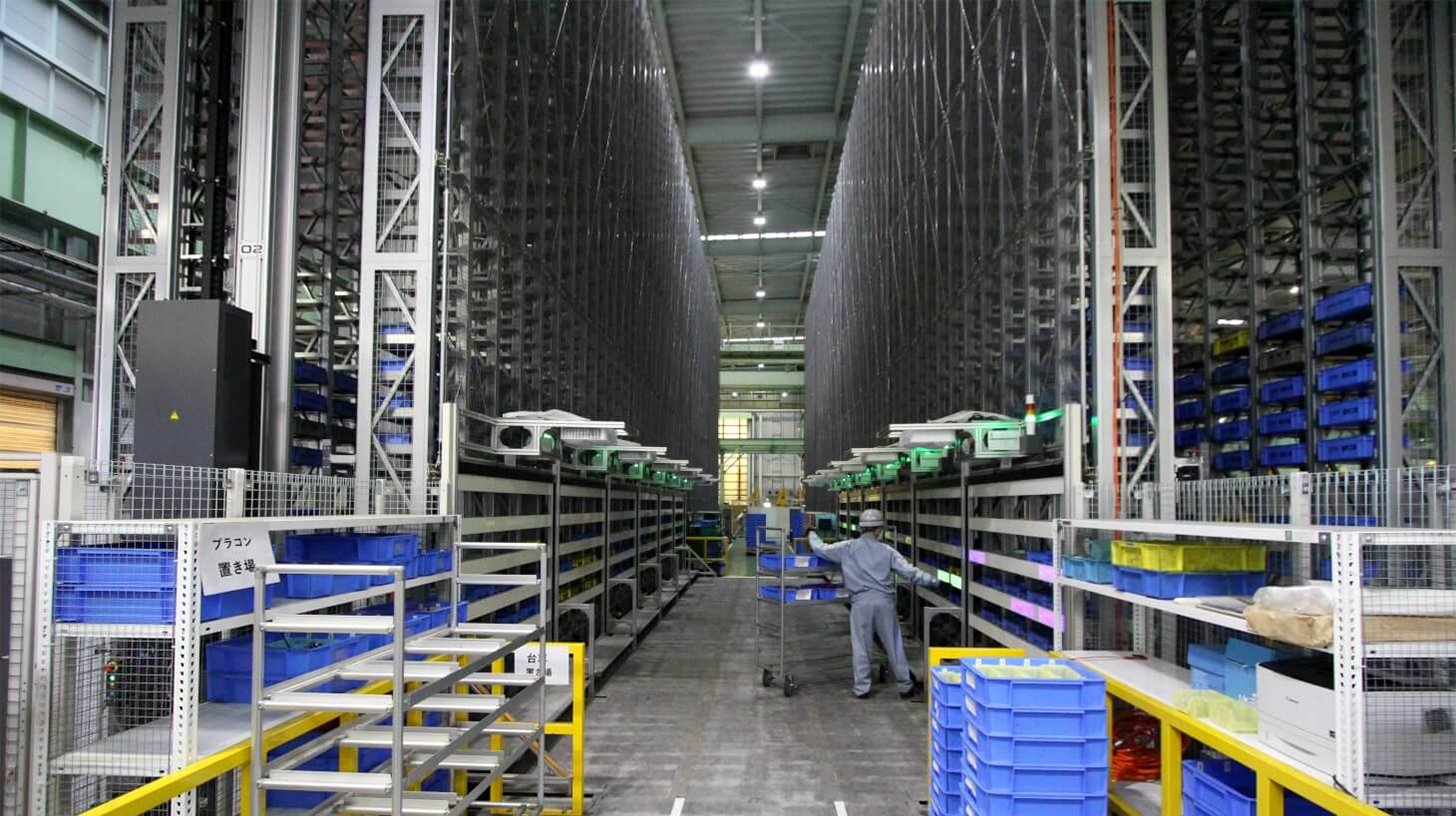
When Daifuku helps the traditional Japanese company Komatsu rethink its warehouses: The intralogistics transformation – Image: Daifuku
From bottleneck to showcase plant: Komatsu's radical transformation of intralogistics – How an old excavator factory became a high-tech laboratory
No more night shifts: How Komatsu solved a decades-old logistics problem
Projection instead of paperwork: Japan's answer to the skilled worker shortage in the warehouse
In Tochigi, Japan, about 100 kilometers north of Tokyo, a transformation is currently underway that is exemplary of the entire global industry. Where forklifts once maneuvered through a labyrinth of scattered warehouses and order pickers could only begin their work at midnight, precise automation technology is now in place.
The Komatsu plant in Tochigi is legendary within the company: since 1968, it has encompassed the entire life cycle of construction equipment – from the initial sketch to final assembly. But past glories don't protect against inefficiency. Structures that had evolved over decades, a patchwork of small buildings, and outdated conveyor technology had brought the plant to a critical point. Logistics had become so slow that it could no longer keep pace with production; parts had to be delivered in the dead of night to avoid disrupting daytime operations.
This article illuminates the profound transformation of an industrial brownfield site. It shows how Komatsu, in collaboration with intralogistics leader Daifuku, not only modernized the warehouse but reinvented it. From high-speed shuttles that drastically reduce energy consumption to futuristic projection systems that illuminate the target directly onto the shelf for warehouse workers, the technologies employed here are more than just a gimmick. They are the economic answer to rising labor costs, demographic change in Japan, and the relentless need to reduce supply chain error rates to zero. Learn why an excavator manufacturer suddenly became a pioneer of the factory of the future and the strategic importance of this investment for global competitiveness.
Related to this:
Why an excavator manufacturer is becoming the test lab for the factory of the future
The Tochigi plant, located about 100 kilometers north of Tokyo, is unique within the Komatsu Group. Since its founding in 1968, it has been the only Japanese site to cover the entire cycle from development to series production of small construction equipment and forklifts. On a total area of 214,000 square meters, including nearly 72,000 square meters of building space, Komatsu operates a multi-product and mixed-product manufacturing facility designed for flexibility while maintaining high quality. That this particular location became the site of a profound intralogistics transformation is no coincidence. It is the result of decades of mounting economic pressure and a strategic decision with repercussions far beyond the warehouse.
Komatsu is the world's second-largest manufacturer of construction and mining equipment, with sales of $54.5 billion in fiscal year 2024 and an estimated global market share of 11 percent. The company operates more than 60 plants worldwide and pursues a distributed manufacturing strategy that focuses less on centralization and more on regional resilience. However, particularly in Japan, where labor costs are high, labor shortages are acute, and production efficiency requirements are especially stringent, modernizing internal logistics has become a matter of survival.
The strategic legacy of an established factory structure
The core problem Komatsu faced in Tochigi is a classic example of industrial brownfield development. For decades, production facilities within the Komatsu Group had been consolidated and relocated, but the supporting processes, particularly logistics, warehousing, and order picking, remained scattered across a patchwork of small buildings. This organically grown structure may have been functional in the early years, but with increasing product variety and growing cost pressures, it became an obstacle.
The inefficiencies were not abstract, but very concretely measurable. The existing warehouse for production parts used an automated storage system from a third-party provider, whose throughput was so low that it could only be used for receiving and storing goods during the day. The actual picking and retrieval process had to be shifted to the night shift and didn't begin until around midnight. This meant not only increased overtime costs, but also a systematic decoupling of warehouse operations and assembly. Parts needed on the assembly line during the day had to be provided in sufficient quantities in advance, leading to excess inventory, increased handling, and a process-related safety buffer that tied up capital and occupied space.
When the aging building structure and steadily declining efficiency reached a critical level in 2014, the plant initiated a comprehensive reform of its operational processes. The first and perhaps most important step was structural in nature: the distribution building, which had been spread across the site, was closed down, and parts storage was integrated into the expanded assembly building. This consolidation step created the physical prerequisite for everything else, because only by spatially combining storage and assembly could material flows truly be synchronized.
Multi-shuttle technology as the first lever for automation
In 2018, the company selected Daifuku, the world's leading provider of automated material handling systems, with a projected revenue of approximately 550 billion yen (about 3.7 billion dollars) in fiscal year 2024 and consistently ranked among the top two global system integrators in the material handling sector. Daifuku's Shuttle Rack M, a shuttle-based small parts storage system, was installed as the first step in the automation strategy.
The system stores approximately 6,600 small and medium-sized parts and enables picking at fixed locations, which, according to Komatsu, significantly improves work efficiency. The system's technical characteristics highlight its suitability for the requirements of mixed-product manufacturing. Each level of the Shuttle Rack M has its own lightweight transport vehicle, operating at speeds exceeding 200 meters per minute. By using these lightweight vehicles, the system consumes approximately 60 percent less energy per cycle than conventional storage and retrieval machines. A flexible storage location management system automatically adjusts the storage position to the size of the stored load carriers, enabling compact storage of various container types, cartons, and trays.
The decisive breakthrough, however, lay less in storage density than in throughput. The previously used external conveyor system had such a low turnover rate that it became the bottleneck for the entire plant. The introduction of the Shuttle Rack M eliminated this bottleneck and, for the first time, enabled synchronized daily operations for storage and retrieval. The immediate result was a significant reduction in the required overtime.
Projection-based order picking as the next evolutionary stage
Two years after the shuttle installation, a technological advancement followed in 2020 that was considered a first in Japan: the introduction of a small parts storage system (Mini Load AS/RS) with projection-based picking technology for shelf-side retrieval. This technology uses projection technology to project picking information directly onto the picking locations, a method that provides more comprehensive information than conventional digital displays.
The system stores 1,500 different parts that must be kept permanently in stock. 240 picking locations are distributed across twelve picking areas along the shelves of the automated warehouse. The projected information includes not only the quantity to be picked, but also the destination, the machine model, and the part number. Each location is equipped with a sensor that warns of a picking error via a red light signal and an audible alarm.
The economic relevance of this technology becomes clear when considering the cost of picking errors. A cross-industry study by Intermec, which surveyed 250 supply chain managers in Germany, France, the USA, and the UK, revealed that a single picking error costs an average of around €17 and that distribution centers lose an average of more than €290,000 per year due to such errors. 52 percent of the companies surveyed reported an accuracy rate of less than 97 percent, which translates to thousands of incorrect picks per year in a high-throughput environment. The average error rate for conventional paper-based picking is around 0.3 percent. Technical assistance systems such as pick-by-light or pick-by-voice significantly reduce this rate. Projection-based picking goes a step further by combining context-related visual information with sensor-based error detection.
The market for projection-based order picking technology was valued at $1.2 billion in 2024 and is projected to grow to $4.9 billion by 2033, representing a compound annual growth rate (CAGR) of 16.8 percent. This growth is driven by the increasing integration of augmented reality, vision systems, and pick-to-light technologies into warehouse processes, with the manufacturing and automotive industries, along with e-commerce and pharmaceuticals, among the key customers.
Security architecture as an economic factor
One aspect often underestimated in discussions about warehouse automation is the safety infrastructure. At the Komatsu plant, zone and area sensors are installed that prevent the stacker cranes from storing or retrieving loads as long as personnel are present in the respective area. This is not merely regulatory compliance, but has tangible economic implications. Workplace accidents in intralogistics cause direct costs through downtime, insurance payments, and legal proceedings, as well as indirect costs through production interruptions and reputational damage. In an environment where automated storage and retrieval systems and human order pickers operate in the same space, investing in sensor-based safety technology is insurance against business interruptions and a crucial element for employee acceptance of the technology.
The fact that Daifuku was able to coordinate the entire process from planning to installation at Komatsu was cited by plant management as a decisive advantage. In practice, this meant that the interfaces between warehouse technology, conveyor technology, projection technology, and safety sensors came from a single source, which minimized implementation risks and accelerated commissioning.

Expert partner in warehouse planning and construction
The Komatsu model: How an industrial giant is completely reinventing its logistics
Daifuku's market position and the consolidation dynamics of the industry
The decision to choose Daifuku must also be understood in the context of market dynamics in the field of automated storage and retrieval systems (AS/RS). The global AS/RS market was estimated at around $9.9 billion in 2025 and is projected to grow to $21.3 billion by 2035. Other estimates see the market reaching $18 billion as early as 2025, with an annual growth rate of over 11 percent. The range of estimates illustrates the varying market definitions, but regardless of the methodology, they all point to double-digit growth.
Daifuku consistently ranks first or second among global system integrators in this market, measured by revenue from material handling systems. Revenue in fiscal year 2024 was approximately 550 billion yen, with operating profit revised upwards to 64 billion yen. Growth drivers included intralogistics systems, cleanroom technology for semiconductor manufacturing, and airport systems. With the acquisition of Wynright in 2012 and the expansion of its North American capabilities, Daifuku has transformed from a Japan-centric engineering firm into a global intralogistics group operating in over 50 countries.
In the automotive sector, which is a direct reference industry for Komatsu as a manufacturer of forklifts and construction equipment, the specific ASRS market will grow from $1.34 billion in 2025 to $1.97 billion in 2030, driven by more complex supply chains, increasing product variety and the requirements of electromobility for traceability and sequence-accurate delivery.
Japan's industrial modernization wave and the context of labor shortages
The automation initiative at Komatsu Tochigi is embedded in a broad wave of modernization across Japan's manufacturing industry. The Japanese smart factory market was estimated at $4.2 billion in 2025 and is projected to grow to $9.2 billion by 2034, representing an annual growth rate of just over nine percent. The investment motives are multifaceted: expanding production capacity (38.2 percent), increasing efficiency and reducing labor costs (31.7 percent), developing new products and technologies (28.4 percent), meeting environmental requirements (24.6 percent), and digitalization (22.8 percent).
Demographic pressures in Japan lend these figures a particular urgency. In an economy with a shrinking working-age population, automating repetitive and physically demanding tasks in order picking is not just a matter of efficiency, but a necessity for maintaining production capacity. Komatsu itself has systematically implemented this insight and plans to further advance the integration of automated storage systems, autonomous mobile robots, and driverless transport systems with production planning data to achieve demand-driven parts supply to assembly lines.
The economic arithmetic of warehouse automation
Investments in automated warehouse systems of the scale implemented at Komatsu typically range from one to 30 million dollars, with payback periods of 24 to 60 months. In practice, well-sized projects aim for payback periods of two to five years, with many achieving amortization within three years. The cost benefits stem from several sources: a reduction in labor costs per pick from typically €0.60 to €0.24, a decrease in error costs, savings in warehouse space through compact storage, and a reduction in overtime.
For Komatsu, the specific savings can be derived from the known facts. Eliminating the mandatory nighttime order picking should have substantially reduced overtime costs. Error reduction through projection-based order picking eliminates rework, returns, and production downtime. Consolidating logistics space into the assembly building reduces internal transport routes and the associated travel times. And the higher storage density of the Shuttle Rack M frees up previously occupied building space for value-adding uses.
Ninety percent of the warehouse and distribution managers surveyed in the Intermec study agreed that investments in new technologies lead to time savings and increased productivity. Sixty percent agreed that even shortening individual work steps by just a few seconds can result in significant time and cost savings. In an environment like Tochigi, where thousands of picks are made daily for multi-product manufacturing, such time savings add up to measurable productivity gains.
From individual project to systemic transformation
What Komatsu Tochigi implemented in several phases between 2014 and 2020 is more than just the introduction of new warehouse technology. It is a systemic reorganization of material flow that integrates building structure, warehouse technology, information provision, and security architecture. The phased approach—first structural consolidation, then a shuttle system for high-throughput, and subsequently projection-based picking for fine distribution—demonstrates a well-thought-out process that minimizes investment risks and enables learning effects between phases.
Komatsu has since extended this approach to other locations. In 2025, the company introduced intermodal rail transport for the first time, using specially developed 20-foot containers that allow for a payload of up to ten tons, thus overcoming the previous five-ton limit. Together with JR Freight and Nippon Express, this facilitates a shift of long-distance transport from road to rail. This initiative demonstrates that optimizing internal logistics is just one component of a broader supply chain transformation.
What the industry can learn from the Komatsu model
The Tochigi case study yields several insights that extend beyond the specific instance. First, it demonstrates that the greatest efficiency gains arise not from individual technologies, but from the integration of various systems. The interplay of shuttle storage, stacker cranes, projection technology, and sensors generates benefits that exceed the sum of their individual components. Second, it demonstrates the value of a phased approach in brownfield environments where complete redesign is not an option. Third, it underscores the importance of a single system integrator who assumes overall responsibility and minimizes interface risks.
The global market for automated storage and retrieval systems is growing at rates that suggest a long-term structural shift, not a cyclical one. The combination of rising labor costs, increasing product variety, higher quality requirements, and the pressure for space efficiency is driving demand across industries. For the manufacturing industry, where order picking has often been considered a secondary process, intralogistics is increasingly becoming a decisive competitive factor. Komatsu translated this insight into concrete investments earlier than many competitors, thereby not only increasing the efficiency of a single plant but also setting a benchmark for the modernization of industrial production logistics that deserves attention far beyond Japan.

Xpert.Plus Warehouse Optimization - High-bay warehouses and pallet warehouses: Consulting and planning
Your global marketing and business development partner
☑️ Our business language is English or German
☑️ NEW: Correspondence in your native language!

Konrad Wolfenstein
I and my team are happy to be available to you as your personal advisor.
You can contact me by filling out the contact form here or simply call me at +49 7348 4088 965. My email address is: [email protected]
I'm looking forward to our joint project.
☑️ SME support in strategy, consulting, planning and implementation
☑️ Creation or realignment of the digital strategy and digitization
☑️ Expansion and optimization of international sales processes
☑️ Global & Digital B2B trading platforms
☑️ Pioneer Business Development / Marketing / PR / Trade Fairs
Our global industry and economic expertise in business development, sales and marketing

Our global industry and economic expertise in business development, sales and marketing - Image: Xpert.Digital
Industry focus areas: B2B, digitalization (from AI to XR), mechanical engineering, logistics, renewable energies and industry
More information here:
A thematic hub offering insights and expertise:
- Knowledge platform covering global and regional economies, innovation and industry-specific trends
- A collection of analyses, insights, and background information from our key areas of focus
- A place for expertise and information on current developments in business and technology
- A hub for companies seeking information on markets, digitalization, and industry innovations










