
Precision bearings | From niche trend to 130 billion market: Why bearing automation is now exploding
Xpert Pre-Release

Language selection 📢
Published on: January 26, 2026 / Updated on: January 26, 2026 – Author: Konrad Wolfenstein
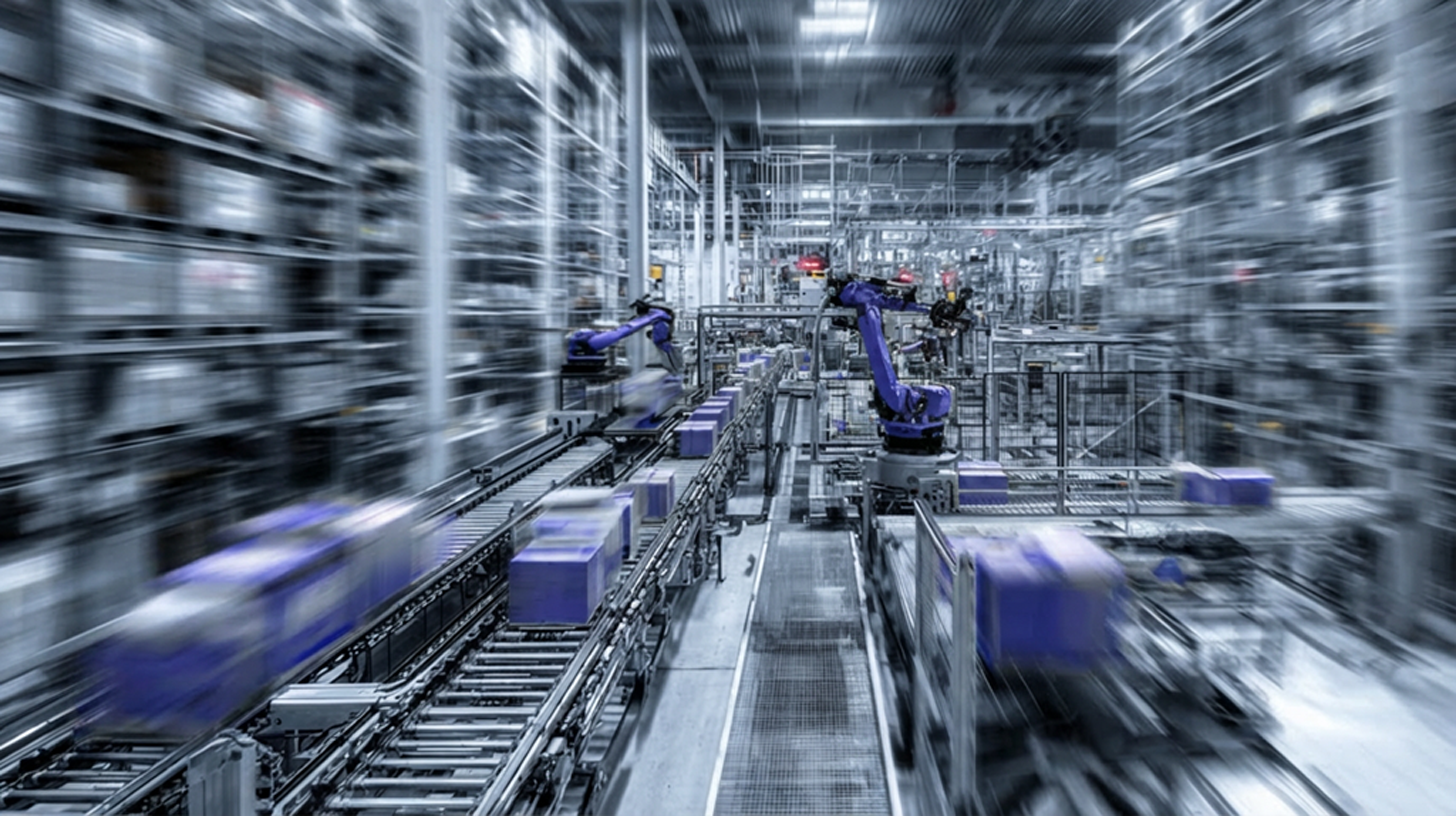
Precision bearings | From niche trend to 130 billion market: Why bearing automation is now exploding – Creative image: Xpert.Digital
High-bay warehouse automation: Why vertical intelligence beats horizontal storage space – and what the calculations are
Lack of space in logistics? The 45-meter solution that makes horizontal surfaces look outdated
While the e-commerce boom demands hourly delivery times and traditional warehouse concepts are reaching their physical limits, we are witnessing a renaissance of vertical space. With storage and retrieval machines reaching heights of up to 45 meters and systems that achieve ten times the capacity of traditional warehouses on a minimal footprint, the industry is redefining the concept of "efficiency." But this transformation is not solely driven by space requirements. With a market projected to exceed $130 billion by 2034 and payback periods sometimes under two years, automation is becoming a matter of strategic survival.
This article sheds light on the fascinating dynamics behind the scenes of modern high-bay warehouses. We analyze why vertical storage, despite high initial costs, is the more cost-effective option in the long run, how companies are addressing demographic change through automation, and which technological innovations—from AI to deep-freeze logistics—are making the supply chains of the future resilient. Discover why the sky's the limit in modern logistics, offering not just room for growth, but a wealth of profitable opportunities.
Logistics at its limit: How high-bay warehouses ensure supply at minus 30 degrees and maximum speed
The European market for automated storage systems is projected to reach US$8.37 billion by 2029, representing an average annual growth rate of 14.4 percent. Globally, the market is expected to grow from US$26.5 billion in 2024 to over US$130 billion by 2034. These figures reflect a fundamental shift in how companies manage logistics' most valuable asset: space. High-bay warehouses, reaching up to 45 meters in height and providing hundreds of thousands of pallet spaces on a minimal footprint, represent not simply a technological evolution, but an economic necessity in a world of rising land costs, chronic skills shortages, and increasing e-commerce demands.
The vertical space revolution
The fundamental economic logic of high-bay warehouse automation is based on a simple principle: vertical space is dramatically cheaper than horizontal space. A traditional floor-level warehouse with a height of five meters wastes three-quarters of its potentially usable volume. A high-bay warehouse, on the other hand, utilizes space up to 45 meters high and can create ten times the storage capacity on the same footprint. This increased density leads to measurable savings: storage density can be increased by 30 percent, while operating costs per stored pallet decrease dramatically.
The technical specifications of modern storage and retrieval machines (SRMs) reveal impressive performance data. They move at speeds of up to 160 meters per minute horizontally and 66 meters per minute vertically under full load. With a load capacity of up to 1,500 kilograms per lifting platform in single-deep systems and up to 3,000 kilograms in double-platform configurations, these machines handle 40 to 120 double cycles per hour. A double cycle refers to the combined storage and retrieval operation, meaning that a single SRM can perform up to 1,200 pallet movements in a ten-hour shift.
This automation also functions under extreme conditions. The temperature range extends from minus 30 degrees Celsius in deep-freeze warehouses to 45 degrees Celsius in high-temperature environments. This adaptability makes high-bay warehouses the ideal solution for industries with specific requirements. In the food industry, where cold chain continuity is crucial, automation reduces the time employees have to spend at minus 25 degrees. In the pharmaceutical industry, precise temperature control ensures compliance with GDP guidelines, which prescribe a temperature range of two to eight degrees Celsius for biological products.
The cost equation and the return on investment
The economic justification for automated high-bay warehouses stems from a complex cost structure that differs fundamentally from manual systems. Investment costs for an automated pallet warehouse range from several million euros, depending on the configuration. For a medium-sized system with approximately 10,000 pallet positions and four storage and retrieval machines, companies can expect total costs between three and five million euros. The cost per pallet position varies considerably: While simple pallet racks start at around 75 to 200 US dollars per position, fully automated systems are significantly more expensive, with installation and software integration accounting for an additional 25 to 35 percent of the project costs.
Nevertheless, the operating cost analyses paint a compelling picture. In a manual warehouse with 50,000 picking operations per year and an error rate of five percent, the costs associated with errors amount to approximately €152,000 annually without quality control. Even with additional quality control, which reduces the error rate to one percent, personnel costs remain at around €28,600. An automated system, on the other hand, achieves accuracy rates of over 99.9 percent, thereby virtually eliminating error costs. Pick-to-light and put-to-light systems, in conjunction with machine vision, can even increase picking accuracy to 99.99 percent.
Personnel costs represent the greatest leverage point. While a manual warehouse might require 20 full-time employees at €35,000 each to achieve the same output, an automated system requires significantly fewer operators. The annual personnel savings of €700,000 are offset by operating costs of approximately €95,000, which include maintenance, energy, and software. The resulting net benefit of €605,000 per year allows for amortization within three to five years. In particularly favorable scenarios, such as high throughput rates and optimal capacity utilization, investments can pay for themselves in as little as 18 to 24 months.
The energy balance of automated systems requires a nuanced approach. While automated warehouses typically consume 15 to 25 percent more energy than manual operations due to the continuous operation of conveyor belts, shuttles, and robots, automation simultaneously enables structural savings. Automated warehouses require neither lighting nor heating or air conditioning for employees, which can lead to energy savings of up to 85 percent, particularly in large facilities. The use of lithium-ion batteries instead of lead-acid technology reduces energy consumption by a further 20 percent. Intelligent load management systems can reduce maximum power demand by up to 80 percent, while the relative throughput decreases by a maximum of only one percent.
Strategic advantages beyond cost reduction
The added value of automated high-bay warehouses extends beyond direct cost savings. They offer strategic advantages that are often undervalued in traditional calculations. Space efficiency is key: In urban areas, where land prices reach several hundred euros per square meter, every square meter saved translates into a significant competitive advantage. A high-bay warehouse with 10,000 pallet spaces requires only 2,000 to 3,000 square meters of floor space, while a conventional ground-level warehouse would need three to four times that amount for the same capacity.
The speed and reliability of automated systems enable shorter delivery times. While manual order picking takes an average of two to three minutes per item, automated systems complete the same task in 30 to 60 seconds. This acceleration is crucial for same-day or next-day delivery promises, which have now become standard in e-commerce. In a highly automated warehouse like Kaufland's, with 26,800 pallet spaces and seven stacker cranes, tens of thousands of orders can be processed daily, something that would be simply impossible manually.
Scalability represents another strategic advantage. High-bay warehouses can be expanded modularly without interrupting ongoing operations. Additional aisles or stacker cranes can be integrated as the business grows. This flexibility is particularly valuable in industries with volatile demand. A fashion retailer, for example, can handle seasonal peaks without having to maintain permanent excess capacity. The systems can be ramped up when needed and throttled down when utilization is lower, thus optimizing energy costs.
The data transparency of automated systems also creates competitive advantages. Modern warehouse management systems provide real-time data on inventory levels, movements, and bottlenecks. This information enables predictive planning, reduces stockouts, and optimizes capital commitment. Companies can reduce their inventory levels by 15 to 20 percent without jeopardizing their ability to deliver, which translates into significant capital savings when the average inventory value is several million euros.

Xpert partner in warehouse planning and construction
More than just efficiency: Why the pharmaceutical industry is investing billions in precision bearings
Industry-specific use cases and market dynamics
The adoption of automated high-bay warehouses varies considerably across industries. In e-commerce, where speed and scalability are crucial, the penetration rate is over 40 percent. Online retailers such as Amazon, Zalando, and Bol.com operate high-bay warehouses with several hundred thousand pallet spaces. The food industry follows with an automation rate of around 35 percent, driven by the need for temperature-controlled environments and the requirements for cold chain integrity. High automation rates are also found in the automotive industry, where large and heavy components must be delivered just-in-time.
The pharmaceutical industry has unique requirements. It's not just about efficiency, but also about regulatory compliance. EU GDP guidelines demand complete documentation of storage conditions. Automated systems with integrated temperature and humidity sensors ensure this traceability and reduce the risk of costly product recalls. A break in the cold chain can lead to losses in the millions for biologics or vaccines. Investing in automated precision storage pays for itself simply by preventing a single incident.
The market is dominated by a few globally operating players. Daifuku from Japan is the undisputed market leader with a revenue of US$4.5 billion and a global market share of over 14 percent. The company developed the first automated high-bay warehouse in Japan in 1966 and has maintained its technological edge ever since. Dematic, part of the KION Group, follows in second place with a revenue of US$4.1 billion. German suppliers such as SSI Schäfer, Witron, and Knapp also play significant roles, differentiating themselves through specialization. SSI Schäfer is a leader in silo high-bay warehouses, Witron focuses on the food retail sector, and Knapp is considered a technology leader in shuttle systems.
Germany holds a market share of approximately 28 percent in Europe, followed by Great Britain and France. The implementation rate of German logistics companies is 72 percent, making it the leader in Europe. This reflects not only the strength of German industry but also the acute shortage of skilled workers. According to the DIHK Skilled Workers Report 2025, more than one in three companies cannot fill vacancies, with a particular shortage of highly qualified professionals. Automation is therefore becoming a key strategy to compensate for these labor shortages.
Challenges and risk factors
Implementing automated high-bay warehouses is not without risks. The high initial investments present significant hurdles for small and medium-sized enterprises (SMEs). A fully automated system ties up capital for several years and requires stable, predictable business performance. Companies with volatile order volumes or frequently changing product ranges may struggle to achieve the necessary capacity utilization. As a rule of thumb, automation typically only becomes worthwhile with at least 1,000 picks per day or more than 2,000 SKUs.
The technical complexity carries inherent risks of failure. Automated systems are entirely dependent on functioning hardware and software. A malfunction of a storage and retrieval machine, a software error, or a power outage paralyzes the entire warehouse. Unlike manual operations, where employees can partially compensate for downtime, an automated warehouse comes to a complete standstill. The costs of unplanned downtime can amount to tens of thousands of euros per day. Maintenance contracts and redundant systems are therefore essential, but they also drive up operating costs.
The maintenance requirements of automated systems are often underestimated. Storage and retrieval machines, conveyor technology, and warehouse management software must be inspected at least annually. According to DGUV regulations, power-driven racking systems must be inspected by a qualified expert as needed, but at least once a year. These maintenance operations cost between €50,000 and €100,000 per year, depending on the system size. Predictive maintenance approaches can reduce maintenance costs by 25 to 30 percent and decrease downtime by 70 to 75 percent, but require additional investments in sensors and AI-supported analysis software.
The flexibility of automated systems is limited. Changes in the product range, new pallet formats, or altered processes often necessitate costly retooling. A manual warehouse can be reorganized relatively easily, while an automated system is bound to its original configuration. Companies with frequently changing products or uncertain future developments should factor this inflexibility into their calculations. Hybrid approaches that combine automated pallet warehouses with manual picking zones offer a compromise.
Personnel implications and qualification requirements
Automation is fundamentally changing the employment structure. While simple warehouse tasks such as order picking, packing, or forklift operation are being reduced, new skill sets are emerging. Modern high-bay warehouses require specialists in warehouse management software, maintenance technicians for stacker cranes, and IT specialists for the integration of various systems. These positions require higher qualifications and are therefore better paid.
The training requirements are considerable. Employees must be trained in the use of warehouse execution systems, complete safety briefings for working in high-bay warehouses, and participate in regular continuing education courses. According to DGUV Regulation 1, all employees must receive training in occupational safety and health at least once a year. The training costs amount to several thousand euros per employee per year, but are offset by increased productivity and lower accident rates.
The social acceptance of automation depends heavily on communication. Companies that position the transformation as a partnership between humans and machines achieve higher acceptance rates. Robots take over monotonous and physically demanding tasks, while humans remain responsible for complex decisions and problem-solving. This redistribution of tasks can increase job satisfaction and reduce employee turnover. Studies show that well-communicated automation projects can increase employee retention by 15 to 20 percent.
Demographic change is intensifying the pressure for automation. In Germany, 59 percent of those over 55 working in manufacturing and retail will retire within the next five years. This loss of expertise will severely impact companies that have failed to transfer their company-specific know-how in a timely manner. AI-supported knowledge databases and automated onboarding systems can handle up to 80 percent of the training tasks, thus complementing manual knowledge transfer. Automation is therefore becoming a strategic tool to mitigate the impending loss of skills.
Future prospects and technological developments
The future of high-bay warehouse automation is shaped by several megatrends. Artificial intelligence and machine learning enable self-optimizing systems that adapt warehouse processes in real time. Modern systems analyze order flows, inventory levels, and demand patterns to dynamically optimize storage locations. Fast-moving items are placed closer to picking stations, while slow-moving items are moved to higher or lower levels. This optimization can increase throughput by 15 to 25 percent.
Robotics is developing rapidly. Autonomous mobile robots like the SOTR-S from Daifuku achieve sorting rates of 10,000 units per hour and can be flexibly integrated into existing systems. Combining high-bay warehouses with AMR systems creates hybrid solutions that unite the advantages of both worlds: the high storage density of high-bay racking and the flexibility of mobile robots. Such systems often pay for themselves within two to three years, while conventional high-bay warehouses require five to seven years.
Sustainability is becoming a crucial differentiator. Companies are setting ambitious climate targets and striving for climate neutrality by 2030 or 2040. High-bay warehouses offer opportunities in this regard: The use of renewable energies in conjunction with battery-powered storage and retrieval machines can reduce CO2 emissions by more than 30 percent. Intelligent load management systems enable participation in balancing energy markets, allowing companies not only to reduce energy costs but also to contribute to grid stabilization.
The convergence of physical AI and intralogistics opens up new possibilities. Systems that not only perform tasks but also understand them can adapt to changing conditions. A high-bay warehouse equipped with physical AI could independently recognize maintenance needs, replan processes, and even communicate with suppliers. This vision is no longer a distant dream but is already being tested in pilot projects.
The market will continue to consolidate. Major players like Daifuku, Dematic, and SSI Schäfer are investing heavily in research and development and expanding their market share. At the same time, specialized providers are emerging, occupying niche segments. The strategic partnership between Dematic and Hai Robotics demonstrates how Western and Asian expertise can be combined to create innovative solutions. This dynamic will intensify competition and put downward pressure on prices, making it easier for smaller companies to enter the market.
High-bay warehouse automation is not at the end of its development, but at the beginning. The next generation will be smarter, more flexible, and more sustainable. Companies investing today are not only achieving short-term efficiency gains, but also positioning themselves for the logistical challenges of the next decade. The question is no longer whether automation will happen, but when and how. In a world of increasing complexity, shrinking margins, and rising customer expectations, the vertical intelligence of high-bay warehouses is becoming a strategic necessity. The investment pays off – for those bold enough to think vertically.

Xpert.Plus warehouse optimization - high-bay warehouses such as pallet warehouses consulting and planning
Your global marketing and business development partner
☑️ Our business language is English or German
☑️ NEW: Correspondence in your national language!

Konrad Wolfenstein
I would be happy to serve you and my team as a personal advisor.
You can contact me by filling out the contact form or simply call me on +49 7348 4088 965 (Munich) . My email address is: wolfenstein ∂ xpert.digital
I'm looking forward to our joint project.
☑️ SME support in strategy, consulting, planning and implementation
☑️ Creation or realignment of the digital strategy and digitalization
☑️ Expansion and optimization of international sales processes
☑️ Global & Digital B2B trading platforms
☑️ Pioneer Business Development / Marketing / PR / Trade Fairs
Our global industry and economic expertise in business development, sales and marketing

Our global industry and business expertise in business development, sales and marketing - Image: Xpert.Digital
Industry focus: B2B, digitalization (from AI to XR), mechanical engineering, logistics, renewable energies and industry
More about it here:
A topic hub with insights and expertise:
- Knowledge platform on the global and regional economy, innovation and industry-specific trends
- Collection of analyses, impulses and background information from our focus areas
- A place for expertise and information on current developments in business and technology
- Topic hub for companies that want to learn about markets, digitalization and industry innovations










