
Logistics automation in transition: How Daifuku is leading the global race for the intelligent supply chain
Xpert Pre-Release

Available in 27 languages 📢
Prefer Xpert.Digital on GoogleⓘPublished on: February 19, 2026 / Updated on: February 19, 2026 – Author: Konrad Wolfenstein
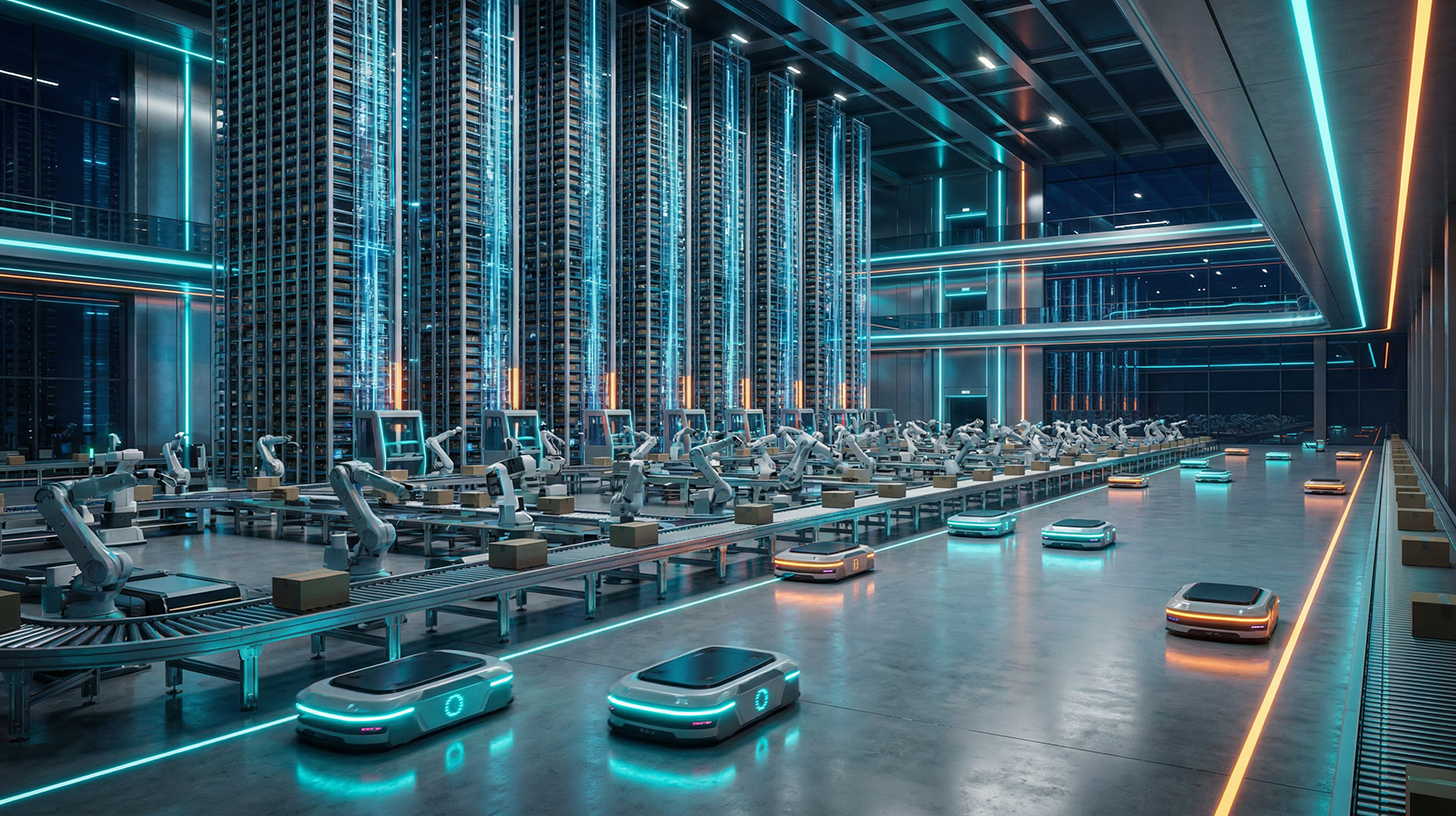
Logistics automation in transition: How Daifuku is leading the global race for the intelligent supply chain – Image: Xpert.Digital
Those who don't automate will automatically be left behind – why the logistics automation market shows no mercy
Attack on the world's top spot: How Japan's logistics giant Dematic and SSI Schäfer are stealing market share
The global logistics automation market is undergoing a period of tectonic shifts, with robotics, artificial intelligence, and advanced warehouse systems converging to form a new value chain architecture. Amidst this transformation, the long-established Japanese company Daifuku has positioned itself as a key player, ranking among the world's two largest systems integrators with $14.8 billion in revenue and a growth rate of 9.8 percent. What sets Daifuku apart from many competitors is the exceptional breadth of its technology portfolio, ranging from semiconductor cleanroom systems and airport baggage handling systems to fully automated e-commerce fulfillment centers. The question industry decision-makers must now ask is no longer whether to automate, but how quickly they can do so before the competition steals their market share.
A market on its way to quadrupling in size
Forecasts for the global logistics automation market vary in their methodological scope depending on the research firm, but the trend is clear. According to Fact.MR, the market will grow from $46.3 billion in 2025 to $182.4 billion by 2035, representing an average annual growth rate of 14.7 percent. Transparency Market Research even estimates the market at $95.3 billion in 2024 and forecasts a volume of $294.5 billion by 2035, with an annual growth rate of 10.8 percent. Market Research Future arrives at a more conservative estimate of $83 billion in 2025, rising to $193.3 billion at an annual rate of 8.82 percent. Regardless of the methodology used, all analyses predict a doubling or even quadrupling of the market volume within a decade.
Hardware components dominate this market with a share of approximately 63.4 percent, while the retail and e-commerce sector leads demand as a vertical segment with 34.2 percent. North America represents the largest single sales market, but Asia-Pacific is emerging as the fastest-growing region, driven by the unprecedented expansion of online retail in China and India. Europe, in turn, is benefiting from the wave of industrial modernization, particularly in automotive manufacturing and food logistics, where stringent regulatory requirements for traceability and hygiene are further accelerating automation.
Daifuku: From Japanese machine manufacturer to global automation empire
Founded in Japan in 1937, Daifuku has transformed itself over the past decades from a national machine manufacturer into a global intralogistics empire with a presence in over 50 countries. The turning point in its international expansion came in 2012 with the acquisition of Wynright in the United States, which provided the company with its first strong North American production and service base. Since then, Daifuku has consistently pursued a strategy of local production for local markets, a move that has proven far-sighted in light of geopolitical upheavals and protectionist trade measures.
In fiscal year 2025, which covers the period from January to December 2025, Daifuku achieved consolidated sales of 660.7 billion yen, a 2.6 percent increase compared to the same period of the previous year and a new record. Even more impressive is the earnings performance: Operating profit exceeded 100 billion yen for the first time, reaching 100.8 billion yen, an increase of 24.4 percent. The operating margin climbed to 15.3 percent, an increase of 2.7 percentage points, and net profit rose by 21.3 percent to 78 billion yen. This marked the fourth consecutive year that Daifuku has recorded record results across all key performance indicators.
Return on equity improved to 18.4 percent, up from 15.1 percent in the previous year, and return on invested capital reached 14.7 percent, significantly above the weighted average cost of capital of 6.9 percent. These figures demonstrate that Daifuku is not only growing but also consistently creating value for its shareholders. The order backlog at year-end stood at 632.2 billion yen, providing the company with solid revenue visibility for the coming quarters.
The four pillars of the Daifuku business model
Daifuku's diversification strategy rests on four supporting business pillars, which make the company more resilient to economic fluctuations in individual industries than many of its competitors.
The Electronics and Semiconductors segment, accounting for 38 percent of revenue, is the largest single division. Daifuku is considered a world leader in cleanroom automated material handling systems (AMHS) for semiconductor fabrication plants, which fully automate wafer transport between processing units. This technology is characterized by minimal particle emissions, low vibration levels, and reliability that ensures uninterrupted 24/7/365 operation. Given the massive global investments in advanced semiconductor manufacturing for AI applications, this segment is a structural growth driver that is expected to gain further importance in the coming years. In fiscal year 2025, orders at the Korean subsidiary Clean Factomation increased by 17.6 billion yen, driven by continued strong demand for investments in advanced semiconductors for AI applications. The Chinese cleanroom subsidiary Daifuku Suzhou also recorded an order increase of 15.1 billion yen, boosted by China's strategy to strengthen domestic semiconductor production.
The trade and retail segment generates 20.2 percent of revenue and includes automated storage systems, high-speed sorters, and conveyor technology for e-commerce fulfillment centers and distribution centers in the consumer goods industry. Here, Daifuku competes directly with European market leaders such as Dematic and SSI Schaefer, but differentiates itself through its integrated software and service expertise.
The airport systems segment, which contributes approximately 11.6 percent to revenue, is benefiting from the global modernization wave in air transport. Daifuku supplies baggage handling and sorting systems to major international airports and has a multi-year order backlog supported by infrastructure investments in North America and Asia.
The automotive manufacturing and supplier segment, which accounts for 13 percent of sales, serves the automotive industry with conveyor and assembly systems for body construction and final assembly. Although this segment is suffering in the short term from a reluctance to invest in new projects, Daifuku expects a recovery in fiscal year 2026 due to postponed projects and investments in flexible production systems for electric vehicles.
The competitive landscape: An oligopoly of system integrators
The attached market overview shows the 15 largest players in the logistics automation sector, along with their respective market shares by revenue and growth rates for the period 2024/2025. At the top is Dematic, a subsidiary of the KION Group, with a market volume of $15.2 billion and a growth rate of 10.5 percent. Dematic positions itself as the largest pure-play logistics automation provider and has extended its lead through integration into the broader KION ecosystem of forklift trucks, warehouse technology, and software solutions. The KION Group as a whole employs over 42,000 people and generated consolidated revenue of €11.4 billion in 2023.
Daifuku follows in second place with $14.8 billion, although the gap to Dematic is small in absolute terms. What distinguishes Daifuku is its broader industry coverage beyond pure warehousing and distribution logistics. While Dematic focuses on warehouse automation and supply chain optimization, Daifuku also serves the semiconductor, airport, and automotive industries, providing natural diversification against cyclical downturns in individual end markets.
Honeywell Intelligrated ranks third with $12.5 billion and a growth rate of 11.2 percent, benefiting from its deep integration into the Honeywell technology ecosystem, which includes sensors, building automation, and industrial control systems. SSI Schaefer, based in Switzerland, achieved $10.9 billion with 8.5 percent growth and is considered one of Europe's leading specialists in automated storage and order picking systems. Knapp, from Austria, holds a particularly strong position in the pharmaceutical and healthcare sector with $9.2 billion and 12.1 percent growth.
The middle group is led by Swisslog, a KUKA subsidiary, with $8.5 billion and 9.5 percent growth, followed by Murata Machinery with $7.8 billion and 7.9 percent, TGW Logistics Group with $6.5 billion and 8.2 percent, and Beumer Group with $5.9 billion and 7.5 percent. Vanderlande, a subsidiary of Toyota Industries, reached $5.2 billion with 6.8 percent growth, and Fortna recorded particularly dynamic development with $4.8 billion and 13.5 percent growth. Bastian Solutions, also part of the Toyota Group, contributed to the growing presence of Japanese companies in global logistics automation with $4.1 billion and 6.5 percent growth.
Particularly noteworthy is the lower segment of the table, where three technology-driven companies exhibit the highest growth rates: Geek+ with $3.5 billion and 15.2 percent, Hai Robotics with $3.2 billion and 16.8 percent, and AutoStore with $2.8 billion and 18.5 percent. These three companies represent a new generation of providers specializing in mobile robotics and cubic storage systems, lowering the barriers to entry for mid-sized companies with disruptive business models such as Robotics-as-a-Service.
The drivers of transformation: Why automation is becoming a matter of survival
Three structural forces are driving the demand for logistics automation to an unprecedented degree.
The first and arguably most powerful driver is the explosion of global e-commerce. The e-commerce logistics market expanded from $354.6 billion in 2025 to an estimated $417.2 billion in 2026 and is projected to reach $1.19 trillion by 2032, representing an annual growth rate of 18.95 percent. In the Asia-Pacific region, which alone accounts for 43 percent of the global market, a growing middle class and increasing internet penetration are driving online retail to dimensions that are pushing conventional logistics infrastructures to their limits. Consumer expectations for same-day and next-day delivery are forcing logistics providers to radically upgrade their fulfillment capacities. Sorting facilities in urban distribution centers are already reporting throughput increases of 25 percent through automated systems.
The second driver is the chronic labor shortage that has gripped the logistics industry to such an extent that it is reaching a turning point. In the United States, the American Trucking Association estimates the shortage of drivers at over 80,000, while some 430,000 jobs in warehouses and distribution centers nationwide remain unfilled. An aging workforce, high turnover in physically demanding warehouse jobs, and competition with other industries for skilled labor exacerbate the problem. In Europe and Japan, where demographic aging is particularly pronounced, the situation is even more dramatic. Daifuku CEO Hiroshi Geshiro explicitly identified the labor shortage and rising labor costs as a key growth opportunity for the company.
The third driver is the technological convergence of AI, the Internet of Things, and advanced robotics, which is making automation solutions more powerful and affordable. AI-powered predictive analytics optimizes inventory placement and reduces retrieval times in automated warehouses by up to 50 percent. The integration of IoT sensors enables real-time visibility across the entire supply chain, while cloud-based warehouse management systems increase the scalability and flexibility of automation. Daifuku is making targeted investments in physical AI and robotics, as the company emphasizes in its latest annual report, and has increased its research and development expenditure to 13.1 billion yen in fiscal year 2025, representing 2.0 percent of revenue.

Expert partner in warehouse planning and construction
Warehouses of the future: How robots are changing the logistics industry forever
Autonomous mobile robots and cubic storage systems: The new battlefields
Within the broader market for logistics automation, two technology areas are emerging as particularly dynamic growth fields.
The market for autonomous mobile robots in logistics was estimated at around $3 billion in 2025 and is projected to grow to over $10 billion by 2033, with an annual growth rate of 15 percent. Unlike traditional automated guided vehicles (AGVs) that navigate along fixed guideways, AMRs use sensors and AI algorithms to plan dynamic routes, avoid obstacles, and collaborate with human employees. Current forecasts predict that AMRs will account for more than 60 percent of all new automation investments in distribution centers by the end of 2026. Companies such as Geek+ and Hai Robotics have established themselves as leading providers in this segment, with growth rates of 15.2 and 16.8 percent, respectively. Founded in 2016, Hai Robotics has already completed over 1,300 projects worldwide and can demonstrate a reduction in warehouse space of up to 75 percent, a decrease in labor costs of 67 percent, and a picking accuracy of 99.9 percent.
Daifuku addresses this challenge by developing modular AMR and AGV systems designed to complement existing fixed automation, as well as through strategic partnerships with specialized robotics providers. This approach differs fundamentally from pure robotics providers: While Geek+ or Hai Robotics integrate individual robotics solutions into existing warehouse infrastructures, Daifuku offers fully integrated systems that combine conveyor technology, automated storage and retrieval systems, sorting technology, and mobile robotics in a unified software architecture.
The second dynamic area is cubic storage systems, where AutoStore leads the market with a growth rate of 18.5 percent. AutoStore has installed approximately 82,500 robots and 1,850 systems in 63 countries worldwide, but faced challenges in 2025 when revenue declined year-over-year despite a sequential recovery. In the third quarter of 2025, AutoStore generated revenue of $139 million with a gross margin of 73.1 percent and an adjusted EBITDA margin of 47.1 percent. Its order backlog grew to $543 million, a 13 percent increase year-over-year, indicating a recovery in demand. AutoStore's innovative approach with pay-per-pick subscription models demonstrates how Robotics-as-a-Service can lower investment barriers for customers while generating recurring revenue for the provider. AS/RS market penetration is currently only around 20 percent, which signals significant long-term growth potential.
Daifuku's North America strategy: Local production as a geopolitical shield
North America represents one of Daifuku's most important growth markets, accounting for 26.4 percent of revenue and 29.6 percent of orders. In 2024, the company invested $35 million to double its US production capacity in Indiana, consistently pursuing its strategy of local production for local consumption. In an environment characterized by US tariff increases, this strategy offers a natural shield. Daifuku CEO Geshiro explicitly emphasized that the impact of US tariff policies on the company is limited, as local manufacturing reduces import dependencies.
Daifuku holds an estimated 18 percent share of the US market for automated racking systems and, through its North American subsidiary Daifuku North America, aims for further expansion via turnkey e-commerce fulfillment projects and reduced delivery times. In fiscal year 2025, Daifuku North America recorded order intake of 196.1 billion yen, an increase of 12.8 billion yen compared to the previous year, with intralogistics and airport systems in particular remaining stable.
The semiconductor dividend: Why AI investments are driving Daifuku's growth engine
The explosive demand for advanced semiconductors for generative AI, high-performance computing, and autonomous driving has triggered an unprecedented investment cycle in semiconductor manufacturing. The global market for semiconductor cleanroom technology is projected to grow from $8.08 billion in 2025 to $11.88 billion by 2030, at an annual growth rate of 8 percent. Daifuku stands to benefit significantly from this trend, as the company is recognized as a world leader in AMHS (Automated Manufacturing Systems for Semiconductor Fabrication) for semiconductor factories, thanks to its Cleanway systems.
Daifuku's cleanroom systems feature unique technologies such as nitrogen purging and air cushion transport, enabling the miniaturization of semiconductors and the production of cutting-edge digital products. In South Korea, its subsidiary Clean Factomation increased its order intake by 17.6 billion yen to 49.4 billion yen in fiscal year 2025, driven by continued strong demand for investments in advanced semiconductors for AI applications. In China, Daifuku Suzhou Cleanroom Automation recorded an order increase of 15.1 billion yen, supported by China's strategy to promote domestic semiconductor production.
This dual tailwind from global AI investments on the one hand and geopolitical efforts toward semiconductor sovereignty on the other gives Daifuku a structural advantage that pure warehouse automation providers cannot replicate. While Dematic, SSI Schaefer, and Vanderlande are primarily dependent on the e-commerce and distribution cycle, Daifuku, with its semiconductor segment, has a growth driver that operates largely independently of economic fluctuations in the consumer goods sector.
Vision 2030: The path to the trillion-yen mark
Daifuku's medium-term strategy, entitled "Driving Innovative Impact 2030," sets ambitious targets. By 2030, the company aims for annual sales of 1 trillion yen and operating profit of 150 billion yen. Having already achieved the profitability targets of the current business plan ahead of schedule, management has revised its profit targets for 2027 and 2030 upwards and speaks of a transition to a phase of higher growth.
For fiscal year 2026, Daifuku forecasts order intake of 780 to 820 billion yen, representing an increase of 16 to 22 percent compared to 2025, revenue of 700 billion yen (a 5.9 percent increase), and operating profit of 105 billion yen with an operating margin of 15 percent. The growth drivers for this expansion are clearly identified: continued automation investments in production and distribution, expanding semiconductor investments for generative AI, modernization of airport infrastructure, and an expected recovery in the automotive sector due to postponed projects.
Capital allocation supports these growth ambitions. In fiscal year 2025, Daifuku invested 33.3 billion yen in property, plant, and equipment, including approximately 22 billion yen for the redevelopment of the Shiga plant, the company's main production base in Japan, and about 5 billion yen for the new plant in the United States. Research and development expenditures of 18.2 billion yen are planned for 2026, representing 2.6 percent of sales and a significant increase over the 13.1 billion yen of the previous year. The dividend is projected to rise to 82 yen per share, an increase of 4 yen compared to 2025, with a target payout ratio of 37.7 percent.
Europe's role in the global automation race
With a share of just 2.3 percent of total sales, Europe remains an underdeveloped market for Daifuku, where competitors Dematic, SSI Schaefer, Knapp, TGW, and Vanderlande are significantly more established. Nevertheless, the European market offers considerable potential. The combination of high labor costs, strict regulations, and the trend toward reindustrialization is creating demand dynamics that are expected to exceed the global average.
German industry, in particular, grappling with challenges in automotive manufacturing and a sluggish economic recovery, faces the necessity of achieving productivity gains through automation to remain competitive internationally. The market for intralogistics automation solutions, which is more narrowly defined than the broader logistics automation market, is estimated at $25 billion in 2025 and is projected to grow to $53.9 billion by 2035, at an annual growth rate of 8 percent. For Daifuku, Europe therefore represents an expansion area that could be tapped through selective acquisitions and the expansion of its service business.
Sustainability and energy efficiency as a differentiating factor
The increasing regulation of CO2 emissions and the growing pressure from investors and customers for sustainable supply chains are opening up another area for differentiation. Automated storage systems reduce energy consumption through optimized space utilization and reduced lighting and air conditioning requirements. AMR systems require significantly less energy than conventional conveyor technology and can be flexibly adapted to fluctuating order volumes. AutoStore, for example, explicitly promotes its cubic systems as an energy-efficient solution that reduces space requirements by up to 75 percent. For companies that have to meet ESG criteria, automation thus becomes a double benefit: it simultaneously reduces costs and the environmental footprint.
Risks and uncertainties in the growth path
Despite the overall positive market outlook, substantial risks exist that could impede growth. The high initial investments required for automation solutions pose a particular hurdle for medium-sized enterprises, even though models like Robotics-as-a-Service are increasingly reducing these costs. Geopolitical tensions, especially between China and Western industrialized nations, can disrupt supply chains for automation components and affect planning certainty for multinational customers. For Daifuku, which sources 15.3 percent of its orders from China and 11.8 percent from Taiwan, the Taiwan Strait issue represents a latent risk.
Furthermore, there is a risk of a cyclical slowdown in semiconductor investments, which will inevitably occur after the current boom. The KION Group already reported subdued order intake in the project business of its Supply Chain Solutions segment for 2024, which could indicate a normalization of demand after the post-pandemic boom. Exchange rate fluctuations represent another risk for Daifuku: In fiscal year 2025, negative exchange rate effects amounted to 5.5 billion yen in revenue and 0.6 billion yen in operating profit.
Looking ahead: A market in constant flux
The logistics automation market is in a state of constant flux, driven by technological disruption, demographic shifts, and geopolitical realignments. Daifuku has established a unique position through its combination of industry diversification, technological depth, and geographic reach, a position few competitors can replicate. The ability to simultaneously serve semiconductor factories, airports, automotive plants, and e-commerce fulfillment centers not only diversifies revenue streams but also fosters technological synergies that accelerate innovation.
The next ten years will determine whether established system integrators can defend their market position or whether technology-driven challengers like Geek+, Hai Robotics, or AutoStore fundamentally change the rules of the game. For Daifuku, the key lies in a continuous investment cycle: 18.2 billion yen for research and development in 2026, the doubling of US production capacity, and strategic expansion into underdeveloped markets like India and Southeast Asia form the foundation of a growth strategy that capitalizes on a decade of structural demand for automation. In a world where consumers expect same-day delivery and the shortage of skilled workers is worsening, there is only one direction for the logistics industry: forward, and automated.

Xpert.Plus Warehouse Optimization - High-bay warehouses and pallet warehouses: Consulting and planning
Your global marketing and business development partner
☑️ Our business language is English or German
☑️ NEW: Correspondence in your native language!

Konrad Wolfenstein
I and my team are happy to be available to you as your personal advisor.
You can contact me by filling out the contact form here or simply call me at +49 7348 4088 965. My email address is: [email protected]
I'm looking forward to our joint project.
☑️ SME support in strategy, consulting, planning and implementation
☑️ Creation or realignment of the digital strategy and digitization
☑️ Expansion and optimization of international sales processes
☑️ Global & Digital B2B trading platforms
☑️ Pioneer Business Development / Marketing / PR / Trade Fairs
Our global industry and economic expertise in business development, sales and marketing

Our global industry and economic expertise in business development, sales and marketing - Image: Xpert.Digital
Industry focus areas: B2B, digitalization (from AI to XR), mechanical engineering, logistics, renewable energies and industry
More information here:
A thematic hub offering insights and expertise:
- Knowledge platform covering global and regional economies, innovation and industry-specific trends
- A collection of analyses, insights, and background information from our key areas of focus
- A place for expertise and information on current developments in business and technology
- A hub for companies seeking information on markets, digitalization, and industry innovations










