
India's energy collapse: Why Modi is now forcing 1.5 billion people to go without
Xpert Pre-Release

Available in 27 languages 📢
Prefer Xpert.Digital on GoogleⓘPublished on: May 18, 2026 / Updated on: May 18, 2026 – Author: Konrad Wolfenstein
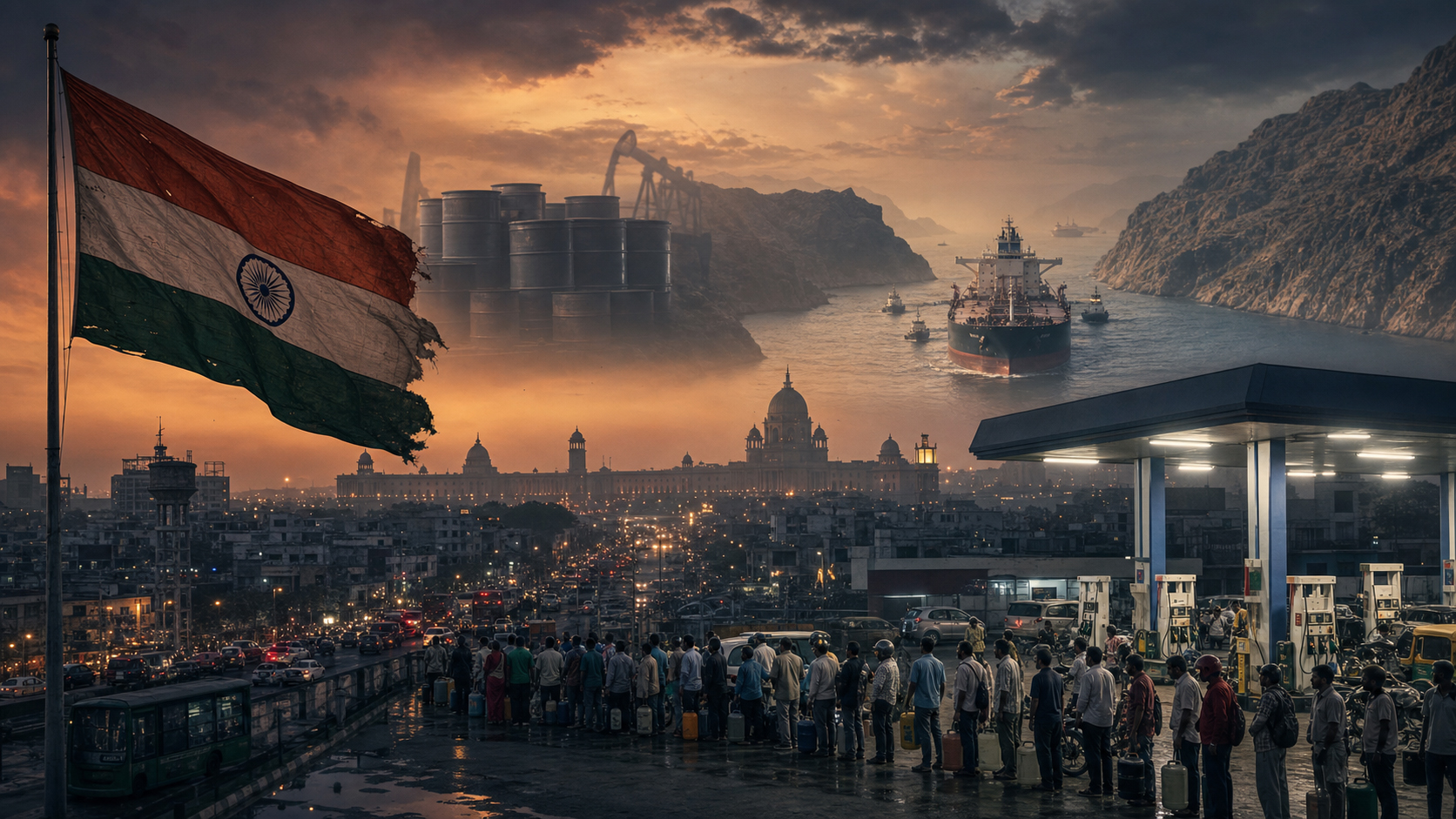
India's energy collapse: Why Modi is now forcing 1.5 billion people to go without – Image: Xpert.Digital
No gold, no travel: India's radical emergency plan against the global oil shock
When the oil runs dry: How India's economic crisis is becoming a warning signal for the world
Currency crash and billions in losses: Is India's economic miracle coming to an end?
A global crisis collides with structural vulnerability: The hypothetical closure of the Strait of Hormuz in February 2026 has shaken India's economic landscape to its core. As the world's third-largest oil importer, the country suddenly faces exploding costs, a plummeting rupee, and rapidly dwindling foreign exchange reserves. After weeks of silence, seemingly motivated by election tactics, Prime Minister Narendra Modi has now declared a national state of austerity. From drastic restrictions on traditional gold purchases to bans on foreign travel and fertilizers, the Indian government is demanding unprecedented sacrifices from its 1.5 billion citizens. But this urgent appeal for thrift reveals far more than just a temporary emergency: It is the unspoken admission of a deep-seated import dependency that seriously jeopardizes India's rise to an unassailable global economic power.
Narendra Modi explains the national austerity emergency – and thereby reveals how deep the wound really runs
When Iran closed the Strait of Hormuz at the end of February 2026, it not only shook global energy markets but also hit India with a force that hardly anyone had anticipated. The narrow strait between the Persian Gulf and the Arabian Sea is considered one of the most significant bottlenecks in the global economy: Until the outbreak of war, around 20 million barrels of crude oil passed through this corridor daily, representing almost a fifth of global consumption. Approximately 80 percent of the oil and gas transported through this route was destined for Asian markets – with India as one of the key recipients.
India is the world's third-largest importer and consumer of crude oil. Around 90 percent of India's oil needs and about 50 percent of its gas needs are imported. This makes the country structurally dependent on external energy sources, leaving it virtually defenseless against shocks of this magnitude. Furthermore, approximately 60 percent of India's liquefied natural gas (LPG) imports originate from the Gulf States and are transported almost entirely through the now-blocked strait.
The consequences were undeniable. The price of oil climbed to over $100 per barrel – a level that massively burdened India's import bill. The rating agency Saudi Aramco estimated that the conflict with Iran caused a shortfall of around one billion barrels of oil on the global market in the first two months alone. Aramco CEO Amin Nasser made it clear that even after deliveries resumed, stabilizing the energy markets would take considerable time. This assessment is not an abstract prediction for India – it describes the harsh reality that the government and population face daily.
The political arithmetic of silence
In the first weeks after the outbreak of the conflict, India's government under Narendra Modi acted with conspicuous restraint. Instead of preparing the population for harsh austerity measures, it emphasized the resilience of the Indian economy. State-owned refineries such as Indian Oil, Bharat Petroleum, and Hindustan Petroleum sold fuels below market prices—a politically convenient but increasingly unsustainable economic decision.
This deliberate delay had an immediate reason: regional elections. In early May 2026, the BJP achieved decisive successes, including its first-ever electoral victory in West Bengal, a state with over 100 million inhabitants that had previously been firmly in the hands of the Trinamool Congress Party under Mamata Banerjee. The BJP won more than 200 of the 294 seats – a prestigious victory that significantly strengthened Modi's political position halfway through his third term. It also secured a majority in the eastern state of Assam.
Only after these election victories, which secured Modi a stabilized power base, did he dare to take this open step. The political logic behind it is clear: Before an election, such appeals would have been seen as an admission of economic weakness and cost him votes. After the election, the prime minister can afford the risk of telling the truth – and declare it a national duty. Opposition critics sharply questioned this timing. They pointed out that the strains had long been noticeable and that the government had wasted valuable time through its silence.
The weight of foreign exchange reserves and the shock of the rupee
India's foreign exchange reserves are a key indicator of the extent of the crisis. Since the start of the Iran conflict, they have fallen by around $38 billion to $691 billion. At the beginning of April 2026, they stood just below $700 billion – a figure that still appears solid, but clearly indicates a downward trend. The central bank, the Reserve Bank of India (RBI), had intervened systematically in the preceding months to prevent a freefall of the rupee – expending considerable resources in the process.
The rupee itself is one of the clearest indicators of the crisis. Since the beginning of the year, it has depreciated by around six percent against the US dollar, making it one of the biggest losers among all Asian currencies. The exchange rate fell to 95.21 rupees per dollar. The rupee had already come under pressure in the months leading up to the Iran-Iraq War: in 2025, it lost around 19 percent against the euro, and January 2026 saw further losses of 3.7 percent against the euro. Bernstein Research warned in an extreme projection that the rupee could fall as low as 110 per dollar if the conflict continues.
This exchange rate collapse has systemic consequences. A weak rupee makes imports more expensive – and since India imports not only oil and gas, but also fertilizers, pharmaceutical precursors, and industrial raw materials, the devaluation has a profound impact on the economy. At the same time, larger government deficits are emerging because subsidies in local currency are increasing, while import costs must be paid in dollars. The Ministry of Finance had projected the budget shortfall for the 2025/2026 fiscal year at 4.4 percent of gross domestic product – a figure that is under considerable upward pressure due to the consequences of the war.
Modi breaks the silence: The call for austerity and its dimensions
On a Sunday in the southern Indian state of Telangana, Narendra Modi addressed his countrymen with unusual directness. He urged them to reduce their consumption of gas, gasoline, and diesel to the bare minimum – explicitly with the aim of conserving foreign currency and mitigating the economic consequences of the war. The transparency of this explanation is remarkable: government leaders typically avoid addressing economic weakness so explicitly.
The list of measures Modi recommended is extensive and touches on almost all aspects of life. In cities with subway systems, only public transportation should be used. Companies were urged to prioritize online meetings over business trips, similar to the approach taken during the COVID-19 pandemic. Private individuals were asked to refrain from non-essential international travel for a year – a direct attack on the outflow of foreign currency through tourism. Modi also asked the population to temporarily stop buying gold, as gold purchases traditionally account for a significant portion of India's import bill.
Farmers were also asked to reduce their use of chemical fertilizers by up to 50 percent. Even the consumption of cooking oil was to be reduced by ten percent – a measure Modi accompanied by the remark that it was healthy and patriotic anyway. This rhetorical device of combining economic necessity with appeals to public health is a familiar tactic in modern crisis communication and demonstrates the communicative care with which the message was packaged. The return to working from home, carpooling, and the preferential use of public transportation completed the picture: India is collectively asking its 1.5 billion citizens to shrink.
The fuel price dilemma and the silent bill of state-owned companies
The most significant economic decision made by the Modi government to date is also the most politically sensitive: the artificial stabilization of gasoline and diesel prices at the pump. While global market prices skyrocketed as a result of the Iran conflict, state-owned refining and distribution companies have not raised retail prices since April 2022. At the end of March 2026, the government even lowered taxes on gasoline and diesel again – a signal of political priorities that can be interpreted as preparation for the regional elections.
The consequence is massive cross-subsidization: State-owned companies Indian Oil Corporation, Hindustan Petroleum, and Bharat Petroleum are experiencing losses of around 100 rupees per liter of diesel and 20 rupees per liter of gasoline. These losses amount to over three billion US dollars per month. The Indian rating agency ICRA has openly warned that this situation is unsustainable and that the companies and the government will sooner or later have to decide on price increases. Media reports indicate that moderate fuel price hikes are imminent.
At the same time, in mid-May 2026, the government increased export tariffs on gasoline, diesel, and kerosene to ensure domestic availability and prevent further foreign exchange outflows due to cheap fuel exports. This measure demonstrates how the government is attempting to mitigate the most politically dangerous of all crises—inflation in the everyday lives of ordinary people—using a mix of instruments: price subsidies for consumers, export restrictions, and tax increases elsewhere.
Gold imports as a structural foreign exchange problem
When Modi asks the population not to buy gold, he touches upon one of India's most sensitive cultural and economic nexus points. In Indian society, gold is far more than an investment: it represents dowry, inheritance, social status, and religious practice. Weddings without gold jewelry are unthinkable for large segments of the population. This deep cultural entrenchment makes the appeal to abstain from gold both courageous and structurally difficult to implement.
The economic dimension is considerable. Indian gold imports rose by 24 percent from April 2025 to March 2026, reaching a record high of around $72 billion, nearly doubling in just two years. India is, alongside China, the world's largest gold importer – and gold purchases can account for more than ten percent of the total current account deficit in certain years. At a time when every foreign exchange reserve counts, this structural outflow is a major concern for the government.
The parallel increase in gold demand had already become apparent as a problem before the Iran-Iraq War. Rising global gold prices, a weak rupee, and the population's tendency to seek refuge in physical gold during uncertain times had driven the trade deficit to a record high of $41.68 billion in October 2025. Modi's call for austerity is therefore not merely a short-term crisis response, but a political acknowledgment of a structural imbalance between an import-driven consumer culture and the limits of foreign exchange capacity.
Our Asia expertise in business development, sales and marketing

Our Asia expertise in business development, sales and marketing - Image: Xpert.Digital
Industry focus areas: B2B, digitalization (from AI to XR), mechanical engineering, logistics, renewable energies and industry
More information here:
A thematic hub offering insights and expertise:
- Knowledge platform covering global and regional economies, innovation and industry-specific trends
- A collection of analyses, insights, and background information from our key areas of focus
- A place for expertise and information on current developments in business and technology
- A hub for companies seeking information on markets, digitalization, and industry innovations
How the Iran war is shaking India's economy
The economic collateral damage: growth, inflation, capital
The macroeconomic repercussions of the Iran war on the Indian economy are quantifiable and alarming. Goldman Sachs has revised its growth forecast for India downwards at an unprecedented pace: Before the outbreak of war, the economists at the US investment bank were still expecting GDP growth of seven percent. On March 13, 2026, the first revision to 6.5 percent was made, followed by a further downgrade to 5.9 percent. This represents a loss of over one percentage point of growth – in absolute terms, this equates to a loss of tens of billions of dollars in economic output.
Goldman Sachs downgraded Indian equities from "overweight" to "marketweight" and lowered its earnings growth forecast for Indian companies by nine percentage points cumulatively over two years. The inflation forecast was raised by 70 basis points, and the current account deficit widened to 2.0 percent of GDP for 2026 – compared to 0.9 percent the previous year. For the following year, ending in March 2027, a deficit of 2.5 percent of GDP is expected. Furthermore, a 50-basis-point increase in the key interest rate is forecast.
Another area of crisis is the massive capital outflow. Foreign portfolio investors have withdrawn over $20 billion from Indian stocks since the start of the war. In March 2026 alone, the monthly net outflow amounted to around $12 billion – a historic record in India. These figures demonstrate how much international investors have lost confidence in the short-term stability of the Indian economy. The benchmark index of the Mumbai Stock Exchange has fallen by around 12 percent since the beginning of the year.
Scientific estimates from the journal for international economic and financial affairs suggest that even a short oil shock of less than three months could increase Indian consumer price inflation by one to two percentage points and weaken the rupee by three to five percent. If the conflict persists, the inflation rate could rise to seven to nine percent and the budget deficit could worsen by several tenths of a GDP percentage point. The simultaneous strain of an oil shock, currency devaluation, capital outflows, and structural imports, in this combination, represents one of the most severe external economic crises India has experienced since the 1991 balance of payments crisis.
Sectoral disruptions: From the kitchen to the pharmacy
The economic consequences are not limited to abstract macroeconomic figures – they impact daily life and the production chains of numerous industries. The shortage of LPG, which is indispensable in India as cooking gas for households, restaurants, and industrial plants alike, has a direct impact on the restaurant sector. Around 80 percent of Indian restaurants rely on LPG – many establishments have had to scale back operations or radically alter their menus. Food delivery services like Swiggy and Zomato have experienced declines because partner restaurants could no longer fulfill orders; this has been reflected in falling share prices of the delivery platforms.
The pharmaceutical industry is also affected. Propane, needed for steam generation in pharmaceutical production facilities, has become scarce. Factories producing snacks, baked goods, and confectionery with LPG have been shut down. In the transport sector, a supply crisis threatened for the exhaust gas purification fluid DEF (AdBlue/urea), as approximately 60 percent of the precursors originated in Dubai and Egypt – both supply chains significantly disrupted by the conflict. The Association of Indian Automobile Manufacturers (SIAM) warned that a prolonged DEF shortage could paralyze large parts of the country's freight transport – a threat with systemic consequences for supply chains and industry.
Even agriculture, the backbone of the rural economy and the livelihood of hundreds of millions of people, is directly affected. Nitrogen fertilizers from the Persian Gulf are becoming harder to obtain, and the prices of synthetic fertilizers have risen. Modi's recommendation to halve the use of chemical fertilizers is therefore not only a call for austerity but also a signal that the government is anticipating structural supply shortages. The question of whether Indian farmers can implement this without suffering crop losses remains unanswered – and is highly relevant to food price inflation.
Geopolitical asymmetries: Who benefits, who loses
The Hormuz blockade is distributing the economic burden globally – but highly unevenly. While India, Japan, and other Asian importing nations are suffering from drastically increased energy costs, Russia is profiting from the situation. According to the German-Russian Chamber of Commerce, the rise in the price of Brent crude oil to over $111 per barrel – almost $40 more than before the outbreak of war – is generating additional monthly revenue of over ten billion euros for Russia. The Russian budget was originally calculated based on an oil price of $59; the current price level is thus providing Moscow with an unexpected windfall profit of up to $50 billion annually.
Germany and most Western European countries are relatively moderately affected by the Hormuz conflict, as they can largely meet their energy needs via alternative supply routes. A study by the Supply Chain Intelligence Institute Austria, the Complexity Science Hub, and TU Delft identified the Gulf states of Oman, UAE, Qatar, Kuwait, and Bahrain as the major export hubs whose entire maritime trade infrastructure runs through Hormuz. Countries like Japan, South Korea, India, and China bear the brunt of the burden—together they consume the majority of the energy transported daily by road. The geopolitical asymmetries of this crisis therefore also represent a shift in global power balances: Russia gains room to maneuver, while India loses it.
For India, the situation is further complicated by the fact that foreign trade relations with the US remain strained. Washington continues to impose 50 percent tariffs on Indian goods, with no bilateral trade agreement in sight. This means that India is fighting on two fronts simultaneously – with an external energy shock and a structural export barrier to the world's most important export market. India's services surplus can only partially offset the goods trade deficit, which further exacerbates the current account deficit.
The limits of voluntary restraint and the question of social justice
Modi's call for austerity measures has a fundamental weakness: it relies on voluntary participation. Historically, such appeals—whether in times of war like World War II, the 1973 oil crisis, or the COVID-19 pandemic—have only been effective when underpinned by binding measures, social incentives, and a clear narrative of national solidarity. Whether 1.5 billion Indians are prepared to forgo foreign travel, gold purchases, and car journeys for a year is highly questionable—especially since those who contribute most to foreign exchange outflows, namely the wealthy middle and upper classes, would also be most likely to disregard such recommendations.
The social dimension is also not to be underestimated. The rise in energy and food prices hits the poorest segments of the population the hardest. Reports of migrant workers returning to their home villages from major cities like Delhi due to increased fuel costs and high living expenses are reminiscent of the social upheaval of the early COVID-19 pandemic. The "refrigerator effect"—rising prices for cooking oil, LPG, and basic foodstuffs—is hitting those who spend a large portion of their income on daily food particularly hard.
The government is thus faced with a classic dilemma of crisis economics: If state price guarantees keep demand high and provide short-term protection for the poor, they simultaneously risk driving state-owned enterprises into bankruptcy and exceeding the budget deficit. If state-owned companies allow prices to rise, inflation and social unrest threaten. There is no painless solution – only a choice between different distributions of the pain.
Structural vulnerability as a strategic lesson
This shock exposes structural vulnerabilities that have long been discussed in India but not addressed with sufficient vigor. Dependence on fossil fuel imports from a geopolitically highly volatile region is not an inevitable fate – it is the result of decades of political decisions that prioritized short-term price stability over long-term security of supply.
India certainly had options. The expansion of renewable energies has gained momentum in recent years: India is one of the world's largest markets for solar energy. However, transforming its energy infrastructure is a lengthy, capital-intensive, and politically demanding process. In the short term, solar power plants cannot replace oil refineries or provide LPG for cooking. In the medium and long term, however, the question of how quickly India can diversify its energy mix is synonymous with the question of how vulnerable the country will be to future crises of this kind.
The same applies to India's dependence on gold imports, its one-sided focus on the US market for its exports, and the structural weakness of the rupee, which is regularly cited as an indicator of external vulnerability. The Iran war is therefore not just a crisis—it is an economic and political mirror forcing India to confront its deepest structural weaknesses. When Narendra Modi urges his compatriots to conserve energy on a Sunday evening in Telangana, he is not only talking about the war in the Persian Gulf. He is speaking, whether intentionally or not, about the unresolved challenges of an emerging economic power that is still learning how to combine size with resilience.
India's reaction to the Iran war reveals an uncomfortable truth: even one of the world's fastest-growing economies is hardly less vulnerable to an external energy shock of this magnitude than a classic emerging market. Political room for maneuver shrinks when foreign exchange reserves dwindle, the currency falls, capital flows out, and state-owned enterprises rack up billions in losses. What Modi is demanding of his citizens—sacrifice, solidarity, patriotic saving—is essentially a plea to collectively bear the costs of a structural weakness that has accumulated over many years. An honest analysis of this situation is therefore not merely an assessment of a war—it is a diagnosis of the limitations of the Indian economic model in its current form.
Consulting - Planning - Implementation

Konrad Wolfenstein
I would be happy to serve as your personal advisor.
me at wolfenstein∂xpert.digital contact
Just call me on +49 7348 4088 965 .
Our global industry and economic expertise in business development, sales and marketing

Our global industry and economic expertise in business development, sales and marketing - Image: Xpert.Digital
Industry focus areas: B2B, digitalization (from AI to XR), mechanical engineering, logistics, renewable energies and industry
More information here:
A thematic hub offering insights and expertise:
- Knowledge platform covering global and regional economies, innovation and industry-specific trends
- A collection of analyses, insights, and background information from our key areas of focus
- A place for expertise and information on current developments in business and technology
- A hub for companies seeking information on markets, digitalization, and industry innovations










