
Vadhavan and Galathea Bay: India's dual strategy at sea – How two mega-terminals are set to reshape global shipping
Xpert Pre-Release

Available in 27 languages 📢
Prefer Xpert.Digital on GoogleⓘPublished on: May 12, 2026 / Updated on: May 12, 2026 – Author: Konrad Wolfenstein
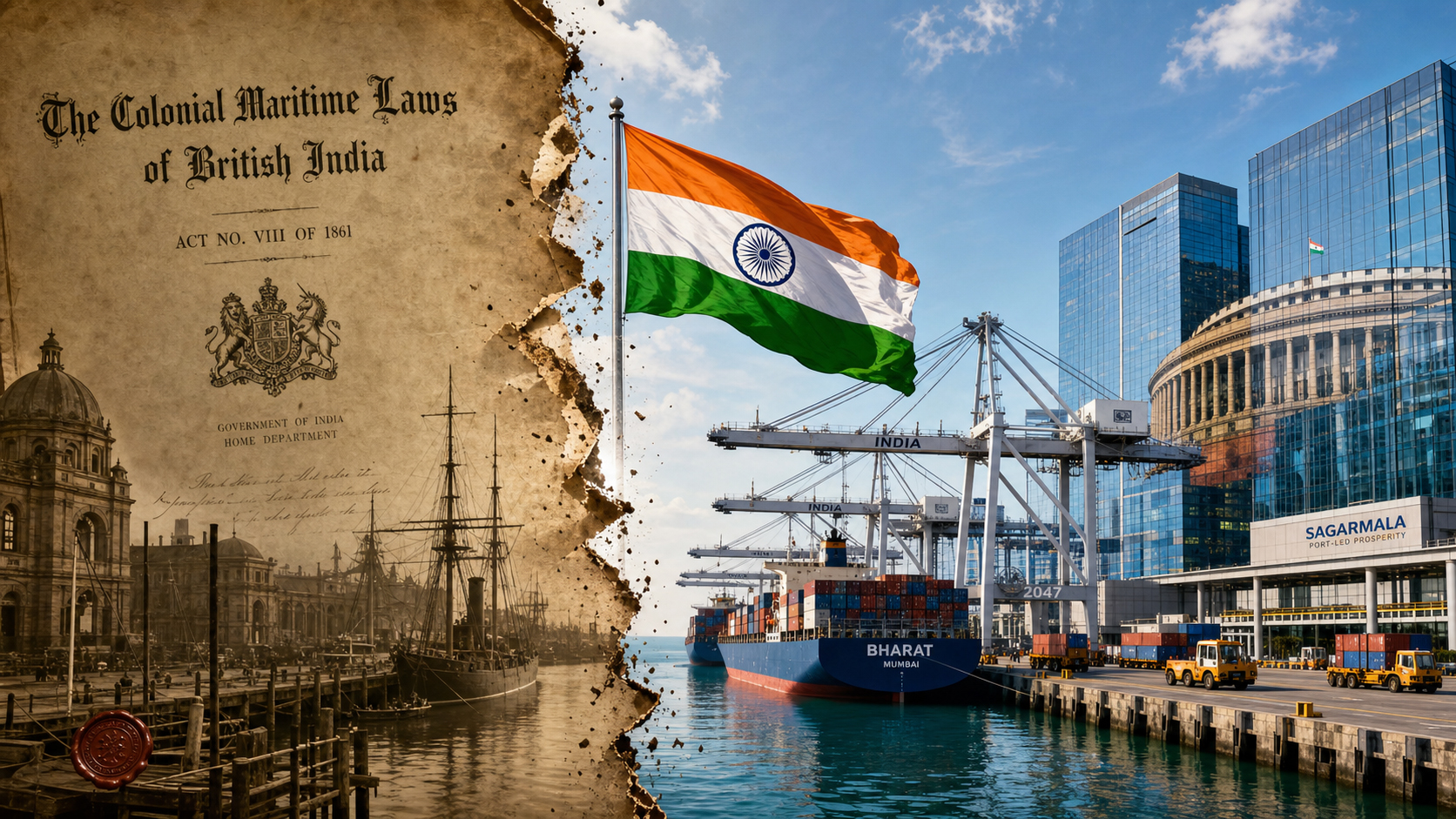
Vadhavan and Galathea Bay: India's dual strategy at sea – How two mega-terminals are set to reshape global shipping – Image: Xpert.Digital
In the middle of the ocean: India's radical plan against the dominance of Singapore and China
New routes for gigantic ships: Why global trade will soon be massively rerouted
Artificial islands and mega-terminals: India's master plan for dominance of the seas
India has had enough of watching from the sidelines. For years, the world's most populous nation has relied on foreign ports for global trade – a costly and strategically disastrous disadvantage that has hampered its own economy. But now, New Delhi is launching a monumental offensive: Vadhavan on the west coast and Galathea Bay deep in the Indian Ocean are two unprecedented mega-projects. Through artificially created islands and superlative terminals, India aims to handle the world's largest container ships itself and break the dominance of Singapore, Colombo, and, not least, China. This ambitious dual strategy will cost billions and carries immense risks – but if the plan succeeds, it will not only revolutionize India's economy but also permanently reshape the entire geopolitics of the world's oceans. A deep dive into a project poised to change global shipping forever.
Related to this:

Artificial islands and strategic hubs – a country reaches for maritime superpower status
India is building. And it's building big. To understand where the maritime ambitions of the world's most populous nation are leading, one must memorize two coordinates on the map: Vadhavan on the west coast of Maharashtra and Galathea Bay on the remote island of Great Nicobar in the Indian Ocean. Both projects represent a strategic shift that goes far beyond simply pouring concrete into the sea. They embody India's determination to no longer be a spectator in a global game dominated for decades by Chinese ports, Singaporean hubs, and Sri Lankan transshipment centers. What is being created here is nothing less than an attempt to reshape the maritime geography of the Indian Ocean to its own advantage.
The strategic logic behind these investments is coldly calculated. Every year, around three million TEU (standard containers) of Indian cargo are transshipped at foreign ports such as Colombo, Singapore, Port Klang, Salalah, and Dubai because India's own ports are too shallow to accommodate the latest generation of ultra-large container ships directly. Colombo alone handles around 2.5 million TEU of this, representing almost the entire transshipment flow from southern India. For each of these transshipments, the Indian export industry pays between 80 and 100 US dollars per container in additional costs – costs that directly impact the competitiveness of Indian products on global markets. With Vadhavan and Galathea Bay, India aims to end this structural dependency.
The Vadhavan Project: When a country builds an island to divert world trade
Vadhavan, located in the Palghar district of Maharashtra, about 150 kilometers north of Mumbai, will be India's first offshore port, built on an artificial island in the Arabian Sea. The foundation stone was laid on August 30, 2024, by Prime Minister Narendra Modi himself – a symbolic act that unequivocally signaled New Delhi's political will. The project carries a price tag of 76,220 crore rupees, equivalent to approximately US$8.1 billion, and is being developed by a special purpose vehicle called Vadhavan Port Project Limited (VPPL). The Jawaharlal Nehru Port Authority (JNPA) holds 74 percent of the shares in this company, with the Maharashtra Maritime Board holding the remaining 26 percent – a public-private partnership model that attracts private capital for terminal development while the state controls the liability structure.
What sets this project apart from all previous Indian port projects is its sheer physical scale. 1,448 hectares of land are being reclaimed from the sea, and a 10.14-kilometer-long offshore breakwater is being constructed. Nine 1,000-meter-long container terminals, four multi-purpose berths, four liquid cargo berths, one Ro-Ro berth, and one berth for the coast guard are planned – infrastructure comparable to the world's largest ports. The natural water depth of 20 meters is the decisive technical advantage: it allows direct access for the latest generation of Ultra Large Container Ships (ULCS) with a deadweight tonnage (DWT) of over 233,000 tons – something the existing ports of Mumbai and JNPT simply cannot offer.
Capacities beyond imagination: What 23 million TEU means
The planned total capacity of 298 million tons per year, including 23.2 million TEU container throughput, makes Vadhavan a potential top-tier global player. For comparison, JNPA, currently India's most efficient container port, handled approximately 7.2 million TEU in fiscal year 2024–25. Vadhavan would thus more than triple the capacity of its own parent company – all with a single project. Phase I is planned to be operational by 2029, generating a container capacity of 9.87 million TEU. This capacity is expected to increase to 15 million TEU by 2035, before reaching full capacity of over 23 million TEU in 2040.
International interest is already concrete: At India Maritime Week 2025, Memoranda of Understanding (MoUs) were signed with Evergreen Marine Corporation for a terminal worth 100 billion rupees and with Gulftainer Company for a terminal worth 40 billion rupees. Both shipping companies belong to the global elite of the container business, and their announcements lend the project commercial credibility. In August 2025, the first tenders for construction package 1A were published – the starting signal for physical construction. The ambition for Vadhavan to rank among the world's top ten ports upon completion is not hubris, but rather mathematically plausible: Shanghai, Singapore, Ningbo, Shenzhen, and Guangzhou currently dominate the global rankings with capacities between 30 and 50 million TEU – but Vadhavan is targeting a market that is still growing steadily.
Vadhavan's role in the geopolitical connectivity network
The strategic importance of the project extends beyond purely economic considerations. Vadhavan is explicitly envisioned as a hub for two of India's most ambitious infrastructure initiatives: the India-Middle East-Europe Economic Corridor (IMEEC) and the International North-South Transportation Corridor (INSTC). The IMEEC, a joint US-India response to China's Belt and Road Initiative, envisions a rail and sea link from India across the Arabian Gulf to Europe – with Vadhavan serving as India's anchor point. The INSTC, in turn, connects India via Iran to Russia and Central Asia. A port serving both routes thus possesses a rare dual geopolitical function.
Added to this is the project's climate resilience. The design incorporates nature-based solutions for coastal protection and storm surge mitigation – an unusual investment in an infrastructure project of this scale. The port will be divided into six construction zones, ranging from coastal land reclamation to offshore land reclamation, with each zone presenting its own engineering challenges. The fact that a green and smart port infrastructure is also planned – featuring digital operations control, renewable energy, and low-emission handling processes – is not merely a PR gimmick, but a prerequisite for competitiveness in the global container market of the future.
Your container high-bay warehouse and container terminal experts

Container high-bay warehouses and container terminals: The logistical interplay – expert advice and solutions - Creative image: Xpert.Digital
This innovative technology promises to fundamentally change container logistics. Instead of stacking containers horizontally as before, they will be stored vertically in multi-story steel racking structures. This not only allows for a drastic increase in storage capacity within the same area, but also revolutionizes all processes at the container terminal.
More information here:
Why India is now relying on its own transshipment hubs – costs, control, risk
Galathea Bay: The silent giant on the world shipping route
Less well-known, but at least as strategically important, is the second megaproject: the International Container Transshipment Port (ICTP) in Galathea Bay on Great Nicobar Island, the southernmost island of India's Andaman and Nicobar archipelago. The island lies just 40 nautical miles from the main east-west shipping lane, where hundreds of container ships travel daily between Asia, Europe, and America. Anyone operating a port here possesses a natural locational advantage that no investment in the world can buy – it is simply geographical.
In April 2026, the responsible Public-Private Partnership Appraisal Committee (PPPAC) approved the project with a budget of 48,862 crore rupees. This cost estimate is slightly higher than the previous estimate of 43,796 crore rupees, indicating refinements to the plans and increased material costs. The port project is part of a broader program for the integrated development of Great Nicobar Island, which also includes an international airport, a power plant, and a new township. The plan calls for a total capacity of 11.8 million TEU in two phases, while other plans envision 16 million TEU per year in a four-phase development.
Related to this:

Ownership structure and strategic sovereignty
The ownership rules of the Galathea project are politically revealing. At least 55 percent of the joint venture building the port must be held by an Indian-controlled entity; foreign operators are completely excluded. This decision is not an economic accident, but a deliberate distancing from the model that China exported with its Belt and Road Initiative: strategically located ports under foreign participation or control. India is rejecting this model outright – and simultaneously closing the door to precisely the kind of influence that China has exerted in places like Colombo, Hambantota, and Gwadar.
The National Green Tribunal (NGT) gave the project the green light in February 2026 after reviewing numerous petitions and rejecting all objections to the environmental permits already granted. Nevertheless, ecological concerns remain: Great Nicobar lies within the Sundaland Biodiversity Corridor, is home to 11 endemic mammal species, 32 endemic bird species, and is one of the most important nesting grounds for the globally endangered leatherback turtle. Around 130 square kilometers of forest could be cleared, which is estimated to mean up to one million trees. Tribal representatives of the Shompen, a particularly vulnerable ethnic group in the island's interior, have withdrawn their previous consent and are demanding the right to information and participation. These tensions will accompany the project politically – and they serve as a benchmark for how India balances its development goals with its constitutional obligations to protect indigenous communities.
Two ports, one strategy: India's maritime twin axis
The complementary logic of both projects becomes clear when viewed together. Vadhavan serves the western axis: From here, freight flows to the Middle East, the Persian Gulf, Africa, and via the IMEEC towards Europe. Its deep-sea capacity makes the port a port of call for the world's largest container ships, which until now have bypassed India. Galathea Bay serves the east-west axis: As a transshipment hub in the heart of the Indian Ocean, the port can consolidate cargo from the smaller eastern coastal ports of India, Bangladesh, Myanmar, and Sri Lanka and transfer it to the major mainline routes. What Colombo is today for South India, Galathea Bay is intended to become for the entire eastern Indian Ocean.
Together, these two projects address India's greatest maritime weakness: its inability to directly accommodate ultra-large container ships and the resulting structural dependence on foreign hubs. The Ministry of Finance estimates that India loses between US$200 million and US$220 million annually in potential port revenues due to transshipment via Colombo, Singapore, and Port Klang. Every TEU handled through Indian ports in the future, instead of being diverted via Colombo, translates into foreign exchange earnings, jobs, and added value for the logistics sector domestically. The "Maritime Amrit Kaal Vision 2047," which aims to quadruple India's port capacity from 2,700 million tonnes (MTPA) in 2024 to 10,000 MTPA by 2047, makes it clear: Vadhavan and Galathea Bay are not the end of the plan, but its core.
Criticism, risks and the question of feasibility
No analysis of these projects would be complete without a sober assessment of the risks. Infrastructure projects of this scale in India have a historical tendency toward delays, cost overruns, and regulatory friction. Phase I of Vadhavan, scheduled for 2029, is extremely ambitious given the current state of tenders for construction packages. Galathea Bay grapples with one of the world's most sensitive conflict zones: the tension between national development interests and indigenous protection rights in a tectonically active, biologically exceptional area. The island was severely damaged in the 2004 tsunami and lies in a high-risk zone for earthquakes and tsunamis—a risk factor that is only marginally addressed in project approvals.
But given what's at stake, the competitive landscape is even more pressing than the internal risks. Over the past 15 years, China has built or controlled ports in Pakistan (Gwadar), Sri Lanka (Hambantota and Colombo), Myanmar, Bangladesh, and along the East African coast—a "necklace of pearls" that is increasingly constricting India. Every day that Vadhavan and Galathea Bay don't exist is a day that foreign ports handle Indian cargo, generating not only revenue but also maritime power. From this perspective, the environmental and logistical risks of both projects are very real—but the risk of not building them is far greater for India.
Consulting - Planning - Implementation

Konrad Wolfenstein
I would be happy to serve as your personal advisor.
me at wolfenstein∂xpert.digital contact
Just call me on +49 7348 4088 965 .
Our global industry and economic expertise in business development, sales and marketing

Our global industry and economic expertise in business development, sales and marketing - Image: Xpert.Digital
Industry focus areas: B2B, digitalization (from AI to XR), mechanical engineering, logistics, renewable energies and industry
More information here:
A thematic hub offering insights and expertise:
- Knowledge platform covering global and regional economies, innovation and industry-specific trends
- A collection of analyses, insights, and background information from our key areas of focus
- A place for expertise and information on current developments in business and technology
- A hub for companies seeking information on markets, digitalization, and industry innovations
Your container high-bay warehouse and container terminal experts

Container terminal systems for road, rail and sea transport in the dual-use logistics concept of heavy-lift logistics - Creative image: Xpert.Digital
In a world marked by geopolitical upheavals, fragile supply chains, and a new awareness of the vulnerability of critical infrastructure, the concept of national security is undergoing a fundamental reassessment. A state's ability to guarantee its economic prosperity, the provision of essential goods and services to its population, and its military capability increasingly depends on the resilience of its logistical networks. In this context, the concept of "dual-use" is evolving from a niche category of export control to a broader strategic doctrine. This shift is not merely a technical adjustment but a necessary response to the "paradigm shift" that demands a profound integration of civilian and military capabilities.
Related to this:










