
The global supply chain on the verge of collapse: Why a Middle East war is Europe's worst nightmare scenario
Xpert Pre-Release

Language selection 📢
Published on: March 1, 2026 / Updated on: March 1, 2026 – Author: Konrad Wolfenstein
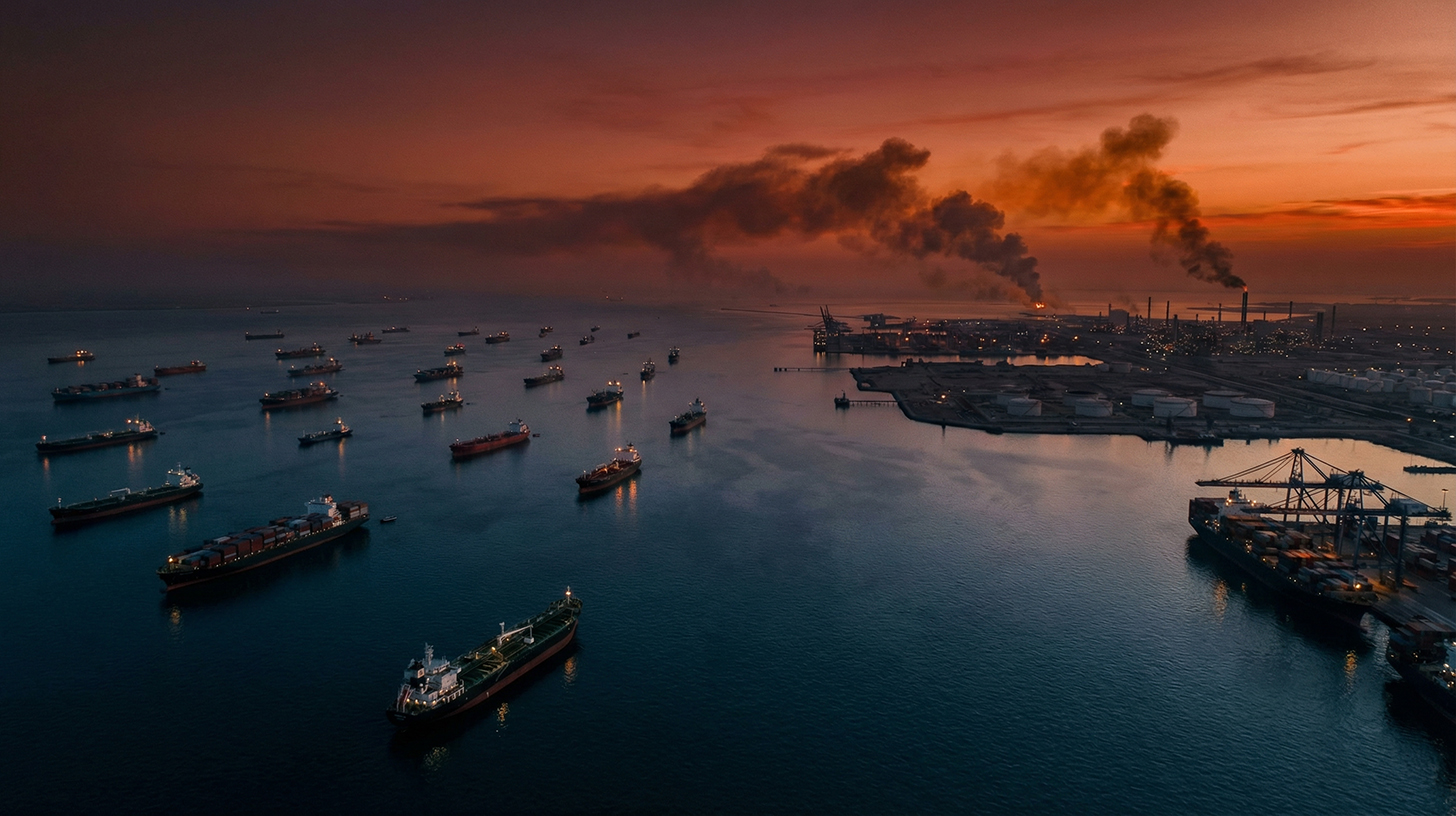
The global supply chain on the verge of collapse: Why a Middle East war is Europe's worst nightmare scenario – Creative image: Xpert.Digital
Oil shock, inflation, empty shelves: How a war in the Persian Gulf would cripple our economy
Container congestion and exploding fuel prices: The fatal chain reaction of a US attack on Iran
When Washington lights the fuse: The triple economic shock that threatens Europe's industry
It's the ultimate nightmare scenario for the global economy: an open military conflict between the US, Israel, and Iran that blocks the world's most vital energy route—the Strait of Hormuz—overnight. But while the first bombs fall in the Persian Gulf in February 2026, the most devastating shockwaves unfold thousands of kilometers away in Europe. Although not a single European soldier is involved in the fighting, the old continent faces unprecedented economic collapse. Exploding oil and gas prices, crippled global supply chains, and rampant inflation drive the European Central Bank into an impossible dilemma—and push the already struggling German industry to the brink of ruin. A geo-economic autopsy of a fictional but frighteningly realistic scenario that could forever alter our world order and our prosperity.
Related to this:

When the Persian Gulf burns, Europe freezes: Economic shockwaves from a war that nobody in Brussels wanted
Europe is paying the price – a geo-economic autopsy of the world's most vulnerable economy
It is February 28, 2026, and the world holds its breath. The United States and Israel have launched a coordinated major offensive against Iran, involving all five branches of the US armed forces. Within hours, Tehran responds with missile salvos targeting Gulf states that host US military installations – from Abu Dhabi to Doha to Bahrain. What began as a targeted military operation escalates within hours into a crisis that shakes not only the Middle East but the entire fabric of the globalized economy. And while American fighter jets circle over Iranian territory, a very different war begins in the trading rooms of Frankfurt, London, and Singapore: the battle for energy prices, shipping routes, and the stability of global supply chains.
Europe finds itself in a paradoxical position. Not a single EU member state supported the attacks, and no European soldier is fighting in the Persian Gulf. And yet, the old continent is becoming one of the biggest economic losers of this conflict. The mechanisms of this economic shock transmission are multifaceted, cascading, and unprecedented in their simultaneity in recent economic history.
The bottleneck trap: Why the Strait of Hormuz is the Achilles' heel of the global economy
The Strait of Hormuz is more than just a maritime waterway. It is the lifeblood of the global energy supply. Through this narrow passage, barely 33 kilometers wide, between Iran and Oman, roughly 20 percent of the world's seaborne oil and 20 percent of global LNG exports flow daily. When Iran's Revolutionary Guard banned ships from passing through the strait on February 28, the news sent shockwaves through world markets. The Iranian news agency Tasnim declared the waterway effectively closed, and Iran's Revolutionary Guard warned that transit through Hormuz was unsafe.
The shipping industry reacted with unprecedented speed. Several major oil companies and leading trading firms immediately halted their deliveries of crude oil, fuel, and liquefied natural gas (LNG) through the Strait of Hormuz. The strategic importance of this bottleneck can hardly be overstated, even in absolute terms: Approximately a quarter of the world's seaborne oil passes through it, as does a fifth of global LNG trade. A blockage not only affects ships in the Gulf itself but triggers a cascade of diversions, congestion, and disruptions throughout the entire global maritime network.
Charter costs for so-called Very Large Crude Carriers (VLCCs), the supertankers capable of carrying up to two million barrels of crude oil, have more than tripled since the beginning of the year, recently exceeding US$170,000 per day. This price level reflects not only increased risks but also a shrinking number of available vessels, as more and more shipping companies are avoiding the region. Even the usually calculating insurance industry has reacted with drastic premium increases: War risk premiums for transit through the Red Sea had already risen from US$10,000–20,000 to US$150,000–500,000.
Ships without a course: How the container fleet came to a standstill
The impact on global container traffic extended far beyond the immediate Persian Gulf. According to the analysis firm Linerlytica, around 170 container ships with a total capacity of approximately 450,000 TEU, representing 1.4 percent of the global fleet, were trapped within the strait and faced restrictions on leaving. At least 15 container ships turned back, either while entering or attempting to leave the Strait of Hormuz. However, most had already stopped or been diverted.
The world's three largest container shipping companies reacted with formal suspensions of operations. MSC, the world's largest container shipping company, announced a suspension, as did CMA CGM, the industry's number three, which ordered all ships in or en route to the Persian Gulf to seek immediate shelter and suspended all Suez transits until further notice. Hapag-Lloyd, Germany's largest container shipping company, announced the suspension of all shipping transits through the Strait of Hormuz, citing the official closure by the relevant authorities. The Japanese shipping company Nippon Yusen also instructed its fleet to no longer transit Hormuz, and Greece urged its massive merchant fleet to reassess the passage.
What makes the situation so uniquely threatening is the simultaneity of the disruptions. Analyst Peter Sand of Xeneta noted that the attacks have also shattered hopes for a large-scale return of container traffic to the Red Sea in 2026. Since the end of 2023, the Houthi attacks in the Red Sea had already led to around 80 percent of Asia-Europe container traffic being diverted around the Cape of Good Hope. In the preceding months, some shipping companies had cautiously resumed selected services via the Suez Canal. This tentative normalization is now definitively over. Two of the world's three most critical shipping bottlenecks are disrupted simultaneously, a situation that was not foreseen in any planning scenario of the global logistics industry.
Dubai's dark Saturday: When the Middle East's logistics hub faltered
The strategic importance of the Gulf ports for global logistics can hardly be overstated, and it was precisely there that the Iranian retaliatory strike had its devastating effect. A fire broke out in the Jebel Ali port in Dubai, the largest port in the Middle East, after debris from intercepted shells struck. Dubai Civil Defence responded immediately, but the symbolic and operational impact was catastrophic. Jebel Ali handles approximately one-third of the United Arab Emirates' non-oil-related trade and serves as a central hub for trade between Asia, Europe, and Africa.
In total, Iran launched 137 missiles and 209 drones at the United Arab Emirates alone. Although the majority were intercepted by defense systems, 14 drones struck Emirati territory or waters. Debris from intercepted projectiles caused additional damage: Dubai International Airport, the world's busiest international airport, suffered damage, four employees were injured, and operations were suspended. The iconic Burj Al Arab Hotel caught fire due to drone debris. In Abu Dhabi, at least two people were killed at Zayed International Airport.
The attacks spanned the entire Gulf region. Qatar reported 65 missiles and 12 drones being hit, injuring 16 people. Bahrain was struck at the base of the US Fifth Fleet. Kuwait and Jordan intercepted Iranian missiles in their airspace. Even Oman, which had acted as a mediator between Iran and the US, was hit by a drone attack on the port city of Duqm.
For global logistics, the closure of Jebel Ali is a nightmare scenario. Xeneta's chief analyst, Peter Sand, emphasized that there is no viable alternative for transporting containers by sea to or from ports like Jebel Ali when the Persian Gulf is closed. Shipping companies would have to cancel these calls on their east-west services and unload containers at the best possible alternative port, from where they would have to be transported onward by truck. This would cause severe disruptions and port congestion at the regional level.
Black gold on fire: The oil market on the verge of losing control
Oil markets reacted to the escalation with the expected force. Brent crude jumped around 10 percent to about $80 a barrel in after-hours trading on Sunday, March 1, 2026. Before the attacks, the price was around $73, already the highest level since July. Analysts agreed that this was likely just the beginning. Ajay Parmar, energy and refining director at ICIS, explained that the decisive factor was the closure of the Strait of Hormuz, and predicted that prices would be significantly closer to $100 a barrel when markets reopened and could potentially exceed that level if the blockade continued.
Leading Middle Eastern officials had warned Washington beforehand that military action against Iran could drive oil prices above $100 per barrel. Analysts at Barclays confirmed this assessment. Jorge León of Rystad Energy warned that without signs of de-escalation over the weekend, a price jump of $10 to $20 per barrel could be expected at the start of trading on Sunday evening. Rystad itself predicted a possible rise to around $92 per barrel.
OPEC+ responded on Sunday with a production increase of 206,000 barrels per day, to be implemented in April. This was significantly higher than the expected 137,000 barrels. The official statement made no mention of the Iran conflict, instead citing a stable global economic outlook and healthy market fundamentals. However, analysts like Jorge León of Rystad warned that this increase might not be enough to prevent a price surge. The market will react to developments in the Gulf and the status of shipping flows, not to a comparatively modest production increase. Adding to the concern is the fact that several OPEC+ members, including Kuwait, the UAE, Iraq, and Oman, have themselves been affected by Iranian attacks and their own export capacities could be impacted.
In the weeks leading up to the attack, Iran had been frantically trying to get as much oil as possible onto the world market. Between February 15 and 20, almost 20.1 million barrels of crude oil were loaded onto tankers from the Kharg oil island, nearly three times the amount loaded during the same period the previous month. This frantic loading indicated Tehran's expectation that a military strike was imminent and that export opportunities would be drastically reduced afterward. As the fifth-largest producer within OPEC+, Iran produces around 3.3 million barrels per day, and a disruption of this production would further strain the already tight markets.
Europe's triple energy shock: oil, gas, and the inflation nobody wanted anymore
For the European economy, this oil price shock is hitting terrain already scarred by the energy crisis of 2022 and 2023. Around one-tenth of the EU's crude oil is still transported through the Strait of Hormuz. The immediate price reaction on the energy markets is likely to be dramatic. Analysts at EU Perspectives predicted that Brent crude could rise to between $120 and $140 per barrel within a few days, driven less by actual supply losses than by the pricing in of risk, delay, and perceived threat.
The gas market is following oil's upward trend, even though no pipeline directly connects Iran to Europe. Dutch Title Transfer Facility futures, the European gas benchmark, could rise by 25 to 40 percent. ICIS analysts have calculated model-based scenarios of a three-month Hormuz blockade and conclude that a rise in the TTF front-month contract to over €90 per megawatt-hour appears realistic if direct Qatari LNG exports to Europe cease. For context, the April TTF price was valued at just under €32 per megawatt-hour on Friday, February 28. A potential tripling of the price is therefore a possibility.
Europe's vulnerability regarding LNG is by no means abstract. Approximately ten percent of European LNG imports originate in Qatar and transit the Strait of Hormuz. Among EU member states, Italy, Belgium, and Poland are most dependent on LNG imports transported through the strait. According to available ship tracking data, LNG trade through the Strait of Hormuz has effectively ceased, and at least eleven LNG tankers have suspended their voyages.
The inflationary consequences for the eurozone would be considerable. Prior to the conflict, the European Central Bank (ECB) had left key interest rates unchanged at 2.00 percent at its meeting on February 5, 2026, after inflation in the eurozone unexpectedly fell to 1.7 percent year-on-year in January. The ECB reaffirmed its assessment that inflation should stabilize at the target of two percent in the medium term. This optimistic outlook is now likely to be rendered meaningless.
An ECB scenario from December calculated that a 14 percent increase in oil prices would raise inflation in the eurozone by 0.5 percentage points, while growth would fall by only 0.1 percentage points. The actual price movement is likely to far exceed this scenario. ING analysts pointed to an ECB scenario according to which a 20 percent jump in energy prices would reduce growth by 0.1 percentage points in both 2026 and 2027 and increase inflation by 0.6 and 0.4 percentage points, respectively. Given the magnitudes now foreseeable, the impact would be many times greater.
EU Perspectives estimates that eurozone consumer price indices, previously expected to reach just over 2.2 percent, could rise to between 3.0 and 3.5 percent by the third quarter of 2026, wiping out most of the disinflation of 2025. Food prices would rise again as higher fertilizer costs translate into higher wheat and meat prices. Manufacturing purchasing managers' indices could fall below 50 for two consecutive quarters, prompting economists to reduce their 2026 EU-27 growth forecast by around 0.4 percentage points, pushing expansion down to a meager 0.9 percent. Germany, Italy, and Poland, all heavily reliant on hydrocarbons for their heavy industry, would be hardest hit, while France and Spain would benefit from some protection thanks to their nuclear and renewable energy capacities.
Our global industry and economic expertise in business development, sales and marketing

Our global industry and economic expertise in business development, sales and marketing - Image: Xpert.Digital
Industry focus areas: B2B, digitalization (from AI to XR), mechanical engineering, logistics, renewable energies and industry
More information here:
A thematic hub offering insights and expertise:
- Knowledge platform covering global and regional economies, innovation and industry-specific trends
- A collection of analyses, insights, and background information from our key areas of focus
- A place for expertise and information on current developments in business and technology
- A hub for companies seeking information on markets, digitalization, and industry innovations
Europe's high price: A conflict in the Gulf reveals our fatal dependence
The stagflation trap: Why the ECB faces an unsolvable dilemma
Stagflation is an exceptional economic situation characterized by stagnant economic growth and high inflation simultaneously. This phenomenon is particularly detrimental to an economy, as it is usually accompanied by rising unemployment.
The monetary policy implications for the European Central Bank are particularly delicate. Before the conflict, a majority of forecasters had expected stable interest rates for the remainder of 2026, with inflation considered to be under control. This calculation has been fundamentally shaken by the Gulf crisis. The ECB faces the classic stagflationary dilemma: Rising energy prices are driving inflation upward while simultaneously suppressing growth, meaning that neither an interest rate cut to stimulate the economy nor an interest rate hike to combat inflation is clearly the right answer.
The experience of the 2022 energy price crisis showed that energy price shocks in Europe can have a lasting impact on services inflation, a phenomenon that was less pronounced in previous decades. The Bank for International Settlements had warned central banks that it had become more difficult to simply ignore supply shocks. This means that the ECB cannot simply look past the oil price shock, as was the prevailing doctrine before the pandemic.
EU Perspectives expects the ECB Governing Council to postpone planned interest rate cuts until at least the last quarter of 2026 and to expand the transmission hedging instrument to limit the yield spreads of peripheral countries. Stocks accumulated during the pandemic would continue to flow into Italian and Spanish government bonds to prevent fragmentation. Even before the actual attacks, stagflationary concerns had already been reflected in yield curves, with German government bonds confirming their safe-haven status and beginning to outperform the swap market.
The rating agency Scope had previously pointed out that a stagflationary scenario linked to an escalation in the Middle East would test the public finances of those eurozone countries with the least fiscal leeway and the weakest growth. According to Scope, countries already assigned a negative outlook, including Austria, Belgium, Estonia, France, and Slovakia, could come under pressure.
The sudden weakness of the euro, which could fall by up to three percent against the dollar, would further inflate the import bill, while European stock markets would come under pressure. The STOXX 600 could decline by up to ten percent in its opening week. Bond investors would be closely watching the spreads of Italian government bonds until the ECB reacts.
Related to this:
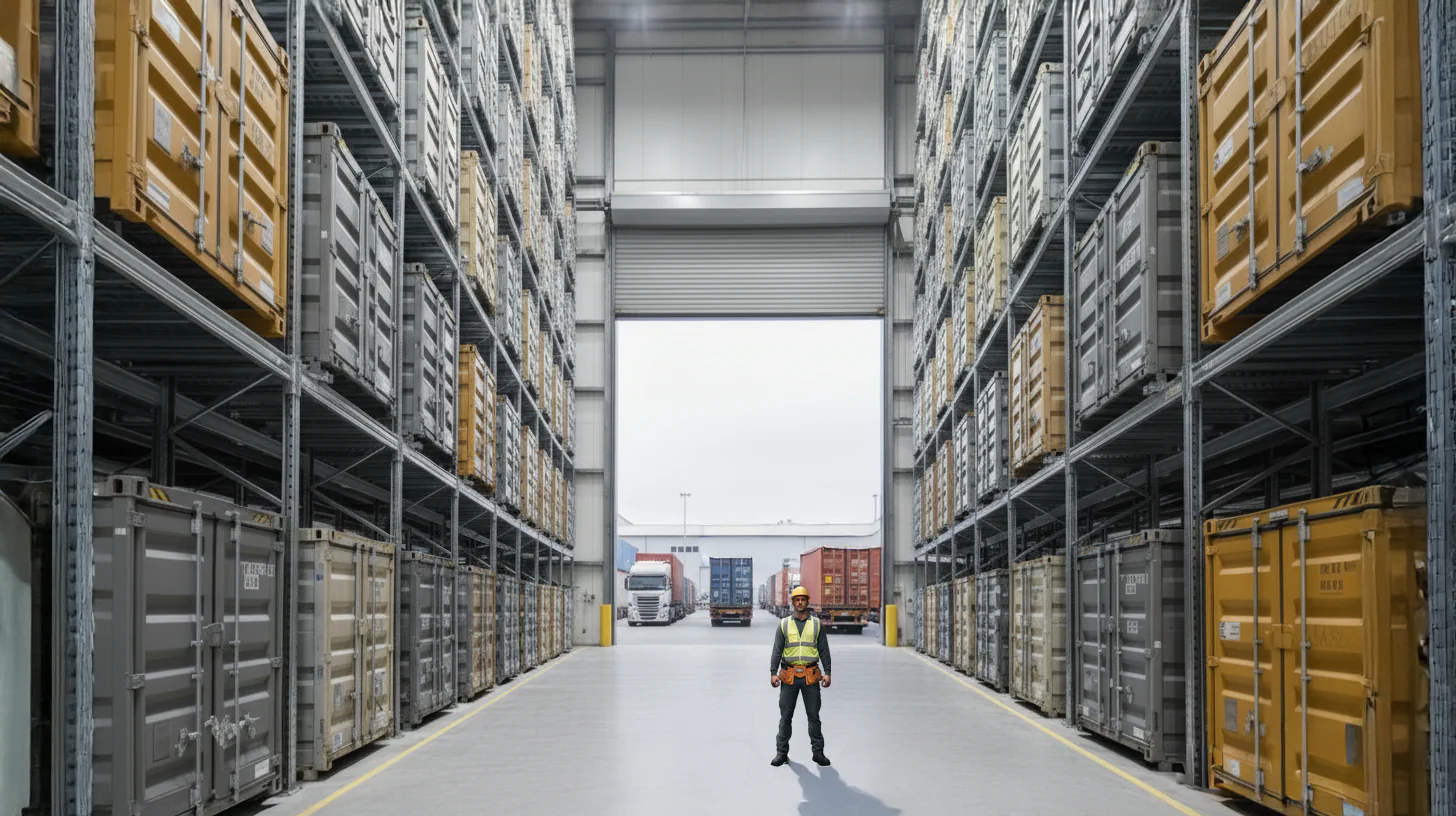
From the Persian Gulf to the factory floor: How the crisis is impacting Europe's industry
The mechanisms by which the oil price shock impacts European industry are multifaceted and alarmingly rapid. Energy costs represent a significant portion of total production costs in vehicle assembly. Steel foundries and aluminum smelters, whose products power every press line on the planet, are among the most energy-intensive industrial facilities. Paint shops, body presses, and powertrain machining all consume electricity on a massive scale. When the marginal cost of energy rises sharply, the impact spreads throughout the entire supply chain within weeks, not months.
Germany's manufacturing industry is particularly vulnerable. The country has not yet recovered from the consequences of the 2022 energy crisis. RWE CEO Markus Krebber stated that gas prices in Germany are structurally higher than elsewhere in Europe due to the country's dependence on LNG imports, and that significant structural disruption of demand in energy-intensive industries is to be expected. Research by the IAB Nuremberg and the University of Mannheim has documented that the 2022 energy price shock had significant negative effects on economic activity and wages in the German manufacturing sector. A renewed shock of this magnitude would hit an already weakened industrial base.
The chemical industry, in particular, faces acute challenges. While Iran is not a major gas exporter, it is a significant supplier of methanol and a relevant exporter of ammonia, urea, and polymers. Disruptions at Iran's ports or the Strait of Hormuz would tighten the global supply of these intermediates and drive up prices. Europe's chemical sector is already under pressure from high energy costs and plant closures, so any additional disruption could lead to further shortages or shutdowns. Approximately 30 percent of global maritime traffic typically passes through the Red Sea, and the diversion around the Cape of Good Hope has already tripled freight costs for chemical products.
The automotive industry faces a particularly time-critical problem. Buffer inventories, already depleted by years of lean manufacturing practices and post-pandemic reforms, are not designed to accommodate an additional two-week transit time in either direction. Assembly plants in Germany, Great Britain, and the USA are likely to feel the effects of delayed Asian component deliveries within two to three weeks of a sustained shutdown.
The logistical reorganization: When two bottlenecks collapse simultaneously
Beyond the immediate energy supply, the conflict is forcing a fundamental recalculation of global trade routes. The simultaneous disruption of the Strait of Hormuz and the ongoing dangers in the Red Sea from Houthi attacks mean that the two most important transit routes between Asia and Europe are compromised. Ships would have to take the significantly longer route around the Cape of Good Hope, which would add 10 to 14 days to transit times and increase transport costs by US$200 to US$400 per TEU.
The detour via South Africa is far more than just an inconvenience. According to calculations by JP Morgan, an increase in transit times of around 30 percent corresponds to a reduction in effective global container ship capacity of approximately 9 percent. Since more ships are needed for the same transport volume, the already strained shipping capacity is dramatically reduced. Each additional voyage around the Cape of Good Hope requires 800 to 1,000 tons more fuel for large container ships and ties up capital for almost two additional weeks.
The existing Red Sea crisis had already driven freight costs on key Asia-Europe routes up by 40 to 60 percent before stabilizing at 25 to 35 percent above pre-crisis benchmarks. Data from JPMorgan's supply chain research showed that the longer Cape route adds $200 to $400 per TEU when fuel consumption, crew wages, and vessel positioning are factored in. Insurance premiums have quadrupled. The total cost of the ongoing diversion to global trade has been estimated by the International Transport Forum at $15 to $20 billion annually.
For the global logistics industry, the simultaneous occurrence of both disruptions represents a true nightmare scenario. The cascading effects on just-in-time supply chains, inventory levels, and production planning are substantial. Singapore and Bintulu in Sarawak are emerging as critical diversion hubs for LNG flows to Southeast Asia, with Singapore located downstream of 41 affected routes, roughly twice as many as the next most important hub. Indian ports such as Marmugao, Haldia, and Mundra, as the most exposed ports in the entire network, are under pressure to absorb diverted bulk cargo flows that previously transited through Hormuz.
Europe's fiscal fire brigade: crisis bonds, reserve releases and the failure of preparedness
European policymakers face the challenge of responding to a shock they neither caused nor even remotely prepared for. EU member states hold strategic oil reserves that, according to the Oil Stockpiling Directive, must cover at least 90 days of net imports or 61 days of consumption, whichever is higher. Germany maintains the largest strategic oil reserve in Europe, at approximately 250 million barrels. In a coordinated effort, EU energy ministers could decide on a joint release of up to 30 million barrels from these strategic reserves and reinstate a voluntary gas savings scheme of ten percent.
But these reserves offer only a temporary buffer, not a solution. Around 20 to 25 billion euros in unused RePowerEU funds could be mobilized for energy subsidies for households and vouchers for small, energy-intensive businesses. The European Parliament is likely to call for a crisis energy bond of around 100 billion euros, even though frugal governments in The Hague and Vienna will resist it. Fiscal planners would channel 5 to 7 billion euros into hydrogen and LNG import links, accelerate permits under the TEN-E system, and advance the ten-year network development plan for trans-European energy infrastructure.
At the national level, measures diverge. Berlin could extend its reduced fuel tax rate from 2022 to 2027, at an estimated cost of €8 billion. Paris would again call for an EU-wide fuel price cap, which would irritate eastern capitals tied to market prices. Rome would urge Algiers to accelerate a new pipeline, while Warsaw and its Baltic partners would have to balance trade issues with increased defense spending.
Industrial policy hawks would seize the moment. A revised net-zero industrial law could promote domestic refining and petrochemical projects, arguing that shorter supply chains equate to greater security. Defense hawks in Poland and Denmark would demand that a portion of the revenue from excess profit taxes on energy companies be allocated to the European Peace Facility.
Nearshoring as a survival strategy: The forced reorganization of value chains
The forced revolution: Why European companies now need to bring their production back
The crisis is giving new, urgent impetus to political demands for nearshoring and friendshoring—that is, the relocation of production and trade to geopolitically friendly regions. The idea itself is not new, but the simultaneous disruptions in the Strait of Hormuz and the Red Sea are making the vulnerability of long, fragile supply chains more painfully apparent than ever before.
According to Maersk's 2024 European Business Resilience Survey, 76 percent of European companies had experienced disruptive delays in the previous year. More than half were already considering new procurement locations, and about a third of these new locations were in or near Europe, in countries such as Turkey, Egypt, Poland, Morocco, and Romania. In parallel, EU policy had promoted selective re-industrialization in strategic sectors, including batteries and net-zero technologies, semiconductors under the EU Chips Act, pharmaceuticals and medical devices, as well as defense, machinery, and the automotive industry.
The emerging pattern is described as “in Europe for Europe.” While critical supply chains continue to operate globally, they are gaining a stronger regional base so that essential flows are not dependent on a single distant source. KPMG’s analysis of supply chain and friendshoring trends emphasizes that companies are driving the diversification of their supplier base to reduce dependence on individual regions and countries, with nearshoring and friendshoring gaining importance as strategies that help build resilient and geopolitically stable value chains.
Industrialized nations have learned from the supply chain shocks of the pandemic and the 2021 Suez Canal blockade, and have, in some cases, increased their inventory levels. However, the scale of a simultaneous disruption of the Strait of Hormuz and the Red Sea exceeds all previous planning scenarios. The practical implementation of nearshoring is not a panacea: relocating supply chains to new countries can incur higher costs, introduce regulatory differences, and require the development of new logistics and infrastructure networks. Companies must weigh these factors against the benefits of increased stability and reduced risk.
Tehran's calculations and Washington's hubris: The geopolitical architecture of an avoidable crisis
The fundamental asymmetry of this conflict lies in the distribution of costs and benefits. Washington and Tel Aviv pursue the stated goal of destroying Iran's missile industry and halting its nuclear program. However, the economic collateral damage of this endeavor is disproportionately borne by third parties, primarily Europe and Asian economies.
US security sources indicated that the short-term probability of Tehran forcing de-escalation through targeted escalation was between 40 and 50 percent. In this scenario, a victory for Iran would not consist of the military defeat of the US or Israel, but rather the political survival of the mullah leadership. The fundamental weakness of the Iranian calculation is political in nature, as it is based on the assumption that the US is war-weary, internally divided, strategically overextended, and economically vulnerable to energy price shocks.
But this very sensitivity to energy price shocks is hitting Europe far harder than the United States. Thanks to its shale oil revolution, the US is now almost energy self-sufficient, while the Eurozone remains heavily dependent on imported energy. Geopolitical analyst Gusseinov warned of far-reaching consequences of destabilization: the costs would also affect countries in which the US pursues strategic investments.
The Scope rating agency had already pointed out before the outbreak of fighting that the US shift away from its traditional role as guarantor of international norms increases the risk of broader conflicts elsewhere. This is particularly acute for Europe, where growth remains more moderate than in the US and China, while rising defense budgets exert additional fiscal pressure on states already struggling to reduce budget deficits and reverse rising public debt. The agreed increase in NATO defense spending to 5 percent of GDP, more than double the previous target of 2 percent, significantly exacerbates this fiscal dilemma.
Related to this:

The scenario of controlled escalation: Why even a short war leaves long-term scars
Even in the most optimistic scenario of a short, limited exchange of blows, the economic consequences for Europe would be long-term. Experience from the 2022 energy crisis showed that an energy price shock has a persistent effect on consumer prices and leads to a substantial, sustained downturn in economic activity in the eurozone. The shocks of 2021 and 2022 had a larger and longer-lasting effect on inflation than previous shocks, suggesting state-dependent effects. After a shock, real GDP falls persistently, reaching its minimum at the end of the second year.
Brussels' scenario planning distinguishes three paths. In the first scenario, a short, contained conflict, markets calm down, shipping continues, and EU diplomacy focuses on preventing a return to proxy escalation. In the second scenario, a prolonged regional conflict, oil and freight costs rise, shipping risks in the Red Sea and Gulf increase, and EU member states expand their naval and air defense planning.
In both scenarios, European companies face a reassessment of their entire supply chain architecture. Luxury goods exporters to the Gulf monarchies could lose up to eight percent of their annual revenue if regional purchasing power suffers as a result of the attacks. Bavarian car manufacturers and designers in Emilia-Romagna would have to chase down components stranded at sea. Secondary American sanctions would increase trade financing costs and dampen investment even for companies with no exposure to Iran.
Perhaps the most profound long-term consequence lies in the acceleration of geoeconomic fragmentation. The global economy is transitioning from a highly integrated to an increasingly bloc-based order, in which trade routes are no longer evaluated solely on cost-efficiency but also on geopolitical security. The crisis in the Persian Gulf is not an isolated event in this respect, but a catalyst that is drastically accelerating the already ongoing process of deglobalization. For Europe, whose prosperity is based on open trade routes and the free flow of energy and goods, this is not a mere inconvenience. It is an existential challenge that extends far beyond the current conflict and will shape the continent's economic architecture for years to come.
Consulting - Planning - Implementation

Konrad Wolfenstein
I would be happy to serve as your personal advisor.
contact me at wolfenstein ∂ xpert.digital
Just call me on +49 7348 4088 965 (Munich) .










